The writing shows up

While I—er, I mean Henry, our dog—composes his own blog post, my younger son (the Cadillac man) drifts through the kitchen.

I pull up a previous post on my phone and hand it to him:

“Here, read the comments about you and Pa-Pa’s Cadillac.”

He reads, smiles. He’s pleased but says little. He’s a man of few words.

He won’t ask, so I tell him what I—um, Henry—is working on: “This is the next post. Henry is writing it in response to one I wrote about him interrupting my writing.”

“Hmmm,” replies the Cadillac man.

“Want to read it?”

“Sure.”

So the Cadillac man sits down at the table and takes my laptop. He reads Henry’s post-in-progress.

“I like it,” he says.

He sits for a minute.

Then: “I wonder if I could write from Nik’s perspective.”

Nikolaus is our sixteen-year-old dachshund. We got him as a puppy when my son was four.

As I take my laptop back, I say, rather airily, “You should try it.”

I don’t expect him to.

He hates writing.

This is a big, jagged stake in my heart.

His older brother loves writing and even maintained a blog for a while, long before I started this one. But the Cadillac man has gone all the way through his academic career cracking books only when he had to, writing only when forced for assignments, and utterly exasperating me with his lack of interest. He didn’t struggle with reading or writing. He just didn’t care about any of it.

At all. Ever.

He’s a brilliant musician, however, and a powerful vocalist. He’s loved music all of his life. At age seventeen, two weeks after graduating from high school, he was hired as a church music director. He’s working on a degree in that field. He’s adapted songs, composed a little—”just the music, not the words. I don’t do words”—and coaches others as they try playing instruments new to them. He speaks beautifully before a crowd, did so at Ma-Ma’s funeral despite not having any notes, because . . . he hates to write.

So, when he mentions writing about Nik, I think he’s just wondering out loud, nothing more.

He leaves the room. He comes back to the kitchen table with his new Chromebook.

“Do you have homework?” I ask.

“No, Mom, it’s spring break, remember? I’m going to write a story from Nik’s perspective. To see if I can actually do it.”

What?

The first time in his twenty years that he’s chosen to write a story.

I feel like the floor under my feet is shifting, that the Earth itself hangs in the balance. I have to leave the room.

I can’t stand it. I have to know.

I creep back into the kitchen.

He’s typing away.

“How’s it going?” I dare to ask.

“Pretty good.”

“Is it . . . fun?” I hear my voice quaver.

“It’s sad, really,” he says.

He finishes, lets me read it.

We know Nik won’t be with us much longer. He’s old. Frail. He’s going blind; his eyes are turning milky. My son’s words show Nik making his peace with all of this, that he’s satisfied he’s served his family well, and how he knows our other two dogs will “carry my torch of comfort and protection long after I’m gone.”

The attribution reads Nikolaus Haley, expert red dachshund.

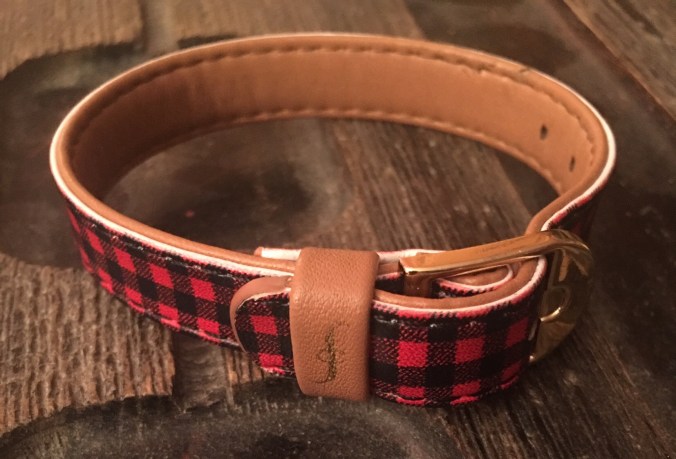
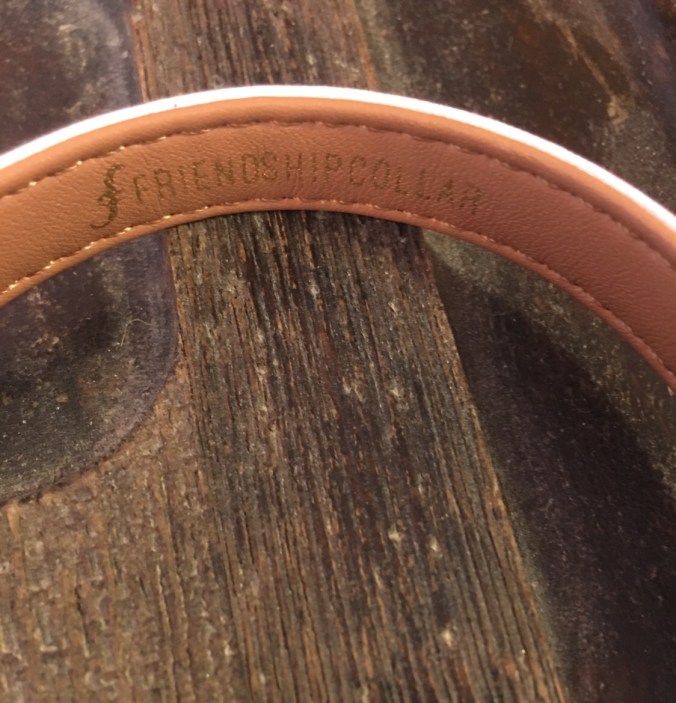
My throat is tight. Nik and the Cadillac man have been together almost their entire lives. Every single day. They wear a matching red-and-black checkered friendship bracelet and collar.

“It’s a powerful story,” I manage.

“Thanks,” says my son, softly. He gets up from the table, gathers Nik, who’s been wandering aimlessly around the kitchen this whole time, and takes him upstairs to “the lair,” as we call it.

I read the story again and again.

Thinking how he said to see if I can actually do it.

I think he meant getting in Nik’s head to write from his beloved dog’s viewpoint, rising to meet a challenge he set for himself.

And then I think how, when you finally show up for the writing, the writing shows up for you, and pulls you through.
Henry writes

Dear Readers,

First of all, hello.

I didn’t realize you were out there. Apologies.

I was only sniffing around to see what She is doing all the time on this, this . . . annoying Electrical Thing. I am forced of late to spend a great deal of time sitting on the kitchen rug by her chair instead of on the sofa where She will cuddle with Me. Granted, I can cuddle with a He (there are three from which to choose), but, as She has the warmest lap, She makes the best pillow.

I cannot figure out what’s so compelling about this Electrical Thing, other than, as I’ve just discovered—having inadvertently hit a movable part—there being a story here about ME.

Well. I don’t know what to think. And that accompanying photo of me-! I am aghast.

Do not tell Her this but I tried getting rid of that unflattering story. I confess that I don’t know how to make it go away. But I am, if I don’t say so Myself, a quick learner, as you can see, although it is taking Me a while to tap this out with one nail.

I do have stories, some that you might need to know, and others from long ago that—well, I prefer not to talk about long ago when I was found living on the streets. It brings a shudder even to this day. If I seem, ahem, needy [air quotes], there are reasons: I have loved, lost, and been lost.

-Hang on. She’s supposed to be sleeping. Must check. Be right back.

[clickclickclickclickclickclickclickclickclickclick . . . 

clickclickclickclickclickclickclickclickclickclick]

Gracious, how loud My nails are on the hardwood floor when the house is quiet! I’ve been in trouble yet again for biting them, but, HELLO, it’s time for a pedicure, if Anyone cares.

In the interest of time, before They All wake up: Rest assured that I will be vigilant about policing what is said about Me here, as vigilant as I am over what that abhorrent, slobbery yellow monster out back is doing, the foul fiend that She talks to so nicely in the voice meant for Me and ONLY ME, that incessant barker, copious shedder (My own hair, very, very fine, just comes off in wee, hardly perceptible amounts), that, that ANIMAL whose story has, unbelievably, won some kind of recognition, if My ears didn’t deceive me whilst pretending to be asleep during recent conversations.

-Egregious.

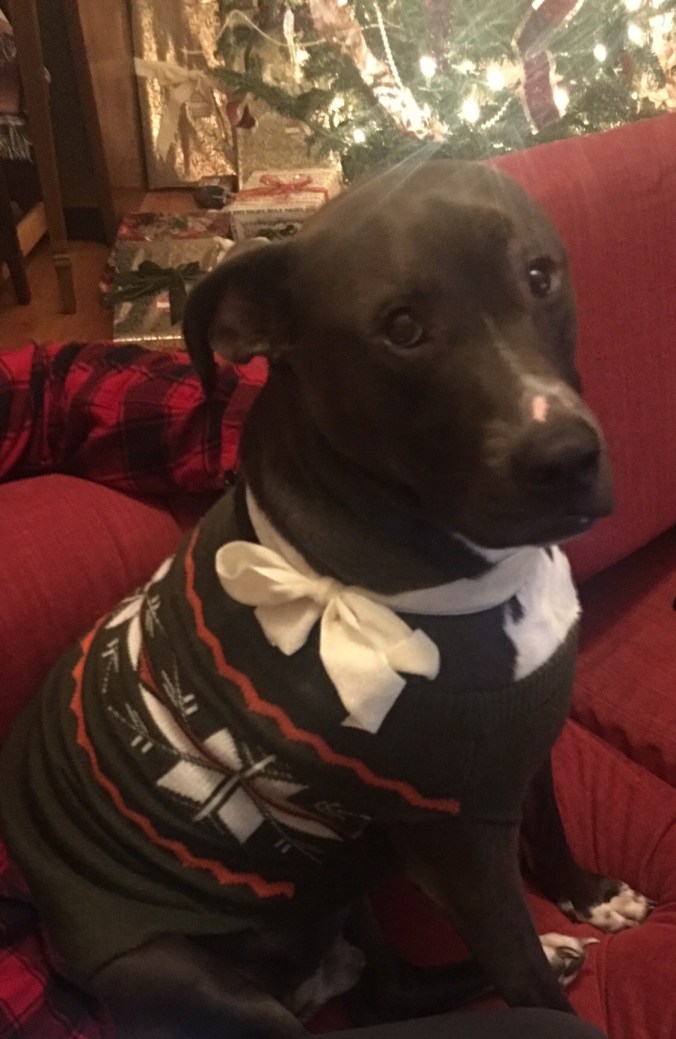
Happy to make your acquaintance, however. Until next time, I leave you with a far better image of Me, bedecked in My holiday finery:

Fondly,

HRH (Henry Rollins Haley)

Paterfamilias, Dominus, Master of the House

Cadillac man

img_4381

When he was little, he spent hours lining up his Hot Wheels just so.

“What are you doing?” I asked.

“It’s the parking lot at church,” he told me. Car to car, he explained who each owner was according to where they parked every Sunday morning.

He’d matched his toys to the real cars by the types of spokes and wheels.

A mother can be worried and fascinated at the same time.

Around the age of six, he announced: “I’m going to get a Cadillac when I grow up.”

“Oh, you are?” I responded, attempting to keep a straight face.

He nodded his head emphatically. “Yes. A blue one.”

His grandparents drove a blue Sedan de Ville. My husband’s stepfather bought it new in 1989, with forty miles on it.

I could understand the appeal. My boy was obsessed with cars. When I was growing up, I loved my grandparents’ car, too: a vivid red 1964 Ford Galaxie 500 (see A long time ago in a Galaxie far, far away).

The boy has always known exactly what he likes and doesn’t like, what he wants and doesn’t want. There are no proverbial shades of gray with him. He loves dogs. He loves music, especially old gospel songs. I joke that he was born seventy-five years old and he has never disagreed. When he fell in love with Cadillacs at age six, it was forever.

He began collecting Cadillac memorabilia, knew all the latest models and years. He knew the old ones, too.

“Ma-Ma and Pa-Pa say the Cadillac goes to me when they’re gone,” he said, his big brown eyes aglow, around age ten.

The de Ville was, at that point, twenty years old.

“I’m glad they want you to have it,” I tell him, even as I think Buddy, by that time the old car won’t be worth having . . . 

Pa-Pa, a jolly, larger-than-life Scotsman, took meticulous care of his Cadillac, but after his death in 2014, it just sat in the driveway. Undriven. The seasons came with their ravages, year after year: summer’s blazing sun, autumn leaves gathering layer upon layer, winter’s snow and ice, spring’s thick coating of pollen.

Ma-Ma died last fall. We began cleaning out the house, my husband’s childhood home.

Our boy said, “It’s time to get the Cadillac.”

My husband and I looked at each other.

We looked at the de Ville.

It looked forlorn, awful.

But, to honor Ma-Ma and Pa-Pa’s promise to their little grandson long ago, we decided to see what could be done.

We had the car towed to the place where Pa-Pa bought it almost thirty years before. With a new battery, it fired right up, despite four years of sitting completely idle. It got new brakes, new fluids, new tires, and a much-needed bath.

The service rep called my husband: “You’re not going to believe it’s the same car. Everyone here thinks it ought to be in the showroom.”

We were skeptical . . . but the rep was right.

The boy—now a man—drove his father and me to the dealership to get the Cadillac, to bring it home.

It sat in the service area, waiting, gleaming, as if age and time had no meaning.

Touching the hood lightly with his fingers, our son whispered, “I wish Pa-Pa could see it.”

He took the wheel. His dad rode shotgun beside him.

I followed behind, marveling, as my son, at last, drove his shiny blue Cadillac down the country back roads into the setting sun.

Somewhere over the rainbow

skies are blue

and the dreams that you dare to dream

really do come true.

I note that when Judy Garland sings this line in The Wizard of Oz, she’s leaning on a big wheel.

*******

On the de Ville’s front grille is a medallion with the Roman numeral VI. Our son learned that this is a Heritage of Ownership emblem given to Cadillac owners for each vehicle. 

This was Pa-Pa’s sixth Cadillac.

Heritage emblems are not given anymore.

How do I inspire them?

Inspire

Inspire. chattygdCC BY 

The crowd of educators goes to lunch, posting their “gots” and “wants” on a chart as they exit the morning’s session on growing young writers. My co-facilitators and I look over these sticky notes, preparing to address the “wants” in the afternoon when the participants return.

One note in particular grabs my attention:

I want my students to be excited about writing and to write more. How do I inspire them?

“It’s all yours,” say my colleagues.

I smile.

This is what I love.

Educators talking about inspiration. It’s vital to professional development, to the work that we do

To inspire, one must first be inspired.

Author Avi, in a Skype with students at my elementary school a couple of years ago, defined inspiration as breathing life.

Writers are life-breathers.

So are teachers.

Lucy Calkins, speaking of launching writing workshop, says: “No matter how tentative and insecure you may feel, role-play your way into being confident of yourself and your children because they will hitch a ride on your enthusiasm.”

It’s more than modeling the writing; it’s modeling a passion for writing. It’s digging deep within yourself to find your own stories, your own ideas, your own stances, and giving life to them . . .

The crowd returns. Little knots of teachers, support personnel, and administrators spanning kindergarten through high school, chattering, laughing. They take their seats one by one; an air of expectancy settles over all as my co-facilitators and I respond to their “wants.”

It’s my turn.

I want my students to be excited about writing and to write more. How do I inspire them?

“If we want students to get excited about writing, we must be excited about writing. We must write more ourselves, for ourselves first. Walk the walk; if we’re telling them writing is important, we’d better be writing ourselves. That’s why I started my blog, to keep me writing consistently. Tap into your own memories, the things that matter to you. Write in front of the students; show them every step of the way, how the ideas and images come to you, why you want to say what you’re trying to say, why it’s important.  That’s authentic writing. Tell students writing is the closest thing to magic that there is. Show them the power that’s in it. That what THEY think and feel matters. Good writing is labor-intensive; they have to get a taste of why it’s worth it. Tap into their emotions; there’s always a way . . . help them see that writing isn’t just something to be done for school for a grade, over and done. Writing is about life itself . . . .”

Breathe life. From your writing to theirs, from your soul to theirs.

There’s a whole world within each young writer. There’s a world around them that they’re grappling to understand. A world with a place for each of them. We don’t create these worlds for them. We just open the doors.

“Another world is not only possible, she is on her way.

On a quiet day, I can hear her breathing.”

– Arundhati Roy

Why I DON’T write

img_3902-2

I think this picture says it all . . .

I took it while trying to write a blog post.

This is Henry.

He belongs to my older son. Who’s back home for a while.

Hmmm . . . thinking of all those pets I foisted on my dad . . . is this poetic justice?

I type a few words, then stare, unseeing, trying to capture the elusive idea, drawing vague images out of the shadows, turning words and phrases around and around for the right rhythm, my mind miles away. I am not even in the world at the moment . . .

A nudging at my lap. The worming of a furred head between me and the laptop.

I am pulled back from wherever I was.

From my lap, two brown eyes look up at me, unblinking.

The images recede, the lovely phrases fall apart in chunks, the idea skitters away.

“What, Henry, WHAT?”

Wagging of tail, perking of ears.

He runs to the back door. Does a dog-dance to go outside. I call it his reindeer dance, because that’s what he looks like, back feet stationary and the front part of his body springing upward, repeatedly.

He’s out there for forty-eight seconds before he’s barking to come in.

He needs his treat.

Okay.

I settle back at the laptop. What was I thinking about—? Oh yeah . . . 

I type, oh, five or six words.

A nudging at my lap.

I ignore it.

A warm head worming its way between me and the laptop.

I am NOT looking at him. I am WRITING.

He finally withdraws his head. Good. He’s giving up. He’s going to to the living room to get on the couch, thank heaven.

But no.

A soft whine.

I don’t look. I reach over, pat his head. Tail thumps. I am going to finish this post . . .

A low grumble.

Then a louder, longer, much more rumbly one.

“Henry. STOP.”

I make the mistake of looking . . . and take the picture to prove why I don’t write.

He needs to be loved right now. That’s all he wants, to be petted and to snuggle. For me to give him my undivided attention.

It’s my own fault. I’ve spoiled him. I cave, but it gladdens my heart. His fur, especially the white patch at this throat, is silky-soft; he arches and rubs against my hand as if he were a cat.  He exudes comfort and luxuriant well-being. Henry could be a therapy dog; it’s impossible to be sad, angry, or troubled in any way when he’s leaning against me or lying with his head on my feet or even while he’s devising clever ways to get petted. He craves being touched, responds to it with absolute bliss, wriggling, writhing. The words I say to him most often are Sweet boy. Sweet sweet boy. 

He intrudes on my writing. He’d say my my writing intrudes on him.

One day I’m going to put Henry in a story. It’s a really important role; I’ve got it figured out.

I guess I’ll have to teach him to write it, because he’s certainly not going to let me do it.

Your why

Last Friday at school our professional development centered on finding our whys. For we are not made of what we do; we’re made of why we do it.

In a YouTube video, comedian Michael Jr. puts it this way: “When you know your why, you have options on what your what can be.” To illustrate the difference between knowing what and knowing why, he calls on a member of the audience (a school music director by the name of E. Daryl Duff) to sing a few bars of “Amazing Grace.” Duff’s voice is resonant, beautiful. Michael Jr. then asks Duff to sing as if a couple of specific, tragic things had happened to him; the transformation is stunning. Duff sings in a higher key with a vibrato full of emotion and energy—see the “Know Your Why” video).

It’s a perfect example of how our power, our potential, lies in knowing why we do things.

So, my colleagues and I got to work on finding our whys. 

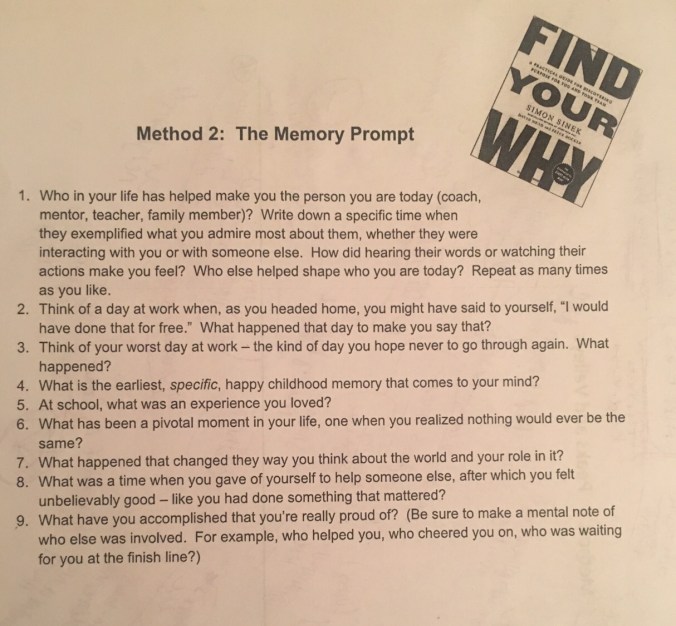
We were to map at least five peaks and valleys in our lives; if we needed help, we could use a memory prompt based on the work of Simon Sinek:

Our principal modeled the activity first (let us remember that good teaching and good writing have a primary rule in common: Show, don’t tell). The peaks and valleys didn’t necessarily have to be milestones in our lives, but experiences surrounded with much meaning or emotion, maybe turning points, times we gained knowledge that changed us. The more specific we could be in listing several significant life events or people that made an impact on us, the better we’d get to our why. 

Mulling the suggestions and the need for specificity, I chose these events, people, and moments that first came to mind as being beyond the norm:

Thinking of such experiences and writing them can be emotional, but sharing is where the emotion really kicks in.

Laughter. Tears. Reassuring hugs.

In pairs who were moderately comfortable with each other, but who didn’t know each other really well, we shared some of our peaks and valleys. We didn’t have to share everything we wrote, just the items we wanted to share. We told why we chose these points in our lives and what stood out about them. While one partner read, the other listened for connections or patterns in those life events, made notes, and then the roles switched.

We then shared what we discovered about one another.

In my case, my father’s sudden death (my lowest valley), reading “The Murder of Robbie Wayne, Age 6” in The Reader’s Digest when I was a young teen, my birthday party when my mother invited a boy who had bullied me, and a boy who did one of the greatest acts of kindness I’ve ever seen back when we were in 5th grade (I wrote about it: The Valentine) all connect to my present notions of fairness, doing what’s right, and being an advocate.  My having asthma as a child, my husband’s loss of an eye to disease two years ago, and my return to college to finish after a span of many years have a common theme of overcoming. The others—my husband’s ministry, my grandmother’s belief in me, my volunteering to do a play with elementary students when I was still in high school, my blog, the professional development I’ve led in writing, my boys’ individual accomplishments in music and leadership, and the high school teacher who saved the lead role in The Matchmaker for me to read in class—are tied to inspiration.

Synthesizing all of this leads to drafting a why statement comprised of our contribution and our impact:

To _____________________ [contribution] so that ___________________________ [impact].

Mine, at the moment, is this (still working to tighten it further):

To inspire others so that they know they can overcome obstacles and setbacks.

This is why I do what I do; some of the whats are literacy coaching, encouraging others to write, and writing this blog.

I wonder, now, how many colleagues—how many people in the world, actually—have their whys and whats aligned. Seems to me there’d be incredible frustration, anger, anxiety, depression, imbalance, and utter lack of fulfillment when whys and whats aren’t aligned, when people don’t recognize their contribution or see the impact they can make. I think of people in jobs that don’t match their whys and how such dissonance makes for misery.

In The Art of Coaching, Elena Aguilar writes of a teacher struggling with classroom management. The man couldn’t bring order because, when he was in school, he suffered being stereotyped and devalued by a teacher. Being the authority figure for his students felt like he was doing the same to them. He went into teaching because he had a genuine love for the kids, but his core beliefs, his why, the very essence of who he was, wouldn’t allow him to establish the needed structure.

He couldn’t change his why; he could only change his what. He ended up leaving the teaching profession.

“When you know your why, you have options on what your what can be.”

We are not what we do.

We are why we do it.

Knowing that, as Robert Frost might say, makes all the difference.

Fatherlove

Corgi

“Waiting …” jmcmichaelCC BY-SA

When I write personal narrative, memoir, and even realistic fiction across elementary grade levels, I usually give students choices of topic for the writing I’ll model. Many times they’ve chosen for me to write about my dad not wanting any pets when I was growing up, despite my desperate begging for them.

Students rejoice when I overcome my dad to get a dog or a cat.

One of the things I haven’t fully explored with the children is why my dad didn’t want pets. Truth is, it took years for me to fully understand . . . 

That’s where I’m going today.  

To set the stage, here’s a modeled excerpt, the scene when my mom, my sister and I have brought not one but TWO puppies home from our neighbors’ house across the street. It’s getting time for my father to arrive from work, and he has no idea we have these puppies:

“Will he make us take them back?” my sister whimpers. She has her puppy, Bagel, wrapped in a pink doll blanket. She cradles him in her arms like a baby.

“I don’t know,” says Mom. “We’ll have to wait and see.”

She sort of sticks her chin out when she says that.

The three of us sit in the living room, waiting, and when I hear the car door slam, I jump. I hold my puppy, Onyx, so close I can smell his puppy breath.

He’s home! What will he say? Will he yell?

I can hear his work shoes coming up the steps. I watch the doorknob turning . . .

Here he is, in his blue uniform with the white hard hat on his head, his big, gray lunchbox in his hand. He looks at us.

He sees the puppies.

He wrinkles up his face: “What in the . . . ”

“Surprise, Daddy!” yells my sister, holding Bagel up high in the air. “We got you some puppies!”

Suffice it to say the man knew when he was outnumbered. And defeated.

Bagel, the collie-colored, long-haired dachshund mix, was still with us when I got married.

As was Moriah, my black cat: 

Free kittens.

Take one.

The sign stood on a chair beside a disheveled guy leaning against the wall at the college bookstore entrance. This guy—another student, I guess—held a cardboard box in his arms. Kittens! I hurried over to look inside.

Only one dark, little shape huddled in the box.

“Is that the last kitten you have?” I asked.

“Yeah,” he replied. “No one wants her because of her tail.”

“What’s wrong with her tail?”

The guy scooped the kitten up and showed me her backside. She didn’t really have a tail, just a stump.

“What happened to her?” I wanted to know.

“She was born this way. The only one in the litter like this.”

The tiny black kitten looked up at me with her big yellow eyes.

She meowed.

She rode on my shoulder as I drove home wondering exactly how to approach Daddy.

“Please,” I said, clasping her close to my heart, where she purred against me. “No one else wanted her. I’ll keep her in my room.”

You’re allergic to cats!” he thundered. “Find somewhere for her to go!”

I didn’t, and once again, my poor father was defeated.

Moriah developed an endearing habit of running up the leg of my jeans and my shirt to my shoulder, where she liked to ride while I walked around. 

 One day, my father roared from the bathroom: “FRRAAAANNCESSSS!”

My whole first name. 

Yeah.

Had to be something really bad.

I flew down the hall to find him hunched over the bathroom sink. He’d been shaving. White cream all over his face.

When he shaved, he never wore a shirt.

Moriah, watching him, had decided his shoulder looked inviting.

She ran up his leg and his bare back to his shoulder, where she was now hanging precariously by her nails. Embedded in Daddy’s pink skin.

GET-THIS-CAT-OFF-OF-ME!” shouted Daddy. His blue eyes, reflected in the mirror, blazed at me. (Note: He actually said a few  more words than this. I’ve chosen to censor.)

I extracted my cat and we hid for days, until Daddy’s scratches healed.

Two years later, when I was about to be married, the apartment where I’d be living had a no-pet policy. I couldn’t take Moriah.

The night before the wedding, I handed her collar to my dad. “She’s yours now, Daddy.”

Here’s the crazy part: He looked pleased. He kind of half-smiled. 

Weeks afterward, my mother told me on the phone: “Your dad buys turkey at the deli for Moriah. He tears it up in tiny pieces and puts it in a dish for her.”

“He—WHAT?” 

He did it for Moriah until she was gone. Then he said, “That’s it. The last of the pets.” 

Until my mother brought home a little Shih Tzu. She named her Bridget.

Daddy grumbled for months, but was soon buying deli tidbits for Bridget, too. 

When I was expecting my first baby, I came home for a visit, and Daddy told me this story: “When you were born, your mom and I had a cat. A big, orange tabby named Tiger. He kept getting in the crib with you and we worried you’d suffocate. I ended up having to take him to the pound. It was terrible. I swore I’d never do that again.”

I looked at his face, this face that had frowned about pets all these years, saw the pain-shadow cross over it.

All this time, I thought he was just being hardhearted. 

One night, Mom called. “Bridget died today,” she said.

“Oh no. Are you okay?'”

“I’m all right. Your dad buried her underneath his camellia bush.”

A pause. Then:

“He cried like a baby. I’ve never seen him sob like that before.”

My throat wrenches. Tears burn like fire.

Oh, Daddy. Daddy. I’m sorry for everything.

And there was one more dog to come, yet another that my mother brought home without warning. A Corgi.

Daddy sighed, complained, vented for weeks on end.

He named her Foxy.

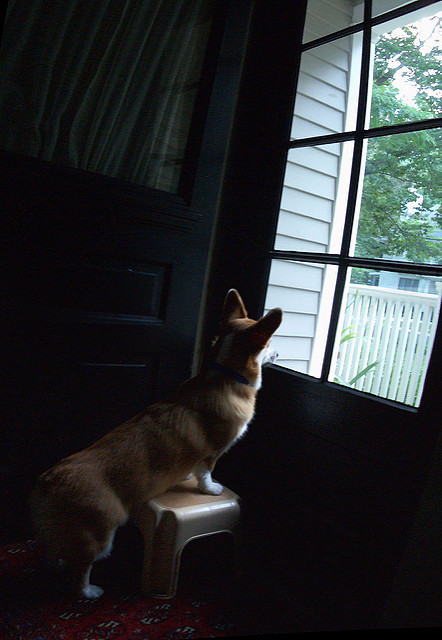
He taught her tricks, played with her every day after work. Foxy knew when to expect him; she sat on the back of the sofa, watching through the picture window, waiting for him to come home.

Maybe it’s a case of saving the best for last, for, out of them all, Daddy loved Foxy best.

He never had to give her up, suffer her loss. 

She suffered his. 

For weeks on end, she sat at the picture window, watching for him. Sighing, whining. Day after day after day, waiting, forever waiting, for him to come home . . . 

Fatherlove.   

Motherlove

img_4330

“Ripe Tomatoes.” Robert Duncan.

When my first child was born, I thought I knew what love was.

But then . . .

Alone for the first time this day, I’m lying in the hospital bed, looking at the bulletin board with a few cards from friends and family already pinned to it, thinking of my mother and grandmothers.

How they warned me.

Three different times, unbeknownst to each other:

“I delivered all of my babies quickly, so don’t wait around when the time comes . . . ”

How each of them nodded sagely after giving their own individual versions of this pronouncement. Like lesser, more amiable versions of the mythological Three Fates. 

Good thing I listened, I tell myself.

I beat them all.

He came so fast.

Less than an hour after I walked in here.

*******

The doctor, thinking he has plenty of time, arrives almost too late. As soon as his gloves are on, it’s over.

“A boy,” he says. I get only a glimpse of tiny flailing arms as the doctor immediately hands my son to the nurses, who sweep into a side room to suction his mouth and nose before he draws his first breath.

Loud, remarkably strong cries reverberate through the rooms.

“Whose baby is that?” I ask the nurse attending me.

She chuckles. “Yours.”

Gracious. I never imagined a newborn’s lungs could be so strong.

Within minutes, another nurse brings him to me, puts him in my arms.

He’s already quit crying.

His father, standing by in green scrubs, weeps audibly.

This tiny face. The nose. It’s uncanny. “He looks exactly like pictures of your father,” I tell my husband.

“I know,” is all he can manage. 

Now, more than ever, I wish I could have known my father-in-law, who died when my husband was twelve. But the pictures are enough to know that his namesake, here in my arms, is a living replica.

*******

I feel a rush of something that surpasses euphoria. I recall a friend telling me about this sensation: Right after your baby’s born you feel like the most powerful person on Earth, like you could do anything. It’s almost superhuman.

The neonatal people come to take my baby.

I say I’m starving. 

My nurse brings me a breakfast tray.

After the first three bites I promptly throw up. On the rest of my breakfast.

“Sorry,” I tell the nurse.

So much for being superhuman.

My nurse, chuckling again, takes the tray away. “That happens a lot. It’s just your body stabilizing.”

*******

It’s all still a big blur, really. Family members coming, going. Grandma calling to see for herself that I’m okay, saying what she always says when she calls: “I just needed to hear your voice.”

The room is still now, strangely silent for a hospital. I hear muted voices down the hallway where my husband is glued to the nursery window, staring at his son.

The chilly gray morning has apparently turned into a sunny afternoon befitting late April; a ray of light shines through the high window above my bed onto the bulletin board. This golden finger of light illuminates a card with a little boy in overalls standing on the front: Congratulations on Your Baby Boy!

My baby boy. 

Mine.

An internal switch flips. A floodgate opens, some kind of dam bursts with a force too great for words. It surges through my entire being. My body shakes with the ferocity of it. Tears flood my eyes; I can’t see the bulletin board anymore, just the light.

He is mine, he is MINE. If anything, anyone, tries to hurt him, they’ll have to take me out first. 

*******

Motherlove.

The moment it kicked in remains vivid in my memory, many years later. My son was just hours old; looking at the sunlight on that congratulatory card, the sudden thought of something harming him nearly turned me animalistic. I knew I’d move heaven and Earth, I would fight to my death, to save my baby boy: Take me instead. I’d have been completely consumed by this force if a voice in my brain hadn’t said, Look, just be wise. Take care of yourself. Live so that you can keep him safe.

I don’t know why some women are infused with intense motherlove and others are not, for there are women who bring harm to their own. I don’t know everything that can go awry with a person’s psyche or all that causes internal barometers to not function properly. I only know the power of this moment and that the force of it is with me still, even now when my two boys are grown and beyond the protective bubble I could cast over them when they were small.

That doesn’t mean the love is any less fierce.

Mine. They’ll always be mine, as long as I am alive, and even when I am not.

For, once begun, motherlove never ends.

********

My thanks to Kathleen Neagle Sokolowski, whose post “The Cariest” on her blog Courage Doesn’t Always Roar in January brought back the intensity of these moments. 

Believe

img_4350

A writer is first a receiver, open to messages all the time, always watching and listening. A message or image can come at any moment; the writer’s job then becomes How do I interpret this? What meaning shall I attach? How will I shape this notion, this idea, this sense of something, into words to relay it?

The greatest challenge is capturing that first fleeting message before it’s lost; I heard an author say once that “a new idea is fragile thing.”

Sometimes a writer recognizes that an idea is hovering close and just hasn’t landed yet. Some ideas flutter and dart about like hummingbirds for a while. For me this is like Yeah, I know you’re there, Idea, whatever you are. I feel you darting in and out. One of these days I’m going to get ahold of you but right now I am tired of the chase.

So it was on a day that I visited the hair salon. One of my favorite things there is the complimentary coffee bar for clients. As the iCoffee machine whirred and glowed with blue light, illuminating the cup (so mesmerizing), I reached for a napkin.

The napkins here are always pretty, often seasonal. A lot of thought on someone’s part clearly goes into the napkin choices, no detail being too small or insignificant in creating a pleasant experience.

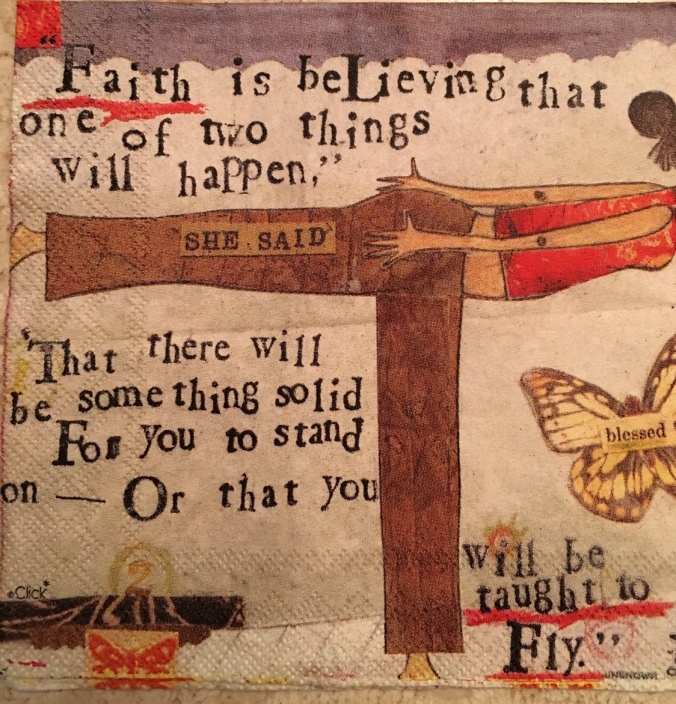
This napkin was a message.

You saw it yourself, at the top of this post—that’s a picture of the napkin.

Coffee momentarily forgotten, I stood there thinking, I’ll write about this. Somehow . . . 

Yesterday I told someone: “When an image comes to you, Writer, use it!”

Today I return to the napkin, thinking. I finally decide to Google the phrase printed on it, suspecting that it’s connected to an author out there somewhere.

Aha. The quote seems to have come from Patrick Overton’s book of poems entitled The leaning tree: 

“When you come to the edge of all of the light you’ve known, and are about to step off into the darkness of the unknown; faith is knowing one of two things will happen. You’ll have something solid to stand on, or you’ll be taught how to fly.”

The idea is so near now that I can feel its wings beating against my soul

Believe. Believe. Believe.

Like the beating of a heart.

I wonder what word would remain if the napkin were tossed outside, trampled on, battered by wind and rain. What the last surviving word would be.

Maybe faith.

Maybe believing.

Maybe fly.

For the napkin in my hand is ephemeral, meant to be thrown away.

Faith, believing, and fly — hear the wings, feel the breeze stirred by their rustling? — are eternal.

Oh, wait—there’s one tiny word there on the napkin, there on the butterfly—how could I have almost missed it?

Blessed.

Thank You, I whisper at last.

And I write.

Celebrating Young Authors

Show Your Strength

Raleigh-Wake Reading Council 

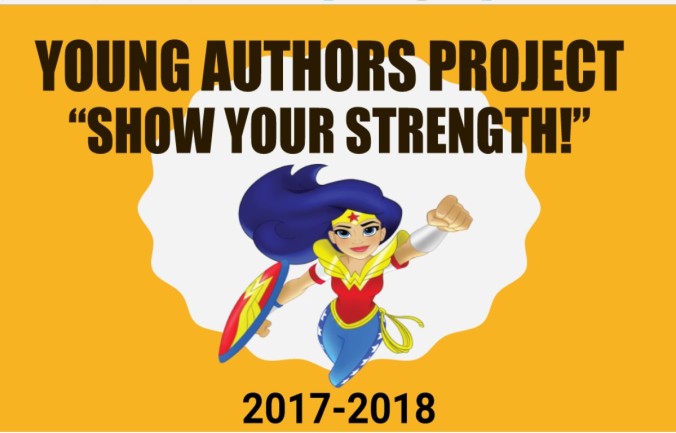
This afternoon, I am celebrating young writers from kindergarten through high school. Our local reading council, affiliated with the International Literacy Association, sponsors the Young Authors Project annually. Students write on a given theme and council members submit their work. A committee then scores the pieces for quality of content and structure. This competition is about encouraging young writers to work hard at the craft, to tell their stories well. The stories are published in a local book. Some stories have gone on to the state level, to be recognized and published later this month by the North Carolina Reading Association.

This year’s theme is “Show Your Strength!” The students could write about their personal experiences of perseverance, how they’ve overcome obstacles, how they found strength in a time of weakness, and who or what inspired them to rise above a particular challenge.

It’s my honor today to be the speaker at the awards ceremony.

Here’s my tribute to these courageous writers:

Thank you, members of the Young Authors Committee and the Raleigh-Wake Council for encouraging students of all ages to write. Thank you, families and teachers, for being the wind beneath the wings of these young writers; because of your support, because of your belief in these writers, many of them have now flown higher than they ever thought they could before.

And thank you, Writers, for your stories. I’ve read your work and it’s breathtaking. I stand in awe of what you’ve experienced and how you captured it on paper.  It’s an honor and a joy to celebrate your courage, your beautiful work, and your personal victories today.

So you know that I am a writer, too. I remember being six years old and sitting at the coffee table in my living room with some notebook paper and a pencil, trying to write a story, not because a teacher told me to, but just because I wanted to. Something inside me needed to get out and even at age six, all by myself, I understood that I needed to write it. I’ve been writing all my life and I’ve written a lot of different things for different reasons, but I do it mostly because I love it. Why do I love it? I think it’s because writing helps me see things in different ways, sometimes in deeper ways than I would have if I didn’t write.

Here’s an example from last summer: I noticed that seahorses had started showing up in my life. Yes, seahorses! When I ordered some books, they came with a tote bag that had a seahorse on it. A friend gave me a notebook that happened to have a seahorse on it. I took my seahorse tote bag and my seahorse notebook to a teachers’ writing workshop at the beach, where I was given a journal to decorate . . . guess what was in the decorations? Seahorses! This, Ladies and Gentlemen, is what we a call a motif, a symbol that keeps recurring, or showing up. I started wondering if there was a reason for all these seahorses suddenly appearing —what could they mean? I do what writers always do: research. I looked up seahorses and I learned a few pretty cool things: The scientific name of the seahorse is hippocampus, the same word for the part of the human brain that’s the center of emotion and memory. As a writer, this connection between the seahorse and the human brain fascinates me. I also learned that seahorses are a species recorded as the slowest swimmers in the animal kingdom. They swim so slowly that they can die of exhaustion when storms come and churn the seas, so seahorses use their tails to anchor them to long grasses and corals. They survive by being anchored.

And that’s another big thing that writing does for me; it anchors me, it helps me survive whatever comes.

Seahorses, Writers, are a symbol of perseverance, the very theme that you wrote on for our Young Authors Project. You’re here today because you persevered in writing your stories.

Your stories show your strength as writers and your strength as human beings. Stories, in the end, are gifts that we give to others. We give these pieces of ourselves away to make other people think and feel; writing is an almost magical connection between the heart and mind of the writer and the hearts and minds of readers. There’s power in it. Think about it. We can use our words, our power, to hurt others or to strengthen them. Be mindful that you always use your power for good.

It is my hope, as a teacher of writing, that you will keep writing. Today is just the beginning of what you can accomplish, and you’ve started off so strong! Good writing is hard work. Sometimes it comes so, so slowly. Don’t give up. Always remember there’s power in writing and the effort is always worth it. The more you work on your writing, the more your writing will work on you; it will give you more and more strength to share with the world, and the world needs you.

Thank you all.