Spreading poetic wings

This is my first attempt at writing a ghazal (pronounced “guzzle”) a medieval Persian form of poetry with ancient Arabic roots. Traditional ghazals have themes of love, longing, and loss. They are often sung. Couplets are typically comprised of autonomous lines and the final stanza sometimes contains the poet’s name or a connection to its meaning (mine being either “from France” or “free one.”)

I have entitled this ghazal “Relationships.” Is it romantic? About a married couple? About colleagues? Or… what? You decide, Dear Reader…

For the record, I find this form incredibly challenging. I am still working on it (hmmm. Same can be said of some relationships).

Relationships

We yoked ourselves in this chosen journey
We get old, in one another’s way 

Passions burn like inspirational fire
Tongues burn cold in another way

A heart weighted with iron and ire
Can be a heart of gold in another way 

Narratives are sometimes cardboard boxes
Packaging people to be sold in another way

Your words cannot cage me, for I’m a bird set free 
Your truth is yours; I hold it another way

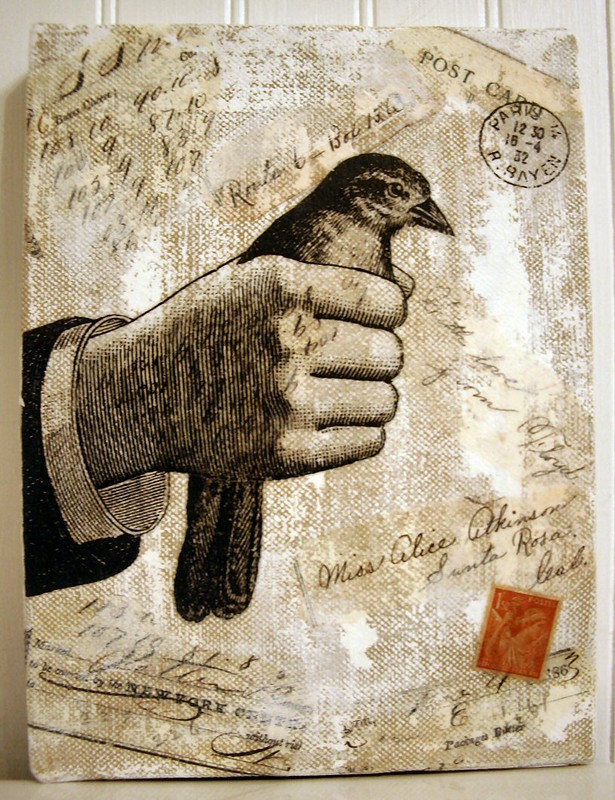
Bird in Hand 3mollycakes. CC BY-NC-ND 2.0.

*******

with thanks to Wendy Everard on the last day of the March Open Write at Ethical ELA, and to all who provided poetic inspiration there over the past five days

with thanks also to Two Writing Teachers for the Slice of Life Story Challenge every day in the month of March

Two Shards in the Mosaic of Our Time: Olga and Amellia

I heard their stories over the last week and was deeply moved by their courage...

From the fragments
they rise
glittering
like stars in the heavens
glowing
like sunflowers in the field
turning their faces to the light

iridescent shards
in the mosaic
of our time

a prima ballerina
leaving her homeland
and the Bolshoi
to join the Dutch ballet:
‘I am against war
with all the fibers
of my soul’
 
a little girl
all of seven
consoling others with song 
while sheltered
in a bunker
encouraging help
for her homeland
after escaping to Poland
with her grandmother
standing onstage
before a huge crowd
in traditional dress,
a little nightingale, singing
her national anthem:
The glory and freedom
of Ukraine
has not yet perished…”

They dance and sing
through the brokenness

iridescent shards
in the mosaic of our time

turning their faces to the light
like sunflowers in the field
glowing
like stars in the heavens
glittering
they rise
from the fragments.

Note: The sunflower and nightingale are national symbols of Ukraine

*******

with thanks to Wendy Everard, Tuesday host of Ethical ELA’s Open Write, for the idea of mosaic as a frame for poetry

with thanks also to Two Writing Teachers for the Slice of Life Story Challenge every day in the month of March

Birdspiration

a story in haiku

As I drive to work
psyching myself for the day
I look up, and there

on the power lines
they sit, like kings or angels
the day’s guardians

watching as I pass
—oh, bestow on my spirit
creatures of the air

robins, your good cheer
occasional snow-plumed hawks,
fierce acuity…

it dawns on me, now,
that most of the birds I see
are doves, offering

the one thing needed
for the living of this day:
Look up. Claim the peace.

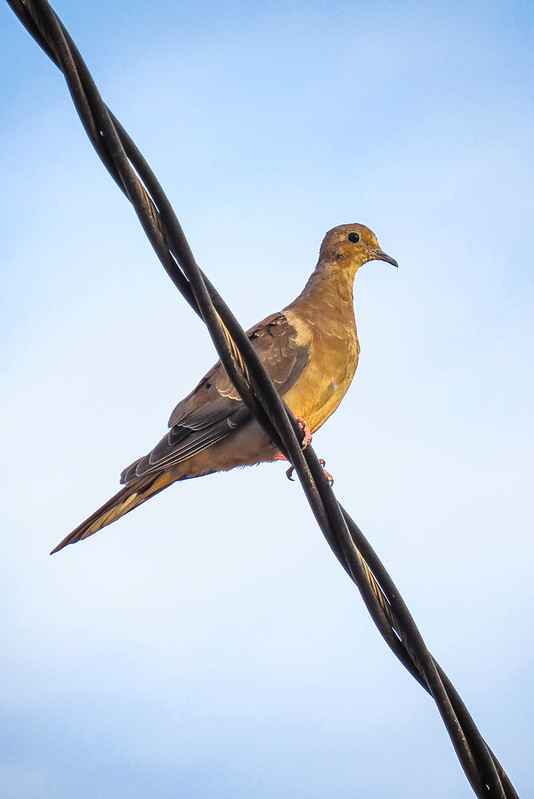
Photo: Mourning Dove. FotoGrazio. CC BY-NC-ND 2.0.

*******

with thanks to Chiara Hemsley, Monday host of Ethical ELA’s Open Write, for the inspiration to compose a poem around the phrase “look up”

with thanks also to Two Writing Teachers for the Slice of Life Story Challenge every day in the month of March

Lament and celebration poem

with thanks to Andrew Moore, host of Sunday’s Open Write on Ethical ELA. Andrew challenged teacher-poets to compose around lament plus celebration (these don’t have to be related; this is meant to be exercise in writing freely, in any form). He writes: “My inspiration comes from a distinct lack of good sadness, grief, and lament beside a healthy laugh and looking forward to the changes the future may bring.” The poem can be as light-hearted, silly, or serious as the poet desires.

Here’s where I am today:

Remains

Today, I mourn 
the destruction of trees along my rural byways
the displacement of wildlife
the destruction of Ukraine
the displacement of her people
the systemic demoralization of teachers
the systemic misplacement of trust

Today, I celebrate
the remnants
of trees
wildlife
Ukraine
her people
teachers
trust

Today, I hope
for restoration
in revelation 
and reverence

before all
become revenants

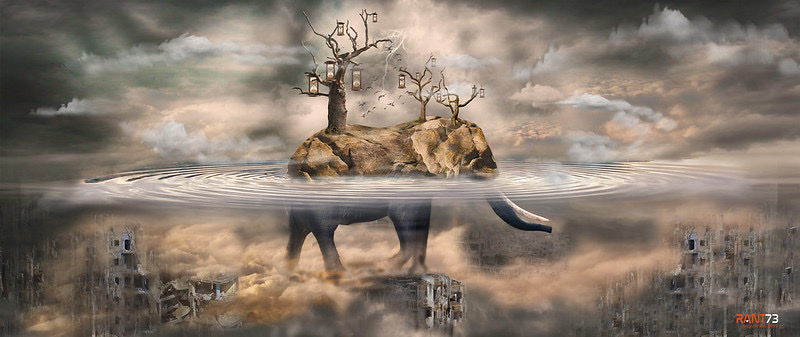
“The Elephant – great destruction.” Public domain. Note the trees, the cities, the elephant all in stages of disappearing … elephants, by the way, symbolize wisdom, memory, prosperity

******

with thanks also to Two Writing Teachers for the Slice of Life Story Challenge every day in the month of March.

Ingredient poem

Thanks to John Noreen who hosted yesterday’s Ethical ELA Open Write with the invitation to pay homage to food that comforts and sustains us. John focused on process; he suggested that we “create the way we cook.” He says when he cooks, he takes a central ingredient and gets going, improvising along the way.

Sounds like a metaphor for writing to me…

Daily Writing Staple

An idea forms
inside my brain
like an egg forms
within a bird


one moment
nothing
and the next
the shell
of something


I feel new presence
of fragile life
within

or at least
the provisional sac
of nourishment
for building and 
sustaining life
as it forms

deep inside
living membrane

until it should hatch
and eventually fly
on wings of its own


or

like my breakfast egg
boiled for long enough
at the right temperature
the idea solidifies
and gives life
to me

one simple ingredient
containing a whole world
of possibility

and I almost never settle
for just one.

*******

with thanks also to Two Writing Teachers for the Slice of Life Story Challenge every day in the month of March.

Death calls

Subtitled The morgue, part 2. A slice of memoir.

And so it was that the house for the dead became a house for the living. If there were any ghosts of soldiers or prisoners lingering in it for over twenty years, perhaps a three-month-old baby’s cries and the acrid odor of diapers drove them on.

Even I wouldn’t be there long. The shadow of death falls like a blanket; the living must keep moving out from under it.

My memories of the house are fragmented, all in black and white. A living room with plain white walls. A window with pale curtains likely made by my mother. The black slats of my crib. Years later my mother said there were little black footprints on the wall from where I pressed my feet through the crib slats. She didn’t have the heart to wash them off. My grandmother wanted to know why I’d been put to bed with dirty feet.

I had a white blanket with satin trim. I sucked my thumb and rubbed the satin against my nose with my forefinger; eventually the satin pulled away from the blanket. I’d rub it between my left thumb and fingers while sucking my right thumb. A soothing rustle, rustle, rustle. I called it my Silky String.

That is almost all I can remember for myself of the old house that was once an Army hospital morgue.

Pa-Pa was the reason we came to live here; he was the reason we had to go. He owned the house. When he died suddenly from a heart attack, his children took over his property. We were the stepfamily. Grannie had to leave the big house next door. My father, mother, baby sister and I had to leave this first house of my remembering. It was March. I was not yet three, when the long shadow sent us searching for a place to be.

When death calls, the living must answer.

*******

All these years later, I watch the news. Tanks, warships, airstrikes, destruction. A hundred and nine empty baby strollers placed in Lviv’s central square today, commemorating the children killed in the invasion of Ukraine.

I think of morgues.

And of the mothers. And little footprints left behind.

And people being driven from home. That is what wars do. That is what death does.

My son, in his mid-twenties, comes in as night falls. Dressed in suit and tie. I know he’s tired.

“Long day, wasn’t it?” I ask.

“It was,” he answers. “Maybe I won’t get called out tonight.”

For a minute I see him at age five, pulling out the church directory every time a member passed away. He’d grab a pen, cross out the person’s photo, and write the word Died.

Funny how these things come back to you. Memories are ghosts.

And life is circular; all things are connected.

My boy eats supper, collects Dennis the dachshund, goes upstairs to rest and, I hope, to sleep. Unless his phone should ring in the night. If it does, he’ll be back in suit and tie, leaving home to pick up someone. He’ll transport them to the house waiting to receive them, where he’ll begin the preparations for their burial or cremation. Got a death call, he’ll say, if his dad and I are still up. If not, he just goes quietly into the night, a mortuary emissary.

For when death calls, the living must answer.

Window in the living room of the house that was originally an Army hospital morgue.
I lived here from about age three months to almost three years.

*******

with thanks to Two Writing Teachers for the Slice of Life Story Challenge every day in the month of March.
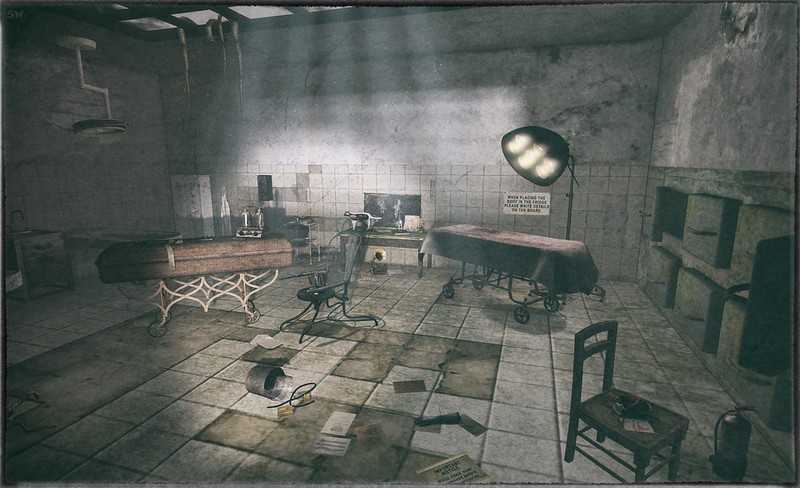
The morgue

a slice of memoir

By 1949, the Army base where a million and half people were processed for service in WWII stood deserted. This had been the last stop before boarding ships for western Europe. All branches of military personnel, not just Army, passed through here — even some civilians on secret missions. Surely these young people made time for the cantina, laughing and maybe dancing to big band music, or for a show in the base’s theater before they left American soil, maybe for good… how many wouldn’t return to see the wooden arch bearing the message WELCOME HOME at the camp’s entrance, erected over the wide road cut through the forest? And how did the Axis POWs feel, seeing this sign on their arrival? Did they wonder what welcome awaited them here in an Allied prison? They would be put to work; they would also be given their own canteen.

All that remained four years after war’s end were empty buildings, ephemeral fliers, yellow canteen coupons occasionally spiraling in the wind, and weeds growing tall in their eagerness to swallow it all, to satisfy the hungry forest.

A local man overheard talk that the decommissioned land was being sold and if you had a way to move a building, you could buy one cheap.

He had a way of moving a building. He had a place for it, on his own land right beside his own house. He signed the papers and took his building.

It made for a nice little home, he thought. It had a concrete floor with pipes running through for radiant heat. Solid. It would need a little paint, a little work here and there. He could do it. He was pleased with himself. He would rent it it out, make a little money…

Quite some years later, a young man came to ask about the house: We can’t stay in the apartment where we are anymore. It’s not working out… he and his wife had a baby. They wanted to be in a safer place.

The older man, now gray-haired, pursed his lips for just a moment before agreeing.

And that is how I came to live in the house which was once part of a bustling World War II Army base at a port of embarkation.

That was my dad and mom who needed a place to live.

That was my step-grandfather, Pa-Pa, the sometime opportunist who’d moved the building. He’d married my mother’s mother.

I, of course, was the new baby.

This house is the first home I remember. In this place, my memories would first come into being while I watched the interplay of light and shadow on the walls. Here I would dream my first dreams and cry out in the darkness until my father came to settle me back to sleep, sometimes holding me in his arms all night when I suffered asthma attacks. Here I would begin to recognize the distant rattle and whistle of trains, long before I first crawled on the warm, warm floors in wintertime or knew the cold and silvery moon.

I wonder if this is where I first came to understand the word ghost.

The little white house with the heated floors was, after all, the Army hospital morgue.

Photo: Shocking Wonder. CC BY

*******

with thanks to Two Writing Teachers for the Slice of Life Story Challenge every day in the month of March.

Until we meet again

Today I write in memory of my grandfather.

His name was Columbus St. Patrick Brantley.

He was born in 1906 “up the swamp” in coastal North Carolina. Farming was in his blood. He married my grandmother during the Depression and worked as a sharecropper. My father was born in a tenant house. Just before WWII, Granddaddy went to Virginia to work as shipwright. He tried farming and house painting after the war but “couldn’t make a go of it,” so he went back to the shipyard, where he was still working when I came along. For the record: the whole family said I looked exactly like him when I was born.

He didn’t work on Sundays; that became our day together when I was small.

He retired when I was six. He and my grandmother moved back home and thus began my many journeys to the little white house nestled in the bend of an old dirt road, where the woods had grown up all around, taking back house after house where people lived no more.

In his later years Granddaddy recorded stories of his life on audiocassette to give to his family. He could remember seeing his first Model T at age three or four. He said that mail was delivered by horse and buggy; farmers ordered chickens that were delivered in cages. He had a whole string of pins awarded him for perfect Sunday School attendance at the little Methodist church. He loved listening to the Grand Ole Opry on the radio. He spoke of his nine siblings, including a sister, Peaney (Penelope), who died of diphtheria at age four. He outlived them all. He lived to see both of my children. He could remember an ancestor speaking of Dublin.

Near the end of his life, I gave him a framed print of an Irish blessing. It hangs by my front door now:

The last time I saw him, he was dying of lung cancer at ninety-two. It was springtime. He’d grown weak but was fully dressed, sitting in his recliner by the door; he tried to coax my two-year-old to sit in his lap, like I did when I was little. I sat by his chair on a stool and held his old, wrinkled, work-worn hand.

Do you remember how we used to go to the park on Sundays?

I do, Granddaddy. We took bread to feed the ducks.

And the old locomotive?

I can just remember climbing in it together…

He was tired, always a man of few words. We sat for a long time together, not speaking at all.

When it was time to go, I kissed him on his forehead.

I love you, Granddaddy. God’s got you safe in His hands.

That’s the best place to be. And I love you.

He held tight to my hand.

It’s been twenty-three years. You can’t imagine all I have to tell you, Granddaddy. There’s been another pandemic. Wars and rumors of wars. Your great-grandsons are grown. The little two-year-old you tried to coax into sitting with you at that last visit plays piano and guitar; he loves singing the old-time songs that you loved. His brother’s a pastor with a baby girl; he tells me almost daily that something about your great-great-granddaughter reminds him of you. God remains faithful from one generation to the next. It’s almost springtime again, the fields are so green…

Until we meet again, Columbus St. Patrick.

I love you.

*******

with thanks to Two Writing Teachers for the Slice of Life Story Challenge every day in the month of March.



For love of all creatures

Many years ago I read a series of books about a young 1940s veterinary surgeon beginning his career in Yorkshire, England. The stories are captivating, hilarious, heartwarming, and heartbreaking; the characters—some of them animals—are larger than life, unforgettable. I fell in love with these stories right away.

And so I have again, with the Masterpiece Theater version of James Herriot’s All Creatures Great and Small. When the series premiered in 2020, it was deemed “the surprise runaway hit of the year.” The second season recently ended and I do not know how I am going to endure until Season Three. I have begun watching episodes over and over…and over…

I have to ask myself why.

Maybe it’s that I loved these stories so much when I was young. I recall encountering the name “Tristan” for the first time and being so enchanted by it (and by the comical character, another young vet) that I thought about naming one of my eventual children Tristan (a thought which earned a resounding Are you serious? NO from my eventual husband). Maybe it’s that I find details of long-ago rural veterinary practice fascinating. James delivers calves and tangled-up twin lambs; in the show he must figure out how to untwist a mare’s uterus to deliver a foal, or both will die. Or maybe it’s James’s ongoing struggle for acceptance by the local farmers who are often mistrustful, preferring their familiar “old ways” (I so relate to this as an instructional coach, sometimes).

I suspect it’s all of these. And more.

Beyond James’s love for the animals and his gentle spirit is a compelling, refreshing sense of purity. Times aren’t simple, life is hard, loss is always imminent, yet there’s a richness in it all, a sacred honesty born of living close to the land, a sense of true interdependence and valuing all living things…

Not to mention the scenery. The Yorkshire Dales are breathtaking. I have to go there someday. I feel like I have seen this place before, in some of my most beautiful dreams. Place is a character in itself, alive, vibrant, calling in its own voice, and the Dales will not be outdone by human nor beast…speaking of which: the animal performances are astounding (how DO the directors manage this magic?).

As the series progresses, so do relationships. I will not say anything more than this: Conflict, humor, and great love are all bound together by cords of civility. Reputation matters. Honor matters. Honoring life matters…

And just as one is getting cozy at the end of 1938, and snow begins to fall, and farmers lead draft horses through the town streets at the close of day, and young people are gathered together, beginning new chapters of their lives…the first war plane flies overhead in the darkening sky…

And I’ve an overwhelming desire to stop time, to hit rewind, to savor peace… which we almost never realize we have, until we don’t…

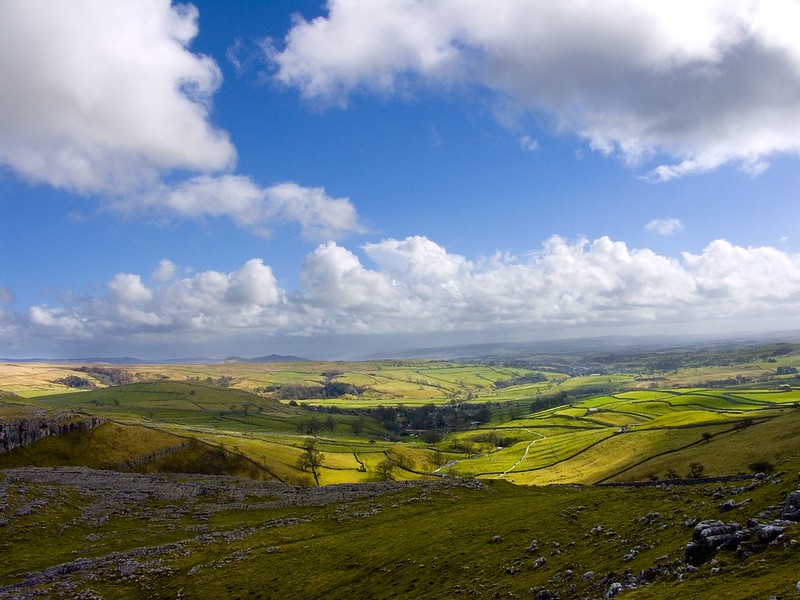
Yorkshire Dalestricky (rick harrison). CC BY-NC-SA 2.0.

*******
with thanks to Two Writing Teachers for the Slice of Life Story Challenge every day in the month of March.
Flower pajamas

Evening, near eight o’clock.

My phone vibrates.

A text from my son.

No, wait… from my granddaughter, age six.

She types her name with a colon so I know who’s sending the message.

Scout: are you wearing your flower PJ’s?

(Backstory: She stayed with me on the night her baby sister Micah was born. I got us matching pajamas as part of our celebration).

(Me) Hi, Scouty ❤ ❤ No, I am wearing my cardinal nightgown and leggings and housecoat because I am cold!

Scout: cuz I am wearing my flower pjs….

(Me) Aww. I will go put mine on.

Scout: OKAY [with sunflower emoji]

(Me) Love you, Scoutaroni

Scout: Love you too good night ❤ ❤

(Me) Good night! [many heart emojis]

—It is a very good night. ❤

Franna loves you, sunflower girl

*******

with thanks to Two Writing Teachers for the Slice of Life Story Challenge every day in the month of March.