The eagle

Eagle

Bald Eagle. sally9258CC-BY

After a recent outpatient procedure, as I secretly celebrated waking up from anesthesia and not dying, my  husband drove me home down the back country roads. Through the passenger window I idly watched winter-brown grass, trees, and old gray outbuildings zipping by, noted a small clearing with a tiny pond nestled in wood-strewn ground, an eagle sitting by the wayside—

wait

We said it simultaneously, my husband and I: “THAT’S AN EAGLE!”

Just a quick impression, sitting majestically, facing us, huge, white head gleaming atop the dark body, not ten feet away . . . .

We were past it as soon as the sight registered on our brains.

“Go back! Go back!” I pleaded, grabbing my phone, opening the camera.

sssskkkkrrrrttt! of a turn-around at a dirt driveway, and we were back in a flash.

It watched us, unmoving, as we neared, but when we slowed, the eagle grew suspicious. It took off. Within a millisecond, into the bare, gnarled oaks.

“No! Wait! Wait!” I cried, snapping as fast as I could.

We rolled a little farther, but the only good shot I got was of its back, soaring away.

Gone. I missed the moment. Failed to capture my encounter with the wondrous. I have never been that close to an eagle in the wild. I’ve hardly seen any free ones at all, in fact. I’ve heard them calling in their high, haunting, piercing voices, have seen one perched on top of a streetlamp, but never anything like this.

I grieved my loss: It would have made such a great blog post, too.

I got home, got into bed.

Couldn’t rest.

The image of the eagle wouldn’t leave my thoughts. It stayed, motionless, watching me. Cocked its head, affixed me with its eye, its penetrating gaze.

—Why wouldn’t you stay so still just a little while ago?

It ruffled its feathers. Kept right on staring at me.

So I looked it up.

There are few things I love better than symbolism, and few are better-known than the eagle: The national bird, on the Great Seal of the United States. Revered icon of ancient times, civilizations, people. Mascot to numerous sports teams—even that of the school where I work.

But this is what got me about the eagle:

It is a symbol of healing.

It is a symbol of transition, some element of life or creative endeavor, about to take flight.

—Dare I see it as a sign that all shall be well, that some new venture, personal or professional, lies just ahead?

It was just an eagle sitting by the wayside, as eagles surely do, somewhere, every day.

Only this time I happened to see it. In the blinking of an eye.

It blinked.

I blinked back at it.

So, I told it, you wouldn’t stay put for a real picture, but now you linger as a mental one. If you’re going to hang around portending something, then let it be my creativity and insight taking flight. Let it be about thing I love to do most—let my writing be courageous and free, with clarity of vision. Let it fly, let it fly, on and on, higher and higher.

Only then did the image fade; only then did I rest.

I fell asleep.

And woke in the morning, renewed, resolute.

No more missed moments. There aren’t moments to lose.

—I’m ready for whatever lies ahead. Lead on, eagle.  
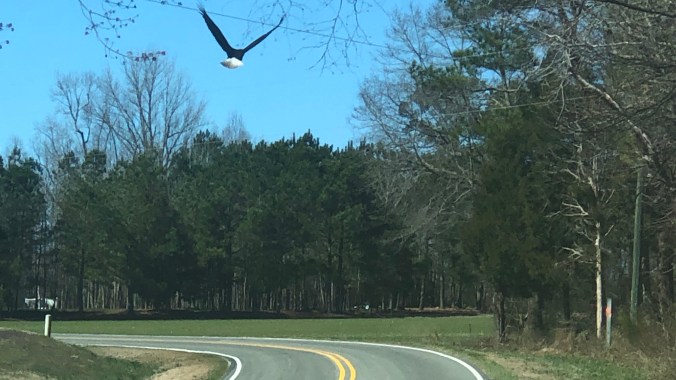
My best shot

Culture clash, of sorts

My new “place” in the school is a loft  above the media center that used to be the computer lab. Whenever I am at my desk checking email or jotting notes, I can hear the media specialist working with classes downstairs.

Last week, while typing away on my laptop, I was dimly aware of a lesson on Cinderella Around the World with second grade, until . . .

“Any questions?—Yes?” asks the media specialist. I can tell by the tone that a hand is in the air.

“Are you a Hufflepuff?”

—Giggles. My own. There’s a whole subculture of Harry Potter mania at our school in which I may have played a small, a very, very small, part . . . .

“Ugghhh, no!” retorts Ms. S., the media specialist. “Ahem, I mean, not that there’s anything wrong with Hufflepuffs . . . .”

—This dialogue!

Another small voice: “What are you, then?”

Clearly the question of Hogwarts house identity is of vital importance. Cinderella must wait until it’s answered.

Which it is, magnanimously.

“I’m a Ravenclaw,” announces Ms. S. “And so is . . . . ” She proceeds to name several of our teaching colleagues. I get a fleeting sense of actually being at Hogwarts, where everyone belongs to a house.  “But Mrs. K. is a Hufflepuff.”

And Mrs. Haley is a Gryffindor, I mentally add, still typing up in my loft, surrounded by Potter memorabilia that kids across grade levels love to peruse.

“What’s Mrs. L.?” one of the kids asks.

“A Slytherin,” says Ms. S.

A collective GASP! from the class.

“Well, there are lots of good Slytherins, you know,” says Ms. S.

I stop typing.

Social psychology with Harry Potter. Breaking stereotypes. That could be a whole unit in itself . . . imagine . . . .

Poor Cinderella. No one seems to mind that her world tour is utterly derailed, at least for the moment.

—I am just waiting for the kids to ask what house SHE’D be in.

The homecoming

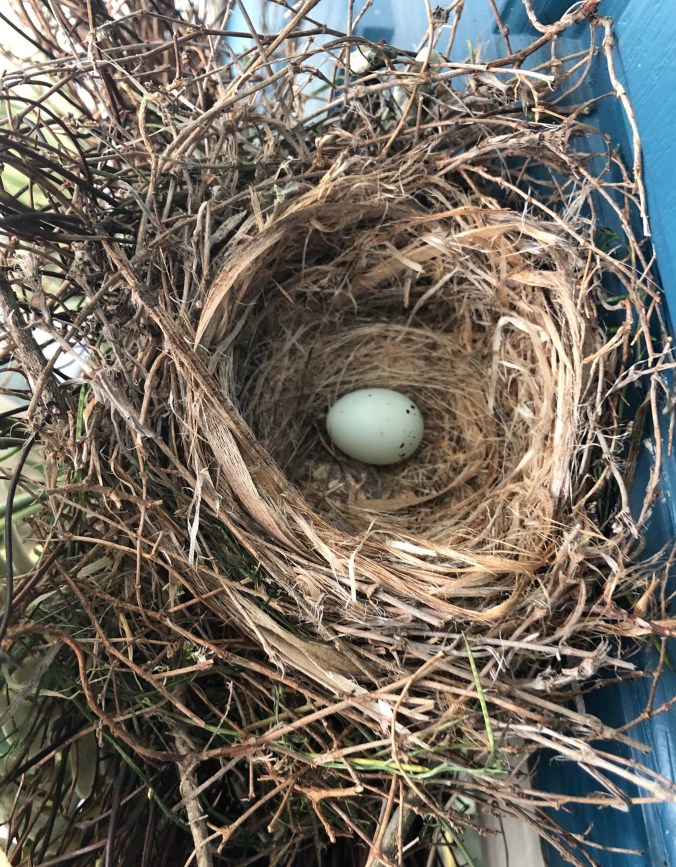
Last summer, a pair of finches made a nest on the wreath on my front door. I watched their family develop, day by day: Four eggs, four baby birds, four fledglings taught how to fly by their parents, and then they were gone.

I suffered empty nest syndrome. Literally.

I took wreath down for the winter and saved the little nest, because I didn’t have the heart to destroy a thing so beautifully made by tiny creatures that don’t have hands.

A Christmas wreath hung on the door until I finally got around to removing it in late January (well, it was festive; it brightened the winter-bleak days).

And I re-hung the “finch wreath,” which is clearly for springtime, but . . . I confess . . . I was hoping . . . .

And along mid-February—might it have been Valentine’s Day? Really?—I heard them.

The tell-tale cheerful chirps, the sweetest bird music, right outside my door.

My heart sang, too: You’re back, you’re back! Welcome home! 

They built a new nest and then . . . nothing.

For weeks, nothing.

I began to worry, which makes no sense, because these tiny birds are much more adept at survival than I am. My worry was mostly selfish, I realized. I wanted the birds here, didn’t want them to change their minds, find another place. I wanted to hear their happy voices every morning, wanted the joy they unknowingly impart, wanted to see new life happen again.

Every day, I checked. The perfect little nest was barren. No finches in sight or within hearing.

The temperatures dropped below freezing again. Just as I began to fear that some fate had befallen my finch friends, I wondered: Is it possible that they knew another freeze was coming? That they built the nest as planned, right on schedule, but that they can hold off laying eggs until the cold spell passes? Can that happen?

Then, early yesterday morning, a chorus of chirpy cheer outside my door!

I had to go see . . .

I have an egg!

Today at the exact same time will be another egg, tomorrow, maybe another, and soon I’ll know how big my little finch family will be.

But for now I just reflect, with reverential awe, on how the first egg came with the first bit of welcome warmth on the first day of the week.

My birds are back home, safe in their sanctuary, on Sunday morning.

And I sing for joy.

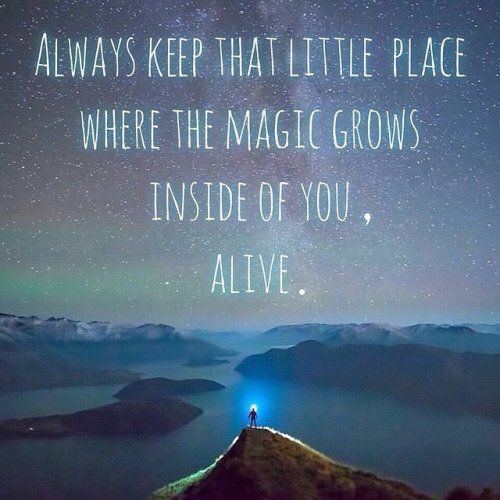
Keep it alive

It is the place

where ideas are born

some as ghosts

some fully formed

It is the place

where voices echo, echo

real or imagined

they ebb and they flow

It is a place of seeing

yet layered in veils

lift them one by one

as mystery entails

It is a place of sensing

both self and Other

alive within, without

—feel the shiver, the shudder

It was striving to be

long before we had words

for we are knitted of story

given voice, to be heard

So nurture it well

let it breathe, let it grow

keep the magic alive, for

you’re meant to write it,

you know.

Henry writes on injustice

Henry maintains his own category, “Henry Writes,” on Lit Bits and Pieces.

Dear, dear Readers (if you are still out there, and haven’t abandoned Me, yet),

I write today out of great offense, so great that I can no longer keep silent.

Never did I see such a thing coming.

Never could I imagine a thing so, so—demeaning, so insulting.

I am, in fact, still in a state of utter disbelief.

I am not even sure I can bring Myself to voice it. My toenail trembles so against the keys as I type this that I continually have to backspace to correct My errors (if only My forepaws had the span and flexibility of People’s! What I could accomplish if I could use more than one toe at a time!).

I have been told [—shudder!—] that I am . . . I am . . .

overweight.

[Heavy sigh].

So said the veterinarian immediately upon entering the exam room at my last check-up. The very first words out of her mouth: “How much are you feeding him? He’s going to have to drop some pounds.”

She didn’t even pet Me first, and I have such gloriously silky fur.

My dignity is not merely in shreds. It is entirely evaporated. Gone. Nonexistent.

Poof.

It didn’t really matter what was done to Me after that, as I couldn’t care, so deep was My hurt. I figured My People would surely console Me with a TREAT when we got home, as I work hard to bring out their generous nature and their sympathy. If I am especially winsome, I can usually finagle two TREATS out of them.

But a most egregious fate awaited Me.

My breakfast and dinner were DRASTICALLY REDUCED and I got no TREATS for days! Then, at last, when I saw I was about to receive a TREAT, I momentarily lost My cool (quite striking) head and threw Myself into near-convulsions of ecstasy . . .

Abject disappointment.

Readers, it was the size of a gnat. No, a flea.  

This couldn’t possibly be a treat, this barely-existent bit of almost-air.

“Here you go, Boy,” said My She, “it’s just five calories! You can even have another!”

If you aren’t aware, Readers, two times nothing is still nothing.

I am, after all, a strapping, stunning creature in the absolute prime of My life; I give away all the joy and love My being can muster; I do not deserve this treatment.

All because a veterinarian questioned My weight.

I question the validity of that framed diploma in her office.

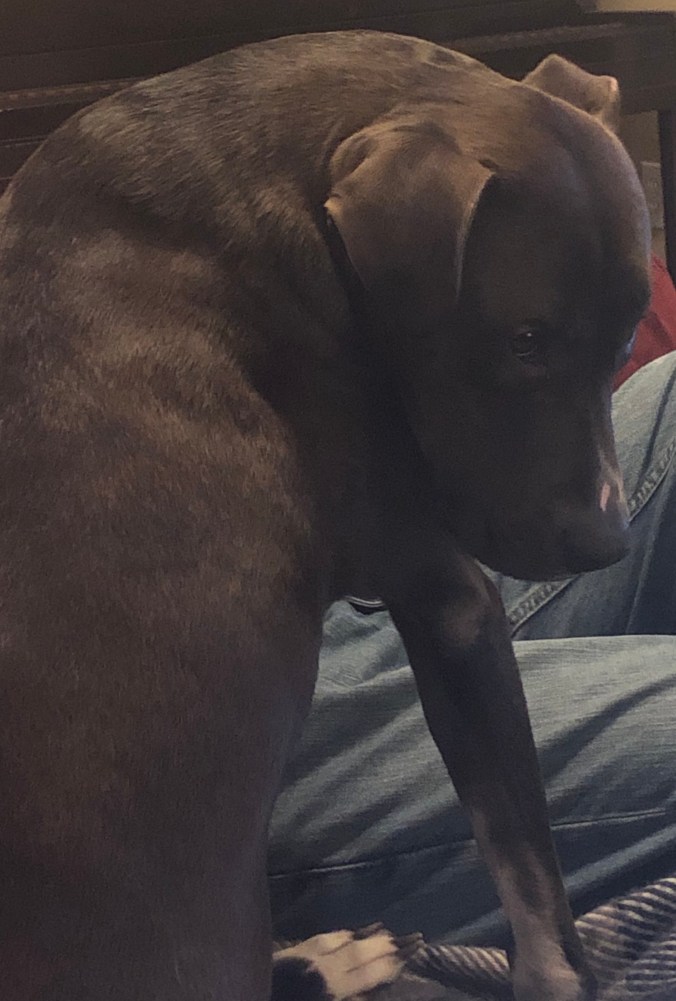
I will leave it to you, My dear, dear Readers—is this not the most appalling picture of injustice you’ve ever seen?

img_1544-2


The gift

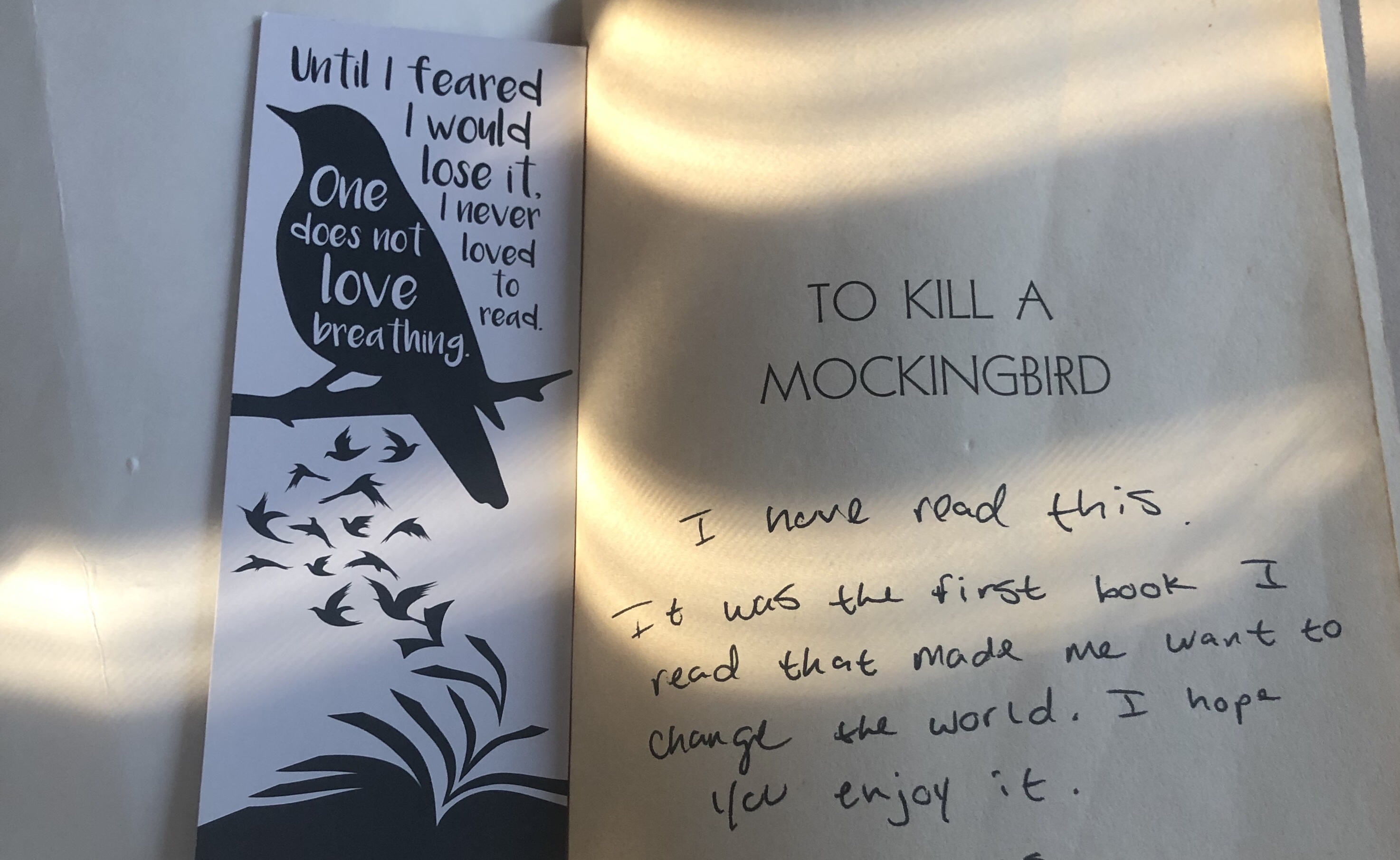
I remember what you wrote but I came to find the book anyway, to read the inscription again.

I hold it in my hands and think about you for a long, long time.

You were the baby who was always smiling, the cheeriest toddler, until I had to launder your blanket. Then you leaned your head against the washer and cried.

You were the little boy in preschool who sat beside classmates on the playground when others overlooked them, excluded them. From the start you noticed the outcast, offered comfort, pulled for the underdog.

You were:

The winner of the Principal’s Leadership Award at the end of your senior year.

The college student who started teaching the men’s Sunday School class at church.

The young man who returned to high school, where your Leadership Award still hangs in the front office, to teach Social Studies. Remember how, when you were setting up your classroom, you cleaned out a cabinet and found your old history exams in that stack of papers?

The teacher who taught your students to dance the Charleston—and who taught your own brother in AP U.S. History (your Dad and I weren’t kidding when we said, “Don’t even THINK about calling us in for parent-teacher conferences”).

The soccer coach who built the program and took the team to the State playoffs for the first and only time. 

An inspiration to so many kids. Their parents still tell your father and me.

I remember it all.

Teachers don’t make a lot of money; you took an extra job at night.

I remember the call. You’d been taken to the hospital. You’d been assaulted. Emergency surgery, jaw wired shut, liquid diet for six weeks. Having to carry wire cutters if you should vomit, or you’d suffocate.

How you chose to visit that young man in prison, forgave him, became his friend.

How you adopted a rescue dog, reached a crossroads in your life, came back home, quit teaching, enrolled in seminary.

Almost immediately followed by your meeting the loveliest young woman and her little girl.

I think about all these things as setting sunlight spills through the blinds onto this book in my hands, illuminating the words you wrote to me that Christmas, years ago:

It is the first book I read that made me want to change the world.

You may not think so, but you’ve been changing the world since the day you first entered it, baby boy. One word, one breath, one heartbeat at time.

I’m quite sure you always will.

Maybe we should have named you Atticus.  

No matter, for things have a way of working out as they’re meant to. I watch you with your new loved ones. I marvel at the gift of it all, the sheer poetry of life writing itself a day at a time, in the most curious of rhythms—like how pages of a book that stirred your heart long ago should come to us, living and breathing, a young mom who loves the same book, and in a little girl named Scout, crawling into your lap for a story.

Dichotomies

Dichotomy
Dichotomy #3 by Abdulaziz al Loghani. Brett JordanCC BY

Our greatest national resource is the minds of our children.

—Walt Disney

When they are hungry

who would give them rocks

When they cry for a spark

who would spew water

When they strive to see

who would deploy smoke and mirrors

When they would fly

who would clip their wings

When they desire to go further up, further in

who would confine, constrain

When they crave autonomy

who would demand automatons

When their differences resemble a separate peace

who would distill a disparate piece

When the lengths they must travel are not equidistant

who would mistake equality for equity 

When they carry fragile fragments of hope within

who would build a diehard dystopia without

When they begin to perceive diversity as a gift

who would wrap it in sameness

When they aren’t the same

who would construct uniform boxes

When they would breathe

who would affix a lid

When the scraping of the adze and the hammering cease

who will hear the sound of fingernails

from inside

the casket of our dichotomies? 


Note: If you read “they” as children, try reading with “they” as teachers.

*******

Literary allusions: Matthew 7:9-10 and Luke 11:11-12; The Last Battle, C.S. Lewis; A Separate Peace, John Knowles; Animal Farm and Nineteen Eighty-Four, George Orwell; The Giver, Lois Lowry; To Kill a Mockingbird, Harper Lee; As I Lay Dying, William Faulkner.

Salt and the stagecoach

Stagecoach

Western Stagecoach 08. Robin HallCC BY

The third graders were having a hard time.

“We’re writing pourquoi tales in this unit,” explained their teacher, “which have to be based on the students’ research of frogs. We practiced writing one together and now they have to write their own, but they keep coming up with stuff that doesn’t quite work. I’ll end up with twenty stories about ‘Why Frogs Have Eyes’ or something.”

She sighed.

So, as extra practice,  I agreed to come help the children write pourquoi stories on topics of their choosing. I modeled writing one of my own composition, “Why People Wear Shoes,” incorporating their artistic contributions along the way (my main character meets a talking owl and the kids said it needed to be huge so that my character could ride on its back, which greatly enhanced the story).

Then we brainstormed ideas that they might write about:

Why there are stars

Why there are oceans

Why the ocean is salty

Why zebras have stripes

Why there are colors (challenging!)

Or anything else in the universe that might make a sensible pourquoi.

“Remember,” I told them, as they settled on their ideas and started to write, “you can have fun with this. You can make animals can talk, you can make mysterious things happen, but your stories have to clearly explain why or how something is the way it is.”

When I returned the next day, the teacher said, “You’ve got to hear this!” She asked a boy to read his draft to the class. A quiet boy who hadn’t seemed especially interested in writing.

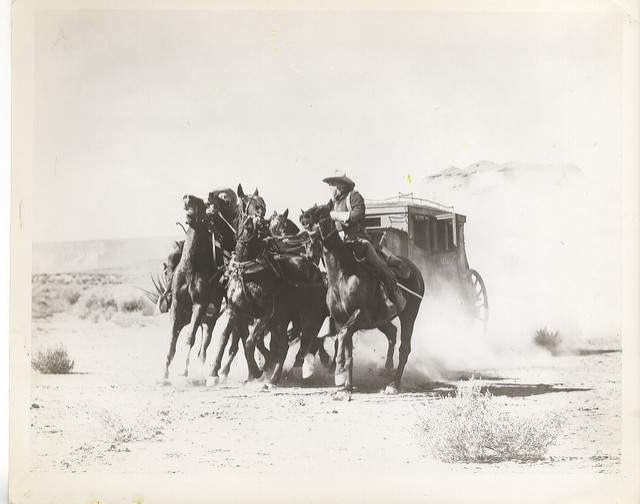
I sat down and listened. He’d chosen “Why the Ocean Water is Salty.” A man working in the mountains delivered salt to people in a stagecoach. Thieves threw a stick of dynamite into it, which frightened the horses. They drove over a cliff into the sea, where the dynamite went off, dispersing “billions of salt” throughout the water.

Oh, and the driver survives, retires, and decides he’ll just fish and hunt for the rest of his life.

He finished reading. His classmates applauded enthusiastically.

Must have been a full minute before I thought to close my gaping mouth.

“Amazing!” I finally managed to say. “What made you think of a stagecoach?”

“Well, first I wrote that the man was breaking up rocks on the mountain and hit one accidentally with his foot. It rolled down a cliff and knocked other rocks in, but then I thought, that doesn’t make sense. Rocks won’t make the ocean salty. So I thought about a stagecoach with salt in it. Then I needed something to explode in the water . . .”

—Makes perfect sense to me.

The moral of the story:

We can show them the stagecoach

but if we never let them load it as they please, 

they’ll drive only so far.

Set the wheels in motion,

hand over the reins,

jump out of the way.

See what astonishing routes they take.

Happy place

Sitting in the surgical room, waiting for a minor outpatient procedure, I try to redirect my sense of dread by listening to the nurses chatting:

“The knees, they’re the most unforgiving body part.”

“How about the uterus? The uterus is a vindictive organ. You mess with it and it’s going to fight back.”

Immediately I am looking all over the room for something to write with: The uterus is a vindictive organ –! That’s got to be one of the best lines I’ve heard in my entire life. Profound and very possibly inarguable . . . .

But pens apparently aren’t needed in the surgical room, as I can’t see one anywhere, and even if I did, I can’t get to it, I’m hooked to an IV, and besides, here comes a nurse, still talking: “The liver, now, it has a great sense of humor, but the uterus has absolutely none. —How ya doin’?”

She’s addressing me. “Oh!” I say, still etching the dialogue into my brain in a desperate attempt to preserve it. “I’m, um, good.”

—What does she mean, the liver has a great sense of humor? Because it’s able to regenerate? Or is there some other reason? What can that possibly be?

“So, you know you’ll get propofol, right, and this will all be over in a jif,” she says cheerily, busying herself with the tubes and such.

—Propofol. Isn’t that what killed Michael Jackson?

I am just about to ask when the anesthesiologist comes in and says, “All right, let’s do this.”

I want to say, Hang on a second, I really need to know about the liver’s sense of humor, when the anesthesiologist says in a low, silken voice:

“Do you have a happy place?”

I so know what THIS is. Get me talking about something happy so I’ll go under peacefully. A completely obvious ploy.

I don’t want to be put under, I don’t want to talk about my happy place, I want to know about the liver’s sense of humor before I wear myself out wondering about it.

But the moment’s upon me and suddenly this question about my happy place makes me want to cry.

See, I think my happy place is a little like Heaven, and if I start talking about it—will I wake up?

No need to fight. Just embrace it, says my own voice in my own head. At least, I think it’s my own voice.

So I say, “Yes, I have one.”

“Tell me about it,” says the silken voice, as warm as a blanket.

I sigh. “My grandparents’ home.”

“Where’s that?” asks the liver-humor nurse.

“In Beaufort County, out in the country. Some people say at the end of the world.”

“Why were you happy there?” coos the anesthesiologist.

“Well, because they were there. My grandparents. I always wanted to be with them.”

And they always wanted me, I think, but I don’t say it aloud. I can see them, faintly, as I speak. Standing out in the yard, watching for my arrival. One or the other or both, every time they knew I was coming. Watching, waiting.

“What was it like there?”

I’m not sure who asked this.

I can see it as I speak, as if through a window in my mind. The blue sky, the trees. Grandma’s azaleas, the camellia bush, the orchard, Granddaddy’s garden, the old hen house. I am not sleepy, yet. Maybe I can fight this, a bit . . .

“I grew up in the city and in the summers I’d go stay with my grandparents. I loved the country. It was a little paradise . . .”

It was love personified, love-infused, love written in the veins of every leaf, in every blade of grass, in the black earth itself that gave back so abundantly of what was given,  love echoing in every birdsong, in the vibration of every cicada, love painted on the iridescent bodies of dragonflies in a place more alive than any other I have ever known.

“Time to wake up, now,” says a gentle voice in my ear.

Grandma? Is it morning, already?

I’m so sleepy, still.

“Here you go. It’s all over, and everything is fine. You did great.”

It’s the liver-humor nurse.

I’m dressed, wheeled out to the car, buckled in beside my husband who’s driving, and well on my way home before I realize:

I STILL don’t know why the liver has a great sense of humor.

The gazebo

Gazebo at Night. Lori L. StalteriCC-BY

At first he thought he never wanted to see it again, the little gazebo on campus.

How perfect it was when he last saw it.

He couldn’t have orchestrated things better than they’d played out: the June sunlight just beginning to wane after dinner, shining in a deep, golden slant through the magnolias, the fragrance of the last blooms heavy in the air.

And her.

At last, and again, for they’d broken upon once. This time he knew it was meant to be. Side by side they sat, and he gave her the ring.

She started to cry.

“Will you marry me?”

She wiped her tears, laughed, hugged him. “Yes!”

Perfect. That one afternoon, in the whole of his life, was perfect.

In two weeks she was gone.

Not ready, she told him. They were too young.

That’s it then, he told her. Not now, not ever.  

His friends consoled him: “You ARE too young. Just enjoy life before you worry about getting tied down.”

Trouble was, he didn’t know how.

For days, all he wanted to do was sleep. He slept the rest of the summer away. He ate his way through autumn into the winter until he decided (while standing on the scales) that enough was enough.

He started walking, counting his calories. He lost seventy pounds.

He reconnected with old friends.

One asked, “Whatever happened, exactly?”

He told her all of it, just as they were driving past the campus. On the spur of the moment, he said, “I’ll even show you the gazebo where I gave her the ring.”

It was getting dark. He parked the car. They got out, walked the magnolia path. Lights in the lampposts flickered on. It was chilly; he hadn’t thought to wear a coat but he hadn’t planned on strolling to the gazebo tonight, or any night. He shivered as they stepped into the clearing . . .

The gazebo wasn’t there.

For a minute he thought he was dreaming. He looked every which way—yes, this is where it was. This is where it stood.

It’s gone!”

“Gone? How could it be gone?” asked his friend. “Are you sure this is the right place? That you haven’t made a mistake?”

“I made a mistake here, all right, but it wasn’t forgetting where the gazebo is. Was. I even used to ride my bike past it when I was little. Right here.” He scratched his head. “This is like something out of the Twilight Zone.”

His friend laughed. “Well, it’s twilight anyway. And maybe that gazebo didn’t disappear. Maybe it never existed at all, and maybe you never made that mistake because it’s been erased. It just never was.”

To this day, he hasn’t asked anyone who might know what happened to the gazebo, because, as far as he’s concerned, his friend is right.

Although he still occasionally checks, when he happens to think of it, which is less and less often.

It’s not there.

As if it never was.

*******

(True story)