Tell me without telling me poem

Yesterday on Ethical ELA’s VerseLove, Scott McCloskey invited teacher-poets to compose around “tell me without telling me,” the popular social media meme from a few years ago: “Tell us (through vivid sensory details and whatnot) that you are __________ without telling us you are __________. ” In his model, Scott masterfully incorporated many fragments of famous poems that have inspired him to write, followed by this reveal: “Tell me you’re a poet without telling me you’re a poet.”

So for Day 9 of National Poetry Month, here’s mine… it incorporates bits I’ve written before… and there’s SO much more to write…

It all began, I suppose,
in a darkened room
when Grandma plugged
this thing called a color wheel…

it sat on the floor, rotating, illuminating
the all-foil Christmas tree.
There in the dark
the sparkling silver tree
transitioned to red, blue, gold…

a stillness, a riveting

There was a girl
in my childhood church
who played the piano
accompanying the sanctuary choir.
Once, she stood alone
in front of the handbell table
reaching, grasping,
her white-gloved hands
a blur of choreography
playing those bells solo
never missing a note.
She was sixteen.

a stillness, a holding of breath

I don’t remember
learning how to read.
It was just a thing I could do.
But in fourth grade, the teacher
(built like a mountain, with a face
and heart of carved stone)
read to us every day.
An intelligent, artistic spider
who saved a less-than-radiant pig.
A boy who didn’t want that annoying,
subversive, endearing, ol’ yeller dog
that ended up saving his life, 
before picking up the shotgun…

My God. My God.
I almost died with that dog

and there have been books
in my hands,

in stacks by my bed,
ever since.

a stillness, an absorbing

There’s more, so much more.

At nineteen, 
walking into the community theater audition
where the handsomest man I ever saw
sat with a script…

we were married in less than six months.

Thirty-seven years this summer.

Two years in, when he said he was called 
to preach, I said
Well, you’ll be miserable 
unless you do.

a stillness, an abiding

Our oldest son saying
over and over
I’ll never go in the ministry.
It’s too hard a life.
Not getting married or
having any kids, either.

Just after he enrolled
in seminary,
he met a lovely young lady
with a little daughter
named for the title character
of his favorite book.
In the fullness of time
and in the span of a month
he became a husband, father, 
and pastor.

It was ordained. Jehovah jireh.
God provides.

Last fall, he named his newborn daughter
Micah. Which means
Who is like God?

Indeed, who?

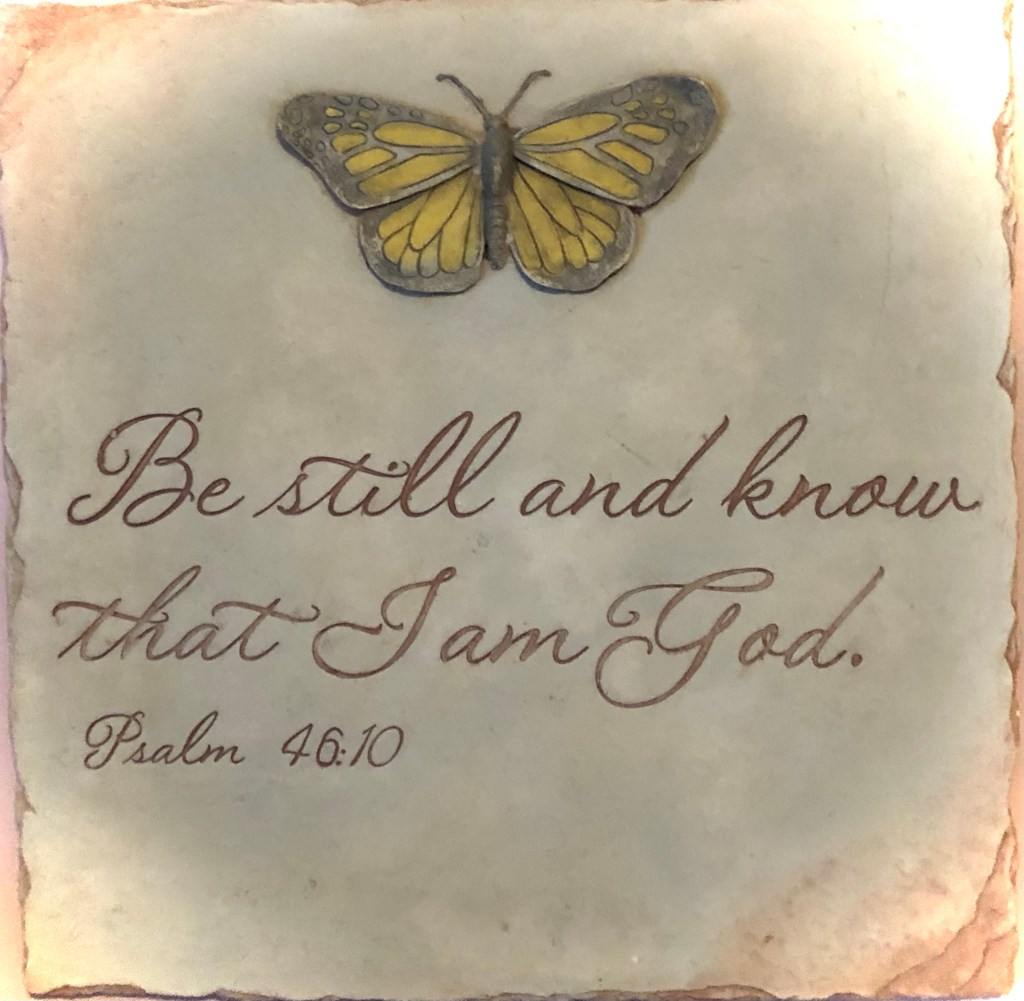
I am still, and know.

*******

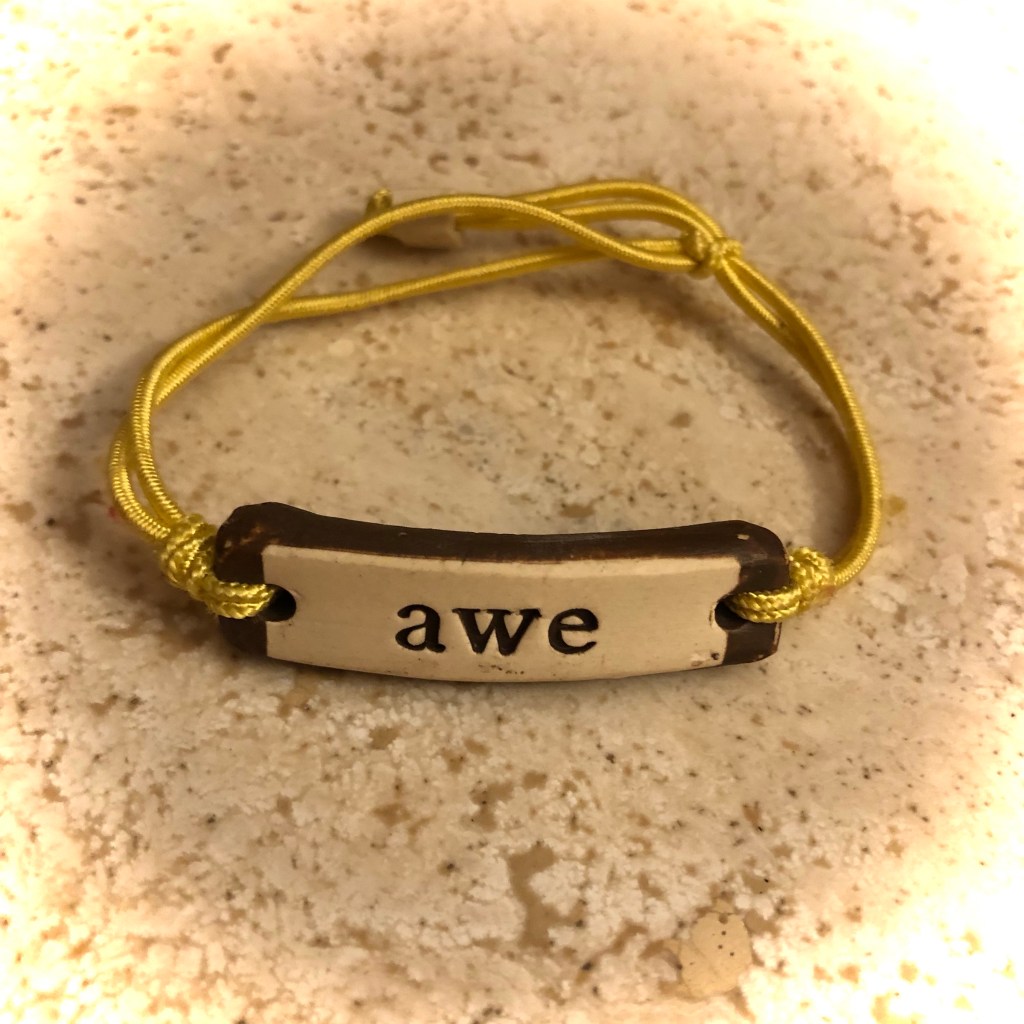
(Tell me you are awed without telling me you are awed)

(likely to be continued…)
Song structures poem

On Day 7 of National Poetry month, for VerseLove at Ethical ELA, Chris Goering invites teacher-poets to compose around song structures by borrowing syllables, meter, rhyme scheme, etc.

My youngest son came immediately to mind.

Before he was born, he would get very still when the piano was played in church; he would become active again when it stopped. I was sure he was listening to the music. At five he said he wanted to be a choir director when he grew up… he now has a degree in worship ministry. 

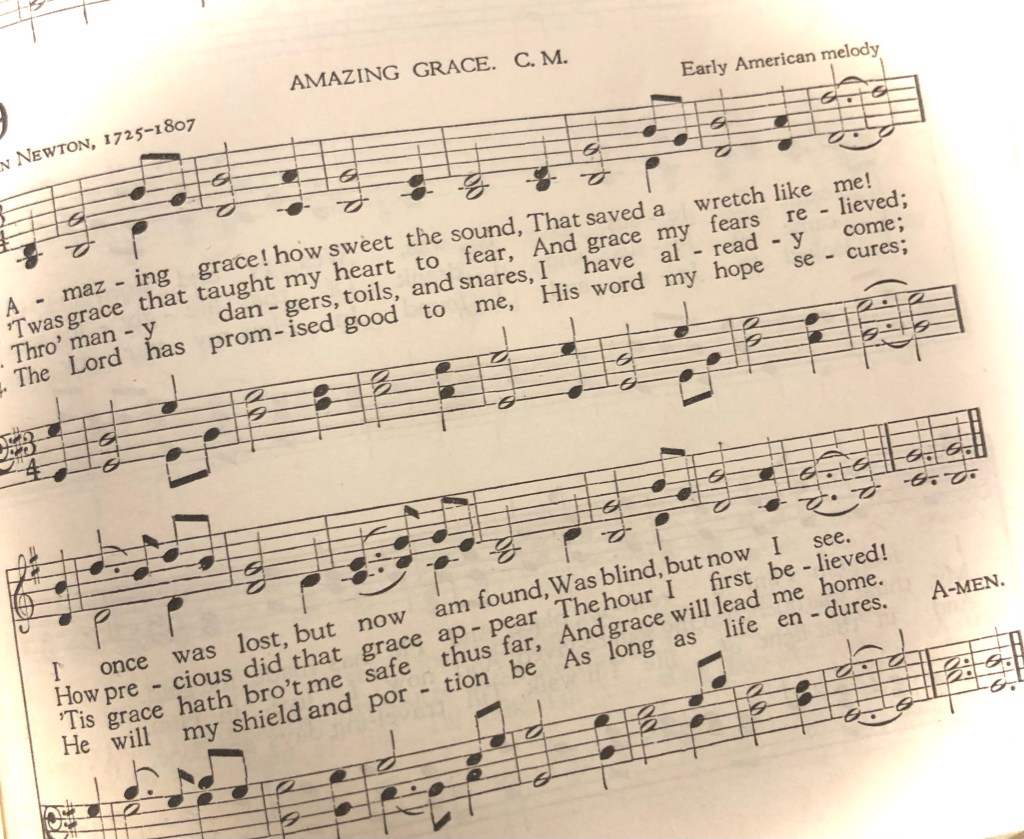
Here’s a scene from long ago, about his first favorite song.

Amazing Grace, Age Three

My boy hummed the song before he knew
What it meant to weep for grace
What could he know of a shattered soul
In spite of his solemn face?

At the whiteboard he stood, making marks
Counting every beat he heard:
Adders deedle-dee, adders, adders…”
-For at three, grace needs no words

Core memories poem

On Day Two of National Poetry Month, Emily Yamasaki offers this invitation for VerseLove at Ethical ELA: “There are some details that we hold in our hearts and minds, never to be forgotten. Whether it was carved into our memory in joy or distress, they are always there. Join me in giving those core memories a space to live openly today.”

This is the kind of thing that can keep me writing for hours, days, years… I kept it simple, using the first things that rose to the surface, sticking somewhat close to Emily’s models.

random core memories

the cadence of my grandmother’s voice, reading
fat pencils in kindergarten
the smell of struck kitchen matches
bacon grease kept in a canister by the stove
having to throw myself against the stubborn front door
     of my childhood home, to get it open
ironing my father’s uniforms
the smell of his shoe polish
the vaporizer sputtering in my room at night
the rattling crescendo, decrescendo of cicadas
saying it’s going to be all right without knowing how
finding sharks’ teeth in the new gravel of an old country road
lines from dialogues in my 7th grade French textbook
soft-petal satin of new baby skin
that one wonky piano key (is it D or E?)
the mustiness of my grandparents’ tiny old church
the weight of the study Bible in my hands
seeing you for the first time, across the crowded room
the cadence of our granddaughter’s voice, reading

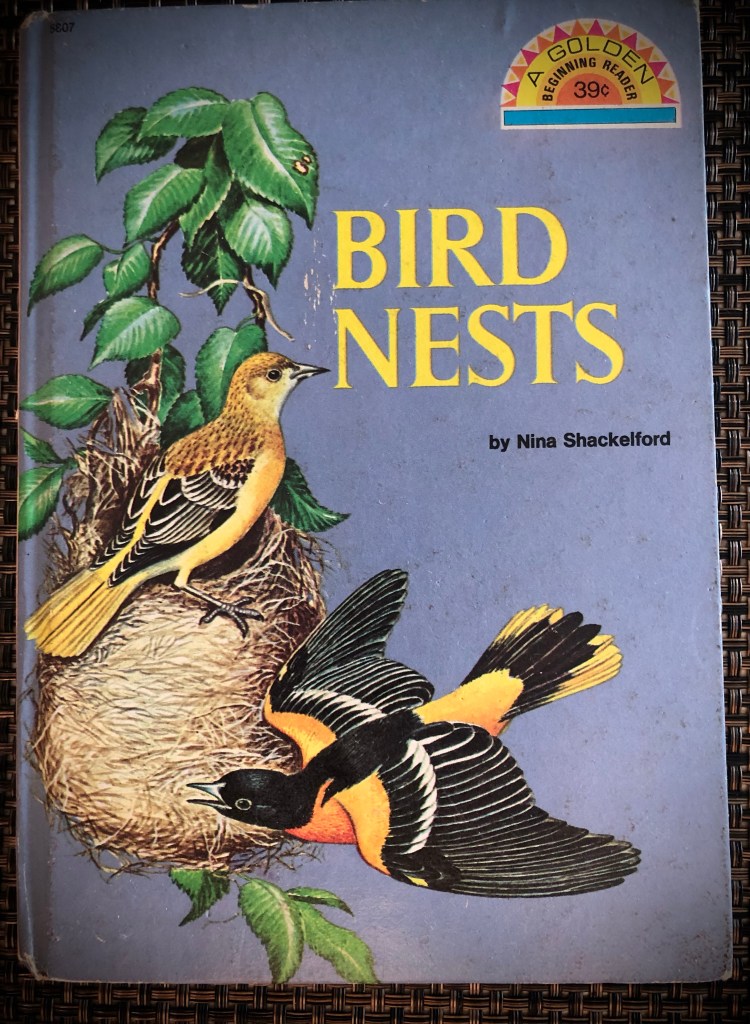
A book my grandmother read to me, that I read with my granddaughter now.
Is it any wonder that I find birds and nests so alluring?
Early memories hold such latent power.

Sunflower acrostic

Happy National Poetry Month!

At Ethical ELA, Bryan Ripley Crandall kicks off VerseLove by inviting teacher-poets to compose acrostics: “Think of your  person, place, or phrase. Lay the letters onto the page as if fallen leaves. Game-on. Write as if you are ‘gifting’ to another, and use each letter to craft an original poem.”

I love acrostics and have long believed this ancient form is underused.

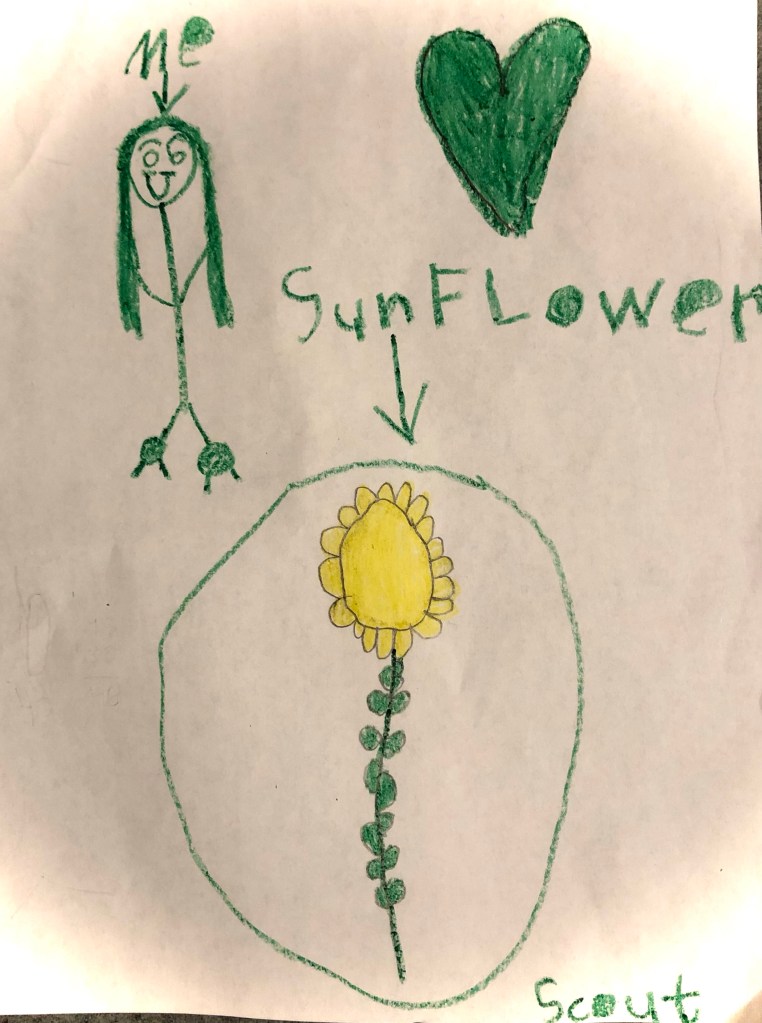
As I pondered a topic, I went to the refrigerator door to start breakfast, and there it was:

The Drawing My Granddaughter Made During a “Sleepover”

Six years old, blissfully
Unaware that it’s the emblem of a 
Nation being invaded, she announces:
Franna, I am making this for you.
Love crayoned on the paper as
Our own special symbol.
When night falls, we put on our pink pajamas
Emblazoned with these light-seeking faces
Radiating joy of now, promise for tomorrow.

She texts me in the evenings sometimes to be sure I am wearing my sunflower pajamas

Story love

My family loves to tell stories.

Mostly on each other.

At every gathering, my husband and our two sons continually try to one-up each other with their own versions of stories, all of which are calculated for maximum comic effect followed by boisterous laughter.

My granddaughter Scout, age six, is used to this now. She smiles, shakes her head, sometimes smacks her forehead with her palm, and sighs: “C’mon, Franna, let’s play.” She doesn’t have to ask me twice…

Micah, five months old as of today, is just beginning to take notice of conversations by shifting her gaze from speaker to speaker. She’s probably wondering the baby version of These are my people??

It so happened at a recent family gathering that as I was telling a funny story about Grandpa, I noticed little Micah, sitting with her dad on the couch, watching me with rapt attention.

I paused. “Goodness,” I said, “look how Micah is listening!”

“Oh yes,” said my daughter-in-law, “she loves a story.”

I had a sense, then, of something meaningful in the making. Something of great significance. Something being recorded deep in Micah’s baby brain, before she even has words for it, long before images and moments become archivable memories. She may not understand quite yet that I am Franna, her grandmother; she hasn’t yet learned words and attached meanings; but she could tell by the cadence of my voice that I was communicating something. She watched me intently, absorbing it.

It made me mindful.

It also reminded me of her dad’s little brother, who, before birth, stopped moving around whenever the piano was played at church. He’d kick back up afterward. He’s listening to the music, I told his dad at the time.

And he was. He’s our musician-mortician son. He’s loved music all of his life and can play anything he wants on the piano and guitar. Without sheet music. The patterns and chords are all in his brain.

Which brings me back to his baby niece, who bears a strong resemblance to him in many ways, especially in this serious manner of absorbing of things.

Micah loves music, too; we’ll see how that plays out…

What I know for certain is that, at five months, she loves story before she knows what story is.

I predict she’ll be the greatest storyteller of us all.

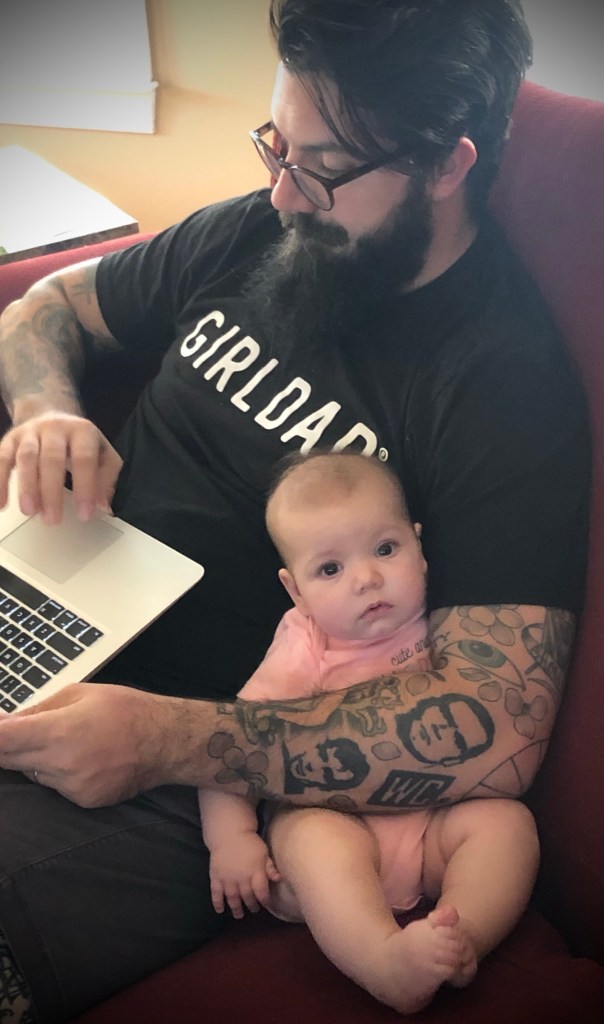
Micah with her preacher dad, my oldest son, while he works

*******

with thanks to Two Writing Teachers for the Slice of Life Story Challenge every day in the month of March

A curious balance

There’s a curious balance in life. Maybe the same can be said of death.

Once upon a time I watched a day-old kitten die in my mother’s hands. I wept that it didn’t have a chance to bloom and grow. I named it Edelweiss (who among you will catch that musical allusion?).

Not so many years ago I watched a sixteen-year-old dachshund draw his last breath after two needles from the vet. I wept. Profusely. So did my boy, standing by my side. He’s the one who said it had to be done. This was his beloved childhood pet from the age of four to twenty. When we left the vet’s office, my boy carried the little limp body in his arms. The lights had been dimmed and a candle had been lit. Tears rolled down the receptionist’s face.

The boy now makes his living in the death industry. After having obtained a worship ministry degree, he’s returned to school for mortuary science. A funeral director’s apprentice. His hours are long. He gets called out in the middle of the night, in the wee hours of the morning, to pick up a body.

He’s carried the old, the young, the sudden, the long-suffering.

Even a baby.

I worried, at first, about the toll it might take.

But he’s a born comforter, stalwart, as solid as mountain, as placid as a morning pond in the countryside, smooth as glass. In taking care of others, he is taking care of himself.

He is as happy as I’ve ever known him to be.

He meets people. He connects with them. He learns from them. He hears their stories, knows about their lives.

Not just the families of the deceased.

A couple of times a week, he picks up the funeral home groundskeeper and drives him to work. This man tends a farm, among other things. Occasionally he puts something in the back of my son’s car. At some point along the way he has my boy stop so he can get the thing out of the back. A cage, of sorts. The groundskeeper will set it by the woods and release whatever’s inside… a big ol’ possum, a raccoon… creatures he traps on the farm to keep them away from his chickens and eggs (I suspect he’s trying to catch a fox. Maybe he has. Maybe my boy just hasn’t said).

What strikes me is the preservation of life. That of the wild creatures as well as the domestic ones. It’s especially fascinating to me in light of the context, occurring en route to work at the funeral home. A curious balance…

Earlier this week, when the boy dropped the groundskeeper off at the farm at the end of the day, the man pointed to the goat pen:

Looka new baby goat. It’s maybe thirty minutes old.

He pointed again:

That one, maybe fifteen minutes old.

My son marveled. I could hear it in his voice when he told me the story: Fifteen minutes old, Mom. So tiny. I could see the afterbirth still hanging from the mother.

He sees death every single day. How fitting that his work should also lead him to witness life preserved and the miracle of its fresh arrival.

Such a curious balance.

Baby Goatkendrick. CC BY-NC-SA 2.0

*******

with thanks to Two Writing Teachers for the Slice of Life Story Challenge every day in the month of March

When you first laughed

a pantoum for Micah, age 5 months

When you first laughed
your family stood
surrounding you
oh how sweet the sound

Your family stood
filled with awe
oh how sweet the sound
of happy forevers beginning

Filled with awe
we are your cloud of witnesses
of happy forevers beginning
on the last day of your first winter

We are your cloud of witnesses
surrounding you
on the last day of your first winter
when you first laughed

Micah, here are your first laughs, captured on video. Your mom, dad, big sister, Grandpa, and I were all there to see it. Notice that the word “Happy” is on your onesie. I hope you know, someday, how much happiness you’ve brought to all of us. This actually occurred on the last day of winter. Your first spring has begun. A whole lifetime of love, blossoming…

You are a joy, sweet Micah-roon.

Love you forever.

—Franna

*******

with thanks to Two Writing Teachers for the Slice of Life Story Challenge every day in the month of March

Death calls

Subtitled The morgue, part 2. A slice of memoir.

And so it was that the house for the dead became a house for the living. If there were any ghosts of soldiers or prisoners lingering in it for over twenty years, perhaps a three-month-old baby’s cries and the acrid odor of diapers drove them on.

Even I wouldn’t be there long. The shadow of death falls like a blanket; the living must keep moving out from under it.

My memories of the house are fragmented, all in black and white. A living room with plain white walls. A window with pale curtains likely made by my mother. The black slats of my crib. Years later my mother said there were little black footprints on the wall from where I pressed my feet through the crib slats. She didn’t have the heart to wash them off. My grandmother wanted to know why I’d been put to bed with dirty feet.

I had a white blanket with satin trim. I sucked my thumb and rubbed the satin against my nose with my forefinger; eventually the satin pulled away from the blanket. I’d rub it between my left thumb and fingers while sucking my right thumb. A soothing rustle, rustle, rustle. I called it my Silky String.

That is almost all I can remember for myself of the old house that was once an Army hospital morgue.

Pa-Pa was the reason we came to live here; he was the reason we had to go. He owned the house. When he died suddenly from a heart attack, his children took over his property. We were the stepfamily. Grannie had to leave the big house next door. My father, mother, baby sister and I had to leave this first house of my remembering. It was March. I was not yet three, when the long shadow sent us searching for a place to be.

When death calls, the living must answer.

*******

All these years later, I watch the news. Tanks, warships, airstrikes, destruction. A hundred and nine empty baby strollers placed in Lviv’s central square today, commemorating the children killed in the invasion of Ukraine.

I think of morgues.

And of the mothers. And little footprints left behind.

And people being driven from home. That is what wars do. That is what death does.

My son, in his mid-twenties, comes in as night falls. Dressed in suit and tie. I know he’s tired.

“Long day, wasn’t it?” I ask.

“It was,” he answers. “Maybe I won’t get called out tonight.”

For a minute I see him at age five, pulling out the church directory every time a member passed away. He’d grab a pen, cross out the person’s photo, and write the word Died.

Funny how these things come back to you. Memories are ghosts.

And life is circular; all things are connected.

My boy eats supper, collects Dennis the dachshund, goes upstairs to rest and, I hope, to sleep. Unless his phone should ring in the night. If it does, he’ll be back in suit and tie, leaving home to pick up someone. He’ll transport them to the house waiting to receive them, where he’ll begin the preparations for their burial or cremation. Got a death call, he’ll say, if his dad and I are still up. If not, he just goes quietly into the night, a mortuary emissary.

For when death calls, the living must answer.

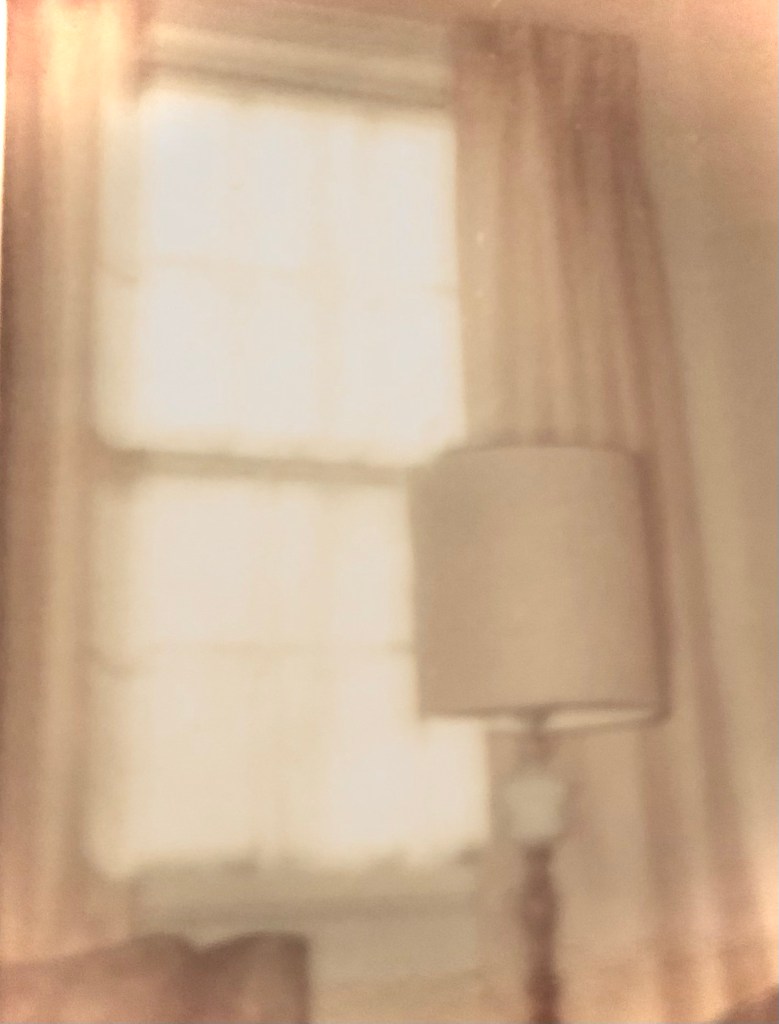
Window in the living room of the house that was originally an Army hospital morgue.
I lived here from about age three months to almost three years.

*******

with thanks to Two Writing Teachers for the Slice of Life Story Challenge every day in the month of March.

The morgue

a slice of memoir

By 1949, the Army base where a million and half people were processed for service in WWII stood deserted. This had been the last stop before boarding ships for western Europe. All branches of military personnel, not just Army, passed through here — even some civilians on secret missions. Surely these young people made time for the cantina, laughing and maybe dancing to big band music, or for a show in the base’s theater before they left American soil, maybe for good… how many wouldn’t return to see the wooden arch bearing the message WELCOME HOME at the camp’s entrance, erected over the wide road cut through the forest? And how did the Axis POWs feel, seeing this sign on their arrival? Did they wonder what welcome awaited them here in an Allied prison? They would be put to work; they would also be given their own canteen.

All that remained four years after war’s end were empty buildings, ephemeral fliers, yellow canteen coupons occasionally spiraling in the wind, and weeds growing tall in their eagerness to swallow it all, to satisfy the hungry forest.

A local man overheard talk that the decommissioned land was being sold and if you had a way to move a building, you could buy one cheap.

He had a way of moving a building. He had a place for it, on his own land right beside his own house. He signed the papers and took his building.

It made for a nice little home, he thought. It had a concrete floor with pipes running through for radiant heat. Solid. It would need a little paint, a little work here and there. He could do it. He was pleased with himself. He would rent it it out, make a little money…

Quite some years later, a young man came to ask about the house: We can’t stay in the apartment where we are anymore. It’s not working out… he and his wife had a baby. They wanted to be in a safer place.

The older man, now gray-haired, pursed his lips for just a moment before agreeing.

And that is how I came to live in the house which was once part of a bustling World War II Army base at a port of embarkation.

That was my dad and mom who needed a place to live.

That was my step-grandfather, Pa-Pa, the sometime opportunist who’d moved the building. He’d married my mother’s mother.

I, of course, was the new baby.

This house is the first home I remember. In this place, my memories would first come into being while I watched the interplay of light and shadow on the walls. Here I would dream my first dreams and cry out in the darkness until my father came to settle me back to sleep, sometimes holding me in his arms all night when I suffered asthma attacks. Here I would begin to recognize the distant rattle and whistle of trains, long before I first crawled on the warm, warm floors in wintertime or knew the cold and silvery moon.

I wonder if this is where I first came to understand the word ghost.

The little white house with the heated floors was, after all, the Army hospital morgue.

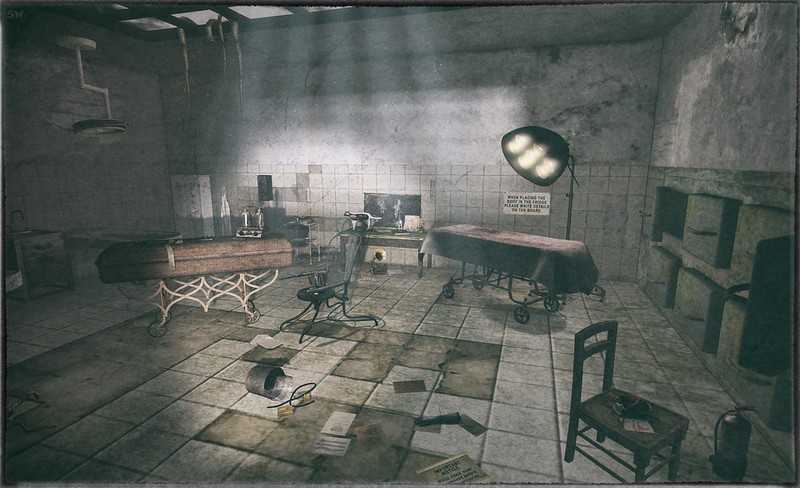
Photo: Shocking Wonder. CC BY

*******

with thanks to Two Writing Teachers for the Slice of Life Story Challenge every day in the month of March.

Until we meet again

Today I write in memory of my grandfather.

His name was Columbus St. Patrick Brantley.

He was born in 1906 “up the swamp” in coastal North Carolina. Farming was in his blood. He married my grandmother during the Depression and worked as a sharecropper. My father was born in a tenant house. Just before WWII, Granddaddy went to Virginia to work as shipwright. He tried farming and house painting after the war but “couldn’t make a go of it,” so he went back to the shipyard, where he was still working when I came along. For the record: the whole family said I looked exactly like him when I was born.

He didn’t work on Sundays; that became our day together when I was small.

He retired when I was six. He and my grandmother moved back home and thus began my many journeys to the little white house nestled in the bend of an old dirt road, where the woods had grown up all around, taking back house after house where people lived no more.

In his later years Granddaddy recorded stories of his life on audiocassette to give to his family. He could remember seeing his first Model T at age three or four. He said that mail was delivered by horse and buggy; farmers ordered chickens that were delivered in cages. He had a whole string of pins awarded him for perfect Sunday School attendance at the little Methodist church. He loved listening to the Grand Ole Opry on the radio. He spoke of his nine siblings, including a sister, Peaney (Penelope), who died of diphtheria at age four. He outlived them all. He lived to see both of my children. He could remember an ancestor speaking of Dublin.

Near the end of his life, I gave him a framed print of an Irish blessing. It hangs by my front door now:

The last time I saw him, he was dying of lung cancer at ninety-two. It was springtime. He’d grown weak but was fully dressed, sitting in his recliner by the door; he tried to coax my two-year-old to sit in his lap, like I did when I was little. I sat by his chair on a stool and held his old, wrinkled, work-worn hand.

Do you remember how we used to go to the park on Sundays?

I do, Granddaddy. We took bread to feed the ducks.

And the old locomotive?

I can just remember climbing in it together…

He was tired, always a man of few words. We sat for a long time together, not speaking at all.

When it was time to go, I kissed him on his forehead.

I love you, Granddaddy. God’s got you safe in His hands.

That’s the best place to be. And I love you.

He held tight to my hand.

It’s been twenty-three years. You can’t imagine all I have to tell you, Granddaddy. There’s been another pandemic. Wars and rumors of wars. Your great-grandsons are grown. The little two-year-old you tried to coax into sitting with you at that last visit plays piano and guitar; he loves singing the old-time songs that you loved. His brother’s a pastor with a baby girl; he tells me almost daily that something about your great-great-granddaughter reminds him of you. God remains faithful from one generation to the next. It’s almost springtime again, the fields are so green…

Until we meet again, Columbus St. Patrick.

I love you.

*******

with thanks to Two Writing Teachers for the Slice of Life Story Challenge every day in the month of March.