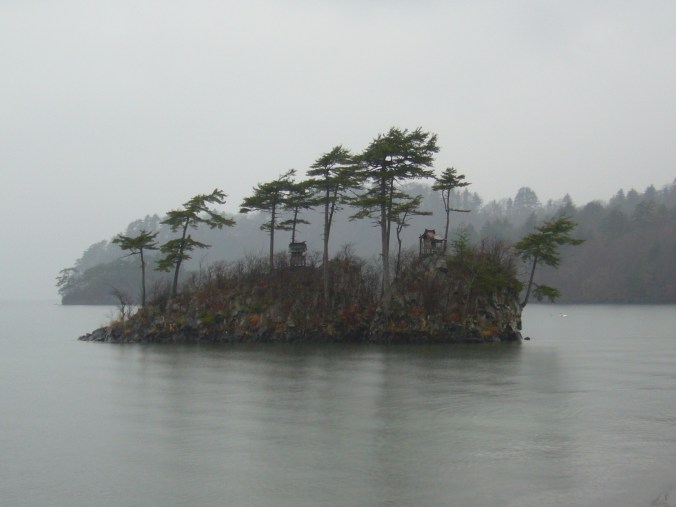
Breakfast Island

island

Image:  studio tdes CC BY

Somewhere in Maryland’s scenic Severn River is a tiny island that belongs to me.

Not that I have a deed to it, or that the island was even the giver’s to give, but those are minor details.

The transaction came about when I was around seven years old, during a family gathering. My aunt and uncle, avid boaters, decided to treat everyone to breakfast on the beach. In the chilly gray dawn, a bunch of us piled into my uncle’s motorboat and sped across the Severn. Unbeknownst to me at the time, this majestic river connects with the Chesapeake Bay; the U.S. Naval Academy stands at the convergence. I only knew I was cold and hungry. I shivered in the breeze, thinking that going to the beach for breakfast was just about the most exciting thing ever.

The beach turned out to be an island right in the middle of the river. If Huck Finn had seen it, he would have called it a towhead, a mere islet with a thicket of brush in the middle. As the grown-ups busied themselves with building a small fire, I walked the whole sandy circumference in a couple of minutes, marveling at the island’s diminutive size.

“What is this place?” I asked my uncle, who was crouching by the fire with a skillet full of sausage links.

“Just an island where people sometimes stop off,” my uncle answered, as the sausages began to sizzle.

The sun was bright now, the Severn very blue against the island’s golden sand. A few white sails appeared in the distance.

“What’s the island’s name?” I wondered aloud.

“It doesn’t have one,” replied my uncle.

“Why not?”

“I guess it’s too small for a name.”

How disturbing, that such a pretty place did not have a name.

“Why don’t the owners want it to have a name?”

“Nobody really owns this island,” my uncle said, carefully turning the sausages. Thin blue smoke drifted up from the skillet.

“What! How come nobody owns it? ”

“It’s just here, hon. It isn’t like the big islands, where people live. That’s a good thing, because anyone who wants to can stop and visit, like we’re doing now.”

An inexplicable sorrow welled up in me. It wasn’t fair that no one cared enough about this little island to want it or give it a name. It hurt my heart.

My uncle squinted at me. “What’s the matter?”

“It should belong to somebody.”

“Ok, then, why not you?”

“WHAT?!”

“It now belongs to you.”

“For real?”

“You’re the owner of this island. Congratulations.”

Pride surged through me – I owned this island, the prettiest place in the world! I loved it. Somehow I felt it was mutual, that the island loved me back, was happy that I was there, that we were meant to be. Then a fleeting fear struck me:

“Do I need to pay for it?”

My uncle howled with laughter. “Goodness! Well, since there is no other owner, it’s free.”

The sausages were done; someone filled another skillet with apples and cinnamon. I never knew apples could be fried. Their aroma filled the air like incense from an altar, sweet, pleasing, mouth-watering. For the rest of that morning I basked in the glory of possessing my own island,  soaking up the sun and asking for more apples, until they were gone. I never wanted to leave.

I have never returned. I do not know if the island still exists, or if time and weather have dissolved it, the way that relationships eventually dissolved. What I know is that for that one halcyon morning, I was the richest person on Earth; I owned an island, and it was free.

Reflect: In what ways can you take a child beyond the realm of “the usual” to experience something rich and unusual? How can you creatively instill a sense of ownership? 
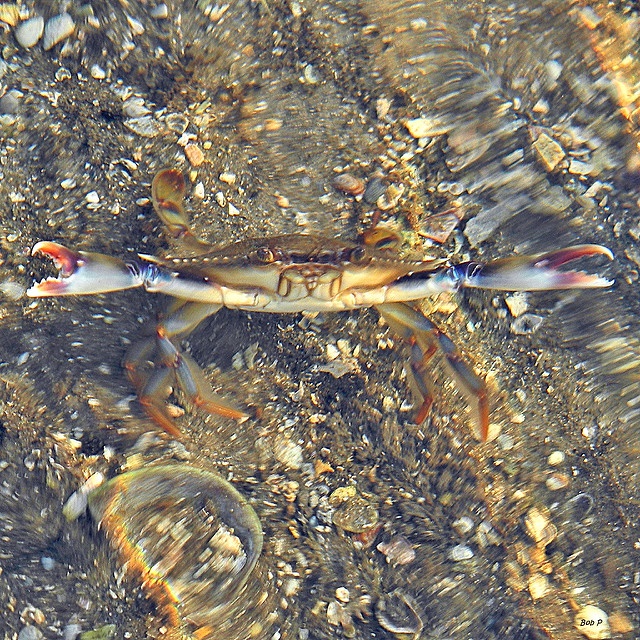


Seeing past the surface

Blue crab

Blue crab (Callinectes sapidus). Image: Bob Peterson CC BY

One summer long ago, my grandmother took me crabbing at South Creek, a tributary of the Pamlico River. We knelt on the weather-beaten pier, tied a long string of twine to a raw chicken neck, and lowered the bait into the murky green depths. Grandma anchored the loose end of twine to a rusty nail jutting out from a piling.

“Now we wait,” she said. “But keep your hand on the string so you can feel when a crab starts nibbling.”

Being a novice, I was sure I felt a crab nibbling right away. I pulled up the length of twine ever so slowly, only to see the fleshy chicken neck. I released the twine. The bait plummeted out of sight again. Within minutes, I was positive I felt nibbles. Reeling in my string, I found only the bait once more.

Grandma chuckled. “You have to be patient. Give the crabs time.”

“I thought I felt nibbles,” I said in my own defense.

“You feel the bait drifting. You’ll know when it’s a crab.”

I waited, my mind wandering. The day was bright; Grandma’s sunhat cast a ruffled shadow on the gray boards, warm and splintery.

Next thing I knew, there were erratic tugs on my line.

“Easy,” said Grandma, sensing my excitement. “Pull slow and easy or you’ll lose it. Pull so the crab doesn’t realize you’re pulling.”

Bit by bit, I inched the twine up through the water to find not one but two – two! – blue crabs picking at opposite ends of the chicken neck. Holding my breath, I pulled until the crabs were just below the surface of the water. I dared not move as Grandma scooped them up with the dip net.

As the crabs scuttled inside a galvanized tub, I tossed the slightly-gnawed chicken neck back into the water, observing: “It would be a lot easier if we could just see to the bottom. Then we would know when we have a crab.”

“Well, isn’t that the fun of it?” asked Grandma. “Not being able to see what’s there, but pulling until you can?”

Decades later, I sat listening to a group of fourth grade intervention students rereading a script.

“You’ve all come a long way with your fluency, recognizing words automatically without needing to self-correct. I can hear some great expression,” I commended them. “I have one question: What is this scene really about?”

As students tossed out random answers, images of a weather-beaten pier, twine, and raw chicken necks came to mind. “Wait, you guys. You’re all skimming along the surface, just seeing the words. There’s a deeper meaning you’re not seeing; it goes past the words into the ideas behind them.” I told them of my long-ago crabbing days, how I knew the crabs were there, hidden from my view, and how I had to watch, feel, and finally pull them to the surface. “Reading is like that,” I told the kids. “There is more than what you see at first. To infer, you have to take your time, go back, and try to feel what’s not actually said before you can grasp the meaning. Some words give you more clues than others, but a deeper understanding is always there. Sometimes you have to wait, think, and work to pull the meaning out.”

Until that moment, I hadn’t imagined crabbing as a metaphor for reading comprehension, or, for that matter, teaching. The students often come to us with their backgrounds, experiences, struggles, and gifts hidden from us at first. The depths can be murky, indeed; how easy teaching would be if we could automatically see everything that each child needs to be successful. The best way to start is by throwing out the greatest “twine” we have: the love of learning. Keep your hand on the string, Grandma said. You’ll know. Pull easy so you won’t lose them. Be patient. 

To me, the true joy of teaching is first hooking students with a love of learning, then watching myriad treasures rise from those depths, especially when students start pulling on their own.

Reflect: Where can you strive to see past the surface of experiences and relationships to something deeper, of value? What unique exploration can you share with a child?