Grace upon grace

Yesterday Leilya Pitre opened the March Open Write over at Ethical ELA with an invitation to compose poetry inspired by the Ides of March.

The Roman calendar confuses me, with all the backward counting. An “ide” is one day before the middle day of the month. For March, that’s the 15th – yesterday’s date. Leilya gave several poetic form suggestions: villanelle, free verse, limerick. She prompted participants with a choice: 1) Write with “an air of inevitability and doom…mirroring the idea of a foretold fate,” or 2) “Write a poem that celebrates a moment of change or transformation, akin to the original meaning of the Ides of March as a day of transition in Roman history.”

A day of transition…hmmm.

Change.

What needs to change more than the human heart?

I confess to wanting to run for my life at the idea of writing a villanelle (see how much the very word looks like “villain”?). The form is deadly! And there’s only one Dylan Thomas. Nobody else can rage, rage at the dying of the light quite like him. And so I opted for free verse, my default form.

Crickets. Nothing. No ideas on ides.

And so I returned to the villanelle – drat it all! – with “an air of inevitablity and doom,” for sure.

But then: Two repeating lines came to me. I started a rhyme search. A villanelle takes a pile o’ rhyming words. Not all of them will work. One of my favorite images re-materialized in my head: the “golden rim.” Yes. Let us drink from the golden rim of the goblet…no, chalice. Yes. What are we drinking, and why? What’s the point? What does it mean?

Have you ever heard that what you need is there, right within your reach, if you just look?

In this case, what I needed was literally right there within reach: the bracelet on my wrist. You’ll see.

Here’s the poem. Still tinkering with it.

Gratiam pro gratia

As evening descends in shadows dim
Let’s toast to ceasefire of life’s fight:
Drink, my love, from the golden rim.

The face of the morrow will be less grim
—See, our ashen embers retain the light
As evening descends in shadows dim.

Toss off your cloak with fraying trim.
Kneel by me, pray, well we might—
Drink, my love, from the golden rim.

There sparkles yet a priceless gem
Within the pocket, glittering bright
As evening descends in shadows dim.

Hold my hand — let’s sing a hymn
Before we take our earthly flight.
Drink, my, love, from the golden rim.

Sweet chalice of life, abrim,
Despite this darkest night…
As evening descends in shadows dim,
Drink, my love, from the golden rim.
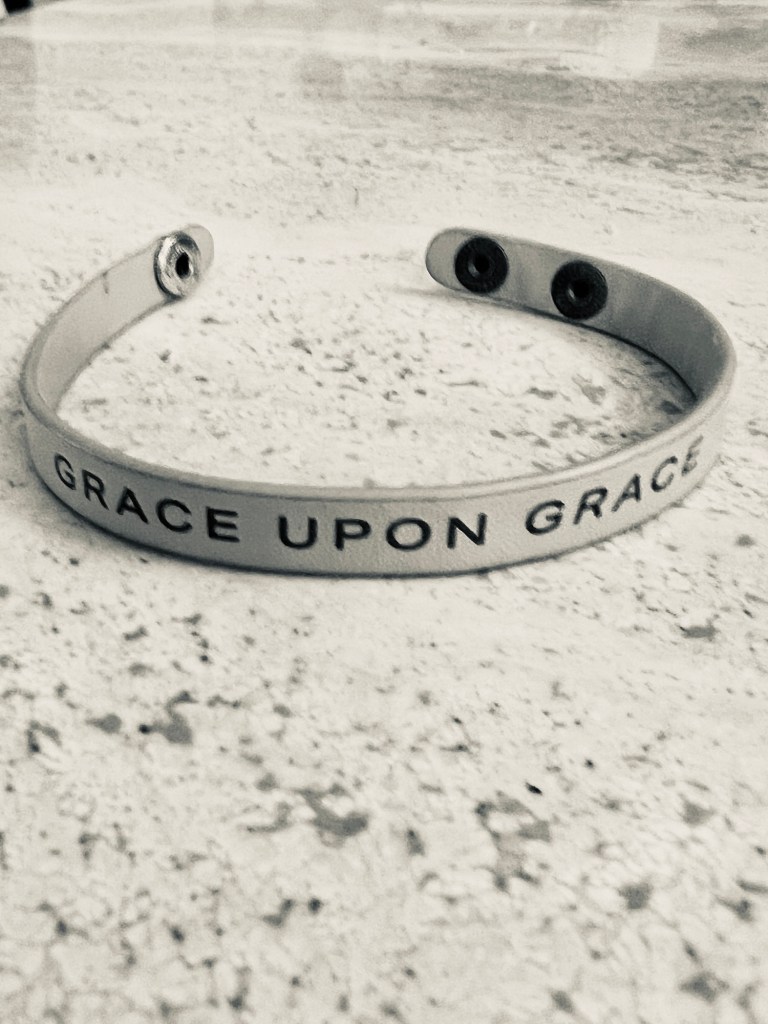
My poem’s title is Latin for the words on my bracelet. An excerpt of John 1:16: from the fullness of Christ, we have received “grace upon grace.” I wear it as a reminder to give grace, having received it in such abundance. I purchased the bracelet at a coffee shop called Charis (“Grace”) which has a wall plastered with customers’ prayers written on tiny slips. The owners donate a portion of proceeds to organizations that are working to make the world a better place. Our time here is short. Let us be about this work, in communion with one another, giving each other grace.

*******

with thanks to Two Writing Teachers for the March Slice of Life Story Challenge
Today

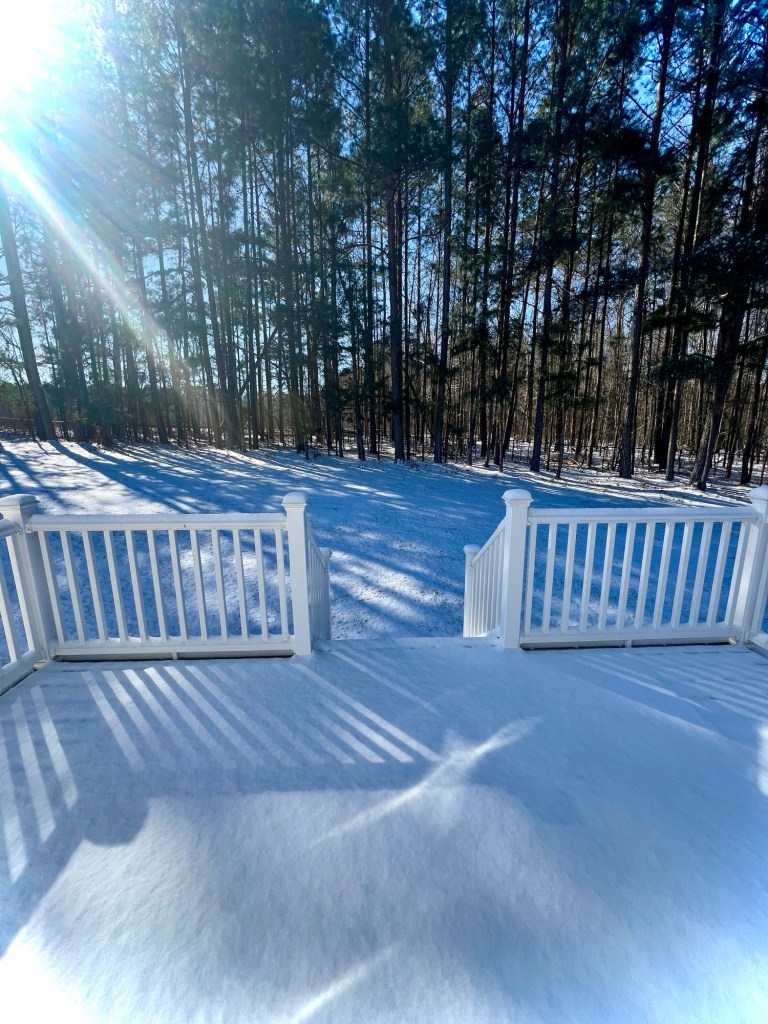
Today there is snow. After a recent local record of 1077 days without measurable snowfall.

Today I participated in a poetry group writing about aspirations for the future.

Today I had a hard time composing my thoughts, let alone my words.

Today I wondered if it is time to leave some writing communities I have loved and in which I’ve grown so much as a writer.

Today I took time to savor the holy hush in my backyard:

Today I marvel at nine inches of snow in New Orleans and six on the Outer Banks of my own state…

Today I acknowledge that anything is possible.

Today I contemplate my own words (written yesterday) about finding beauty despite brokenness.

Today, this is all I could manage for a poem on my aspirations for the future, beginning with the starter This is the year:

Imagine

This is the year
that we say
I love you
anyway.

Today, let’s try.

Color me darkly poetic

Here’s my little seasonal spin on a paint chip poetry prompt during last week’s Ethical ELA Open Write, hosted by Seana Hurd.

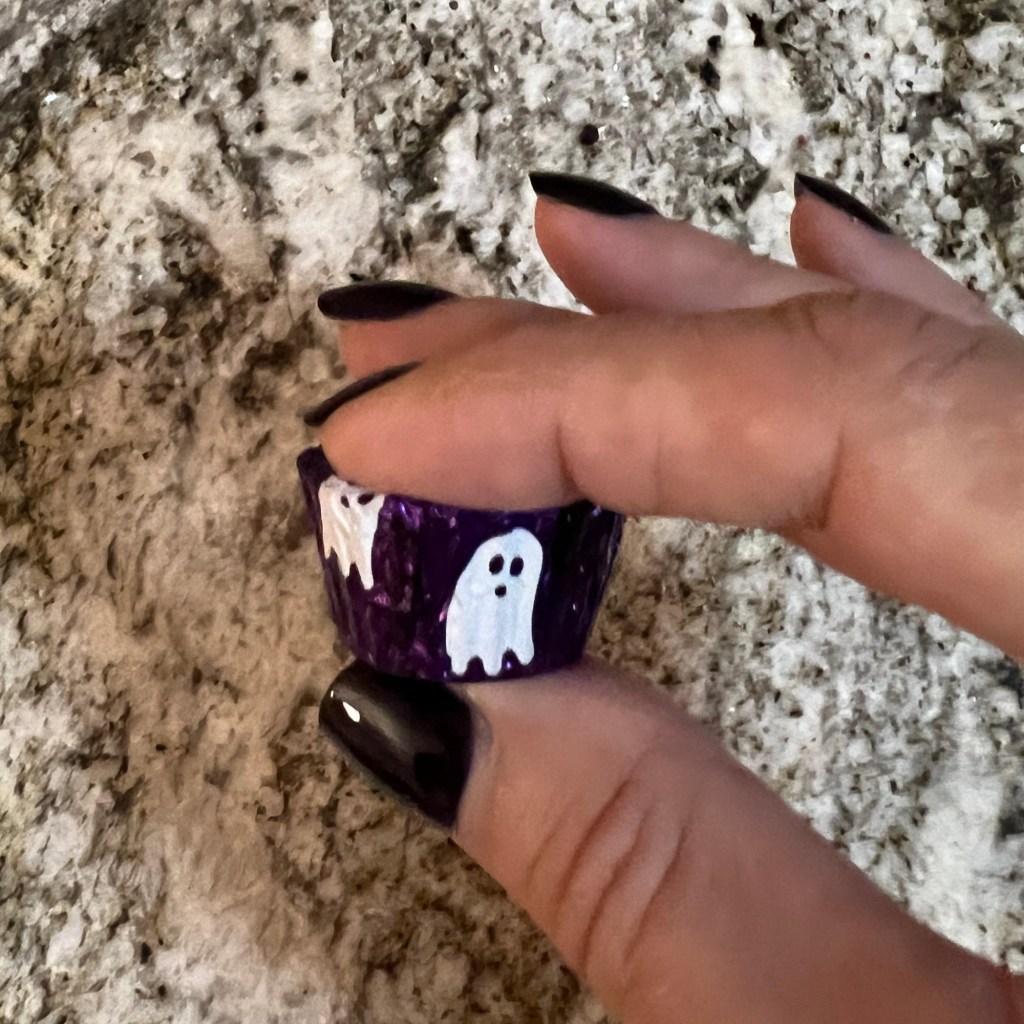
The very instant I learned the name of this nail polish, it was begging to be in a poem

Lincoln Park After Dark

Told the nail technician I’d like dark red
for fall you, know. Here’s what she said:
“No no no. Try this instead.”

Lincoln Park After Dark

Whoa, wait a second – is that black?
Will folks think I’m goth? Or cracked?
Too old for Halloweenish wack?

Lincoln Park After Dark

—turns out to be deep purple, friends
a bit Beaujolais or raisin; it depends
on the light and where perception ends.

Lincoln Park After Dark

As the tech painted these nails of mine
she offered this “intrickate” design:
a spiderweb, but I drew the line.

Lincoln Park After Dark

is enough on its own, you see.
Already I am cloaked in mystery
my mind off on a midnight spree

(with autumnal specters watching me

a-walkin’)

Lincoln Park After Dark

*******

with thanks to:

Two Writing Teachers for the Tuesday Slice of Life Story Challenge
the nail tech who suggested this magical color
and the poet-friends at Ethical ELA

The important thing poem


For today’s Ethical ELA Open Write, host Gayle Sands invited poets to compose “important thing” poems. She offered this form, based on the boiled-down essence of children’s books and Aristotle’s philiosphy on the accidental purpose of things:

  • Begin with:  “The important thing about __________ is that ________________”.
  • Follow with:  An assortment of supporting facts and ideas
  • End with:  “But the important thing about  _______________ is that _______________”.

The poem could be about an object, person, concept, or belief. Anything.

For some reason, AI came to mind.

As it happens, Two Writing Teachers offered a suggestion for today’s Slice of Life Story Challenge: Write about a time you felt fear.

Many people fear AI.

So here we are.

The Important Thing About AI

The important thing about AI
is that it can do 
so many important things. 

It can
plan your lesson
make your presentation
craft your poem (in any form you choose)
write your dissertation
and your novel.

It can
compose your music
reinvent your image
create believable deepfakes
of visuals and news
that fit perfectly
in the alternate reality
of your preference.

It can
design your clothes
your house
your city
your travel
your vehicle
your financial portfolio
pretty much anything.

But the important thing
about AI is
that it’s the tool

not the builder.

Photo: pexels.com

*******

with thanks to Gayle and the vitally important communities at Ethical ELA and Two Writing Teachers

The greening

The Greening

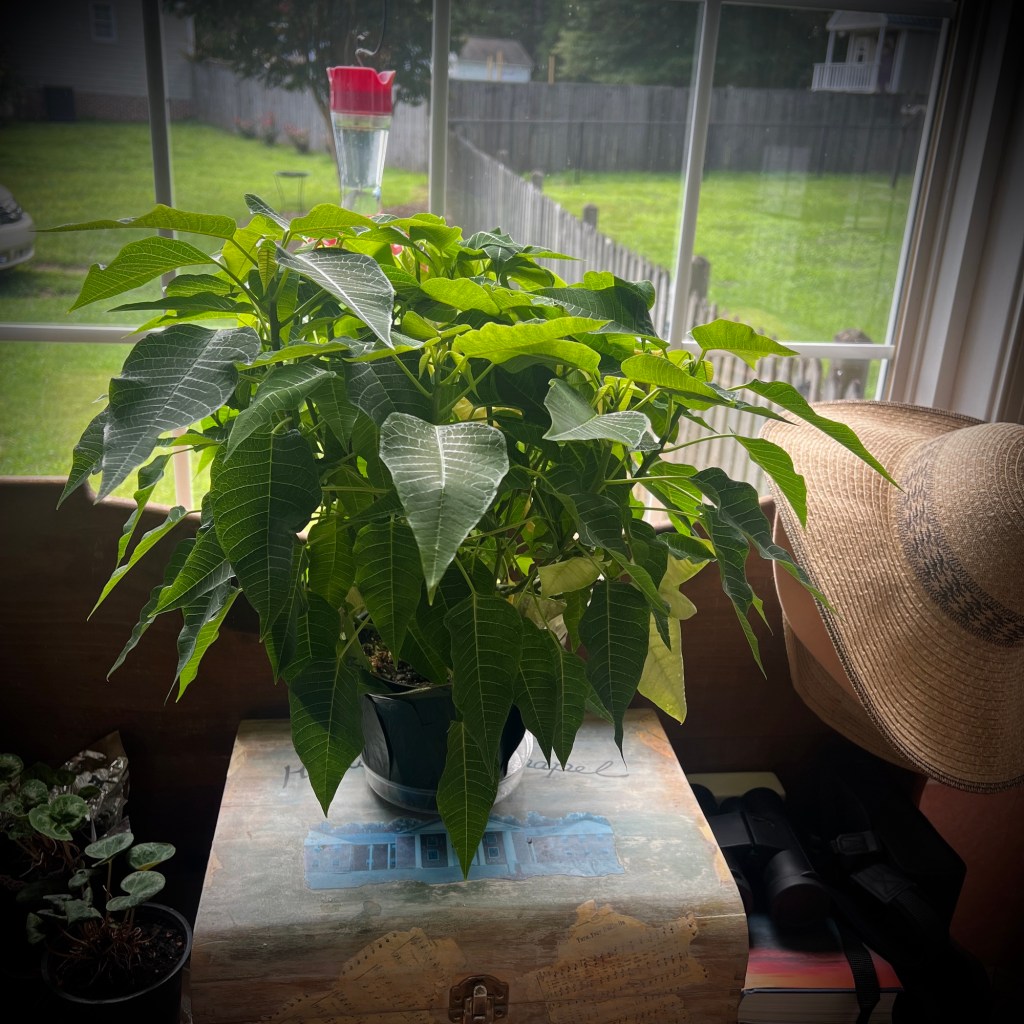
On Christmas, my firstborn son
brought me a white poinsettia
from the altar of his church

I set it by the window
in the kitchen, facing east
expecting it would die soon

but it lives on, lush and green
from the abundance of light
and my increased watering

For reblooming, it must go
in the dark, thirsty and dry
but I can’t, I can’t do it

It’s the only poinsettia
I haven’t managed to kill
and my boy gave it to me

Let it stay pure emerald
drinking all the light it can
in its summer of content

growing a little bigger
every day, like my spirit
while my leaves begin to fall

*******

with thanks to Denise Krebs for the inspiration and septercet poem form in today’s Open Write at Ethical ELA

For love of reading

with thanks to Anna J. Small Roseboro, today’s Open Write host at Ethical ELA, for inviting teachers to write poems of reflection on the past school year and projections for next…my thoughts came out this way, and so I’m calling it a prose poem.

For Love of Reading

Reading and writing were the great loves
of my childhood…for birthdays and Christmas,
I wanted books. And more books. I never thought
about them as keys to unlock life’s doors. In retrospect
I see that books were my lifeline, keeping me afloat
in a muddy sea of existence. I would read and find myself
in another world, another life. I didn’t think about reading
as amassing riches in my mind. My family didn’t have wealth
but I was rich, rich, rich in books. They were my
greatest treasures.

I never planned to be a reading teacher. I didn’t pursue
the vocation; it pursued me. My professional role changes
every year depending on funding and the current trend
for helping children learn to read. For many the struggle
is great. The battles waged by the Educational-Powers-That-Be
are great. Year to year the sands shift, the tides of research turn,
blame is passed, and verbal artillery is fired.
I have served in ranks wearing armor that didn’t fit me,
using approaches that didn’t dovetail with desired outcomes…
furthermore, we are not talking about war.
We are talking about what children need.

Every so often, the winds of war abate and through the smoke
blows a bit of fresh breeze. Let us name it Opportunity.
It comes offering me a chance to recruit volunteers
from the community to read with students each day. It comes
with a whole new library that I inventoried and archived
in preparation for next fall, a wealth of beautiful books
that are windows and mirrors for our young students
to pick from, with their volunteer readers. It comes
with taking donations of books to give to students
to keep at home. It comes with redecorating
a neglected space in the building, with an astounding gift
of bright new seating from the PTA, to make this space
special for our students. This is a sacred space.
Here people will give of themselves to others,
here relationships and lives will be built, here love will be born…

My reading soul rejoices.

*******

with thanks also to Two Writing Teachers for the Tuesday Slice of Life Story Challenge
—writers need community. ❤

Prayer poem: Learning rhythms of grace

Last weekend I spoke on Matthew 11:28-30 at a women’s conference. Jesus, under increasing oppostion, extends this invitation to a Galilean crowd oppressed by their religious leadership and Rome:

Come unto me, all ye who are weary and heavy laden, and I will give you rest. Take my yoke upon you, and learn from me, for I am meek and lowly in heart, and you will find rest for your souls. For my yoke is easy and my burden is light.

In The Message, a contemporary rendering of the original languages into that of the modern day, pastor and biblical scholar Eugene Peterson paraphrases Christ’s words: Walk with me and work with me—watch how I do it. Learn the unforced rhythms of grace.

That last line plays in my head like a continous prayer, pushing away the constant challenges of life in this world by sensing and seeing the unforced grace given by God.

And, in turn, to give it.

Learning Unforced Rhythms of Grace

How do I learn them, Lord?
Let me count the ways…

Listening for Your voice
in the cadence of my days

Seeking to still my spirit’s
frenetic beating wings

Perceiving the song
all of Creation sings

Releasing judgment, 
not mine to make

Forgiving and forgiven daily,
a flow of give and take

Bearing pain and scars
accrued in life’s syncopated race

Opening my arms, my heart
to YOU, my resting place

Acknowledging the story
pulsing though others’ veins

Knowing You have the final Word
Your sovereign remedy remains

Desiring patterns of peace
in a prosody of embrace, erase…

Walking in step with Your pierced feet, O Lord
I learn unforced rhythms of grace.

Jesus preaching. ideacreammanuela2.

True or False poem

My friend Denise Krebs hosts VerseLove over on Ethical ELA today with a profound “true/false” list poem based on the work of Dean Young. By all means, read her poem and the prompt.

Here’s what I have, so far…

True or False?

  1. I am much older than I appear.
  2. Green is the color of ordinary time.
  3. Angels can sing.
  4. Stars can sing.
  5. Trees can sing.
  6. Just because it’s myth doesn’t mean it isn’t true.
  7. There’s a reason I use seven asterisks for section breaks.
  8. A seahorse holds the reins of your memory and emotions.
  9. Salt water heals all.
  10. Blood is thicker than water.
  11. Blood cries.
  12. I will live to see another solar eclipse.

*******

Bonus points will be awarded for citing evidence in support your answer for #10.

Tip: Double check #3 before submission.

*******

MDavis.D, CC BY-SA 4.0 https://creativecommons.org/licenses/by-sa/4.0, via Wikimedia Commons

*******

with thanks to Two Writing Teachers for the Tuesday Slice of Life Story sharing

Alphabeticals poem

For VerseLove today on Ethical ELA, host Jennifer Guyor Jowett extends this invitation to participants: Pick any letter from the alphabet. Think about its shape, its function, how else it might be heard or understood. Play with variations. See what might be discovered. 

Welp… I find I’ve gotta go with this.

Ode to F

Let’s face it:

F is not the most alluring
letter of the alphabet.

It indicates failure.

It stands for an expletive.

Technically, it’s fricative,
a sound made by forcing
air through a narrow channel,
in this case, by placing the
teeth on the lower lip

looking rather like
trepidation

or, rather,
fearfulness.

Seems a humble
(if not humiliated)
letter
not to mention
nearly impossible
for a young child
to write
in its capital cursive form:
France, for example,
looks like Trance.

But
let’s face it:

F happens to be
a banner letter.
Case in point:
when a small child
has to turn her
first name initial
into an object
for a class assignment
and the girl beside her
is drawing E as
the gorgeous wing
of a bird in flight
the F girl’s got nothing
until she finally thinks
of a flagpole.

A universal
symbol of
freedom

and where would we be
without that?

It stands nobly
there in JFK and RFK

not to mention
twice ceaselessly
in F. Scott Fitzgerald.

A banner letter,
indeed

woven into the very
fabric of our existence…
how could we function
without

Fibonacci sequence
flora and fauna
forests
fish
family

or finches?

Or FRIDAY
or friends?

Or fearlessness.

Or faith.

Stand tall
and proud, 
oh F,
waving your
two little fronds
in the wind
forever.

Fly on.

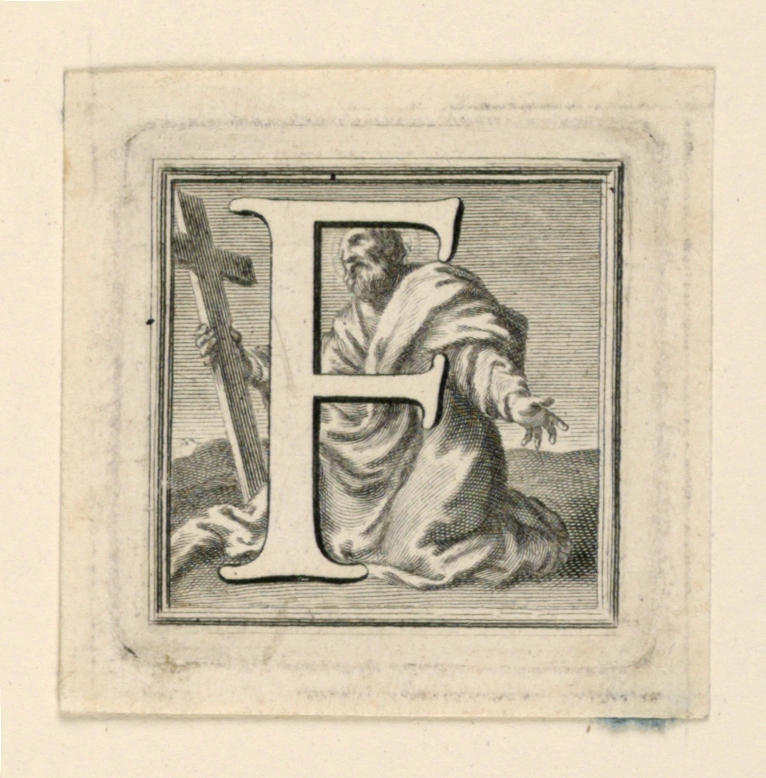
Decorated Capital Letter F“.Jakob Frey, Swiss, active Italy, 1681 – 1752. CC0 1.0.
Public domain, Smithsonian.

Inspirational place poem

For VerseLove on Ethical ELA today, host Wendy Everard invited participants to “Take some time to rabbit hole online.  Discover some places that were inspirational to your favorite author or poet.  You can write about a place you’ve visited or one that you’ve discovered today, through some research.”

Ah. See if you know this place and, more importantly, the person that inspires me.

Remember the Signs

Sometimes
there is
a magic
that
chases you
from one
world
to another

such as when
you visit
a Tex-Mex restaurant
in North Carolina

dedicated to Elvis

and as
the hostess
leads your party
to your table
you happen
to notice

high on the wall
above all the 
hodgepodge
framed photos
that aren’t even 
of Elvis at all
but instead are 
of food 
and dogs 
and cars
(the ceiling
is a mass
of actual
gleaming chrome
hubcaps)

…that high
on the wall
above these
eccentric displays
is a wooden sign

and that
is when
you know
you know
you know
magic is 
afoot

the air begins
tingling with it

and if
you can somehow
explore this wall
without being noticed
by anyone else

you might
very probably
find, if conditions
are right,

a hidden door…

It is here,
somewhere,
I am sure.

Someday,
so help me, 
I shall find it

I shall get in

to find myself
I suspect

in the Rabbit Room
of an Oxford pub
where a group of men
light their pipes and order
another beer as they
debate the manuscript
on magic chasing you
from one world
to another

by mysteriously
connected rooms
and secret portals…

inside the Tex-Mex
Elvis restaurant
I stand staring
at this sign
(later,
I will have trouble
remembering
if I actually
saw it)

knowing magic
is afoot

—it’s more than
a pretty strong
inkling…

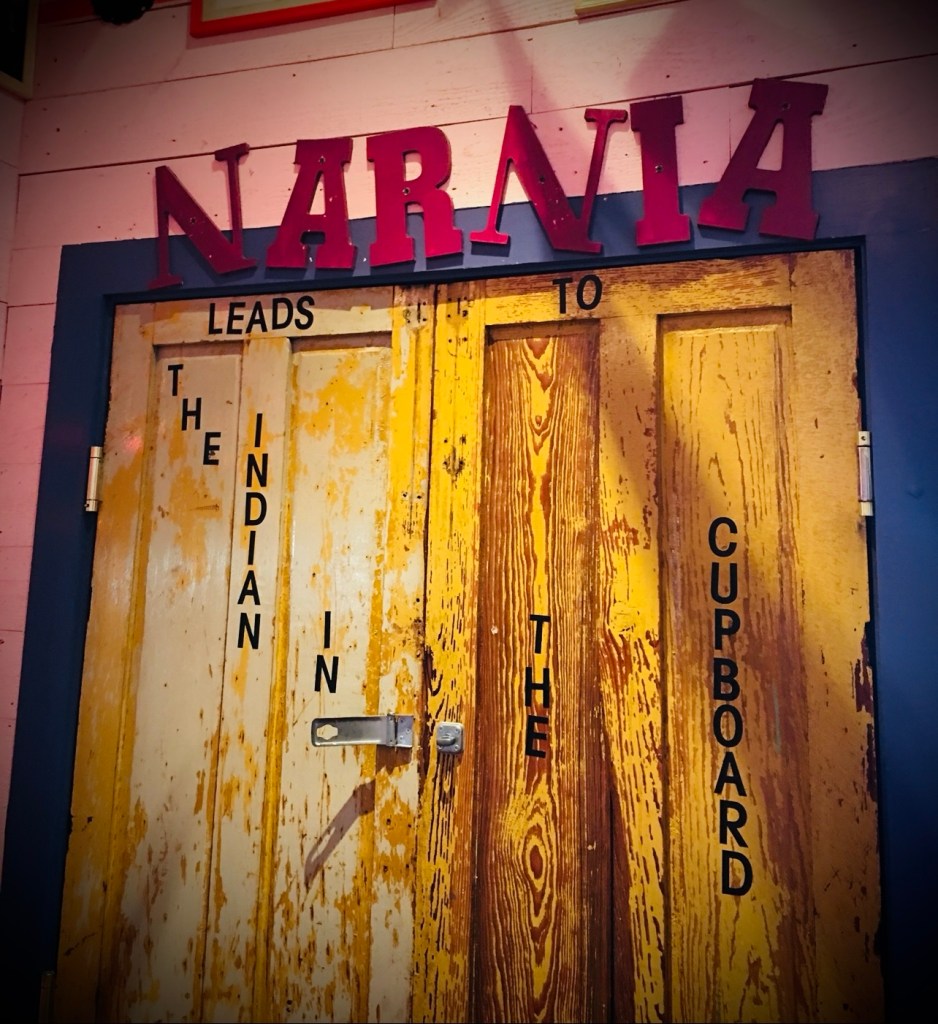
A photo of the actual sign — and door—! on the wall inside the Tex-Mex Elvis restaurant in NC.

*******

*REVEAL* in case you did not know:

The Rabbit Room was a private lounge in the back of the Oxford, England pub, The Eagle and the Child (nicknamed The Bird and the Baby), where C.S. Lewis, J.R.R. Tolkien, and others (“The Inklings”) met regularly to share their working drafts. My poem’s title, the tingling magic, the door leading to another world are all Narnia/Lewis references. Even “I shall get in” is taken from Lewis, whom I’ve loved since age ten. The manuscript being debated in the poem is The Lion, the Witch, and the Wardrobe – Tolkien didn’t like it and basically told Lewis it would never work. While writing the poem I actually forgot what the sign (“NARNIA”) looked like in my local Tex-Mex-Elvis restaurant; I recalled it as an obscure reference to that magical world. I had to scroll around for the photo I took, to remember…but even my forgetting the sign ties directly into the plot of one of The Chronicles of Narnia books (The Silver Chair).

The sign’s presence in this odd place is definitely magical to me…one day…I shall get in…