Memory poem: Pier

For Day Three of a five-day Open Write Challenge on the Ethical ELA blog, Margaret Simon invites memory poem writing. See her glorious sensory poem and one penned by her second-grade student, as well as other offerings and the inspiring “mystery of memory” mentor-poem from Nikki Grimes, here.

Today’s poem challenge begins with the word Think, followed by a word linked to childhood associations and evocative detail. Grimes’ poem begins with Think food and leads to her grandmother’s pineapple upside-down cake and food being “so much more” than nourishment. Margaret’s poem begins with Think dirt and brings the reader into a very real moment of making mudpies (you can feel and smell it) and the deeper context within.

Memoir is probably my favorite type of writing; it is a chance to stand once more in your childhood shoes, experiencing the world just as you did, only framed by knowledge gained since. I had to think a while before an image came to mind foe this memory poem. Then I had to think a while longer about what it meant …

Here’s “Pier.”

Think pier
and danger comes to mind.
Weathered gray boards
armed with splinters
meant for tender young feet
encased in sneakers
that Grandma made me wear.
Sneakers stepping deliberately
from slat to solid slat
avoiding intervals of nothingness
where water laps dark and green
below, moving and moving
until it seems the whole pier
is floating out to sea
with me.
Summer sun beating down
casting our squatty silhouettes
on grainy gray wood-canvas.
Grandma’s sunhat fluttering
in the river’s breath
brine in my nose, my mouth
endless expanse of silver-green water
glinting, beckoning,
reckoning—
there are no rails.
There are nails.
Tie the string to the raw chicken neck
toss it over—plop
and wait.
Let the nail-anchored string
rest on your fingers
until it moves with strange little jerks
then pull so so slowly
so carefully.
Use both hands but
have your net ready
for the greedy green-brown crab
with fierce orange ‘pinchers’
—keep your fingers away!—
and legs painted bright watercolor blue
soon scuttling around in
Grandma’s galvanized tub.
Think pier
and she’s right there again
between me and danger
showing me how to navigate.

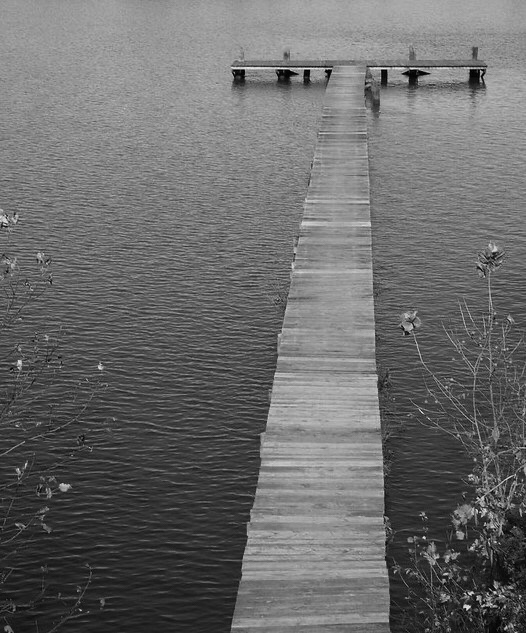
Photo: Pier. Richmond AACA. CC-BY. Cropped and converted to black-and-white. The pier of my long-ago childhood memory is so like this one.

Learning decay wordplay

Today on the Ethical ELA blog, teacher-librarian-poet Linda Mitchell kicks off a five-day Open Write invitation by using lists for composing poetry (read her beautiful “Wishing Well Price List” poem and other inspiring offerings here).

Now, I am a notorious list-maker, so much so that my husband once asked: “What are you writing now?”

To which I replied, absently, while hunched over a scrap of paper: “A list.”

“ANOTHER list? For what?”

I hesitated to confess, but I did, in a decidedly small voice … “A list of lists I have to make.”

So. If I am going to base a poem on one of my myriad lists, I must choose quickly or I’ll never begin.

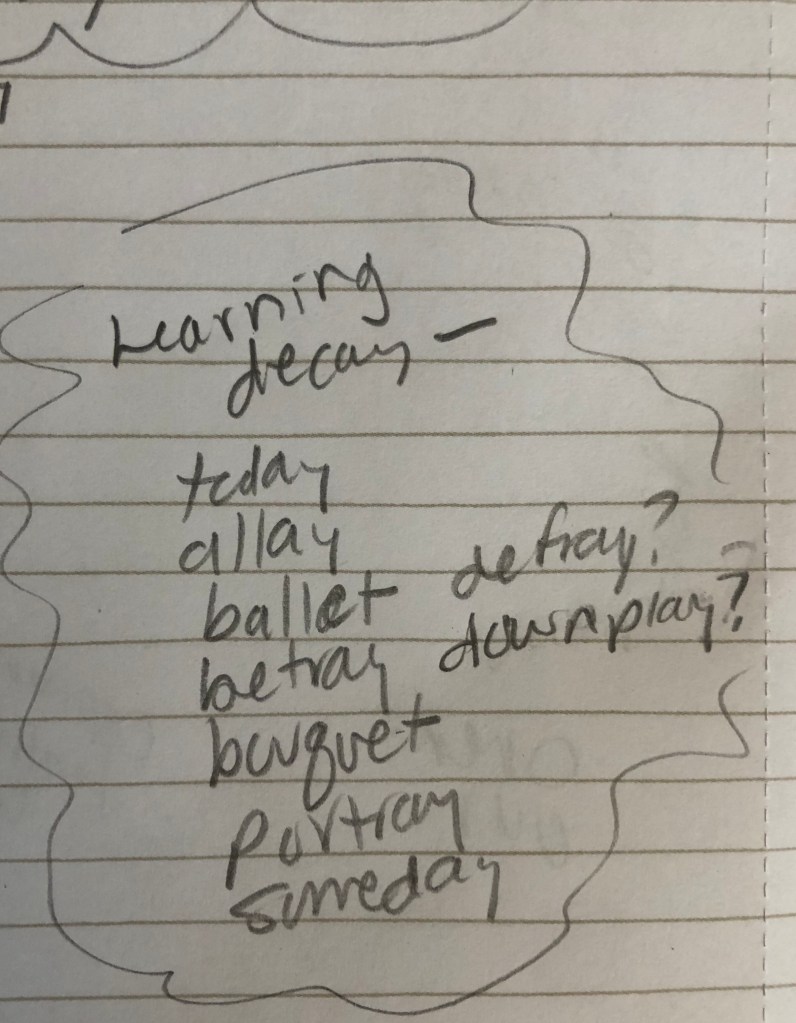
The first thing I turned to in my scrawly notebook idea-keeper was a list of rhyming words based on the phrase “learning decay.” I heard a fellow educator use it recently, expressing concern for children returning to school in the fall after having been out for five months (or longer) due to COVID-19. That idea has been sitting dormant … maybe waiting for just this moment, this prompt, as a lens to lend focus. What can I make of this list? What would help prevent “learning decay” for kids? For ANYONE? For me the answer is always twofold: Read. Write. Always.

One last thing: Kids need to know that writing is more than an assignment and generally hateful chore. They can do it anywhere, anytime, about anything. There are no limits, only endless discoveries. A notebook is a gateway for making sense of the world and discovering what you think and feel … a safe haven, a springboard, a sounding board, a lifeline, a reliquary for housing fragile new ideas, precious fragments of self. It can be on paper. On a screen. It can be a recording. A drawing. Any means of capturing thoughts, impressions, expressions. I use multiple mediums, myself. You’re reading one now. To me, moments spent writing are never wasted; growth is inevitable.

Here’s my rather rapid-fire poem based on “learning decay” and the list of rhyming words in my notebook:


Learning decay?
No, not today.
Strive to allay.
So invite play:
a word ballet,
a thought bouquet.
True soul portray,
not self-betray.
Notebook away,
the cost defray –
Recoup the day.

Poetry Friday: The web

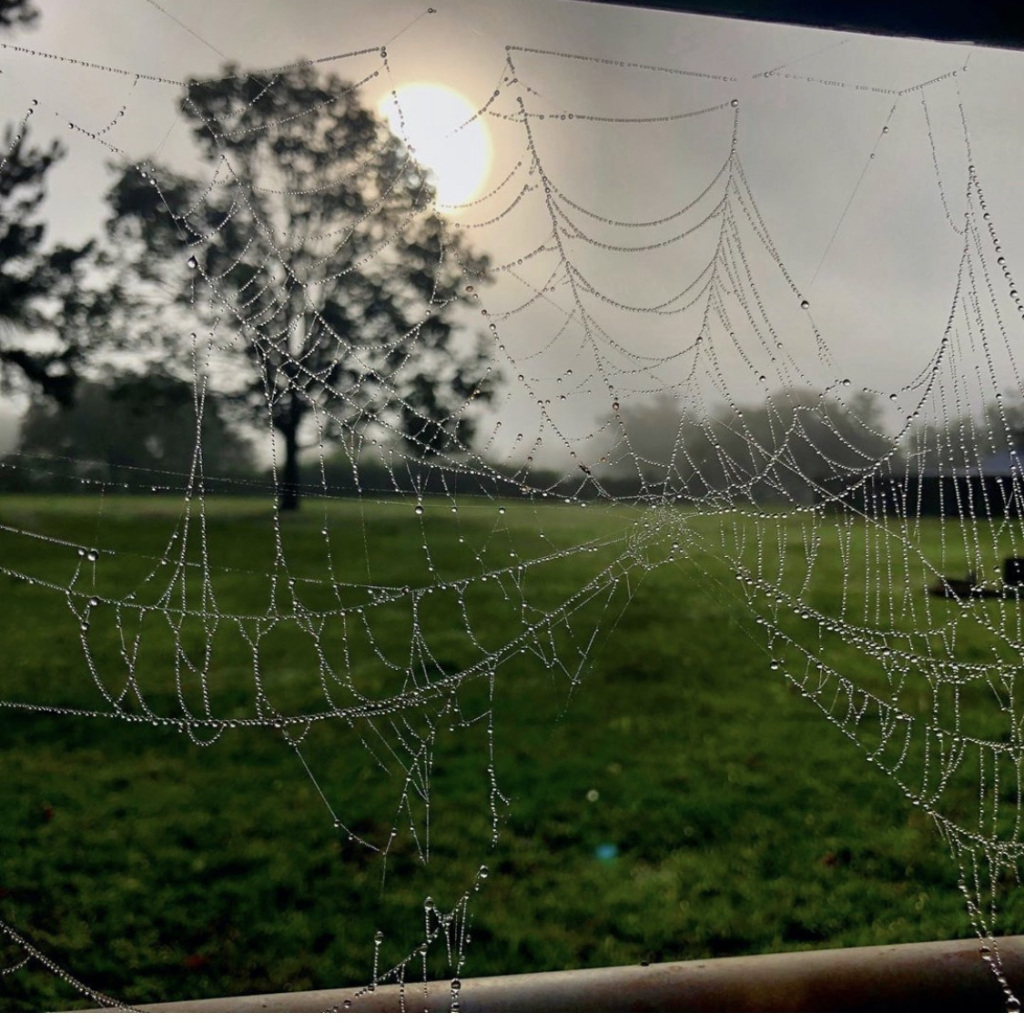
Photo: Morning Web by Jen Gray on “This Photo Wants to Be Poem,” Reflections on the Teche, Margaret Simon.

Teacher-poet-friend Margaret Simon posts a weekly image on her blog along with an invitation to write: “This Photo Wants to Be a Poem.”

Yesterday’s photo, shot by Margaret’s friend Jen, featured a dew-studded spiderweb framing the sun. A compelling call to compose … leading to my first attempt at a non-rhyming loop poem:

Sunrise feels like hope
Hope for a new day
Day of repairing damage done
Done to one another
Another day to try
Try starting afresh
Afresh with distilling dew
Dew droplets, sacred diamonds
Diamonds glittering in the light
Light illuminating the torn web

Web of our intricate interconnectedness.

May we all be found working on our corner of the web—and in the corners of our own hearts.

Thank you, Margaret and Jen, for inspiration to weave.

Check out other offerings at the Poetry Friday Roundup – thank you, Tricia, for hosting today.

Poetry Friday: Soul shine

I’m a relative newcomer to Poetry Friday. First let me thank Irene Latham for hosting today’s Roundup and Carol Varsalona for extending the invitation on social media to come and honor author Nikki Grimes.

Carol created a lovely rose-adorned Buncee card which reads: “Nikki Grimes—Do more of what makes your soul shine, because you inspire others to write.”

Those words, soul shine, beckoned me to ask … what makes one’s soul shine?

Nikki’s soul certainly shines through her poetry as well as through her faith and her literary contribution to children. I’ve read that her favorite color is purple and it got me thinking that our souls shine with all that we love, all that is most precious to us. I still consider myself mostly a storyteller with poetic leanings, but I thought I’d try capturing this idea of “soul shine” by exploring what our favorite colors might represent in a form that Nikki uses, tanka:

Your soul shines purple
with creative energy

imparting faith, calm,
stability and passion
for people, stories, and words.

My soul shines rose-gold,
a fusion of alloyed strength:
Copper for healing
in gold of faith, hope, and love
for people, stories, and words.

I often think about writing as a means of healing. Today I contemplate writing poetry as a striving to grasp what is just beyond our reach—whether the parameters and inner workings of nature, the universe, or own souls. Sometimes it comes as an anguished cry, other times quiet awe or wonder, a celebratory outpouring of joy, always an embrace of the nearly-inexpressible, real and ethereal, images of life and the living of it. What does the soul crave most? Beauty? Truth? Understanding? Freedom? Peace? It may change as we change.

Whatever the answer … poetry beckons the soul to shine.

Peace is the lofty landing place
Of our souls’ storm-torn flight.
Exhausted, expended
Transcending
Rising still to shin
e—
Your soul and mine.

Thank you, all Poetry Friday Friends, for being the wellspring of inspiration that you are.

Lead photo: Shine. Rodnei Reis. CC-BY

Progressive poem is here

So, April has had a number of firsts for me, beyond “first pandemic.”

It’s the first time I’ve attempted to write a poem a day for National Poetry Month. My first plunge into Poetry Fridays.

And this is the first time I’ve participated in a Progressive Poem.

Our poem was born on the first day of April, with the first poet writing two lines. The next poet chose one of those lines and left two more for the subsequent poet to choose from … and so the poem grew in stature and whimsical beauty as it rolled all the way down to me on Day 29.

Here’s how it was up ’til now:

Sweet violets shimmy, daffodils sway
along the wiregrass path to the lake.
I carry a rucksack of tasty cakes
and a banjo passed down from my gram.

I follow the tracks of deer and raccoon
and echo the call of a wandering loon.
A whispering breeze joins in our song
and night melts into a rose gold dawn.

Deep into nature’s embrace, I fold.
Promise of spring helps shake the cold.
Hints of sun lightly dapple the trees
calling out the sleepy bees.

Leaf-litter crackles…I pause. Twig snaps.
I gasp! Shudder! Breathe out. Relax…
as a whitetail doe comes into view.
She shifts and spotted fawns debut.

We freeze. My green eyes and her brown
Meet and lock. Time slows down.
I scatter the cakes, backing away
Safely exiting this strange ballet.

I continue the path that winds down to the lake.
Missing my breakfast for beauty’s sake.
But wait, what’s that delicious smell?
Something familiar, I know so well.

It’s a campfire. I follow my nose. I see
a circle of friends waving at me.
I free up my banjo, quicken my pace

And here were my two choices for the next line:

Option 1: Find a place to sit and gaze into space
Option 2: Find a place to sit and unlatch my banjo case

And I gotta choose it, because it’s just so musical (pun intended):

(are you ready?)

(really ready??)

Option 1: Find a place to sit and gaze into space (!)

So here we have it:

Sweet violets shimmy, daffodils sway
along the wiregrass path to the lake.
I carry a rucksack of tasty cakes
and a banjo passed down from my gram.

I follow the tracks of deer and raccoon
and echo the call of a wandering loon.
A whispering breeze joins in our song
and night melts into a rose gold dawn.

Deep into nature’s embrace, I fold.
Promise of spring helps shake the cold.
Hints of sun lightly dapple the trees
calling out the sleepy bees.

Leaf-litter crackles…I pause. Twig snaps.
I gasp! Shudder! Breathe out. Relax…
as a whitetail doe comes into view.
She shifts and spotted fawns debut.

We freeze. My green eyes and her brown
Meet and lock. Time slows down.
I scatter the cakes, backing away
Safely exiting this strange ballet.

I continue the path that winds down to the lake.
Missing my breakfast for beauty’s sake.
But wait, what’s that delicious smell?
Something familiar, I know so well.

It’s a campfire. I follow my nose. I see
a circle of friends waving at me.
I free up my banjo, quicken my pace
Find a place to sit and gaze into space.

—Now what?

Apparently I have to compose two lines.

I then hand the poem to the thirtieth and last poet in the line of succession, Michelle Kogan.

Dear Michelle … I leave my two lines to you for your choosing. The chosen line will, however, be hanging out there by its lonely self at the end of all these lovely quatrains. What if you add your own line after mine and we end as a couplet? You can also have the distinction of titling our collective masterpiece! Such choices!

Here’s what I’ve got:

Option 1: Then my fingers pick out the old, old tune

Option 2: Then together we sing, and the song is our story

Thank you, poet-friends, for this alluring, ambling April adventure. It’s an honor to have walked this path in your company.

Here’s the progression of the poem:

1 Donna Smith at Mainely Write
2 Irene Latham at Live Your Poem
3 Jone MacCulloch, deowriter
Liz Steinglass
Buffy Silverman
6 Kay McGriff at https://kaymcgriff.edublogs.org/
7 Catherine Flynn at Reading to the Core
8 Tara Smith at Going to Walden
9 Carol Varsalona at Beyond Literacy Link
10 Matt Forrest Esenwine at Radio, Rhythm, and Rhyme

11 Janet Fagel, hosted at Reflections on the Teche
12 Linda Mitchell at A Word Edgewise
13 Kat Apel at Kat Whiskers
14 Margaret at Reflections on the Teche
15 Leigh Anne Eck at A Day in the Life
16 Linda Baie at Teacher Dance
17 Heidi Mordhorst at My Juicy Little Universe
18 Mary Lee Hahn at A Year of Reading
19 Tabatha at Opposite of Indifference
20 Rose Cappelli at Imagine the Possibilities
21 Janice Scully at Salt City Verse
22 Julieanne Harmatz at To Read, To Write, To Be
23 Ruth, thereisnosuchthingasagodforsakentown.blogspot.com
24 Christie Wyman at Wondering and Wandering

25 Amy at The Poem Farm
26 Dani Burtsfield at Doing the Work That Matters
27 Robyn Hood Black at Life on the Deckle Edge

28 Jessica Bigi at Mainely Write
29 Fran Haley at lit bits and pieces
30 Michelle Kogan
I am from poem

How have I lived to be this old without attempting an “I Am From” poem?

A rectification …

I am from sharp pencils
from Ivory soap and Duke’s mayonnaise
I am from the secret vault under the concrete back steps
(cool, cobwebby, smelling of ghosts)
I am from gardenias
from towering Eastern pines
heavy boughs whispering
waving to me like a vertical green sea
I’m from storytelling and dogs
from Columbus and Ruby
I’m from Reader’s Digest and gospel music
From “You’re the oldest, set the example”
and “take care of your precious self”
I’m from Jesus Loves Me, red-letter Bibles, put your offering in the plate
I’m from the riverside and the shipyard
from collards with hot pepper vinegar and carrot cake from scratch
From my father’s crew-cut ever since his head was pierced
by a friend’s cleats in a childhood game of deer and dog,
from three translucent pink moles on Grandma’s chin.
In trunks and in closeted boxes my grandmother’s painstaking albums
rest atop layers of loose photos, paper strata of many eras.
I am etched deep in this phosphorite, the living reliquary
of all the stories.

Earth song of life: cicadas

My love for the sound of cicadas is a recurring motif in my writing.

It stems from childhood summers spent with my grandparents in the country, the most idyllic days of my existence.

In thinking of Earth Day, my first inclination is to write on In the sweat of thy face shalt thou eat bread, till thou return unto the ground; for out of it wast thou taken: for dust thou art, and unto dust shalt thou return.

That verse, Genesis 3:19 in the King James, conjures images from At Home: A Short History of Private Life. Here’s Bill Bryson’s observations of country churchyards in England where churches seem to be sinking into the ground: Think about it. A country parish like this has an average of 250 people in it, which translates into roughly a thousand adults deaths per century, plus a few thousand more poor souls who didn’t make it to maturity. Multiply that by the number of centuries that the church has been here and you can see that what you have here is not eighty or a hundred burials but probably something more on the order of, say, twenty thousand … that’s a lot of mass, needless to say. It’s why the ground has risen three feet.

In other words … we are the earth.

Times being the pandemic they are, death surrounds us. April 22 also marks the anniversary of the sudden passing of my husband’s father at the age of fifty-four. My husband was just twelve.

But I do not wish to turn Earth Day into a death knell.

I write about cicadas today because they lie in the earth and emerge—some after seventeen years—to sing their song of life.

In the thick woods and byways of North Carolina, from May through September, it’s a deafening cacophony; but as beauty is in the eye of the beholder, so there is beauty in the ear of the listener.

In honor of Earth Day, a “found poem,” of sorts, from a former blog post I wrote, entitled Cicada Rhythms:

The song of cicadas
calls to me
from long ago
from sultry summers
in the country
where narrow dirt roads
keep an ominous forest
from encroaching
on rustic homeplaces
from tiny cemeteries
where baby after baby
is buried
under white monuments
adorned with lambs
at the old church
just around the bend.
The song is of the ages
of the rising and falling
of generations
all of us coming and going
in our time
a song reverberating
from oaks, pines,
cypresses
across canals
teeming with frogs
and turtles
to white-tailed deer
standing along the fields
at dusk.
It is the bright song
of the sun
of hope
of continuity.
It is the dark song
of the night
oddly comforting—
something out in the blackness
is vibrant, alive
maybe keeping watch
while children
drift off to sleep.
It is the sound
of safety
of stability
of belonging.
Calling, calling
the crescendo mirrors
the rhythm of life
brimming with promise
echoing eternity.
When I hear it
I am a child again
no matter
how many summers
have come and gone.
Every spring as I mark
another year of existence
I listen
for the first rattle.
You’re back! my heart sings.
Ah, but we were here all along
they might say
if cicadas had words.
There’s a lot of living
and loving
yet to do.
You have today.
Carry on.

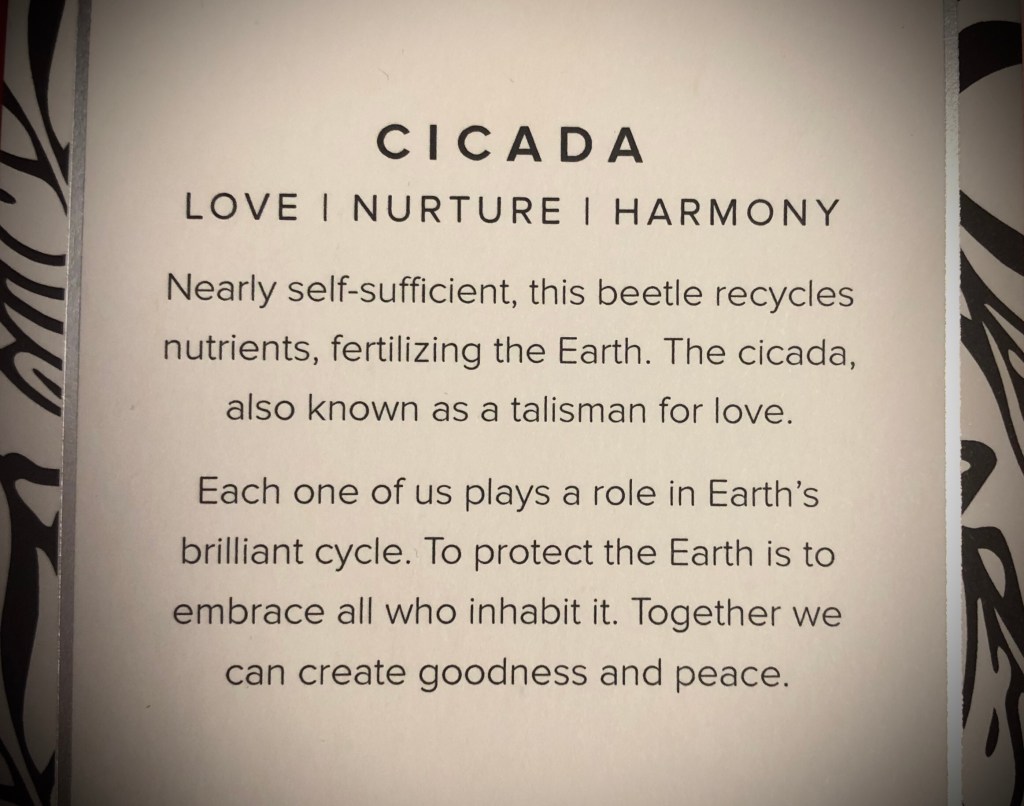
The cicada isn’t exactly a beetle, but a “true bug.”
They symbolize renewal, rebirth, transformation, change.
They can disappear for many years to return en masse.
Their buzzing call is made by the males, who begin singing soon after emergence.

A child is a poem

I recently encountered acrostic analogies, thanks to my friend and endless source of inspiration, Margaret Simon. The basic idea is to find your word and then compose analogies on each line, related to the acrostic word.

The word Child came to me pretty quickly:

Courage is to character as
Hope is to heart as
Imagination is to idea as
Love is to life as
Discovery is to delight

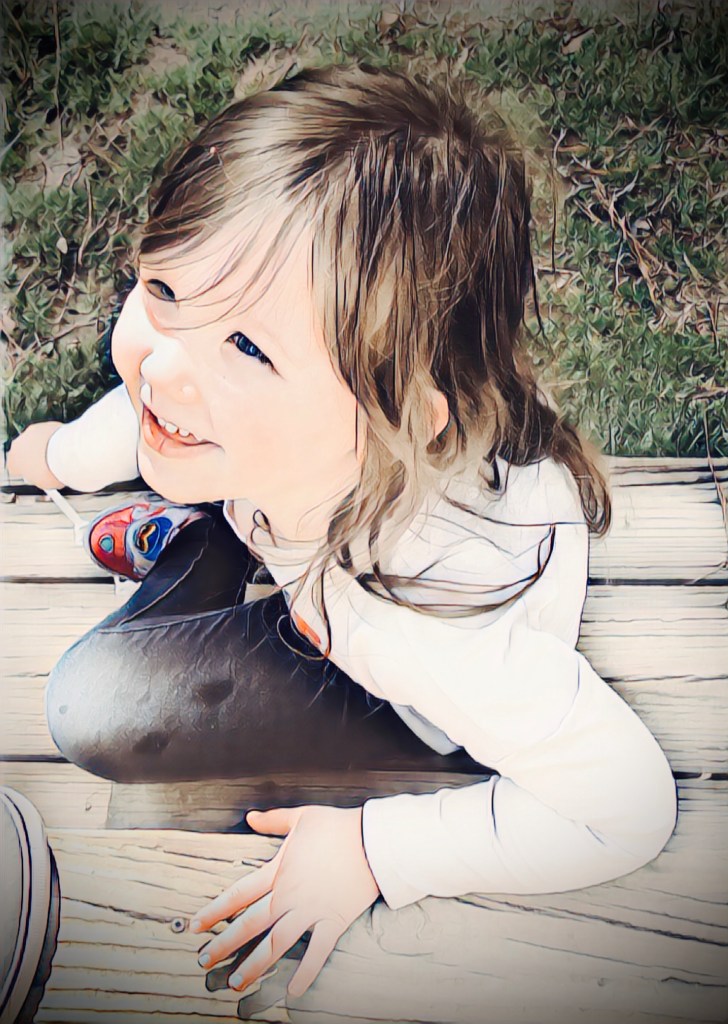
It takes courage to be a child. So much is unknown; there’s so much to learn. I think of my granddaughter, age four, sighing heavily at the end of a long, pre-pandemic day. When my daughter-in-law asked what was the matter, my granddaughter said, with utter bone-weariness: “It’s hard to be a kid.” I think of how natural hope is to children. They hope for summer, for pizza and candy, for snow enough to build a snowman, for specific toys, for special things, for being with special people. Hope seems hardwired into children, as does delight. I originally had “dazzling” in place of delight, thinking how discovery causes a child’s face to light up, sometimes drawing a vocal Ooohhhhhhh and a smile. Dazzling seemed temporary, though. Not sustainable. Delight feels more permanent, a better fit with imagination and a synonym for joy, just as intrinsic as hope to children.

Revisiting this Child acrostic today has me thinking that a child is a poem.

A miracle, how you came to be
You were not, but now you are
Materializing in ways I could not foresee
Stardust forming its own new star
Your own direction you’ll go
Your own rhythm and rhyme you’ll make
In all your wanderlust, just know
That whatever path you take
I’m part of you, you’re part of me

Life interwoven, yours and mine
Images of each other we’ll always be
Written in every line.

Read it as if it is referencing a child—doesn’t matter if it’s a child of your own, any one that you’ve loved or taught, one you’ve happened to encounter, or possibly the child you used to be.

Then read it as if it’s addressing a poem. Certainly one you’ve written. Maybe even one you’ve read.

Tell me a child is not a poem.

Or, at the very least, poetry in motion.

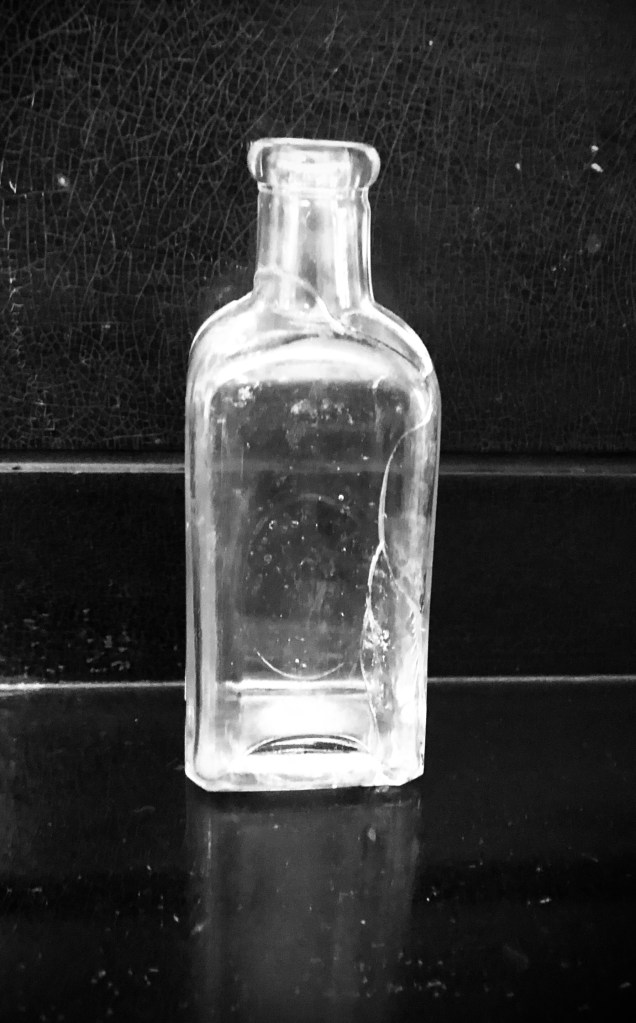
The bottle

Today I have a literal “found poem.” Meaning not one derived from another’s work but as in finding it while going through folders from previous school years and unearthing poetry I’d modeled for students on writing around an object. I remember taking three objects with special meaning to me so the kids could choose which I’d write about.

They chose the bottle.

Which I found after my grandfather’s death, visiting the farm where he was born. It was the second and last time I walked this piece of land. The first time, my grandfather, grown old and frail, walked with me. Ten acres of fields bordered by trees is all that remains, but he showed me where the house once stood, and the barns, and the henhouse … all gone without a trace now.

Except for some long-buried treasures.

In the old days, farm families had a trash pile. What wasn’t burned away with fire, or washed away by ages of wind and weather, or destroyed by perpetual tractors and harrows, might be swallowed by the earth until the earth is ready to give it back.

I wasn’t expecting such a gift the day I walked alone, mourning my grandfather.

So, I told the students, as I prepared to draft, when you write about an object you might also consider the feeling the object triggers in you. For me, with this bottle, it’s wonder. I want to incorporate a sense of wonder in this poem.

And so I wrote for them, and they enjoyed making artistic suggestions (they wanted it to rhyme):

Granddaddy is gone
And I walk his old farm
How he loved this place
This wide-open space
Nothing now to see
Where barns and house used to be
Just an empty field
After harvest’s yield
Cold breeze blows
Through my heart, it goes
When I spot in a bit of grass
Sunlight glistening on—glass?
I momentarily forget my hurt
As I dig it from the dirt
—a bottle, imagine that
No telling how long it sat
Buried deep in this ground
As the as the years circled round
Whose hand touched it last
In that long ago past?
Clear glass, heavy, yet small
Cracked but unbroken, all in all
What unseen secrets must it hold
This bottle of stories untold

It holds untold stories, all right. I’ve not determined exactly what tincture this old bottle actually held. The faintest embossed image of a root, almost worn away, remains on the front. A health tonic, likely. I know my grandfather had a sister who died of diphtheria at age three, in 1907. I doubt the bottle is that old but I have visions of my great-grandmother nursing her ailing children and tossing that empty bottle onto the trash heap…

Sparking me to attempt a didactic cinquain:

Bottle
Antiquated, weather-worn
Eroding, cracking, enduring
Poured out for healing
Elixir

Or maybe a double reversed etheree:

Empty of that for which you were fashioned
vessel of life-blood for veins long ceased
drawn from roots to nourish my own
cold glass clasped in hands now still

spooned in mouths now silent
elixir fully
poured out, consumed
every drop

gone
cast off
forgotten
swallowed by earth
kept year after year
without ceremony
lying silent, eroding
enduring seasons, weathering
cracking but enduring, determined
to remain clear with your story obscured.

—oh, little bottle.

How I wish you could speak.

Social distance of trees

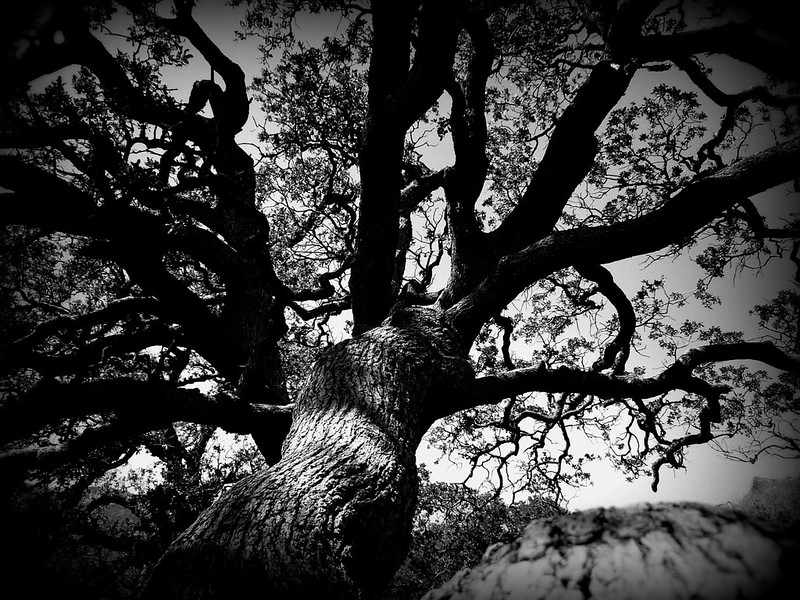
One of the best books I’ve read in recent years is The Overstory, Richard Powers’ novel of the American chestnut blight that wiped out almost all of those beautiful trees by the end of the 1930s. Powers wraps stories of people’s lives around that core like concentric rings. The novel won the Pulitzer Prize for Fiction on April 15, 2019, a year ago yesterday. Author Robert Macfarlane’s enthusiastic praise of the book led me to read it and to plunge deep into the secretive, endlessly fascinating world of trees. They communicate with one another. They have memory. Maybe they are whispering their secrets to us … This week Macfarlane shared an article on Twitter about the social distance practice of some trees, the phenomenon known as crown or canopy shyness, their treetops (“overstory”) not touching in order to survive in the competition for resources like sunlight. That was the clarion call to me: Write something. About trees and how they do this. But what? How? Then I stumbled across a different article about the Fibonacci sequence of trees, oaks in particular: as their branches grow, five branches to two spirals, a pattern is formed. Could I combine these ideas, somehow?

Doesn’t poetry always make a way?

A Fibonacci poem on the social distance practices of trees:

Trees
keep
distance:
crown shyness,
their overstory,
shared but not touching each other.

Photo: Old oak. Dave Parker. CC BY.