The baby dragon

I am not sure what inspired me to write this poem as a teenager. Likely it was born from a love of fantasy and mythology. Perhaps I was just playing with rhyme. Maybe I was feeling silly. Or all of the above. The only thing I’ve changed from the original is some punctuation.

Nevertheless, consider yourself forewarned, should a baby dragon drop in to visit YOU

Once, a baby dragon

dropped in to visit me.

He flew right through my window

(he’s not too bright, you see).

He was quite a charming fellow

with enormous, greenish scales,

quite polite, this dragonlet,

who came to hear my tales.

I told him one of Pegasus,

the horse with wings of gold.

I told him one of Camelot,

of days when men were bold.

The dragonlet, he loved these tales!

He begged and begged for more;

once he laughed so very hard

he burned down my front door.

I told him of the Lion King

who secretly had sworn

not to tell the whereabouts

of the only Unicorn.

When morning’s light awoke me,

the dragonlet had gone.

The only trace I found of him

was on my neighbor’s lawn.

Photo: Baby dragon. Derek Hatfield. CC BY

Dear Writing

As a participant in the annual Slice of Life Story Challenge with Two Writing Teachers, I will be posting each day for the month of March.

What better way to start than by expressing my love for writing? Or, to be exact, by expressing my love TO writing for the profound impact it’s had on my life.

Inspired in part by Kobe Bryant’s retirement love letter, “Dear Basketball.”

*******

Dear Writing,

It occurs to me that I’ve never told you how much you mean to me.

It is time, for you mean more now than ever before.

I remember when you first materialized. I was, what, about six years old? I wonder now whether I discovered you or you discovered me, sitting there at the coffee table in the living room, wide-ruled paper in front of me and a fat pencil in my hand. All I know is that it began with story. A pull, a beckoning, a desire to get what was swirling inside me onto pages. By some great alchemy, my blocky letters, erratic spelling, rudimentary sentences ceased to be merely themselves; combined, they became something distinctly Other.

And there you were. Almost a living, breathing presence.

I didn’t know then that you’d come to stay. That as I grew, you would grow with me. That you would, in fact, grow me, always pulling me to more. To think more, explore more, discover more, strive more, play more. To be more.

Do you remember the diary Grandma gave me for Christmas when I was ten or eleven? Trimmed in pink, little girl on the front, with a brass lock and tiny key. Do you remember this entry: “I wrote a story that I hope will be published”? Whatever happened to that diary—? To that story? They’re lost in time. No matter. I can see that page in my mind to this day; is it you that keeps this memory alive?

People began to notice our relationship early on, didn’t they. Teachers who said it was a good thing, who gave tips on how we could be stronger. Friends and family who told me to stick with you: Please keep writing. I owe them all for how they shaped you and me.

Where would I have been without you in my teenage years? In the early days of my marriage? Those were the poetry years, the journal years, when you let me glimpse the beautiful inside the uncertain, when you compelled me to pour out my heart. You were bigger than my anguish, my anger, my fear. You channeled it all, absorbed it all. Ever how circuitous the path, how violent the storm, how steep the mountain, how dark the night, how deep the pain, you were there, leading me to safety, to calm. Even now, I reach for you and you are there. Like the ocean, you bring forth unexpected treasures. And healing. When my emotions and energy are spent, washed clean away, you reveal over and over one thing that always remains: Hope.

For there’s always more to the story, to the ones that I create, to the ones that I live. I think that’s one of the most important lessons you’ve taught me: This chapter of life is ending, but a new one is about to begin. Embrace it. It’s one of your most extraordinary powers. As amazing as your ability to mine my memory. With you I am any age I ever was. I sit on my grandfather’s lap once more; he walks with me, holds my hand. I hear his voice. I am in Grandma’s kitchen while steam fogs the windows, in her arms as she rocks me and sings: Jesus loves me, this I know . . . I see my father’s blue eyes, hear my mother’s laughter and the whir of her sewing machine late into the night. With you my children are still little, my husband is young, black-haired, healthy, whole, and out on the court shooting hoops. And every dog I ever loved comes bounding back to me in absolute joy, all my shortcomings forgiven.

With you, I relive it all. The parts I am proud of and the parts I’m not; the moments I cherish and the ones I survived. With you, they all become a celebration of living, of learning.

I learned long ago that I can harness your power to attack but you showed me that it doesn’t bring me peace; you taught me, instead, to defend. Not as a warrior with drawn sword but as a careful guardian of my own mind and heart. Not by destroying, but by edifying. You enable me to walk in another’s shoes and see through another’s eyes, to understand that fighting doesn’t move the hearts of others, but story does.

There’s something of the divine about you as well. Marvel of marvels, how a spark in the human brain becomes a thought and a thought becomes substance because of you. Like something from nothing. Ex nihilo. It’s how God created, speaking the world into existence. With words. Without limits. Anything is possible. Believe. To me there’s a sacredness behind the human spirit’s desperate craving to create, to express, to be heard . . .

Which brings me back to being six years old, at the table, pencil in my hand.

And you will outlive me. You are my record, what I leave behind.

Let it be the best of me.

Know that you’re an inextricable part of who I am, one of my life’s greatest gifts. Meant to be given. And so I give you away.

I am grateful beyond words.

I love you.

Fran

A poem written at age sixteen

Lost

It started with a feeling.

It led to a word.

Lost.

It led me to look for a beautiful book, The Lost Words.

I couldn’t remember where I put it.

I looked everywhere.

It’s lost.

Ah. A theme.

Maybe it’s the dreary January dusk, or the drizzle, or Monday.

Maybe it’s the news. Lost lives.

Maybe it’s growing older and being reminded of things I loved long ago, like koalas, because of a book my grandmother read to me, and wondering how many koalas are left in Australia now. Wondering if there are enough eucalyptus trees left in that charred landscape to keep them alive.

Maybe it’s everything.

So much is lost.

I am not lost.

Just caught in layers of lost, like being wrapped round and round with invisible tulle.

It’s there.

I feel it.

Cocoonish.

That’s what sent me searching for The Lost Words as reading it suited my mood. The book is a glorious creation based on words that are disappearing from the dictionary. Words about the natural world that children don’t know anymore. Lyrical verse, majestic illustrations, making something beautiful of something lost . . . it was calling me to reread it. The very thing I needed.

But I can’t find it or remember where I last left it.

It’s really lost.

Naturally that beckoned lost associations. Lost people, lost friends, lost dogs, lost moments, lost time, lost things. Lost opportunities. Lost relationships, lost trust. Lost vision, especially in the educational world of late. Lost sense, lost direction. Lost ideas that I didn’t write down (although I am better about it now than I used to be). Lost dreams, so vivid and clear — what great stories they would make! — disintegrating as I wake, alas. I can’t seem to hold onto the dream and wake up; too often I am left with odd fragments.

But even in my tulle-swathed, piece-y malaise, never lost hope. No, not that. Never lost faith. Never lost love, because, if it’s love, it’s there forever.

I lost interest in reading tonight. So, I write.

Never lost words, not for me. Not yet. They find me, somehow.

And tomorrow I’ll find that book.

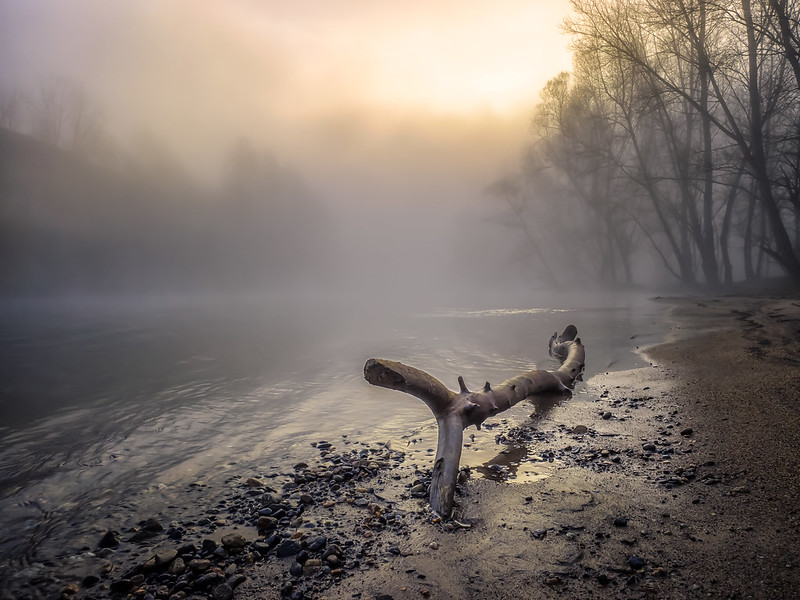
Photo: Lost. gwenole camus. CC BY-SA

Possumbilities

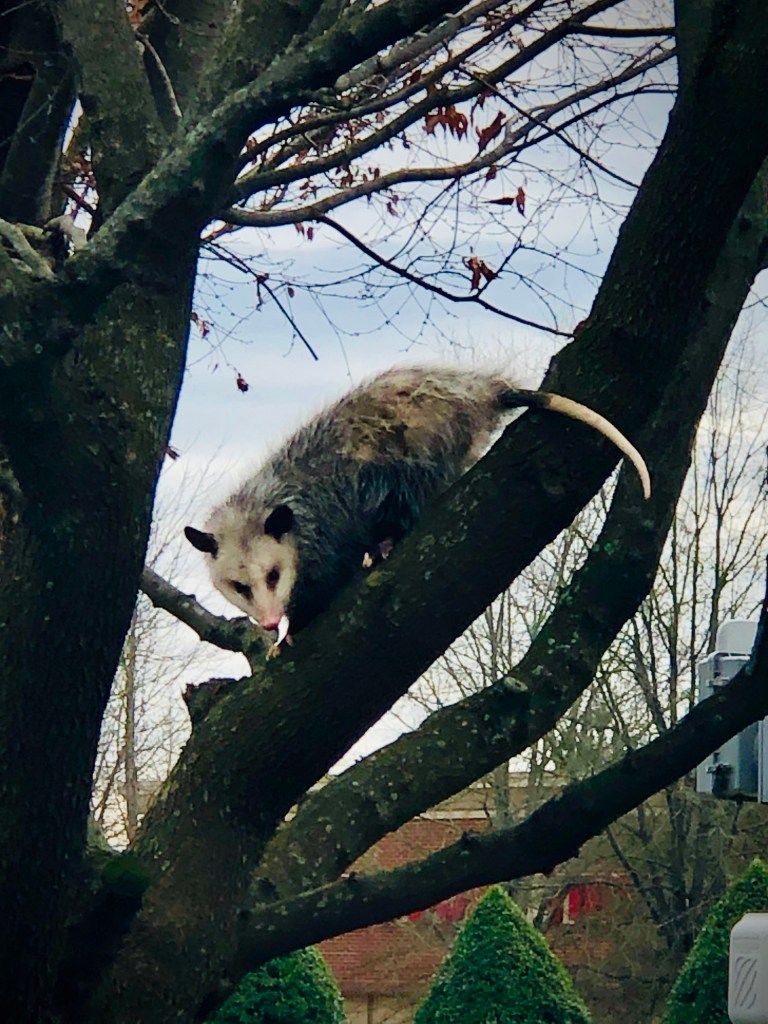
It was not a thing I expected to see while on a Chick-Fil-A lunch run.

But there it was, directly opposite the drive-through menu board for ordering: A possum in a tree.

First thoughts: What’s wrong with it? Why would a possum be out and about during the day?

Next thoughts: Where did it come from? Why is it here? Has the smell of food lured it? Did it somehow manage to cross the busy street? Or (I shuddered): Will it TRY to cross the busy street? What will become of it?

Then: I need a picture. I’ll have to write about this.

And so I left the drive-through with the possum’s image preserved in my phone. Before I pulled into traffic, I looked back at the tree one last time. The animal wasn’t there any more.

It’s hard, for a storyteller, to not know fate or destiny.

I wondered many things as I drove away: Will restaurant workers or patrons call Animal Control? What does Animal Control do in a case like this? Will some random person decide to shoot it, deciding it poses a safety hazard, or just for the sake of shooting it? I am not a big fan of opossums but I didn’t want harm to come to it. Maybe it was old, weak, confused, like a person wandering in a nursing home. Maybe it was a female with babies hidden in her pouch. One Sunday morning when I was coming home from church a possum darted in front of my car. “Dart” isn’t really accurate; it hobbled as fast as it could. A mother laden with knobbly pink and gray babies on her back. Four little faces with eyes looking right at me. I slowed; they skittered across the road to safety.

That time, anyway.

And so I remembered them as I drove farther from my drive-through possum, contemplating the whole gamut of what might happen to it. Then, thankfully, my fanciful side kicked in: It knew where the speaker was. Maybe the possum comes on a daily basis to place an order: “Twenty-piece nuggets, please. Don’t forget my ketchup.” With those little pink hands, it could probably peel the ketchup foil back for dipping. Maybe the famous renegade cows are initiating this possum for the next round of their advertising campaign to ‘Eat Mor Chikin‘. . .

Oh, I thought, children would really like that story! I wonder what THEY would write . . . ?

There was a time when I’d take the photo and my story right into classrooms, across grade levels, as a model for any kind of writing. Small moment narratives, opinion, informational (for I ended up researching why an opossum would be so visible during the day and guess what? It’s not out of the ordinary at all. I further learned that opossums have a natural resistance to rabies and snake venom. Imagine people shooting it out of the tree because they don’t know). As an intro I might ask students if they know that the opossum is the only marsupial native to the Americas and link it to the koalas and kangaroos in Australia; we might consider relief efforts and life preservation, for all life is connected.

I’d even use my possum for teaching poetry writing. My mind is playing, this very minute, with opposite and opossum and tree and see, with an atmosphere of fear, wishing for a safe place. . . and of course there’s the fabulous fun of writing fantasy. Perhaps this possum took Chik-Fil-A home to its family where the bigger possum kids are playing video games (it always appears in some students’ writing). Maybe the possum babies got their nuggets “to go,” eating them in their mother’s pouch, with the littlest one crying that it didn’t get a toy . . .

The possibilities—or, in this case, “possumbilities”—are endless.

Or were endless, in the days when we did those kinds of writing, in that way, before the advent of programs that “incorporate” writing via a series of formulaic steps with whole classes writing on the same thing for the same amount of prescribed time. When authentic process was valued above uniform product and the end results were all different, because students—humans—are all different. In the days when students asked questions they generated themselves, because they really wanted to know the answers, because the answers mattered to them. When mining their own experiences for meaning lit up their faces and exploring their own ideas illuminated their minds. When the most priceless gift of childhood, imagination, wasn’t constrained and when teachers were not conscripted to teaching writing this way (with some believing that it’s better because it’s “easier”).

—Not me.

I saw a possum in a tree.

And I wondered, knowing I’d write about it, to find out why I needed to write about it.

It’s not about knowing fate or destiny.

It’s all about seeing possibilities, great and small, without and within, following a thread of thinking, of feeling, of life, to see where it takes you.

In other words, not blindly driving through and missing possumbilities.

Reclamation

I love the stillness of the morning, before the dawn, which is presently hours away. I love the silence, the holy hush preceding the coming of the sun. My family, even the new puppy, slumbers on. If I have a word for these moments, it’s expectancy. If I were to step outside now I might hear footsteps in the pine straw beneath trees that border my back fence; I will not yet be able to see which creature is moving there in the dark. A white-tailed deer, perhaps, or a squirrel, which makes an astonishing amount of noise in the straw, much more more than larger creatures. Two mornings ago, in the first light, I glimpsed a huge gray rabbit running to and fro just beyond the fence. And if I wait long enough, I’ll hear my neighbor’s rooster crow. Any time now. He doesn’t wait for actual light that I can see. He’ll proclaim the new day, the continuum of daily living, before it’s set in motion. He’ll stir the goats in various pens throughout the neighborhood (not to be expected in a little subdivision—whatever happened to restrictive covenants?) and their loud chorus of wild baas will back up the rooster’s solo.

It’s life waking up again, claiming the day for its own.

On this new day, of this new year, this new decade, I think about life. The trouble with life, I once read, is that it’s so daily. Not merely being alive but trying to accomplish all that must be (or that we think must be) accomplished in this day, this week, this month … last year I learned a lesson about life on hiatus. When the life of someone you love hangs in the balance, all your best-laid plans disintegrate. Poof.

Moving forward becomes an act of will, a revised determination to do what you can, what’s most important, for that given day. Recovering ground, inch by precious inch.

Reclamation.

Whether life is suspended, or stagnant, or spinning out of control, we still have choices. Maybe it’s resting more. Writing more. Reading more, singing more. Praying more. Maybe it’s seeking help. Maybe it’s restoring relationships, or releasing them. Or creating something beautiful, meaningful. What we want to do and what we’re actually able to do in a day, a week, a month, a year, may be vastly different, but reclamation doesn’t happen all at once. It happens in determined, consistent bits by bits. It is deliberate and intentional.

Once I wished for something like parallel lives, a cloning of sorts, with one of me staying home to write all day, one of me getting everything done in the house the way I want it, and another me going to work. I am exacting of myself; I do a thing, I want to do it well, and so I am easily paralyzed by my own standards.

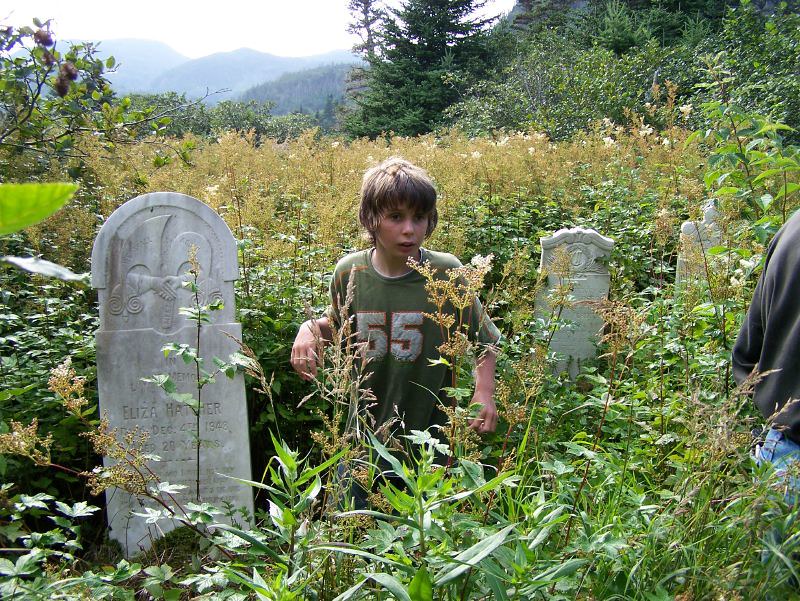
I think of the sea, rolling on and on, its billows and rhythms, its continuity, its fluidity. I contemplate its healing properties, how it is designed to cleanse itself. I look at the photo I included at the top of this post, how, writes the photographer, the cemetery “is being reclaimed by the forest as alders, birch, spruce, fir and a couple apple trees crowd out the dozen or so headstones that stand here.” It’s in Newfoundland and that symbolism strikes right at my writer-heart, new found land.

That’s what reclamation is. Taking back solid ground, or creating new land, from what would submerge it, overtake it. Inch by precious inch, bit by bit. Yesterday I heard a sportscaster speak of Ron Rivera’s move from the Carolina Panthers to the Washington Redskins: “Coach Rivera has been part of a reclamation project before.” It took him four years to take the failing Panthers to the Super Bowl. He’s already begun the work for the Redskins, before he ever gets there … like my rooster here, calling to the dawn before it appears.

It’s hard daily work, reclamation. Progress is slow to see for a time.

But I’ve started.

I pulled the weeds out of the planters on my back deck and planted pansies, a bright bit of welcome on these cold mornings when I take the new puppy out. The puppy is himself an act of reclamation, an affirmation of love my family has always had for dogs (which, I’ve said before, have souls; purer than my own, there in those eyes). He marks a moving forward.

One step at a time, I’ll reclaim the house by many little needed repairs and coats of paint. Patience, endurance …

My writing, my writing. How many stories lay unfinished? Not begun? If I can learn to live nonlinear, to live as fluid as the sea, then anywhere is an entry point. Whenever, wherever, just plunge. The time necessary for writing will come if I just begin the reclamation.

Work. I write this paragraph not only for myself, but for other educators and instructional coaches struggling for clarity and a foothold in an ever-changing, shifting field: Beware the great chasm between theory and application, between programs that are packaged as “the magic bullet” and cost a pretty penny but fail to deliver. Be aware of the great gulf between data that’s visible and the stories of human children, not so visible. Push back all that encroaches on growing the children, that which would inhibit their love of learning. Reclaim that for them. Know them and their families and their stories. Know your colleagues and their stories. Write together, all of you; in this day of restorative practices and social-emotional wellness, why are people not writing more in such settings? We reclaim the very heart of our humanity when we share our stories.

—It is light now. A new day is here; I hear life stirring all around. Forget those restrictive covenants.

Let the reclamation begin.

Photo: Reclamation. Derrick Mercer. CC BY-SA

Sick Ada, part II


About a month ago I shared this idea for a story about a little girl who loves cicadas and who’s having a hard time dealing with her parents’ separation. The girl’s name is Ada and she becomes seriously ill . . . hence the title, “Sick Ada,” cicada . . .

The story’s been gestating for a while as there were so many things to flesh out: How old is Ada? Why are her parents separated? Who left, Mom or Dad? Why? What’s the deal with her cicada fascination? How does she get sick? Most of all: Where should the story begin?

I considered writing this scene first: Near the end of the story, Ada goes into the hospital, sick enough that her recovery hangs in the balance. It is winter, when cicadas don’t sing, but she hears the heater rattling in her hospital room and believes it to be cicadas. She decides she doesn’t mind dying as long she can hear them . . .

But I am not starting there, and Ada will not die because my friend Kathleen interceded, pleading for the little girl’s life.

Amid much encouragement and a few thinly-veiled threats (thanks, Friends!), here’s the first draft opening scene.

*******

The darkness began to change.

Strips of light glimmered between the blinds until a thin finger of sunshine pushed through, reaching across Ada’s rumpled bed to caress her cheek.

At its warm touch, she opened her eyes.

Morning.

Oh!

Ada sat straight up in bed.

It’s my birthday! I am nine.

She felt strangely old.

Sitting there in the grayness, Ada knew two certainties. Today the cicadas would start singing. They always started singing on her birthday; Daddy said it was their song of celebration for her coming into the world. He would sing to her, too, only this time it would be over the phone. He promised to call today. Next week when school was finally out, Mama would drive Ada to the airport, put her on a plane, and Daddy would be there to meet her when the plane landed. It would be her first flight.

Ada wondered if cicadas sang on the other side of the country.

The other certainty was that she wouldn’t get her biggest birthday wish of all, that Daddy would come home to stay.

*******

So, Friends, that’s how Ada’s story begins for now, rough as it is.

For the record: The cicada is an ancient symbol of change or transformation and the name “Ada” just so happens to mean “noble.”

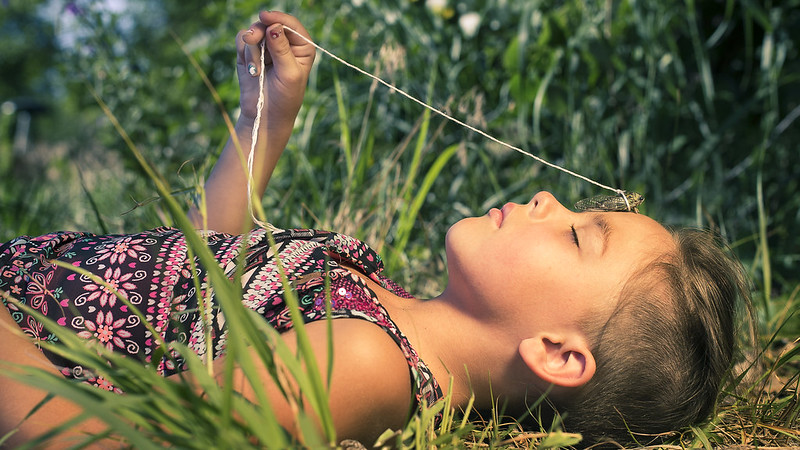
Photo: Girl with cicada bug. Jose HernandezCC BY-SA

Writing your own story

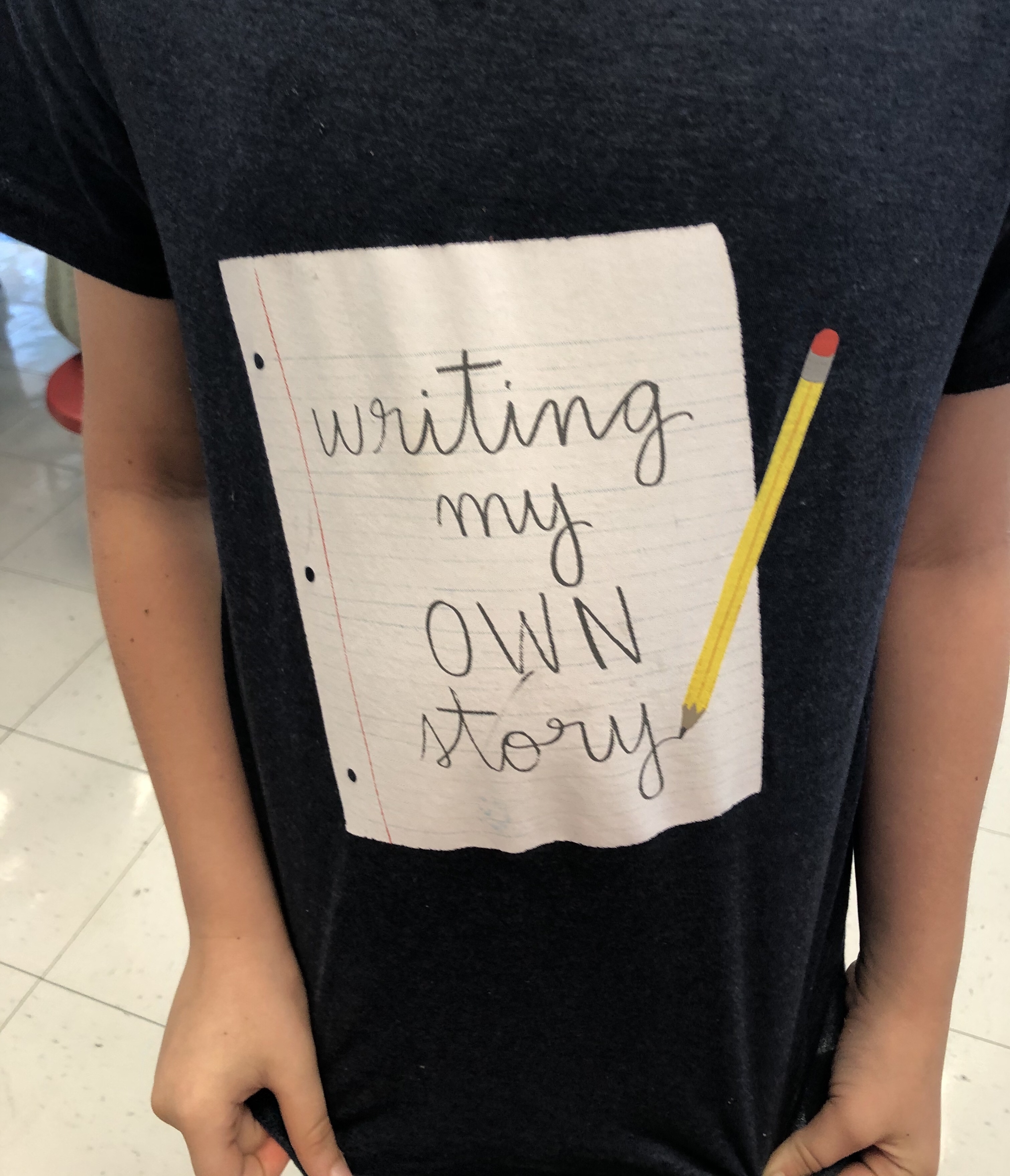
I saw his shirt from across the crowded cafeteria:

Writing my OWN story.

I hadn’t seen him before, didn’t know him, but I had to go over and say: “That’s the most awesome shirt! Do you like to write?”

He smiled and nodded, eyes bright and cheerful: “Yes!”

We had a short conversation about reading and writing. He was new to our school. After this initial encounter he was quick to come ask questions if he wasn’t sure about how we do things here, always greeting me with an earnest face and slightly self-conscious smile.

He wasn’t with us long. On his last days, he asked if he could stay after lunch and clean all of the tables as his grade level headed to recess. He wiped every table meticulously, then straightened all of the cardboard trays in the serving line for the classes to follow.

I understood.

It was something he could control. A positive and productive outlet.

I never got to write with him.

I thought about students over the years and what I learned about their lives from their writing. A girl whose family slept in their car on the journey north to visit relatives for the holidays; how she woke in the morning, shivering, to find frost coating the windows. A teenager whose vivid third-person narrative about a child born in another country, who survives abuse to find a new life and family in America . . . it switches to first person at the end as he rejoices and reveals he was that child. A first-grader who wanted to write about her dog, how the police shot and killed it. Unnerved, I told her teacher, in hopes that this was just a disturbing fabrication. It wasn’t. The child saw it happen.

For all the story-loving writer that I am, I know writing is not a magic cure for the pain and scars of life. It is, however, a real coping mechanism, a positive and productive outlet, a way of seeing and dealing with and finding hope to overcome. Even in the youngest of us, many of whom already know that life doesn’t follow a neat formula, that it seldom follows a clear and sensible series of steps. I often think about what passes for “writing” in schools; it can’t always be a neat response to a text or a prompt. If we are truly to equip children with tools for life, it begins with a real response to their lives in this world. We owe them, for as long as we have them, a place to feel safe, to be loved, a way of having some control in the face of change, to find their own power despite their powerlessness.To write their own lives, even as life is unfolding.

To have hope on the journey as it takes so many twists and turns.

Time is of the essence; we don’t know for how long or short a time they’ll be in our sphere of influence. Good-byes can come without warning.

And so I quickly gathered the best tools I had at my disposal: pencils, notebooks, a couple of favorite books from my shelf. It was my way of saying Godspeed, child. Write your OWN story. Believe. Attend to your heart. Here’s a piece of mine to carry with you.

Edward knew what it was like to say over and over again the names of those you had left behind. He knew what it was like to miss someone. And so he listened. And in his listening, his heart opened wide and then wider still.

You must be filled with expectancy. You must be awash in hope. You must wonder who will love you, whom you will love next.

—excerpts, Kate DiCamillo, The Miraculous Journey of Edward Tulane

Sick Ada

I don’t know where it came from, this idea for a story about a little girl who likes cicadas.

Except that I was a little girl who liked cicadas. I am a grown-up who loves them; I’ve written about this many times.

Anyway . . .

In my idea (that fell into my head when I was actually thinking of other things), a little girl is having a hard time adjusting to her parents’ separation. It’s connected to a change in seasons when she can’t hear cicadas anymore. Perhaps she will find some shed cicada shells and ponder the emptiness where a living thing used to be. Or how one outgrows things. Maybe she’ll even think that her parents have outgrown their love for her. I am not sure yet of all the meanings and connections; I will have to write and let the story grow and breathe on its own.

I do know, however, that the little girl becomes ill. Is it terminal? Not sure yet. She goes to the hospital. It’s winter. As she’s falling asleep, the heater in her room sounds like cicadas rattling high in the summer trees. It’s a happy sound, this buzzing. She will wonder if dying is not so bad, really, if she can just keep hearing cicadas . . . and then she hears voices. Her mother and father are there with her in the room, together if only for a little while, united in their concern for their sick daughter.

Whose name is Ada.

Sick Ada . . . cicada . . .

That’s as far as I’ve gotten, just grasping at these gossamer images, the barest wings of an idea.

But I think it might like to become a real story.

That belongs to children, for they live at the mercy of adults and the world.

And, of course, to cicadas, which are always buzzing somewhere, and which represent many things, mostly good.

Seems I almost owe it to little sick Ada, waiting there in the wings.

Photo: Girl with cicada bug. Jose Hernandez. CC BY-SA

Why I Write 2019

The National Day on Writing invites me to examine my writing history: Why DO I write, really? And why do I love it?

I don’t know exactly when the desire began, only that it manifested itself early in life.

It had nothing to do with the hateful formation of letters on paper. My handwriting was never pretty. Even now my letters aren’t uniform; I scrawl my thoughts onto a page lightning-fast, before they escape me.

That’s what writing is. Thoughts. Ideas. The attempt to capture and convey images, emotions, sensations.

It has everything to do with words.

I fell in love with words long ago on my grandmother’s lap as she read book after book to me, the prosody of her voice like the waves of the ocean rolling on and on and on. Endless, musical, alive. Her voice buoys me to this day. I hear it still; she is never far away.

At age six I gathered paper and a pencil, sat at the coffee table in my living room, and wrote a story that I’d heard many times. No one said Do This. The compulsion came from within. The writing was for me and no one else. It simply needed to be done and I wanted to do it. So there I sat, laboriously printing my ugly letters, making words to what I believed was the most beautiful story in the world.

I wrote because, in the days before the Internet and cellphones, Grandma wrote letters (with perfect penmanship) in which she included books of stamps so that I could mail letters back to her.

In my adolescence she gave me a diary with a lock and key (two keys, actually, in case one got lost). I flooded those pages with the secrets of my young soul, such as the angry suspicion that my parents had adopted me, whereas my sister was their real child, and: One day I want to write a book. I hope it will be published!

And so I wrote.

One teacher, then another and another, strategically placed throughout my education, said Keep writing. Here’s what you do well. Here’s a thing that can make your writing even better. They asked me to read my work to my classmates, who said Keep writing. Oh, and will you help us?

Throughout my teens poetry called to me. It said: You hear my music. Show me. Come, dance. Don’t think about perfect steps. Just listen and follow what you hear.

—That’s pretty much how I write everything now.

And the books, the books, the books . . . who and what would I be if I had not loved reading so? All genres, all my life. New words, new information, new ways of thinking, new things to explore and imagine. New motivation to write with the same power as the writers who stir something my very core, as our cores are clearly made of the same stuff.

So, to this day, I write. Because I love story, real or imagined. I write with and for children who have their own stories to tell. I write to cope with people and situations that I cannot change and to remember all that’s good in my life. I write my celebrations and my losses. I write not to wage war on the world but to find peace in myself, where finding peace with others begins. I write to forgive myself and others. Not with words that destroy, but those that build, that create, that go on in the belief that the chapter to come will be better than the one before. Even when pain is woven through it, so is joy. Because that’s life. And love. And writing. I want to store it all it before the hippocampi in my brain (I envision these as two seahorses, yes) stop recording my memories and before the ideas evaporate and the words don’t come any more.

Until then, on a sea of words, the rhythm of life rises, falls, and calls: You hear my music. Show me. Come, dance. Don’t think about perfect steps. Just listen and follow what you hear.

And so I do, with a heart full of gratitude.

That is why I write.

A few words

As a literacy coach, one great advantage I have is interacting with students from grade to grade throughout their elementary years. I get to watch their growth and development firsthand. As readers, as writers, as fellow human beings . . .

One great disadvantage is not being a daily part of their lives or having as much impact as a classroom teacher. I try to maximize the joy of student learning in the moments I do have with them, for I am on the periphery of their academic life.

Or so I believed.

This week, after several weeks out with my husband’s hospitalization and convalescence, I went back to school. Feeling grateful to be on familiar ground (somewhat like finally making it to a known island through strange, ominous seas), whom should I see but a little friend I used to call “Superman” because he was wearing a shirt emblazoned with the superhero’s “S” logo on the day I first saw him. He was in first grade then, having come from another country. He was tiny, he knew no English, and his frustration was immense. His face was one miniature thundercloud until I said “Hey, you’re Superman,” and that’s when he smiled.

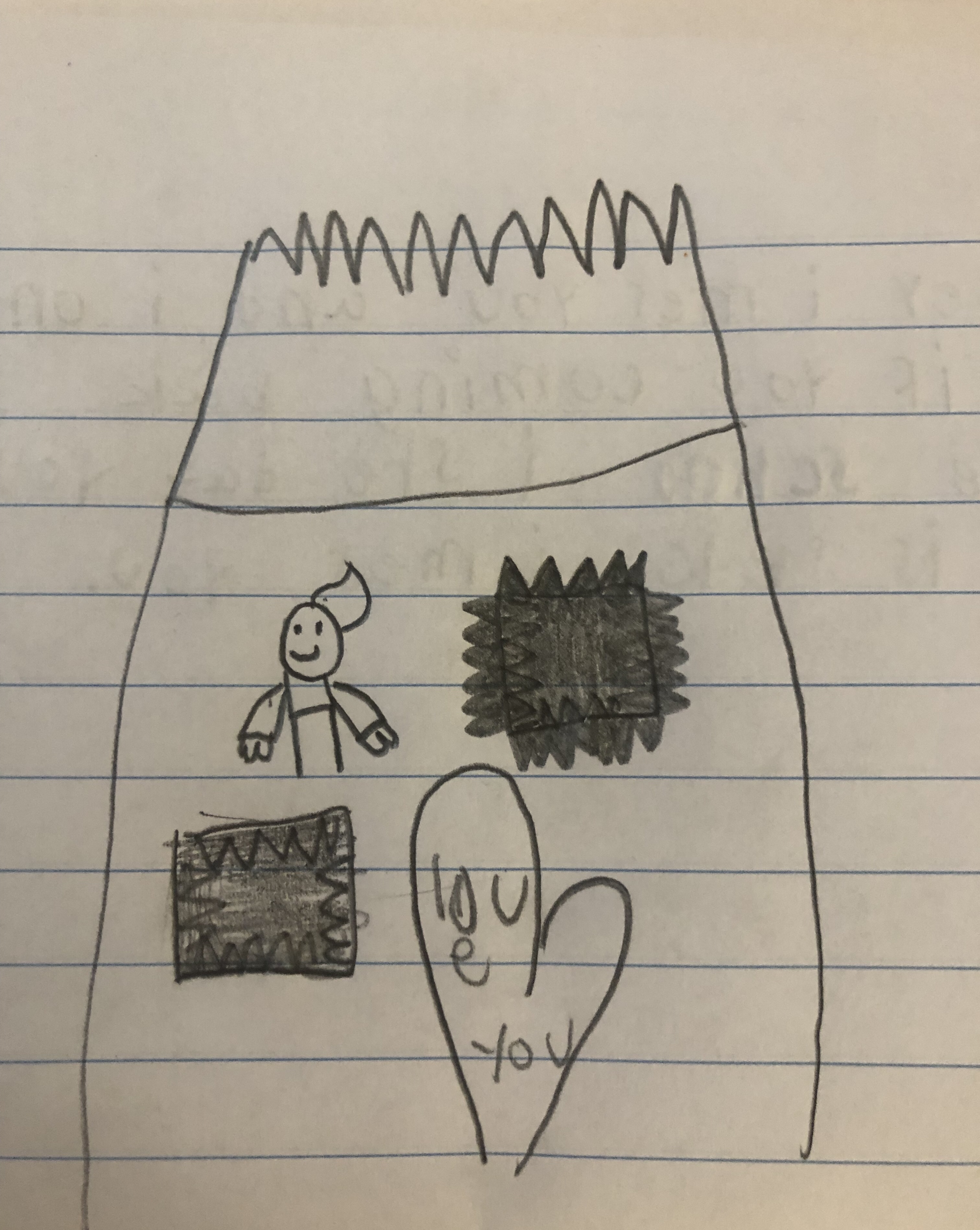
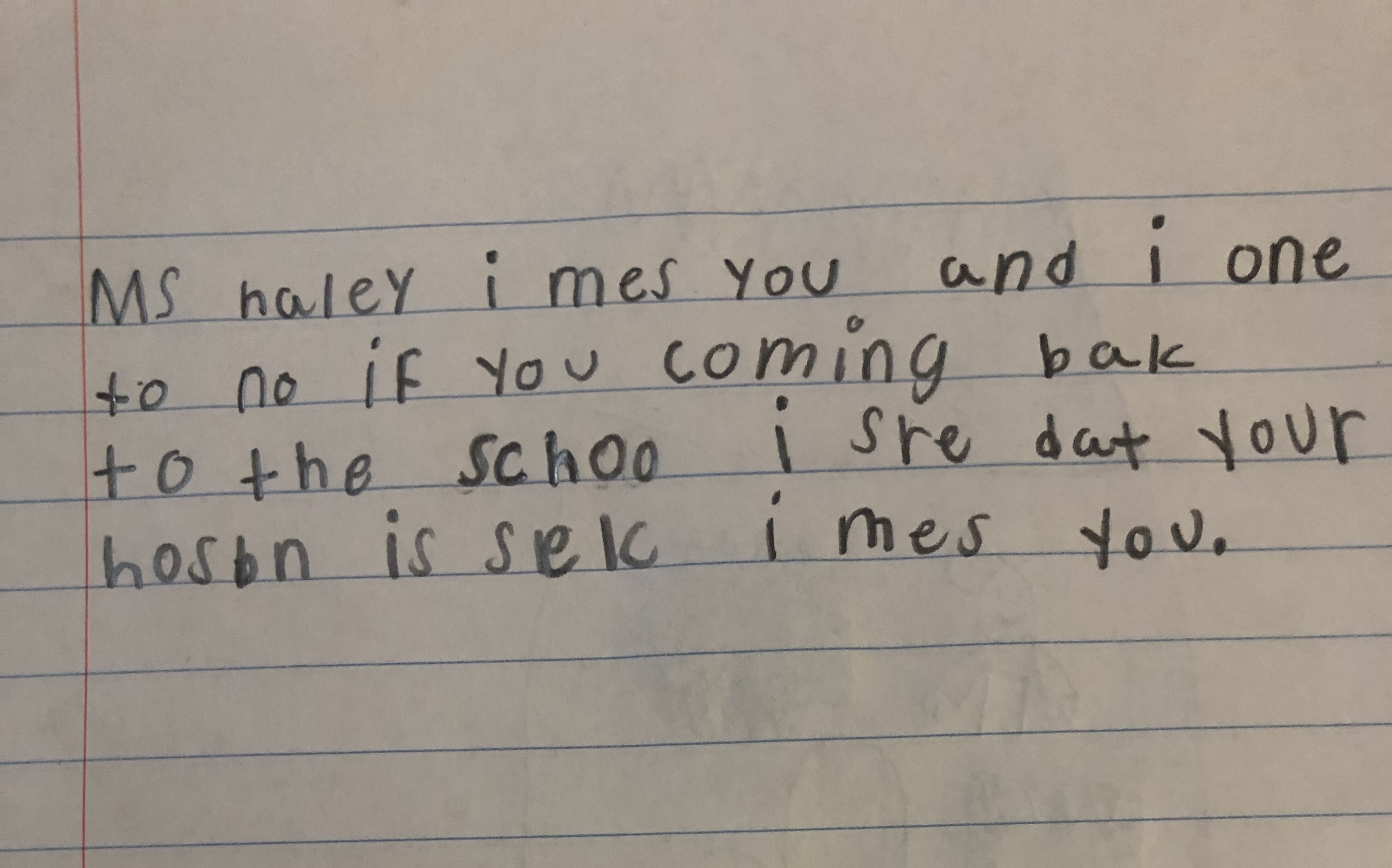
So, on my first day back, here he is, getting off the bus, smiling, making a beeline. He’d made a card for me. This child, now in third grade, has mastered English to the chatterbox level and still doesn’t like to write (although he loves telling elaborate stories about things like playing soccer in the street with other kids in his neighborhood).

I thank him. I tell him how tall he’s gotten in these few weeks I’ve been away. He grins, hugs me, and heads off to class, uncharacteristically shy.

I read my card and I understand.

Sometimes it’s hard to share your heart out loud. So we write when we have something to say, when the need to express this something outweighs the chore of getting it on the page.

Just a few words, but how I rejoice in them, that he has them.

—I missed you, too, Superman.