Not just the baking of them as a means of COVID-coping productivity, but as an expression of the times.
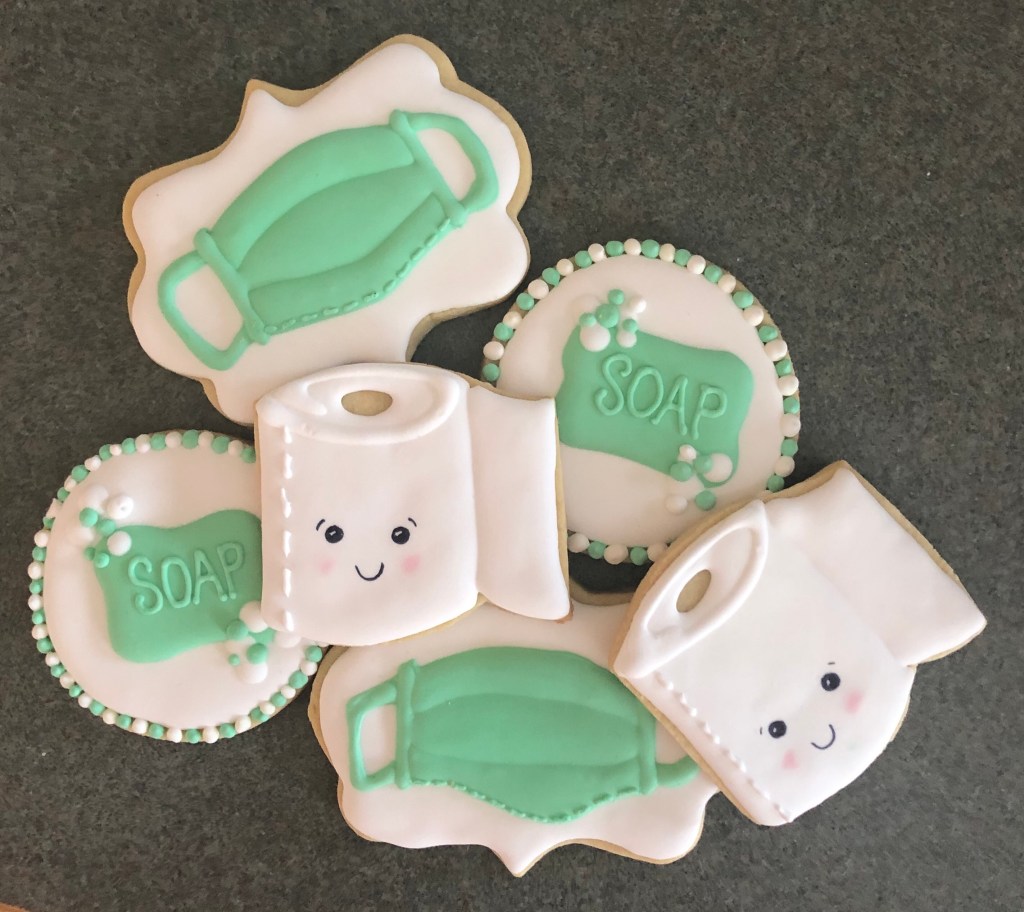
My daughter-in-law—artist, baker, craftsperson extraordinaire—created these cookies a few weeks ago. She and my son delivered them with my granddaughter via a front porch social-distance visit:
My ebullient four-year-old granddaughter belly-laughed on presenting these whimsical delights: “TOILET TISSUE COOKIES!!!!!”
“And face masks and soap!” I exclaimed.
“They’re too pretty to eat!” said my husband.
But we did. Every crumb. With joy.
I thought about the joy with which these cookies were infused, how ingesting them was an antidote to the virus zeitgeist. What you put into a thing is what you get out of it …
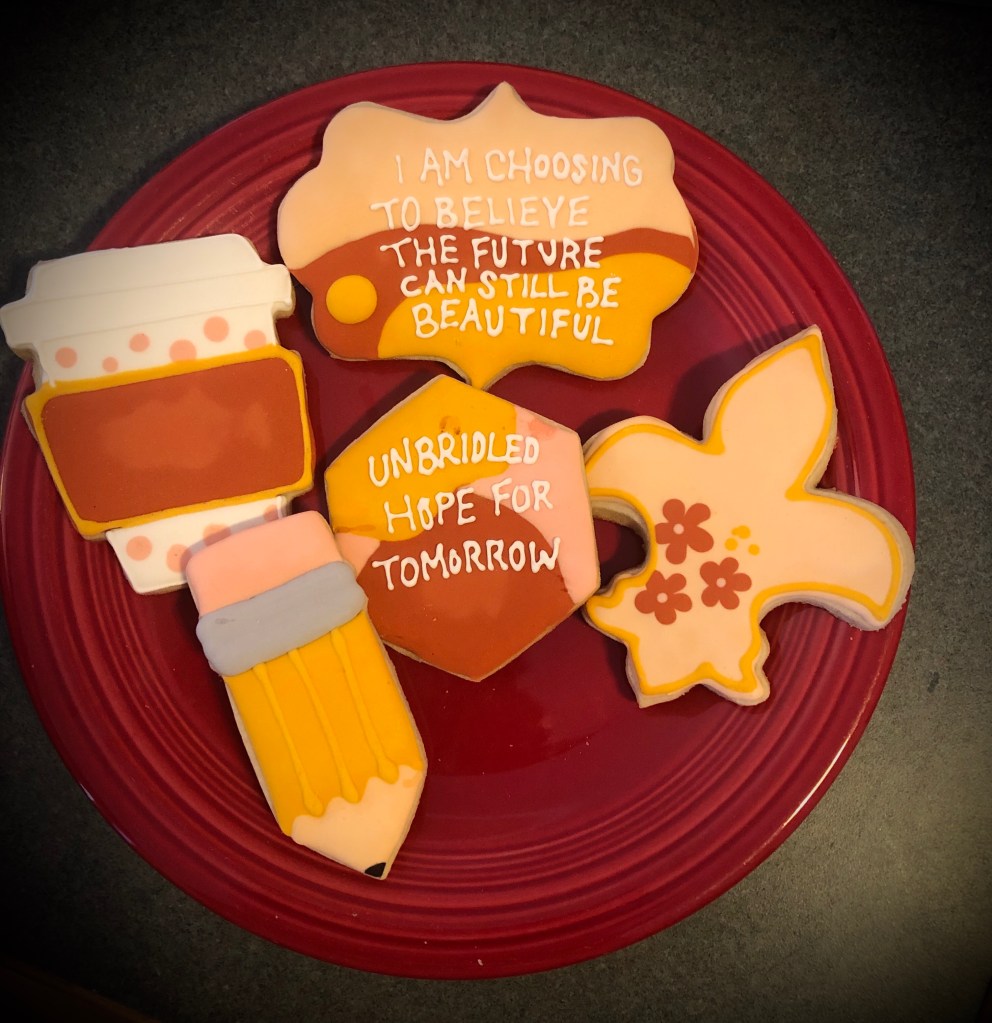
Yesterday my son and his family made another delivery:
“Ooooohhhhh,” my husband and I breathed in unison.
As we admired the astonishing artistry, I noted a shift in the cookie symbolism: Not just physical survival, as in the previous batch, but spiritual (coffee counts as both, right?). The fleur-de-lis, emblem of our daughter-in-law’s Louisiana roots, long associated with Christianity and the church, an icon from antiquity for royalty and protection. Choosing to believe, as the stages of isolation drag on, that the uncertain future can, and will, be beautiful. “Unbridled hope for tomorrow” … such trust. Such zest for life.
And a pencil.
Truth is, we write our tomorrows by our choices today … and nothing represents spiritual survival to me more than writing.
I call it: “The pencil is mine.”
“I want this one,” said my husband, picking up the fleur-de-lis. How he misses going to church, being with the flock he pastors. A shepherd pining for restoration, preservation.
More of it each day. Driving the darkness away with its gentle appearing, rousing bright-eyed birds earlier and earlier, which respond in uninhibited chirps, songs, chatter. New day new day new day day day …
It’s a beautiful time to be alive. To be reborn. To mark having been born.
“What do you want for your birthday?” asked my husband.
“New rocking chairs.”
I’d been thinking on it.
The old chairs on the front porch are cracked, broken, portions held in place with wood glue. Time for them to go. Time for new ones. I want to sit outside in the light, in the breeze, even though it remains oddly chilly, to hear the birds, to see Papa Finch alight on the roof. I hear him before I see him; I wonder what his loud twitter means but I always answer, “Hi Finch!” Then there he is, tiny brown creature with his chest faintly dusted red, sitting high above the garage against the cloudless blue sky, looking directly at me. The porch is part of his domain. Sometimes from inside the house I hear his loud chirp; looking through the window, I find him sitting on the white porch rail. I suspect he’s eyeing the front door wreath for his bride’s nest. Although I took the wreath down for the winter, I’d left the old nest from last year attached. With the coming of March, and with great care, I put the faded, bird-loved wreath back in hopes that the nest would be reused. It hasn’t. So I removed it to make way for new.
Like my rocking chairs.
When my granddaughter visits now, it’s only on the front steps for a while, until the coronavirus social distancing expires. She comes with eyes full of spring light, as blue as the sky above my finch, who never fails to join our gathering and to add his voice to the conversation.
“That’s a loud bird!” says my granddaughter, age four.
“He is. Look, there he is, on the roof. Hi, Finch!”
And in these bright little moments, I revel in the poetry of life, that this bird (I wonder if he was one of the previous hatchlings from my wreath? ) should be a mainstay. Especially as my granddaughter’s name is Scout. Yes, from To Kill a Mockingbird. Whose last name was … Finch.
I want sturdy chairs on the porch, for resting. As a place to quiet my mind with the greenness of the grass in the yard and over where the path leads round the pond through greener trees. He maketh me to lie down in green pastures: he leadeth me beside the still waters. He restoreth my soul … To share with my granddaughter as she grows, to have coffee with my husband who almost didn’t live to see another spring. To celebrate living, being, enduring. To converse with generations of finches who’ve chosen to make my home theirs. To know, as evening falls, and I must go in, that I savored the gifts of that day to their fullest, their deepest.
My husband bought the chairs.
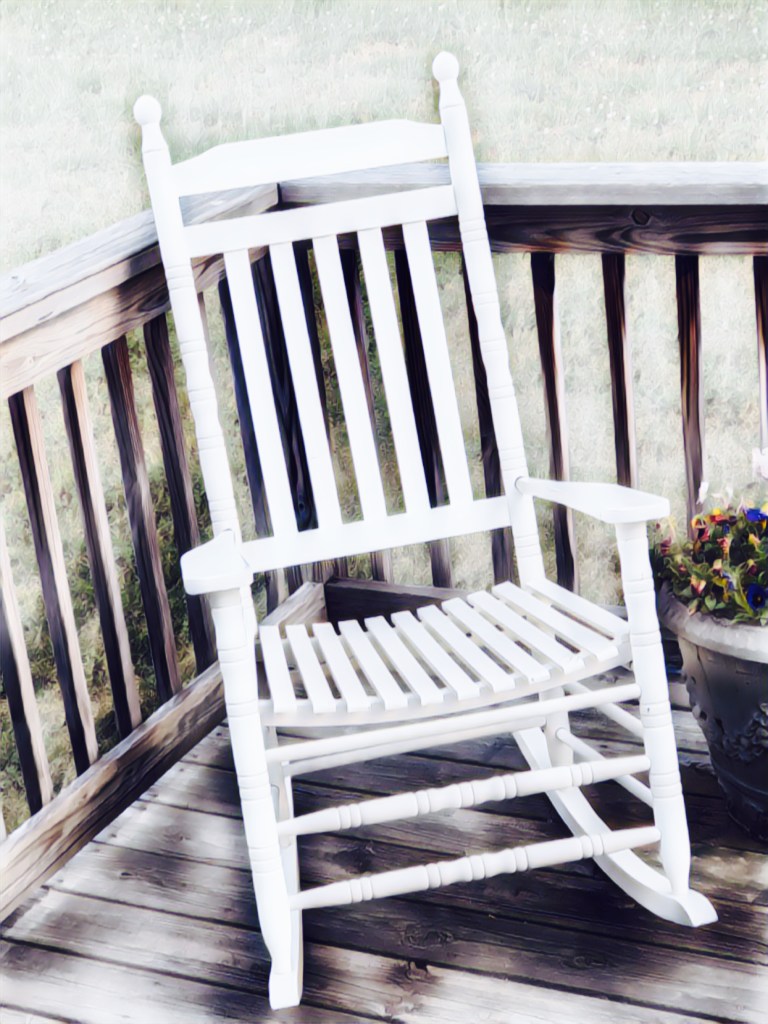
“We’ll put the old ones on the back deck,” he told me.
I wanted to say Why, they’re held together with glue, they’ll last maybe three days out there with no shelter, let’s just throw them away. But I didn’t. He wants to keep them, for some reason …
Truth is, the old chairs look kind of nice on the back deck by the flowerpots. For ever how long they last out there.
It was the rocker nearest the kitchen that made me realize.
Thump thump. Thump thump.
Dennis the dachshund woke from his sleep in a patch of sun-stripes at the back door. Ears perked.
“What is that?” I asked him from my chair at the kitchen table, where I was typing on the laptop.
Rising, looking through the window.
The rocker, rocking all by itself.
Thump thump. Thump thump.
The other rocker opposite sat motionless.
The wind, I thought.
Second thought: Why this rocker and not the other?
Third thought: Is the wind — or something — IN that chair?
It reminded me that I’ve always wanted to write a collection of ghost stories. An incongruous thought on such a bright, gold-green day.
Then.
How have I missed it?
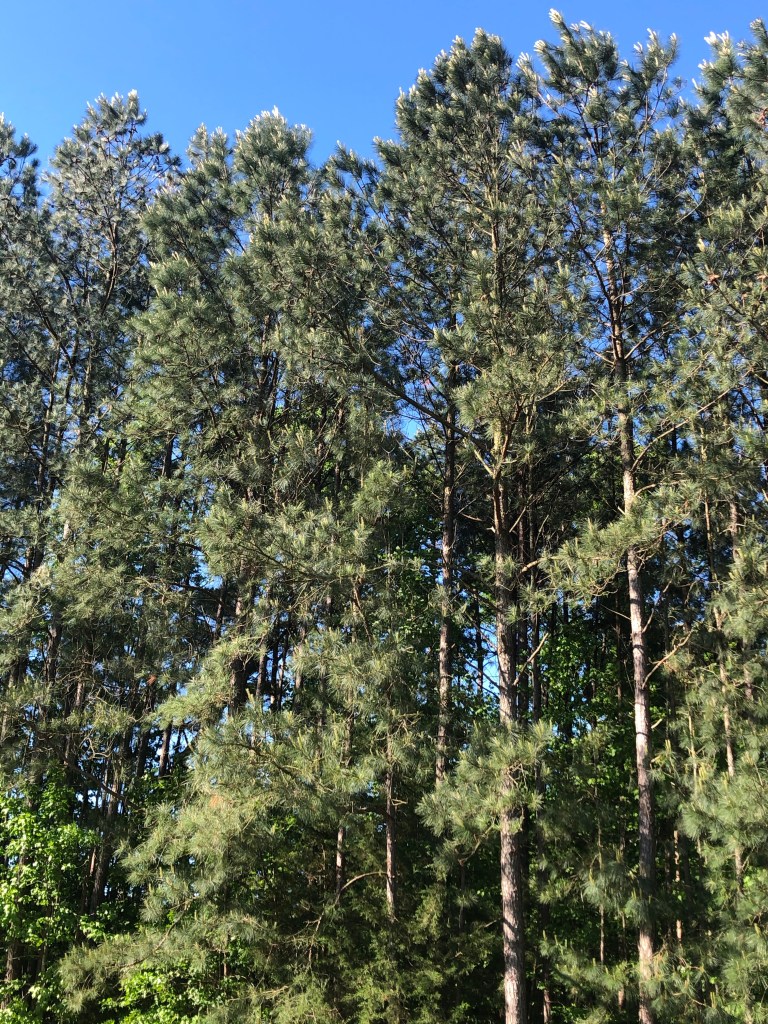
For all the weeks—months—of the wind’s extended gusting and moaning under the eaves, unlike I’ve ever heard it before, I failed to notice it had stopped. All through the COVID crisis it’s been a grieved entity, swirling around my house in desperation, haunting my spirit with its voice, agitating the tall pines.
It’s still here, as my rocking chair can attest. But subdued.
Perhaps the wind has decided to sit a spell and rest. Perhaps the rocker was an invitation.
I am not sure we are friendly, yet, the wind and I, but I will offer it hospitality as long as it’s a benevolent guest. Is it taking up residence here, like the finches?
Perhaps I will take my coffee out there one afternoon and ask—begging the wind’s pardon, of course—why it cried so long and so hard.
But as I have no wish to stir anything up, maybe I’ll just let the wind rock to its heart’s content, in peace.
Empathy is defined as the ability to understand and share the feelings of another. It is the hallmark of every exceptional teacher to understand and share the feelings of students, remembering what it’s like to be in their shoes, being able to discern factors of student life beyond “school.” For any adult, empathy is remembering what it is like to be a child. In good times and bad. For the writer, empathy is invaluable to character development … and for taking a walk in the shoes of anything and everything, real or unreal, alive or not. Empathy is more than taking on the guise of another; it is the ability to be the other in a given situation. It is a transformative force, one of humanity’s greatest facets, vital to our coexistence.
But not solely a human attribute.
Since his cardiac arrest and heart surgeries last year my husband has battled a new thing. His blood pressure is typically high and it’s been a challenge for his doctors to get his prescription cocktail just right. His pressure is currently well-managed, to the point of being a little low; occasionally when he rises from a sitting position he becomes light-headed. This is something for which I have much empathy, my own blood pressure being characteristically low. It’s called orthostatic or postural hypotension. Once, as a teenager, I got up from the living room floor where I was sprawled in front of the television to answer a knock on the front door—thankfully the neighbor caught me as my knees buckled and the tingling world went solid gray.
So the other evening when my husband got up from his chair just to grab the kitchen counter, muttering, “I’m dizzy,” I knew exactly what it was like.
“Sit down! Now!” I told him.
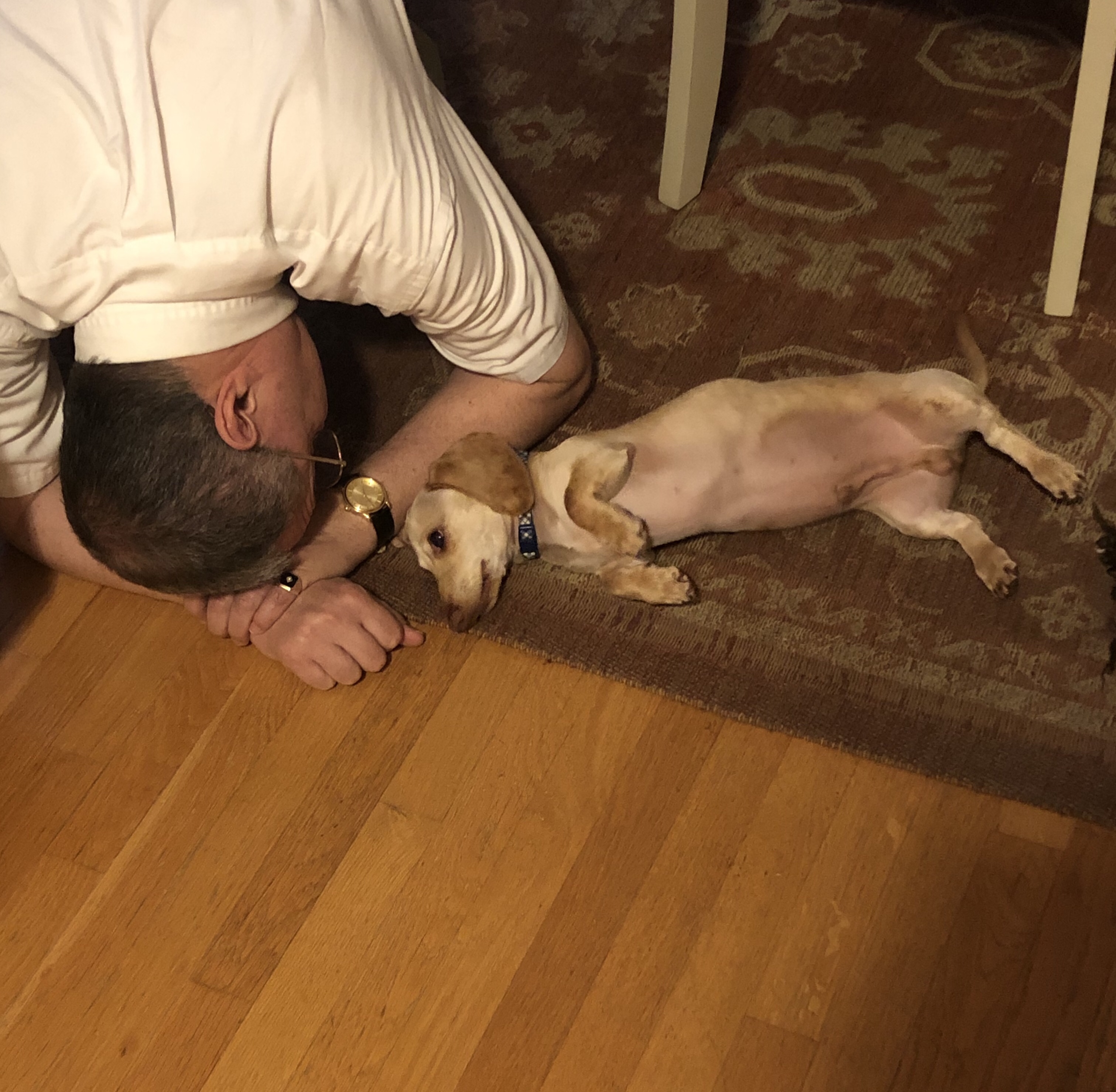
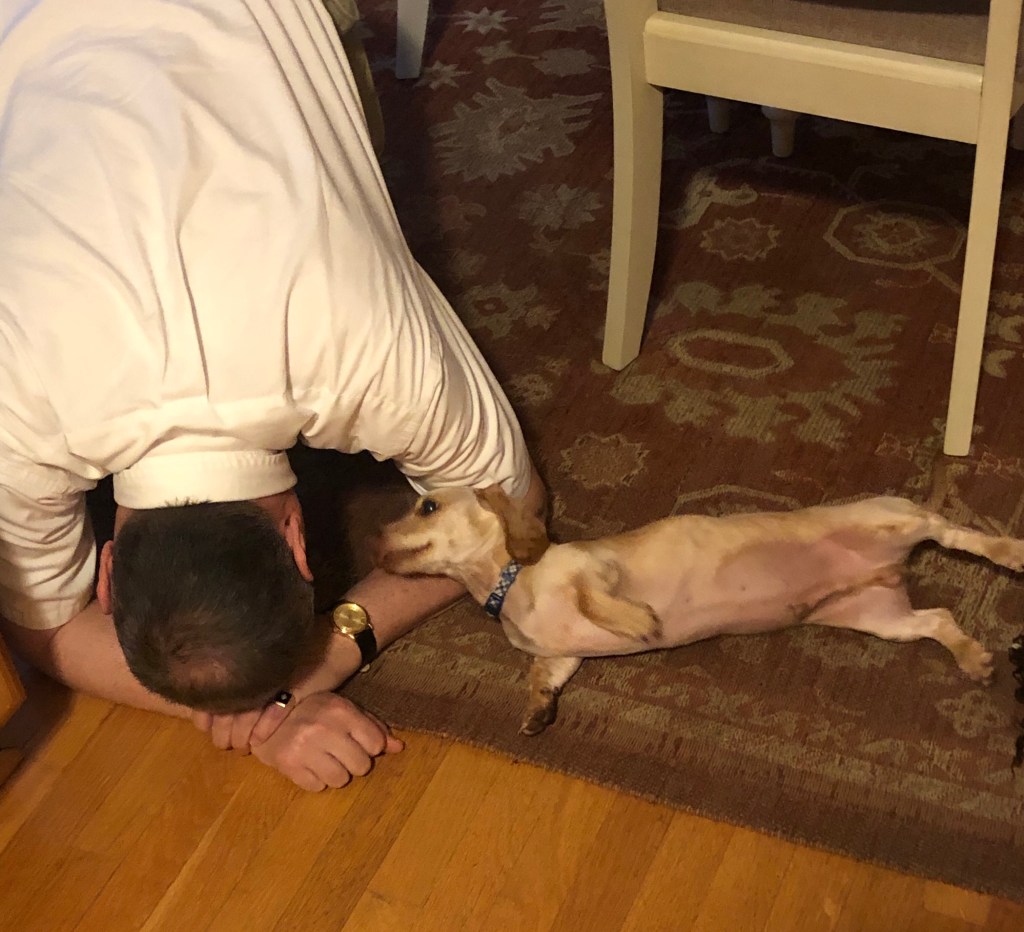
He did. He leaned over in the floor and rested his head on his arms.
That’s when Dennis, our 6-month-old dachshund, rushed over, considered the situation, and promptly keeled over in the floor beside my husband.
“That,” I laughed, “is about the most empathetic thing I’ve ever seen.”
And once his light-headedness was past I made my husband restage it so I could take pictures.
Poor sweet hilarious Dennis.
I can’t say for sure how much he understood, but he certainly shared the experience of another. Took a bit of the suffering on. Kind of like If you’re going through this, then I am, too.
If only our species could be as consistently perceptive, responsive, and willing.
So, April has had a number of firsts for me, beyond “first pandemic.”
It’s the first time I’ve attempted to write a poem a day for National Poetry Month. My first plunge into Poetry Fridays.
And this is the first time I’ve participated in a Progressive Poem.
Our poem was born on the first day of April, with the first poet writing two lines. The next poet chose one of those lines and left two more for the subsequent poet to choose from … and so the poem grew in stature and whimsical beauty as it rolled all the way down to me on Day 29.
Here’s how it was up ’til now:
Sweet violets shimmy, daffodils sway along the wiregrass path to the lake. I carry a rucksack of tasty cakes and a banjo passed down from my gram.
I follow the tracks of deer and raccoon and echo the call of a wandering loon. A whispering breeze joins in our song and night melts into a rose gold dawn.
Deep into nature’s embrace, I fold. Promise of spring helps shake the cold. Hints of sun lightly dapple the trees calling out the sleepy bees.
Leaf-litter crackles…I pause. Twig snaps. I gasp! Shudder! Breathe out. Relax… as a whitetail doe comes into view. She shifts and spotted fawns debut.
We freeze. My green eyes and her brown Meet and lock. Time slows down. I scatter the cakes, backing away Safely exiting this strange ballet.
I continue the path that winds down to the lake. Missing my breakfast for beauty’s sake. But wait, what’s that delicious smell? Something familiar, I know so well.
It’s a campfire. I follow my nose. I see a circle of friends waving at me. I free up my banjo, quicken my pace
And here were my two choices for the next line:
Option 1: Find a place to sit and gaze into space Option 2:Find a place to sit and unlatch my banjo case
And I gotta choose it, because it’s just so musical (pun intended):
(are you ready?)
(really ready??)
Option 1: Find a place to sit and gaze into space (!)
So here we have it:
Sweet violets shimmy, daffodils sway along the wiregrass path to the lake. I carry a rucksack of tasty cakes and a banjo passed down from my gram.
I follow the tracks of deer and raccoon and echo the call of a wandering loon. A whispering breeze joins in our song and night melts into a rose gold dawn.
Deep into nature’s embrace, I fold. Promise of spring helps shake the cold. Hints of sun lightly dapple the trees calling out the sleepy bees.
Leaf-litter crackles…I pause. Twig snaps. I gasp! Shudder! Breathe out. Relax… as a whitetail doe comes into view. She shifts and spotted fawns debut.
We freeze. My green eyes and her brown Meet and lock. Time slows down. I scatter the cakes, backing away Safely exiting this strange ballet.
I continue the path that winds down to the lake. Missing my breakfast for beauty’s sake. But wait, what’s that delicious smell? Something familiar, I know so well.
It’s a campfire. I follow my nose. I see a circle of friends waving at me. I free up my banjo, quicken my pace Find a place to sit and gaze into space.
—Now what?
Apparently I have to compose two lines.
I then hand the poem to the thirtieth and last poet in the line of succession, Michelle Kogan.
Dear Michelle … I leave my two lines to you for your choosing. The chosen line will, however, be hanging out there by its lonely self at the end of all these lovely quatrains. What if you add your own line after mine and we end as a couplet? You can also have the distinction of titling our collective masterpiece! Such choices!
Here’s what I’ve got:
Option 1: Then my fingers pick out the old, old tune
Option 2: Then together we sing, and the song is our story
Thank you, poet-friends, for this alluring, ambling April adventure. It’s an honor to have walked this path in your company.
Those words have been lurking, brooding, around the perimeter of my mind this long, strange, separated spring.
Even on the brightest days, the wind remains a peculiar Presence in my otherwise quiet corner of the world. This is not normal behavior. I cannot decide if its constant moaning represents mourning for the dead and those yet to die of COVID-19, grief for the state of the world at large, or if it’s a harbinger of bleak times ahead for human existence. The earth lives on, arrayed in spring splendor, while the life and livelihood of people has frozen. Time stands still. For how long, we don’t really know: what time frame is there for outlasting a deadly microorganism? Seems the wind knows … on and on it blows, perhaps not ill in itself, but certainly as a soundscape to a ravaging illness. Somewhere in the sound is a sense of statues, cracking, crumbling, turning to dust, being swept clean away.
So it seems to me, anyway. Sometimes.
Haunting, daunting, taunting, flaunting … I cannot decide which. Perhaps all.
Then, the trees.
Last week, while composing my “I Am From” poem, I decided to choose a representative tree. I meant to write of bald cypress, for I love them, I identify with them, they are a symbol of my southern heritage. I even love the sound of the name. Cypress. But almost instantaneously a vision crowded out any other tree: the little pine sapling that grew to a towering height in the backyard of my childhood home. When I left at twenty, it was a majestic presence, a sole monarch holding dominion over the ditch-adjoined, chain-link backyards of the neighborhood. Hardly an enchanted kingdom, but don’t try to convince my pine of that. It would be my representative tree. Reaching ever-skyward, grown wide with long, heavy, green-needled boughs undulating like ocean waves. Whispering, whispering, always whispering …
Today I read this tweet by Robert Macfarlane:
Word of the day: “susurrate”—to whisper, murmur, esp. of noise produced by numerous individual sources of sound (bees humming, leaves rustling, etc.) Compare to “psithurism,” its similarly sibilant sense-sibling, meaning the whispering of wind in trees (from Ancient Greek).
—That’s how the universe works. Messages of perception. Then sometimes supplying the exact right word (the universe is a writer).
Pining Sighing Inner crying Truths revealing Hidden healing Unknown to me Regal tree I listen listen to your whisper whisper Susurrus secrets, ceaseless, swirling Mystery messages written by the wind
There’s something being said, for sure. If only I spoke pine. Or wind.
Pines, by the way, represent survival, longevity, protection (think “shelter”). Sometimes the pine is called the tree of life. Perhaps there’s a promise in this psithurism.
But you, Wind, remember—you’re ill if you don’t bring something good.
How haveI lived to be this old without attempting an “I Am From” poem?
A rectification …
I am from sharp pencils from Ivory soap and Duke’s mayonnaise I am from the secret vault under the concrete back steps (cool, cobwebby, smelling of ghosts) I am from gardenias from towering Eastern pines heavy boughs whispering waving to me like a vertical green sea I’m from storytelling and dogs from Columbus and Ruby I’m from Reader’s Digest and gospel music From “You’re the oldest, set the example” and “take care of your precious self” I’m from Jesus Loves Me, red-letter Bibles, put your offering in the plate I’m from the riverside and the shipyard from collards with hot pepper vinegar and carrot cake from scratch From my father’s crew-cut ever since his head was pierced by a friend’s cleats in a childhood game of deer and dog, from three translucent pink moles on Grandma’s chin. In trunks and in closeted boxes my grandmother’s painstaking albums rest atop layers of loose photos, paper strata of many eras. I am etched deep in this phosphorite, the living reliquary of all the stories.
My love for the sound of cicadas is a recurring motif in my writing.
It stems from childhood summers spent with my grandparents in the country, the most idyllic days of my existence.
In thinking of Earth Day, my first inclination is to write on In the sweat of thy face shalt thou eat bread, till thou return unto the ground; for out of it wast thou taken: for dust thou art, and unto dust shalt thou return.
That verse, Genesis 3:19 in the King James, conjures images from At Home: A Short History of Private Life. Here’s Bill Bryson’s observations of country churchyards in England where churches seem to be sinking into the ground: Think about it. A country parish like this has an average of 250 people in it, which translates into roughly a thousand adults deaths per century, plus a few thousand more poor souls who didn’t make it to maturity. Multiply that by the number of centuries that the church has been here and you can see that what you have here is not eighty or a hundred burials but probably something more on the order of, say, twenty thousand … that’s a lot of mass, needless to say. It’s why the ground has risen three feet.
In other words … we are the earth.
Times being the pandemic they are, death surrounds us. April 22 also marks the anniversary of the sudden passing of my husband’s father at the age of fifty-four. My husband was just twelve.
But I do not wish to turn Earth Day into a death knell.
I write about cicadas today because they lie in the earth and emerge—some after seventeen years—to sing their song of life.
In the thick woods and byways of North Carolina, from May through September, it’s a deafening cacophony; but as beauty is in the eye of the beholder, so there is beauty in the ear of the listener.
In honor of Earth Day, a “found poem,” of sorts, from a former blog post I wrote, entitled Cicada Rhythms:
The song of cicadas calls to me from long ago from sultry summers in the country where narrow dirt roads keep an ominous forest from encroaching on rustic homeplaces from tiny cemeteries where baby after baby is buried under white monuments adorned with lambs at the old church just around the bend. The song is of the ages of the rising and falling of generations all of us coming and going in our time a song reverberating from oaks, pines, cypresses across canals teeming with frogs and turtles to white-tailed deer standing along the fields at dusk. It is the bright song of the sun of hope of continuity. It is the dark song of the night oddly comforting— something out in the blackness is vibrant, alive maybe keeping watch while children drift off to sleep. It is the sound of safety of stability of belonging. Calling, calling the crescendo mirrors the rhythm of life brimming with promise echoing eternity. When I hear it I am a child again no matter how many summers have come and gone. Every spring as I mark another year of existence I listen for the first rattle. You’re back! my heart sings. Ah, but we were here all along they might say if cicadas had words. There’s a lot of living and loving yet to do. You have today. Carry on.
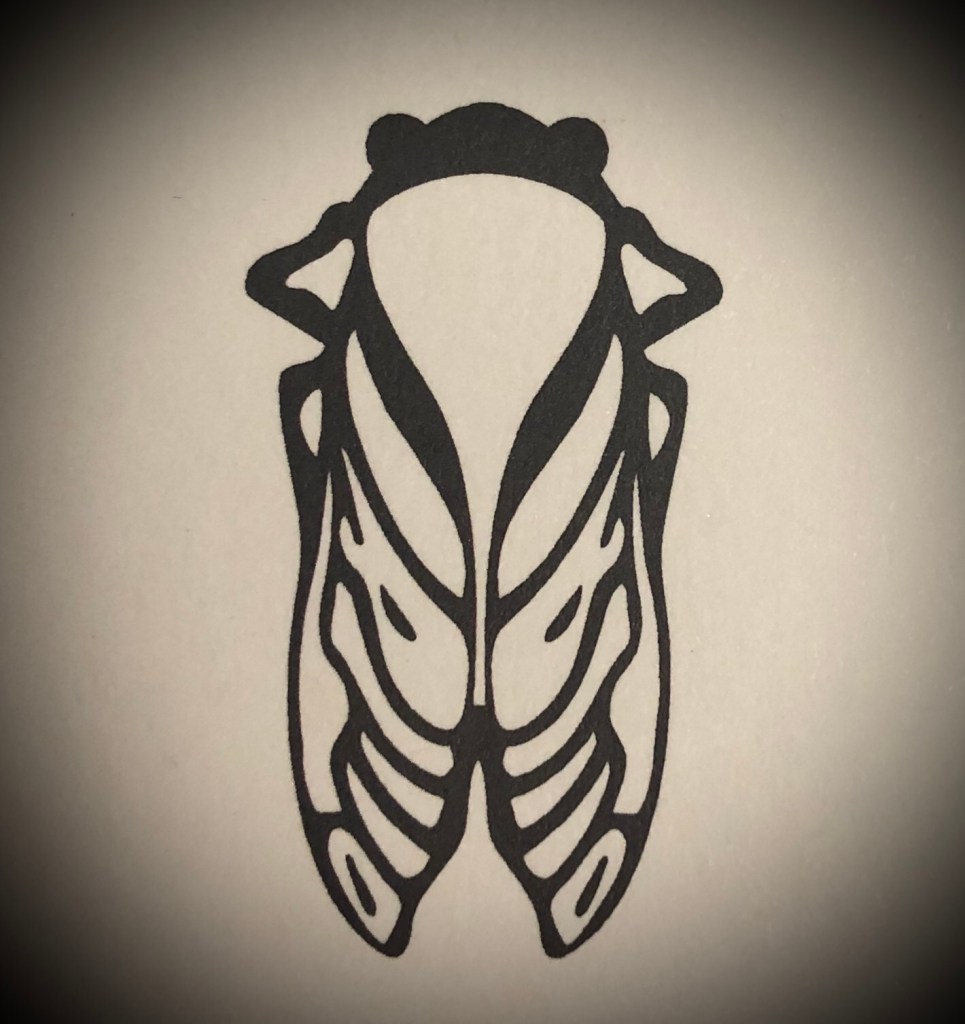
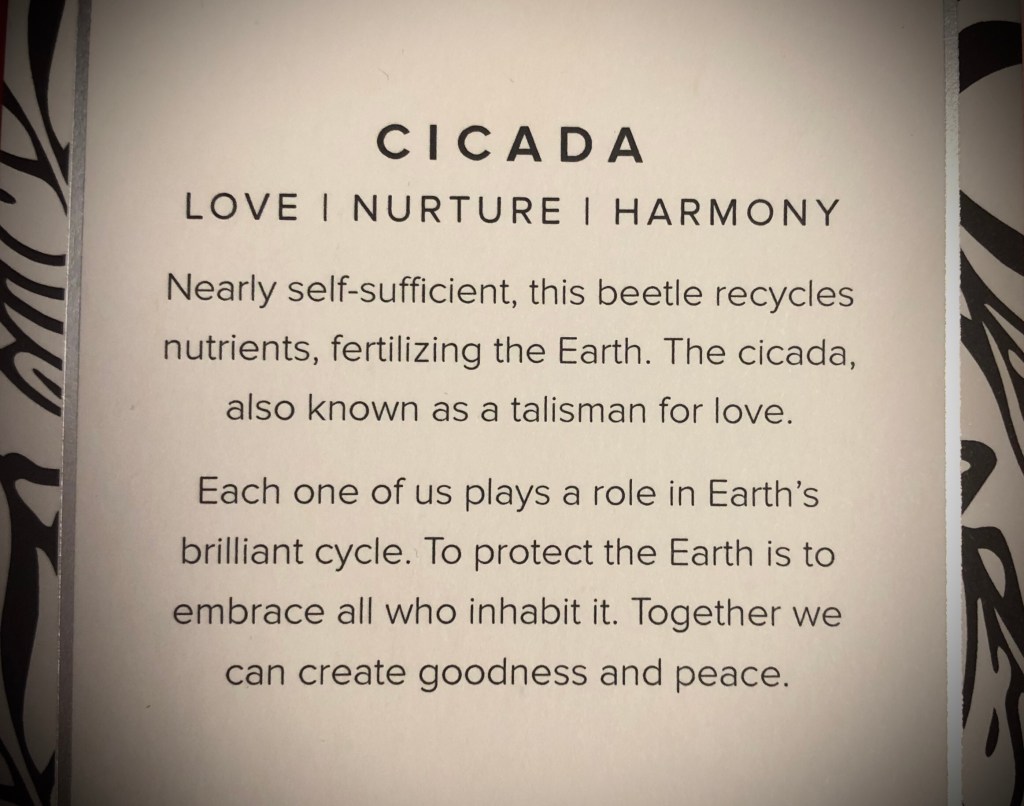
The cicada isn’t exactly a beetle, but a “true bug.” They symbolize renewal, rebirth, transformation, change. They can disappear for many years to return en masse. Their buzzing call is made by the males, who begin singing soon after emergence.
Heard today that a friend and former colleague passed away.
We worked together for a few short years as paraprofessionals, until I switched schools to complete student teaching, the final step in my university degree. It was an unexpected door that opened later in life for me.
My colleague encouraged me. She was an interesting, eclectic person who celebrated individuality and embraced life even as she absorbed some of its severest blows. I remember one sunny conversation we had about the word “eviscerated” — the gleam in her steely blue eyes never dimmed, whether burning with impassioned convictions or shining with compassionate discernment. She loved to laugh, to comfort, to speak of spiritual things.
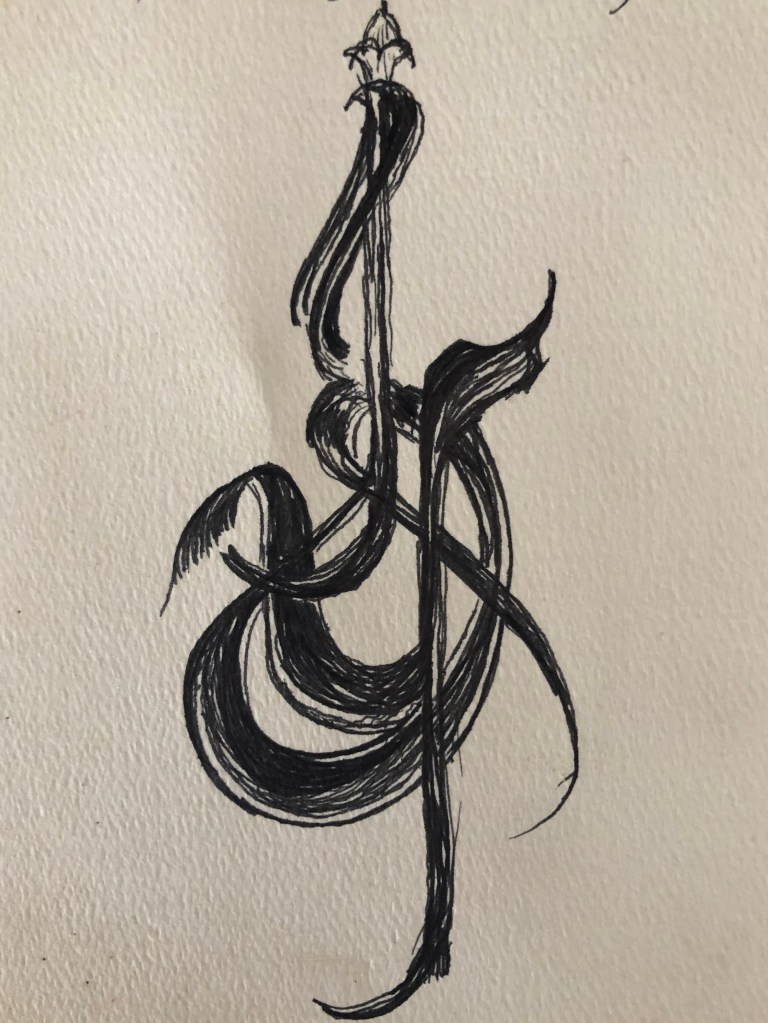
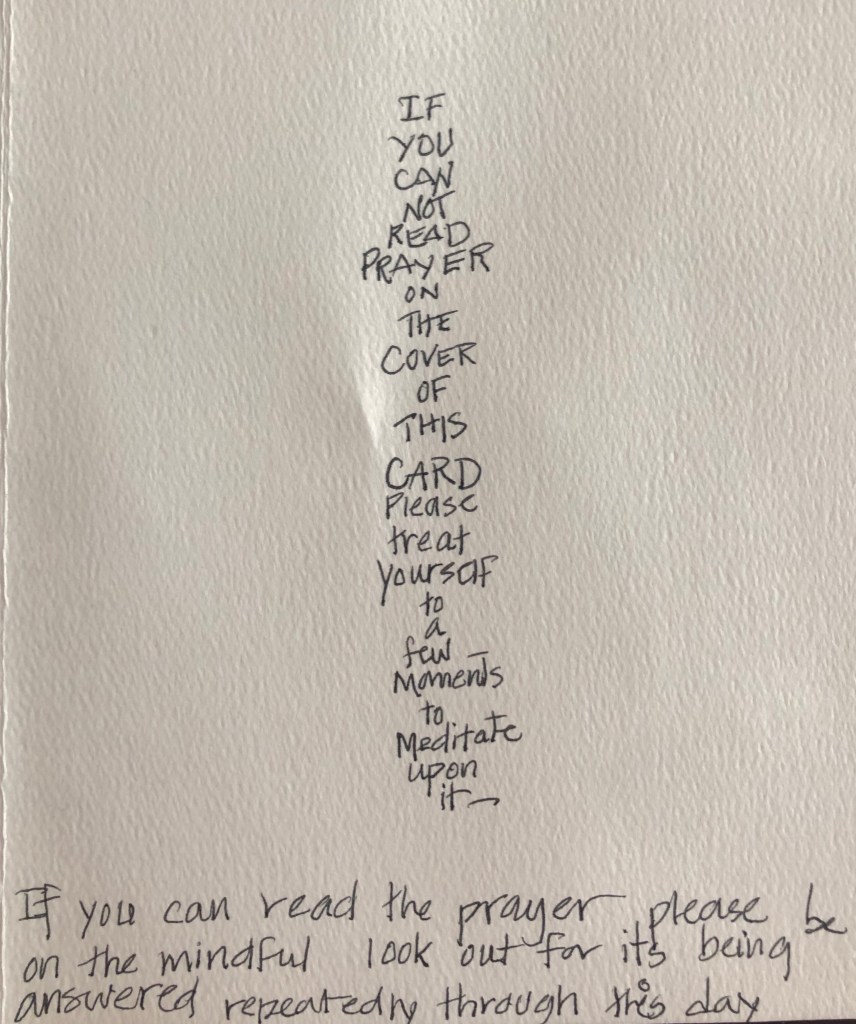
One day she surprised me with a handmade card bearing a mysterious drawing on the front: “This is my prayer for you,” she said with a smile and those unwavering, bright eyes.
I kept it all these years, long after we lost touch. Long after I heard that her compromised, declining health rendered her unable to work.
I found the card again this week during my incessant pandemic purge. With the TV in the background broadcasting the rise of coronavirus deaths at a local nursing home, I reread the card, marveled anew at its artistry and sentiment, thought of her, wondered what became of her.
Today I learned she’s numbered among those dead.
—How many messages do we miss in life, because we aren’t “still” enough to receive them. How many moments do we miss because we don’t make time. How many gifts go unacknowledged because we can’t see them while looking through the lens of unfairness.
My friend didn’t miss. She understood. Far better than most.
She reminded me once, long ago.
She reminds me, still.
It’s a choice.
Just now, seize the day Offer your own gifts in return You’ll find joy for the taking
I recently encountered acrostic analogies, thanks to my friend and endless source of inspiration, Margaret Simon. The basic idea is to find your word and then compose analogies on each line, related to the acrostic word.
The word Child came to me pretty quickly:
Courage is to character as Hope is to heart as Imagination is to idea as Love is to life as Discovery is to delight
It takes courage to be a child. So much is unknown; there’s so much to learn. I think of my granddaughter, age four, sighing heavily at the end of a long, pre-pandemic day. When my daughter-in-law asked what was the matter, my granddaughter said, with utter bone-weariness: “It’s hard to be a kid.” I think of how natural hope is to children. They hope for summer, for pizza and candy, for snow enough to build a snowman, for specific toys, for special things, for being with special people. Hope seems hardwired into children, as does delight. I originally had “dazzling” in place of delight, thinking how discovery causes a child’s face to light up, sometimes drawing a vocal Ooohhhhhhh and a smile. Dazzling seemed temporary, though. Not sustainable. Delight feels more permanent, a better fit with imagination and a synonym for joy, just as intrinsic as hope to children.
Revisiting this Child acrostic today has me thinking that a child is a poem.
A miracle, how you came to be You were not, but now you are Materializing in ways I could not foresee Stardust forming its own new star Your own direction you’ll go Your own rhythm and rhyme you’ll make In all your wanderlust, just know That whatever path you take I’m part of you, you’re part of me Life interwoven, yours and mine Images of each other we’ll always be Written in every line.
Read it as if it is referencing a child—doesn’t matter if it’s a child of your own, any one that you’ve loved or taught, one you’ve happened to encounter, or possibly the child you used to be.
Then read it as if it’s addressing a poem. Certainly one you’ve written. Maybe even one you’ve read.