Blue Valentine

Sunday dawns oyster gray, cold.

Rain rolls down the windows like tear-streaks of the wind, which howls in anguish under the eaves like a maimed creature.

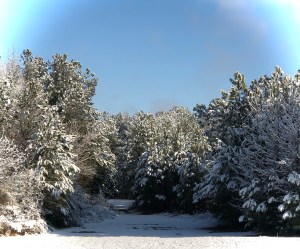
In the backyard, pines stand in solidarity, like soldiers at a burial. Knee-deep in a sea of mud.

All dreary in its own right. I do not need to color it more so with my own thoughts, or to further stir my restive soul. Day after day after day of rain. No snow. At least no ice.

Am I unhappy?

No.

It’s Valentine’s Day. My husband and I have exchanged cards, chocolate, a sampler of hot sauces. “Burning Love,” the box reads. The flames on it are certainly a bright spot.

Am I tired?

Not as much as I was at the end of the workweek, the final one of remote teaching. We return to campus this week. Hard to envision the epic regulations to be enforced, the acrobatics of keeping elementary children distanced in imaginary bubbles.

Am I worried?

Concerned is a better word. It is a time to be like the pines, standing in solidarity despite the grayness, the bleakness, the muddiness, the wearing-on of things. I don’t know if I have it in me. This is not like me. My patience is peeled unusually thin; turpentine burns too near the surface. I do not like the feel of it.

Is my spirit failing me this Sunday morning? I should think not. It is a seasoned spirit. Today also happens to be the anniversary of my husband’s ordination, many, many years ago. We were so young, setting our feet on a path we could not clearly see, but we walked, and we walked, moment by moment, in sun, in shadows, over years, across decades…and here we are. I am grateful. He has already gone to church. I am getting ready, mulling this miserable scene beyond the blinds. I should have kept them closed.

I wish I could see the bluebird. He shows up almost every day, if I’m watching at the right time. He sits on the deck railing for long stretches. Little messenger of brightness.

Why should seeing him make me feel better-? Maybe hope is electric blue. Never thought of that before.

I sigh, and am turning away, when I catch a fluttering of wings…

The female. Not the bright blue I am longing for, but still. This means a nest may be in the works, nearby! Might I see baby bluebirds this spring? Dare I hope for such bounty? Do I deserve it?

She takes a bath, there on the railing. I think of Esther’s yearlong preparation for her union with the King.

And then my little lady bird is gone. I wait. The railing remains bare. He will not come. Maybe it’s the rain. I can’t keep watching. Must get to church or I will not be in good graces with the pastor, which is a problem I don’t need, since I live with him.

Happy Valentine’s Day, bluebirds, I say in my mind as I bundle up to leave.

And then, at the last, a flash of blue, landing on the railing…it’s him, it’s him! No, wait! Both! I have never seen them together before.

Rain never interferes with the mail and this is surely addressed to me as much as an envelope bearing my handwritten name.

A gift of love, my blue Valentine.
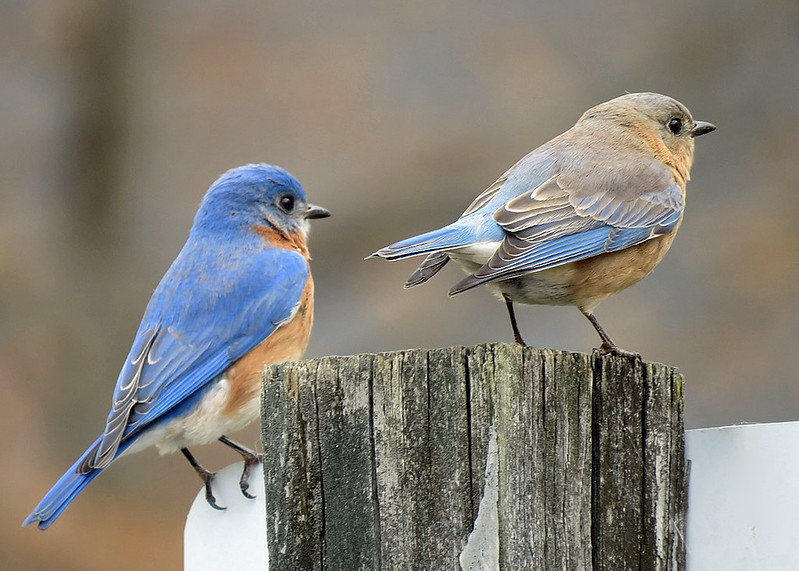
One day I will be poised just right to get a photo of MY birds, which look exactly like this. Eastern bluebirds are known to begin nesting in February. Let us hope…

Update: The Phrontistery definition: “valentine – of birds, to sing to a mate.”

If you are so inclined, here’s a little poem written on the occasion of the first sighting last week: First bluebird.

*******

Photos:
Vintage postcard. Kaarina Dillabough. CC BY-SA
Eastern Bluebird. 611catbirds, too. CC BY
Wherever I Gogh

He just keeps turning up everywhere I go.

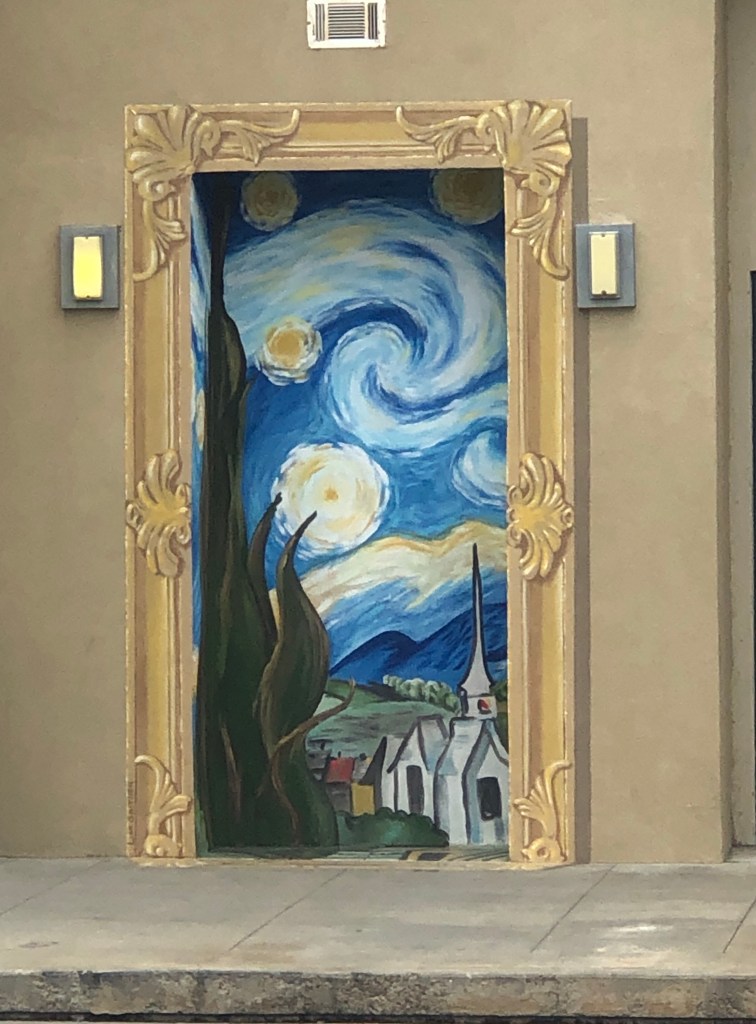
It started with the painting on the otherwise unremarkable side of a building in an uptown shopping mall last summer. An unexpected portal:

Got me thinking a lot about imagination, passages, transitions, transcendence, overcoming…and faith. See how prominent the church is. And maybe a touch of magic—who has not encountered mysterious doors leading from one world to another in fantasy novels?

The Starry Night beckoned, took me in, adopted me. It became a personal motif during the COVID pandemic. Consider these definitions of motif:

a usually recurring salient thematic element (as in the arts); especially : a dominant idea or central theme.  —Merriam-Webster

a symbolic image or idea that appears frequently in a story. —literaryterms.com

My version: A “salient” (noticeable, as in you can’t miss it) symbol that keeps recurring, that has significant meaning to a narrative. Which is, in this case, my life. For I began taking note of how often van Gogh’s famous painting appeared in my daily existence, and what it could mean. Perhaps it is those deep blues, or those stars, or the peaceful village, or the presence of the church, or all of the above, that impart a sense of calm, benevolence, and well-being to me in the time of crisis. Maybe much as the artist felt when he painted it.

I have The Starry Night on a mask. A sort of literal and figurative protection. I used its imagery in a poem I wrote about awe, the word that adopted me when I turned the pages of my planner from 2020 to 2021 and found it in a quote there on January 1st. Awe and well-being are also deeply linked. When I wrote the poem I was thinking of all those blues in the painting and how blue is the rarest color in nature. Like forgiveness. Hence my closing lines: “The color of forgiveness/in the blue hour.” Those lines were born of awe just after The Starry Night resurfaced yet again in a startling way; one day I will be able to explain, but the time is not yet ripe for that story. Let us leave it at love, for love and forgiveness do not exist apart from one another.

And so we come to February.

Where this quote appears in the pages of my planner:

He just keeps turning up everywhere I go.

I marvel at those words and their truth for an artist, a student, a teacher, a writer.

Furthermore, we learn life by doing it.

One more thing…

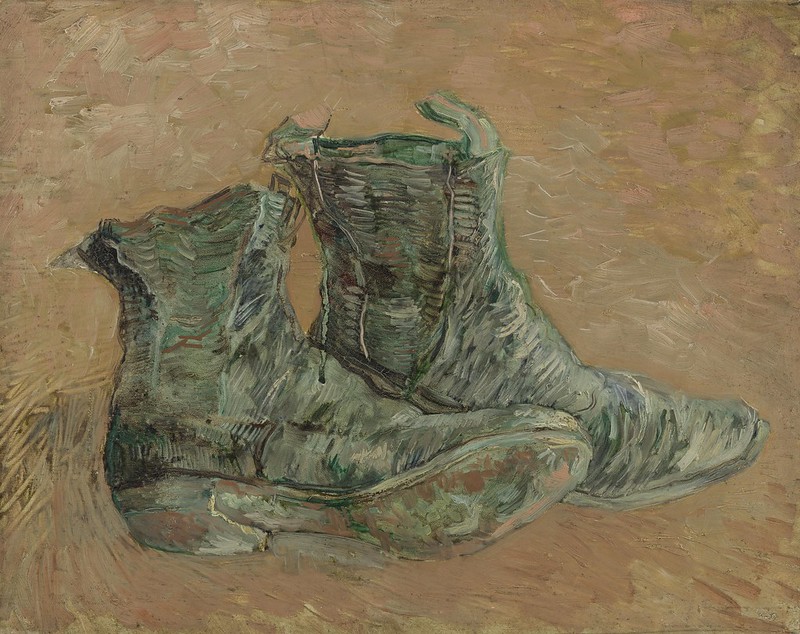
I recently stumbled across van Gogh’s paintings of shoes. I wasn’t aware that this was a favorite subject for him. The story is that he would buy old shoes from flea markets and wear them through mud until they were interesting enough to paint.

I have to wonder about the symbolism. Shoes are necessary protection in daily life. A motif with many meanings in many cultures. A fashion obsession and status symbol in some. Deep spiritual connotations in others; shoes are often mentioned in the Bible, especially removing them as an act of reverence and faith. I wonder if van Gogh thought while he painted about the places these shoes had been, the people who wore them, what their life-journeys were like. What stories the shoes might tell, maybe just metaphorically, humbly, in their layers of dust and mud from long, hard travels on this Earth.

Lots to ponder with van Gogh and his shoes.

As I travel through life in my own.

He really does keep turning up, everywhere I go.

My shoes.

I’ve found these to be the most comfortable since breaking my foot, a year ago today.
Lots more to explore there, on brokenness and healing
.

How perfect is it that they are Vans. Wherever I may Gogh.

*******

written for the Tuesday Slice of Life Story Challenge with Two Writing Teachers.
Our stories often remind us of where we’ve been, where we are going, and who we are.
Writing them leads to surprising discoveries.
Sometimes those within ourselves.
Sometimes awe, at what lies beyond.

A bowl of snow

Deep in the night, it came.

I wake to the sound of it falling.

A faint, feathery swishing against the bedroom windowpanes. A silvery glow at the blinds, beckoning. I crawl out from under the warm covers to peer through.

It’s a different world. Softer. Purer. At peace in its perfect winter-white blanket, illuminated by the full moon. Big flakes descend to the ethereal stirring of wind chimes.

I imagine animals curled in their cozy dark burrows.

In the spirit of affinity, I return to mine.

I waited well into the morning before texting my son: Is she so excited?

His daughter, age five, has been longing for snow. Some winters pass without it here in central North Carolina.

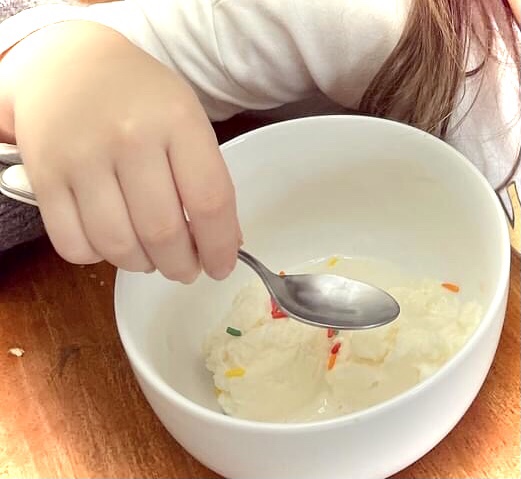
He texted right back: She’s so wound up. We have already been out to play. We made snow cream. Put sprinkles on it and ate it for breakfast.

How awesome is that, I thought. She will remember it all of her life, this snow, getting to eat it for breakfast.

Magical moments. They will be stored away, deep in the hallowed halls of her mind.

I was just rereading The Power of Moments: Why Certain Experiences Have Extraordinary Impact by Chip Heath and Dan Heath. They explore moments we remember and revere the most. Some are tied to great emotion or to shared meaningful experiences. Others transcend “the normal course of events; they are literally extraordinary.”

The authors write: “The most precious moments are often the ones that cost the least.” They relate the story of a three-year-old who succumbed to a severe E. coli infection. They describe (brace yourself) her kidney failure, horrible pain, portions of her colon being removed twice, her heart failure and resuscitation; she desperately needed a kidney transplant and a compatible donor could not be found. At Halloween, her costume had to be laid on top of her because of all the tubes. She was still in the hospital as Christmas neared, and it began to snow:

For a child from Vermont, it was cruel, having to watch the snow through the windows. Wendy loved to make snowmen, to go sleigh riding. She hadn’t been outside for two months. Her lead nurse, Cori Fogarty, and and patient care associate Jessica Marsh hatched a plan. If Wendy couldn’t play in the snow, they would bring the snow to her. But it was more complicated than that. Because of Wendy’s heart condition, the staff was monitoring every milliliter of water that she consumed. So Jessica went and filled an emesis bucket with snow, weighed it, let it melt, and poured it into a graduated cylinder. Now they knew how to translate the weight of snow into its volume of water. So they went and filled the bucket with exactly the right amount of snow so that if Wendy ate it all — as three-year-olds are prone to do — she’d be just fine.

Can you see them, bringing the bowl of snow into the hospital room? Can you see that little girl’s expression when she saw it? Jessica Marsh said: “I have never seen such joy and pure innocence on a child’s face.” Wendy’s mother: “It was bliss, it was joy.” Many years later she would write: “It’s easy to forget the monotony of the endless days that stretched together during her recovery. But that one moment of brightness, that is one moment we will never forget.”*

Perhaps that is just the image we need right now, as COVID-19 drags on. A bowl of snow for a child…a bit of magic to escape the moment, maybe to carry us through.

As parents, as teachers, as writers, compassionate human beings, we have this power within us to imagine such moments, to make them happen. The most precious moments are the ones that cost the least…

Just so happens that as I write these words on this new, dark morning, flurries have started falling again.

Let us go and seek our bowl of snow. And where we might share it.

Maybe even for breakfast, with sprinkles.

*******

*Wendy’s story is from the chapter “Making Moments Matter” in The Power of Moments by Chip Heath and Dan Heath (Simon & Schuster, New York, 2017, 263-265). You might like to know that she did receive a transplant and went on to be an athlete.

Thanks to all at Two Writing Teachers for the power of your shared stories. Where there’s writing, there’s a way.

Let there be awe (OLW 2021)

Like many writers I am in the habit of selecting One Little Word (also known as One Word) at the beginning of a new year. It is a lens through which to view the craft of writing and, to me, the craft of living. A well-chosen OLW can guide to deeper meanings, connections, and creativity; it is a reflective tool, a restorative practice, sometimes a call to action. One little word can be a mighty force of reckoning.

In an earlier post, I wrote about not being in the frame of mind to choose a word for 2021 until I stumbled upon this quote in my planner. Surely I saw it there before, this tiny, tiny print, like a microscopic footnote, at the bottom of January 1st:

Experiencing awe (the feeling of being in the presence of something bigger than you) can improve your physical health and make you more altruistic. Intentionally create awe this month by spending time in nature, meditating, volunteering, etc.

It was like a shaft of sunlight through barren, tangled trees, an electric jolt through the settling-winter numbness of my brain.

Awe. It is familiar. One can’t be a writer, a reader, be around children, savor the healing mysteries of nature, have faith in Almighty God, without experiencing it. I’d never thought about awe improving physical health; certainly that stems from its effects on mental, emotional, spiritual health. Never thought about awe as a source of altruism, having the power to shift focus away from self to promoting the well-being of others. I certainly never thought about intentionally creating awe. Inviting awe, yes. I want to fling all the windows and doors of my entire being open for it. But creating it? I mean, isn’t awe a response to encountering the extraordinary, something much bigger than me? Am I capable of intentionally creating it? Seems a curious choice of words for something so spontaneously generated.

I sat looking at my planner, wondering…knowing in that moment awe had chosen me and there was nothing for it but to bow in reverential submission.

Immediately, I began to expect.

I can’t imagine all the ways awe will present itself this year. Trying to imagine kind of defeats the purpose. It’s more of a recognizing in the moment thing. I just know that awe is coming.

Truth of the matter…it’s all around, if I stop, if I am still enough, to sense it. If I let it be the lens through which to view the craft and artistry of being alive.

Awe is a matter of perspective…we can see it, if we try. It is tucked inside the ordinary. It lives in moments and outlasts time. It is tiny as coding in cells, as vast as the universe. The big picture book containing all of our life’s stories, for they are intertwined.

Keeping the heart open for it might even lead to a hand in creating it.

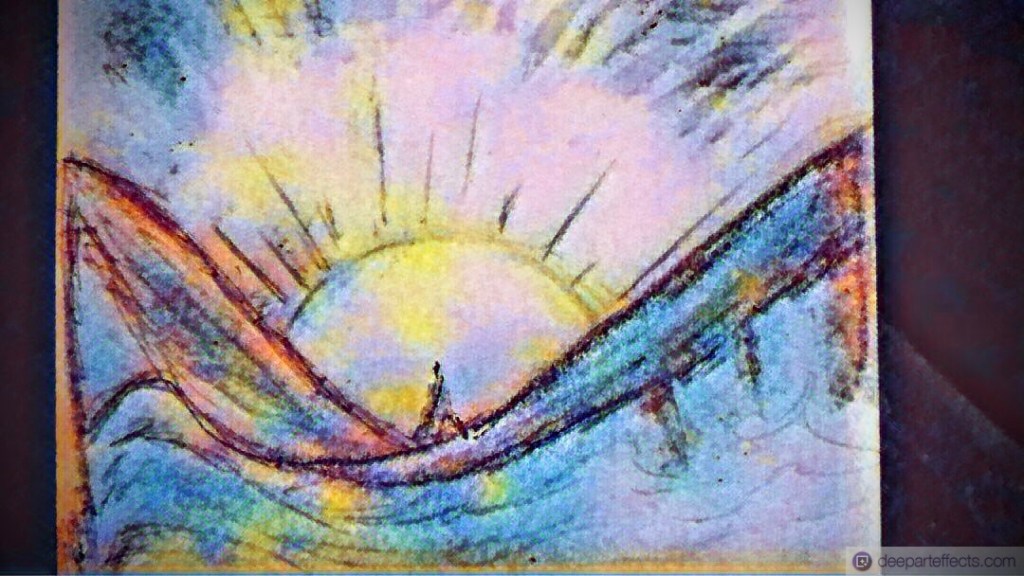
My sketch representing AWE in response to Carol Varsalona’s recent #K12ArtChat.
Can you see the word in the landscape?


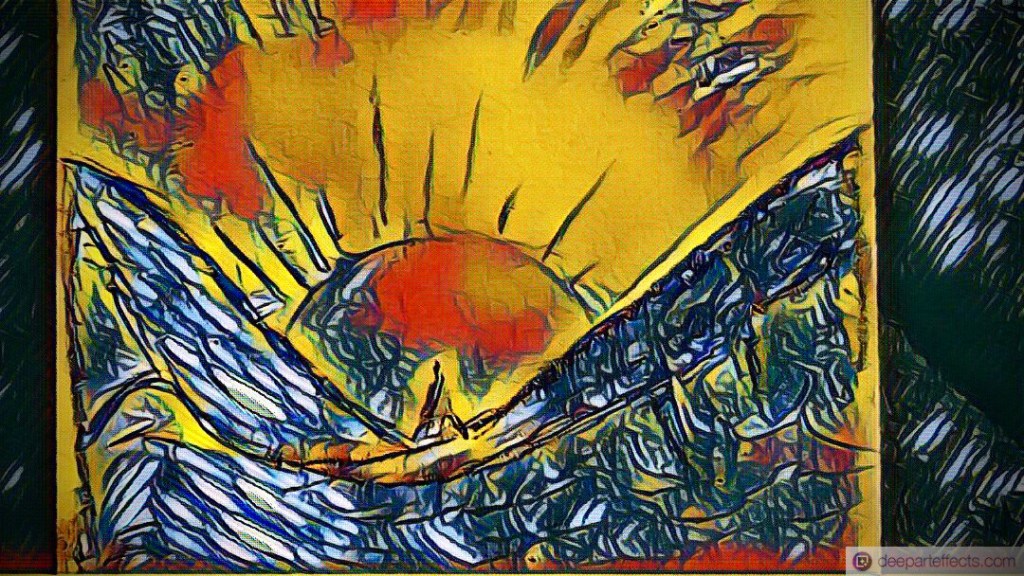
I decided to run the sketch through the Deep Art Effects app.
The following were my favorite styles.
Wishing you AWE in 2021.
Be on the lookout for it.
Maybe make it happen.

*******

with thanks to the awesome community at Two Writing Teachers
and to Carol Varsalona for the sketch inspiration
.

My most recent posts on the power of words:

Spiritual Word Journey – reflecting on being chosen by “awe”
When – a poem-prayer lament, composed of one word on each line


More on “awe” to come.

Spiritual Word Journey

As the calendar turned from 2020 to 2021, I thought about words.

Particularly the word “weary.” It had seeped into my bones.

And I wondered if maybe, maybe…as much as I love them…I was tired of words.

Tired of the way they are wielded to wound.

Tired of the clamor.

One word with appeal: hibernation. Yes. Give me that word. It is, after all, winter.

I’ve just begun reading the book Wintering: The Power of Rest and Retreat in Difficult Times by Katherine May. Early in the book, May speaks of how plants and animals don’t fight winter. They don’t pretend it’s not happening or carry on living the same as they would in summer: They prepare. They adapt. They perform extraordinary acts of metamorphosis to get them through. Winter is a time of withdawing from the world, maximizing scant resources, carrying out acts of brutal efficiency and vanishing from sight, but that’s where the transformation occurs. Winter is not the death of the life cycle, but its crucible.

It is winter. My country is in a metaphorical winter. A bitter one. Certainly a crucible. What is being forged, I cannot say; the combination of a pandemic, many types of loss, from jobs to loved ones, to food insecurity, to strife and political unrest, seems almost more crucible than can be withstood. It takes its toll. Mentally, physically, emotionally. Withdrawing, at least from social media where vitriol is most rampant and draining, has great appeal. In the name of preservation, if not of one’s sanity, then certainly of one’s spirit.

Vanishing from sight. Alluring.

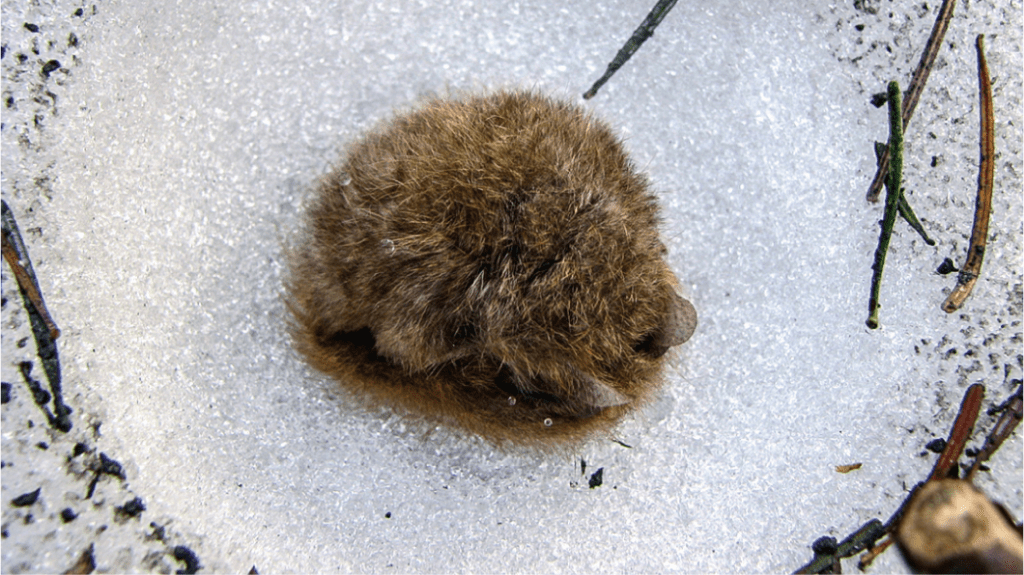
Makes me think of little bats I read about recently, how they survive the winter by making tiny dens in the snow. Took scientists years to figure out how they survived—only polar bears were known to make snow caves.

/

Ussurian tube-nosed bat, hibernating in Japan. Photo: Hirofumi Hirakawa. Science Magazine.

I am not a fan of bats, long before COVID-19. But that this tiny creature weighing less than a quarter ounce can endure, knows to endure, such harsh conditions in this way fills me with awe.

And that is the word I am clinging to in 2021.

Not hibernation. Awe.

I didn’t feel like choosing a word as a focus for the year. Remember, I was weary beyond words. Yet when I flipped my planner to January 1, I found this quote: Experiencing awe, the feeling of being in the presence of something bigger than you, can improve your physical health and make you feel more altruistic. Intentionally create awe this month by spending time in nature, meditating, volunteering, etc.

So that is how awe chose me as a guiding word for the year, extracting an unwritten promise from me that I would look for it each day. I started capturing an “awe of the day” in a notebook…for three whole days. Then I started back to remote teaching with sketchy Internet and a plethora of other school-related issues that weighed heavy enough to bring tears, a rare thing for me. All which were obscured today by the long shadow of the U.S. Capitol. Tonight another word from my planner’s awe-quote, altruistic, rises to the surface: having a genuine and selfless concern for others.

Where is it?

Like awe from which it is born, it must be looked for.

When I see it happening, I take heart. I am awed by others who, in the darkest of times, are the light-bearers. The healing-bringers. In these moments I know I am in the presence of something greater than myself.

I also happened to read this quote from Albert S. Rossi in Becoming a Healing Presence:

We need to push “pause” often and avoid reacting to the latest and loudest…The Lord expects us to live a life of love for Him and for others.

We have all the time we need to do all the things God has us here to do, in a peaceful way…We revere time as a way to remain peaceful, no matter what, to please God who gave us time. We have time to be come more of a healing presence during our remaining time on Earth.

We don’t live life. Life lives us.

Those words and that wisdom fill me with awe, like the little bats which know to burrow in the snow. Like the stars, like the ocean that I haven’t seen in eighteen months and am longing to see again, for the healing it offers my soul, for the taste of salt and infinity on its breeze. Like the children at school (on the screen) who are so buoyant. Like my son’s music—I can hear the keyboard upstairs, as I write—and his beautiful voice when he sings. Like his older brother’s way with words and his deepening altruistic nature. Like my daughter-in-law, a gift straight from God to our family, and her artwork in both painting and baking. Awe. Like my granddaughter’s face, lit with joy, every time she comes to see us. She has changed our world.

Just one more reminder that I’m in the presence of something far, far greater than me.

What the world needs now might not be as much love, sweet love, as awe, healing awe.

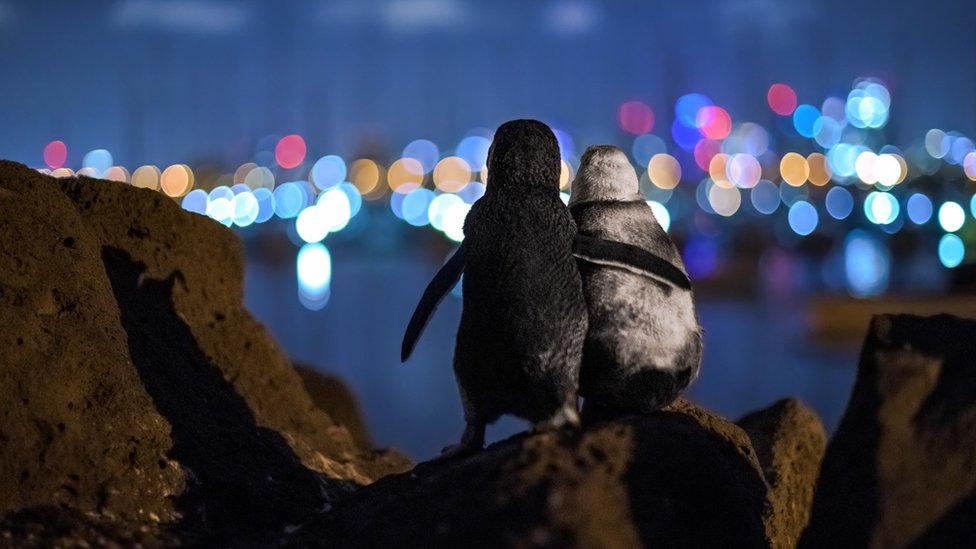
Did you see the two widowed penguins with their wings around each other in an award-winning photo, touted one of the best of 2020? Animals know. Let us humans likewise be a healing presence to one another, moving forward.

Two penguins look into the distance in Melbourne

Tobias Baumgaertner. Ocean Photography Awards. BBC News

Here’s to claiming your awe. Or letting it claim you.

Just little more of mine:

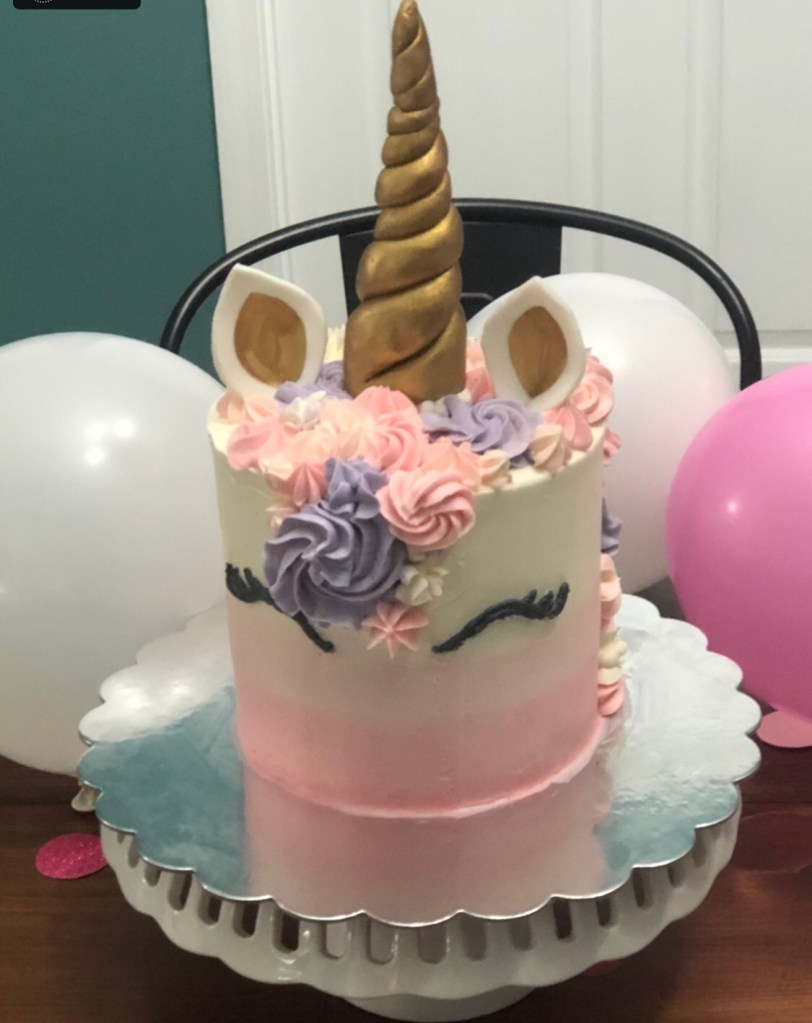
Unicorn cake my daughter-in-law made for my granddaughter’s birthday…
unicorns, by the way, are a symbol of healing.

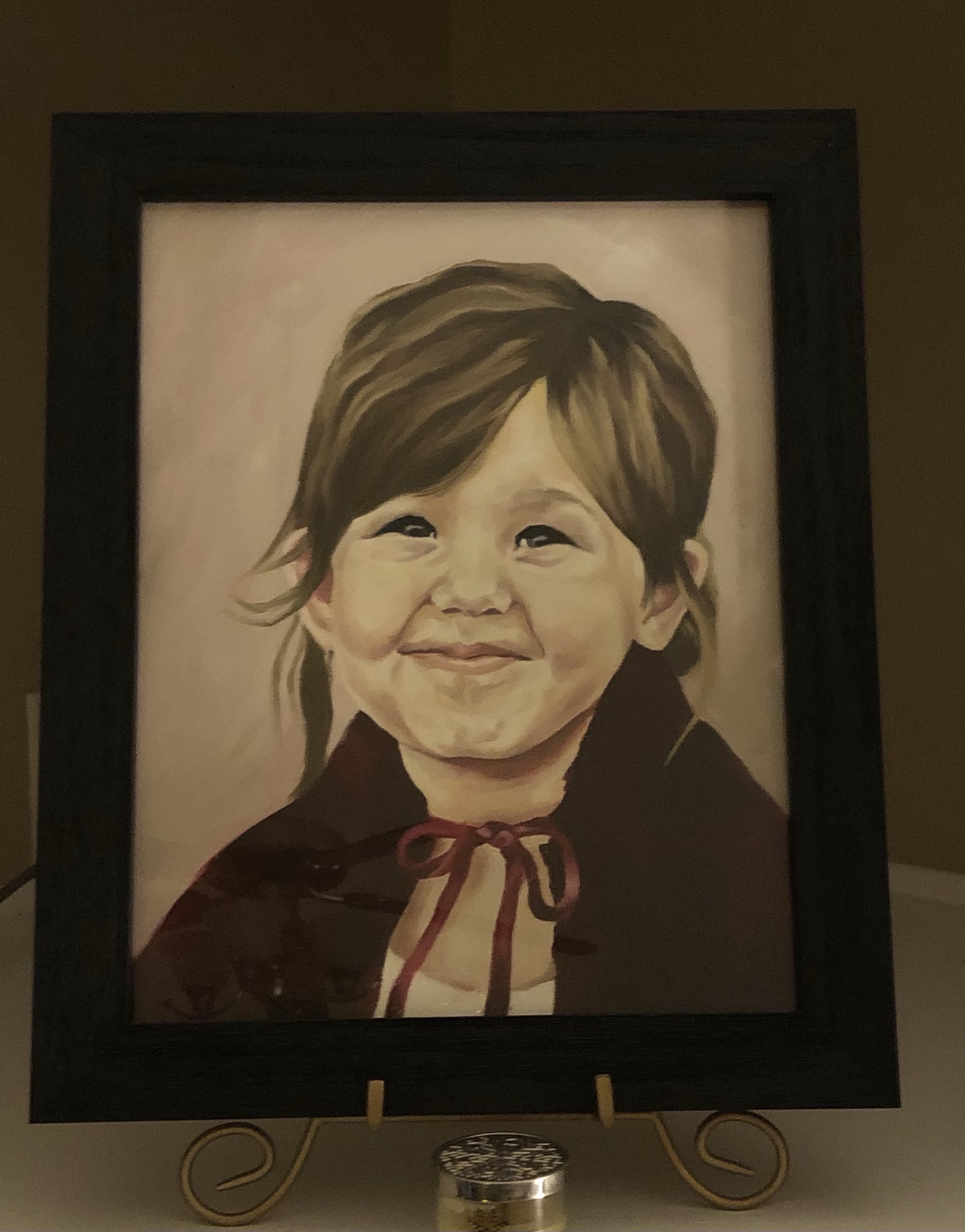
My granddaughter’s portrait, painted by her mom, as a Christmas gift to my husband and me.

*******

With much gratitude to my Spiritual Journey Thursday group. You all are another source of awe. Special thanks to Carol Varsalona for hosting at Beyond Literacy Link. Per Carol’s suggestion, I am including a link to a prayer-poem here that I wrote earlier, tying “awe” (note the beginning letters in the title) to being a vessel of the Spirit: Alight with Expectancy.

Alight with expectancy

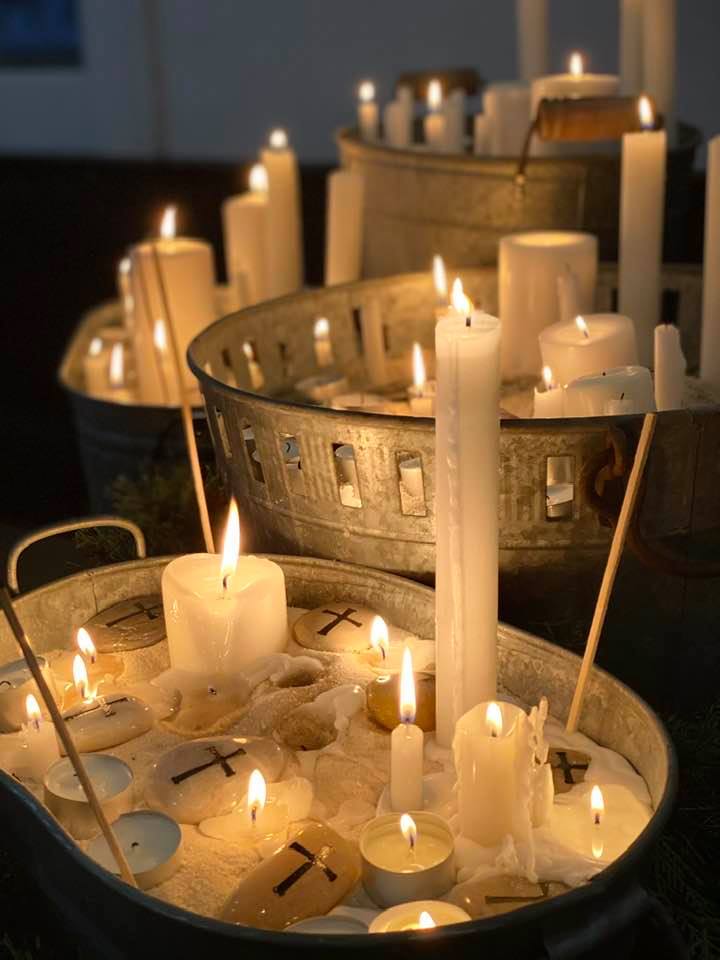
The following is an invented form of poetry called “Spirit’s Vessel(see shadowpoetry.com). It’s three stanzas of six lines, each line containing six syllables. Rhyming is “a plus.” It’s also an acrostic designed to convey faith: VESSEL OF YOUR… with a final six-letter word chosen by the poet. My final word: SPIRIT. I have entitled this piece “Alight with Expectancy” for two reasons: the title is a nod to “Awe(another acrostic). If you know about the One Little Word tradition, you know about choosing a guiding word for the new year. After the year that was 2020, I hadn’t planned on choosing a word for 2021…more on that later. Just know that “awe” chose me as soon as the calendar turned. Who doesn’t need awe? Reason #2 for the title : This photo. It sparked my desire to try the Spirit’s Vessel for the first time. Those candles, at a church Christmas Eve service, in the time of COVID… thank you to photographer Ann Sutton and to Margaret Simon for sharing it on “This Photo Wants to Be a Poem” at Reflections on the Teche.

Thanks also to the Poetry Friday gathering and to Ruth in Haiti for hosting the Round Up.

My first post of 2021: Alight with Expectancy

Votives cast haloed light
Eclipsing dark of night
Shadows flicker and play
Stained-glass luminants pray
Expectant, glistening
Lord, we are listening

Offering petition
From hearts of contrition
Your conduits, help us be
Of Your all-healing sea
Undulating with grace

Rippling out from this place

Salvation receiving
Penumbral believing
Illumination starts

Restoration of hearts
In holy candleglow
Touched by the Spirit—know

My Thanksgiving song

Thanksgiving Day, 1987.

My boyish husband and I have come to eat with my parents. There’s a lot on my mind as I carry dishes from the kitchen to the dining room table. My father’s voice drifts from the adjoining living room, mingling with the Macy’s parade-babble on TV. He’s conversing with my husband, who’s planning to enter the ministry. Beyond the old lace drapes of the picture window where I sat so often as a child, the November day is like a sepia print. Browns of dead grass and leaves, oyster sky, skeletal trees bathed in pale, unassuming sunlight.

Then…another voice.

Singing.

Coming from the television.

I turn to face it, spellbound. I cannot move. I stand stone-still, between portals, as everything else fades away…there’s only that voice. Almost too pure to bear. It wrenches something inside of me, twists and pierces so that tears spring to my eyes… a man singing “God on high, hear my prayer, in my need, you have always been there…”

He sings of protection for a young man in troubled times, afraid, resting nearby. Of summers dying, one by one. He is willing to die for the young man— “he is only a boy”— if God will let him live and “bring him home.”

I stand, tears flowing, aching to the core of my soul, not wanting it to stop, knowing that I am somehow irrevocably changed.

******

The singer was Colm Wilkinson, portraying Jean Valjean from the Broadway musical Les Misérables. The song “Bring Him Home” is a prayer for young Marius, who’s fallen in love with Valjean’s adopted daughter, Cosette. Valjean watches over the sleeping Marius at a barricade during the June Rebellion, or the 1830 Paris Uprising. Broad view: On top of harsh economic times, crop failures, and food shortages, a cholera epidemic killed over 100,000 across France. The poor, especially in the city of Paris, were devastated; they blamed the government and retaliated.

I learned much later that the song was especially written for Wilkinson’s tenor voice—a profound marriage of artistry. And revision. Lyricist Herbert Kretzmer struggled with the English translation. He completed it seventeen days before the show opened. Upon hearing its first rehearsal, the cast was blown away. One member, playing the Bishop, said:“You told us at the beginning that you couldn’t keep God out of the show. But you didn’t say you’d booked God to sing this song.”

My husband eventually took me to see (to hear?) Les Misérables on Broadway. My awe has never diminished; so many songs are hauntingly beautiful, meant to pull on the soul with deep themes of loss, love, faith, sacrifice, death…and, above all, redemption.

I’ve been thinking of Thanksgiving in the time of COVID, how life and gatherings— and parades—are changed in ways we couldn’t have imagined. We are not allowed to sing at school, for fear of spreading the virus.

But some things never change. We never really know what is to come in a day, a week, a year…or the next moment.

Like Valjean, I grow older, with my heart turned toward the next generation in prayer for preservation. For their peace and joy. My own boys, now grown… the firstborn followed his father into the pastorate. The youngest is a worship leader. A musician and singer. Yes, how soon the summers fly, on and on…the boys weren’t even born yet on that long-ago Thanksgiving when I stood before the TV screen in my childhood home, transfixed by a cloaked Irish tenor in the streets of New York City, as snow began to fly…

God on high, hear my prayer
In my need, you have always been there

It remains my Thanksgiving song, every day.

Always.

God on high, hear my prayer
In my need, you have always been there
He is young, he’s afraid
Let him rest, heaven-blessed
Bring him home
Bring him home
Bring him home

He’s like the son I might have known
If God had granted me a son
The summers die, one by one
How soon they fly, on and on
And I am old and will be gone

Bring him peace, bring him joy
He is young, he is only a boy
You can take, you can give
Let him be, let him live
If I die, let me die
Let him live
Bring him home
Bring him home
Bring him home

Songwriters: Alain Boublil/Claude-Michel Schönberg/Herbert Kretzmer

The horse

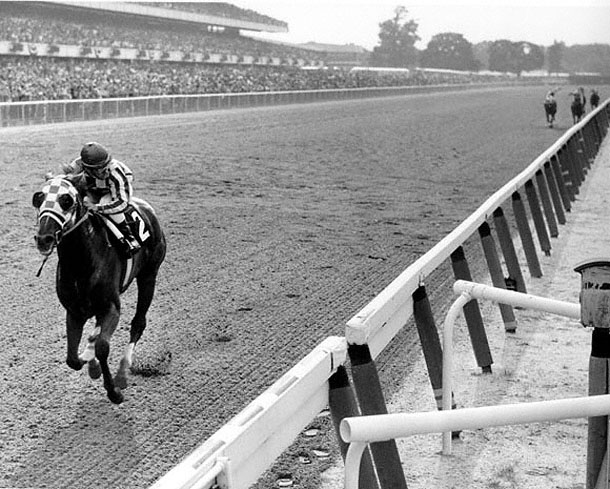
Secretariat

Secretariat. Charles LeBlancCC BY-SA

They’re gathered at the kitchen table—Daddy, Mama, Grannie, Earnie— as Mama shuffles the cards. With a riffling “flflflflflflflflflflt,” she makes the cards fall in a fancy bridge finish. I don’t know how she does it. They’re playing Canasta. Cigarette smoke hangs thicker than fog in the close kitchen; Grannie is the only one who doesn’t smoke. I sometimes think that the white cloud pouring like an upside-down waterfall from Earnie’s lips straight up to her nostrils looks kind of dragonish. I wonder again why she’s not married, being my mother’s older sister. My sister and I almost never call her Aunt. She’s just Earnie. 

I can’t stay in the kitchen for long. The smoke stings my eyes and makes me cough. I watch cartoons with my sister for a while on TV, then drift back to my room to look at my at rock and mineral sticker books, until I am thirsty and come back to the kitchen for Kool-Aid. The grown-ups pay me no mind; they’re into their game. I pay them no mind as I get my drink from a pitcher in the refrigerator.  

Until I hear them saying a strange name. One I’ve heard on TV.

A lot. 

It sounds like “secretary.”

Earnie is a secretary. For something called Sybil Service. For the Army, I think, but she doesn’t wear a uniform. She can write in shorthand. I have seen her notepads and her little squiggles look made up. How can those little curly marks mean anything at all?

But they’re not talking about a person. I can tell by the way they say the name that there’s something very important about it. 

“Who is Secretary It?” I ask. I gulp my Kool-Aid. 

Secretariat,” Daddy says, enunciating clearly, frowning at his cards. “He’s a racehorse that just made history. He won the Triple Crown—ran so fast that he left all the other horses behind like they were just standing still.” 

Secretariat. Secretariat.

The name is as strange as Earnie’s shorthand. It uncurls in my head like a wisp of smoke. The way Daddy says it is the way people speak in church before the preacher preaches. When the music is just beginning. 

Part of me suddenly envies this horse who can run so fast, who’s so strong. I can’t run. When I do, I can’t breathe; my asthma is as heavy as a horse sitting on my chest and all I can do is wheeze until it passes.

But another part of me tastes something sweeter than Kool-Aid when I whisper his name.

Which I do, over and over.

Secretariat.

*******

I don’t remember seeing him run or win the Triple Crown in 1973. I didn’t know he was the first such winner since 1948, that he broke records with his times, that he won the Belmont by 31 lengths—so much that when I look at the old footage now, the other horses aren’t even in the frame with him. I didn’t know anything about horse racing at all, nothing about the big money, or betting, or odds.

But I remember the awe, the utter reverence, with which his name was spoken. His image, a magnificent, glossy red horse with three white-stockinged legs, soon became familiar to me.

What I understood instantly, the day I learned of him, is that he was the stuff of legend. His name tasted of rare glory, of something almost otherworldly. It’s possible that Secretariat was the beginning of my love of things fantastic.

I celebrate Justify’s recent Triple Crown win. I pulled for him all the way, holding my breath, tears flooding my eyes when he crossed the finish line, another beautiful chestnut horse excelling at exactly what he was born to do.

And I marvel at my weepiness, at my need to go back and watch the clips of Secretariat, to read about him one more time. It’s a longing born of wonder, of the crystallized moment that this big red horse with the strange name seeped into my heart like the red Kool-Aid stain above my lip, sparking something magical in the little girl that I was.

img_4952-4


Divine appointment

Cardinal

Cardinal Singing Along. Don and Janet BeasleyCC BY-SA

Broom in hand, I descend the brick steps where moss has newly sprung. The sidewalk needs sweeping and I’ve only a minute. Must get to school early, to prepare for the day; the minutiae of all that has to be done circles round and round my mind. 

But I have to do this first. Oddly. Sweeping the sidewalk is not part of my morning routine. 

Hurry. Hurry.

All is still but for the light chatter of a few birds, waking. The sound of early spring. The sound of April. Of a new day. I pause, listening. How cheerful, how happy their bird voices are, even if to them it’s just regular conversation. My spirit eases, just hearing them. I note that the light is unusual. Against random trees and shrubs, the dawn gleams amber in patches. Everything else is a backdrop in half light. There’s an edge to it all, a starkness. The sky is moody. Altocumulus clouds, dark in their middles, gleaming around their rims, are gathered in bands or waves; this is what scientists call a mackerel sky, I think. Strange light.

—Time. Be aware.

Right, I must hurry.

Just as I put broom to concrete, I see it.

Over in the neighbor’s yard, in the shadows under the bushy, unpruned crape myrtle. 

The brightest spot of color I’ve ever seen. Red. Rosy, electric red, brighter than any neon light, as vivid as fire, glowing, but not burning. Just being. I blink. How does such a color even exist in nature? It has to be a cardinal but I can’t see the rest of him, just his plump breast. A half-memory from childhood stirs in my mind, of pretending I had a pet cardinal and spraying pine-scented air freshener throughout the house to create his forest, where he could fly freely— but for all my attraction to the male cardinal’s plumage, I’ve never seen it to the intensity and brilliance as right now in this capricious light.

I want to see him better but I dare not move. 

I think I’ve quit breathing.

Could I, maybe, get a picture? If I’m stealthy, can I make it into the house and back with my phone? 

I have to try. I have to capture this image.

I watch him as I ease toward the house. He moves a little, hopping in the dappled grass.

As soon as I reach the steps, out of his field of vision, I race through the front door to the kitchen, grab my phone, turn, shoot back through the door, take the steps without making a sound, stop, and creep to where I can see the crape myrtle.

He’s still there! I can’t believe it!

An astounding spot of color, radiating an otherworldly light.

Holy.

I aim my phone and zoom in . . . 

On the screen I see the thin myrtle branches up close. The grass, the shadows, the sunlit patches. —Where’s my bird?

I look away from the phone back to the scene, to get my bearings . . . don’t know how I could have missed, I aimed right where he was standing . . . .

Gone.

He is gone.

In the second between my sighting him and my lifting the phone, he vanished. Without a sound or any perceptible movement. He was and then he was not. Just like that.

Nowhere to be seen at all.

I stand frozen, phone in hands, an inexplicable feeling sweeping through me. 

The moment passed and nothing remains of it. Stunning, that spot of fiery color like no other, in the shadows under that tree. One glimpse of glory. He was so beautiful and I never even saw all of him. Even if I do see him again—and I’ll try, at this same time tomorrow, and the next day, and the day after—it will never happen again, not just like this. The clouds will not be the same. The position of the sun will be slightly different. It can never be again exactly as it was. 

I so wanted to capture his image, the holiness of it, to keep it forever, and I could not.

But I hold it in my mind. I cling to every breathtaking detail. 

I write it before it leaves me, wondering at the tears burning behind my eyes over this one bird, this one moment, why it should be so significant, to make me feel so much.

I was just there, unexpectedly, and so was he.

For one shining moment, we just were.