XIII and XIX

One recent early morning, I sat down at the kitchen table to write some poetry just as my husband turned on the TV. I caught the word cicadas.

I abandoned my laptop to come watch the segment:

“2024 is going to be a banner year,” announced the newscaster, “a rare co-emergence of two periodical cicadas: a seventeen-year brood and a thirteen-year brood…

A chart appeared on the screen:

Brood XIIIBrood XIX
Emerges every seventeen yearsEmerges every thirteen years

“They make the most beautiful sound I’ve ever heard,” said a second newscaster.

“Said no one ever,” joked the first.

The whole news crew burst into laughter.

“But it IS a beautiful sound!” I said to their guffawing faces.

I know the sound is a harsh rattle. Loud. Discordant. Metallic. Strange.

I don’t expect everyone to like it.

I’ve loved it since I was a child.

I wasn’t aware I loved it when I spent brutally hot summers deep in the country with my grandparents, where an old dirt road and a ditch were all that kept their yard from being swallowed up by a towering deciduous forest. From those dense, mysterious depths emanated a deafening buzz, hundreds upon hundreds of cicada-songs swelling and subsiding in synchronized rhythms, the background music of my happiest childhood days.

Time passed. As my grandparents grew older and my visits rarer, I’d realize the meaning of the rhapsody. Cicadas play love songs with all their might. They know their time is short.

At nineteen I was hospitalized with a high fever. My father and mother both accompanied me, clearly concerned about my condition. They sat by my bedside while I lay shivering under layers of blankets, too tired to talk, to move, to care about anything. Afternoon melted into night. It was winter. The heater in the room kicked on with a buzz so like the cicada chorus of my childhood summers that my shivering eased almost instantly.

They’re calling me, I thought. The cicadas. They’re taking me to Granddaddy’s and Grandma’s, and I’ll be safe there.

This flooded with incomparable comfort and indescribable joy.

Then… if I’m dying, it’s okay, as long as there are cicadas.

And I fell asleep.

When I woke in the morning, my fever had broken.

I didn’t know, at nineteen, that cicadas are a symbol of resurrection and immortality. I didn’t know the many legends and lore surrounding the insects, such as the myth of Aurora, goddess of the dawn, doomed to fall in love with a mortal who inevitably grew old. She obtained immortality for him without thinking to secure eternal youth. Soon there was hardly anything left of him but his voice, continually singing his lamentation and love, so she finally turned him into a cicada.

Note: Aurora is the name of my grandparents’ hometown, where I spent those childhood summers steeped in cicada song.

Back to the present…

After that news segment, I had to do a little research.

Scientists say that these perodical broods, XIII and XIX, haven’t coincided since 1803 and won’t do so again until the year 2245.

They’re calling this a “cicadapocalypse” of maybe a trillion bugs…but not all in the same place (in case you’re thinking biblical plague). One’s called the Northern Illinois Brood (XIII) and the other, the Great Southern Brood (XIX). If my calculations are right, this brood appeared the summer that followed my sickness at nineteen (same as the brood numeral). I got married that August, when they would have been in full throttle. The time before that, I’d have been seven and hearing them at my grandparents’.

On the day the segment aired with newscasters poking fun at the sound, I happened to be taking part in an Open Write at Ethical ELA. Host Leilya Pitre introduced the Naani poem form, which orginated in India: four lines consisting of 20-25 syllables total. The poem isn’t restricted by theme, subject, or metric pattern. Leilya challenged participants to scroll through social media or the news to find four phrases to make a Naani.

My lines had just been delivered to me, before I even read the prompt.

Once again, the Magicicada were at work in the background rhythms of my life.

From This Morning’s Newcast

Brace yourself:
the cicadas are coming…
the most beautiful sound
I’ve ever heard.

—I don’t know about you, but I can hardly wait for cicadapocalypse.

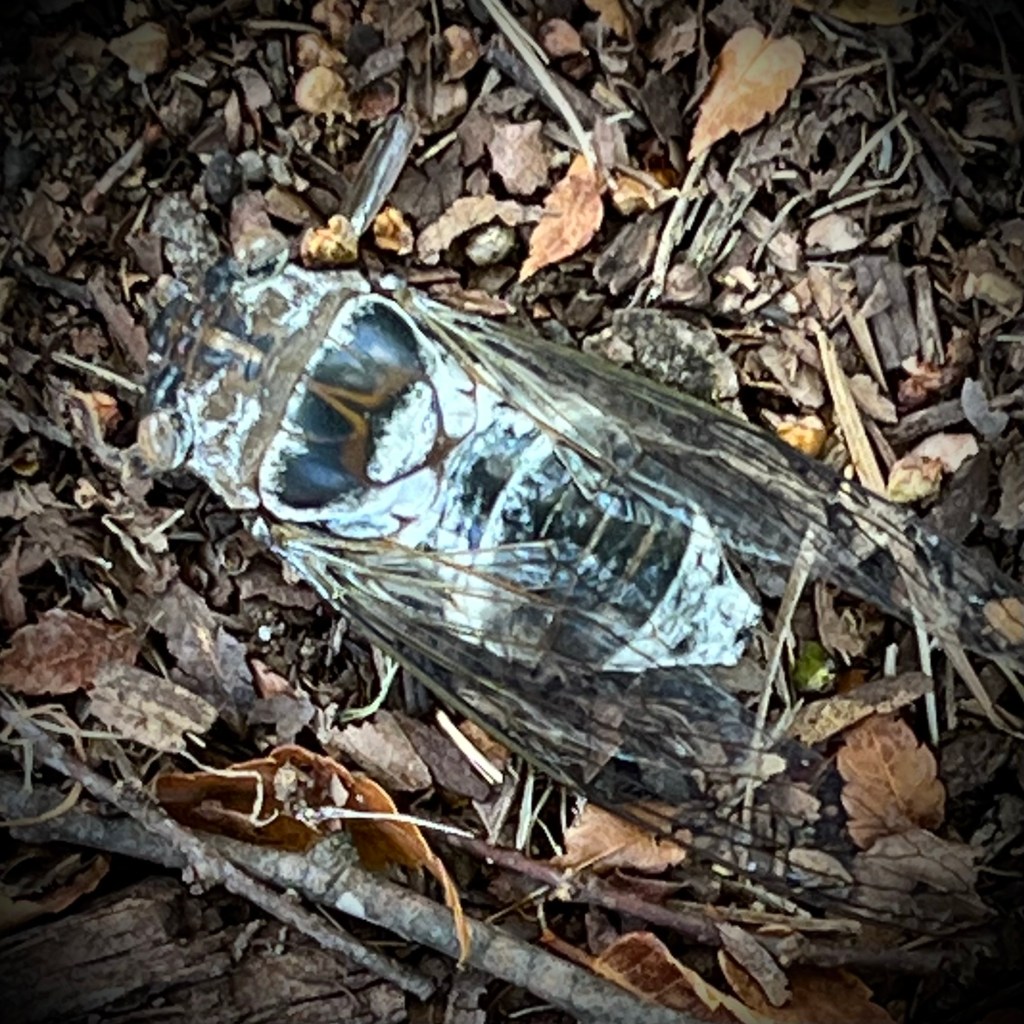
Cicada vunerable after metamorphose. Joi. CC BY 2.0
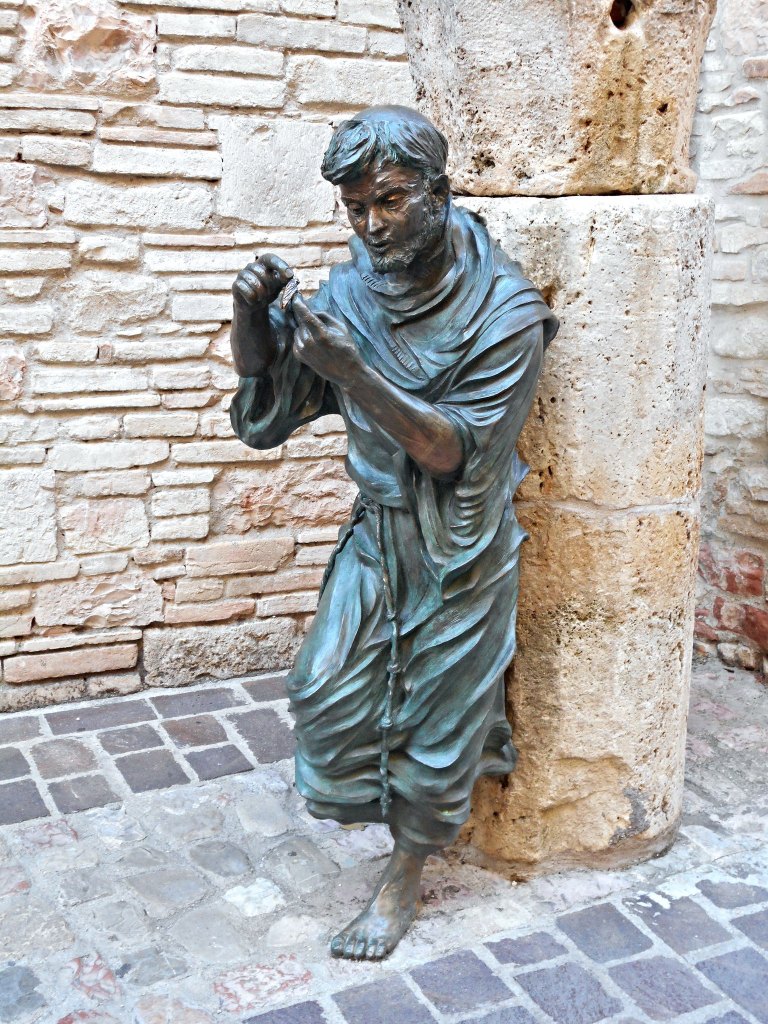
‘Saint Francis with cicada’ – modern bronze statue by Fiorenzo Bacci – Friary of Santa Maria degli Angeli at Assisi. Carlo Raso.

Legend has it that Saint Francis heard a cicada chirping in in a fig tree and called it to him, saying “Sing, my sister cicada, and praise the Lord thy Creator,” and it obeyed, sitting on his hand.

*******

Composed for Day 3 of the annual Slice of Life Story Challenge with Two Writing Teachers.
Q: What’s YOUR favorite insect? Why?
Screenshot

Usually it’s the sound of cicadas that stirs my soul, their rattling courtship-chorus reaching a feverish crescendo in late August. Summer hits its brutal zenith just before it begins to die. Interesting how August means to increase.

On the last Sunday of August, it’s not the sound of cicadas which captivates me.

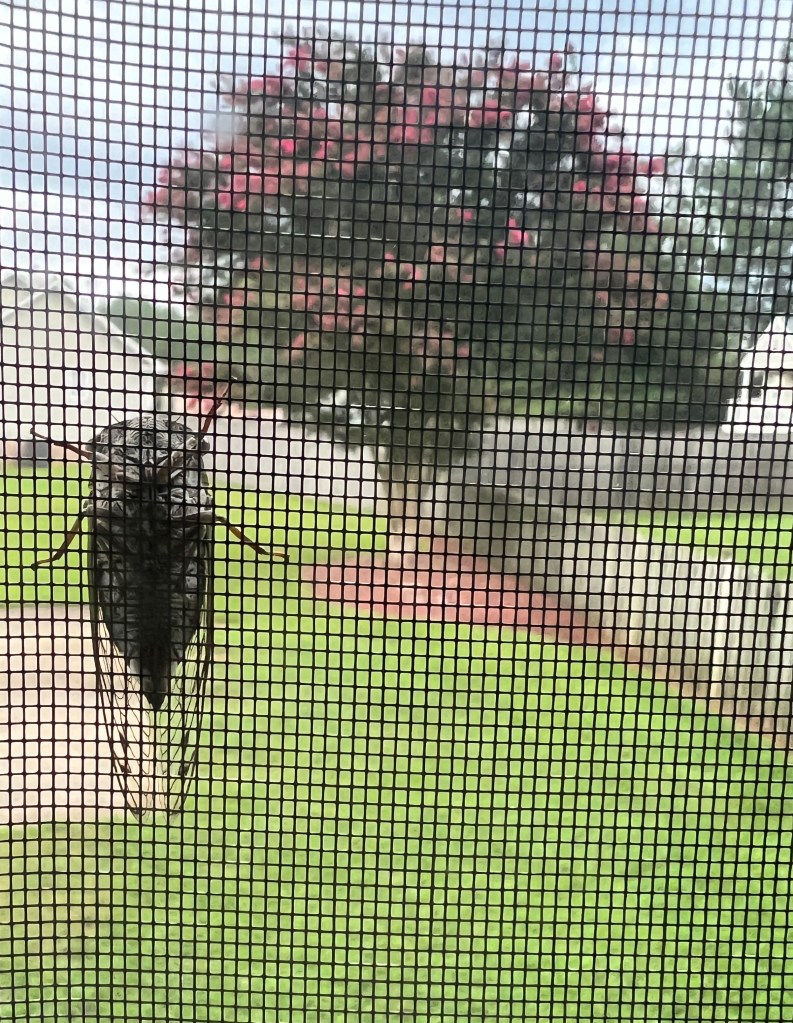
It’s the sight of one clinging to the screen in the kitchen window, early in the morning.

So still that I wonder if it’s dead.

I am tempted to go out and see, but I don’t. Let it be. If it’s dead, it will still be there after church and I’ll save its body to show the granddaughters. Cicadas are big insects that evoke terror in many people; I do not want the girls to fear them. The antidote to fear is understanding. Study. Fear not. Maybe even learn to love.

I take a photo instead.

It is a dark morning, like the one in the sermon text for this day, Mark 1:35: Jesus rises “very early in the morning, while it was still dark” to find a desolate place to pray. He’d spent the previous day healing the sick, including Simon Peter’s mother-in-law, and driving out demons.

When I return home, the cicada is gone.

Not dead.

All I have is this snapshot of it resting alone in a quiet place on the grid, with the crape myrtle by the old dog’s grave blooming in the background.

I could write an entire book, perhaps, on the symbolism and metaphor here.

I settle for a poem.

Clinging to the grid
In respite from work
Crape myrtle abloom
August’s crescendo is the last
Defying death in the wings
As love drives resurrection

The cicada and crape myrtle are symbols of life, longevity, immortality, and resurrection.
Summer is dying, but only for now.

*******

with thanks to Two Writing Teachers for the weekly Slice of Life Story Challenge

A president, a poem

Today on Ethical ELA’s Open Write, Stacey Joy invites participants to lift a line of poetry and use it in creating a Golden Shovel poem.

I was thinking about it being President’s Day, so I went in search of poems written by our presidents. This led me to Jimmy Carter, the first U.S. President to publish a book of poetry in his lifetime. He is our longest-living president; at age 98, he has just entered hospice care. I have lifted a line from his verse.

“To hear the same whale’s song” – Jimmy Carter, “Life on a Killer Submarine,” Always a Reckoning and Other Poems

Homeward Hymn

when my life draws to
its close I imagine the last thing I hear
will be cicadas rattling high in the
green oaks as I pass, fervently calling, calling the way, same
lost and found returning sound of whale’s 
pulsating destination song

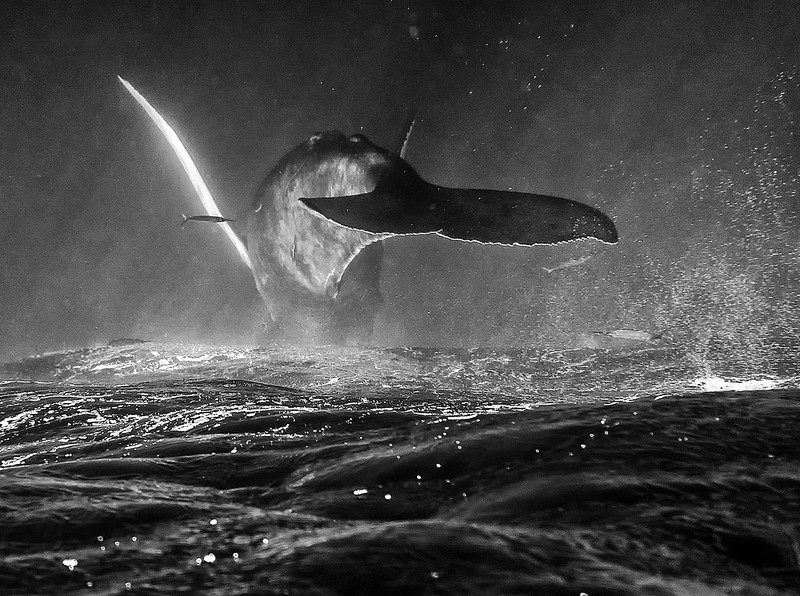
If Whales Could Fly. Christopher.MichelCC BY 2.0.

The cicada

Yesterday I tried to rescue a cicada that had fallen on the pavement in the bus loop at school.

I didn’t see it fall. I only saw it on its back, wildly fluttering its wings, unable to right itself.

As cicadas are huge insects, many of my colleagues preferred not to get near it.

But I have loved cicadas all my life. Their summer song, that choral buzzing swelling from the treetops, sends my spirit spiraling skyward. I find it among the most comforting of Earth’s songs.

And so I went and picked it up.

The cicada beat its wings in a frenzy, for a second clinging to my dress with its hook-legs.

I placed it, right side up, in the mulch at the roots of a crape myrtle.

It flipped over on its back again.

This is what cicadas do, what most insects do, when they are dying. Their legs can’t support them anymore.

I figured the creature would be gone by the time school dismissal was over. All I could do was provide a dignified passing for it in the mulch under the tree versus being flattened by the wheel of a bus.

But it was still alive, moving its legs a little, when time came for me to leave.

So I put it in a cup and brought it home.

It was still and silent for most of the ride, except for one episode of weak wing-beating against the cup.

I placed it, right side up, under some ivy in a planter on the back deck.

A couple of hours later, it was on its back again, still feebly moving a leg or two.

I don’t know how long it takes cicadas to die. I don’t know if they feel pain, anxiety, or fear. I know they live the greater part of their lives underground (up to 17 years, some of them) and their time above is short (a few weeks). I start listening for their song at the end of May, the month of my birth, and I hear the last strains sometime in September. Cyclical, symbolic creatures, cicadas. Across cultures and legends, they’re most often associated with immortality and resurrection.

Yet this one was dying. I couldn’t help it or save it. I couldn’t tell it how grateful I am for its kind, and it couldn’t care. I couldn’t give it peace.

In the end, it gave me peace to let it play out here at home with honor in the ivy-sheltered planter. As night drew near, dozens of other cicadas called from the trees…a fitting requiem for a fellow northern dusk-singing cicada.

Maybe it could hear. Maybe the song was a comfort, a blessing, a benediction.

It was for me.

My northern dusk-singing cicada

Dog day rhythms

Rest is not idleness, and to lie sometimes on the grass under the trees on a summer’s day, listening to the murmur of the water, or watching the clouds float across the sky, is by no means a waste of time.

—John Lubbock

haiku story poem

dog days of summer
triple-digit heat index
white haze cloaks the air

one can drown in it
too hot for lying in grass
even in the shade

lethargic rhythms
settle on all living things
except for insects

unrepentant sun
shimmers on dragonfly wings
iridescent darts

buzzing cicadas
in feverish frenzy sing
of love high in trees

remaining unseen
falling silent before storms
darkening the skies

as lightning’s forked tongue
snakes from the heavens to earth
(thunder, they told me

when I was a child,
is just the angels bowling;
that’s their pins, crashing)

—the heat breaks at last
like evening revival
saving weary souls

murmuring water
seeps into my dreams
ephemeral streams

summer’s lullaby
syncopated rain-fingers
tapping windowpanes

no sleep is so deep
as that borne by rhythms of
dogs days descending

summer rain. annalisa ceolin. CC BY-NC-SA 2.0.

*******

with thanks to Ruth Ayres for the inspirational quote at SOS-Sharing Our Stories: Magic in a Blog

In the treetops

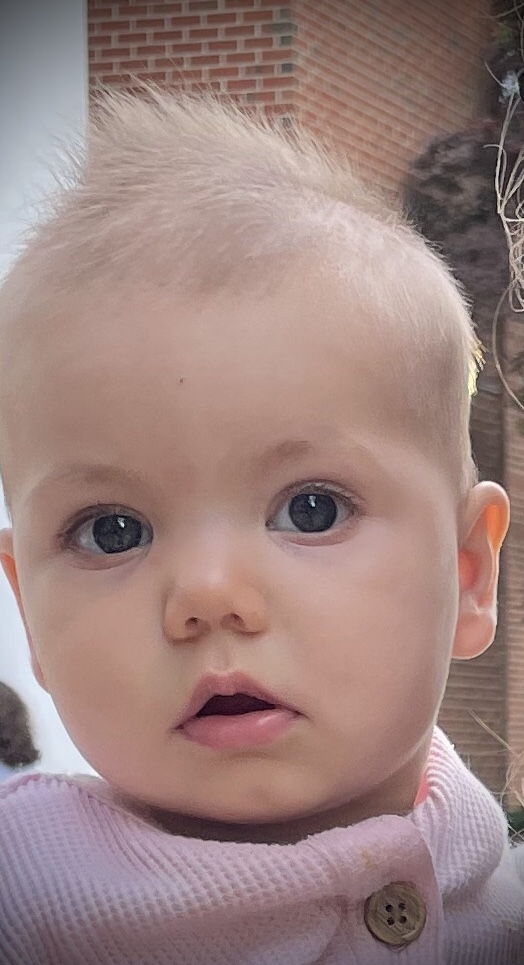
Today I kept you
and you cried because it’s new
so we went outside

to see all the trees
you touched the green leaves sweetly
with your baby hand

and you looked up high
at the pines rattling with song
cicadas, at last

first time this season
oh how I love their comfort
oh how I love you


Shimmer of being alive poem

Late September

across the street
the first few spots
of yellow dot the lush green
abundance of trees
despite the searing blueness of sky
and bathwater-saturated
Carolina air

lingering summer

yet in it I feel a tinge
the tiniest tinge
an almost imperceptible
coolness

deep in the wooded shadows
from a sun-patched limb, no doubt,
a lone cicada takes up his rattle
crescendo, decrescendo


they were late arriving this year
but still here

driving to work
along the winding backroads
a darting from the left
two gray squirrels, 
scampering in tandem
right in front of me
on the double yellow lines

I stop for them 
they stop for me

after a moment
of squirrel contemplation
one continues on across
but the other, the other
turns back
with something in its mouth

not an acorn, something hanging
pale-colored
I’ve never seen the likes
but instinctively know:
that’s a baby squirrel

and on I drive, thinking
of the old squirrel twins book
my grandmother read to me
so long ago

and of how I shall read it
to my own granddaughter
arriving in a few short weeks

the morning September sun shimmers
rose-gold in my rearview mirror
like promises steeped in time

I no longer dream of dying
like I did when I was nine
now, in my first tinge of autumn
I dream of new babies born
every night

*******

with thanks to Sarah Donovan at Ethical ELA for the inspiration to write poetry
around moments of knowing “I am alive.”

The sound of gratitude

playing with a variation of pantoum, on gratitude found in favorite sounds

When I listen, I can hear
the sound of gratitude

in the rattle of summer’s last cicada, clinging
and crystal tones of children, singing

The sound of gratitude—
in the distance, church bells ringing
and crystal tones of children, singing
then at your voice, my heartstrings quiver

In the distance, church bells ringing
Jesu, Joy of Man’s Desiring
then at your voice, my heartstrings quiver
one last “I love you” before retiring

Jesu, Joy of Man’s Desiring
—when I listen, I can hear
one last “I love you” before retiring
in the rattle of summer’s last cicada, clinging.

*******

Cicadas are ancient symbols of renewal, rebirth, transformation, change, resurrection, immortality, spiritual realization. Socrates linked the cicada song with divine inspiration in religion, poetry, art, and love.

Thanks to Ruth at SOS: Magic in a Blog for the sounds of gratitude inspiration & to Susan Bruck for hosting Poetry Friday Roundup at Soul Blossom Living.

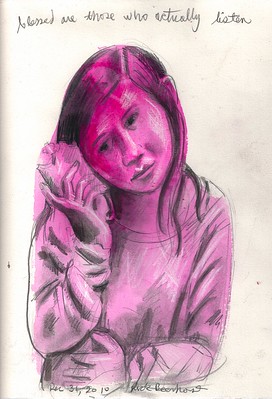
Photo: Listen. Artists Rick & Brenda Beerhorst. CC BY

Repurposed

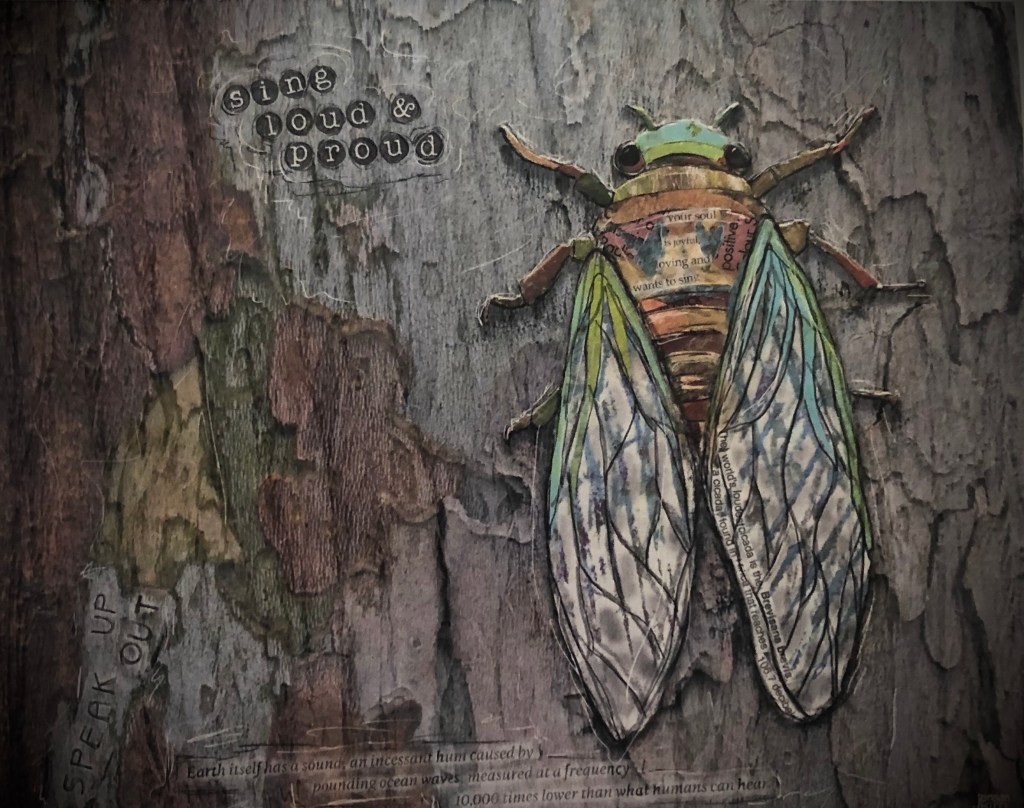
“Speak Up” mixed media collage. Jordan Kim, 2019.

A friend who knows of my strange love for the loud, jarring buzz of cicadas presented me with this card for my birthday. Fashioned from repurposed material, these snippets, chosen with artistic precision and care, strike deep…

Sing loud & proud

your soul
is joyful
loving and
wants to sing

positive

The world’s loudest cicada is the Brevisana brevis,
a cicada found in Africa that reaches 106.7 decibels

Earth itself has a sound, an incessant hum
caused by pounding ocean waves
measured at a frequency 10,000 times lower
than what humans can hear

Speak up
out

For now is the time of cicadas; some of them, sleeping underground for seventeen years, are due to rise.

And sing.

Yesterday, when the sun was brightest, I walked and walked the path around the graveyard of a country church, listening for the first strains.

—Silence.

No cicadas.

Seems they are late. I wonder why.

I thought about their wings, how the sectional lines running through the lower portion of these long, diaphanous structures form the letter W or P. It is said that these are omens for War or Peace.

—Folklore.

Unless Nature is a prophet.

Whatever pattern lies in the veins of their wings, or however it’s perceived, the cicada’s song is always one of life. Of survival. It is individual. It is collective. It is precious.

Most people call it cacophony, a harsh, deafening, discordant noise … not hearing the song for what it is. Not recognizing it the way cicadas do. We are not cicadas.

Yet there’s something of us, of all living things, in the sound. A song not heard with ears but with the heart, that ceaseless hum of our own brief journey from the womb to the ground. A song of earth, ocean, dust of the stars, for we are repurposed atoms of these; we carry them all, and each other, within us. Can we even hear our own song, any more than we can know our own heart, for what it really is? How can we even think we know someone else’s?

Until it becomes a collective cry of the heart.

In words

Speak up
out

in musicality

your soul
is joyful
loving and
wants to sing

even in sorrow, loss, grief, despair

even in fear, rage, hurt

especially in overcoming, healing,

rising, at long last

to greet the season of change.

Today, Two Writing Teachers shared words from Toni Morrison: This is precisely the time when artists go to work. There is no time for despair, no place for self-pity, no need for silence, no room for fear. We speak, we write, we do language. That is how civilizations heal. I know the world is bruised and bleeding, and though it is important not to ignore the pain, it is also critical to refuse to succumb to its malevolence. Like failure, chaos contains information that can lead to knowledgeeven wisdom. Like art.

Like that of Jordan Kim, who created this cicada collage. Her mission: To inspire others to honor our connection to the natural world and to each other.

Let it be our repurposed song, fashioned from the fragments of our hearts. Let it be positive. Let the Earth ring with it.

Sing loud & proud.