with thanks to Kim Johnson, who recently reminded me of the word…
It really is a hug that you give yourself perhaps on darkest days in the dead of winter
when forecasts of snow and ice fill the news or maybe you already hear tiny frozen pellets striking the windows
but inside you have a little crackling fire jars of dancing candlelight wafting balsam and spice a bunch of fleecy blankets a few brand-new books and bookmarks and maybe soft new slippers (mine say “Sleeps with Dogs” with fancy scrollwork. They are blissfully snug)
maybe your Christmas tree is still up (like mine) or at least your strings of lights outside, sparkling in the bitter cold where the faint sound of windchimes drifts in from a distance
with your favorite brew brewing knowing you don’t have to be going anywhere or doing anything except savoring the now with a slothful-as-you-please slowness
go ahead now, give yourself a hygge.
Dennis the dachshund is a master at hygge (pronounced hue-gah).
Originating (or at least perfected) in Denmark, hygge is the act of intentionally creating an atmosphere of warmth, coziness, and well-being, however it works for you, regardless of whatever is raging beyond your own walls.
We are getting reports here that the ice may cometh soon. Dennis clearly has his hygge on. I am preparing for it…got my new books and and my slippers ready.
September. Days growing notably shorter. Darker mornings. Sun blazing at midday, chorus of feverish buzzing from the treetops, cicadas singing loudest just before the last.
School. Children swathed in masks. Eating lunch all over the building for safe distancing. Even in a recessed section of hallway, sitting on the floor in portable blue plastic seats with built-in tabletops for food. A study in balance. Like seesaws. It takes coordination to stand up without losing what’s left of your lunch.
In the evenings, exhaustion. Everyone expresses it. Everyone. The nightly news drones on: Death and dying. Afghanistan. Hurricane destruction. Epic flooding. Rising COVID cases. Delta variant. And you might want to invest in warm clothing, Viewers. The Farmer’s Almanac predicts an unusually cold winter…it’s being called ‘the season of shivers‘…
Season of shivers. So poetic. I want to make something out of it, turn it around in my hand like a crystal, watch it sparkle in the light. I will hold onto it a while.
Isn’t it already a season of shivers. Church closed again, three weeks to date, as COVID struck a number of our members at once. Granddaughter in kindergarten for a week, now quarantined for two, following an exposure. Colleagues wanting to talk about intervention for students who were kindergarteners and first graders during the last year and a quarter, when instruction went virtual. A frantic clinging to norms when norms are gone. We can’t start with intervention. We must be about reinvention. Daunting.
Children. The most resilient of us all. I am sent to the cafeteria to supervise half of second grade while the other half is spread across the hallway and classrooms. Two to a table, facing the same direction. Cheerful. Chattery. They have to finish eating in time for me to clean all the tables before the next grade level arrives. I am the only staff member present. Normally there are two. Even office staff is pressed into service at lunch time, covering all locations. Skeleton crews, everywhere.
I manage it. The kids are in two lines, masked, lunch boxes in tow, awaiting their teachers. They watch me. They’re not sure what to make of me. They are quiet.
Beyond the propped cafeteria door, a balmy September afternoon. The swelling of cicada-rattles. Loud.
Do you hear that buzzing? I ask.
Nodding of masked heads. Like little bobbers on water.
Do you know which insect makes that sound?
Cockroaches! shouts a boy.
Crickets? offers a girl.
No. It’s a cicada.
They like the sound of the word. They say it aloud: Cicada.
I describe it. With my fingers: This big. Long wings. Hatches underground, climbs to top of trees. That buzzing is made by the males. It’s a love song. Doesn’t sound like a love song, does it?
Giggles. Shaking of heads.
They have questions, but their teachers have come. They must go.
Thank you for telling us about cicadas, says a girl, as her line begins snaking away.
At the door, the last boy stops, turns back: Where is that rattle, on the cicada?
In his belly, I say.
The boy nods. He runs along the sidewalk to catch up with his class.
I stand still in the shadowy silence, this momentary transition, listening to the miniature buzz-saw, helicopter-blade whirring of the cicada congregation. Loudest they’ve been all summer, just as it begins to die.
How well they must understand, cicadas, about the season of shivers.
When I began writing this post, I hadn’t planned on including cicadas. They crept in of their own accord. Because I love them, and their song, I let them stay. I often write of them. Cicadas represent, among other things, personal change and transformation.
Many thanks to the Two Writing Teachers community and the weekly Slice of Life Story Challenge. Sharing our storiesis also about personal change and transformation. We grow through it.
Let me preface this post with a restated confession: I am not exactly a fan of snakes.
But they, like all of nature, have lessons to teach, if one is willing to learn.
I hope to always be teachable, so…
Early in the summer I found a snakeskin in my garage. Just a little one, but still.
A few weeks later, I found another.
This morning, I found a couple more.
So.
Snakes seem to have been vacationing in my garage. Let us think on that momentarily versus thinking that they’ve taken up permanent residence there.
Here is why I say this: The skins, I’m pretty sure, belong to smooth earth snakes. I’ve seen a couple over the past year or so, which is saying something: These are nonvenomous, shy, fossorial snakes that don’t like to be seen. The first one I saw was dead, lying across my sidewalk after a rainstorm. Pale gray body. I thought it was a worm until I saw the tell-tale scales. The second one was stretched out in my flowerbed mulch, black tongue flickering in and out “smelling” the air, trying to determine what Iwas. That’s it for my lifetime earth snake sightings. Two. They are uncommon, tiny creatures…just the size of these silvery skins left behind.
So they live in the ground around my home, harmless little things, going about their business of eating earthworms and itty bitty snails or whatever.
And coming into my garage to moult.
Which is nevertheless discomfiting. For me, anyway. Not for the bashful snakes.
I don’t especially want one to come all the way inside and hang out or anything.
But they do have me thinking (among many things) about shedding one’s skin. Metaphorically, that is. As in, what sorts of things I wrap around myself and cling to when I could be letting go and growing. Mindsets, habits, beliefs, assumptions, what have you. Which things actually nourish me, and which actually constrain me? Which are beneficial, and which are harmful? What do I need to shed and leave behind, to better move forward?
I suppose this thinking occurs because summer is waning. I return to work next week not knowing what the year ahead will look like, other than back to masked here in my district. I think about the possibility of a full return to virtual learning. It is more than a great many teachers can take. Yet… we got through last year. The children got through. There were good things in spite of the trials; there were surprises. Many from the children and most concerning ourselves. School of 2020-2021 took a toll on everyone. We had to shed quite a bit of familiarity and comfort to get things done. But we did it. We grew.
I don’t wish for a repeat any more than I wish for snakes to be summering in my garage. I cannot ignore the timing of COVID rearing its more-venomous-than-ever head again when we thought it was on its way out, just when we are on our way back into the schools. I now have a granddaughter starting kindergarten. Her little sister will be born this fall. There’s always a lot at stake when it comes to children—in the words of Herbert Hoover (ever how unpopular a president he was in his day): “Children are our most valuable resource.” There’s nothing more precious. They represent our tomorrows; they are the culmination of our yesterdays. We have to shed the fear of failing them. Not assuming the worst, or that “we can’t,” but doing daily, as only that given day dictates, what must be done for their care and nurture as well as for our own. We have to be… well, “as wise as serpents.” When it comes to plans, we have to hold on loosely, ever how painfully contrary it is to our nature.
This summer I had plans for household repairs and updates. That was before the dryer quit working. Followed by the air conditioning during the hottest week of the year (of course). Followed by turning on the water one morning and nothing coming out of the faucet; the pump died.
I did repairs, all right. Just not the ones I planned.
But I got through. I now have a new dryer and water pump. The AC unit didn’t have to be replaced, thank heaven. All is working well. Throughout this whole process I thought about adapting. I dried clothes out in the hot sun. I remembered how my grandparents never owned a dryer. I thought about that one window air conditioner they had (late in their lives) against a sweltering Carolina summer and no AC at all in the old Ford Galaxy 500; I once left a stack of 45 RPM records on its back deck under the windshield. They melted. They warped and ruffled like clam shells. I’ve never had to pump or draw water in my life, but I had plenty of bottled water and didn’t have to miss my morning coffee while waiting on the new pump.
So I attempt to bring the lesson of shed snakeskin to a point here: In the discomfort is growth. Newness lies ahead; it approaches incrementally as we scratch away at the constraints and setbacks of now. Endurance is possible. We certainly know this. Sometimes the thing that needs shedding most is our perspective…
Meanwhile, I go back to cleaning out my garage, another thing I hadn’t planned to do right now, but the snakeskins sparked it. Time to purge what needs to go and put up a shelf to keep everything else off the floor. I am working on it. Hot, tiresome, dusty work, but I can see my progress.
And it feels good.
Thanks to the snakes.
******
thanks also to the Two Writing Teachers community, where writing our way through is a way of life…courage and strength to all.
A Skinny Poem, on Day Twelve of National Poetry Month. For me this is an indelible image.
Lunch in the School Cafeteria During COVID-19
Unmasked, they sit, all facing the same direction to eat children separated silent staring children spectral dystopian automatons children all facing the same direction, they sit to eat, unmasked
*******
with thanks to Denise Krebs for the inspiration in #VerseLove on Ethical ELA.
How to write a Skinny Poem:
Write to a strong image, experience, emotion, event, a work of art….consider the image you want to write about and describe the situation in the first line.
Only lines 1 and 11 have multiple words. Lines 2-10 are each one word only
Line 2, 6, and 10 are each the same word.
Line 11 uses the same words as line 1, but it can be rearranged for your purposes.
You can also write multiple Skinnys for one longer poem.
I have heard of found poems. I have not heard of a found haiku. But I offer one today from a favorite book: The Goldfinch by Donna Tartt.
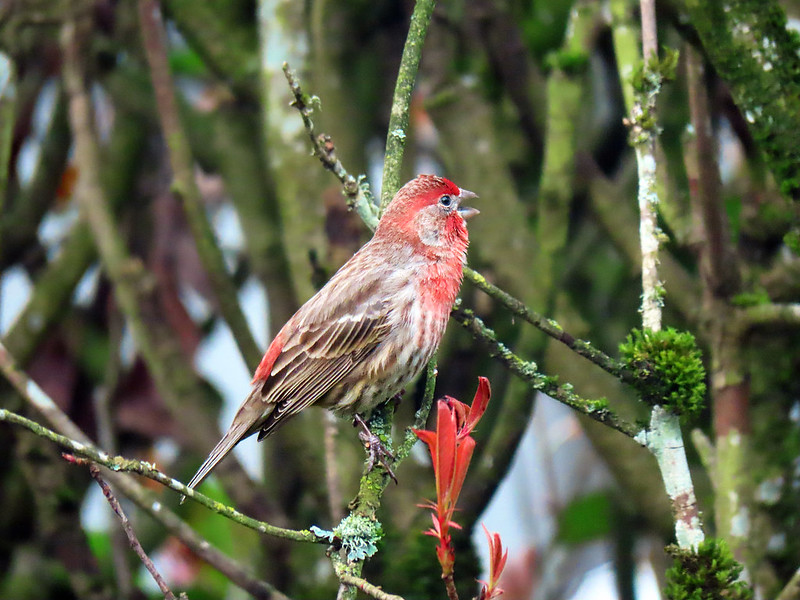
For Day Three of National Poetry Month and in honor of the finches who returned to nest in the wreath on my front door, having mysteriously disappeared last spring during the onset of the COVID-19 pandemic.
bright, immutable finch singing out brilliantly from the wreck of time
A house finch song on the first day of spring. Richard Griffin. CC BY-SA
Next-to-the last day of March. Early morning. Still dark. Chilly.
I sit at my laptop, sipping coffee, catching up on my Slice of Life blog comments. The neighborhood rooster across the street crows for all he’s worth.
My husband comes into the kitchen: “Is she up yet?” he whispers.
He means our granddaughter. She spent the night. We stayed up way late watching Frozen II (again). We watched her dancing to the ending credits soundtrack, performing her own astoundingly artistic interpretation, cheeks pink, blue eyes glowing…followed by punchy laughter before the crashing.
“Not yet,” I whisper back. He retreats to his study to work on sermons.
Shortly, though, she here she comes, a gift of the dawn, Aurora’s child, barefoot in a blue flannel gown, cloaked in long, disheveled hair, ethereal smile of joy illuminating the semi-dark kitchen. Favorite lines of a Billy Collins poem come to life:
But tomorrow dawn will come the way I picture her,
barefoot and disheveled, standing outside my window in one of the fragile cotton dresses of the poor. She will look in at me with her thin arms extended, offering a handful of birdsong and a small cup of light.
My radiant dawn-child climbs into my lap. I let her read my post about Dennis the dachshund and his toy moose. At five, she reads with exactly the right inflection in exactly the right places, decoding beyootiful without batting an eye.
“That rascally Dennis!” She laughs aloud.
My husband returns, his own face alight at sight of her. “There she is!” he exclaims. “I’ve been waiting for you, Sugar Magnolia.”
He sings the opening line of the Grateful Dead song:
Sugar Magnolia blossom’s blooming…
Just so happens that our granddaughter’s middle name is Magnolia. A nod to her Louisiana heritage. A native tree here in North Carolina, too.
I think how, less than two years ago, my husband wasdead, until EMS and CPR brought him back. I think of all he’d have missed…
What matters is that we’re here together now, today, in this moment. The Grateful Alive.
Sugar Magnolia, in one of Grandpa’s hats
When we are dressed for the day, she asks: “Can I pick out your earrings? And your necklace?”
“Certainly.”
She picks the magnolia. She and my son gave it to me for my birthday last year.
She hands me the necklace, watches me clasp it, smiles with satisfaction.
She will look in at me with her thin arms extended, offering a handful of birdsong and a small cup of light…
Just beyond the bedroom door, from the windows in the foyer, birdsong.
The finches.
I waited for them all of March, in vain. Then, here at the very end, within the space of these last twenty-four hours, a nearly-complete nest rests on my front door wreath. More on this tomorrow, when I write with the Spiritual Journey gathering on the first Thursday in April…for now all that needs to be said is that the finches always come to my door, every year except this last one. They vanished without warning, without a trace, during COVID-19. Now they’re back, making their home in the wreath.
The magnolia wreath.
Front door wreath and nest-in-progress
Magnolias, magnolias, everywhere…
They are tougher than they look. The oldest flowering plants on Earth. A symbol of love, longevity, perseverance, endurance.
It’s that word that captures me: Endurance.
It is the end of March.
We’ve endured the COVID pandemic for a whole year.
We’ve endured the reinvention of life as we knew it, school as we knew it, teaching as we knew it.
My family has endured distance, isolation, individual private battles…and we all get our second round of vaccinations over these next two days.
My husband has endured. He is alive.
My granddaughter has endured. She is the light of our days.
The finches have endured. They have returned to resume nesting.
This is my last post for the Slice of Life Story Challenge; for thirty-one consecutive days, I’ve endured. My writing has endured.
I wrote a lot of memoir in the Challenge, for memories endure. I wrote of a walled garden and roots and the need to get out of the comfort zone; I did that with some of my writing. I think now of my magnolia metaphor and look back at its deep roots in my childhood. Southern heritage. My grandmothers, steel magnolias (although they wouldn’t have thought it of themselves). Women who endured wars, deprivation, unspeakable losses. The stand over the landscape of my life like the old magnolia trees near their homes, their churches. They were the encompassing, protective shadows against the burning sun and sweltering heat, the solid coolness of the earth under my feet, where lie the curious, fuzzy seedpods of my existence, my remembering, my gratitude, my faith. From these branches waft the eternal fragrance of sacrificial love and forgiveness; nothing on God’s Earth smells as sweet.
One final curious image—it persists, so I have to figure out if and how it will fit here: When I was very small, I spent a lot of time with Grandma, Daddy’s mother. She and Granddaddy lived nearby in city apartments until he retired and they moved back home to the country when I was six. In this scene, I am around four, I think:
I am waiting in the hall for Grandma. She’s turning the lights out; we are getting ready to go. She calls my name from another room. I call back: “I am here.” My voice keeps bouncing, off the walls, off the stairs going down, down, down, into the darkness; we have to go through it before we can get to the door and the sidewalks and the sunlight outside.
“Grandma!” I cry. More bouncing voice, hollow, strange.
She’s there in an instant. “What’s the matter?”
“What is that sound?”
“Oh, honey, that’s just your echo.”
She calls out, “Hello”…her voice bounces, just like mine.
“Echoooo…” I call. Echooo-ooo-ooo, says the shadow of my voice, rolling down the stairwell.
And I am no longer scared, because now I know.
What does this have to do with magnolias?
Only that we are on our way to the park, where she would offer me bread to feed the ducks, which would come to eat from my hands, from my little extended arms…and where the magnolias still grow in abundance. The memory is a cup of light I carry with me, just as the echo of her voice remains, just as I find myself echoing her, for we are always echoes of the ones we love most. As blood circulates in our veins, so do remembered light and beloved voices, long past shadows and silence. These are things that endure.
Grandma’s homeplace was named for the dawn, by the way. She’s literally Aurora’s child.
But tomorrow dawn will come the way I picture her…
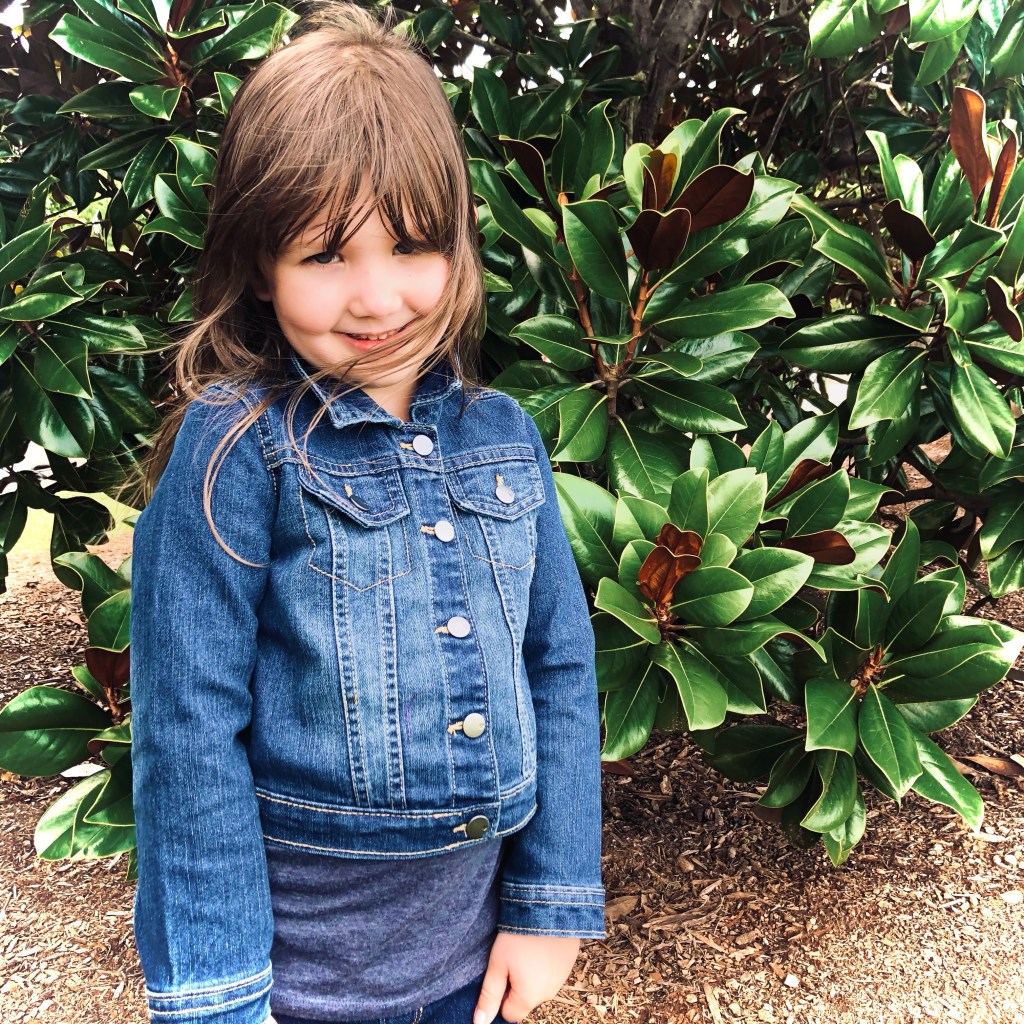
“Stand right there, honey. Let me get your picture by that tree,” I tell my granddaughter, on our first trip to the park.
It’s a different park. A different tree.
But still, and always, a magnolia.
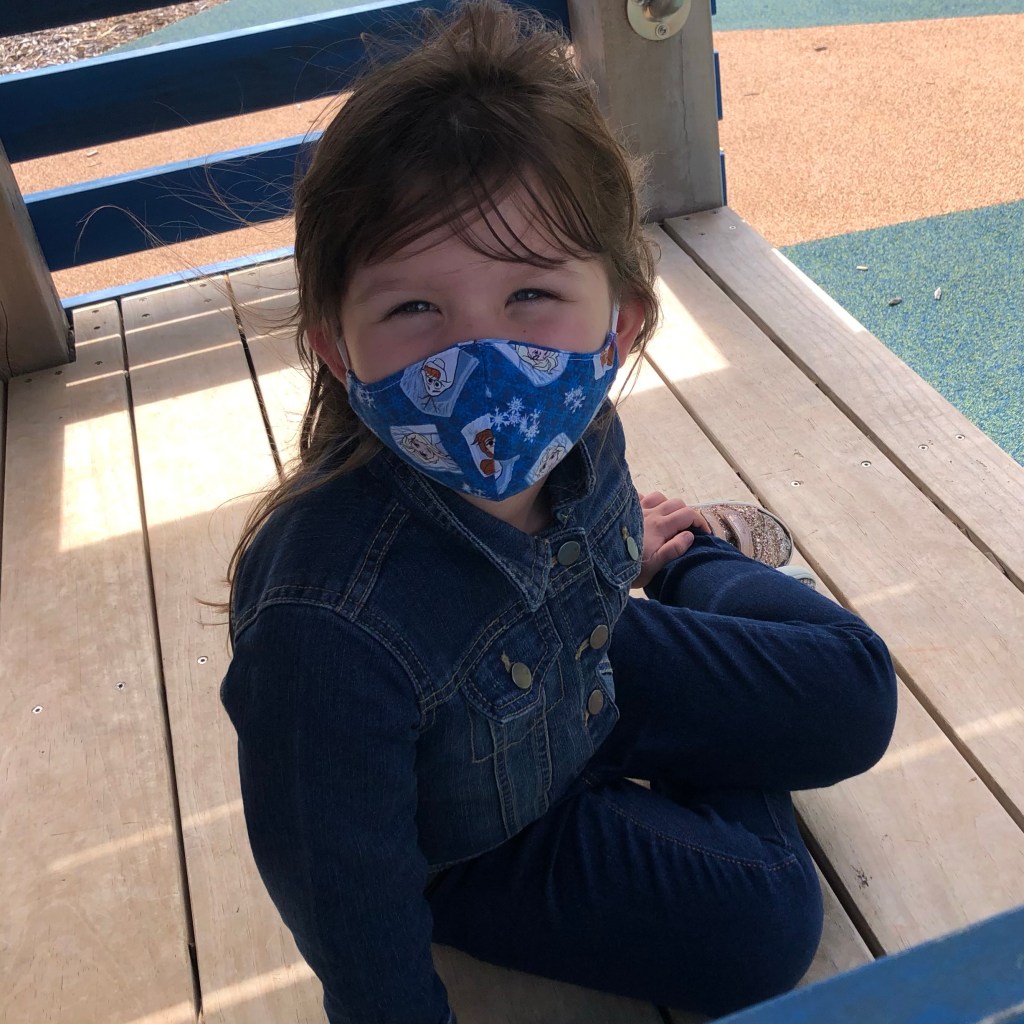
Our Sugar Magnolia, by “her” tree.
*******
With abiding gratitude to the community at Two Writing Teachers during the annual Slice of Life Story Challenge, which concludes today. It was a joy to write alongside you every day in the month of March. Thank you for every cup of light you offered; I will savor the echo of your voicesfor many days to come.
Friday the 13th of March, 2020, when school dismissed, we had no idea we wouldn’t be returning.
Not to the building.
Not to life as we knew it.
Not to teaching as we knew it.
We left mountains of work undone behind us.
We faced mountains looming before us, the likes of which we’d never seen.
A mountain of my masks
In the maelstrom of so much change, we learned.
We learned we could.
We learned that some things, the important things, never change.
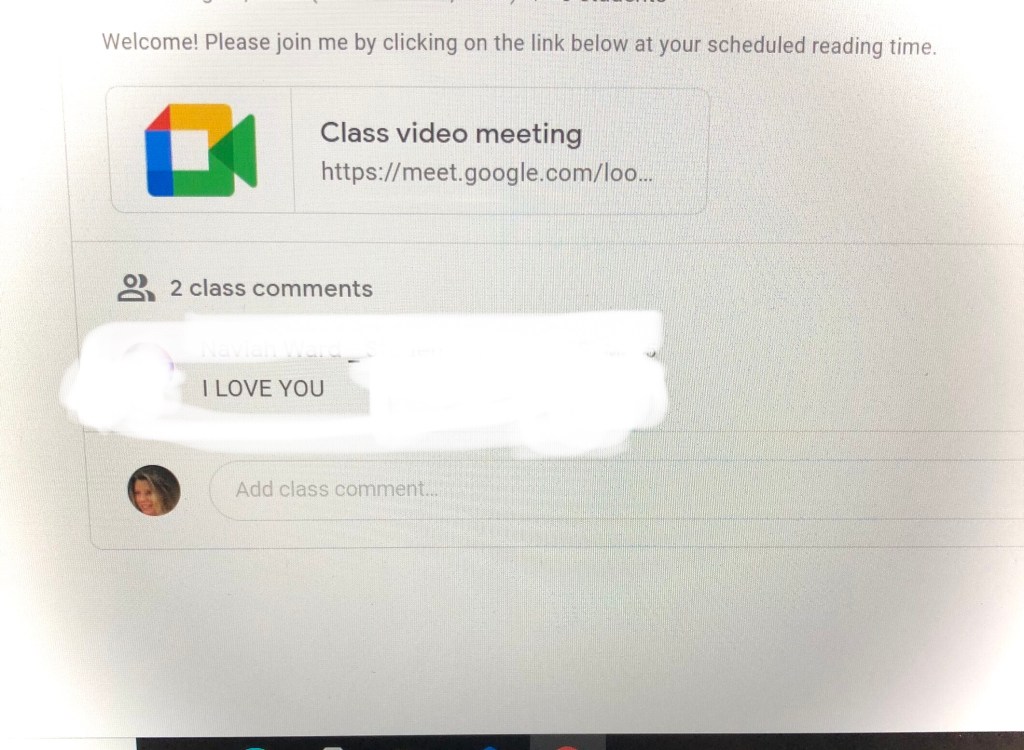
Message from a student on my link
Saturday the 13th of March, 2021: Most of us have had our first vaccination and are getting the second.
We are preparing for all students to return to campus on Monday, except the children of parents who have opted to keep them virtual until June.
Last March 13th, we thought it would only be for a week. Maybe two.
It’s been exactly one year.
Today, March 13th, let us celebrate:
We did enough.
We had enough.
We were enough.
We are enough.
It is enough, knowing our why.
The children. Always our why.
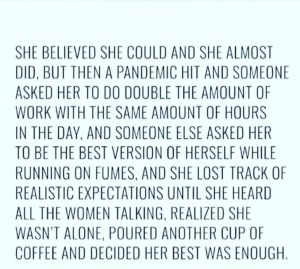
Just sayin’. This was shared via text among my colleagues.
*******
The annual Slice of Life Story Challenge with Two Writing Teachers is underway, meaning that I am posting every day in the month of March. This marks my fifth consecutive year and I’m experimenting with an abecedarian approach: On Day 13, I am writing around a word beginning with letter m. Just so happens to coincide with the anniversary.
Trees hold up their naked, skeletal branches, exposing clumps of old birds’ nests. The world is colorless, like a vintage film, a study of grayscale contrasts. Only the pines, bent by a recent glazing of ice, remain green. My backyard is littered with their brokenness. Tufts of needles and a couple of large boughs are strewn across the dead, mud-puddled grass.
It is a time of enduring.
Little things go a long way.
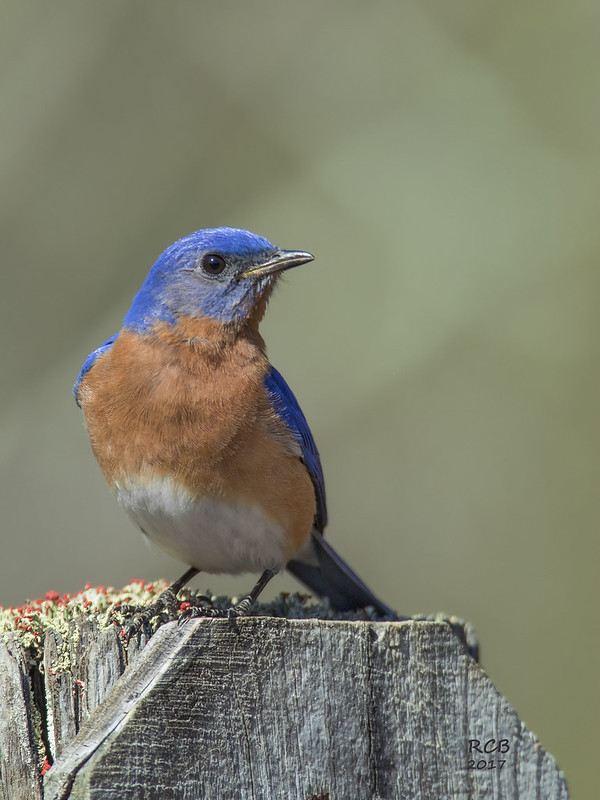
I’ve written of the stab of joy on seeing a bluebird, that brilliant dash of color against this dreary backdrop, as something to treasure each day. Now, despite the cold, an unseen bird nearby sings a bright song to usher in the dawn while it is still dark: cheer cheer cheer… a cardinal. Another favorite bird. I long for its vivid red. Just this week I also heard the first metallic honk, honk of Canada geese, returning to nest.
Spring is afoot, aflight, audible, if not yet visible.
And then there is the flower.
I thought it was my eyes playing tricks.
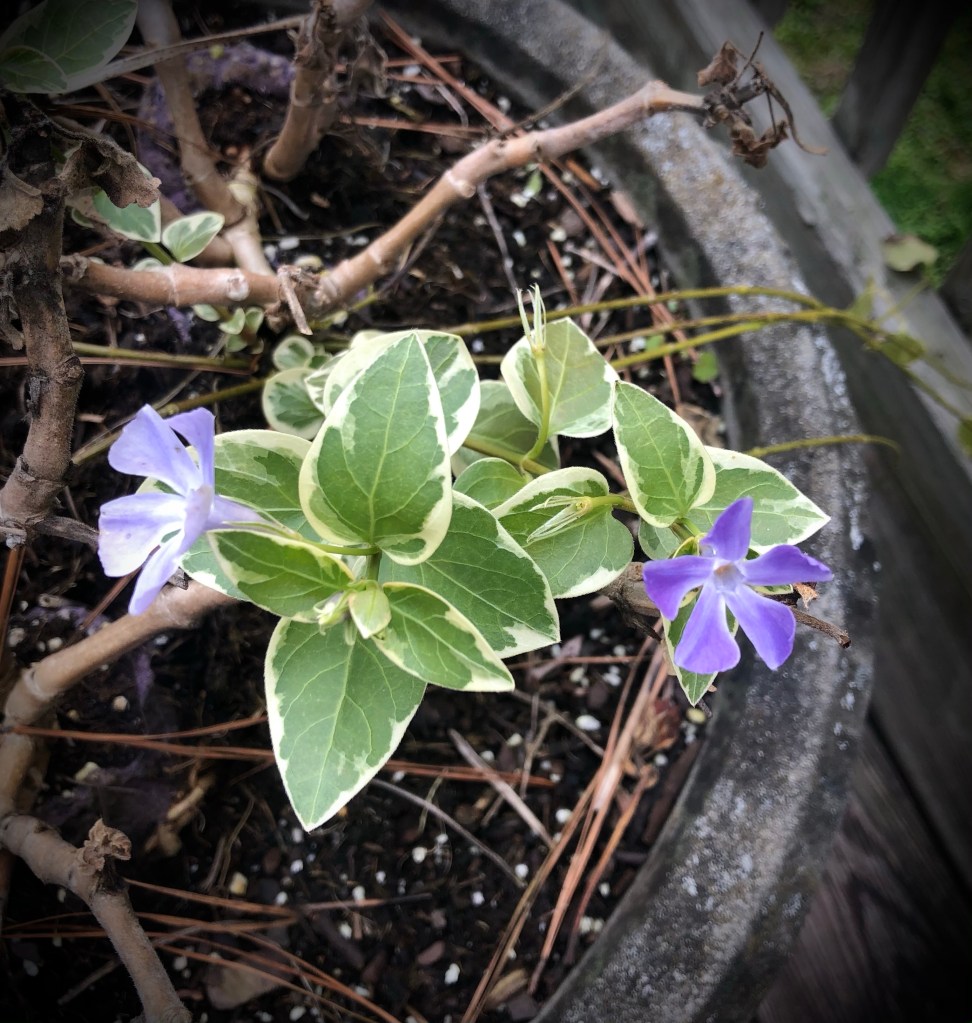
In the old weathered pots on the back deck, amid the ruins of my geraniums, the trailing Vinca still lives. Pale, leafy strands spill across the boards like errant strands of hair. And in one pot… a spot of… what is that color? Lavender?
A closer examination: Two little periwinkle blooms. Five-petaled. Most unexpected. The vines weren’t blooming when I planted them in early summer. I honestly didn’t know they would. This necessitates research: Vinca blooms in “late spring through summer.”
Mine is blooming while it is yet winter. Surely a there’s metaphor in it. As in the cardinal’s bright song in the dark, just before light. Like the bluebird’s welcome spot of color, popping against the blah. More research, because for me symbolism has an irresistible allure: The color periwinkle represents serenity, calmness, winter, and ice. The flower itself, sentimental memories, nostalgia, new beginnings. I read that it can also represent mental acuity. That’s certainly welcome. In the Middle Ages periwinkle was associated with the Virgin Mary; look for these little blooms beside her in old stained-glass windows. The vine’s very name, Vinca, comes from the Roman word for “binding.” Garlands were made of it, for dead children as well as for criminals on their way to execution—good heavens. This pierces me; I shudder. More shades of Mary’s own story, that…we are, after, all barely a week into Lent.
I shall think of this as winter’s funerary flower, then. A little blue-violet garland on the season’s icy brow, bidding adieu.
In place of a eulogy for winter…note Wordsworth’s inclusion of the periwinkle in “Lines Written in Early Spring” (read the whole poem to see what it is really about):
Through primrose tufts, in that green bower, The periwinkle trailed its wreaths; And ’tis my faith that every flower Enjoys the air it breathes.
The birds around me hopped and played, Their thoughts I cannot measure:— But the least motion which they made It seemed a thrill of pleasure.
All I know with certainty is that this little bloom, accompanied by increasingly-present birds, brings a thrill of promise.
*******
-with gratitude to the weekly Slice of Life storytellers at Two Writing Teachers, a bright spot in every week. Here’s to the upcoming daily writing challenge in March!











 lit bits and pieces