Provision

Provision is the title of the prose poem I share here, originally written to a nature prompt on Ethical ELA’s Open Write. A poet-friend suggested turning it into haibun by adding haiku at the endVoilà.

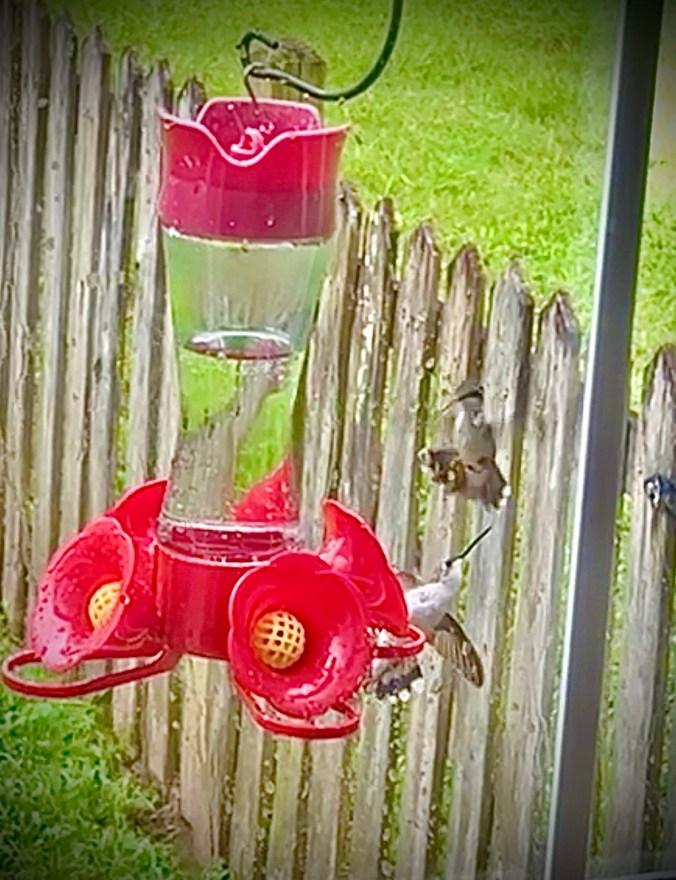
It is July. The hummingbirds are drinking a whole feeder of sugar water a day. My friends say they have no hummingbirds this year and I joke that they are all coming to me. My granddaughters try to help me count, but, in all the frenetic zoomings from window to crape myrtle and every which way, we lose track: Is it seven? Ten? We cannot be sure, even though every bird has different markings. Most are female. One silvery girl has a red dot at her throat. This is somewhat rare, research reveals. I have taken to calling her The Princess. She was here last year. She has come home again to her own realm and it is my great pleasure to serve her.  A documentary tells me that every day of life is a combat zone for hummingbirds. I already know this; I am eyewitness to their fierce competition for food. I am occasionally startled by the sound of a tiny body slamming against the window—THUNK! — where the feeder hangs. How is it so loud? How does the body-slammed bird not die? The hummingbird’s awareness and aerial acrobatics are astonishing. Once in a while, a male finds his way to the feeder, his brilliant ruby-throat like nothing else in nature, as long as the light is right. His jewel-fire turns black in shadows. The women soon drive him away. They rule the feeder. I see females sometimes picking near-invisible insects off of its red plastic flowers, likely to carry to their young. I am thinking some of these birds hatched here in our trees last year. We have never had this many before. It is not hummingbird nature to “bring your friends.” They do not have friends. They are individuals. Loners. Warriors. As fierce and resilient as anything in the animal kingdom. They are, in their way, mightier than eagles. And they know me. I step outside to a helicopteresque whirrrr accompanied by loud chips and chitterings…food’s gone! they say, so hurry up, hurry UP. A bird hovers nearby as I rehang the feeder full of fresh, cool sugar-water, condensation already running down the glass, gleaming in the light. They are back at it before I can open the door to go inside. I do not expect their gratitude. Their love. Their allegiance. None of that is possible in this life. Their beauty and perseverance, their very presence, is enough. They perch on the twig-branches of the pines out back whenever I am on the deck, nearly indistinguisable from the pinecones. They are watching me, these tiny winged wonders of sublime iridescence and supreme intelligence. They know me. It is more than enough. 

The battle is Yours
—I trust Your sweet provision,
grace in every drop.
Silky string: a memory

For Ethical ELA’s Open Write today, host Jennifer Guyor Jowett states this purpose: “We are going to tug at your memories, perhaps even look for a way to express that which is hidden.”

Jennifer goes on to share how Emma Parker, a textile and mixed-media artist from the UK, inspired her own poem: Emma Parker’s themes are “often around the broken, the abandoned, and the forgotten.” She explains that thread and cloth hold the metaphors of mending, repairing, and connecting and becomes interested in the stories the materials hold and who has touched them before.

Before I could even finish reading the rest of Jennifer’s intro and prompt, my mind was spiraling in countless directions. First, writing about memories. My favorite kind of writing. Second, themes of “the broken, abandoned, forgotten.” So much to say about that. Then the whole bit about fabric and cloth, mending and repairing… my mother was a seamstress. An image from my earliest days immediately came to mind for a poem, but the ideas do not stop there, no, not at all.

To be honest, I’ve spent much time thinking on the broken parts of life and generations of brokenness. Some people overcome while others are never able. So many stories in my own family and in my husband’s. I keep picking up the pieces in my mind, marveling at the incredible beauty of some, mourning over the ones beyond repair. Someday, someday…I will see what written mosaic I can make of these. Perhaps.

But for now, a poem with the first image that came to mind:

Silky String

Who
gave me
the blanket
trimmed with satin?
Someone receiving
a new baby to hold.
Did this someone ever know
that my sweet blanket, white as snow,
would become my babyhood lifeline
even as it all disintegrated?

-the blanket, that is, from too much loving.
Over time the satin pulled away
and someone (who?) tied it in knots
to keep it from being lost.
Priceless, my silky string,
for rubbing across
my nose, thumb in
mouth…soothing
me to
sleep.

Note: I didn’t plan to write a double (or reverse) etheree. After the first two lines, the form took charge. Jennifer, the Open Write host, called it “an in and out etheree,” like a blanket unfolding and fading away.

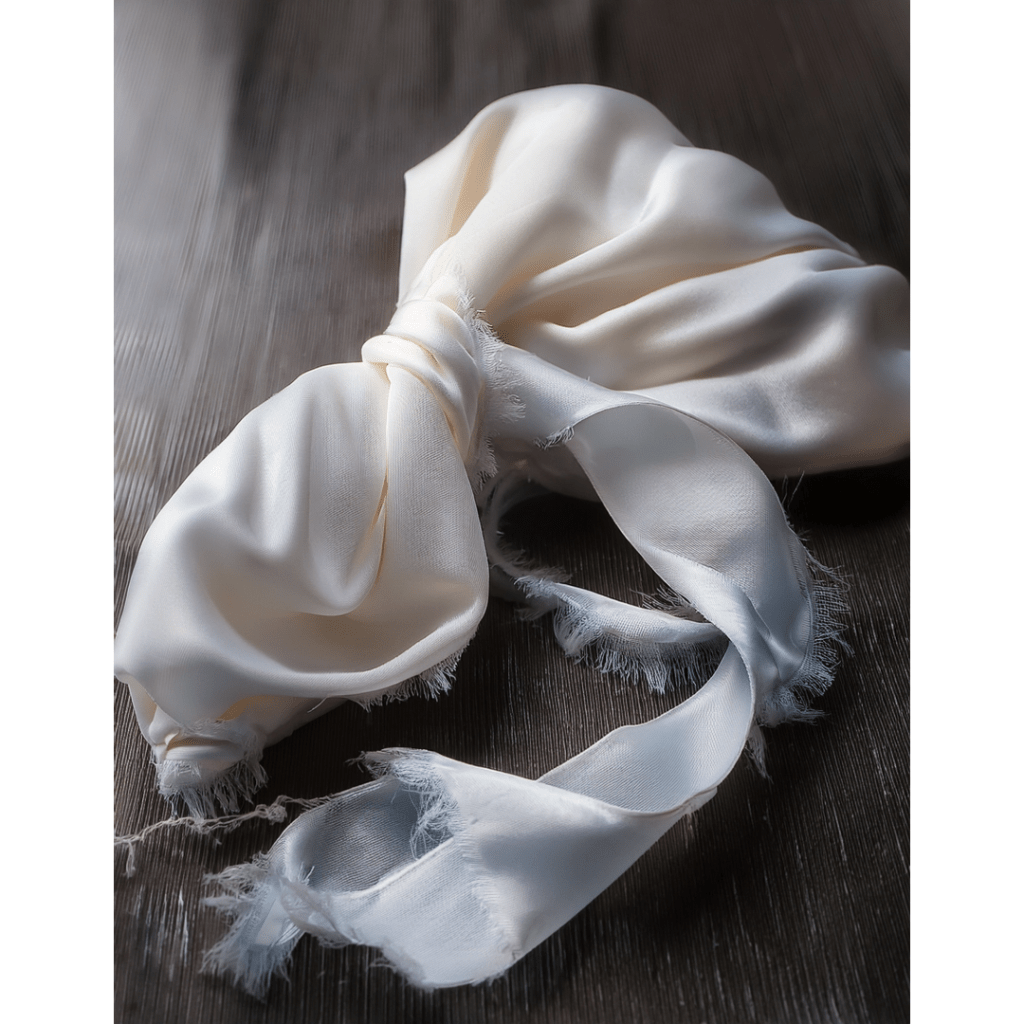
AI-generated image. Took a few tries to get this. Some of the results were haunting. But so is reality, sometimes.

Spring verse

On the second day of National Poetry Month, Leilya Pitre hosts VerseLove at Ethical ELA. She offers this poetic prompt:

A tricube consists of three stanzas, each with three lines, and each line having three syllables—quick, rhythmic, and focused. It’s easy to remember as 3:3:3.

Begin by answering the question: What does spring mean to you?

I think I have an answer…

Spring’s Message

Morning sky
streaked rose-gold:
heaven’s yawn

Birdsong praise
rising on
wings of dawn

Green-robed earth
resurrects—
loss is gone

The important thing poem


For today’s Ethical ELA Open Write, host Gayle Sands invited poets to compose “important thing” poems. She offered this form, based on the boiled-down essence of children’s books and Aristotle’s philiosphy on the accidental purpose of things:

  • Begin with:  “The important thing about __________ is that ________________”.
  • Follow with:  An assortment of supporting facts and ideas
  • End with:  “But the important thing about  _______________ is that _______________”.

The poem could be about an object, person, concept, or belief. Anything.

For some reason, AI came to mind.

As it happens, Two Writing Teachers offered a suggestion for today’s Slice of Life Story Challenge: Write about a time you felt fear.

Many people fear AI.

So here we are.

The Important Thing About AI

The important thing about AI
is that it can do 
so many important things. 

It can
plan your lesson
make your presentation
craft your poem (in any form you choose)
write your dissertation
and your novel.

It can
compose your music
reinvent your image
create believable deepfakes
of visuals and news
that fit perfectly
in the alternate reality
of your preference.

It can
design your clothes
your house
your city
your travel
your vehicle
your financial portfolio
pretty much anything.

But the important thing
about AI is
that it’s the tool

not the builder.

Photo: pexels.com

*******

with thanks to Gayle and the vitally important communities at Ethical ELA and Two Writing Teachers

True or False poem

My friend Denise Krebs hosts VerseLove over on Ethical ELA today with a profound “true/false” list poem based on the work of Dean Young. By all means, read her poem and the prompt.

Here’s what I have, so far…

True or False?

  1. I am much older than I appear.
  2. Green is the color of ordinary time.
  3. Angels can sing.
  4. Stars can sing.
  5. Trees can sing.
  6. Just because it’s myth doesn’t mean it isn’t true.
  7. There’s a reason I use seven asterisks for section breaks.
  8. A seahorse holds the reins of your memory and emotions.
  9. Salt water heals all.
  10. Blood is thicker than water.
  11. Blood cries.
  12. I will live to see another solar eclipse.

*******

Bonus points will be awarded for citing evidence in support your answer for #10.

Tip: Double check #3 before submission.

*******

MDavis.D, CC BY-SA 4.0 https://creativecommons.org/licenses/by-sa/4.0, via Wikimedia Commons

*******

with thanks to Two Writing Teachers for the Tuesday Slice of Life Story sharing

Alphabeticals poem

For VerseLove today on Ethical ELA, host Jennifer Guyor Jowett extends this invitation to participants: Pick any letter from the alphabet. Think about its shape, its function, how else it might be heard or understood. Play with variations. See what might be discovered. 

Welp… I find I’ve gotta go with this.

Ode to F

Let’s face it:

F is not the most alluring
letter of the alphabet.

It indicates failure.

It stands for an expletive.

Technically, it’s fricative,
a sound made by forcing
air through a narrow channel,
in this case, by placing the
teeth on the lower lip

looking rather like
trepidation

or, rather,
fearfulness.

Seems a humble
(if not humiliated)
letter
not to mention
nearly impossible
for a young child
to write
in its capital cursive form:
France, for example,
looks like Trance.

But
let’s face it:

F happens to be
a banner letter.
Case in point:
when a small child
has to turn her
first name initial
into an object
for a class assignment
and the girl beside her
is drawing E as
the gorgeous wing
of a bird in flight
the F girl’s got nothing
until she finally thinks
of a flagpole.

A universal
symbol of
freedom

and where would we be
without that?

It stands nobly
there in JFK and RFK

not to mention
twice ceaselessly
in F. Scott Fitzgerald.

A banner letter,
indeed

woven into the very
fabric of our existence…
how could we function
without

Fibonacci sequence
flora and fauna
forests
fish
family

or finches?

Or FRIDAY
or friends?

Or fearlessness.

Or faith.

Stand tall
and proud, 
oh F,
waving your
two little fronds
in the wind
forever.

Fly on.

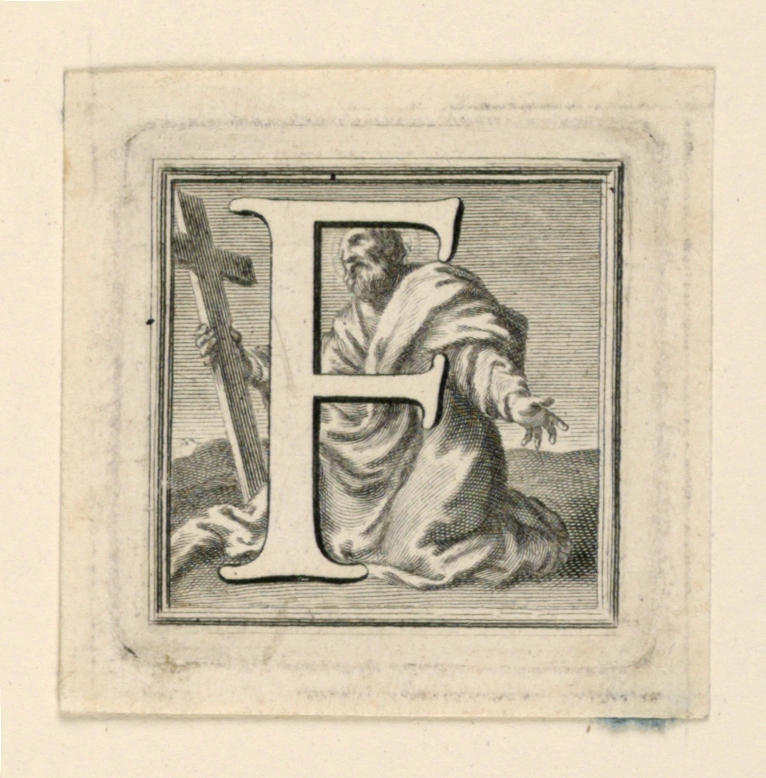
Decorated Capital Letter F“.Jakob Frey, Swiss, active Italy, 1681 – 1752. CC0 1.0.
Public domain, Smithsonian.

Inspirational place poem

For VerseLove on Ethical ELA today, host Wendy Everard invited participants to “Take some time to rabbit hole online.  Discover some places that were inspirational to your favorite author or poet.  You can write about a place you’ve visited or one that you’ve discovered today, through some research.”

Ah. See if you know this place and, more importantly, the person that inspires me.

Remember the Signs

Sometimes
there is
a magic
that
chases you
from one
world
to another

such as when
you visit
a Tex-Mex restaurant
in North Carolina

dedicated to Elvis

and as
the hostess
leads your party
to your table
you happen
to notice

high on the wall
above all the 
hodgepodge
framed photos
that aren’t even 
of Elvis at all
but instead are 
of food 
and dogs 
and cars
(the ceiling
is a mass
of actual
gleaming chrome
hubcaps)

…that high
on the wall
above these
eccentric displays
is a wooden sign

and that
is when
you know
you know
you know
magic is 
afoot

the air begins
tingling with it

and if
you can somehow
explore this wall
without being noticed
by anyone else

you might
very probably
find, if conditions
are right,

a hidden door…

It is here,
somewhere,
I am sure.

Someday,
so help me, 
I shall find it

I shall get in

to find myself
I suspect

in the Rabbit Room
of an Oxford pub
where a group of men
light their pipes and order
another beer as they
debate the manuscript
on magic chasing you
from one world
to another

by mysteriously
connected rooms
and secret portals…

inside the Tex-Mex
Elvis restaurant
I stand staring
at this sign
(later,
I will have trouble
remembering
if I actually
saw it)

knowing magic
is afoot

—it’s more than
a pretty strong
inkling…

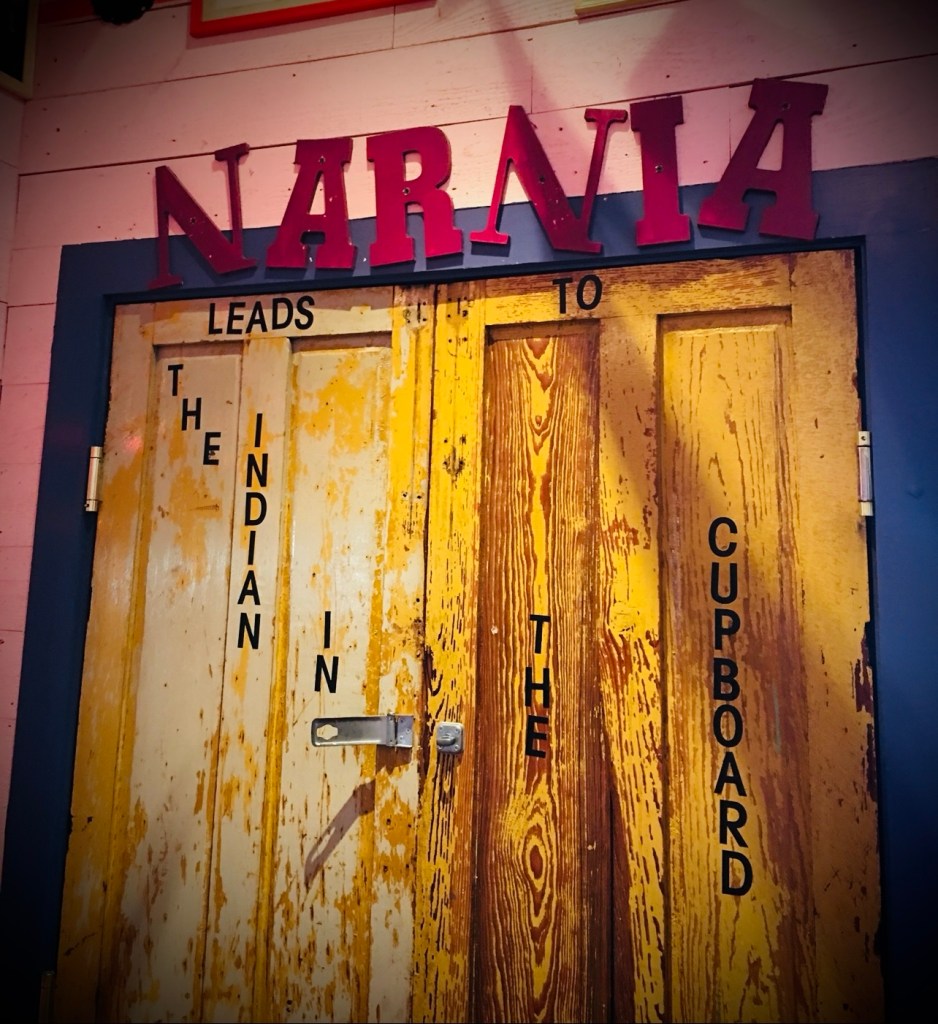
A photo of the actual sign — and door—! on the wall inside the Tex-Mex Elvis restaurant in NC.

*******

*REVEAL* in case you did not know:

The Rabbit Room was a private lounge in the back of the Oxford, England pub, The Eagle and the Child (nicknamed The Bird and the Baby), where C.S. Lewis, J.R.R. Tolkien, and others (“The Inklings”) met regularly to share their working drafts. My poem’s title, the tingling magic, the door leading to another world are all Narnia/Lewis references. Even “I shall get in” is taken from Lewis, whom I’ve loved since age ten. The manuscript being debated in the poem is The Lion, the Witch, and the Wardrobe – Tolkien didn’t like it and basically told Lewis it would never work. While writing the poem I actually forgot what the sign (“NARNIA”) looked like in my local Tex-Mex-Elvis restaurant; I recalled it as an obscure reference to that magical world. I had to scroll around for the photo I took, to remember…but even my forgetting the sign ties directly into the plot of one of The Chronicles of Narnia books (The Silver Chair).

The sign’s presence in this odd place is definitely magical to me…one day…I shall get in…

Hashtag and magic box poems

April is National Poetry Month, and over at Ethical ELA, VerseLove is well underway.

My friend Kim Johnson kicked off the daily poetry writing yesterday by inviting participants to introduce themselves via hashtag poems. Kim shared the process:

Write your name vertically down the left side of a page.  You can use your first name, nickname, or full name – your choice! 

Place a hashtag in front of each letter of your name.

Jot a list of your hobbies, your passions, and any other aspects that you might use to introduce yourself to someone getting to know you.  You can scroll through photos, Facebook posts, or past poems to help you think of some ideas. 

Finally, use the letters to make a hashtag acrostic to introduce yourself to your #VerseLove family! You can #smashyourwordstogether or #space them apart. 

My hashtag poem (I used my favorite variation of my name, what my granddaughters call me):

#HeyY’all #ThisIsMe

#finchologist
#rise&write
#aweseeker
#naturereveler
#nowletmelookthatup
#anothercupofcoffeeplease

Today, Bryan Ripley Crandall hosts VerseLove with a “Magic Box” poem – the directions are somewhat extensive, but very intriguing; check them out here.

My Magic Box poem:

The Golden Rim

I discovered the jewels
right here at home
       whispering rules, awaiting accruals
like longing, lingering talismans
to put in my pockets, protection from fools

I shall not suffer them, removing my saffron socks
barefootedly heading for another world
where winter is fading
       adventure, a’waiting
already, I savor the welcoming salt

I wished, and the grail materialized
in my hand, like a poem
       capturing the wellspring of my heart
       hoping for rhythms of grace
with these words etched around the golden rim:
Write Me

Oh, this spiral shell of Time, wobbling on crustaceous legs!
It’s sweet as honey and bitter as medicine in tentative turn
luring me to press myself
between the musty pages
with my new ink, riding the roaring waves of the past
in the bubbling clean foam of Now.

Fossil nautilus.HitchsterCC BY 2.0.

Speaking of Now…what will you write?

******

with thanks to Kim and Bryan at Ethical ELA
along with those sharing for Slice of Life Tuesday at Two Writing Teachers

February elfchen poem

Today on Ethical ELA’s Open Write, my friend Margaret Simon invites fellow teacher-poets to compose elfchen, also known as “elevenies,” poems of eleven words. Margaret says that the basic elfchen rules can be found on Wikipedia; she shares these guidelines:

Line 1: One word
Line 2: Two words about what the word does.
Line 3: Location or place-based description in 3 words.
Line 4: Metaphor or deeper meaning in 4 words.
Line 5: A new word that somehow summarizes or transforms from the original word.

This is a first for me, never having attempted an elevenie before. Although I love forms with word and syllable counts, the seemingly-simple, enchanting elfchen proved deceptively difficult!

February Elfchen Chain

February
gray desolation
brightened by bluebirds
and sudden pink blossoms
overcoming

winter
gusting winds
squeak naked branches
against each other, awakening
desire

greenness
seeps imperceptibly
to the edges
Nature revels in pre-season
preparation

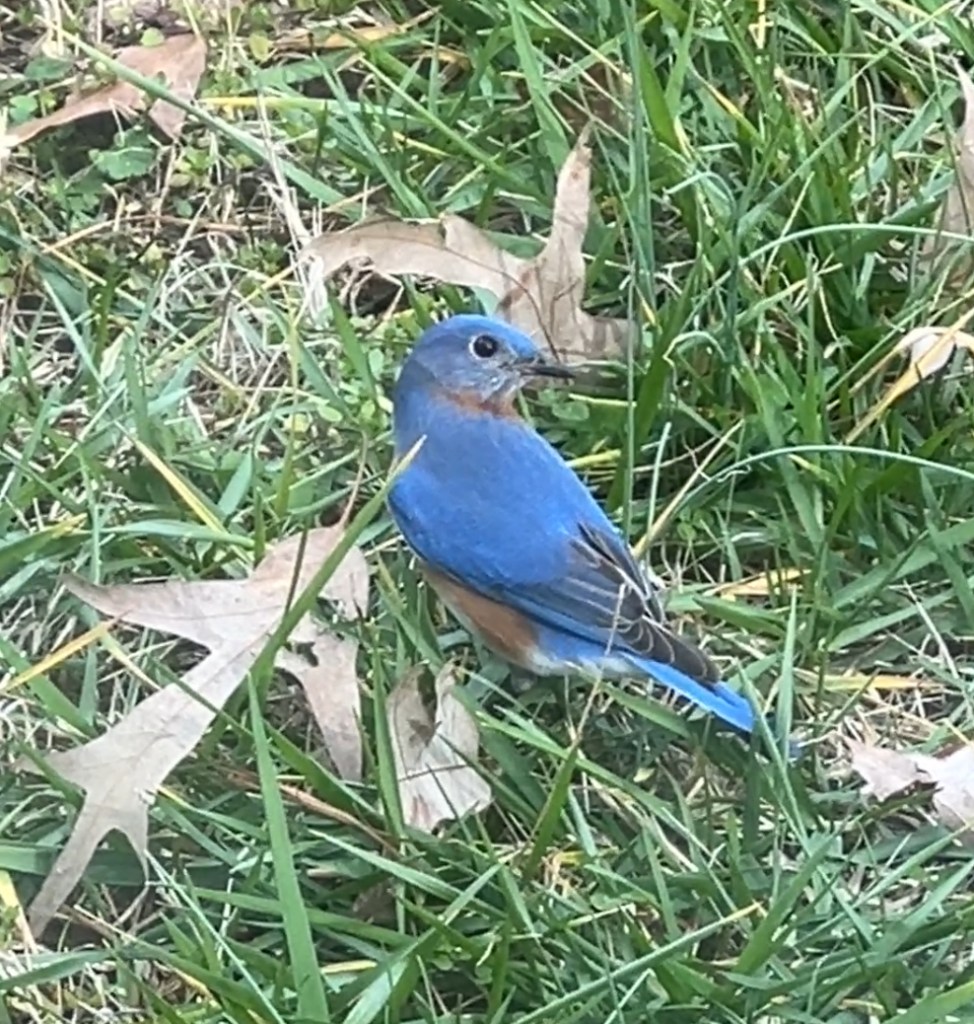
One of my bluebirds, February 10, 2024.

Fibonacci poem: Hey, Ancestors

On Day Two of July’s Open Write at Ethical ELA, host Mo Daly invites us to write a poem in Fibonacci sequence: six lines with syllables of 1, 1, 2, 3, 5, 8.

The Fibonacci sequence appears over and over in nature, from shells to flowers to trees to our own DNA.

Maybe that’s what led to this double-reverse attempt…

Hey, Ancestors

composed after a trip
to the home place

Come
sit
a spell
on the porch.
I want to know you.
Tell me the stories of your life.
I don’t mind your being a ghost.
Just (if you please) try
not to rock
your chair
too
much.

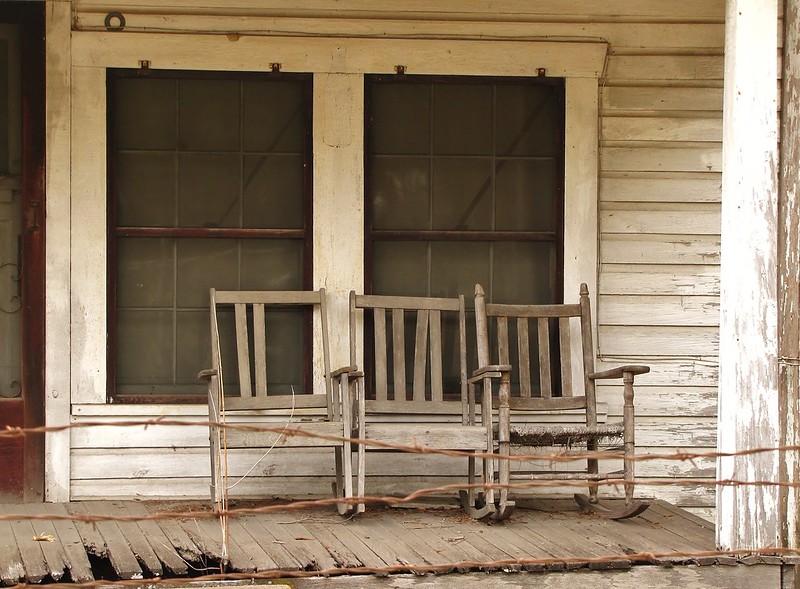
Old rockers. Poor Ole RichCC BY-SA 2.0