Grass poem

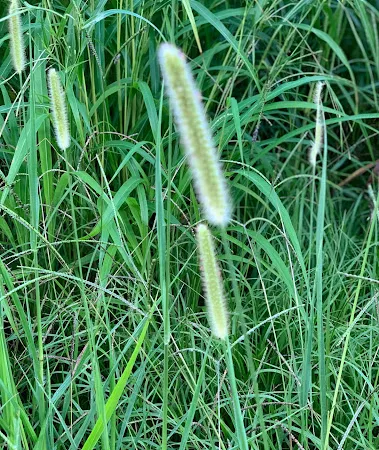
On the second day of the August Open Write at Ethical ELA, Margaret Simon shared “a photo that wants to be a poem.”

Here’s mine.

Release

I savor 
the secrets
of grass
in its returning
again and again
to a scarred surface.
I savor its growing
here in tangled profusion
with yellow foxtails
beckoning in the breeze
in the knowing
that when there comes
a mowing
the inner balm
ever-flowing
secretes itself
across the brokenness
releasing its sweetness
in the air.
What I savor
most of all
is breathing
the fragrance of grass 
healing itself.

Photo: Margaret Simon

The snickersnee

On the first day of the August Open Write at Ethical ELA, Gayle Sands invited participants to scroll this site, https://www.merriam-webster.com/words-at-play/surprising-uncommon-words, for choosing an uncommon word to pay with in crafting a poem.

The word that caught me was snickersnee.

I’ll just let the poem speak for itself…

The Snickersnee

Woe to the olden blades
rusty, dull, disobliging—fie!
Off with thee, useless utensils
—begone!
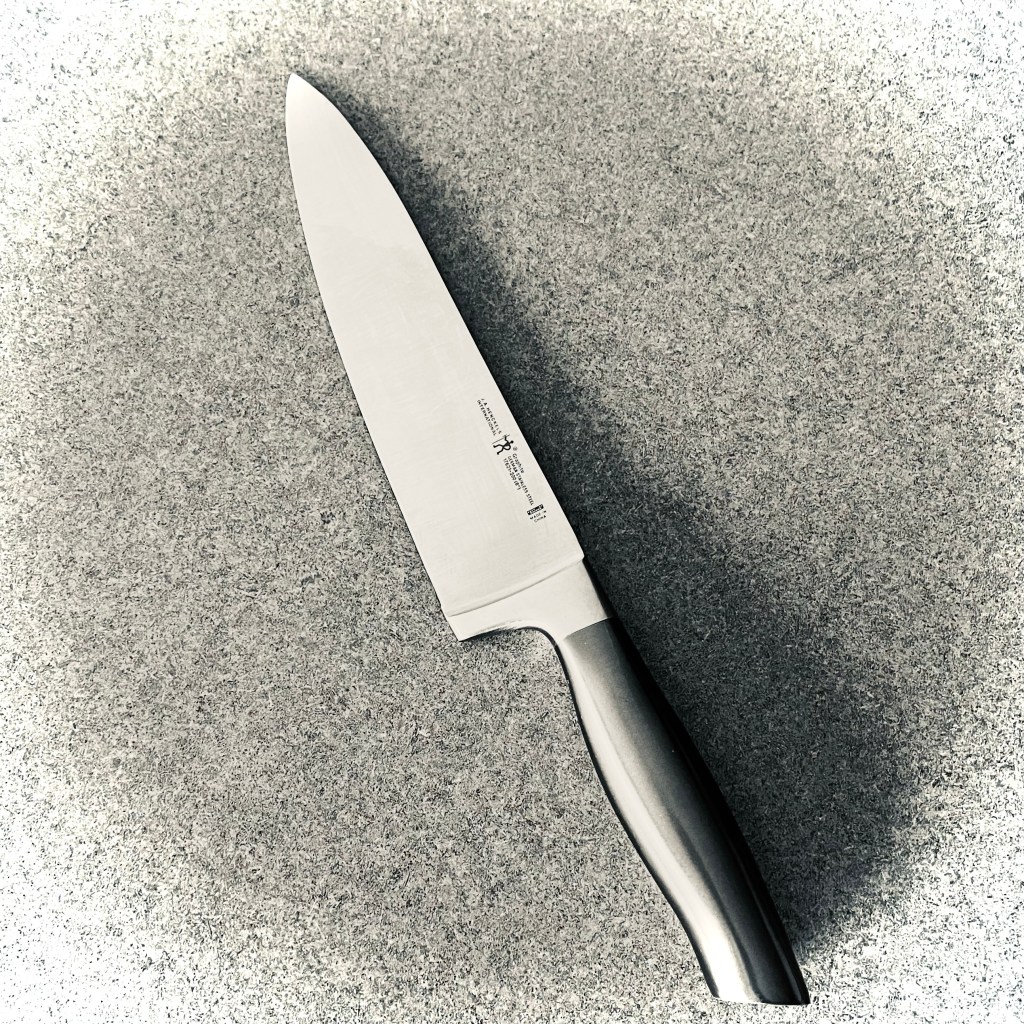
Behold the Snickersnee:

So fine a blade
German-made
slicing mine vegetables
as if they were but a dream
or merely air…
I forgetteth this
exceptional sharpness
during the washing-up
whereupon the Snickersnee
indiscriminately
snicketh a chunk 
o’ me.
(Just a thin slice o’ thumb.
A profusion o’ blood,
nevertheless.
Alas.)

Behold the snickersnee

Tinkering with modern haiku

with thanks to Mo Daley for the Open Write invitation on Ethical ELA today: “Forget counting syllables for this writing exercise! The modern haiku does not trouble itself with syllable and line counts. Rather, write a short (usually 1-4 lines), unrhymed poem that juxtaposes two images to capture an insight about the world or oneself.”

This seems so simple…

The first things that comes to mind is the the gutter work we had done here yesterdaywhat to make of this?

Leaking gutters
purged of sludge, with new downspouts
stormwater conduits now capable
of saving my foundation.

A bit of satisfying metaphor, but not exactly juxtaposition.

Something of a challenge, this. I don’t know why I am clinging to the image of a gutter, other than it’s now stuck in my head. It’s one of those simple, unremarkable things (unless, of course, it has a gargoyle waterspout) with vital importance. Maybe a good metaphor for writer’s block.

Hmm. I will try again:

Life-giving rain and sheltering tree are in conspiracy
nonchalantly sneaking, bit by bit, into the gutter
for the ruination of my house
— rather a long-range plan, but still.

Maybe.

I was going to try another haiku with a father telling his sons to “keep their noses clean” when everything really depends on the gutters, or maybe one playing off Oscar Wilde’s quote: “We are all in the gutter, but some of us are looking at the stars,” but now I am weary of wrestling with modern haiku about gutters.

Guttered out, like a candle.

Eternal summer: memoir poem

with thanks to Jennifer Guyor Jowett for the Open Write invitation on Ethical ELA today: “Share your summertimes with us, whether it’s within the memories of your childhood or the place you are in right now. Take us there. Include sensory details to evoke the spirit of your summer.”

I have written lot about my childhood summers. Today I try a bit of reframing and recapturing the magic…

*******

Eternal Summer Reigns

Daughter of Eve from the far land of Spare Oom where eternal summer reigns around the bright city of War Drobe, how would it be if you came and had tea with me?

—Mr. Tumnus to Lucy, The Lion, the Witch and the Wardrobe

I live it every day of my life, summer.

By some great magic I am still a child
returning to my grandparents’ house
so deep in the country some people say
it’s at the end of the Earth

for me, ever the beginning

a place of woods, holding their secrets close
a place of enchantment, outside of Time
a place of belonging, of sacrifice

where ghosts of the past live again
in Grandma’s stories

there’s her Papa, tending bees
never getting stung
her Mama, picking cotton
and dipping snuff

her brothers and sisters
(eight in all)
playing softball
or piling in the goat-cart
to be pulled by a white mule
named Jenny

there’s my grandfather and his brother
courting my grandmother and her sister
gathering at friends’ houses
singing and make taffy

my father, being born
in a tenant farmer’s house
—Cotton-Top, they call him,
for the color of his hair
when he is a toddler

babies born into the family
some stillborn
(Daddy’s voice…Would have been
so interesting to see
what my double first cousins
would have looked like
if they’d lived)

—I live them every day,
the stories.

I am the stories.

Every day I am a child
unpacking my suitcase
for the summer
welcoming the ghosts
walking the old dirt road
eventually covered with gravel
from phosphate mining rejects

bits of ancient history
crunch beneath my feet:
shark’s teeth, some tiny and sharp,
some as big as my small palm;
coral skeleton, white chunks
embossed with lacy flower designs;
whale eardrums, curiously curved fossils
—with these, whales heard
their own stories, too
now, they are 
part of mine

and above all, above all
from the surrounding woods, bending near
keeping their secrets close
the crescendo and decrescendo
of cicadas

the true song of summer
and the sun
and living
and dying

and returning.

By some great magic I am still a child
still listening, still living summer every day
and forever
in that sound.

My grandmother in the summer of 1959, years before my birth. This is the setting of my idyllic childhood summers to come, beginning a decade and a half later. I would stay for a couple of weeks each year and never wanted to leave. Grandma fostered my love of reading, writing, and story. She drove me to the tiny county library at the beginning of my summer visits and helped me haul out the armloads of books I selected. She saved magazines, Mini Pages, and National Enquirers all year long for me.

We walked the old cemetery in the clearing diagonally across from where she sits in this photo and the graveyard of the church around the bend, where her parents are buried. As we read the stones, the blazing sun casting our shadows across them, Grandma told me the stories.

The fossils in the gravel of the poem were real. I found handfuls of them in the road here when I was a child.

Cicadas are an ancient symbol of immortality and resurrection. I write of them often because of their connection to this place. Their loud, rattling chorus was ever-present in the background of my childhood summers; the sound remains one of the most comforting on Earth to me. It’s a call of the sun, love, belonging, and home. There’s a myth about the goddess of the dawn, Aurora, asking Jupiter to grant immortality to her lover, which he did, only the goddess forgot to ask Jupiter to also grant her man eternal youth. Her beloved continued aging until Aurora finally turned him into a cicada. If you look closely at depictions of Aurora, you will see the cicada. Why tell this story here? This morning, before the dawn, before the cicadas woke to sing, I saw Jupiter shining high beside the moon. Then I sat down to write to this prompt of summer celebration, reliving halcyon childhood moments with my grandparents at their home, a place where my generational roots run deep in the earth, where my father grew up…an old, far place in the east, named Aurora.

For me, ever the beginning. Eternal summer reigns.

*******

thanks also to Two Writing Teachers for providing a place to share our stories – for we ARE our stories
A poem meets its opposite

with thanks to Jennifer Guyor Jowett for the Open Write invitation on Ethical ELA today. Jennifer writes of discovering the contrary form and its antonymic translation. She invited poets to take a poem we’ve written, or another we found, and use antonyms for various words within the poem to change the meaning.

Some time ago I wrote a pantoum. Today I tried its antonymic translation.

Here’s the pair of them:

You Are the Better One

You are the better one
you chose to stay
I walked away
so much for responsibility

you chose to stay
you, the free spirit
so much for responsibility
I chose my life

you, the free spirit
but I know freedom isn’t free
I chose my life
when I ran from that hall of mirrors

but I know freedom isn’t free
after the shattering
when I ran from that hall of mirrors
leaving the brokenness behind

after the shattering
I walked away
leaving the brokenness behind. 
You are the better one.

Smoke and Mirrors

You are not the better one
because you chose to stay.
I didn’t walk away
from responsibility.

Because you chose to stay
—you, the free spirit
from responsibility—
it wasn’t a choice for me.

You, the free spirit,
never learning freedom isn’t free.
It wasn’t a choice for me
when I ran from that hall of mirrors

never learning freedom isn’t free
before the shattering.
When I ran from that hall of mirrors
I broke only the brokenness.

Before the shattering
I didn’t walk away.
I broke only the brokenness.
You are not the better one.

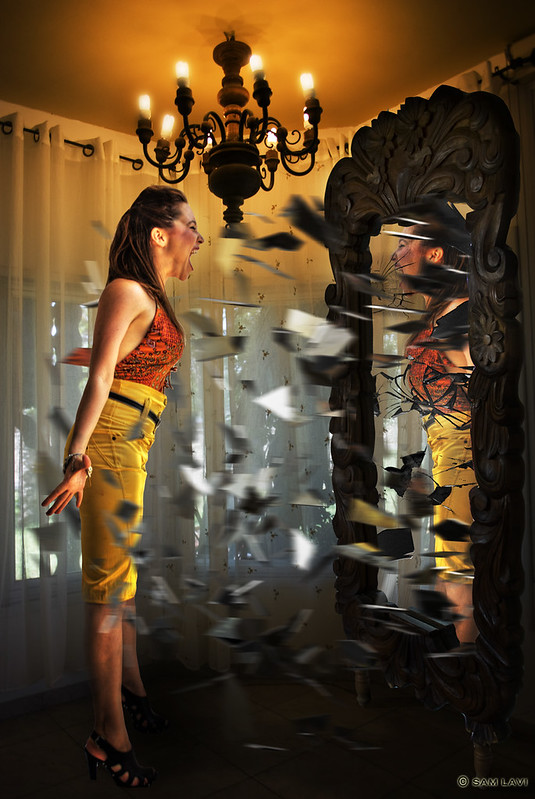
Sonic Super Villain. SuperSamPhotography. CC BY-SA 2.0.

Translation

with thanks to Jennifer Guyor Jowett for the Open Write invitation on Ethical ELA today:

Think about your reality.
What do you see today?
Ponder the possibilities before you.
Allow a free verse poem to develop.
Begin with the line I see…

*******

Translation

I see the sign
on an office wall

simple black frame
simple black font
on a plain white field

devoid of décor

just words:

Alles ist fertig;
es muss nur noch
gemacht
weden.

I do not read
or speak
this language

but that doesn’t keep
images from
springing to mind:

I see furrows
lush and green against
chocolate loam soil
spread out
like a billowing blanket
to tree-lined ditches

I see my childhood
materializing like a ghost
in the white summer haze

I see the cadence
of cicadas
and storytellers
around the dinner table
long ago
(yes, I see them;

rhythms
have shape
and color

as tentative as candleflame
as sustaining as river
as permanent as earth).

—I see it all
even if
I don’t always know
what it all means.

Eventually
I’ll translate
what I see
into words
on a page
for the knowing.

Everything is ready,
it just needs
to be done.

Making it count (syllabic verse)

Today I have the pleasure of hosting the final day of the June Open Write at Ethical ELA. 

I shared syllabic verse:

My youngest son is a musician. When he was four or five he’d stand at a whiteboard easel making tally marks as he listened to cassettes of his favorite songs. When I asked what he was doing, he replied: “Counting the syllables.”

He meant beats. 

Like heartbeats, rhythms of life surround us. Let us listen and take note. Moments and words count…down to the last syllable. Last year I attended a workshop led by a poet who said: “Experiment with the rhythms of your voice. Find a syllable count that’s natural for you.” 

Process

Perhaps there’s a line of unwritten poetry playing in your mind, waiting for its moment. Now’s the time. Count the syllables. Maybe it’s five, eight, or iambic pentameter. Or simply begin by crafting a line that relates to something important to you (listen for it in the beatings of your heart) and count the syllables. 

Once you know the count, try writing the remainder of your lines with the same number of syllables. See where the beats take you.

Maybe play with more sound by incorporating internal rhyme, alliteration, and so on.

My poem, sparked by the words of a teacher during a memorable job interview, came out in lines of five syllables.

All in for the Kids

In the interview
the candidate said
we don’t get credit
for all we’ve endured
on behalf of kids
in these past two years

and apologized
for the sudden tears

surfacing from depths
immeasurable
a soul subjected
to intense pressure
somehow withstanding
high temperatures
beyond description

the weight of the world
in every teardrop
salt-worth far beyond
the rarest diamond

culminating crown
of love resounding
courage rebounding
in five wondrous words:
“I still want to teach”

*******

As the day progresses, I am savoring the poetry being posted over on Ethical ELA.

Every bit of it counts. In the end, I think that’s the poet’s job…showing just how much.

Every moment
every heartbeat
every today
all tomorrows
count forever

Anagram poetry

Today I had the pleasure of hosting Day Four of the June Open Write at Ethical ELA.

I shared anagram poetry:

Sometimes there’s a need for words when the words won’t come. Sometimes in naming the emotion we open ourselves to finding our words and our way.

As the events in Uvalde unfolded on May 24th, I couldn’t encapsulate my thoughts or my feelings. No words seemed appropriate or meaningful enough. 

One word kept resurfacing: heartbroken. I finally resorted to examining its anagrams. 

Those became a poem.

Process

What are you feeling today? What are you grappling with or celebrating? What words or phrases might you explore with anagrams to express your sorrow, fear, or joy?  You can type your word or expression in this Anagram Generator to get phrases. For example, if you type POETRY BLISS in the generator and select “Anagrams” instead of “Words,” 10,0000 phrases appear, including best prosily, blip oysters, blistery sop, priestly sob, and sibyl tropes, not to mention bless or pity. Tap into your feelings, type in your words (maybe not too many!) and see what comes. Weave the anagrams of your choosing into your own meaningful expression any way you like.

I left my anagram poem simple and stark. It’s what I needed to say.

May 24th (originally entitled Heartbroken)

broken hater
broken Earth

broken heart
heartbroken

Uvalde
valued

*******

I’ve enjoyed reading the many varied poems in response today. Some are gleefully nonsensical, sparking giggles. Some are deeply moving.

What fascinates me with this particular wordplay are the hidden meanings that lie in words, brought to light in rearranging the letters. It’s a unique alchemy, peculiarly lyrical:

it’s all such
lovey trope
lye overtop
overtly Poe

every lop to
ole poverty

love or type
poetry love

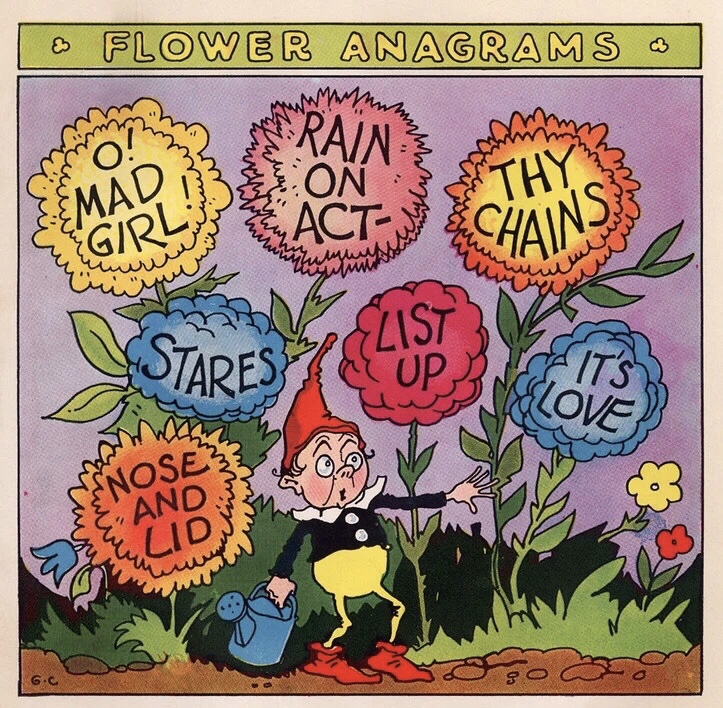
If nothing else, imagine a poem made from this elf row danger (flower garden):

Photo: flower anagrams. gilliflowerCC BY-NC-ND 2.0.

Word-association poem

with thanks to Allison Berryhill for this inspiration on today’s Open Write at Ethical ELA: Look around the room. Let your eyes rest on an object. Let that be your first word. List a word associated with it, then another…keep going until you’re ready to stop and “poetically connect the brain’s chain of associations.”

My word list:

pitcher
pour
tea
sweetness
childhood
sugar

Drinking Deep

I remember the pitcher
in my grandmother’s hand, mid-pour
tea flowing like memory
me drinking deep of the sweetness
a childhood steeped in dinner-stories
Daddy saying Slide up to the table, Sugar.


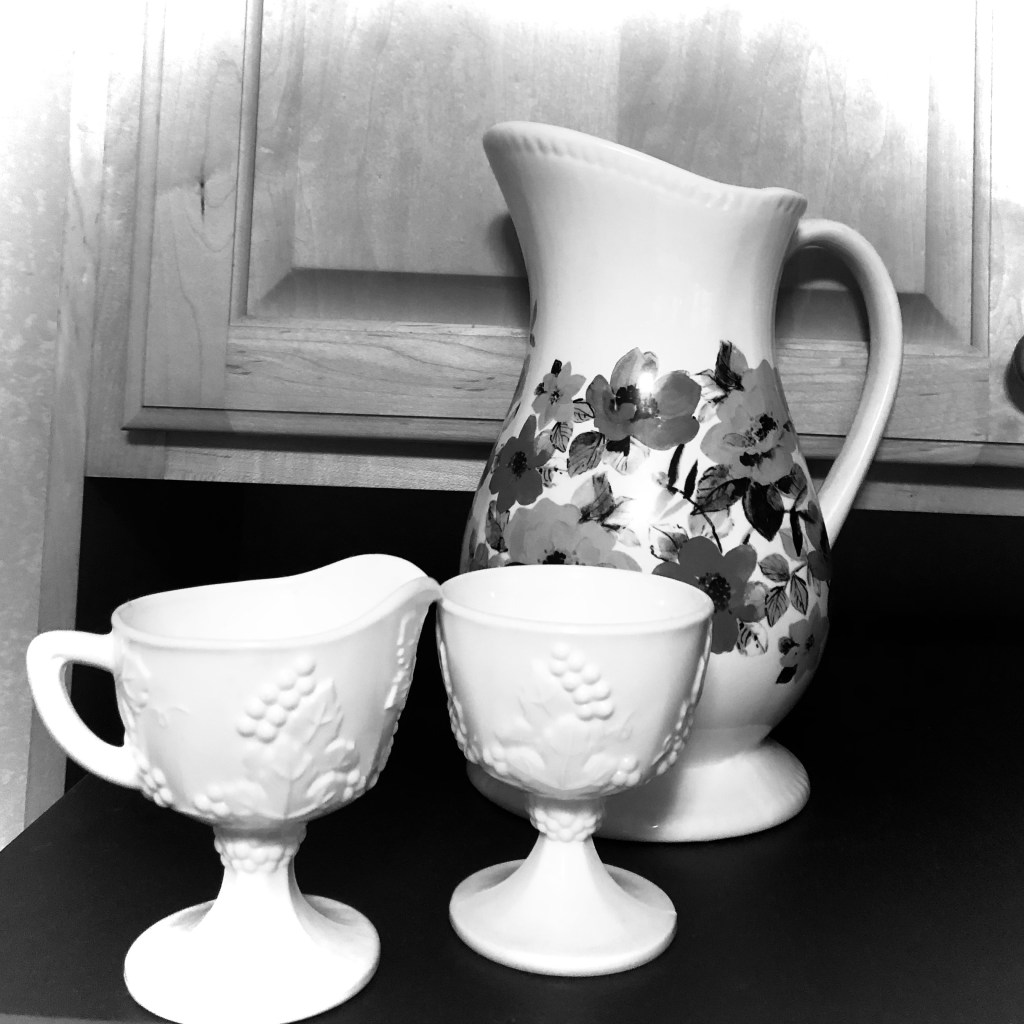
The pitcher that sparked the associations. It’s just decor; didn’t consciously think, in the moment, about the milk glass creamer and sugar bowl being my grandmother’s.

Treasure hunt poem

with thanks to Allison Berryhill for the inspiration on today’s Open Write at Ethical ELA, inviting participants to walk outside and collect objects for writing a poem

The Treasure

In the backyard
by the fence
it lies half-buried

sun-bleached
pristine white
glowing with 
ethereal light

holy relic
enshrined in earth

beloved remnant
of a creature
who carried it
in his kingly jaws
who stretched out
his golden body
this ivory scepter clutched
in big leonine paws

a treasure left behind
for me to find

monument
to lazy afternoons
when he was
here

so full of love
unwritten
in stone

yet still
resounding
abounding
surrounding
the bone