On waiting: Spiritual journey

All dressed for church
waiting for our ride
because Mama doesn’t drive
—never got her license:
I get too nervous, she says—

so we wait while she watches
through the picture window
where I see our reflection: 
Mama, little sister, and me
against the empty street beyond

after a while she says
you might as well change
we have been forgotten

her voice is strange 
and when I look up
there are tears

sliding down her cheeks.

–excerpt, “Picture Window.” Draft poem, F. Haley

On the first Thursday of each month, a group of us teacher-writer-blogger-believers post spiritual journey reflections. Today Chris Margocs hosts our gathering on her blog, Horizon 51. We are writing around the theme of “waiting, with a side of hope.”

Earlier this year I wrote those lines above, remembering the scene from long ago. My mother had asked another church member to please stop by and pick us up. We waited, and waited…until my mother understood the ride wasn’t coming. And cried.

I might have been six or seven. I wasn’t too upset about changing my clothes (likely a dress made by my mother) and not going to church. But I was sorry for my mother’s sadness. I couldn’t understand being forgotten.

My childhood pastor once preached on Isaiah 49:15: Can a woman forget her sucking child, that she should have no compassion on the son of her womb? Even these may forget, yet I will not forget you.

I couldn’t understand that either, at the time: How can a mother forget her child? It seemed impossible, inconceivable…

Decades later, as a mother and grandmother myself, I decorate for Christmas with exceeding great joy because of the new baby in our family. As I plan and wrap and make preparations, humming along to holiday music, I can’t imagine ever forgetting my sons, my little granddaughters. I would cease to be me if I did. They’re such joys. Layer upon layer of richness and fullness on all of my days. But mothers can forget. They do forget. There are mental health issues. Addictions. Illnesses. Diseases. Destroyed relationships. A number of things can separate a child from a mother’s love and from her memory.

The Apostle Paul wrote: For I am sure that neither death nor life, nor angels nor rulers, nor things present nor things to come, nor powers, nor height nor depth, nor anything else in all creation, will be able to separate us from the love of God in Christ Jesus our Lord (Romans 8:38-39).

How this links to God’s promise in Isaiah: I will not forget you.

Christmas is a reminder of exactly that.

We are not forgotten; we are not alone. The prophet Isaiah, again: Therefore the Lord himself will give you a sign. Behold, the virgin shall conceive and bear a son, and shall call his name Immanuel (7:14).The Gospel of Matthew repeats this prophecy as fulfillment in the first chapter detailing the genealogy and birth of Christ: Behold, a virgin shall be with child, and shall bring forth a son, and they shall call his name Emmanuel, which being interpreted is, God with us (1:23).

Words that resonate. God with us. Every day, all the time. How long a wait it was—around eight centuries—from Isaiah’s prophecy to the coming of Christ.

A long, long wait…but we were not forgotten.

That church member from long ago apologized profusely to my mother for failing to pick us up that day. My mother, I presume, graciously forgave. Whenever the weather was nice, we walked to church, my mother, my little sister, and me. I couldn’t know then that my childhood pastor would ordain my future husband to the pastorate one day. I just walked along, hoping Mama would take us to Hardee’s for lunch afterward. The Looney Tunes glasses we collected from those after-church excursions remain in my cabinet to this day, much as memories rest on the shelves of my mind. They are a treasure. I do not want to forget.

My childhood pastor would eventually tell me that when the church’s bus ministry began, my mother was the first person to sign up. No more waiting for rides that might not show. God provided the vehicle to get us where we needed to go.

He always does. In the fullness of time.

Even now, I hear the distant chiming of those church bells of years long gone:

Savior, Savior
hear my humble cry
while on others Thou are calling
do not pass me by.

He hears. He is here. He remembers.

So do I, Mama.

one of my favorite Christmas cards

*******

with thanks to Chris and all my dear Spiritual Journey friends

a blessed Advent to all –
the first candle lit on the Advent wreath this week symbolizes hope

Thanksgiving legacy

I once read of a young woman preparing her kitchen for Passover. Amid the traditional cleaning and purging, she had a sense of taking her place in the long line of women who had done so before her, throughout history. As if the rituals of tradition invoked their presence, for within the actions lie inextricable, unbroken threads of purpose, holiness, praise, gratitude…

On the eve of Thanksgiving, I have a similar sensation. Driving to the grocery store, armed with a list of ingredients for foods that my children have requested (deviled eggs and carrot cake chief among them), I am enchanted by autumn’s alchemy. Late afternoon sun gilds the trees along the roadside. The blending of red, orange, bronze, some trees already bare, preparing for winter…for a moment, for mere seconds, I imagine there are figures running through these flickering sunlit woods. If I could look long enough, or just right, I might catch glimpses of people as they were in times past, maybe even my childhood self. Burnished memories still living, beckoning…snapshot scenes of Thanksgivings, with card tables set up for the children. Heads bowed in prayer. My grandfather’s humble blessing, his knobbled, work-worn hands. Grandma’s deviled eggs and potato salad, Mama’s carrot cake (the hit of every holiday gathering), Grannie’s rum pound cake…lifting that big old Tupperware lid, the first whiff nearly knocking me down, but the moist golden richness after…incomparable. I find myself yearning for a slice of it now.

In the process of cleaning and preparing for the holidays I reorganized a closet. I found a box of Grandma’s things. Letters and cards given to her over the years, her green-bronze jewelry box containing her clip-on “earbobs”. Old photos. Books and trinkets I’d given her. Her diaries, dating back to when I was twelve. Programs from my school plays. Her funeral program. And I think about how life is the story of love, sacrifice, survival. How she and Grannie did much with little, raising children during the Great Depression. How they held faith and family above all else…how they do not feel far from me, even now, as I write these words. My own granddaughter, their great-great granddaughter, will be four weeks old on Thanksgiving Day. I have a profound sense of taking my place in a hallowed line of legacy and love. With abiding gratitude. And joy, shining like the immutable sun on the autumn trees, in the ongoing story of survival. The turning of pages, new chapters, in a gilt-bound book…

Here’s to all the blessings that were, are, and are still to come.

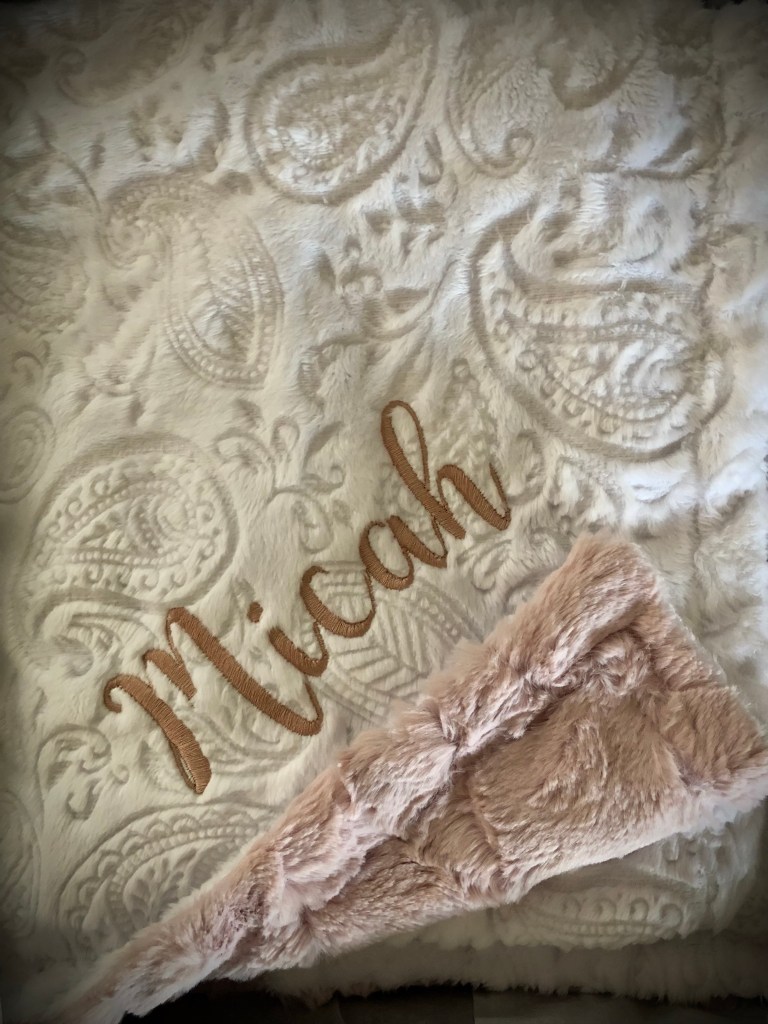
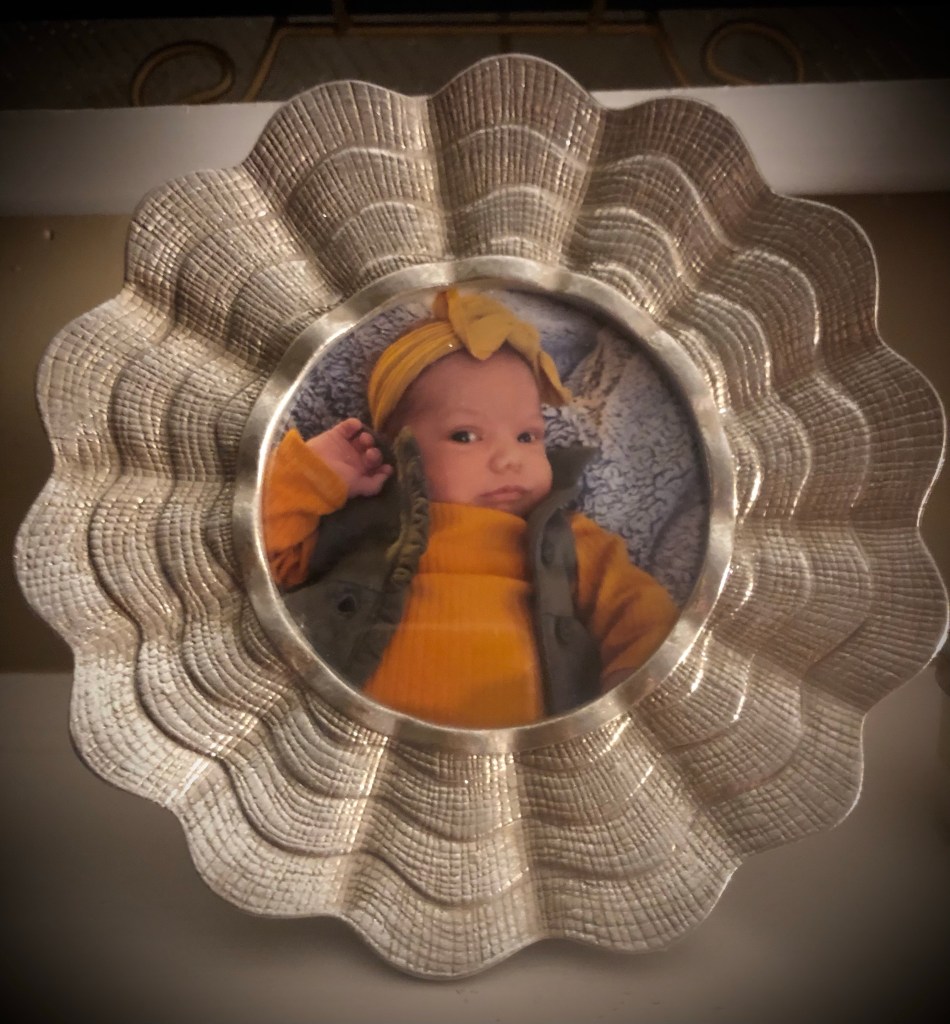
Our precious Micah

On fire and prayer

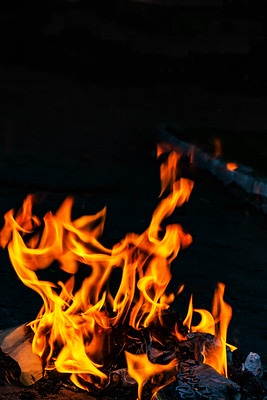
On the last Monday of October I drive to work in pre-dawn darkness as deep as midnight. Rounding bends on deserted backroads past unlit houses, gaping stubbled fields, hulking shapes of farm equipment, shadowed barns, patches of woods, when off in the distance, through silhouetted tree trunks—fire.

A bonfire. Tall flames, bright orange against the blackness, undulating skyward. Startling. So Halloween-esque. Hauntingly beautiful in its way except….I can’t tell what’s burning. Probably trash. The fire seems large for that, and before sunrise? I am too far away to see anything but the fire itself. I cannot see smoke or smell it. No screaming sirens. No alarms. Only silence, stillness…should I investigate to be sure? The road twists and turns, demanding my attention, and as I reach a tricky intersection where a few sets of headlights from opposite directions approach and pass, I realize: I’ve lost sight of the fire now. I am not sure of its location. Somewhere close by it’s burning, consuming, destroying, I hope nothing precious, nothing of value… and so I cross the intersection, praying it is controlled until extinguished.

On I drive in the darkness, shivering.

I think of anger.

*******

Fire, anger. The contrast of being controlled, purifying, and righteous, or uncontrolled to the point of destroying, intentionally or not, what is precious, valued, and loved. Thinking of that fire throughout the day yesterday—there were no reports of damage—reminded me of a poem I wrote last week:

Why I Pray

In the absence of peace,
I pray.

When my mind cannot fathom
or even form questions,
I pray.

When I am weary
of injustice, of sifting truth and lies,
when my inner well has run dry,
I pray.

I pray for power beyond my own.

To overcome the red-hot dagger of fury,
that I should not wield it,
thereby scarring others
and myself.
To knit words of healing instead,
one by one, 
like snowflakes falling
to form a blanket of blessing,
a holy hush.

Freeing myself by forgiving
myself
as well as others,
feeling the weight drop away.

That quickening sense of awe,
for even if I cannot call
fire from Heaven (thankfully),
I can move mountains of ice
in my own heart.

Because, as long as I live,
I will battle need, loss, and fear, 
trusting that love conquers all
—its beating wings in my heart,
forever my reason 
to pray
again.

*******

with thanks to Andy Schoenborn for the “Embrace your why” prompt and the mentor poem written by a student, shared on Ethical ELA’s Open Write last week.

and to Two Writing Teachers for the weekly Slice of Life Story Writing Challenge, always encouraging “a world of reflective writers”—so needed.

Photo: Burning fire at night. wuestenigel. CC BY 2.0

Here

a Spiritual Journey offering

in memory of my father

and in honor of Micah, my granddaughter
who will be born later this month

*******

Meanwhile the wild geese, high in the clean blue air,
are heading home again…
the world offers itself to your imagination,
calls to you like the wild geese, harsh and exciting — 

over and over announcing your place
in the family of things.

–Mary Oliver, “Wild Geese”

October is here
and with it, memory:
it is the month

of my father’s birth.
I am here
because he was here
once upon a time.

October is here
and with it, wild geese

coming home.
My father loved them
like he loved planes
in the wild blue yonder
of his service years

when he was young.
At his funeral procession
a flock of wild geese
stood by in solemn ranks.

He chose to be buried here
so Air Force jets
would fly over his grave

every day.

October is here
with its fiery oranges, reds, golds
and heartrending blue.
Blazing colors that are here
for just a little while,
coming and going
before the long sleep
and eventual rewakening
.

October is here
with its bright story
of permanence
cloaked in

the temporary darkness
of impermanence.

October is here
with its beckoning to
see, smell, taste, feel, know
life in all of its spice

and fullness,
never bound by a calendar,
a schedule, a checklist…

October is here
with its own organic order,
a natural reminder

of all our comings and goings
and of the taking of one’s place
in the family of things
.

October is here.
You will soon be here
,
firstborn child
of my firstborn child
.
I, too, am
the firstborn child
of a firstborn child
.
My father named me
for his mother.
Your father named you
for God

by whose infinite grace
I am here
to see your coming.

A downy-soft blanket and a whole lot of love are here awaiting you, little precious one.
Your name is one of ancient faith and praise: “Who is like God?”

*******

with much gratitude to Ramona Behnke, who inspired our monthly Spiritual Journey Thursday group to write around the word “here” with this quote from Emily P. Freeman’s podcast, Episode 188: You Are Here (And It Matters):


“What if you being all the way here actually mattered, with your cold feet and your stomachache and the light shining through the window. You with your stack of books, by the bedside table and hopeful feeling inside your heart. You with your deep grief, over a loss you thought you’d be over by now, standing in the kitchen while you microwave your coffee. For now, this is true. So what is true of you? And do you really believe God is with you no matter what? That you are not alone, that you don’t have to be you all by yourself? Here’s to being where you already are. Fully present with all that is true. And then here’s to doing your next right thing in love.”

*******


September morningsong

-a pantoum-

Just outside my window
an unexpected song
so loud and full of joy
I want to sing along


An unexpected song
bright spirit, wild and free
I want to sing along

until you fly from me

Bright spirit, wild and free
winging your doxology
until you fly
from me
I’m clinging to your singing

Winging your doxology

so loud and full of joy
I’m clinging to your singing
just outside my window.

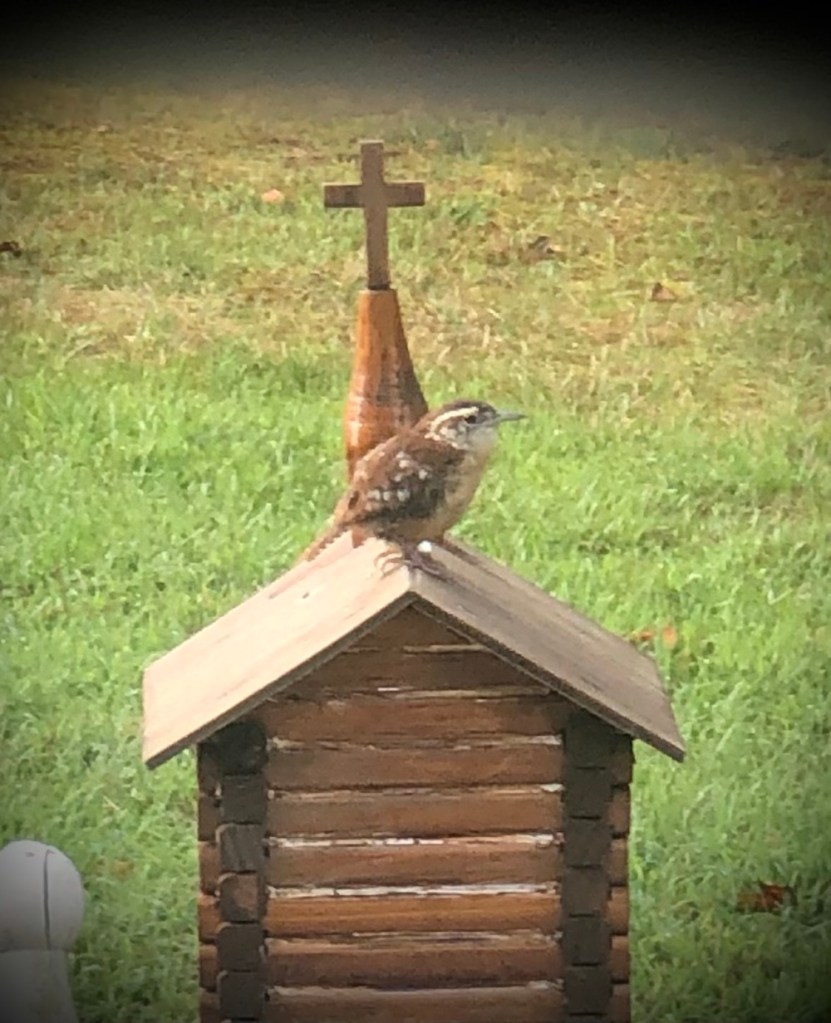
The Carolina wren is a little bird with a big voice. I’ve been trying for days to get a photo of this regular visitor perched on our birdhouse church. I finally managed it this morning. As wrens are a common symbol for artists, musicians, and poets, a poem seemed called for. The pantoum form beckoned, with the rhythms of its moving, repeated lines (per new line, in stanzas of four: 1234 2546 5768 7381).

The wren also represents rebirth, immortality, and protection. It is considered a guide through dark times.

Mostly I am awed by its glorious singing.

Shield of virtue

A Spiritual Journey Thursday offering

with thanks to my Spiritual Journey writing friends and to Karen Eastlund for hosting on this first Thursday in September. Our theme is “virtue.” I began writing on this topic last month: What is virtue?

Allow me to start my circuitous spiritual journey route today with a question, Dear Readers: Do any of you remember a vintage device called Viewmaster? From back in the olden days before cable, videos, DVDs, movie channels, and Virtual Reality headsets?

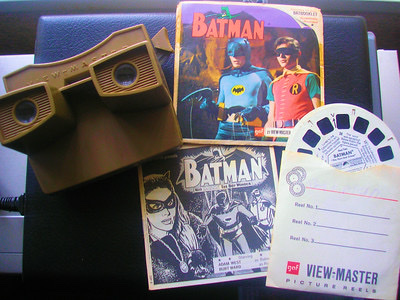
My grandmother bought one for me in the early ’70s. It looked exactly like this:

My Batman & Robin Viewmaster 3D Viewer and Reels. 1966. Jimmy Big Potatoes. CC BY-NC-SA 2.0

You’d remove the reels, ever so carefully holding them by the rim, not getting your fingerprints on the little squares of film. Notches on the rim indicated proper insertion; these would be centered at the top. Then you’d hold the Viewmaster up to your eyes, aim for a light source—lamp, overhead fixture, or window—and voilà! The magical 3D scene would draw you in. When you were ready for the next scene, you’d push down the little lever on the right.

I didn’t have Batman reels as pictured in the photo above. I had Lassie, Casper the Friendly Ghost, Bambi, some others I can’t recall at the moment, and the first set Grandma ever purchased for me: Sleeping Beauty.

I recall my childhood horror of Disney’s Maleficent and her curse on Princess Aurora, who was subsequently disguised as Briar Rose, relegated to living in the woods. My child’s blood ran cold at the spindle scene in which the young girl pricked her finger (creepy multiple hands appeared there), which ushered in her enchanted sleep instead of death…

Enter Prince Philip, her rescuer.

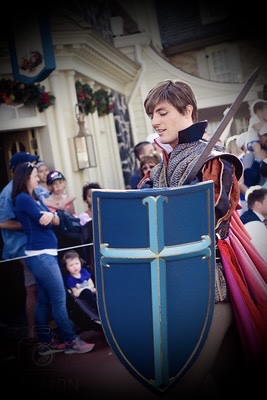
The good fairies Flora, Fauna, and Merryweather, always working on Aurora’s behalf, gave two objects to the Prince: The Sword of Truth and the Shield of Virtue.

That Shield of Virtue has lain dormant in my memory for decades.

Today I retrieve it, blow off the layers of dust, and consider its gleaming significance.

The Shield of Virtue (vignette). C-Lemon. CC BY-NC-ND.

The shield, emblazoned with a cross, protected Philip from Maleficent’s fiery breath when she transformed into a dragon; in the movie, she cries: “Now you shall deal with me, O Prince, and all the powers of hell!” (yes, this is an animated Disney movie made for children. Fairy tales, as you know, can be quite Grimm).

As I contemplated writing on the topic of virtue again, this shield kept rising to the viscous surface of my thoughts. It is more than a magical token.

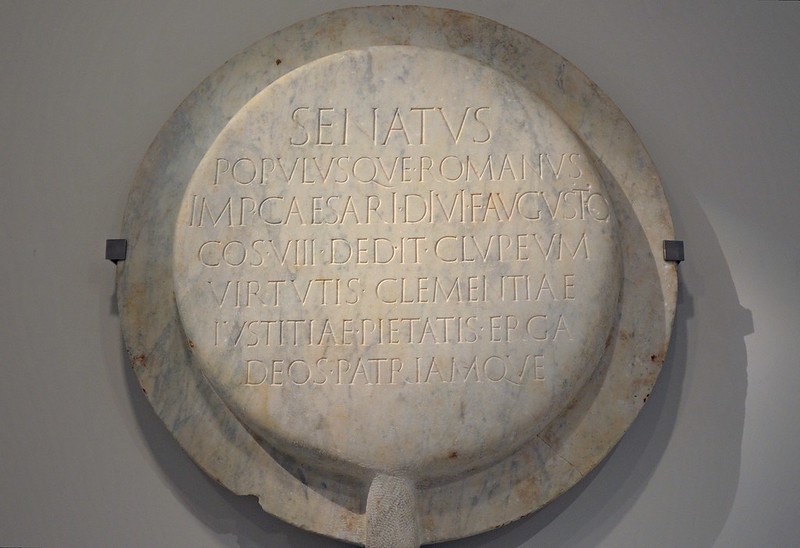
There’s a real Shield of Virtue. A gold one, awarded to the first Roman emperor, Caesar Augustus (Octavian), so inscribed: The senate and the Roman people give to Augustus, son of the divine Caesar, in his 8th consulate, the shield for virtue, clemency, justice, and piety towards the gods and his native land.

Marble copy of the Shield of Virtue (Clipeus Virtutis) of Augustus. Carol Raddato. CC BY-SA

The Shield of Virtue is a thing that was given. It denotes battle. Above all, valor. It is a defense. By very nature of its name, the Shield of Virtue represents high standards, mercy, fairness, loyalty, acting on behalf of others.

I return now to the spiritual journey. A path of treacherous turns, often littered with brokenness. Dark forests of encroaching thorns and dragonfire as ever the fictitious Prince Philip faced. Ongoing warfare, threat of destruction…

Armor is desperately needed. As Paul wrote to the Ephesian believers:

For we do not wrestle against flesh and blood, but against the rulers, against the authorities, against the cosmic powers over this present darkness, against the spiritual forces of evil in the heavenly places. Therefore take up the whole armor of God, that you may be able to stand in the evil day, and having done all, to stand firm…in all circumstances, take up the shield of faith, with which can extinguish all the flaming darts of the evil one…(Ephesians 6:11-16).

The spiritual battle is real. A shield is given; one of faith. It occurs to me that virtue and faith are inextricably intertwined. Courage is born of believing in something greater than oneself (my favorite definition of awe). Tapping into this disperses unique fuel in one’s veins, enabling one to grasp the shield and to power through, trusting. Scriptures repeat that the battle isn’t even ours, but the Lord’s. His faithfulness will be your shield and rampart… (Psalm 91:4).

Somehow, an acrostic seems called for.

Valor. Let it not be born of vainglory but of an
Infusion of love, of mercy, of divine strength.
Righteousness not fashioned by humanity,
Tempered and refined in heat of battle.
Upward, toward the light, let me always cast my
Eyes.

Strength to all.

*******

Another lens through which to view virtue, from my previous post on this theme:

Within the angelic hierarchy of Judeo-Christian tradition is a class of angels known as Virtues. They are connected to motion and order of the cosmos, dispensers of grace, exceptional courage, unshakeable faith, and miracles. They are balance-bringers; in a world so unbalanced of late, the angelic Virtues must have their hands full. As I write, I imagine them roaming the streets, unseen, fervently seeking ways they can impart divine strength.

Last hurrah

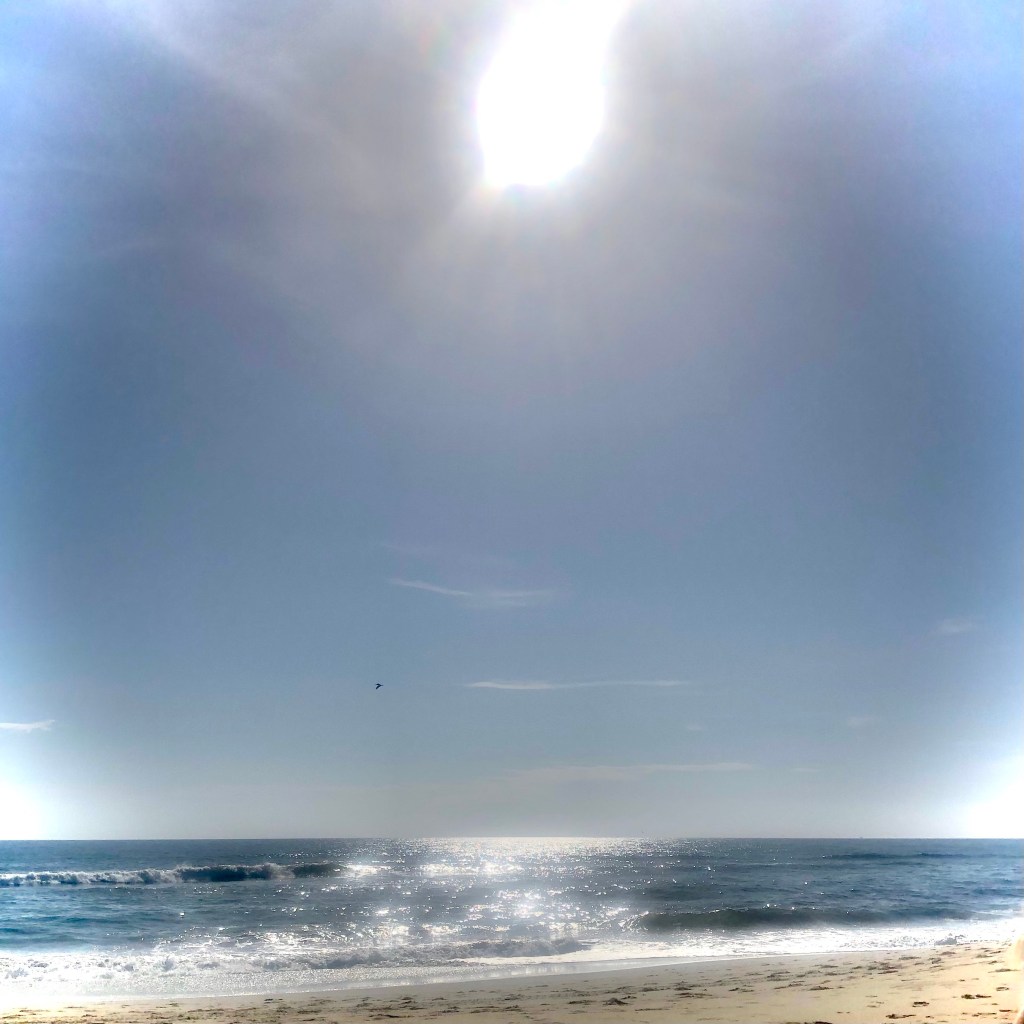
Twenty-four hours ago I woke with the sun by the sea, rested and at peace with the world. I spent a few hours sitting at the ocean’s sandy altar beside my beloved sister-in-law, who’s like my own flesh and blood, speaking of the past, present, and future. Remembering loved ones lost. Cherishing new little ones, our children’s’ children. Hardly any other people were out and about; the beach seemed to be our own for these few sacred hours.

“Look! Dolphins!” my sister-in-law pointed. Out in the glimmering, watery distance, a distinctive leap…dolphins, navigators of the deep, ancient symbols of protection.

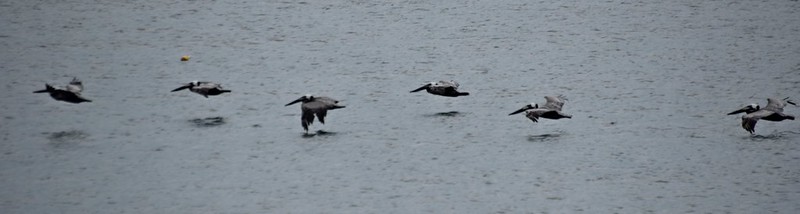
Just above the surface, gliding with astounding grace despite their unwieldy appearance, brown pelicans. Flocks of them. More than I’ve ever seen at one time before. Breaking their flight with dives and a mighty splash of white spray, catching fish and bobbing for a while in the waves.

Pelicans, a symbol for resourcefulness. And sacrifice. Legend has it that mother pelicans sacrifice themselves for their young, if need be. They wound themselves to feed their children with their own blood. They are social birds which hunt cooperatively—representing teamwork. Community.

Twenty-four hours ago, I sat breathing the same salt air as the pelicans, stood in the same sparkling waters as the dolphins.

Today I pack my bags, load my car, and return to school, masked. COVID rages on. Many unknowables lie ahead.

Yet I remain at peace. Diving, leaping, or gliding, I shall navigate as called for in the ebb and flow of moments. Children await, life awaits, time does not. The ocean remains. A reminder of constancy, of strength.

Here’s to the mighty plunge.

Low-flying pelicans. Tony Alter. CC-BY

*******

with thanks to Two Writing Teachers…strength and protection to all in this uplifting community of teacher-writers, seasoned navigators of life and story-sharing.

Decima poem debut

On the Ethical ELA Open Write for Educators today, Mo Daley invites poets to try the decima. Originating in Spain, the form is comprised of ten-line stanzas, eight syllables each, with the rhyme scheme ABBAACCDDC.

These poems typically go on for forty stanzas. I’ve managed only one!

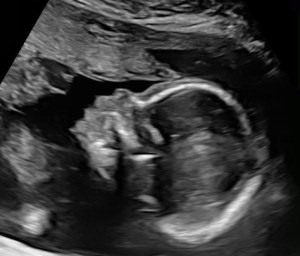
Here’s my decima debut, as well as far more important debut…

First Poem for My Granddaughter, Micah (Whose Name Means “Who is Like God?”)

But seek ye first the kingdom of God, and his righteousness; and all these things shall be added unto you.  —Matthew 6:33

Three things he said he’d never do:
marry, have a child, start preaching
like his dad, all the while reaching
out for what is solid and true.
God brought your mother. And now you,
Beloved One, coming this fall.
Blessing and fruition of all
my boy always longed for, despite
his fears. Now with tears of delight
he embraces his Father-call.

Franna loves you so much already, Baby Girl.

What’s in a name poem

I love the mid-monthly Ethical ELA Open Write for educators. The kickoff for July is hosted today by Mo Daley, who offers the invitation to explore your name, and who you are, through poetry.

I happened to write a post about my name in March: Frances. This morning I rework it here, with a few more layers of meaning…

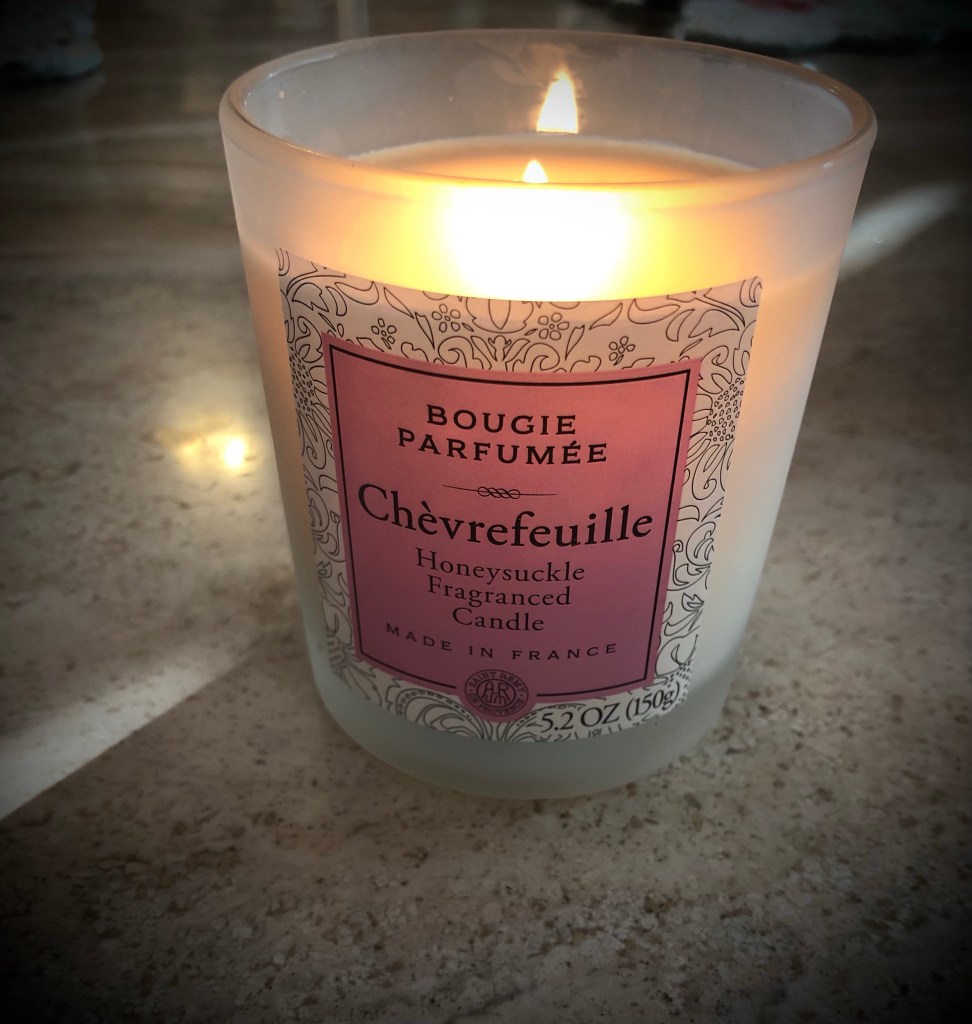
Early morning
before the dawn
as first birds begin to sing

I light a candle
on my table

I sit
by its wavering halo
to write
about my name.

In the beginning
I didn’t even know
it was my name.

My kindergarten teacher, Mrs. Brown, 
called the roll: 
Frances?…Frances?

She finally narrowed her eyes at me: 
Aren’t you Frances?

Sitting before her at a tiny table, I blinked: 
No. I’m Fran.

An inauspicious start
to my academic career.

The first shaky foot
on the lifepath
of learning who I am.

I didn’t love it at first,
my name.

Early on
(sometime after kindergarten,
that is)
Daddy told me
it was after his mother,
Ruby Frances

Grandma

my consummate storyteller
avid letter-writer
daily diarist
devout reader
tireless defender-angel
Grandma

On the day you were born
I stood at the nursery window

and cried.

You looked
like a little angel.

Grandma

My life’s memories
begin in her arms
on her lap
being rocked
in time to the beating of her heart
and the cadence of her voice
singing
Jesus loves me, this I know
or reading reading reading
until I could recite
the rhyming stories
by heart, page by page
long before I went to school

Grandma

who read the entire Bible aloud
several times over
to Granddaddy
who could not read it 
for himself

Grandma

who was named
after her beloved Papa,
Francis

a very religious man

who nevertheless hung himself
on a tree in the woods
in front of her childhood home
when she was just sixteen

—Grandma,

I asked, when I was around sixteen,

did you know
that the name Frances
means ‘free’

or ‘one who is from France?’

We talked about it in French class
today

—Does it? I didn’t know.
I loved taking French

—You took French? Really?

—Yes. Such a beautiful language

I didn’t tell her
we got to choose French names
for class
and I chose to be Renée 
without realizing 
that it means born again

or that the kids back in elementary school
could never get our name right:
Hi, France! they’d cheerfully greet me.

I’d grit my teeth:
It is Fran
or Frances.
Not ‘France’.
I am not
a country.

No one else in school
had my name.

It wasn’t cute or popular
since maybe 1886

not to mention
the spelling problem
such as on labels
from the pharmacy:
Francis

Does the world at large
not understand
or care
that the feminine spelling
is with an e?

I wanted to hurl
those little orange bottles
through the window

along with my problematic name

until the day I was teaching
a group of little Spanish-speaking girls
how to read English
and one of them grabbed my badge
to decode my name:
Fran

Very good! That’s really my nickname.
It’s short for Frances.

Ooooo, breathed my little student.
That sounds just like ‘princess’.

In all my years
I’d never thought of that

even though Princess Diana’s middle name
was Frances

and I have to laugh a little now
because Daddy always said
You ought to take Spanish instead of French,
it would be more useful.

He couldn’t have been more right, alas.
He usually was.

I wonder what he’d say now
if he knew my DNA tests
reveal a dollop of French ancestry
that he very likely
passed down…

and as I’ve been writing
the sun has risen
bright and ever-new

a red dragonfly
lands on the little statue of Saint Francis
by my front steps

never minding that I’m not Catholic

nesting birds find sanctuary here
on my porch
along with a host of small creatures
seeking a resting place
even the occasional stray cat in need
for whom I leave fresh water.

The candle’s wavering halo
is invisible now
in the sunlight spilling
through the windows

as I write about my name
this inheritance
I’ve come to treasure
at last

and it just so happens
that the candle’s fancy label says
chèvrefeuille
French for “honeysuckle”

the flower and scent
of happiness
of hardiness
of devotion
and everlasting bonds

like a legacy of love

and unseen angels

that are
always near.

Note on red dragonflies, mentioned also in my most recent post: I’ve seen them for the first time this summer. They’re stunning and in some cultures, considered a sign of the sacred.

Apothecary of the soul

Today, the first Thursday of the month, my Spiritual Journey gathering writes around the theme of “Nurturing Our Summer Souls.” Deepest thanks to my friend, teacher-poet-artist Carol Varsalona, for hosting.

Summer itself is about journeys, is it not…

In my previous post, A walk back in time, I told of a long-awaited trip to the Country Doctor Museum in the small town of Bailey, NC. I expected to learn about rural physicians and their practices in the 19th to early 20th centuries. I didn’t expect to be mesmerized by the first exhibit, a reproduction apothecary shop replete with show globes (which became the official symbol for pharmacies), exquisite leech jars, real live leeches, rows of dried herbs and powders displayed in large glass jars bearing labels of names so poetic and compelling I itched to look them all up right there on the spot, and black pills made in the shape of tiny coffins because they contain a measure of poisons like mercury, so an illiterate population would be mindful not to overdose.

I certainly wasn’t expecting the large painting on the wall behind the counter…

Apothecary of the soul painting, circa 1700-1750. Artist unknown.
Image: Joyner Library, East Carolina University.

It dominated the wall—the whole room.

“These ‘apothecary of the soul’ paintings are rare,” the docent told our tiny tour group of four, one other couple plus my husband and I. “Most come from Germany. You can see here that Christ is the apothecary. He’s holding the scales, weighing his Crucifixion against the weight of a man’s soul… behind them, jars are labeled with the virtues…we’ve had visitors who are fluent in German and they tell us that this is an old form of the language, much of it is complicated to translate…”

I can make out two Bible references, though. Here’s the King James translation:

Matthew 11:28:

Come unto me, all ye that labour and are heavy laden, and I will give you rest.

Isaiah 55:1:

Ho, every one that thirsteth, come ye to the waters, and he that hath no money; come ye, buy, and eat; yea, come, buy wine and milk without money and without price.

My tour group moved on too soon. I couldn’t linger to study the work at length, to grasp more of its symbolism, so I’ve since visited the Museum’s website for more information. There I learned that an apothecary may have commissioned the painting. Apothecaries wanted to draw people to their shops; they sought to be alluring, to the point of extravagance (hence the elaborate show globe towers and gilded leech jars). But imagine the effect on the ordinary townsperson, in need of help, relief, comfort, entering the shop to find Christ adorning the wall. If customers weren’t able to read the verses (from Luther’s 1545 translation of the Bible, I wonder?), they could see that Christ’s right hand holds the scales and that his sacrifice outweighs the man’s sins, represented by a horned beast. The man holds a banner reading My sins are heavy and overwhelming and grieve me from the heart.* Christ’s left hand rests on what appears to be crosswort, a plant often used to treat wounds, headaches, and other ailments, possibly representing a cure-all from the hands of the Great Physician (or Apothecary) himself: the dispensation of spiritual healing as well as physical, “without money and without price.”

I left the shop thinking about the level of trust one must have in the apothecary, and feeling as if I’d been on a pilgrimage versus a museum tour. This happened to be my first journey of summer, which has come at last, bright and beckoning, as the world strives to heal from the COVID-19 pandemic…

Here is to rest, ongoing spiritual journeys, and nurturing the soul.

*******

*Source: Apothecary of the Soul video, ECU Digital Collections, via the Country Doctor Museum website (see Learning). The Museum belongs to the Medical Foundation of East Carolina University, under the management of the Laupus Health Sciences Library.

Other Apothecary of the Soul paintings can be found online; they contain much of the same symbolism.