Belonging

Goose in flight

Canada Goose in flight. Richard HurdCC BY

Meanwhile the wild geese, high in the clean blue air,

are heading home again.

Whoever you are, no matter how lonely,

the world offers itself to your imagination,

calls to you like the wild geese, harsh and exciting – 

over and over announcing your place 

in the family of things.

-from “Wild Geese,” Mary Oliver

During a summer workshop, I read Oliver’s poem “Wild Geese” and was charged with interpreting what it mean to me in a quick write.

I wrote:

No regrets. Life goes on. Heading home again – from wherever you are. This is a poem of belonging, of recognizing that we all have despairs, losses, soul-aches. We have to keep living, keep trusting life, keep reaching for it, because it reaches for us. Life calls to us as the geese call to one another. Reform – fly in formation. Geese mate for life – they keep going on. They know their places. We must know ours, must find ours, must believe in ours, even if we have never seen it, recognized it, known it existed at all – we have a place of belonging, for all things are connected with meaning, and have meaning. Home may not be home in the sense we know it. Home may be somewhere else – but we all have the homing device inside us. We must keep flying, trusting.  

I put that particular notebook away. I didn’t think about my interpretation again until I prepared to facilitate a recent “writing studio” workshop for teachers, touching on the power of poetry, abiding images, the interconnection of body, mind, heart, and spirit. I got the notebook out and took it with me. Not until I read my words aloud, months after the writing, did this realization come to mind – one so obvious that I can’t believe it didn’t come before.

My father loved Canada geese. I didn’t know this until the last years of his life and even now I do not know why he was so fond of them. On our last Christmas, I gave him two Canada geese lawn ornaments for his front yard (his yard was a great source of pride to him, as I wrote in Fresh-cut grass).  Daddy was delighted; his face lit up at the sight of the goose statues. He set them on the lawn in the shade of the maple tree, where they stood, elegant and life-like, until his sudden, too-soon death.

Many things are a painful blur about those days, but on the re-reading of my interpretation of “Wild Geese,” a stark image returned to me: Walking behind my father’s uniformed, white-gloved pallbearers through the veteran’s cemetery, past a wide field to my right where, standing at attention, was flock of Canada geese, silently watching my father’s casket go by.

Not that they were paying homage, as much as my fanciful imagination would have me believe. The geese were likely keeping wary eyes on this odd processional of invaders so near their space.

Geese, I know, represent fidelity, valor, protection, navigation – returning home – among other things. I treasure their presence and their symbolism at my father’s funeral.

For, with my father gone, there would be no heading to my childhood home again. It marked the end of that family of things.

But I was grown, with children of my own. I had another home, another place of belonging.  Life goes on, I’d written after reading of Oliver’s wild geese. This is a poem of belonging, of recognizing that we all have despairs, losses, soul-aches.

It occurs to me now that Oliver’s poem is about identity.

Whatever our losses, our lot in life, there is a place of belonging. A place of protection, nourishment, growth, and being. However harsh life may be, this place calls to us. It’s up to us to hear and respond.

Home may not be home in the sense we know it. Home may be somewhere else – but we all have the homing device inside us. 

So the question is: What is that home, that place of belonging, where it is safe to be who you truly are? For some, it’s family. Or one’s life’s work. Or a community of faith, believing in an eternal home yet to come.

Others also find it in a group of like-minded people – artists, writers.

I find my place in all of these.

Wife, mother. Teacher, coach. Christian.

Writer.

Each my identity, each my gift.

Over and over announcing your place in the family of things.

Listen. Know who you are. Where you’ve come from, where you’re going. Come into your place in the family of things.

My father’s house was in the city; my home now is in the country. Early in the morning, as the sun rises over the vast field at the end of my lane, geese fly, calling to one another in their discordant, raspy voices. I can hear them long before I see them. They fade in louder and louder as they come near. If I stand outside as they fly over, I hear the silken sweep of their wings.  I can hear them, calling and calling, even when they’re gone, when I see them no more.

The family of things – it is there, always, even if we cannot see it, even when we see it no more.

So is the belonging. Wherever else I find my place, I’m still a daughter, a granddaughter, the living remnant of a family of things.

From my teacher-place, I reflect on how we must create a sense of belonging for the students, encouraging and guiding them to find their places in the family of things.

The world offers itself to your imagination, calls to you like the wild geese.

Whoever you are, wherever you are, whatever has gone before: Trust. Recognize. Reach. Open your wings, stretch them as far as they’ll go.

Fly on.
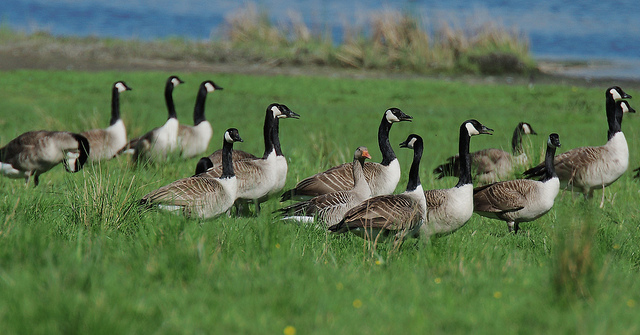
Geese in field
Kanadagås / Canada Goose. Stefan BerndtssonCC BY


Between the moon and New York City

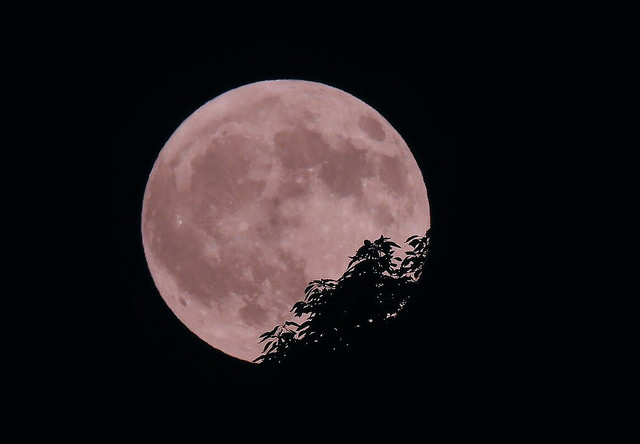
Harvest moon

Harvest moon. patrick pearceCC BY-NC-ND

I have to get to work early. Several teachers have asked for help, and I need to prepare. It’s sometimes all or nothing in the life of a literacy coach.

I rue the hour, but I quickly realize a perk.

A gift, even.

Against the pre-dawn October sky, the full moon is enormous. Breathtaking. As I drive the back country roads, it looms just ahead of me, darting in and out of trees as I round curves

Oh, the Harvest Moon! So beautiful, I think.

The moon is oddly big and bright. I knew it was full when I woke up, as the bedroom was bathed in ethereal, silvery light even with the blinds drawn. There’s something deeply magnetic in its intensity this morning, beyond its size. I shiver. The first autumn chill is in the air. It’s the time of year when strange things are afoot, stirring the dying leaves, whispering of time past.

Do you remember.

Something dormant wakes with a jolt, rushes back – the electricity of being young, on the cusp of a major life event, with the unknown stretching before me. I’m like a racehorse at the starting gate, quivering with anticipation, ready to break free, to run for all I’m worth.

I blink, and the overpowering moon transports me right back.

I am nineteen and I believe I can be an actress.

I really do.

After several years of high school plays and local theater productions, plus a year of college theater courses to my credit, I’ve decided I want more than the traditional education route. I’m chasing a dream: I’ve applied to the American Academy of Dramatic Arts in New York City.

They’ve scheduled my audition.

In a rather surreal haze, I catch a train in my Virginia hometown to meet my older cousin, Dan, in Washington, D.C., where he lives. The next morning, we hop on Amtrak to New York.

I’ve been to the Big Apple once before, with my high school drama club. The proximity and height of the buildings almost suffocated me: “There’s hardly any sky to see,” I told a classmate. I then learned why it’s nicknamed The City That Never Sleeps. All night long I heard traffic, voices, sirens.

This time I know what to expect.  This time I am pulsing with energy, ready for my moment – a racehorse pawing the ground at the gate.

This train isn’t moving fast enough.

Dan is wildly excited about my audition: “You’re the maverick of the family,” he tells me.

I look at his earnest green eyes. For a moment, I fear I’ll disappoint everyone. Our aunt, our mothers’ unmarried sister, has given me a framed picture of a harlequin holding a rose, sitting on a crescent moon amongst stars in the sky. This reminds me of you, she wrote on the back. Somewhere between the moon and New York City.

Lyrics to “Arthur’s Theme,” of course. The song by Christopher Cross, subtitled “Best That You Can Do”:

When you get caught between the Moon and New York City
I know it’s crazy, but it’s true
If you get caught between the Moon and New York City
The best that you can do,
The best that you can do is fall in love.

My spinster aunt means it as an encouragement for me to do my best, believing I’ll succeed on the stage. I understand this just as much as I understand I’m not about to be falling in love.  At nineteen I am decidedly jaded. I don’t want a boyfriend and have secretly sworn off relationships. Guys my around my age, I’ve learned, are not to be trusted. I do not have time to waste on them.

“What do you have to do for the audition?” Dan asks, as the ugly backsides of major East Coast cities zip by the train windows.

“A dramatic piece and a comedy piece,” I tell him. “For the dramatic, Alison’s monologue from Look Back in Anger, after she’s lost a baby. For the comedy piece I’ve spliced together Babe’s lines from Crimes in the Heart. Dark, Southern humor. Really hilarious.”

His eyes glow. “You have to perform these for me!”

Once we are settled in the city, I do. It’s my final rehearsal.

Dan is delighted. “You’re going to make it. I just know it.”

I’m not sure, but I think I detect tears in his vivid eyes.

The hour comes. After a short conversation with Academy officials, I step onto the empty stage. There’s no spotlight. It all feels quite ordinary.

I give the monologues all I’ve got, full rein to the electric charge coursing in my veins – the best that I can do.

The faces of the Academy people are inscrutable. They shake my hand:

“Thank you. We will inform you of our decision by letter within a few weeks.”

I stumble back into the shadows of Madison Avenue where I barely recognize my cousin.

“How did it go?”

“Okay, I think,” I tell him, and only then do I realize how violently I’m shaking.

“I am so proud of you!” His smile is magnificent as he wraps me in a bear hug.

Now we can roam the fabled streets at our leisure. It’s January and utterly freezing, but we don’t let that stop us from going to the top of the Empire State Building where our carefully-styled hair stands on end in the frigid gale. In a tiny restaurant, I have my first cappuccino – a frothy, cinnamon wonder. At a nondescript shop we buy teal scarves that are at least four feet wide and about eight feet long. We loop them around our necks multiple times.

Dan says, “Have you noticed how people are looking at us? They think we are somebody – they’re trying to figure out if we’re famous.”

He is right. I catch our reflection in the shopfront glass – we can pass for ’80s pop stars.

That bright image is a freeze-frame. The rest of my memory curls like fog around the edges of it.

Dan was also right about something else.

A couple of weeks later, I pulled an envelope bearing the Academy’s return address out of a stack from the mailbox. My hands shook so that I could hardly open it.

I cried.

I was on my way to New York City for real. To live, to make my way, to do what I loved best.

I didn’t have a dime to my name or any idea how I’d manage to find a place to live in New York, come August; all I knew was that in the meantime I needed to keep performing. I went to the next community theater audition, for Whose Life Is It Anyway? I walked through the door and instantly spotted, across the room, sitting in a chair, the handsomest man I’d ever seen. Black hair, brooding dark eyes, classic features – if we’d been living in the 1940s, this guy could double for Tyrone Power.

He looked up, saw me, and smiled.

If you get caught between the Moon and New York City
The best that you can do,
The best that you can do is fall in love.

I was going to New York.

I didn’t want a boyfriend.

We both got parts in the play.

This was the end of January.

In May, he gave me his mother’s diamond engagement ring.

We were married in August.

The Academy said I had a year, if I wanted, to enroll.

Within the year, my young husband told me he was called to the ministry.

If you get caught between the Moon and New York City . . . .

There are Things Meant to Be and Things Not Meant to Be, I hear myself whisper.

At least, I think that’s myself whispering.

I blink – and here I am, three decades and two grown boys later, still married to the same preacher man, driving to work, pondering how to help teachers and students, while a magical moon dips in and out of the trees. I am in rural North Carolina, a far cry from New York City. Never made it to Broadway, except as a member of the audience.

But, as Shakespeare wrote, All the world’s a stage, and all the men and women merely players; they have their exits and their entrances . . . .

I wonder what Dan would say now about my being the family maverick. He’s been gone for years. His exit came so early; he died at thirty-four.

I drive on under the Harvest Moon, noting how the darkness is no match for its spellbinding brightness. I am flooded with gratitude for all I’ve been given, realizing that the autumn of my life has not even begun.

Yes, Moon. I remember.

And so I play my part – the best that I can.

slice-of-life_individual

The song

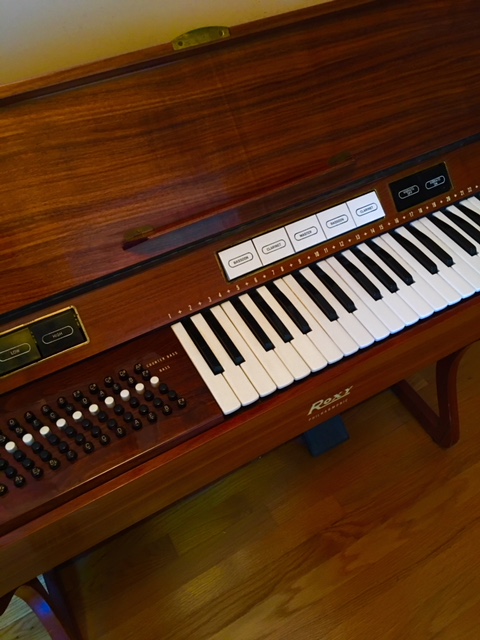
Grandma's organ

I love Granddaddy’s and Grandma’s apartment. The walls are knotty pine and the floors are made of a different wood; they shine under Grandma’s braided rugs.  There’s a booth curving around a table in one corner. It makes me think of the ice cream shop where we sometimes go for milkshakes. This booth is where Granddaddy, Grandma and I eat supper. Sometimes we have jelly doughnuts or apple turnovers for dessert; Grandma is very fond of apple turnovers and so I am I. There’s an odd, glass-less window between the bedroom and the “front room,” as Grandma calls it. I call it the living room. Grandma has curtains on this weird window and I can remember, dimly, my aunt holding me in her arms on one side as Grandma pulled the curtains apart on the other, crying “PEEK-A-BOO!” We all dissolved with laughter. A fancy ashtray with a curved handle that’s either a ram or a goat – some horned, leaping  animal – stands on a tall, thin pedestal beside my grandfather’s worn leather recliner, but no one ever smokes here.

Many wonders exist in this cozy place, but one of the prettiest is Grandma’s organ.

It’s made of polished wood, with curved legs. It stands gracefully against the front room wall, under shelves of family mementos and photographs.

Grandma knows how to play it. She has a piano down home in the country, but it was too big to bring to the apartment. When Granddaddy went to work at the shipyard during the War, my grandmother had to leave her piano behind. So, he bought her this organ one Christmas. 

He knew how much she loved to play.

One afternoon she says, “I will teach you.”

I am nervous and excited at the same time – I have never touched this organ.

Grandma opens the top. She lowers the little stand that holds a book. She has a booklet of hymns and one of Christmas songs; she places the Christmas book on the stand.

“Watch and listen,” she says, her blue eyes soft and bright. “This is my favorite.”

She plays “Silent Night.”

She sings, and I know the song. I sing some of the words with her:

Sleep in heavenly peace, sleep in heavenly peace.

“Now it’s your turn,” she says.”See these numbers? That’s what you play with your right hand. These circles with letters are the chords – you play the buttons with your left hand.”

She takes my hands in her own. 

5,6,5,3 – Si – i -lent night

5,6,5,3 – ho – o -ly night

She puts my fingers on the right keys, pressing the white “C” major button until we switch – gracious! – to “G” and “F.”

I am very slow – it seems a lot to do at one time.

But Grandma guides me, and soon I have played a song.

A whole song.

“Now try it on your own,” she says.

I labor. My keys and my chords are not exactly in sync, but I play. I am playing the song by myself!

Grandma sings behind me. Her voice carries me on.

She hugs me when I finish; I smell her Avon Cachet cream, light and clean.

Her eyes glisten with tears, but she’s smiling.

It was the first of many lessons I’d learn from my grandmother. In those days before I started school, I thought the white major buttons sounded like a wedding; all the minor and diminished buttons sounded like something in haunted houses.

Pretty much the theme music of life – celebrations and dark, mysterious moments. Sometimes I would play the buttons by themselves, listening to the happiness and strangeness of the chords.

I made my own stories out of these sounds.

I realized, decades later, the legacy my grandmother left me: There was always a song of hope and faith in the heart to carry me through the darkest times. That being a wife and mother often meant sacrifice. She was the quintessential teacher, without being formally trained – my foray into the music she loved followed the perfect I do, we do, you do pattern.  She guided my fingers on the keys, my feet on the path, my heart on the things that matter most.

Above all, she believed in me.

There’s no greater gift to a child.

When I was in the sixth grade, I was invited to attend a summer program for gifted students in writing, drama, and photography.

My father couldn’t afford the fee.

Grandma paid it. “Children need to have a chance to do things that matter to them,” she said, with a startling ferocity.

Much later I learned that she wanted to take piano lessons when she was in her early teens and that her family couldn’t afford them during the Depression. A young minister’s wife, however, taught my grandmother how to play.

In everything I do, she’s still there behind me, singing, urging me on, never far away. She is gone, yet she isn’t; her song sings in my soul, in time with the beating of my heart. I am who I am because of her.

Today my youngest son – a college student and music minister – plays her piano and sings the old songs. Her organ stands in my foyer – the first thing that people see when they come to my home.

Her legacy lives, from generation to generation.

I often think how thrilled she’d be to hear my boy’s beautiful playing and singing. “Oh, how my Grandma would love to hear this,” I tell him.

Even as I say the words, I know she knows.

Fresh-cut grass

Grass

Grass. montillon.aCC BY

As daylight hours grow longer, spring stretching toward summer, the hum of a lawnmower is ever-present in my little neighborhood.

Yesterday my younger son mowed our lawn. When I arrived home after work, there stood Banjo, our yellow Lab, with his front paws on the wooden gate leading to the backyard, barking his welcome. As I walked from the car to pet him, the clean, green fragrance of fresh-cut grass also rose to meet me.

It’s the smell of home, of childhood, of long ago.

I closed my eyes against the waning afternoon light. In the cool of the day, for a second, I was there, in another neighborhood, another yard.

My father was so proud of the corner lot he bought in the summer before I started school. This was our first house. Up until then our family had lived in apartments. At the time, having two bathrooms (really a bath and a half – my sister and I dubbed them The Big Bathroom and The Little Bathroom) seemed a great luxury.

By the front steps to the left of the sidewalk stood the black lamppost. Beyond this, the yard sloped toward a chestnut tree and the ditch, which entered our yard from under the street and joined the backyards of all the houses on the block. When I wanted to visit my friends, I took the shortcut, running alongside the ditch. (This ditch sometimes caused flooding, which is  another story starring my dad: The secret gates.)

A maple tree stood on the right side of the front yard. My mother’s gardenia bushes and forsythia comprised a small hedge near the front steps, and at the right corner my father eventually planted a camellia bush, brought from his own childhood home.

My father kept our lawn immaculate.

He did it for years with a push mower. I wonder now if he ever rued having that corner lot with so much grass to cut, especially in the summer when his fair face grew florid from the sun and heat. He wore a towel around the back of his neck to wipe away the sweat.

I played outside a lot as a child; the scent of grass wafted through many games and adventures with my sister, the neighborhood kids, the dogs.

I can’t remember the first time the fragrance brought a pang. It just hit me one day: I stopped, inhaled.

Fresh-cut grass.

Daddy. 

For a split second, I was a child again, standing in the front yard in the cool of the day, glimpsing the streets, feeling the hum of everyday life, lazy afternoons, leaves on the maple tree stirring.

The sense of order, continuity, stability behind it all is my father.

All present and real in that clean, green smell.

Our last phone conversation was about his cutting the grass. He had a riding lawnmower by then:

“My chest is sore. I think it’s from turning the wheel on the mower. I probably shouldn’t have gone over the yard twice.”

“Why do you need to do it twice, Daddy?”

“Well, I don’t need to do it twice. I like to cut it in one direction and then the other. It makes a pattern. Looks so nice.”

“Has that made you sore like this before?” 

“Not really. I overdid it this time.”

“When do you go back to your heart doctor?”

“I don’t go to him any more. Once you’re healed they see you for a while but then they release you. I only see a regular doctor when it’s time for check-ups.”

I don’t like the sound of this. He’s been mowing his lawn forever and hasn’t been sore. It could be overexerted muscles, but . . . 

“Daddy, you should go back to the cardiologist. Just in case.”

He didn’t make the appointment. His mind was on getting through his last week of work and retiring after nearly forty-one years as a security guard at the shipyard.

Four days later, on a bright, early-fall morning, he walked across his prized lawn for the last time. He was in uniform, going to work. He had three more working days to go.

The neighbor across the street happened to look through her window and saw him lying beside his car.

It was his heart, of course. It just blew, six years after his first attack and bypass surgery.

He died there by the green, green grass of home.

That’s a damned sad song, he once told me, shaking his head. “The Green, Green Grass of Home.” That and “Danny Boy.” When I was stationed in Las Vegas, at the nightclubs somebody always asked for “Danny Boy.” Why do people like songs about dying? Why not ask for something cheerful, for God’s sake?

Something cheerful.

It’s not a song, Daddy, just a blog post about fresh-cut grass, but there’s cheer in it, because the grass, though cut, always heals itself and grows again, and you are always present in that sweet scent, and I am a child without a care in the world, only I don’t realize it yet.

I do now.

Thank you for everything. I owe you much.

Love you.

* * * * *

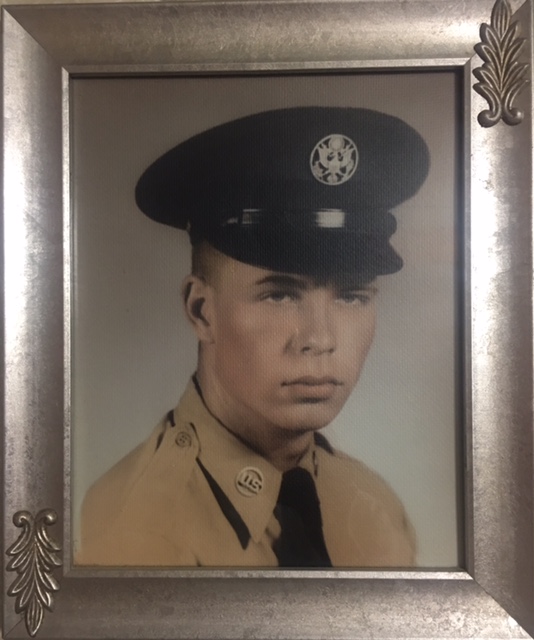
Daddy - USAF

Daddy served in the United States Air Force before I was born. Memorial Day seems to be a fitting time to honor him. Although his service to his country was long past, he was nevertheless in uniform and on his way to perform his duty when he died – one of the most dutiful men I’ve ever known. He was also a storyteller. With Daddy, stories occasionally became epics, as he liked to talk and frequently got in trouble for that in school, according to my grandmother. I owe my love of story in large part to them. Here are two favorite stories of mine derived from theirs, featuring all of us:  Born and Baby’s breath.

Born

“They said it would be a while,” announced the young man, as he came through the apartment door. “I gave the nurses your number – I figured I could wait here just as good as at the hospital, since it’s so close.”

“Yes, that’s true!” beamed his mother, closing the door behind him. “I’m so glad you came!”

The young man’s father nodded from the table. “You’re just in time for strawberry shortcake. Come have a bite.”

The young man seated himself at the table while his mother dished up another serving of shortcake topped with freshly-whipped cream. He’d hardly tasted it when the telephone rang. He froze – it couldn’t be the hospital, could it? 

His mother darted to the phone: “Hello? Yes … yes he is.”

She held the receiver out to him.

Was something wrong? Despite the juicy strawberries, his mouth was dry as he took the phone.

“Congratulations!” said the chipper nurse on the other end. “You have a daughter! Mother and baby are doing fine.”

He managed to thank the nurse. He hung up and looked into the rapt blue eyes of his parents.

“It’s a girl,” he said, blinking. “She’s already here!”

His mother hugged him. She began to cry.

In a flurry, they gathered the dishes and set them in the sink. His mother took off her apron and grabbed her pocketbook. His father put on his black cap, and the three of them fairly scrambled out of the kitchen door and down the back stairs.

His mother-in-law and sister-in-law were standing at the nursery window when the young man arrived with his parents in tow. 

Said his sister-in-law: “It’s a girl – finally!” She sounded almost wistful, having no children of her own.

Turning to hug the young man, his mother-in-law said: “Looka there – a granddaughter, after five grandsons! I thought this baby might come fast. All of my mine did.”

“Mine did, too,” said the young man’s mother, dabbing her eyes with a tissue.

The mother-in-law took her by the arm.”Come up close and see your first grandbaby.” And she stepped back to let the new grandmother near the nursery window.

“Ohhhh,” whispered the young man’s mother, gazing through the glass. “She looks just like a little angel.” Tears streamed down her cheeks, unabated. 

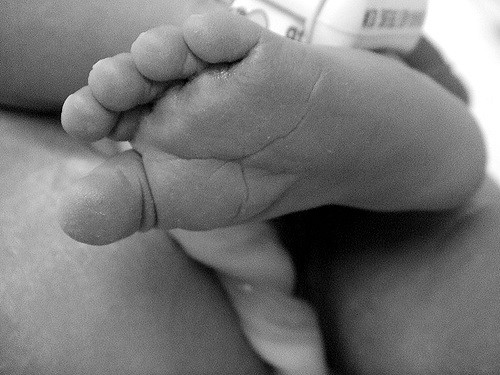
Her son, the brand-new father, peered through the glass beside her, frowning. He hadn’t known exactly what to expect, but one thing was for sure – the newborn wasn’t pretty. “Good Lord. She looks just like Daddy.” 

Everyone laughed at that. It was true – the wrinkly, ruddy newborn had hardly any hair and looked like a little old man – indeed the image of her granddaddy, who beheld her silently, smiling, his heart bursting with pride. He thought of the twenty silver dollars he’d collected  for his first grandchild. One day when this baby was old enough, he’d give them to her.

The in-laws congratulated each other on one side of the glass as the baby slept soundly on the other, while somewhere in the bowels of the hospital, the baby’s mother wanted to know when she was getting some supper, since the baby’s arrival had preempted it.

Thus was I born, that long-ago evening in May, strawberry season, in the city, when fathers were relegated to waiting rooms instead of witnessing and participating in births, before Cool Whip was even invented – alas.

As the day rolls around yet again, with every celebrant who gathered at the nursery window long passed on, it occurs to me that knowing the story of my birth is a gift. It ranks high, priceless, among all the gifts given me over a lifetime. I owe this mostly to my grandmother, a tireless storyteller, and some to her son, my father, who, in his matter-of-fact way, told me that my mother grumbled about missing her supper and that newborns aren’t pretty – not even his own! He made a similar observation at the funeral of his father – my grandfather – as we stood by the casket. “He looks really good,” I said, stroking Granddaddy’s snow-white hair for the last time, marveling at the smoothness of his skin. My father frowned: “I don’t know why people say that. Corpses don’t look good.”

Geez, Daddy.

Nevertheless, I cherish my birth narrative as told by those who were there.

Tonight I celebrate them and their truths, their personalities, their wit, their lives – and their stories, which allow me to see events from their perspectives. Tonight, for just a moment, I am at the window, watching through their eyes, when I am born.

The fascinating reciprocal, of course, is that because of their stories, they live on through mine.

Reflection: Do you know your birth – or adoption – narrative? If you do, write it down! If you don’t, ask, if possible. If not possible, well, that’s a powerful story in itself. Explore your beginning, experiment with perspective  – and write. And, by all means, if you know the birth stories of others – tell them.


Oh, Henry

Henry playing dead

Henry, playing dead.

Henry is the latest addition to our family.

He belongs to my oldest son, who’s come back home to live temporarily.

Henry is a Pit mix. His coat is a shiny, smoky gray with white markings. He has a tiny underbite, as bulldogs do. His eyes take in everything – he is incredibly perceptive of moods and every move we humans make. If he thinks someone is angry, he creeps over to his crate and goes in.

He is meek, the gentlest, most affectionate dog; he never seems to get enough belly rubs. He puts one paw up on your arm when you pet him. He is always ready to play – he brings tennis balls to us and drops them in our laps. If we’re too slow in responding, Henry nudges the ball closer to our hands.

If we fail to give Henry the attention he wants, he lies in the floor and plays dead. Poor neglected creature!

On the second night home, Henry hopped up on my husband’s and my bed, where he settled himself Sphinx-like, quite majestically, looking at us as if to say: “This is where I shall sleep henceforth. This is my place.”

And so it is. Henry snuggles deep between us every night, often sleeping with his head on my leg.

My husband tells our son: “Henry is our dog now.”

Our son rolls his eyes. “Yeah, sure, Dad.”

Henry has been used to living in an apartment, so having a big backyard where he can run around is an absolute joy to him. He’s in dog paradise.

One morning our son went to call him back in and Henry was gone.

Someone had left the gate open.

A stab went through my heart – I could hardly breathe. This is our boy’s beloved dog, he brings him here, and we lose him. 

Our son had adopted Henry from an animal shelter.

He was a stray.

“HEENNNNNRRRYYYY!” I screamed at the top of my lungs. I ran outside in my pajamas, not caring if the neighbors woke up to see. “HEEEEENNNNNRYYYY!”

After a couple of heart-wrenching minutes, our son found Henry on the front porch, looking guilty. Once inside the house, Henry slunk over to his crate and lay down, looking at us with the whites of his eyes showing.

Oh, Henry.

We are so thankful that you’re here.


Henry

Henry making himself at home.


slice-of-life_individualEarly Morning Slicer


Baby’s breath

Sleeping child

Angel1. peasapCC BY

The cure for anything is salt water: sweat, tears, or the sea. – Isak Dinesen

Being a light sleeper, he hears the rasping sound in the middle of the night. He gets up, tracing the sound to the baby’s crib. 

She’s not breathing right.

He touches her face; she isn’t feverish. She stirs under his hand, still sleeping, drawing ragged, rattling breaths.

He is young. This is his first child. They are out of town, visiting his sister in the country.

He goes back to bed.

But he carries his baby with him and lies awake all night beside her, to make sure she keeps breathing. He perspires with anxiety – she’s so little. 

Just three months old. 

“It’s asthma,” the doctors tell him later. 

A few years afterward, she has a bad bout of it. He takes her to the doctors, gets medication. She cries and cries, which doesn’t help the breathing.

“I – want – Grandma,” she wheezes, tears dripping off of her chin.

He calls his mother. “She wants to be with you but I hate to bring her when she’s sick.”

He sounds worn out.

“Bring her,” says his mother.

She lets all the housework go. Wrapping her arms around her granddaughter, she sits down in the rocking chair. Back and forth, back and forth she rocks, singing, “Little ones to Him belong, they are weak but He is strong.”

Yes – Je – sus – loves – me – ” the little girl tries to sing, rattling, wheezing, coughing on the words. She can’t get enough air. 

“Don’t try to sing, honey. Just listen to me singing,” says her Grandma.

On and on Grandma sings. The little girl settles, dried tear stains streaking her flushed face. Lulled by the beating of her grandmother’s heart in time with the song and the rocking of the chair, her eyes close at last. Rocking back and forth, back and forth, Grandma sings, tears flowing freely down her cheeks. Be well. Be well. Be well.

The sweat and the tears couldn’t cure asthma.

They represent another kind of healing power.

Self-sacrificial love.

“I was afraid to sleep,” my father told me of the long-ago night he lay awake, sweating, to make sure I kept breathing when my first asthma attack struck at three months.  He would get up countless nights throughout the years when he heard me coughing, to bring me medication or to turn on the vaporizer.

It’s why my grandmother dropped everything to comfort me, always had open arms, always had a song despite the tears. “My heart was breaking the whole time,” she said, recalling the day I begged to stay with her and didn’t have breath enough to sing, the memory resurrecting the tears even after decades had passed.

The memories are theirs, not mine, as I have no firsthand recollection of these events; told to me separately by my father and grandmother, many times over, they are part of my narrative identity.

Sweat, tears. The pouring out of their lives for mine, the pouring of their love into me from the very beginning. I am infused with their strength, their perseverance.

And beyond the power of the sweat and the tears is the power of story.

I remain to tell it.

slice-of-life_individualEarly Morning Slicer

Laughing Buddha

Hotei

Hotei Buddha. Shanna RileyCC BY-SA

“Come see what your aunt brought you!” Mom calls. 

My aunt has given me some pretty neat gifts: A shirt with iron-on letters that say Bookworm and a Partridge Family album. She’s a fun person, sometimes, like when she records us singing Olivia Newton-John songs on her tape recorder and says we sound professional, or lets me try on her wigs.

I can hardly wait to see what she’s brought this time. I fly down the hall from my bedroom to the living room.

My aunt is smiling wide. She hands me something wrapped in brown paper, saying: “Be careful -it’s breakable.”

I unroll the wrapping, pull out the breakable thing.

It’s a statue. A little bald man with a big belly and no shirt, wearing only a skirt, with his hands up in the air. He is laughing – at me, I think, because I don’t know what in the heck he is.

He’s also solid pink. A little darker than Pepto-Bismol.

I am confused. 

“I made him in ceramics class,” my aunt says, looking pleased with herself. 

Every grown-up female I know is making ceramics or macrame or decoupage. But I’ve never seen anything like this fat little pink man.

“What is he?” I ask, feeling disgusted, while he laughs at me silently. 

I think about dropping him.

My mother glares at me.

“He’s Hotei. If you rub his belly, he’ll bring you good luck,” says my aunt.

I want to say he needs it for himself, but my mother speaks up:

“Look at what’s underneath.”

I turn Hotei head down. Under the base on which he stands is an inscription:

Made for Fran with love. Aunt E.

I look up at my aunt and see the earnestness in her eyes.

She never married, never had children of her own. When I went to high school, she attended my plays, convinced that I’d make it on the stage in New York City. She directed my wedding, bought dozens of outfits for my first child. When I started trying to write short stories, she asked to read my work.

“You should send this to magazines!” she said, genuine excitement in her voice. “You could be published!”

She didn’t live to see my second child.

Hotei sat on my bedroom shelf for many years, and yes, I rubbed his belly. Some days more than others.

But I didn’t need him for good fortune, not really.

I had my aunt.

slice-of-life_individualEarly Morning Slicer


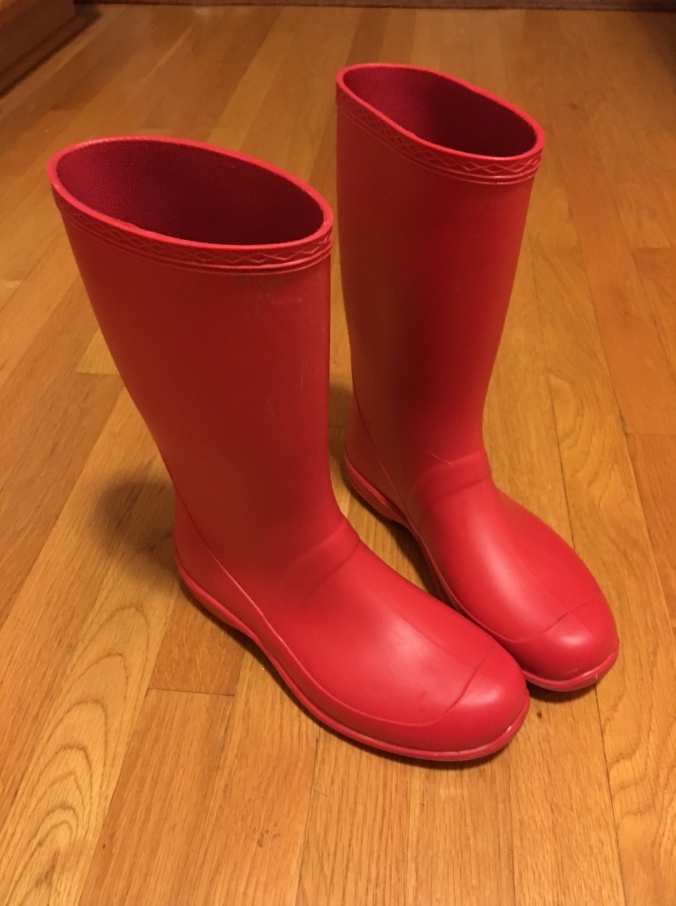
Red rubber boots

red-rubber-boots

It is Sunday, the day my Granddaddy is off from work at the shipyard. It is the day we usually walk to the playgrounds behind the churches across the busy city street, my small hand clasped in his large one, as we wait for the traffic light to change. Today it is raining and we can’t go out. I sit by his recliner on the braided rug beside his feet – he wears black lace-up shoes every day – and sigh.

“What’s the matter, Duck?” he wants to know. Sometimes he calls me Duck, sometimes he calls me Pig. I do not know why. He just does.  It makes me feel warm inside.

“Granddaddy, the girls in kindergarten have red boots to wear when it rains. I don’t have boots.”

“Oh, I see. I guess you been wanting some of those boots?”

I nod my head and crawl up into his lap. “Yes, Granddaddy. For a long time.” His black leather cap is on the side table by the recliner. I pick it up and put it on my head. It smells like him. A little Vitalis and a lot of goodness.

He wraps his arms around me. “Tell me about these boots, what they look like.”

“You can pull them over your shoes … ” I begin.

He got them for me, of course, those red rubber boots that I proudly wore to school and stored on the bottom shelf in the cloakroom, beside the boots of the other girls.

At the time he got them, I did not know that his retirement was imminent, that within the year he’d move back home to the far reaches of eastern North Carolina, three hours away. I would only see him a couple of times a year from then on.

I grew up. I had children of my own. When I went to visit Granddaddy, I sat on the stool by his recliner, as close to him as I could get. He patted my arm. We sat this way for a long time, without any conversation, just being together.

“You remember them red rubber boots I got for you?” he asked eventually. His blue eyes twinkled at me. Every now and then, across the decades, he’d mention those boots.

“Oh, yes, Granddaddy. I remember. I loved them so much.”

He chuckled, patting my arm with his large, wrinkled hand.

He was retired for thirty years, living to be almost 93.

I had nearly forgotten the red rubber boots when I happened to see a pair at the store a year or so ago. They were so like the boots he gave me when I was five.

“Ah, Granddaddy,” I whispered. “You’re never far away.”

I bought them.

They protect me from the rain; they keep me grounded, connecting me to the earth that my grandfather loved, for he was a lifelong farmer even though he had to find better-paying work to provide for his family. The color brightens the gloomiest day. I wear my boots with deepest gratitude for a humble man who knew about sacrifices, great and little, fiercely proud that his blood flows in my veins.

I remember, Granddaddy. I always will.

slice-of-life_individual