Ghost-memory poem

with thanks to Glenda Funk for the Open Write prompt on Ethical ELA today: “I invite you to think about the ghosts who appear to you and the ways you learn from and celebrate the lives of those who have passed on, those who now visit us in our memories.”

In the Night

When I crawl into bed
to rest my weary bones at last
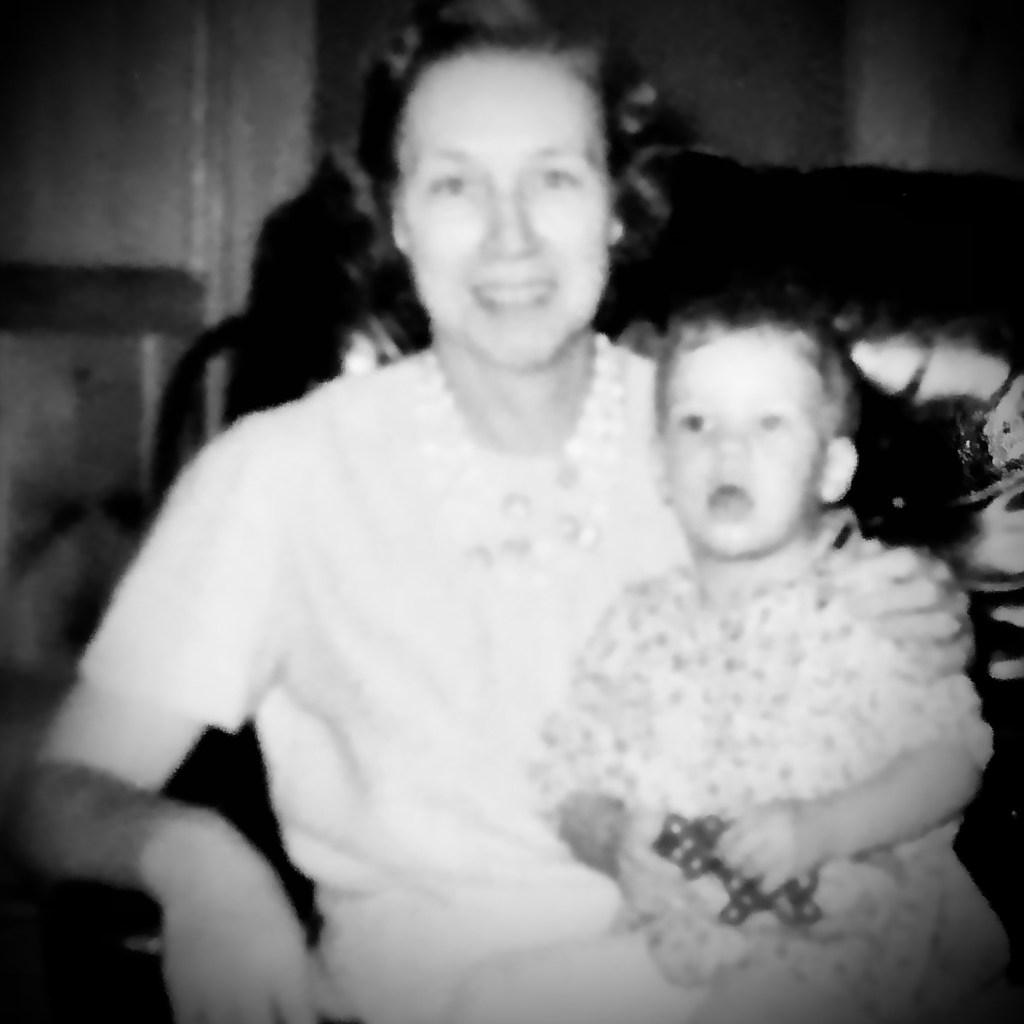
I have a sense of her

the way she tucked me in
heard my prayers
kissed my forehead 
in successive repetition 
soft as wing-flutters

I hear her voice
when the lights go out
and darkness first envelops:
Don’t worry, Honey
in a minute
your eyes will adjust
you’ll be able to see

and I see her
in the night
a drifting wraith
in her thin pale gown
bathed in silver moonlight
floating into Granddaddy’s room
where I sleep 
on the little cot by his bed
listening to the rhythms of 
his mighty snores

for she always rises
in the darkest part
to check my coverings
sometimes caressing my head
or patting my leg
before drifting back out
to her own room
where snoring 
cannot reach

she is never far
even now
and for all the brightness
she brought to my days
she is near, so near,
in the night.
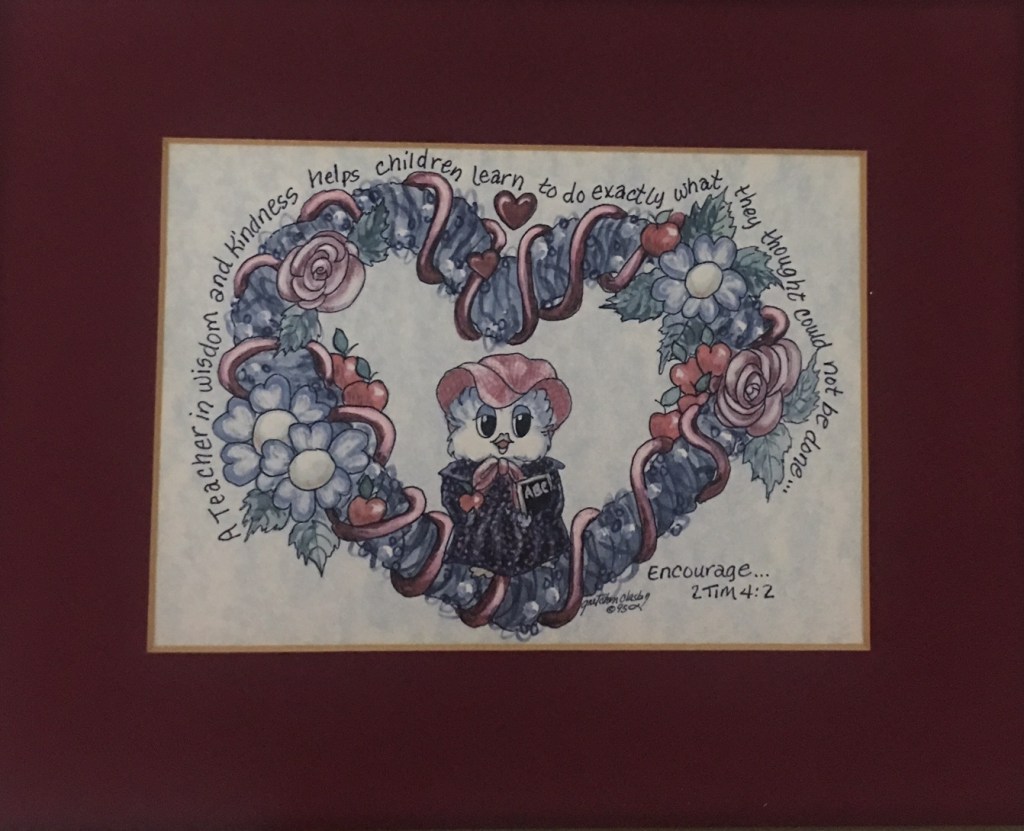
Pedagogy poem

with thanks to Glenda Funk on Ethical ELA’s Open Write today: “What do you owe to pedagogy? Today I’d like us to consider this question and compose a poem in which we explore an idea related to pedagogy, the methods by which we teach, the methods by which we learn. The poem does not necessarily have to be about school. Simply think about teaching and learning as a global phenomenon.”

This is the poem that came today, in reflecting on what I owe to pedagogy… of course, it’s a story-poem…

The Heart of Pedagogy

Little boy in the shop
at Christmastime
spends his money
on a gift for his mom

a matted illustration
of a bird holding a primer
encircled by a flowery heart
and these words:

A teacher
in wisdom and kindness
helps children learn to do
exactly what they thought
could not be done

-Honey, it’s beautiful!
I love it, says his mom,
even though
I am not a teacher

Little boy grins
in his snaggletoothed way:
Yes you are, Mama

She sees the bright belief
there in his face

she cannot bring herself
to diminish it

for maybe she would be a teacher
if only she had finished college

which she does, many years later.

The boy can’t attend
to see her walk across the stage
because he’s taking final exams
at the university
where he’s a history major

-What are you going to do
with that degree?
everyone asks him
-are you going to teach?

No
He’s emphatic:
I do not want to be
a teacher
No

which is, of course,
the path that immediately opens
leading him right back
to the very classroom
where he was a student
where he finds
his old AP history exams
stashed in the cabinet.

The summation of the matter:
we’ve both done
exactly what we thought
could not be done
haven’t we, Boy

for in the end
as in the beginning
teaching is about believing

then in finding
a way.

The Boy’s gift has remained on my bookcase for over two decades. He was in high school when I returned to college. The verse became the foundation of my teaching philosophy as I obtained my degree and additional certifications. It applies even now to the coaching work I do with teachers. As for the Boy: he was a beloved high school history teacher and soccer coach for several years before entering the seminary for divinity degrees and the pastorate. In awe, I watch him teaching his young daughters…and remember.

I want to be the kind of writer…

with thanks to SOS-Sharing Our Stories: Magic in a Blog for the inspiration

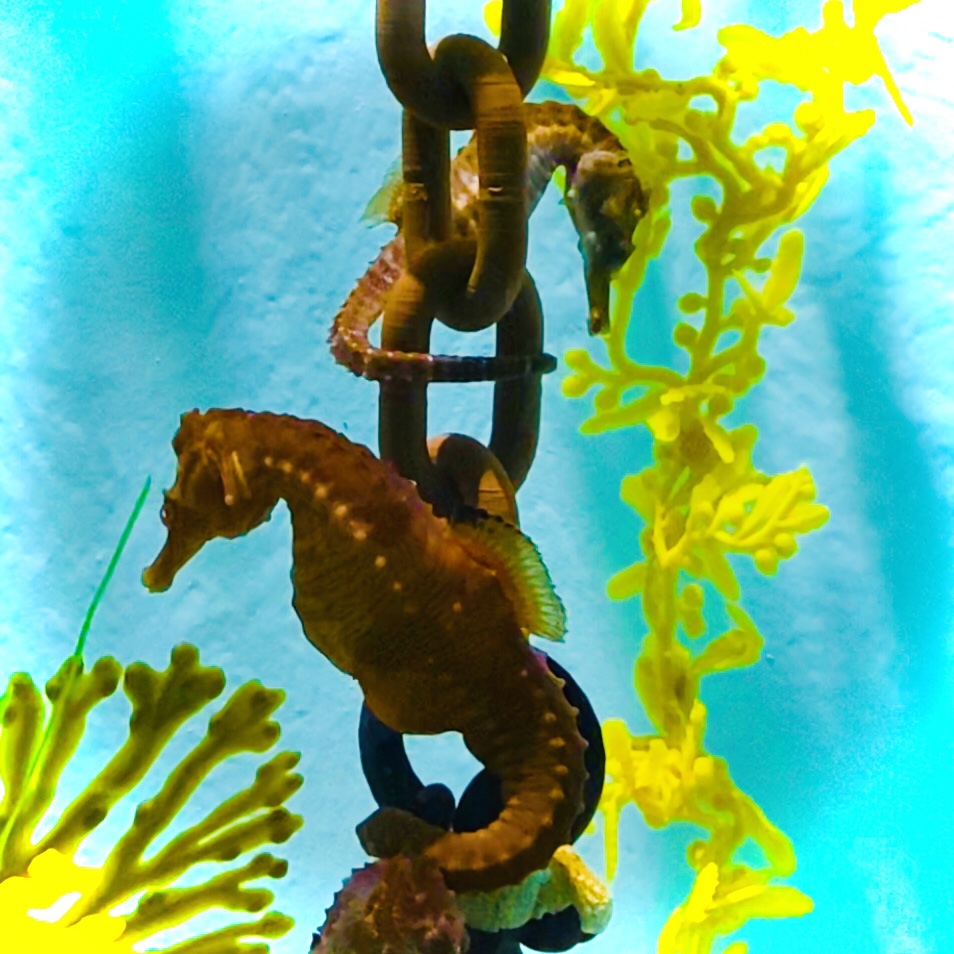
I want to be the kind of writer who seizes every moment, carpe momentum, for the meaning it contains, for the uniqueness it brings, for the virtue of its existence and my existence within it, for these are fleeting: my presence of mind and my presence here. I want to the the kind of writer who lets the tap of memory flow full force, who drinks long, deep drafts in thirsty gratitude for every image that lives in the sea of my brain, inside the little seahorse itself. Precious hippocampus, my writer-symbol. I want to be the kind of writer who feeds it, keeps it strong, leaves floodgates open for all that rides the currents of memory, all that rises to the surface, all that washes up like flotsam and jetsam from long ago, even if but random bits of objects or recalled treasure like moments with those I loved and who loved me, still very much alive and real in the iridescent foam bubbling at the edges. I want to be the kind of writer who doesn’t attempt to pin a fragile new idea to the page but who stops to acknowledge it when it appears, makes note of it, gives it room to breathe, to unfurl its wings, for the thing has something to reveal. Yes, I will write to it, write around it, capture it; but softly, without force. Ideas are living things. They are to be nurtured and examined, not hammered and dissected (even in the name of research). I want to be the kind of writer who honors the organic and spiritual nature of the craft and the transcendent power of story in the human heart. It is a matter of mattering. I want to be the kind of writer who spins crystals of my memory, thought, sensation, perception, emotion, and imagination into stories of substance that matter to readers, that maybe add layers of meaning to their moments, too…the way that writers have done, still do, for me. I hear the echo of their words daily as I go about the moments of my living; the writers, the writing, the words, ever-present, tickling the hippocampus, anchoring in my soul, forever bubbling, forming and reforming, spawning yet more ideas. I want to be the kind of writer always reaching for what’s beyond my grasp, always discovering, always inviting awe, always listening, always and infinitely grateful to have been alive.

Carpe momentum.

I am working on it.

The seahorse is a favorite writer-symbol for me, sharing the same name with the part of the brain regulating memory and emotion: hippocampus. Photo: E. Johnson

A reader is born

She heard the same voice
before she ever arrived,
reading and reading

her big sister’s voice,
kindergarten booklover,
reading and reading

see how she listens
and looks toward the pages
—a reader is born.

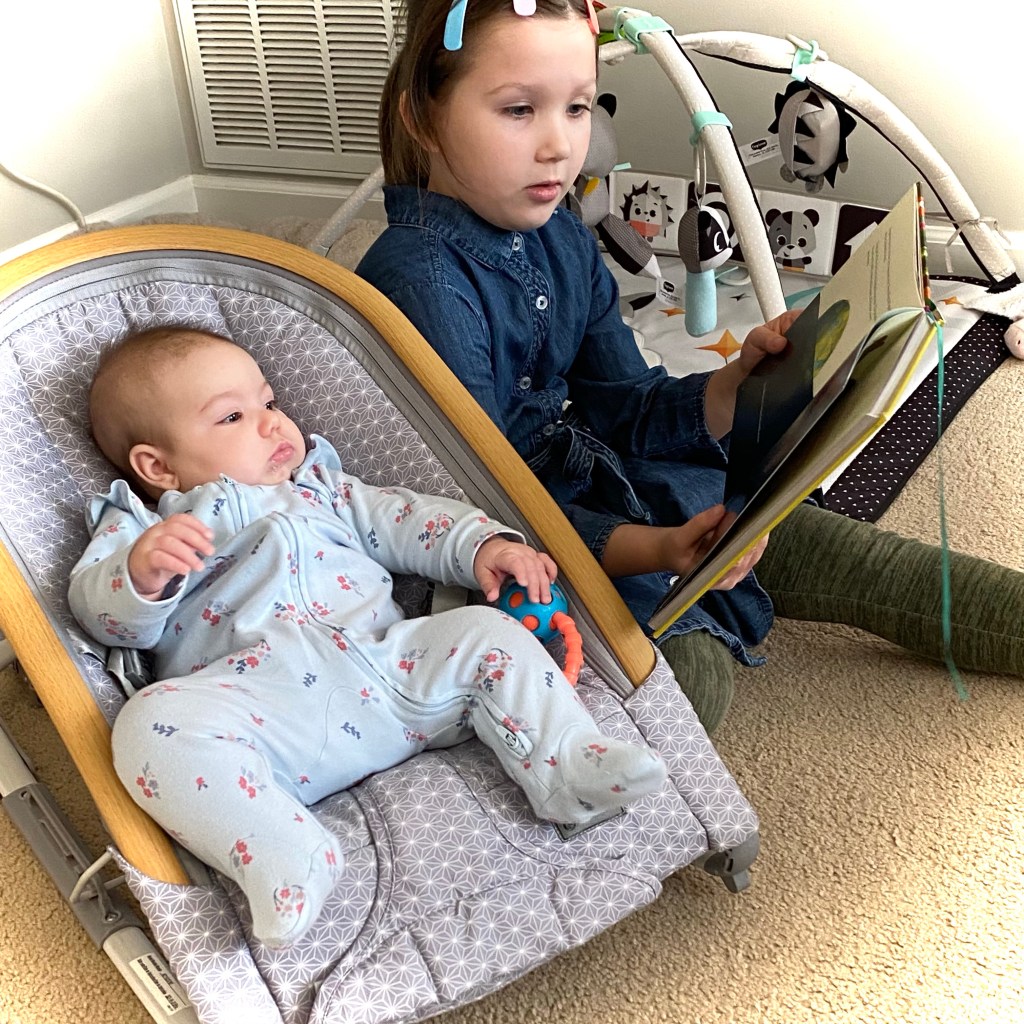
My granddaughters: Scout, age six, reading Bible stories to Micah, age three months

The field

The field at the end of my street
where cotton used to grow
where morning glories of purple and pink
bloomed in tangled profusion
where the autumn sun
burnished the treetops
where myriad insects would chorus
all summer long

is cleared
is being bulldozed
for houses

I will never again see the cotton
stretching out like snow
or the morning glories
rioting in the grass

the trees will be obscured
if they are allowed to remain

and the great insect choir
of quivering magic-sounds
is forever silenced

I cannot imagine how the field
is feeling

but I
am forlorn

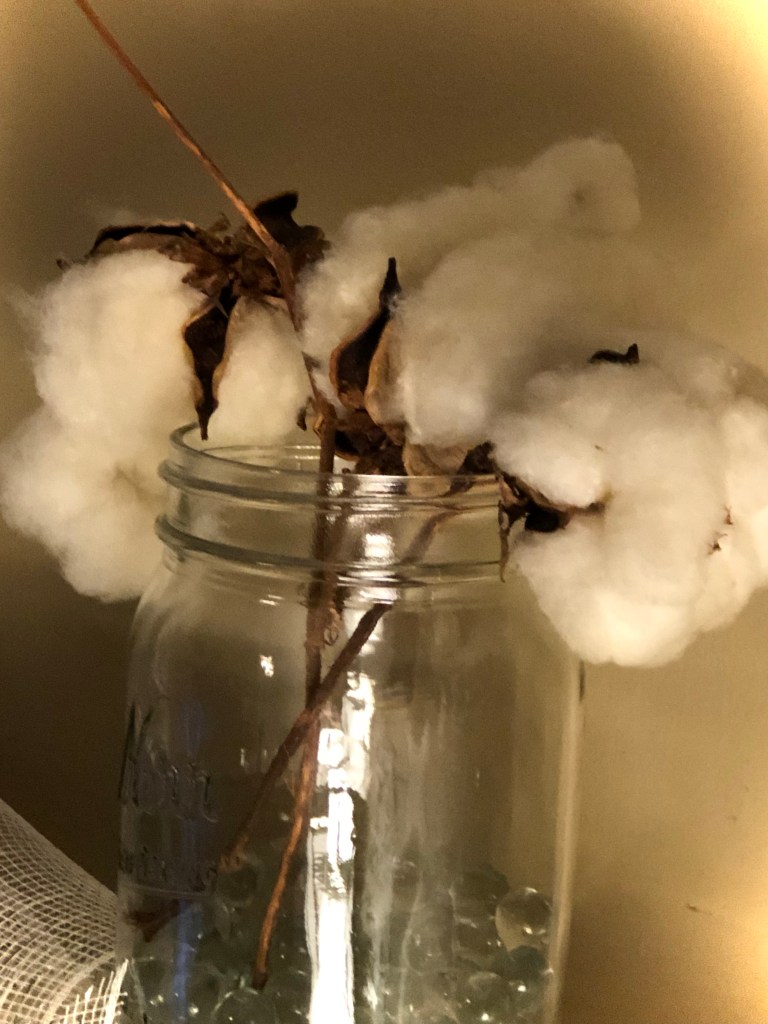
Cotton from my lost field

In the time of broken hearts

Heard on the news this week: Broken heart syndrome is a real thing.

It happens after significant stressors. Too much adrenaline. The heart is weakened. It hurts.

There’s a scientific name for it: takotsubo cardiomyopathy. It derives from the Japanese word for “octopus trap,” after the shape of the left ventricle of the heart in this condition.

It is temporary. The broken heart can heal in a short time, maybe days or weeks.

It can sometimes lead to complications. Rarely death, though.

It seems to affect mostly women 50 and older.

But I wonder.

I wonder, as I regularly step in for teachers who are out.

I wonder, as I absorb laments and frustration and anger about the depth of student struggles.

I wonder, as I listen to students reading poems about tasting the salt of their tears.

I wonder, when I wake up so tired on workdays, when I have so little left to give when I get home.

And I am usually one to see the glass half full, to find the awe in each day, like…

the blue heron standing a glassy pond on the drive to work

the whorls of white smoke floating up from the chimney of a little house in the countryside, struck by the rising sun and transformed into clouds of peach-colored light

the newest photo of my three-month-old granddaughter who’s beginning to smile more and more

hearing my boy play old hymns on the baby grand piano at church with such a multitude of notes and joyful liveliness that surely, surely the angels dance

the one little bird (a cardinal?) singing for all it is worth, from the treetops

-these things strengthen my heart.

And keep it, I think, from breaking.

It is a long season, this pandemic, with its deep layers of residue.

On this day of celebrating love and hearts…I wish you healing peace for the pieces.

Photo: Broken Heart Chalk 2. Retta Stephenson.CC BY 2.0

On quiet

The quieter you become, the more you are able to hear. —Rumi

Morning

I rise far too early, don’t I.
Yet it is an act of love
this aloneness in the
dark, being able to empty
my spirit of noise, slipping into silent
meditation before the dewy
dawn catches in the cobwebby
grass, to wordweave away my hours.

*******

Late Afternoon

The last shaft of sunlight
pales on my pine floor

like a lingering goodbye
from beyond the window
where nothing is stirring
no breeze in winter-bare trees
no birds to be seen nor heard
in this earthtone moment
of prolonged silence
and stillness

time alone moves

it only ebbs
whether in seconds
or epochs

even in this moment
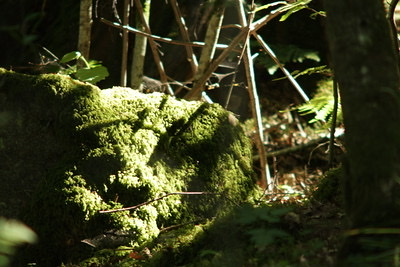
I can feel moss
growing by millimeters
on ancient rocks
caressed by golden fingers
of fading sunlight

I can almost hear
a song of gratitude
and I can’t tell
if it’s being sung by
the moss
the rocks
or the sun

only by something
which knows
time never flows

and that
soon, soon
it will be night

followed again
by morning light

Smiling face in moss. blondinrikard. CC BY 2.0

*******

with thanks to Ruth at SOS-Sharing Our Stories: Magic in a Blog for the inspiration with the Rumi quote and to C.S. Lewis, who wrote of rising “barbarously early” in the morning: “I love the empty, silent, dewy, cobwebby hours” (Letters to an American Lady).

Paper dragon haiku

Discouraging week
somewhat less than magical
suddenly transformed

by the appearance
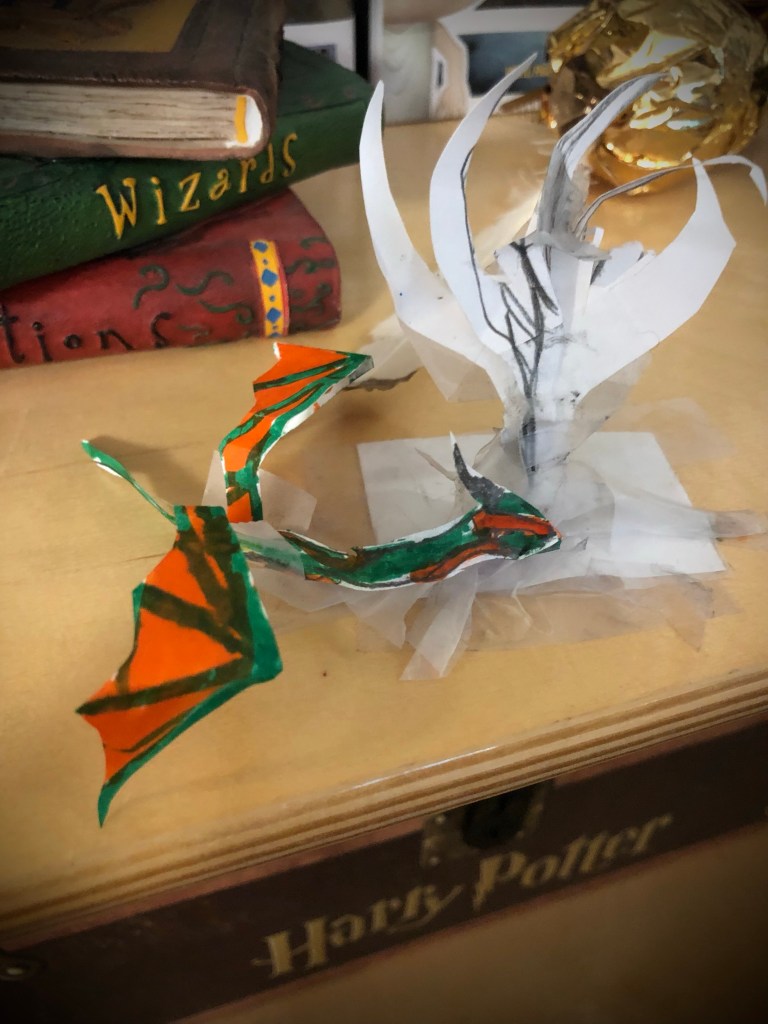
of a tiny green dragon
and its paper tree

enchantment handmade
and proudly given by a
sweet student, to me

Created by a fourth-grader, the fantastic little beast lives on my bookcase now

More metaphor dice

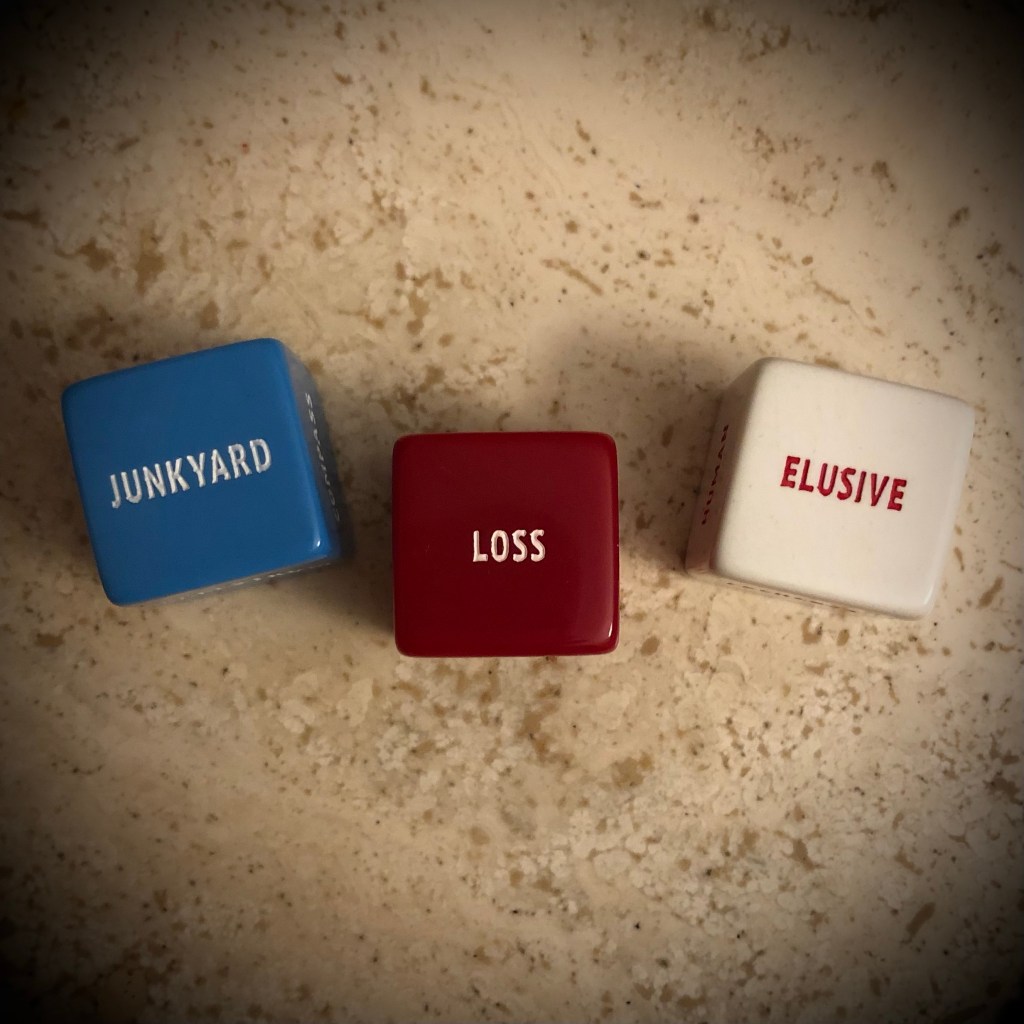
My son challenged me to make something with this roll of my metaphor dice: loss, elusive, junkyard.

This is what I have, so far…

Junkyard Loss is Not Elusive 

It is said that imagination
is the junkyard of the brain
where used things lie in limbo
until they are destroyed
taken back by the grass
or called into service again

which is to say
no experience is wasted
only catalogued and stored
in the deep recesses of memory
until the need for it
should arise
in solving a problem
in creating a new thing
in connecting patterns
in different ways of seeing
relating
expressing
understanding

which is to say
that beloved childhood doll
with the cracked face
or the scent of
your father’s shaving cream
or that dog, that dog
that chewed up your best shoes
but slept every night by your side
long ago, so long ago
comes bounding back
for a specific purpose

for there is unseen order
in a junkyard
where used things lie in limbo
until they are called into service again
or destroyed
or taken back
by the grass.