Silky string: a memory

For Ethical ELA’s Open Write today, host Jennifer Guyor Jowett states this purpose: “We are going to tug at your memories, perhaps even look for a way to express that which is hidden.”

Jennifer goes on to share how Emma Parker, a textile and mixed-media artist from the UK, inspired her own poem: Emma Parker’s themes are “often around the broken, the abandoned, and the forgotten.” She explains that thread and cloth hold the metaphors of mending, repairing, and connecting and becomes interested in the stories the materials hold and who has touched them before.

Before I could even finish reading the rest of Jennifer’s intro and prompt, my mind was spiraling in countless directions. First, writing about memories. My favorite kind of writing. Second, themes of “the broken, abandoned, forgotten.” So much to say about that. Then the whole bit about fabric and cloth, mending and repairing… my mother was a seamstress. An image from my earliest days immediately came to mind for a poem, but the ideas do not stop there, no, not at all.

To be honest, I’ve spent much time thinking on the broken parts of life and generations of brokenness. Some people overcome while others are never able. So many stories in my own family and in my husband’s. I keep picking up the pieces in my mind, marveling at the incredible beauty of some, mourning over the ones beyond repair. Someday, someday…I will see what written mosaic I can make of these. Perhaps.

But for now, a poem with the first image that came to mind:

Silky String

Who
gave me
the blanket
trimmed with satin?
Someone receiving
a new baby to hold.
Did this someone ever know
that my sweet blanket, white as snow,
would become my babyhood lifeline
even as it all disintegrated?

-the blanket, that is, from too much loving.
Over time the satin pulled away
and someone (who?) tied it in knots
to keep it from being lost.
Priceless, my silky string,
for rubbing across
my nose, thumb in
mouth…soothing
me to
sleep.

Note: I didn’t plan to write a double (or reverse) etheree. After the first two lines, the form took charge. Jennifer, the Open Write host, called it “an in and out etheree,” like a blanket unfolding and fading away.

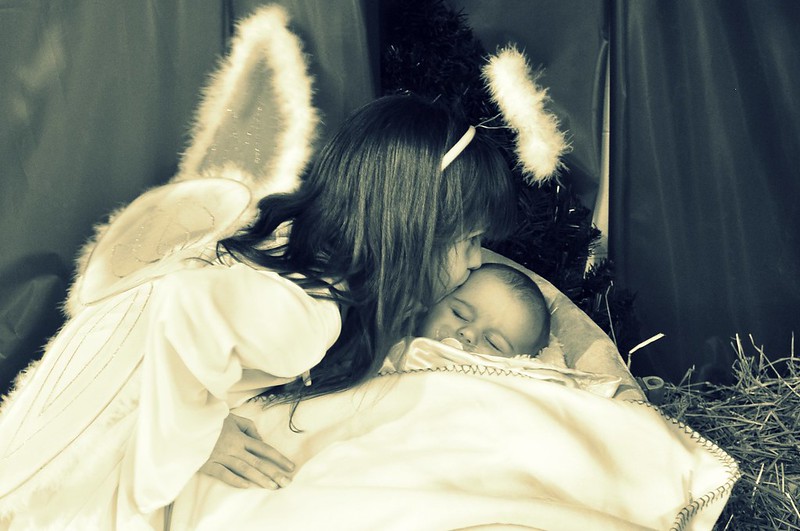
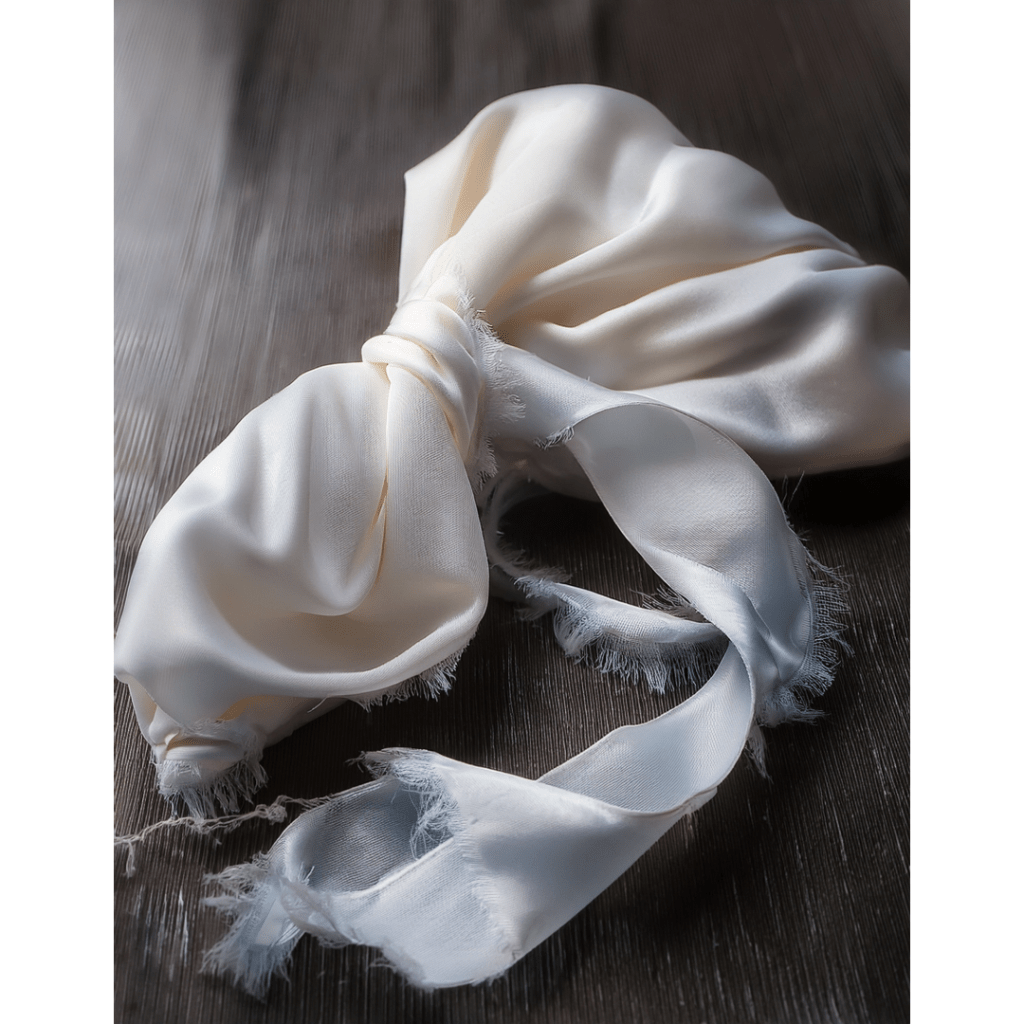
AI-generated image. Took a few tries to get this. Some of the results were haunting. But so is reality, sometimes.

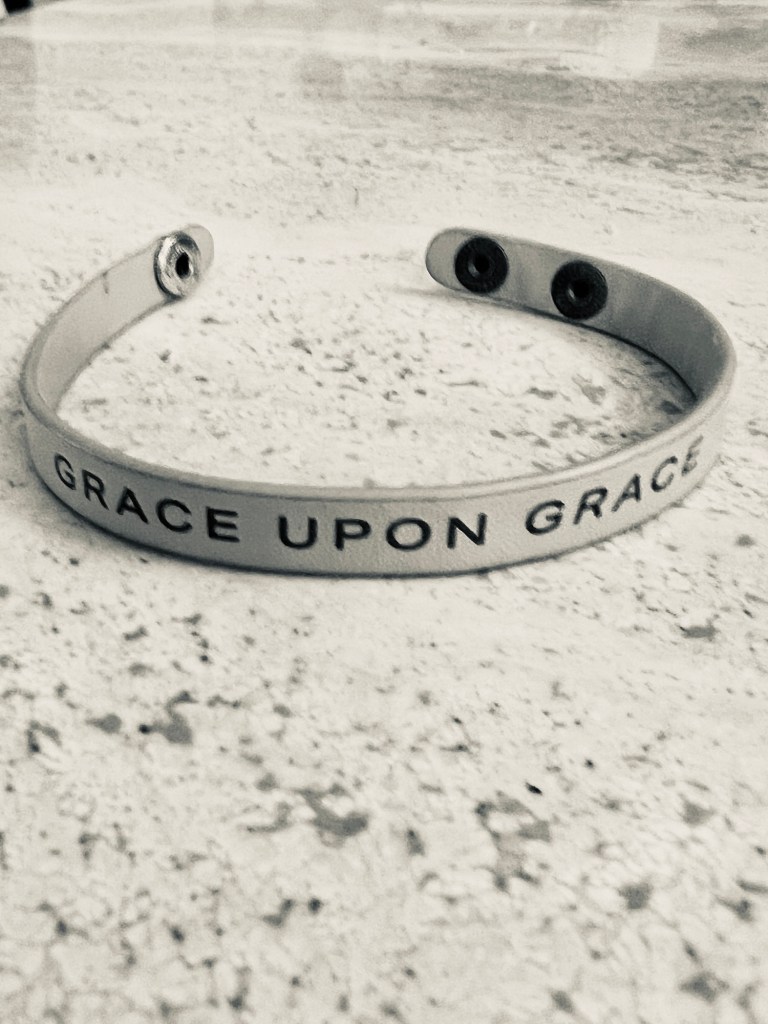
Grace upon grace

Yesterday Leilya Pitre opened the March Open Write over at Ethical ELA with an invitation to compose poetry inspired by the Ides of March.

The Roman calendar confuses me, with all the backward counting. An “ide” is one day before the middle day of the month. For March, that’s the 15th – yesterday’s date. Leilya gave several poetic form suggestions: villanelle, free verse, limerick. She prompted participants with a choice: 1) Write with “an air of inevitability and doom…mirroring the idea of a foretold fate,” or 2) “Write a poem that celebrates a moment of change or transformation, akin to the original meaning of the Ides of March as a day of transition in Roman history.”

A day of transition…hmmm.

Change.

What needs to change more than the human heart?

I confess to wanting to run for my life at the idea of writing a villanelle (see how much the very word looks like “villain”?). The form is deadly! And there’s only one Dylan Thomas. Nobody else can rage, rage at the dying of the light quite like him. And so I opted for free verse, my default form.

Crickets. Nothing. No ideas on ides.

And so I returned to the villanelle – drat it all! – with “an air of inevitablity and doom,” for sure.

But then: Two repeating lines came to me. I started a rhyme search. A villanelle takes a pile o’ rhyming words. Not all of them will work. One of my favorite images re-materialized in my head: the “golden rim.” Yes. Let us drink from the golden rim of the goblet…no, chalice. Yes. What are we drinking, and why? What’s the point? What does it mean?

Have you ever heard that what you need is there, right within your reach, if you just look?

In this case, what I needed was literally right there within reach: the bracelet on my wrist. You’ll see.

Here’s the poem. Still tinkering with it.

Gratiam pro gratia

As evening descends in shadows dim
Let’s toast to ceasefire of life’s fight:
Drink, my love, from the golden rim.

The face of the morrow will be less grim
—See, our ashen embers retain the light
As evening descends in shadows dim.

Toss off your cloak with fraying trim.
Kneel by me, pray, well we might—
Drink, my love, from the golden rim.

There sparkles yet a priceless gem
Within the pocket, glittering bright
As evening descends in shadows dim.

Hold my hand — let’s sing a hymn
Before we take our earthly flight.
Drink, my, love, from the golden rim.

Sweet chalice of life, abrim,
Despite this darkest night…
As evening descends in shadows dim,
Drink, my love, from the golden rim.

My poem’s title is Latin for the words on my bracelet. An excerpt of John 1:16: from the fullness of Christ, we have received “grace upon grace.” I wear it as a reminder to give grace, having received it in such abundance. I purchased the bracelet at a coffee shop called Charis (“Grace”) which has a wall plastered with customers’ prayers written on tiny slips. The owners donate a portion of proceeds to organizations that are working to make the world a better place. Our time here is short. Let us be about this work, in communion with one another, giving each other grace.

*******

with thanks to Two Writing Teachers for the March Slice of Life Story Challenge

Grace reflections: Spiritual Journey

My fellow Spiritual Journey writers post on the first Thursday of each month. Our host for September, Patricia Franz, offered these bursts of thought for reflection: Life at the speed of grace. Grace is my shorthand for God. How will Grace find you?

To me, grace, like love, is a many-splendored thing. It has many facets, casting fiery rainbow-sparks like a diamond ring.

When Patricia says It’s my shorthand for God, I remember discovering my aunt’s spiral-topped notebook when I was a child. The pages were covered in curious swirls and curls, an otherworldly language, impossible code. I was awed by the way my aunt, a civil-service secretary, could interpret these runes into words which would become an official letter typed on behalf of the U.S. military. To this day I cannot read or write shorthand. In this way, grace is code written in the offices of Heaven, authored by God, signed and sealed with His unfathomable, unconditional love. It is the language of love. To be a true recipient of grace is to be an authorized and expected giver of it, in turn.

But what IS grace, aside from aesthetics: clean lines, beauty of movement, a blessing over food before we partake? One dictionary definition says it’s the unmerited favor of God, something echoed over and over in the New Testament. My favorite grace-verse is probably Romans 5:8: God shows his love for us in that while we were still sinners, Christ died for us (ESV).

I have a bracelet that bears this paraphrase: I loved you at your darkest.

Grace.

In preparation for a lesson I recently taught at church, I arrived at another understanding of grace. In the same epistle to the Romans, the Apostle Paul writes: For by the grace given to me I say to everyone among you not to think of himself more highly than he ought to think, but to think with sober judgment, each according to the measure of faith that God has assigned (12:3). In this message to the Roman community of believers, Paul expounds on the characteristics that (should) set them apart from the rest of the world. That opening phrase is what catches my attention: For by the grace given to me…suddenly a portion of the code becomes clear. Grace is more than unmerited favor writ in the blood of unconditional love. Grace is a force for living. A sustainable fuel for powering us throughout all of our days.

I can never write about grace anymore without thinking of Eugene Peterson and his paraphrased reflection of Christ’s words in Matthew 11:29: Learn the unforced rhythms of grace.

Which of these word holds the most transformational power?

unforced

rhythms
grace

Learn.

For me, it’s learn. That is where I must begin. Grace begins with God. The unforced rhythms of grace are currents that have existed long before me and will continue long after me. Learn, as in learn to swim. Therein lies a unique freedom, being carried by that current and never being swept away by it. Grace seeps into one’s heart, becomes a beat in one’s blood, in one’s soul. A rhythm, a song, a dance. A unforced force for living.

Learn.

Of this, I will be forever a student. But all around me, every day there are reminders, endless grace-analogies making themselves known. During Hurricane Idalia last week, the hummingbirds never stopped coming to my window-feeders. The gusting wind and rain appeared to have no effect on these tiny creatures. Completely undeterred, the feisty hummers came for their nectar amid the storm, steady, straight, and sure, same as they do every day.

I have an entire bluebird family that appears, morning and evening, like clockwork, around their little log cabin birdhouse on the old grape arbor. When the birdhouse was on my dilapidated back deck the parents raised several broods in it. When I removed it for the deck to be torn down and rebuilt, the puzzled parents came searching for their home. It shattered my heart. I put the birdhouse on the arbor, not knowing what to expect. They found it immediately. The bluebird family followed it. They still lay claim to it, still operate from it. They are devout about it. I might add that there’s a little cross on the top of the birdhouse; my granddaughters call it the bird church. I might also add that it held during the hurricane…during several hurricanes, actually, including a few before it was moved.

I consider the makeshift birdbath my granddaughters and I built with an upturned trashcan lid and rocks. The solar-powered fountain kept spraying in the storm, even though there was no sun that I could see in the grayness…

For me, all of these echo unforced rhythms of grace.

Most every morning and afternoon since school has started again, on my drive to work, I’ve seen the great blue heron I love at its pond in the corner of picturesque little farm. I’d much rather be birdwatching and soaking up nature than playing around online, but I couldn’t resist a “what bird are you” quiz I came across online. I gave it a try. The results: You are a snowy egret.

That same morning, when passing the pond, I didn’t see the blue heron. Instead I saw a white egret in flight, reflected in the pond.

The very image of grace.

I am more amused than awed: If that egret represents me, I’d be the reflection of it. I cannot be the breathtaking, winged creature itself, skimming with perfect ease above the water. But somewhere in my being is an image of it.

And so it is with God, in whom all things connect, from whom all blessings flow.

Unforced rhythms of grace on the wing, in every breath, in the often-turbulent currents of life, a never-ending song, a ceaseless rising.

Funny how I’ve just now remembered a thing, during this writing: When my husband became a pastor many, many years ago, I was asked to sing my first solo at church. I was twenty-two. Scared and unsure, I tried my best. I fell dismally short of what I hoped for. But an elderly man, a woodcarver, made a gift for me to commemorate the occasion: a white egret on a little base. Underneath, he etched the title of the song: Amazing Grace.

Let me throw my wings wide
to rest in and ride
the currents,
O Lord.
Let me abide
in the depths of your grace
as a wanting but willing
conduit.

Snowy Egret reflection. Wendi Schneider.
Mask poem

The July Open Write on Ethical ELA begins today with host Mo Daley, who invites poets to “Consider the masks you or those around you might wear. Using a format of your choosing, write a poem about a mask or masks.”

My first thought in response, with masks being linked to ancient theatrical performances, was writing around Shakespeare’s “All the world’s a stage, and all the men and women merely players…”

But then a little creature appeared in my head and ran the rest of it away.

Which may be for the best…

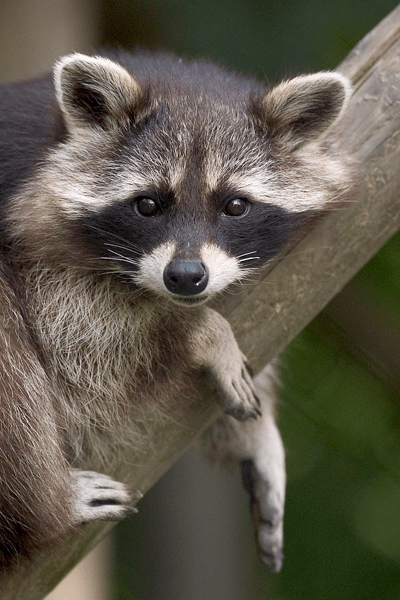
Mask Obscura

Raccoon was named
for the way it uses
its “hands”

rubbing and rinsing
its food
in water

not for the mask
forever typecasting Raccoon
as bandit-trickster
in human lore.

Unlike humans
these creatures know one another
by their individual masks

not donned as shields
or ritual
or protocol
or festivity
or theatrics
or deeds of darkness

but serving to
absorb light
in the night

to see

to survive.

Yet like humans
Raccoon covets shiny things

and can be trapped by them.

Hunters of yore
eventually learned
to cut holes in logs
to place a bit of tin inside
to hammer in nails
around the small circumference

knowing Raccoon
would be beguiled
would reach its hand inside
for the bright thing.

Once the fist is clenched
the creature will never let go
to set itself free…

in paradoxical symmetry
so does the creature
that named itself 
for its supreme intelligence.

Might it have been better named
for its own myriad masks
and motives, ever disguised?
Or for the hubris and folly
accounting for so much of its
own demise?

If only Raccoon
had the ability
to write,
there might be annals
of Ring-Tales
read aloud in the night
at a gathering deep in the forest
by crackling firelight:

To see or not to see*…
Lord, what ultimate Tricksters
these Homo sapiens be!
 
There in that circle, perhaps
with shivery spines
and whiskers a-tremble
they name us
not for our deeds or dominion
but for the way
we wash our hands.


*Note: The collective noun for raccoons is a gaze.

Procyon lotor (raccoon).jpgCC BY-SA 3.0.

Procyon lotor is derived from Latin for “washer”

Wall on the writing: a scrambled idiom poem

On the last day of Ethical ELA’s Open Write, host Denise Hill offered this invitation:

“Take a metaphor or idiom and reverse it or twist it up in any which way you choose – mumbo jumbo jam it!

Then write from the ‘sense’ the new phrase makes. It may be total nonsense. That’s perfectly fine! It may provide a ‘feeling’ or strike a memory chord or a fantasy chord with you in some way that inspires your poem today. Just go with it!”

Here is what came of my scrambling the writing on the wall

The Wall on the Writing

In prehistory
cave-dwellers
dipped their fingers
into animal fat
charcoal
their own earwax

then dirt and ash

to paint their stories
on the walls
by flickering torchlight

over time
many caves
collapsed

to be reabsorbed
by the earth

In the course 
of human migration
the region of the caves
became a fortified city
with iron gates
and great stone walls

one of which
was constructed
over the buried caves

It is said that at this wall
the great orators
gave their mighty speeches
humble petitioners
made their prayers
poets composed their epics
chroniclers penned histories
and storytellers
found their words

I do not know
if the wall 
or the legends
are real

but I do know
that when I
hit a writing block
that I cannot
go over
around
or through
if I dig
deep
deeper
deeper still
within

I will find
the words

just human DNA
finding its way
with story
waiting 
deep
deeper
deeper still
beneath the wall
on the writing

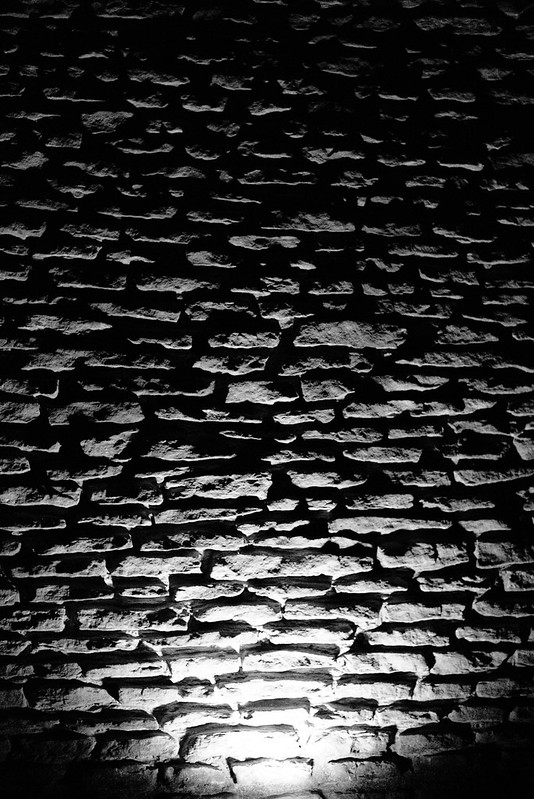
Stone Wall. jcubic. CC BY-SA 2.0.

with thanks to Denise Hill and the Ethical ELA Open Write community

and Two Writing Teachers for the monthlong Slice of Life Story Challenge

for story really is

in our DNA

I can’t be the only one poem

Today on Ethical ELA’s Open Write, Britt Decker shares a beloved C.S. Lewis quote: “Friendship is born at that moment when one person says to another, ‘What! You too? I thought I was the only one.’” She invites participants to share “quirky, unusual, uncommon things you do, believe, or say and turn the list into a poemstarting with the line ‘I can’t be the only one who’…”

To begin with: I have loved Lewis since I was ten years old and first landed in Narnia. I have a shelf of his books. When I read Britt’s words about Lewis, I echoed his own: “What! You, too?”

And so I keep that as my title…

What! You, Too?

I can’t be the only one who

would rather write than speak

drinks more black coffee than water

puts pepper on popcorn

is enchanted by abandoned houses
in various stages of falling down

left my Christmas tree up
until February this year
simply because it was beautiful
and looking at it
made me happy

barely dips in social media anymore

follows murder cases daily
for the latest developments

loves my Grandma name (Franna)
better than my actual given name

looks for hawks and herons
on my drive to work

grieves over the blue heron
not having been at a certain pond
in weeks
(please be all right)

savors the harsh rattling
of cicadas in summer
(heartsong
in the background orchestration
of my life)

senses the presence of my father
in the fragrance
of fresh-mown grass

thinks best and sees solutions
in the dark morning hours
before I’m fully awake

journals my dreams, to be awed
by the constant presence of birds
and the recurrence of
vivid green

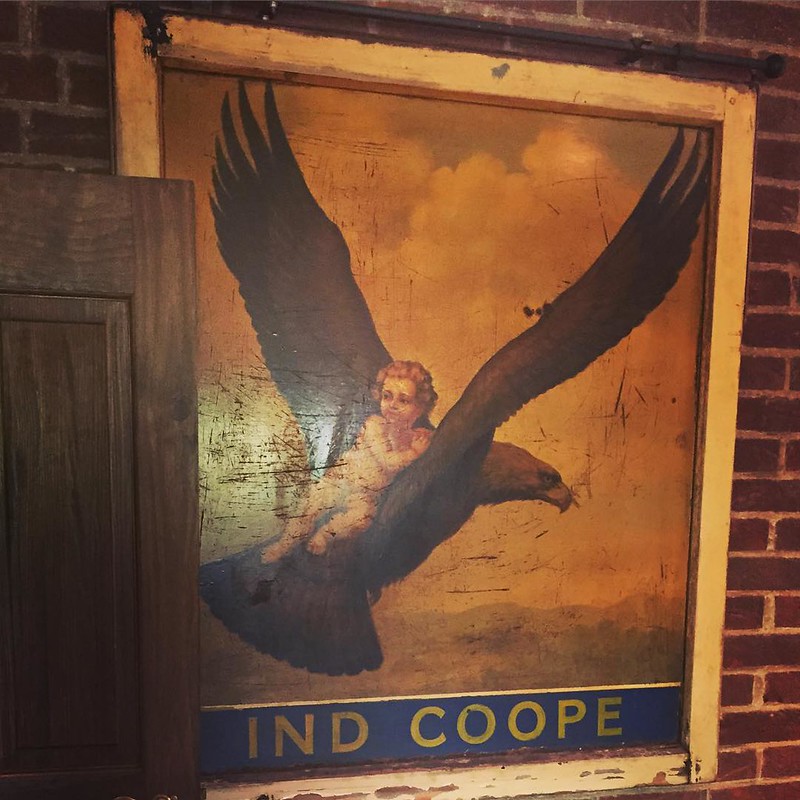
The original sign from The Eagle and Child (at CS Lewis’ home, The Kilns). #TXinUK. david_normanCC BY-NC-SA 2.0.

Tale-based poem: The Legend of Water Rabbit

Today on the Ethical ELA Open Write, poet Stacey Joy invited participants to read a few short folktales, fables, fairytales, myths, or legends to inspire a poem: “Your poem might be a response to, a retelling of, or a new version of the original piece.”

I wanted to work with a fable but the children’s tale that came to mind first was… well, maybe you will recognize itmy poem is meant to be something of a mythological sequeltribute.

The Legend of Water Rabbit

In the forest deep
upon a cushion of emerald moss
Water Rabbit sleeps

and dreams

of the Child.

In his dream
he cannot tell the Child
how much
he loves him

for to the Child,
the Rabbit isn’t real

and there is no language
for conjuring a bridge
across the chasm
of unbelief.

Water Rabbit twitches,
remembering

the nursery
the toys
the Wise Horse
who spoke of love

and longsuffering.

It was Fate that placed
the Rabbit in the arms
of the Child that night
when a favorite toy
was lost.

It was only for a season
that the Child embraced him
and carried stuffed Rabbit
everywhere he went…

Water Rabbit’s whiskers tremble
with dream-reliving.

He sighs.

Other rabbits nearby
cock their heads
and perk their long ears

for in a moment,
Water Rabbit begins
to whimper
and weep
and wail
in his sleep

—the dream
is all too real:
the Child’s fever,
the separation,
the command that
Rabbit and all the other toys
be burned.

It isn’t fire or fears
that brings Rabbit’s tears

but the thought
of never being
with the Child again.

Wake up! Wake up!
The colony surrounds
Water Rabbit,
dozens of their small front feet
against his shimmery fur,
shaking, shaking him

into reality.

Water Rabbit gazes at them
through his tears
from his emerald-moss bed

and asks…Is it time?
 
The colony nods in unison.

Water Rabbit rises
wiping tear tracks
from his velvety face.

The colony parts
Water Rabbit
makes his way through…

he hops and hops with 
boundless energy until
he reaches the clearing 

where the Child
bigger now
(for he’s bigger every Spring)

sits on the blanket
spread over the grass
with a picnic feast 
made ready.

Into the Child’s arms
leaps the Rabbit. 

There are no words
for there is no language
that can capture
love so great
and eternal
and real

as real as the solitary tear
of a toy Rabbit
about to be burned
for the sake of the Child.

For it was that teardrop
the inevitable price
of love
and sacrifice
that brought life,
transformation,
salvation.

That is how
Water Rabbit
came to be.

*******
-with thanks and apologies to Margery Williams and The Velveteen Rabbit.

2023 is the Chinese Year of the Rabbit.

More specifically, the Year of the Water Rabbit.

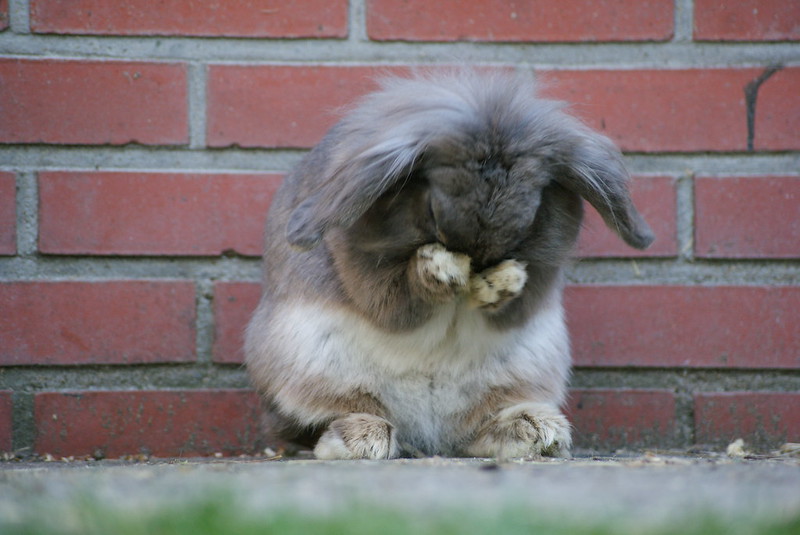
You make vita cry!jpockele. CC BY 2.0.

A bit of light

Today on Ethical ELA I encountered a poetic form new to me: the lantern. My understanding is that it is a five-line Japanese shape poem beginning with a one-syllable noun followed by successive lines of nouns containing two, three, and four syllables, ending with another one-syllable noun, all connected to and building on the first word.

I was immediately captivated and had to give it a try.

It is challenging.

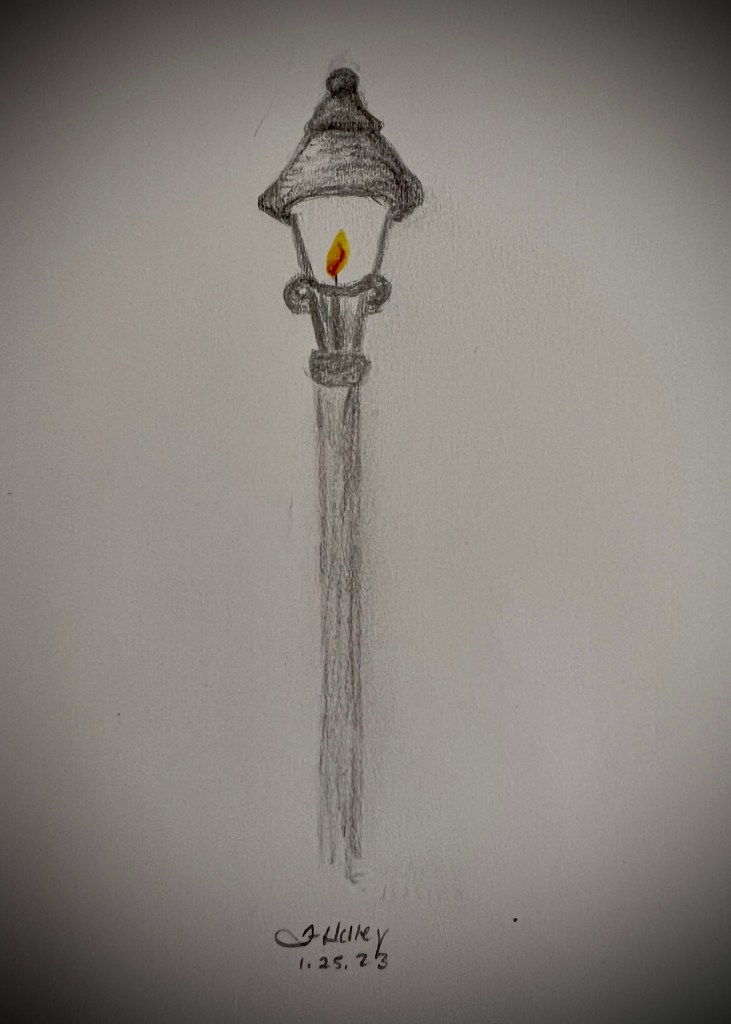
In my mind the lantern image morphed into a lamppost, a symbol with much personal meaning. Like the indelible image in Narnia, a lamppost marks the way home for me: one stood in front of the house where I grew up. Whenever I was out at night and turned the last corner, I’d see the light of that lamppost.

I went with the image. I kept the syllable count but gave up on sticking with just nouns. I could write a lengthy essay about all the other meanings the lamppost holds for me, but this is poetry; interpretation belongs to the reader. 

It is dark and dreary in my neck of the woods today, pouring rain… perhaps that’s another reason the lamppost remained.

I needed a bit of light.

To the Lamppost

Your
good light
still guides me
home through darkest
night

Skitterings

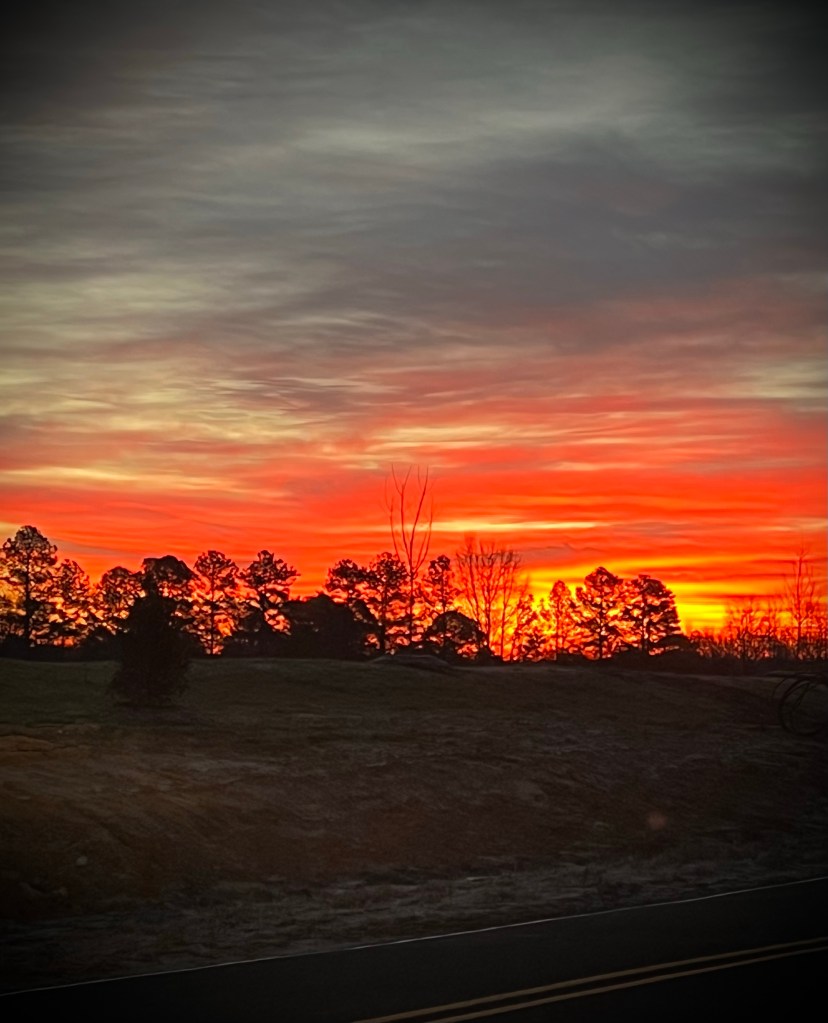
Winter morning, below freezing, ground covered with thick layer of frost like unto snow. Oyster-gray sky streaked with clouds aflame with sunrise. Breathtaking colors. I drive to work, looking for magisterial hawks perched on power lines. None to be seen. At the corner where the patch of woods has been cleared, old tobacco barns are melting into the stubble, overlaid with a thin veneer of crystal. So beautiful, I say aloud. Something pure remains in the devastation. I cannot think of what. I drive on, pondering destruction and human hunger for it.

In the new rose-light little birds skitter up from the wood-edged fields. What type of birds they are, I cannot determine, just upward movement and wings. A strange line plays in my head: This day your life will be required of you. I suppose it’s born of constant murder in the news and too much reading, this very morning the strange coincidence of Diana, Princess of Wales, attending the funeral of Princess Grace of Monaco, who died from injuries sustained in a car crash. Did the struggling Diana sense any foreshadowing?

Why am I even thinking of these things during such a glorious dawn?

A shape swoops from the right, directly in the path of my car…surely a bird. I hear no thunk. I see no skittering escape in my rearview mirror.

The bird—if in fact it was—must be caught in the grille of my car. This happened once, long ago, when I was driving a different vehicle: I discovered a dead cardinal hanging partway under the car. Why, why do they fly so low?

I will have to stop and check. There’s nowhere to pull over on these winding backroads frequented by too-fast drivers and farm equipment.

There’s a tiny church tucked in the woods up ahead, past the intersection. Steep driveway, deserted area, but I have to get out and look.

Nothing ensnared on the wide chrome grille of my old car. Beneath the grille, however, are unscreened compartments and there, on the dark, recessed shelf, is a bird.

Alive and moving around. Gray, orange, and cloud-white, like the morning.

Oh, bird.

I take off my heavy black cardigan, wrap it around my hands, and reach in.

Gently, gently… then a soft, warm weight is in my sweatered hands. I make sure to cover its wings to avoid panicked and possibly injurious flapping. Its head is gray. Small gray beak opens and closes without a sound. Its eye, turned toward me, has a faint purplish hue, slightly reminiscent of my pet parakeet when I was six. The gray back and pale-orange coloring on the breast had me thinking robin, but now I can see it’s not. I don’t know what kind of bird this is.

Oh, little bird. I am sorry. As if my speaking will help, somehow.

I cannot stand here gawking at it. The creature has survived the trauma of my car; I don’t want it to die from terror of me.

I think of being in the hands of God.

Please don’t let it die, I pray. Is this a selfish prayer? I don’t know how badly the bird is damaged.

And what am I going to do with it now.

The woods…I skim for a sheltered spot. I step in the leaves and a sudden sound startles me: a rabbit goes skittering away, its big white cottontail bobbing against the sepia scenery. I had no idea it was there. What else is here that I cannot see—? I am shivering. I find a small ridge of leaves and pine straw by a bit of barren brush and there I lay the bird.

The bird turns itself from side to breast, facedown. There’s a bit of white edging on its tail feathers. I wish for to something cover it. The morning is so cold. My sweater might entangle its legs; scraping pine straw over it might alarm it.

I will go. I will not stay to see the outcome. It will recover, or it won’t. I recall the woodpecker that flew smack into the glass wall of the school where I work; it landed on its back in the flowerbed mulch and lay so still I was sure its neck was broken. Within a moment, it managed to flip itself right side up, ruffled its feathers, and flew off—zip!—as if nothing had happened. The robin I extricated from the grille of my sister-in-law’s car, having traveled miles down the interstate at 70+ mph, hopped around my backyard for a day before it flew away. Birds are hardier than they look…at least robins and woodpeckers are.

Still.

Should this pretty little bird die or recoup…it will be in its own natural setting.

In the hands of God. Not a sparrow will fall to the ground apart from the Father...

It is hard, yes, to leave it there and walk away. But I have done so before. With people whom I loved very much.

It is Yours.

Back in the car, I circle the tiny church named for St. John, heading on toward crystal-coated fields and misty-mirror ponds and the work that lies ahead. The little bird will never know that I will remember it, that it’s now part of me, stuck to my soul as long as I live. I know it and that is enough on this cold, fiery-sky morning, orange and gray, breathtaking glory tinged with, but not diminished by, loss.

“If I take the wings of the morning and dwell in the uttermost part of the sea, even there your hand shall lead me, and your right hand shall hold me.”Psalm 139:9-10 (my favorite of the Psalms). This is the view leaving my neighborhood.

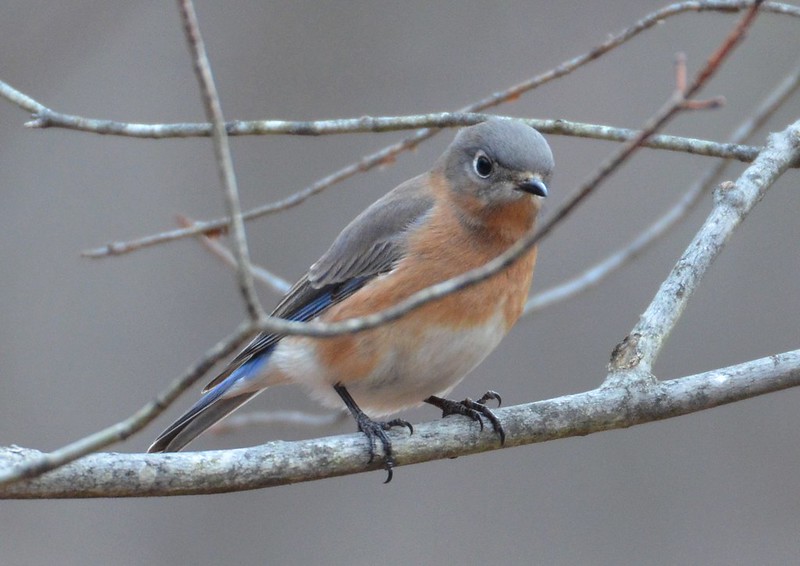
As best I can determine: My unexpected passenger was a female eastern bluebird.

DSC_3019e eastern bluebird–female. jjjj56cpCC BY-NC-SA 2.0.

*UPDATE, May 2023:

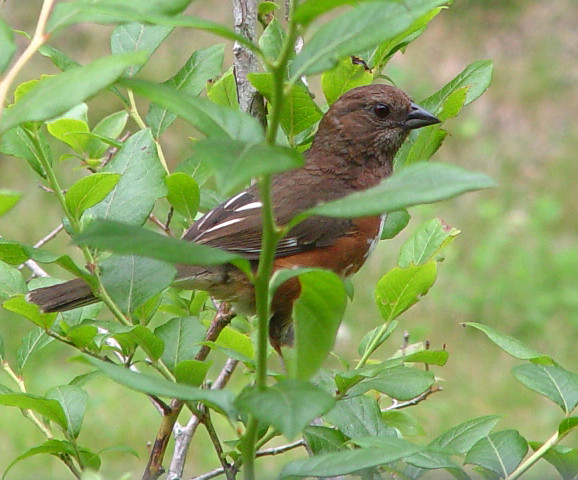
I’ve used the Picture Bird ID app to identify my mystery bird as a female Eastern Towhee.

Eastern Towhee.