And then there were more

Dear House Finches With The Nest Atop The Magnolia Wreath On My Front Door:

I wondered why you’ve been lingering so long.

The four babies you hatched at Easter surely took to the wild blue yonder weeks ago.

I haven’t checked the nest because I feared your fledglings might be reluctant to go; after all, there’s no place like home… not to mention that in a previous season I think I may have accidentally force-fledged babies who could fly but were still cramming themselves into the nest. They gave me quite a turn, flying out that day when I came to investigate. So little. I worried if they were really ready to make it on their own. It would be my fault if they were not…

So, Finches, I have left you to come and go as you please, without interference, and I confess that the whole reason is purely selfish: your music. I savor your beautiful song. So bright and pure…sunlight is woven through it even on the dreariest day. Your song gets under a corner of my sometimes-heavy spirit and lifts it, floods it with peace and a longing I cannot quite explain. I know the day is coming when you won’t be gracing my porch any more and then I will be bereft of these joyful little interludes… so I haven’t questioned your lingering. I’ve only treasured my extended finch fantasia with a grateful heart.

Yesterday my husband asked: “Can’t we use the front door now? Those babies are gone, right?”

Bless him for his great patience with my bird sanctuary. He is a minister, after all…

I said, “Probably. Let me go check the nest to be sure.”

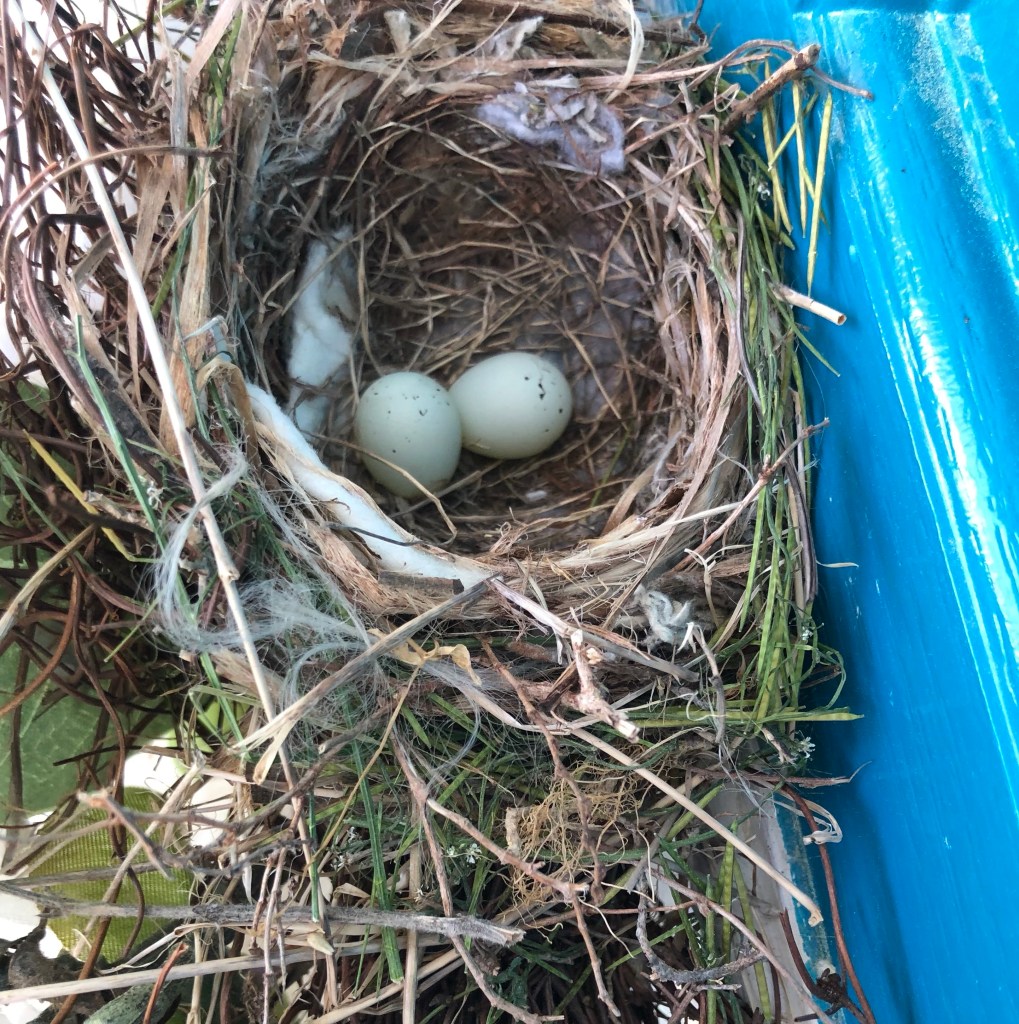
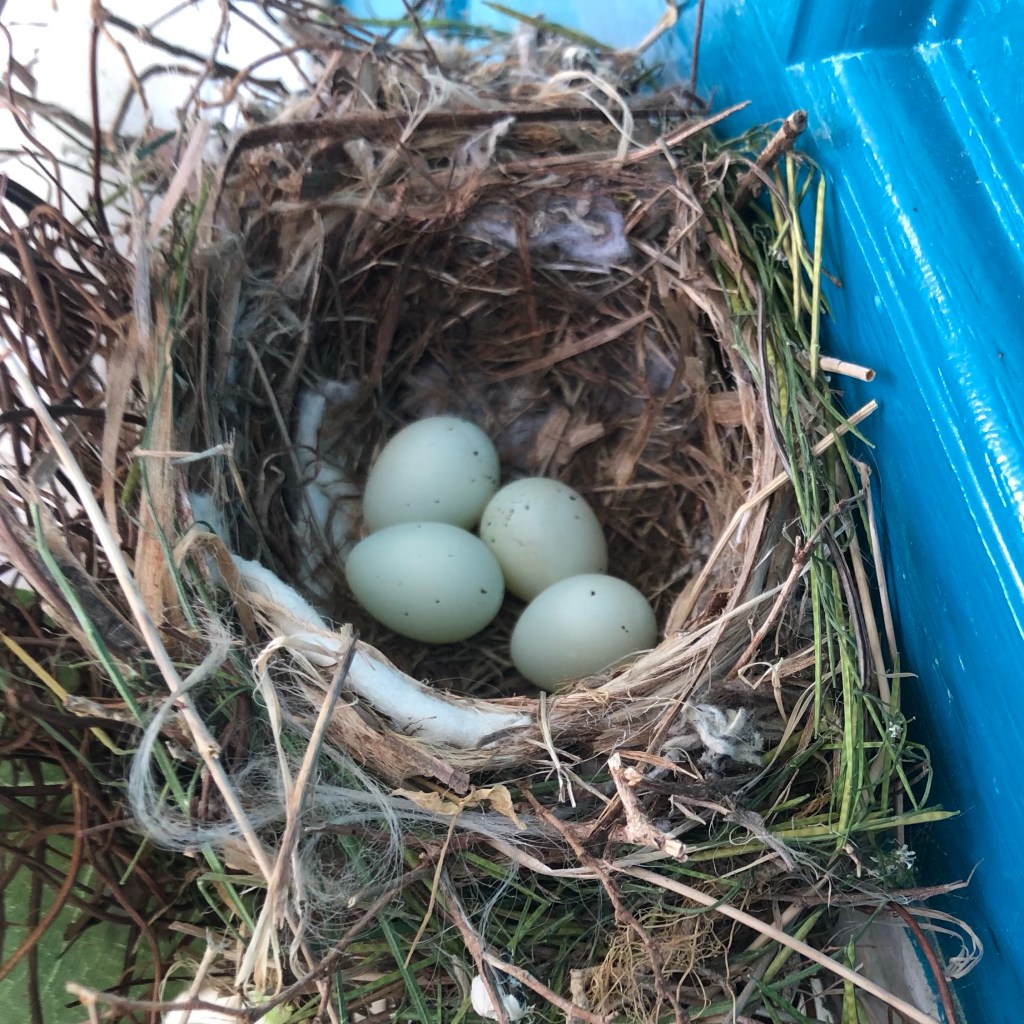
And then.

Then then then.

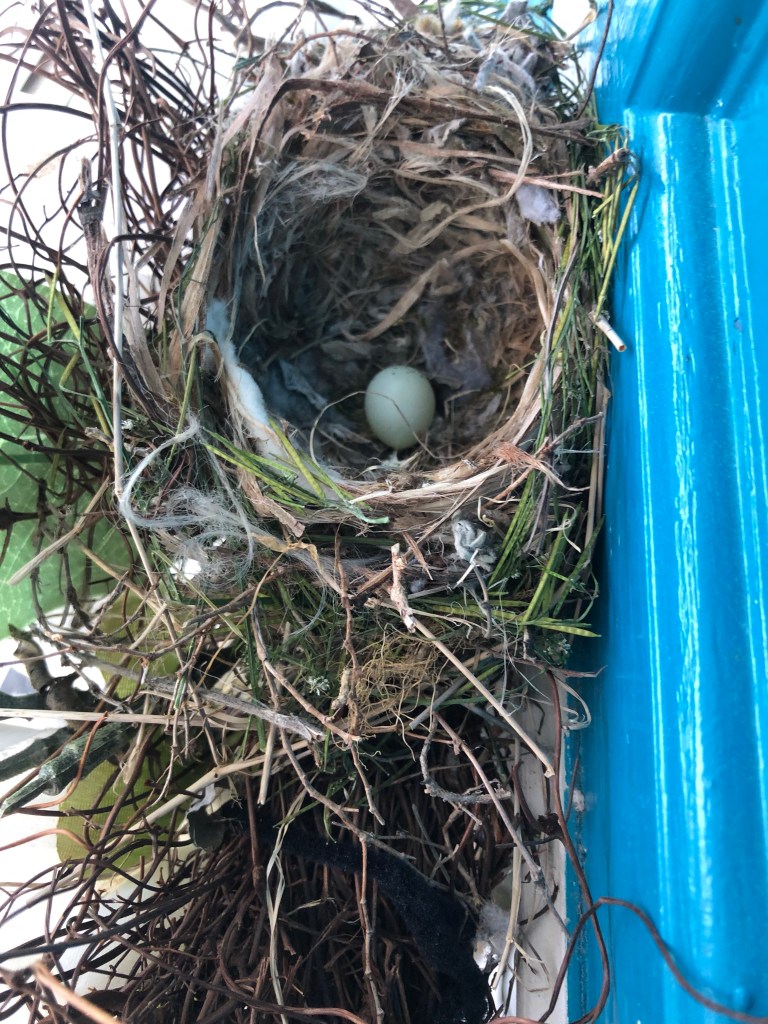
Oh, it’s going be a while yet before we can open the door.

Now I know what you’ve been up to, my beloved Finches.

Encore.
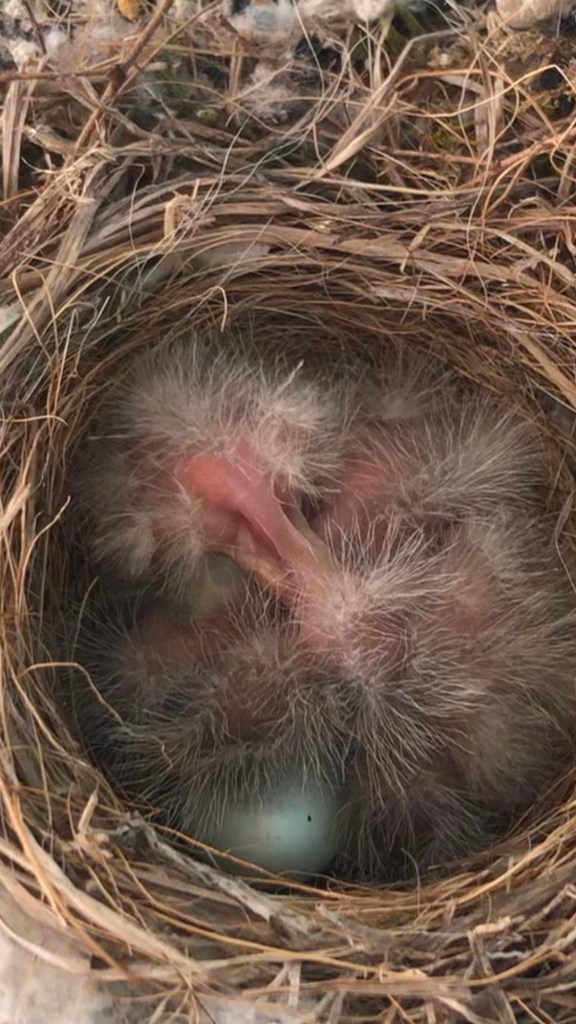
Finch fantasia

fantasia
noun

Music.

1. a composition in fanciful or irregular form or style.
2. a potpourri of well-known airs arranged with interludes and florid embellishments.

—Dictionary.com

They’re still here,
the finches
with the nest
in the magnolia wreath
on my front door

four weeks after
their Easter-egg hatching
I feel certain
these babies can fly

yet they linger
every little singer
adding its glory
to each new day

how I wish
this gold
could stay

Short recording of the finch fantasia

Essence experiment

My kindred-spirit-blogger-teacher-writer friend Lainie Levin had a fun post this week on a favorite exercise with young student writers: playing with suffixes added to your name, then coming up with a definition of the essence of you. Lainie calls this “nounifying yourself.” Here’s her suggested suffix list:

-itude
-ness
-ility
-age
-dom

-ity
-ship
-sion
-ance/ence

-al
-ation
-iety
-ment

Naturally I had to accept her invitation to compose (read more about her process and see fun student examples in her lively post, Word Play – thank you for this, Lainie!)

Frandom

The quality of maintaining a quiet inner realm despite the world’s clamor, where one’s thoughts are free to be one’s own; typically achieved through experiences with reading, writing, nature, and awe.

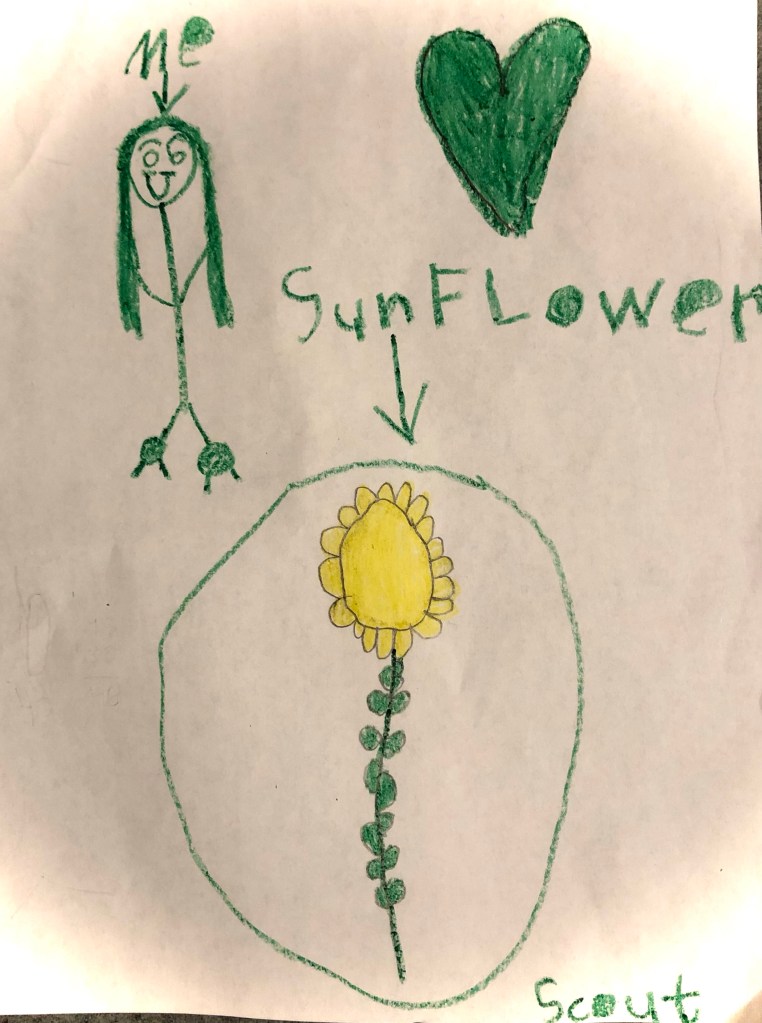
A drawing of me by my granddaughter last year: Franna in her Frandom?

Easter exultation

In honor of the day, an excerpt of “Jesus Makes Sin Forgivable” by Anne Graham Lotz in Just Give Me Jesus (2000):

The Pharisees couldn’t stand Him
but found they couldn’t stop Him
Satan tried to tempt Him
but found he couldn’t trip Him
Pilate examined Him on trial
but found he couldn’t fault Him
The Romans crucified Him
but found they couldn’t take His life
Death couldn’t handle Him
and the grave couldn’t hold Him.

*******

And a happy Easter haiku for you:

I have no more eggs.
As of this morning, new life.
Dawn exultation.

Gogyohka poem (on joy)

For VerseLove today at Ethical ELA, Stacey L. Joy introduces the Gogyohka form. Stacey writes: “The Gogyohka is a form of verse developed by poet Enta Kusakabe in 1957. The idea behind the Gogyohka was to take the traditional form of Tanka poetry (which is written in five lines with 5-7-5-7-7 syllable counts) and liberate its structure, creating a freer form of verse. In the 1990s, Kusakabe began his efforts to spread Gogyohka as a new movement in poetry, and there are now around half a million people writing this form of verse in Japan.” Stacey invites teacher-poets to write a five-line free form poem on joy or liberation, or as many Gogyohka poems as we want.

As I pondered the many things that bring me joy and a sense of liberation, the song “Ode to Joy” came to mind. I went with it. The song title and the last verse comprise the last lines of each Gogyohka:

Call to Joy and Liberation

Listen
it is there
in feathered new-morning stirrings
before the sun’s rising
ode to joy

Believe
it is there
the golden key of redemption turning
in the locked human heart
ever singing, march we onward
 
Look
it is there
illuminating the faces of generations
clasping their grandchildren
victors in the midst of strife
 
Dig
it is still there
the uninhibited dance of childhood
a wellspring pure and free as birdsong
joyful music leads us sunward
 
Create
and it is there
a record of your existence
your own vital contribution 
in the triumph song of life

Joy

Eggsultation

-The continuing saga of Little Blue Egg

Dear Little Blue Egg,

In all the generations of finches
hatched in wreaths on my front door
I have never known
a mother to lay just one egg
and leave

but that is what your mother did
last Sunday.

Here you’ve been ever since
resting in your nest,
forlorn in the freezing cold

day after day after day

one blue egg
one blue door
one long blue silence
one blue human
(that would be me, Franna,
sad self-appointed custodian
checking on you every morning)

until Friday

when, out of the blue,
there were TWO
of you!

On Saturday, three!

On Sunday, no more…
although I heard
the most beautiful singing
at my door

then on Monday… FOUR.

Little Blue Eggs galore.

I do not know
where your parents were
during those five days
of your cold blue lonesomeness
or how your mother could withhold
her charming clutch
for so long

but I know this thing:
your father and mother sing
every morning
like tiny angels
in eggsultation

and so
do I.

Little Blue Egg gets a sibling five days later

A quartet of Little Blue Eggs… joy!

A short clip of the parents’ music… it echoes throughout the house.
No wonder that finches symbolize joy or that their collective noun is a “charm.”

Some sources say only males sing; others say females sing in spring.
Listening to their bright morningsong, I am reminded
of these lyrics from O Come, All Ye Faithful:
Sing, choirs of angels,
sing in exultation…

*******

with thanks to Two Writing Teachers for the Tuesday Slice of Life Story Challenge

note:
the letter to Little Blue Egg (alone no more!) is an epistolary poem
for Day Five of National Poetry Month


Sunflower acrostic

Happy National Poetry Month!

At Ethical ELA, Bryan Ripley Crandall kicks off VerseLove by inviting teacher-poets to compose acrostics: “Think of your  person, place, or phrase. Lay the letters onto the page as if fallen leaves. Game-on. Write as if you are ‘gifting’ to another, and use each letter to craft an original poem.”

I love acrostics and have long believed this ancient form is underused.

As I pondered a topic, I went to the refrigerator door to start breakfast, and there it was:

The Drawing My Granddaughter Made During a “Sleepover”

Six years old, blissfully
Unaware that it’s the emblem of a 
Nation being invaded, she announces:
Franna, I am making this for you.
Love crayoned on the paper as
Our own special symbol.
When night falls, we put on our pink pajamas
Emblazoned with these light-seeking faces
Radiating joy of now, promise for tomorrow.

She texts me in the evenings sometimes to be sure I am wearing my sunflower pajamas

Dear Little Blue Egg

I still do not know where your parents are at present.

I am just your surrogate human grandmother figure who lives behind the blue door where you lie resting in your beautiful downy nest in the magnolia wreath.

Quite alone since your Sunday debut.

Three days now.

You ought to have had at least couple of sibling eggs, but…

Here is what I have learned, since learning is the only thing I can do in this situation of waiting to see how Nature acts on your behalf:

  1. Sometimes a mother bird’s egg-laying gets interrupted. Your mother may resume. I haven’t known this to happen before with our house finch families, but let’s not dwell on that right now.
  2. Sometimes a mother finch lays just one egg. Again, I haven’t known this to happen before, but… maybe you’re all she has. Which means you are very precious, indeed.
  3. Sometimes a mother finch will lay eggs and wait for some time before returning to incubate them, as a means of diverting attention from the nest. It’s a ploy to keep you safe. I could have sworn I heard your parents chatting at the nest late yesterday afternoon. I so expected another egg…
  4. Because a mother may wait a rather long time to return, overly interested humans (ahem) should wait a month (a MONTH!) before assuming a nest and egg are abandoned. There is hope for you yet, Little Blue Egg…

Meanwhile, I’ve done all I can for my front porch bird sanctuary… or should I say egg sanctuary? As always, I put up a sign warning visitors of your nest with instructions to use another door. My family knows to leave the front door bolted (just in case, I put a reminder sign inside: STOP! -birds-).

Meanwhile, with temperatures dipping into the twenties overnight, I cannot help thinking about your cold blue lonesomeness. I am making myself take heart that there can be a pretty good span of time before incubation begins…that you still have a window for survival…

Meanwhile, there are PLENTY of other things with which to concern myself. In the whole of the universe, you are but one little blue egg; yet your tiny solitary presence affects me. Maybe it has something to do with all the work your parents put into creating this beautiful nest and the expense of egg production is to your mother. Very costly, that. Should you, her current one and only, not hatch…it seems, in the scheme of things, a grievous loss.

Granted, grievous losses happen in the world every single day, and my species is not the best (by far) at fathoming (or preventing) them.

For the record: I love birds. Something about you gives wings to something in my soul. House finch songs are particularly joyful; indeed, you’re a bona fide omen of joy (I looked it up long ago). Early in the morning, doxology of joy; in the blue hour, evensong of joy.

This present silence, dear Little Blue Egg, feels immense.

Know that I am pulling for you while watching from a distance.

Your hopeful resident human-guardian-grandmother,
Franna

*******

with thanks to Two Writing Teachers for the Slice of Life Story Challenge every day in the month of March