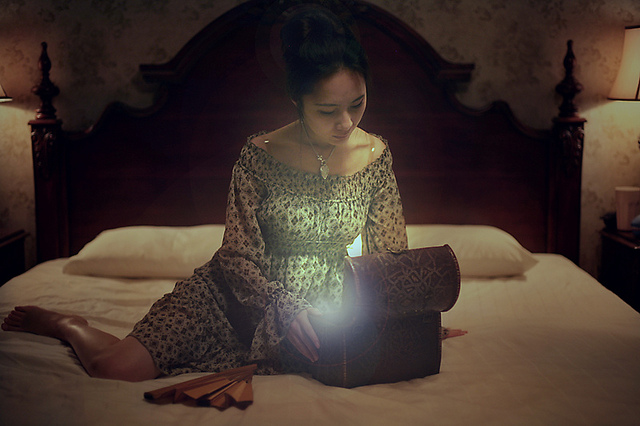
Memory box

Memory box

Memory Box. AntaraCC BY

This weekend I caught a bit of an interview with Jon O. Newman, a senior judge of the U.S. Court of Appeals for the Second Circuit. Judge Newman has written a memoir entitled Benched. The subtitle is rather epic, something you should experience on your own . . .

What caught my attention, however, was the Judge’s statement that “everyone should write memoir, for your children, your grandchildren.” He went onto say how valuable a person’s memories are to the successive generations, especially for the unique knowledge they impart.

These statements were both invigorating and validating to me for a number of reasons.

First: I’ve been writing a good bit of memoir here on Lit Bits & Pieces. It may well be my favorite thing to write. When I am composing a piece, it’s almost like I have “street view” of moments and people as they were long ago; I can see it all from so many angles, from within and beyond my childhood self.  Judge Newman said, “The more you write, the more detail you will remember.” It’s astonishing, really, the little things I begin to recall, one after the other, once I start writing. The images return in startling clarity. I write in scenes, small moments. I tell writing teachers that memoir is really small moments on steroids, all pumped up and full of meaning.

Secondly: I write these pieces of memory because they hover so vividly, begging a landing place, and because I truly love the time-travel. They’re meaningful to me, so I try to preserve them as best I can. What’s astonishing is the response I sometimes get from a  reader; I never anticipated such deep chords would be struck. It leaves me, every time, in wordless awe at the power, the “magic,” of writing.

Lastly, having watched my mother-in-law and grandmother suffer the ravages of dementia — and the loss of their dignity — I write to celebrate the human brain at its most glorious, the triumph of the human heart over its darkest moments, the joy and the story of lives well-lived.

In this way, my blog serves as a memory box for me, homage to those who’ve gone before, and perhaps a gift to those who come after. As the photographer of the beautiful image at the top of this post wrote: We should save part of our memories in a box . . . we may need it later . . . 

Tonight I celebrate memory. My own and the bright fragments given to me by those I loved — those I still love, for in truth, when I write, they are ever so near.

Fresh-cut grass

Grass

Grass. montillon.aCC BY

As daylight hours grow longer, spring stretching toward summer, the hum of a lawnmower is ever-present in my little neighborhood.

Yesterday my younger son mowed our lawn. When I arrived home after work, there stood Banjo, our yellow Lab, with his front paws on the wooden gate leading to the backyard, barking his welcome. As I walked from the car to pet him, the clean, green fragrance of fresh-cut grass also rose to meet me.

It’s the smell of home, of childhood, of long ago.

I closed my eyes against the waning afternoon light. In the cool of the day, for a second, I was there, in another neighborhood, another yard.

My father was so proud of the corner lot he bought in the summer before I started school. This was our first house. Up until then our family had lived in apartments. At the time, having two bathrooms (really a bath and a half – my sister and I dubbed them The Big Bathroom and The Little Bathroom) seemed a great luxury.

By the front steps to the left of the sidewalk stood the black lamppost. Beyond this, the yard sloped toward a chestnut tree and the ditch, which entered our yard from under the street and joined the backyards of all the houses on the block. When I wanted to visit my friends, I took the shortcut, running alongside the ditch. (This ditch sometimes caused flooding, which is  another story starring my dad: The secret gates.)

A maple tree stood on the right side of the front yard. My mother’s gardenia bushes and forsythia comprised a small hedge near the front steps, and at the right corner my father eventually planted a camellia bush, brought from his own childhood home.

My father kept our lawn immaculate.

He did it for years with a push mower. I wonder now if he ever rued having that corner lot with so much grass to cut, especially in the summer when his fair face grew florid from the sun and heat. He wore a towel around the back of his neck to wipe away the sweat.

I played outside a lot as a child; the scent of grass wafted through many games and adventures with my sister, the neighborhood kids, the dogs.

I can’t remember the first time the fragrance brought a pang. It just hit me one day: I stopped, inhaled.

Fresh-cut grass.

Daddy. 

For a split second, I was a child again, standing in the front yard in the cool of the day, glimpsing the streets, feeling the hum of everyday life, lazy afternoons, leaves on the maple tree stirring.

The sense of order, continuity, stability behind it all is my father.

All present and real in that clean, green smell.

Our last phone conversation was about his cutting the grass. He had a riding lawnmower by then:

“My chest is sore. I think it’s from turning the wheel on the mower. I probably shouldn’t have gone over the yard twice.”

“Why do you need to do it twice, Daddy?”

“Well, I don’t need to do it twice. I like to cut it in one direction and then the other. It makes a pattern. Looks so nice.”

“Has that made you sore like this before?” 

“Not really. I overdid it this time.”

“When do you go back to your heart doctor?”

“I don’t go to him any more. Once you’re healed they see you for a while but then they release you. I only see a regular doctor when it’s time for check-ups.”

I don’t like the sound of this. He’s been mowing his lawn forever and hasn’t been sore. It could be overexerted muscles, but . . . 

“Daddy, you should go back to the cardiologist. Just in case.”

He didn’t make the appointment. His mind was on getting through his last week of work and retiring after nearly forty-one years as a security guard at the shipyard.

Four days later, on a bright, early-fall morning, he walked across his prized lawn for the last time. He was in uniform, going to work. He had three more working days to go.

The neighbor across the street happened to look through her window and saw him lying beside his car.

It was his heart, of course. It just blew, six years after his first attack and bypass surgery.

He died there by the green, green grass of home.

That’s a damned sad song, he once told me, shaking his head. “The Green, Green Grass of Home.” That and “Danny Boy.” When I was stationed in Las Vegas, at the nightclubs somebody always asked for “Danny Boy.” Why do people like songs about dying? Why not ask for something cheerful, for God’s sake?

Something cheerful.

It’s not a song, Daddy, just a blog post about fresh-cut grass, but there’s cheer in it, because the grass, though cut, always heals itself and grows again, and you are always present in that sweet scent, and I am a child without a care in the world, only I don’t realize it yet.

I do now.

Thank you for everything. I owe you much.

Love you.

* * * * *
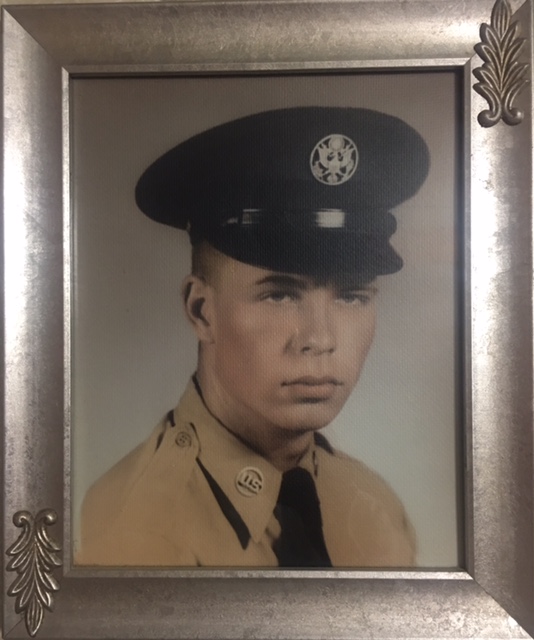
Daddy - USAF

Daddy served in the United States Air Force before I was born. Memorial Day seems to be a fitting time to honor him. Although his service to his country was long past, he was nevertheless in uniform and on his way to perform his duty when he died – one of the most dutiful men I’ve ever known. He was also a storyteller. With Daddy, stories occasionally became epics, as he liked to talk and frequently got in trouble for that in school, according to my grandmother. I owe my love of story in large part to them. Here are two favorite stories of mine derived from theirs, featuring all of us:  Born and Baby’s breath.
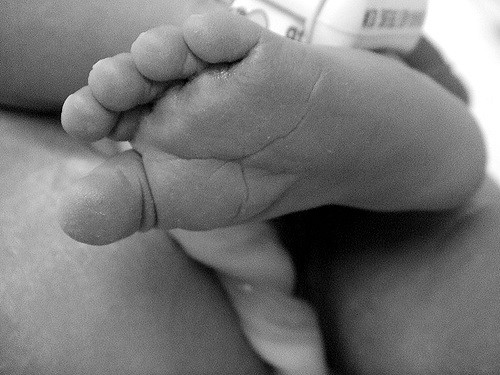
Born

“They said it would be a while,” announced the young man, as he came through the apartment door. “I gave the nurses your number – I figured I could wait here just as good as at the hospital, since it’s so close.”

“Yes, that’s true!” beamed his mother, closing the door behind him. “I’m so glad you came!”

The young man’s father nodded from the table. “You’re just in time for strawberry shortcake. Come have a bite.”

The young man seated himself at the table while his mother dished up another serving of shortcake topped with freshly-whipped cream. He’d hardly tasted it when the telephone rang. He froze – it couldn’t be the hospital, could it? 

His mother darted to the phone: “Hello? Yes … yes he is.”

She held the receiver out to him.

Was something wrong? Despite the juicy strawberries, his mouth was dry as he took the phone.

“Congratulations!” said the chipper nurse on the other end. “You have a daughter! Mother and baby are doing fine.”

He managed to thank the nurse. He hung up and looked into the rapt blue eyes of his parents.

“It’s a girl,” he said, blinking. “She’s already here!”

His mother hugged him. She began to cry.

In a flurry, they gathered the dishes and set them in the sink. His mother took off her apron and grabbed her pocketbook. His father put on his black cap, and the three of them fairly scrambled out of the kitchen door and down the back stairs.

His mother-in-law and sister-in-law were standing at the nursery window when the young man arrived with his parents in tow. 

Said his sister-in-law: “It’s a girl – finally!” She sounded almost wistful, having no children of her own.

Turning to hug the young man, his mother-in-law said: “Looka there – a granddaughter, after five grandsons! I thought this baby might come fast. All of my mine did.”

“Mine did, too,” said the young man’s mother, dabbing her eyes with a tissue.

The mother-in-law took her by the arm.”Come up close and see your first grandbaby.” And she stepped back to let the new grandmother near the nursery window.

“Ohhhh,” whispered the young man’s mother, gazing through the glass. “She looks just like a little angel.” Tears streamed down her cheeks, unabated. 

Her son, the brand-new father, peered through the glass beside her, frowning. He hadn’t known exactly what to expect, but one thing was for sure – the newborn wasn’t pretty. “Good Lord. She looks just like Daddy.” 

Everyone laughed at that. It was true – the wrinkly, ruddy newborn had hardly any hair and looked like a little old man – indeed the image of her granddaddy, who beheld her silently, smiling, his heart bursting with pride. He thought of the twenty silver dollars he’d collected  for his first grandchild. One day when this baby was old enough, he’d give them to her.

The in-laws congratulated each other on one side of the glass as the baby slept soundly on the other, while somewhere in the bowels of the hospital, the baby’s mother wanted to know when she was getting some supper, since the baby’s arrival had preempted it.

Thus was I born, that long-ago evening in May, strawberry season, in the city, when fathers were relegated to waiting rooms instead of witnessing and participating in births, before Cool Whip was even invented – alas.

As the day rolls around yet again, with every celebrant who gathered at the nursery window long passed on, it occurs to me that knowing the story of my birth is a gift. It ranks high, priceless, among all the gifts given me over a lifetime. I owe this mostly to my grandmother, a tireless storyteller, and some to her son, my father, who, in his matter-of-fact way, told me that my mother grumbled about missing her supper and that newborns aren’t pretty – not even his own! He made a similar observation at the funeral of his father – my grandfather – as we stood by the casket. “He looks really good,” I said, stroking Granddaddy’s snow-white hair for the last time, marveling at the smoothness of his skin. My father frowned: “I don’t know why people say that. Corpses don’t look good.”

Geez, Daddy.

Nevertheless, I cherish my birth narrative as told by those who were there.

Tonight I celebrate them and their truths, their personalities, their wit, their lives – and their stories, which allow me to see events from their perspectives. Tonight, for just a moment, I am at the window, watching through their eyes, when I am born.

The fascinating reciprocal, of course, is that because of their stories, they live on through mine.

Reflection: Do you know your birth – or adoption – narrative? If you do, write it down! If you don’t, ask, if possible. If not possible, well, that’s a powerful story in itself. Explore your beginning, experiment with perspective  – and write. And, by all means, if you know the birth stories of others – tell them.