A matter of heart

Better is the end of a thing than its beginning, and the patient in spirit is better than the proud in spirit.

-Ecclesiastes 7:8

Last week didn’t start so well.

On Sunday, I broke a bone in my foot while simply walking (and falling, somehow) down the garage steps.

I’d already taken Monday off to attend my brother-in-law’s funeral but spent it on my couch instead with my newly-damaged foot elevated, commiserating with my husband, whose leg has developed a discolored, painful bulge—the leg from which veins were removed for his bypass surgery last fall. It’s not a clot, and that’s all we know until his appointment this week.

“I never would have believed that I wouldn’t be able to attend my own brother’s service,” he sighed. It’s a seven-hour round trip; neither of us was up to it.

I surveyed our legs, propped on the same stool. His left, my right. Mirror-images of each other. Except for my orthopedic boot.

I sighed, too, the entire left side of my body sore from overcompensating for the right. “I know. This is like being eighty years old or something.” Which is decades away…

Our college-student son, passing through the living room, quipped in his deadpan way: “Well, at least you’ll know what to expect when you are eighty.”

So. That was Monday.

On Tuesday I returned to work. It happened to be the 100th day of school, meaning that most kindergarten and first grade students (and many of their teachers) came dressed as old people. White hair, glasses, wrinkles sketched with eyeliner, canes galore.

For a split second, I mused: Who wants to live to be a hundred?

But the kids were adorable, their teachers were having fun, and God knows we all need to have more fun at school. Too much of it isn’t.

That is where my mind was when a little “old” person wandered up to me in the lobby where I rested on a bench between the arrival of buses, my morning duty.

A kindergartner. Big, mournful eyes moving from my boot to my face: “Are you all right?”

“Oh yes! I am fine,” I said, touched by the obvious concern in that small voice.

“What happened to your foot?

“Well, I broke a bone in it.”

“Does it hurt?”

“No, really, it doesn’t. The boot is a cushion for it, see, and it doesn’t hurt at all right now.”

A flicker of relief across the little, made-up old face. The tiny pseudo-centenarian went on her way.

That was Tuesday.

And Wednesday, and Thursday, and Friday. Everywhere I went, the kids wanted to know: What did you do to your foot?

I shared the X-ray with some of them, saw the fascination in their eyes.

Some didn’t ask anything. They came up to me just to say I hope you will be okay. I hope you feel better.

As I labored up and down the staircases, one careful step at a time—the elevator at school is BROKEN—I thought a lot about the curiosity and compassion of children, how natural these things are for them, how comfortable children are with asking and expressing. If we can preserve, nurture, stir curiosity and compassion through all of their formative years … what a different culture, what a different world, it would be. Possibly our greatest work.

The week ended much better than how it began. Not because of satisfying still more curiosity about my broken foot with ongoing questions, or the taste of true human compassion at its purest. Not because I made it through the first week of recovery, although that was a glad milestone. No. Friday was a day of festivities, of celebration, all shining from the children’s faces.

“Happy Valentime’s Day, Mrs. Haley!” called the little ones when they passed me in line in the hallways, inviting me to their classrooms to share their candy, their cupcakes, their joy.

Valentimes. The mispronunciation seems almost poetic. As in, these times are made for Valentines. Definitely for love.

Oh my, thank you, I’ll come see your goodies but you keep them; they were given to you.

You yourselves are gifts enough to me, children.

You as well as puppy therapy. ❤️
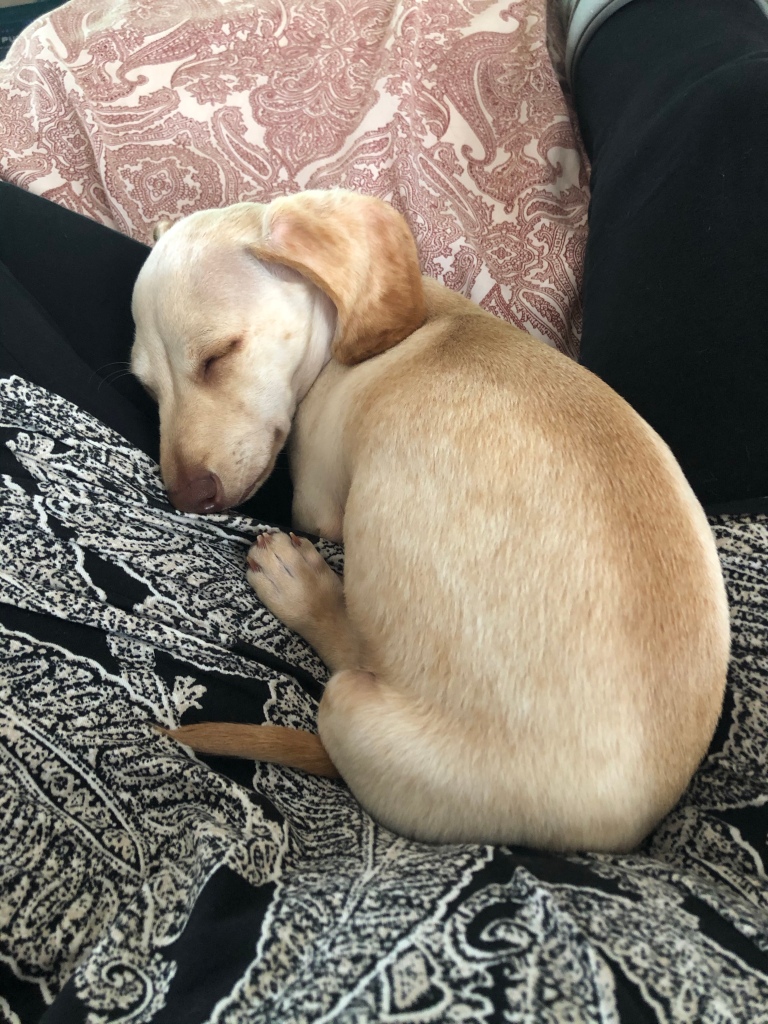
Dennis the dachshund takes turns between my lap and my husband’s while we prop our legs.
Twist of fate

For all the clear memories I have of moments and conversations in years past, I cannot quite recall how this happened two days ago…

Early Sunday morning. Tote bag with Bible and Sunday School lesson, studied and ready to teach. Annotated cantata book for Easter drama practice, ready for first rehearsal and casting. So much to do. So much to think about. Mind full of minutiae to remember. Let me put all this in the car, lest I forget something… wait, the sweet pickles for lunch. I forgot to take them to church with the sandwich stuff for rehearsal. Let me put the jar in my bag. There. Ready…

Opening door. Garage steps, red brick. Car is right there, I will put everything in the backseat floor…

—Falling. Fast.

Everything in my hands scatters across the cement floor; I watch the music book and all my papers sliding away with remarkable speed.

I cry out. I don’t know if it’s during that split-second fall, or on impact.

A snap.

Sharp pain in my right foot… I am only wearing socks, no shoes.

My son, Cadillac Man, is there in an instant. He heard me fall.

I am clutching my foot. It’s bad.

—Mom, is that blood dripping down your bag?

No. Pickle juiceget my Bible out of there.

And get your father.

His father tries to help me up but I can’t stand and he can’t be pulling on me; he is still healing from bypass surgery.

Don’t touch me, I tell them. I don’t know how to move. I have to figure it out.

I crawl back in the house. I take off my sock.

My foot looks intact.

I will try to stand…

Knife-like stab.

No.

My husband and son do not know what to do. It is Sunday morning; one is a pastor, the other, a music director. They each have church services waiting,

Go, I say. I have to figure this out. Maybe it will be better by the time you get back. If not, you can take me to an urgent care. Just go.

They go.

I wait until they’re gone to crawl down the hall and, sitting in the floor, change from pajamas to street clothes, for I know I’ll be going somewhere about this foot.

Suddenly everything is exponentially harder than it was.

That’s when I cry.

*******

X-rays reveal that I broke the fifth metatarsal on my right foot. The tech tells me I snapped it and I say yeah, I heard it. Now I am in a boot for six, eight, ten weeks; who knows? These things are slow to heal, says the orthopedist.

And no driving with the boot, she adds.

So now my husband and son must take me to and from work, every day for weeks on end.

I cannot do this, I say to myself.

But I walk, lopsided, imperfect, maddeningly slow in my Frankenstein boot, out of the office. My husband takes me home.

I watch the countryside whizzing past the passenger window. I know what this is shaping up to be. A hard lesson in dependence, at the least. It’s not like I haven’t lived this before. Seventeen years ago, just after my father died, I broke my foot—the same foot, different bone—while preparing to direct a church play. This second time occurs just after my husband’s brother died. Déjà vu. A curious twist of fate. None curious-er. I am seventeen years older; this is going to be harder.

—Well. It’s just going to have to be one deliberate step at a time.

Oh, how much I take for granted.

Today, back to work.

Just a good bit slower than before.

From ashes of auld lang syne


embers

New Year’s Eve. The wind gusts in the night beyond the bedroom window. I sit at my scarred old vanity, watching a tiny hand-me-down television. I am fifteen, this room is my inner sanctum, so I am surprised when Daddy brings me a slice of frozen pizza that Mom heated up for a late snack. “Something to munch on while we wait for midnight,” he says, and departs. My heart is stirred by this gesture. I don’t know why. I can’t even say if it’s a pang of happiness or sadness.  I take a tentative bite of the pizza and resume watching the movie Come Back, Little Sheba. I am safe and warm, the pizza is unexpectedly tasty, yet I shiver. The desolation of the characters and their story pierces me. How could things be so wrong? Would Sheba—a missing dog—ever come back home?

The wind moans under the eaves; I can’t stop this seeping inner chill.

Midnight arrives. I should say something to my parents.

I go down the hall to the living room, where they are turning off the big TV. “Happy New Year,” I say. 

They are stretching, yawning: “Happy New Year, Sugar. Good night.”

We head for our beds.

The ringing of the phone wakes me from a deep sleep.

I sit straight up. A phone call at this time of night—morning, rather—can’t be good news.

I wait in the dark, pulling the blankets around me, as my father’s footsteps hurry down the hardwood hallway to the kitchen. He answers the phone, hurries back down the hall to get my mother.

I hear her crying.

Heart pounding, halfway not wanting to know but also realizing I’ll have to face whatever it is sooner or later, I get up and go to the kitchen.

Mom is hanging up the phone, tears streaming.

“Grannie’s house caught fire. They all got out but the house is gone.”

I am suddenly weak. I need to sit down. I do, right there on the kitchen floor.

How did this happen? I want to know but can’t bring myself to ask.

My grandparents have been sent to the hospital for monitoring; within a couple of hours, my aunt arrives to stay with us. She is weeping, nearly incoherent, her clothes reeking of smoke. A charred, overpowering smell. 

The smoke woke me up, she sobs. Thank God for the phone in the bedroom. She tells us that when she picked it up to dial 911—the brand-new emergency number—the receiver was almost too hot to  touch. Coughing, knowing she had to get out, she opened her bedroom window and crawled through to the porch roof. There she found Grannie and Papa G. Within minutes, the fire trucks arrived, ladders went up, and my family was ushered to safety. As she speaks, I see hoses dousing orange flames that illuminate the icy black night.

Jenny was still in there, sobs my aunt.

Her beloved Siamese cat, twelve years old.

Three firemen held me back, she says, choking on her words, and I envision how hard my aunt fought to go back for Jenny. She’s a sizable woman; it probably took everything those three firemen had to restrain her until the fire was out and they could search. 

My aunt, middle-aged, unmarried, never having had children, dissolves in anguish: They found her body under my bedroom window.

Jenny, she sobs over and over in my mother’s arms. I am sorry, Jenny.

I am now as cold as ice, shaking uncontrollably.

—Come back, little Sheba.

*******

The question we all had: How did the fire start?

It was an old two-story house, drafty, with a curious assortment of doors and rooms. A chimney stood in the wall between the living room and Papa G’s little dressing room on the ground floor. As that New Year’s Eve was excessively cold and windy, my grandparents burned logs in the living room fireplace. They extinguished the fire before they went to bed but the wind gusted hot embers back down the chimney with enough force to blow the old plate off the wall at its back. The embers landed on the dressing room rug, directly under the room where my grandparents lay sleeping.

On that long-ago New Year’s Day, extended family gathered to survey the damage. Wooden doors on the ground floor were burnt completely through their middles but still held onto their glass knobs, like ravaged ladies saving their diamonds at all costs. The pantry where I stood so often as a young child, opening all of Grannie’s stopper spice bottles to smell the contents—cloves were my favorite—was destroyed by soot and water. The avocado-green telephone in the kitchen had melted down the wall like something out of a Dali painting. 

That phone, more than anything, sent my fifteen-year-old mind reeling. The horror of that much heat. That much danger, the near escape. The ruin of it all, the losses. Jenny. There would be no going back. No coming back.

The old house, the old year, a portion of my childhood lay in ashes. 

But my predecessors were survivors. They left a legacy of rising above, of carrying on. They knew, well before that night, how to bring something new from the old, something beautiful out of desolation. To my astonishment, the house was restored and refurbished more elegantly than before; my grandparents and my aunt lived there for many more years. 

We don’t go back, no. We can’t.

But we go on. 

It’s a long time since I was fifteen, straddling the transition from childhood to adulthood, coping with the temporal nature of life and its losses, but I believe that New Year’s fire marked the true beginning of my resilience, faith, courage, and, when needed, my fighting spirit. My inheritance. It’s carried me through every year since, even this last, in the greatest crisis of my adult life. Once again, my family survives, only this time I’m the older generation. We recoup, we go on to whatever this new year holds for us.

Perhaps it’s overcoming that sparks the memory. 

It’s auld lang syne, my dears, auld lang syne, beyond the darkest night, the ashes of what was. And not forgotten.

I rise and walk into the new carrying you with me, always.

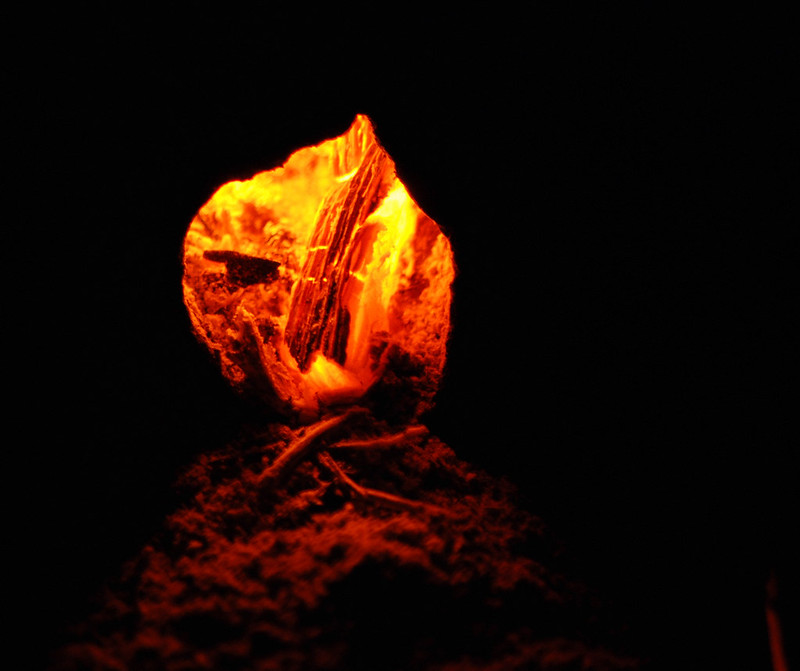
Photo: Embers. Brian Douglass. CC BY

Sick Ada, part II


About a month ago I shared this idea for a story about a little girl who loves cicadas and who’s having a hard time dealing with her parents’ separation. The girl’s name is Ada and she becomes seriously ill . . . hence the title, “Sick Ada,” cicada . . .

The story’s been gestating for a while as there were so many things to flesh out: How old is Ada? Why are her parents separated? Who left, Mom or Dad? Why? What’s the deal with her cicada fascination? How does she get sick? Most of all: Where should the story begin?

I considered writing this scene first: Near the end of the story, Ada goes into the hospital, sick enough that her recovery hangs in the balance. It is winter, when cicadas don’t sing, but she hears the heater rattling in her hospital room and believes it to be cicadas. She decides she doesn’t mind dying as long she can hear them . . .

But I am not starting there, and Ada will not die because my friend Kathleen interceded, pleading for the little girl’s life.

Amid much encouragement and a few thinly-veiled threats (thanks, Friends!), here’s the first draft opening scene.

*******

The darkness began to change.

Strips of light glimmered between the blinds until a thin finger of sunshine pushed through, reaching across Ada’s rumpled bed to caress her cheek.

At its warm touch, she opened her eyes.

Morning.

Oh!

Ada sat straight up in bed.

It’s my birthday! I am nine.

She felt strangely old.

Sitting there in the grayness, Ada knew two certainties. Today the cicadas would start singing. They always started singing on her birthday; Daddy said it was their song of celebration for her coming into the world. He would sing to her, too, only this time it would be over the phone. He promised to call today. Next week when school was finally out, Mama would drive Ada to the airport, put her on a plane, and Daddy would be there to meet her when the plane landed. It would be her first flight.

Ada wondered if cicadas sang on the other side of the country.

The other certainty was that she wouldn’t get her biggest birthday wish of all, that Daddy would come home to stay.

*******

So, Friends, that’s how Ada’s story begins for now, rough as it is.

For the record: The cicada is an ancient symbol of change or transformation and the name “Ada” just so happens to mean “noble.”

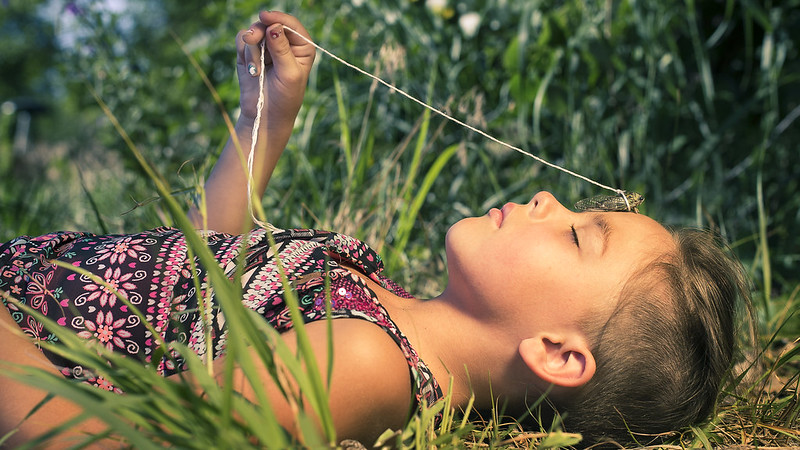
Photo: Girl with cicada bug. Jose HernandezCC BY-SA

Traction

Summer.

It brings to mind vacation. Travel. Beaches, ocean, sand. Rest. Living, loving, luxuriating . . .

Until the sands of life shift suddenly.

As they did it this summer when my husband landed in the hospital twice for a collective nineteen days and two heart surgeries. Existence as we knew it changed in an instant; just as we felt we’d gained a foothold, the sands shifted again. There was no time to think of the sun or even a chance to see it deep in the fluorescent-lit maze of tiled corridors and rooms. No taste of salt on the ocean breeze—oh, and salt is taboo from now on. Savoring life converged to a pinpoint, a prayer, many prayers, for staying alive, every day an uncharted vista with its own unfamiliar seas and long, long shores of loose, uncertain sands.

But he is home at last, convalescing. I grapple with new regimens—dressing wounds left by chest tubes, administering medications, a different diet, slow, slow walks in the driveway. Extra doses of patience. New priorities. The word traction comes to mind. We are on solid ground. We are moving forward, bit by little bit.

Perhaps that particular word returns to mind from childhood. My mother suffered with several health issues, one being injury and surgeries on her back. Her convalescence involved sitting in a chair beside a bedroom door with a rope-like contraption thrown over the door itself and a cup in the dangling loop for her chin. Each day she was to tighten this rope and sit in the chair for a given amount of time to stretch and align her spine. It was called traction.

I love words, their shades and nuances, so once traction got hung in my mind I kept spinning it to see its colors and facets. Traction as a foothold, as aligning, as momentum. Grabbing hold, finding a place of solidity, setting things in motion, in the right direction. I can say that my adventure this summer gave me new spiritual depth and traction.

And when I wrap myself in such metaphor I tend to see what else this blanket enfolds . . . school. I have missed the beginning of school, and while I wonder how I’ll gain traction with so many new programs and systems I’m expected to learn and teach this year, my mind doesn’t linger there. Perhaps it should. But perhaps not. I think of the children and the growth they’re supposed to make. They never will if all the sands keep shifting, if things are not aligned or set in motion in the right direction.

The lesson of my summer was restarting. My husband’s heart was restarted twice. Once during CPR which fractured his sternum and once after bypass grafts. The surgeon repaired his heart and his fractures. Healing is underway. We have new priorities. Life is restarted, with new traction. Why should it be any different for our schools, for our children? It is time to restart, to find a place of traction in shifting systems, opinions, policies, and priorities, and do what needs to be done for their sakes. Too much is at stake. It took a medical team—several, in fact— to save my husband this summer. And so it will be a collective effort to meet the needs of children on their educational journey. We shall seek and find solid ground. We shall move forward together, bit by little bit.

To me the story is the same, no matter how you slice it or apply it. This is life. It all begins and ends with the heart. Start where you have landed and find your traction.

A healing presence

One of the kids in our Harry Potter club, a third grader, wanted to know:

“Mrs. Haley, if you could do any of the magic, what would it be?”

That’s an easy one.

“Healing,” I say.

The children think I mean “episkey,” the little mending of a broken nose or split lip (its name coming from Greek for ‘repair’).

But I mean the healing song.

The one without words, that puts the maimed, the mortally wounded, back together; the song that knits gaping wounds closed.

In the books, the strange song, invented by Professor Snape—perhaps the ultimate antihero—heals devastating physical wounds. They’re obvious; the injured people lie around bleeding profusely.

So many people walk around in the real world just as wounded, emotionally, spiritually, mentally.

Sometimes it is obvious.

Sometimes it is not.

I am not a magical character in a fantasy series nor a trained medical professional. I am no alchemist, apothecary, or angel. I cannot dispense healing.

But I write.

My words don’t grant healing, but maybe they can stir hope of it.

I can listen.

I don’t have a healing song, but I can have a hearing heart.

I can be still.

I can be a pocket of calm inside a world of clamor.

It’s not in my power to fix broken hearts, broken spirits, broken minds, broken families. If I could, I would have done so for many I’ve loved.

I can only be a presence, a voice, an encouragement to be strong in the broken places.

—Yes, healing.

—That is what I wish, children.

Image result for if you don't heal what cut you


The gift

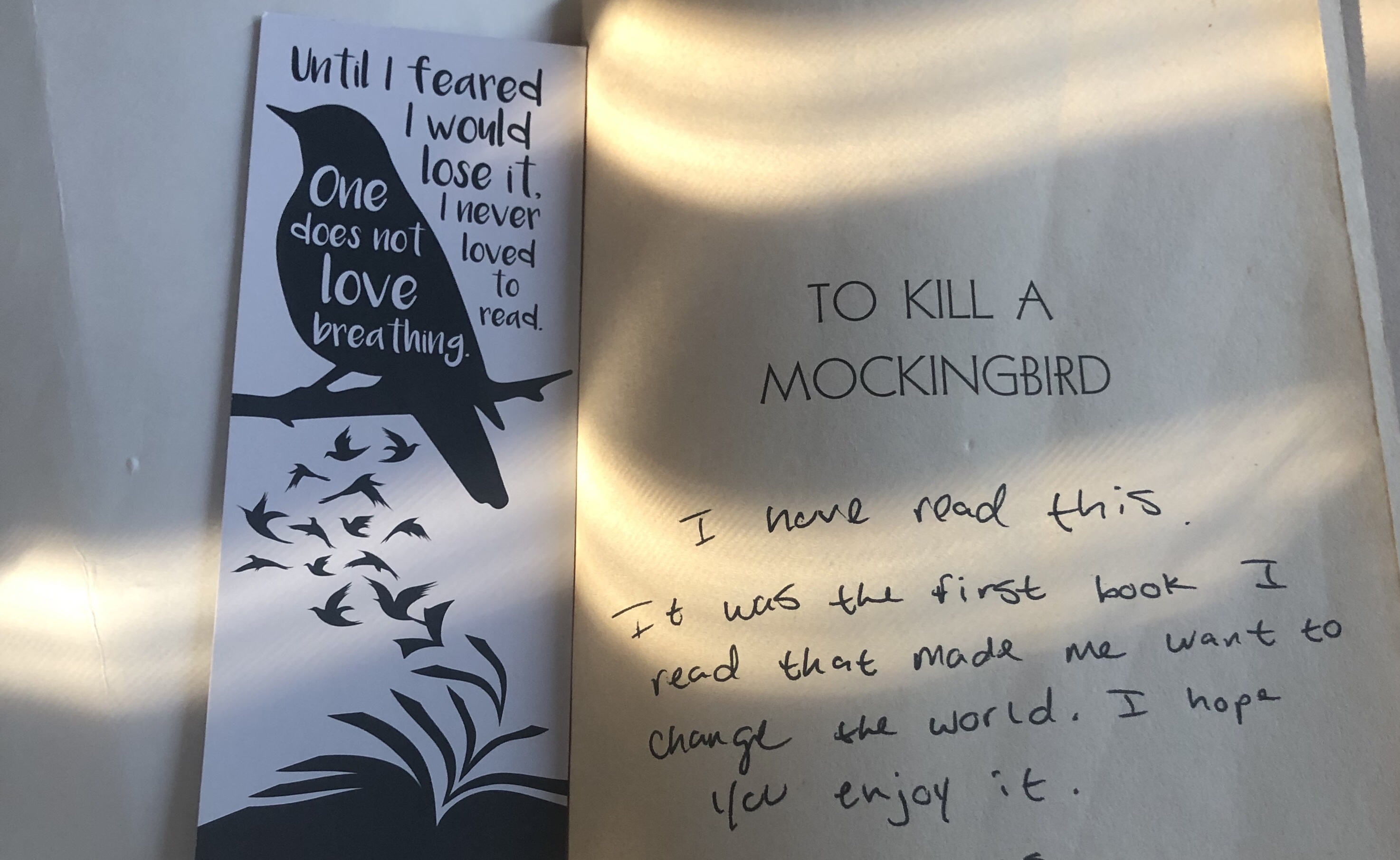
I remember what you wrote but I came to find the book anyway, to read the inscription again.

I hold it in my hands and think about you for a long, long time.

You were the baby who was always smiling, the cheeriest toddler, until I had to launder your blanket. Then you leaned your head against the washer and cried.

You were the little boy in preschool who sat beside classmates on the playground when others overlooked them, excluded them. From the start you noticed the outcast, offered comfort, pulled for the underdog.

You were:

The winner of the Principal’s Leadership Award at the end of your senior year.

The college student who started teaching the men’s Sunday School class at church.

The young man who returned to high school, where your Leadership Award still hangs in the front office, to teach Social Studies. Remember how, when you were setting up your classroom, you cleaned out a cabinet and found your old history exams in that stack of papers?

The teacher who taught your students to dance the Charleston—and who taught your own brother in AP U.S. History (your Dad and I weren’t kidding when we said, “Don’t even THINK about calling us in for parent-teacher conferences”).

The soccer coach who built the program and took the team to the State playoffs for the first and only time. 

An inspiration to so many kids. Their parents still tell your father and me.

I remember it all.

Teachers don’t make a lot of money; you took an extra job at night.

I remember the call. You’d been taken to the hospital. You’d been assaulted. Emergency surgery, jaw wired shut, liquid diet for six weeks. Having to carry wire cutters if you should vomit, or you’d suffocate.

How you chose to visit that young man in prison, forgave him, became his friend.

How you adopted a rescue dog, reached a crossroads in your life, came back home, quit teaching, enrolled in seminary.

Almost immediately followed by your meeting the loveliest young woman and her little girl.

I think about all these things as setting sunlight spills through the blinds onto this book in my hands, illuminating the words you wrote to me that Christmas, years ago:

It is the first book I read that made me want to change the world.

You may not think so, but you’ve been changing the world since the day you first entered it, baby boy. One word, one breath, one heartbeat at time.

I’m quite sure you always will.

Maybe we should have named you Atticus.  

No matter, for things have a way of working out as they’re meant to. I watch you with your new loved ones. I marvel at the gift of it all, the sheer poetry of life writing itself a day at a time, in the most curious of rhythms—like how pages of a book that stirred your heart long ago should come to us, living and breathing, a young mom who loves the same book, and in a little girl named Scout, crawling into your lap for a story.

Getting to the heart of writing workshop

I wasn’t sure how the day would go.

There were a lot of strikes against it before it even started.

Normally when I facilitate writing workshop training for teachers they’ve specifically signed up for it. They want to be there. This year, due to an oversight somewhere at the district level, the workshops weren’t scheduled. At the last minute, this workshop training was added as Day Two of Balanced Literacy (as Day One focused only on reading).

Meaning that teachers who signed up learned that they had two whole-day sessions to attend instead of one.

How would they feel about that?

Normally the overview of writing workshop alone is spread across three afternoons. Now I had to condense it all into one day.

Nothing like prioritizing content . . .

And, with the adoption of a new curriculum, writing workshop—and balanced literacy—won’t be offered to K-5 teachers any more. Just to K-2.

I felt I’d landed in no man’s land on some dismal shore, ineffectively beating back the waves of despair crashing all about me.

But I chose to keep my footing on a solid foundation, to hang onto all that I value about writing and teaching writing. The lifeline. Not just for me, but for the children, for their teachers.

This has to be worth their while, I sighed to myself.

And I got to work revising the training.

The day of reckoning comes. I start with who we are and why we’re here, rolling right into the what of writing workshop: Create the conditions for good writing to occur (credit Donald Graves). Understanding that writing workshop is not a program, is not about a product, but is a time set aside to fall in love with the craft (my definition) and to learn the real writing process.

Then we go deeper, into the why of writing. It’s at the very core of being human.

I read aloud to my participants:

Five-year-old Paul writes. Children want to write before they want to read. They are more fascinated by their own marks than by the marks of others. Young children leave their messages on refrigerators, wallpaper, moist windowpanes, sidewalks, and even on paper. 

Six-year-old Paul doesn’t write. He has gone to school to learn to read. Now that he is in school, the message is, “Read and listen; writing and expression can wait.” Paul may wait a lifetime. The odds are that he will never be truly encouraged to express himself in writing.

Paul will wait and wait to write because a higher premium is placed on his ability to receive messages than on his ability to send them. Individual expression, particularly personal messages in writing, will not be valued as highly as the accurate repetition pf the ideas of others, expressed in their writing. Since Paul will write so little, by the time he graduates from high school he will think of himself as a poor writer and will have a lowered sense of self-esteem as a learner. He will have lost an important means of thinking and will not have developed his ability to read critically.

-Donald Graves, Children Want to Write

I notice, as I read this, how heads begin to nod in acknowledgment . . .

Next we read portions of two articles with quotes from people in the business world. How young would-be employees have a hard time organizing their thoughts and articulating them, and that, when possible, employers should hire the better writer, because writers understand how people work, have better interpersonal skills . . .

We read these even though the participants of this training are K-2 teachers. 

Because this is where all the writing begins. 

Here, with them.

Then I read a bit from Colleen Cruz in The Unstoppable Writing Teacher, how a boy, Robert, discovers what his personal essay is really about. This is in a chapter entitled “I’m Finding Some Student Writing Repetitive and Boring.” Cruz writes: “Kids, and some adult writers, have a subconscious need to write about particular topics, but they don’t understand why.” Robert had chosen the topic ‘Christmas is my favorite holiday.’ His reasons are food, presents, and videos. While conferring with Cruz, Robert finally says that watching videos is the most important  thing about the holiday because his family had recorded every Christmas; he goes deeper and deeper into the meaning, until: “Since my dad died, Christmas is the only time I get to see him. My mom can’t stand to watch all the videos at any other time. But on Christmas she lets us watch them, and it’s like we’re all together again.”

The why of teaching writing: We owe it to the children to find their stories, to tell them.

It begins with our finding and telling our own.

Here’s where I carve out time to write in this workshop training. We lift lines from our writing to create an interactive poem; we brainstorm for more writing with heart maps (credit Georgia Heard).

At this point, I have to gently ask the teachers to stop writing.

For we’ve reached the how of writing workshop, beginning with minilessons. The vehicle for teaching standards and process, for modeling, for creating that atmosphere, those conditions, for good writing to occur. Opening the windows for student ideas to flow. Choice, voice. Meaning and mattering.

And it’s time for lunch. I tell the teachers that when they return, we’ll spend the rest of the afternoon on the backbone of writing workshop: Conferring. It merits its own what, why, and how. Academic feedback in the effort to reach a goal, growth versus grades, meeting each child, each writer, individually . . . .

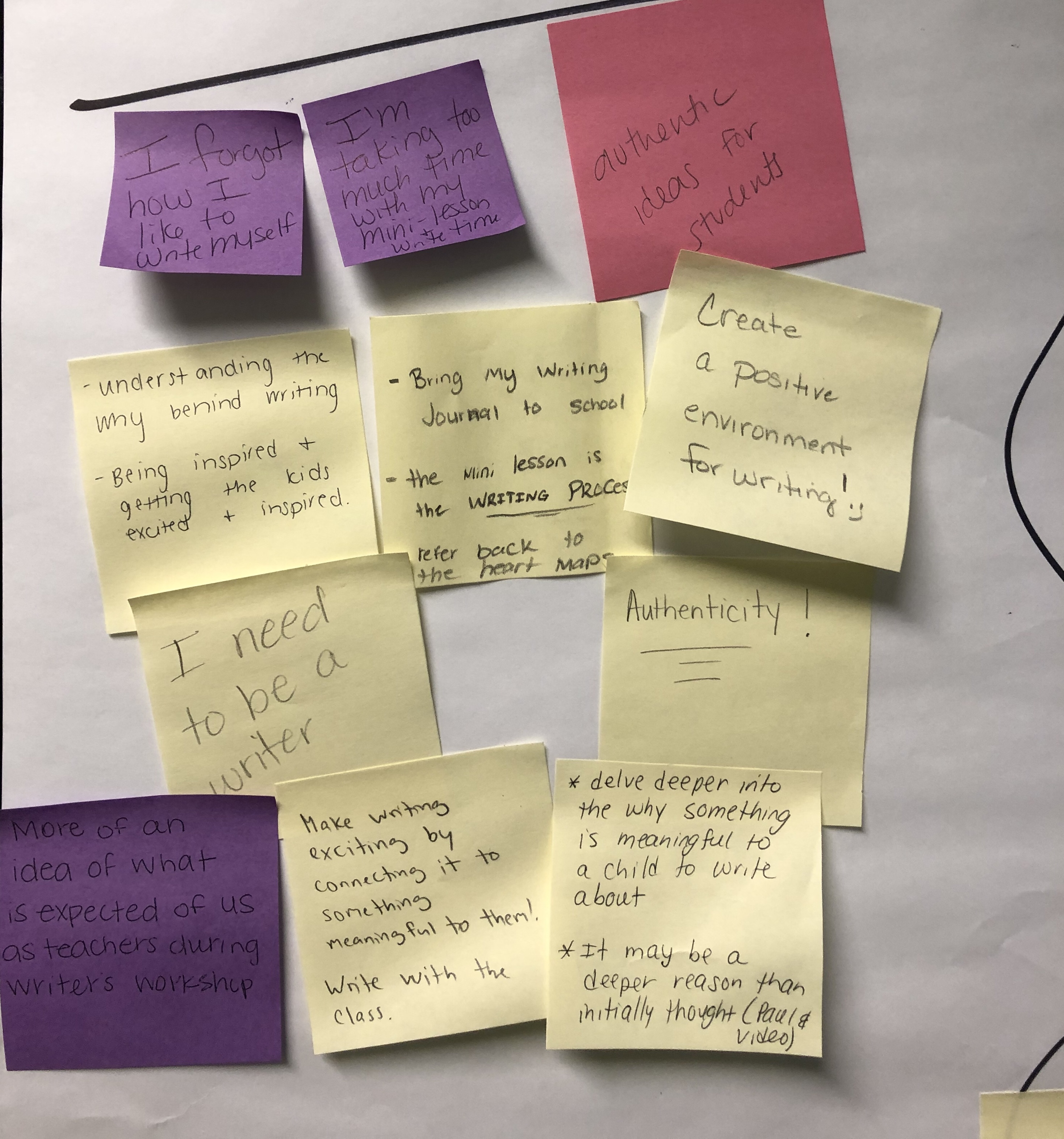
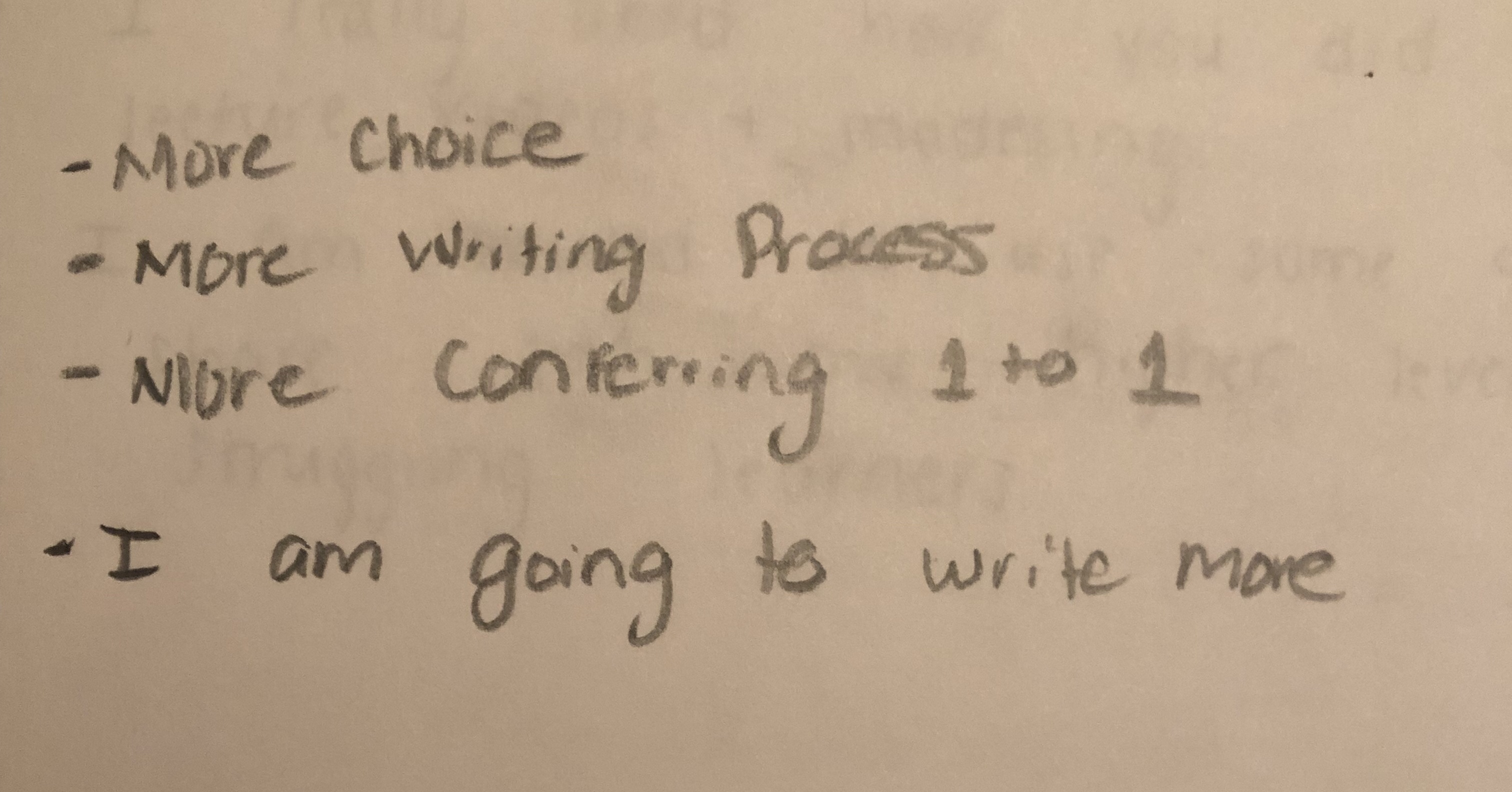
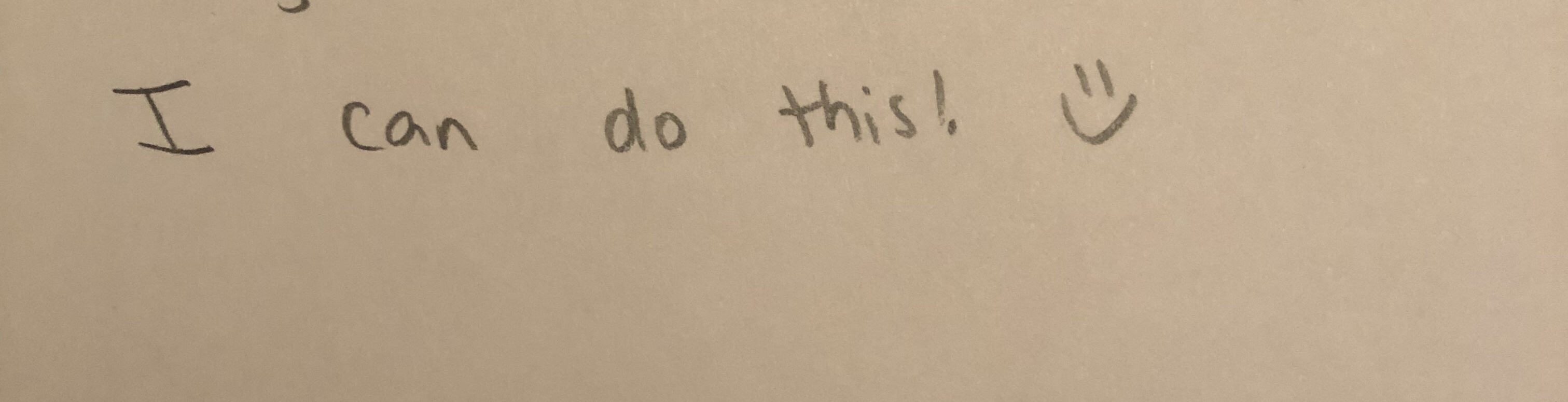
As they exit, the teachers seem happy. They leave sticky notes with their “gots” and “wants” on a chart. Personally I celebrate that the “gots,” pictured at the top of this post, far outnumber the “wants.”

Their notes revive my spirits. I’ve a sense of standing on a shore just as the sun breaks through the clouds. I feel the warmth of it. I can almost hear distant gulls, or something, calling and calling, wild and free; I can taste promise like salt in the breeze.

We’re not even done; we’ve only just begun.

I believe it’s gonna be a great day, after all.

*******

-Bits of the teachers’ final reflections at the end of the day.

Atmosphere

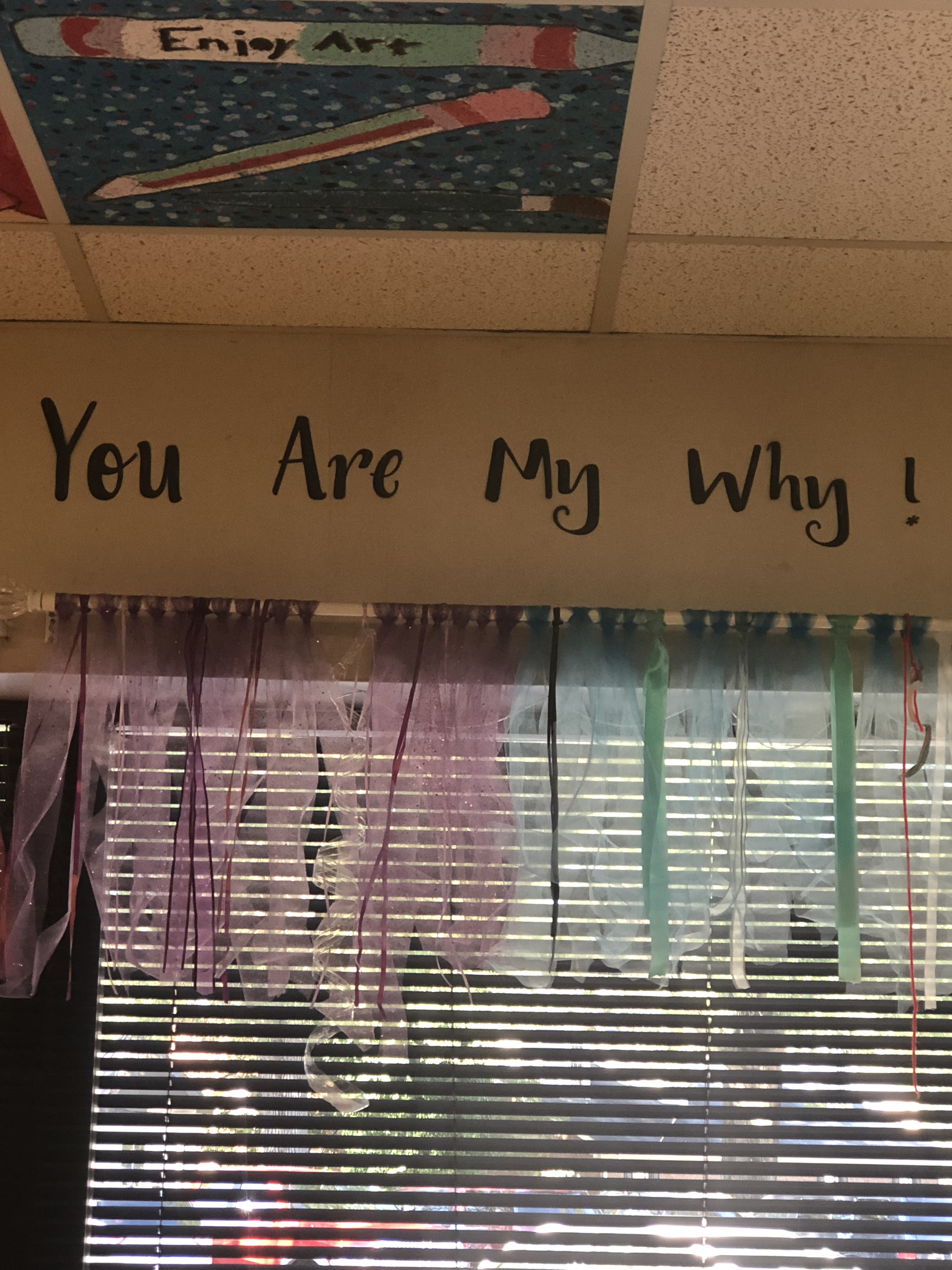
By the worktables in the art room at my school is a window, and above that window is a message from the art teacher to her students:

You are my why!

The words draw your eyes as soon as you walk into the room. They convey more than a greeting; they impart a sense of importance, of being wanted, of being cared about. They are a word-hug of welcome, of belonging, of mattering.

I think about how little is in teachers’ control these days, how the art of teaching is increasingly straightjacketed, hijacked. Expectations on top of expectations, a precariously unwieldy, wobbling mountain, stones heaped one by one, Greek thlipsis until a person’s spirit is crushed rather than one’s actual body. I see, hear, and feel this incremental adding of weight in every day interactions with colleagues. Opening lines from the old Christmas movie It’s a Wonderful Life come to mind, when the angels, appearing as stars in the cosmos, are talking:

FRANKLIN: A man down on Earth needs our help.

CLARENCE: Splendid! Is he sick?

FRANKLIN: No, worse. He’s discouraged.

—Truth.

A gallery of teacher faces appears in my mind.

Then I see these words on the wall and I think, that’s the breathing room. 

The beginning of atmosphere.

Before learning, before discovering, before creating, before engagement, empowerment, objectives or standards, before all the materials and tools are ever distributed, there’s atmosphere. 

It’s both bigger and smaller than the what of climate and the how of culture. Atmosphere in a classroom still lies wholly within the power of the teacher. It starts as small as the heartbeat of the teacher that keeps showing up to say You are my why.

The heartbeat, the breath, that keeps the entire organism alive.

Thank you, Brian Wilson

img_0617

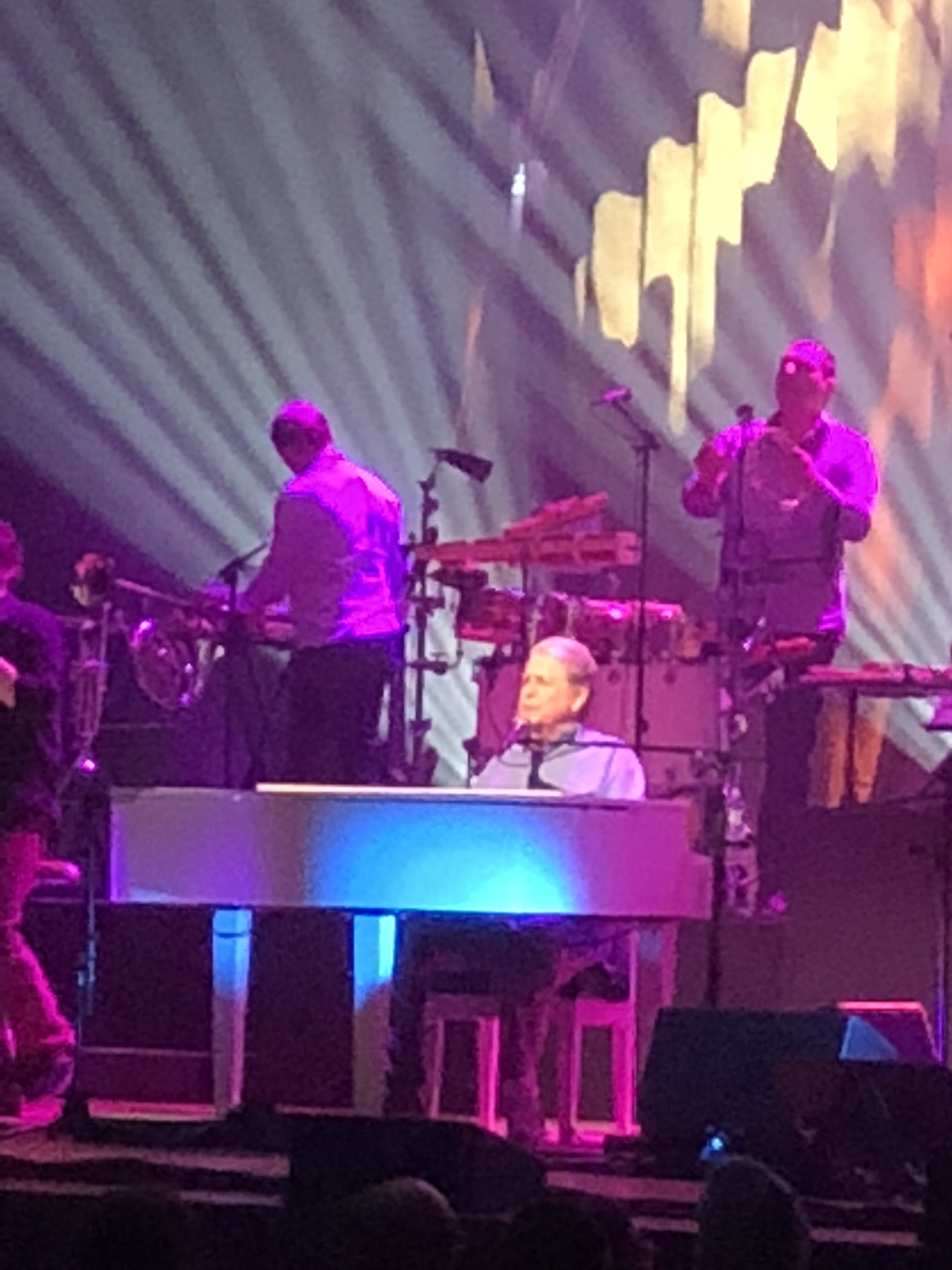
Brian Wilson sings his favorite song from Pet Sounds, “God Only Knows.” 11/02/2018. Richmond, VA.

If setting is everything, then tonight is mystical.

To begin with, the November evening is balmy. Few people in the crowd gathering on the sidewalk are wearing jackets. There’s quiet anticipation in the air, in the murmur of voices. It’s supposed to be raining but the sky above the city is dry, shimmering like a thick swath of navy blue velvet.

The sense of wonder deepens upon entering the auditorium. I’ve never been inside the Carpenter Theater in Richmond before and am unprepared for the splendor of it. Gilded walls, pillars wrapped in vines, balconies adorned with Roman statues, backlit alcoves with busts—it’s like stepping out of a time machine into Old World fantasyland. Overhead, white clouds frame the stage front against the dark auditorium sky —ceiling, I mean—where dozens of man-made stars sparkle an ethereal welcome.

The writer in me searches for words:

breathtaking 

otherworldly

adventure

expectancy

Apropos, I think, for our temporary raison d’etre: My family is here for the Brian Wilson Pet Sounds concert.

Primarily because the younger of my two sons (Cadillac Man), at twenty-one, avows Brian as the artist he most admires. He strives to emulate him in his own music. He studies how Brian deconstructed songs and what he did with vocals and chord progressions, complex, innovative stuff fifty-two years ago when Pet Sounds was released and still the stuff of legend, of music history. My son researches the Beach Boys and tells me things I never knew about their origins, talents, trials, and tragedies. He identifies with Brian on multiple levels—they both have a penchant for Cadillacs, both of their fathers lost their left eyes—but mostly my son relates to Brian’s musical thought and language. Cadillac Man confesses that he couldn’t concentrate on what his first grade teacher was saying in class years ago because “Sloop John B” was playing in his own head. This explains a few things about his childhood academics  . . . nevertheless, that this incident occurred nearly four decades after the release of Pet Sounds speaks to the timelessness of Brian’s work.

So we’re here to see an icon tonight. A glimpse of the extraordinary.

For me it’s not just the music, although I’ve always loved it, too.

It’s the story.

A boy deaf in one ear, teaching his younger brothers the harmonies he heard in his head, singing together in their bedroom at night. An athlete who once wrote in a high school essay: “I don’t want to settle with a mediocre life, but make a name for myself in my life’s work, which I hope will be music. The satisfaction of a place in this world seems well worth a sincere effort to me” (I Am Brian Wilson: A Memoir, 2016).

A name for himself, a place in this world, and a life that’s anything but mediocre . . .  I think about these things as the crowd greets him with a standing ovation. Brian is helped onstage, having had back surgery earlier this year. He wears a brace on one leg. His escorts seat him at a white piano, center stage, where his silvery hair glows in the spotlight.

I look at him and think about time. How quickly life passes. I think about the strange, sad, haunting truth of great gifts so often coming with equally great physical or mental afflictions attached, as if that’s part of the deal. We all have our demons. The ones that chase us, the ones that we chase. Brian’s battles are well-known. The most wondrous thing to me this night is that he’s still here, despite all, the only one of the Wilson brothers to reach old age, a survivor of so much. Still performing, sharing his profound gift.

He speaks just a little throughout the show. I wonder how he feels, what he thinks. At seventy-six, does he enjoy touring now? He wasn’t able to for years when he was young. Does anxiety still threaten to crush him? Is he in much physical pain?

If the answers are yes, then he’s mastered these demons. For the sake of the music, for others.

Brian sings his brother Carl’s solo in “God Only Knows” as stage lights come to rest on him like splintered sunbeams. God rays. I recall the clip of his speech for the Beach Boys’ Rock and Roll Hall Fame induction, in which he said that “music is God’s voice” and that he only ever wanted to create joyful music to make people happy.

He does just that, even now. At the end of the concert, this orderly, respectful crowd—comprised of multiple generations—is on its feet dancing to the old favorite songs. It’s a celebration of life, love, being young—whether now or long ago—and the creative power of humanity overcoming the terrible weight of being human. I think of these things as the audience thunders its applause, as Brian’s escorts return for him, as he’s carefully ushered away.

I wonder what it costs him, these moments of joy for other people. And marvel that he still has it in him to give.

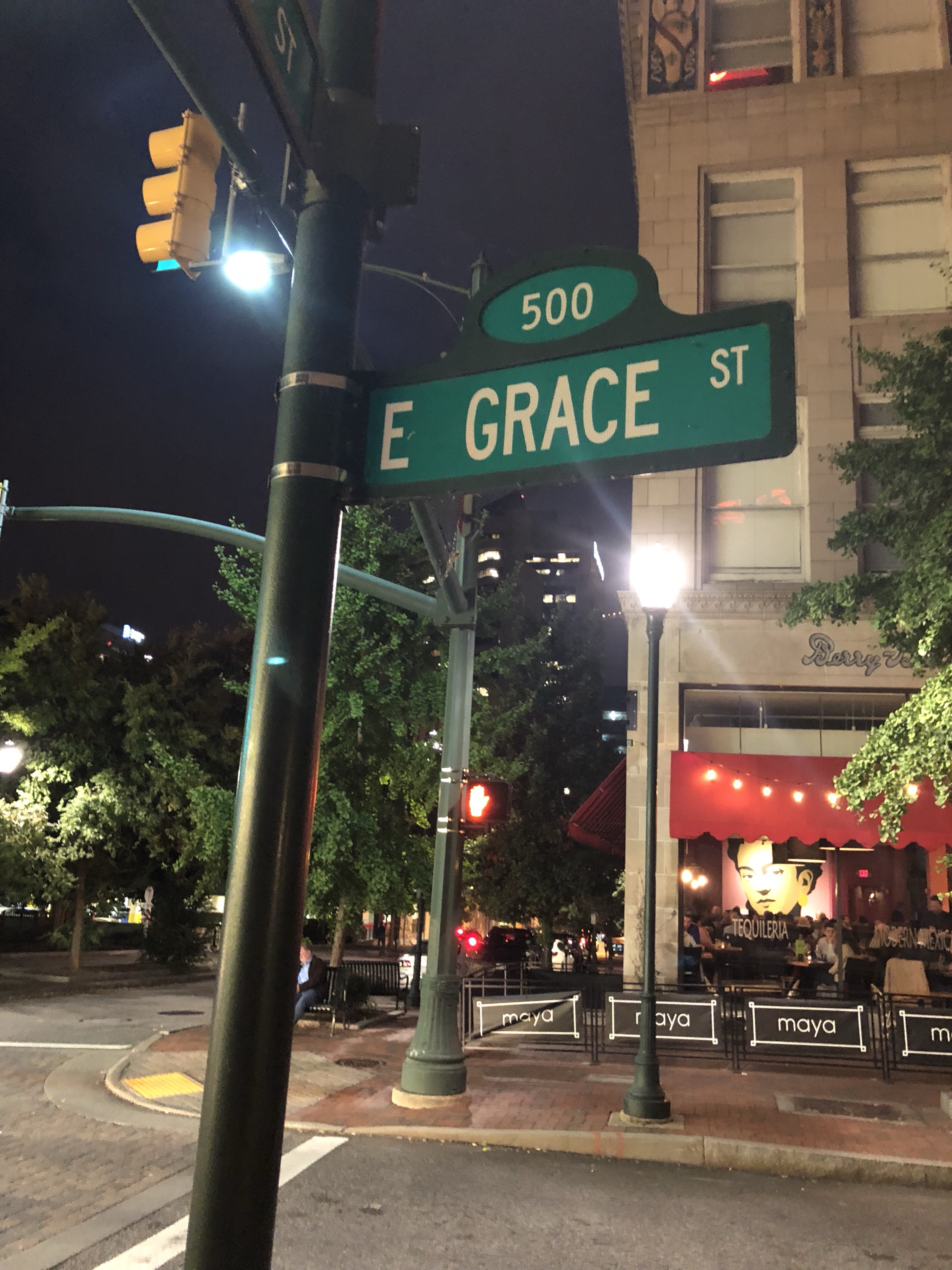
I leave the theater mentally wishing Brian peace in the days and years remaining to him and to his loved ones. I hope he can keep doing this for as long as he wants. I ponder the curious nature of gifts and how they’re so clearly bestowed on certain mortals. Maybe the Roman auditorium put me in mind of the Muses. There’s a word for the strength to overcome, to relentlessly pursue and attain the beautiful, despite unfathomable suffering, the Herculean feat of living. I can’t quite think of what it is. Overhead, the real stars glitter at random through an indiscernible cloud cover. The night is soft, quiet. And then—there it is. The word. I am not sure what Brian would say, but to me, the street sign says it all:

*******

I must also mention the timeless charisma of Al Jardine in this performance. He carried much of it while seeming to enjoy every moment. As did Blondie Chaplin, with absolute showmanship. All in all, the instrumentalists and vocalists paid exemplary homage to the music, which sounded unbelievably rich and true performed live.