A fine mess

After being away on vacation all last week, my first order of business on returning home was to check on the four baby house finches that hatched in the wreath on my front door. I’d been chronicling their development daily, so I knew many changes would occur in my absence.

Here is what I discovered:

1) The babies are now well-feathered; their skin-head mohawks have become mere wisps upon their downy crowns.

2) Two of the babies can fly. They sailed out of the nest this morning as I approached. The other two stayed put, their bright little eyes regarding me with a mixture of curiosity and apprehension.

3) Their nest is one spectacular conglomeration of droppings.

To be fair, the droppings are only around the rim; the mother collects them there. What a job, building a wall of excrement. Worse than diapers. When I first wrote of the perfect, flower-graced nest, the pale blue eggs, the hatching of the tiny pink nestlings, I concentrated on the beauty and wonder of life. I pointed out that the collective noun for a group of finches is a charm.

And charmed I was.

There is nothing charming about that nest now.

The fledglings themselves, of course, are enchanting. They’ll soon be gone, the circle of life will go on, and all that will remain of these magical moments is a monumental mess.

But that’s the story of life. It’s messy. It can’t be comprised solely of breathtaking beauty and newness; if it were, we could not recognize these moments for what they are. They’d lose their value. Only when contrasted with ugliness, hardships, and pain can we see and cherish the beautiful when it comes. We inevitably deal with messes, some that occur naturally, some created by others, some of our own making. Therein lie all the stories . . .

Which makes me think of writing. This nest is a tangible (although I do not wish to touch it) reminder of these commonalities:

-Life is messy.

-Writing is messy.

-Thinking is messy.

-Teaching is messy.

To do any of these well, we have to be willing to accept and even embrace the messiness. We must certainly persevere through it to arrive at the beautiful. It takes courage, stamina, and a lot of hard work, to write well, to think well, to teach well, to live well.

The strength to do so, I believe, lies in believing that the beautiful will come. It’s all a matter of trust, of faith. And pressing on.

Although I was appalled by the quantity of accumulated—um, bird-doo—around the nest, I was also amazed that two of my four little finches could fly. Last night they couldn’t; today they can. Tomorrow the others might.

This is a message to me about readiness.

Everyone arrives as a writer, a thinker, a teacher, a good practitioner of life, in their own time. Lots of messes will be made along the way. Sorting this out is what grows us. One by one, as children, as adults, as long as we live, we are continually growing the necessary wings to fly beyond where we are. And it’s truly a collective, collaborative growth; we are to nudge each other when needed, but not too hard, too soon. We’re not to hold back, to hold one another back, simply because we cannot see all that lies ahead and for fear of navigating the unknown. Knowledge comes by trying. By experiencing. By taking risks. There’s an implicit difference between throwing caution to the wind and taking a leap of faith, that being potential self-destruction versus healthy maturation. These finches know. As the day wears on, I watch the two fledglings that can fly going back and forth from the eaves to the nest, coaching their other two siblings on how to do it. See see see, I hear them cheeping. A bit at a time, a bit at a time. At any moment, those last two are going to get up on that nasty, messy rim and let go.

In more ways than one . . . .

So you make a mess. So what? So you’re alive and growing.

Tomorrow you stretch your newest feathers and find you can move on.

To where the beautiful awaits.
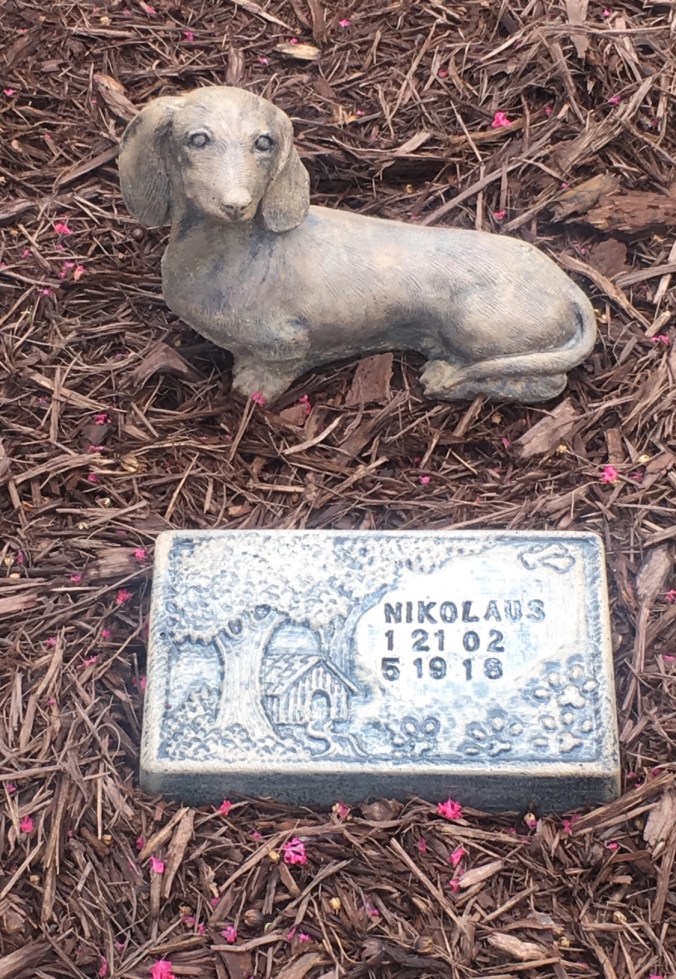
The garden

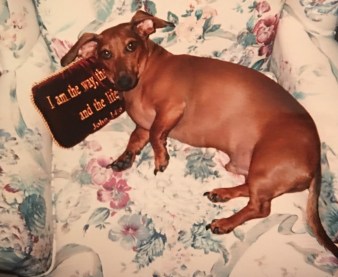
“It’s finished,” said Cadillac Man, as we laid the headstone commemorating his little companion of sixteen years.

He’d chosen this spot months ago as he watched his beloved dog wasting away, day by day. And so we laid Nik to rest here in the shade of the crape myrtle our family planted when we first moved to our home. Nik was a year old then. Cadillac Man was five, soon to finish kindergarten; he’s entering his last year of college now.

The tree in its fullness marks the passing of time. It was young when my boy with black curls and his little red dachshund were young. I think of myrtle being an ancient funeral flower, how it represents love and faithfulness . . . never mind that a crape myrtle isn’t a true myrtle. The name association is enough; the symbolism perfect. As the pink blossoms collect here by Nik’s likeness, I recollect the bright spot of happiness he was throughout my son’s childhood, throughout the life of my family.

The statue is my doing. Cadillac Man drove me on a four-hour round trip to get it. “It’s just like him!” he exclaimed when he saw it.

Yes. For the garden is not here for remembering that Nik’s no longer with us after so many years, whenever we see it through the kitchen windows or as we pass by on our daily comings and goings. It is not for mourning, or to assuage our pain.

It’s here to celebrate the gift of his life—a garden of gratitude.

It is complete.

*******

And so, it would seem, the Nik stories are complete.

The Nik collection:

Good-bye, mighty Nik

Cadillac Man shares his writing!

Dogged determination

Artifact

img_5055

Sometimes I think about the writing process more than I do about what to write. Like the origin of ideas, how the barest glimmering can turn into something substantial and take unforeseen shapes altogether during the writing. A breath of a thing becomes a breathing thing—for inspiration means to breathe in, to breathe life into. When I start writing my glimmer or breath of an idea, as it grows, shifts, and takes on a life of its own, it draws other things to it. When people say, “I don’t know how you manage to see these connections and string them together this way,” all I can say in response is, in the end, all things are connected. If you follow the glimmering threads far enough . . . .

Such was the case in my summer writing workshop for teachers. My co-facilitator asked fellow teacher-writers to bring a personal history artifact, something that holds a story about who we are or about a significant time in our lives.

My “default” artifact is a locket that belonged to my grandmother; her uncle gave it to her in 1930 when she was fifteen. She gave it to me when I was fifteen.

But I’ve already written about that: The locket.

I had trouble choosing another artifact. Why should it be so hard? We’re surrounded by pieces of our personal histories in every room in our homes, in our workplaces, even in our cars, sometimes . . . .

A thought hovered: There’s the cross necklace Daddy gave me at Grannie’s funeral. 

Nearly twenty years old, it still glitters like new, and there’s plenty of symbolism and story wrapped around it, for my father didn’t often give gifts, nor was he expressively religious except for a keen interest in eschatology. That he should give the necklace to me on that occasion (Grannie wasn’t his mother but his mother-in-law) is especially poignant.

I ought to write about that . . . yet, I hesitated.

I know! All those pictures I just had developed—if anything’s personal history, that is! Some years ago I’d gathered all my used rolls of camera film, placed them in a giant Ziploc bag, and promptly forgot about them. I’d finally remembered and had the photos developed (do you know how hard it is now to find a local place that will do this with same or next day service?). In these images, many loved ones who are gone smile at me afresh from decades past. Layer upon layer of stories to tell . . . .

Yes, this is an unusual sort of artifact . . . I definitely need to write about this.

The thing—the idea—certainly had a breath, a glimmer.

But it didn’t seem to be quite ready. I got the feeling that it didn’t want to be written about just yet.

I decided to take both, Daddy’s cross necklace and the old newly-printed photos, and as I prepared to leave the house that morning, another image glimmered in my mind. Rather brightly.

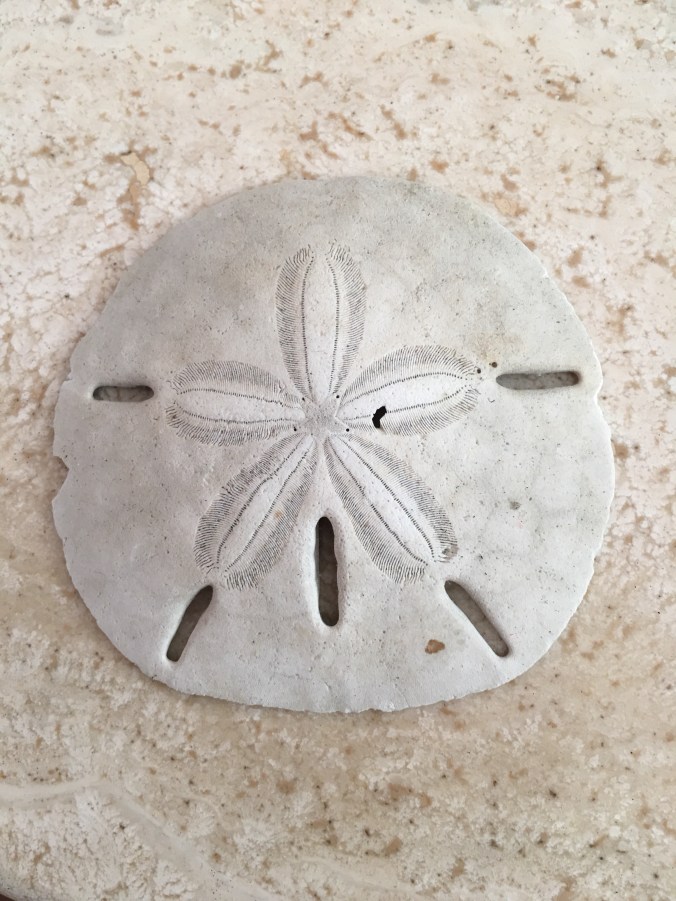
A sand dollar.

I have a few that I found years ago, and while I find them beautiful and compelling, I didn’t really think a sand dollar would be an artifact especially representative of my personal history. But . . . as the glimmering was suddenly there and I’ve learned not to question but to trust . . . I fetched the largest sand dollar, packed it carefully in a box with tissue paper, and took it with me to the workshop.

Guess which artifact I ended up writing about.

Of course.

I found this sand dollar on the beach when walking in the last weeks before my first son was born. There’d been a storm. The sand was still damp, the beach littered with seaweed and shell debris. The sand dollar, however, was whole, which is rare—they’re fragile and I’d never found any here before.

I don’t know why it drew me, just this morning, as a special artifact. It wasn’t something given to me, like Grandma’s locket or Daddy’s cross.

But maybe it was given, from beyond . . . .

I’ve just now recalled that, when I was born, my grandfather gave me twenty silver dollars. He did the same for all of the successive grandchildren. Sand dollar, silver dollar. Wealth of the sea, wealth of the earth. Gifts. Celebration. The coming of children, the next generation, the endowment of hopes and good wishes of those who’ve walked before. Like my younger self on the beach, I am walking the path of generations, I am the bridge between the past and the future. The sand dollar I have in my hand is really a skeleton. It was once a living creature. It’s symbolic of faith and strength despite its fragility and it comes from the ocean, which symbolizes life, continuity . . . .

It occurs to me now that the sand dollar is connected to the other artifacts I considered writing about, Daddy’s cross necklace, given to me unexpectedly at Grannie’s funeral, and the pictures from the old film I just found and had printed. All together they say: These are your life-pieces that endure; you will endure. Oh and I almost forgot that I just had my DNA tested. When I got the results, I marveled at the migratory history of my ancient ancestors, the story of their survival. I hadn’t expected the rush of profound gratitude to all of them for living, that I might be here now. I am here, whole, because they were here. I carry pieces of them within me. 

I found this sand dollar, the skeleton of a living thing, on the beach while walking after a storm, while carrying my firstborn. I walk the path of generations.

We go on.

My co-facilitator’s voice gently broke the hush in the room, we teacher-writers having been immersed in our thoughts, our words, recording on paper:

“Now, how can your artifact drive your teaching of writing?”

I wrote:

My sand dollar can drive my teaching of writing in so many ways. It’s a metaphor for writing:

-Just start walking. Like I did on the beach. Just start writing,

-Until you’re walking, you don’t know what you’ll find.

You’ll have surprises. Rare things will come, if you keep at it.

These gifts are waiting, meant just for you.

I looked at the sand dollar and I know, if it could look back at me, it would have winked.

Kilroy

He flew back to me from long, long ago.

My memory of him is dim, fleeting. I can only see partial scenes, the way a migraine sufferer is unable to look directly at objects because of a big gray spot but can see things around the periphery.

In a summer writing session last week, my co-facilitator challenged participants with quick-writing a bird story—for “everyone has a bird story.”

I have quite a few, some of which I’ve already written.

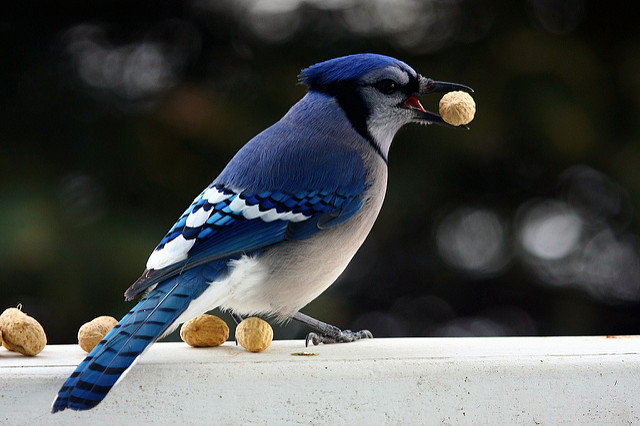
I looked at the page, waiting, my thoughts circling like birds themselves, tiny dark things against a whiteness, when suddenly there he was, crisp and clear, his black feet gripping the black perch, his crested blue head tilted, white face gleaming, a bright, black-rimmed eye regarding me with curiosity.

Oh, I breathed in my mind, I’ve been wanting to write about you! I’d almost forgotten.

He blinked, ruffling his beautiful blue, black-striped feathers. He watched me expectantly.

Kilroy.

*******

Aunt Jack’s house is different from anyone else’s. It’s full of stuff but not messy. I feel a strangeness here. Maybe it’s the animals. A big, speckled brown bird with a white ring around its neck and long tail feathers stands on a hunk of wood. “A pheasant,” Grandma explains. Aunt Jack is her youngest sister. The deer heads mounted high on the wall watch me with their big, soft eyes. I am scared of the bear head and its disconnected feet with sharp claws up there. On a shelf stands some small cat creature, the color of sand with brown spots. I think its mouth is open and its teeth are showing but I look away and hurry past.

I’m in a zoo of dead animals. Stuffed. Someone killed them all.

I do not know who or why.

Aunt Jack is small with a white, heart-shaped face, always smiling. She has brown hair almost to her shoulders and brown eyes as big and soft as the deer. She’s always moving, even when she’s sitting. I like to listen to her talk; her voice is like music, her words quick notes skimming through the air like stones tossed over water, or sunlight flickering through tree leaves on a summer afternoon. As much movement in her light voice as in her slight body.   

She’s always happy to see me, hugs me, says my name in her pretty, musical voice, and I remember how I have the same name as her father. Because it’s also Grandma’s middle name. It’s a special thing. 

I follow Grandma and Aunt Jack from room to room. When we go back through the living room, I see him.

On a tall, black perch, in front of the backside of the sofa.

A blue bird with a white chest and black stripes on his body.

I think he’s stuffed, too.

But his crested blue head tilts; a bright, black-rimmed eye regards me with curiosity.

“Oh!” I say, coming to a dead stop.

Aunt Jack laughs. I think of wind chimes.

That’s Kilroy. He won’t bother you, honey.”

“He’s your pet?”

Yes. I found him on the sand by the river when he was just a baby, so I brought him home.” 

Kilroy blinks, ruffling his beautiful blue and black-striped feathers. He watches me expectantly.

I take a step closer. I have never seen a bird that wasn’t in a cage inside a house before.

A living one, that is.

“Hi, Kilroy,” I call in my friendliest voice.

—Squawk! 

I jump. He sounds like Grandma’s screen door opening.

Grandma and Aunt Jack just laugh.

Kilroy smiles.

I swear.

*******

I don’t know how long Aunt Jack had him, or how many times I saw him. He was free to fly around the house, and I don’t remember any droppings. If I remember correctly, he stole shiny things like pens, rings, and coins, and hid them, sometimes behind the refrigerator, and he liked to crack nuts open and eat them.

I try to imagine my great-aunt walking on the sandy riverbank by her home, discovering the fledgling, carrying him to the house, feeding him by hand. Kilroy was devoted to Aunt Jack. The most enchanting part of their story is how he’d wake her in the mornings by walking on her chest.

Aunt Jack couldn’t have children. I can only guess how much she loved Kilroy, the living spot of color and joy amongst all those dead, unblinking creatures.

The grayness overcomes my memory here; only a little bit’s left around the edges. I can’t recall if Kilroy was allowed to fly in and out of the kitchen window. Maybe. But I’m not sure. It’s too far away, too dim. The memory, like gossamer, disintegrates when I try to touch it.

What I do know is that one day he flew out of the window and never returned, although Aunt Jack went out, calling and calling for him.

And that she still felt his little bird feet walking on her chest every morning, long after he was gone.

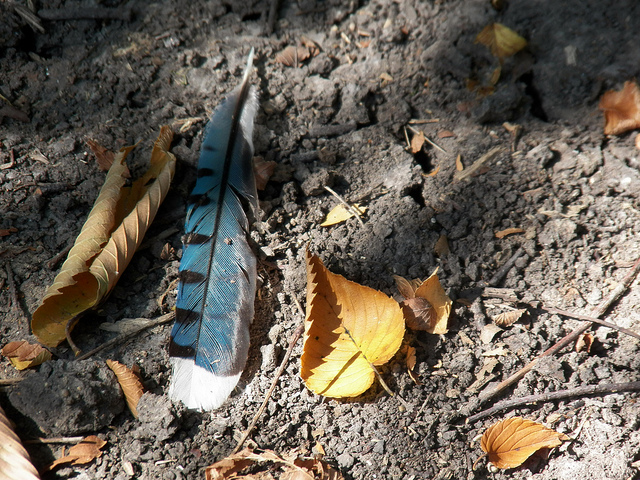
Blue jay feather

Blue jay feather. Robert NunallyCC BY

My last remaining aunt tells me that Aunt Jack did leave a window open enough for Kilroy to come and go as he pleased. He’d peck on the window when he wanted her to open it. When Aunt Jack was outside, he’d fly to sit on her shoulder. Remembering Kilroy piqued my interest in blue jays; I had to look them up. They can live twenty-six years in captivity and usually around seven in the wild. And they aren’t really blue. The color is produced by their feather structure scattering light— if a feather is crushed, the structure is ruined and the blue disappears. The feather is dark brown or black. Blue jay feathers, then, are illusions of light. 

No illusions, however, about blue jays symbolizing energy and vitality—Kilroy embodied it, in all his blue glory. As did Aunt Jack herself.  

 As for the dead creatures: The stuffed bear and wildcat are apparently from another early memory that’s merged with this one over time, but my last aunt says there were definitely stuffed birds on Aunt Jack’s mantel. I opt to leave the bear and the cat in the story with apologies to Aunt Jack, who’d be delighted, I think, that she and Kilroy are still remembered.

Seeing me

img_4994

Come back to examine this image after you read: In how many ways does it represent the information in this post? 

The big question on Day Three of our Teacher Summer Writing Institute: How do I see myself as a teacher of writing—no matter my grade level or content area? 

The day became a collage of images and symbolism.

Teachers were tasked with using postcards and personal artifacts as metaphors for teaching writing. They used these ideas as springboards into poetry and a means of writing to inform.

Then came the birds.

It began with the fact that 2018 is the Year of the Bird. The National Audubon Society and National Geographic, among other organizations, made this designation to honor the centennial of the Migratory Treaty Act, the most powerful and important bird-protection law ever passed. My co-facilitator posed this question: How do birds inform us? Group answers: They indicate coming changes in the weather, or the quality of the air. Their migration patterns have changed because the climate has changed; the birds are getting confused. That’s a reflection of society and the world, don’t you think? This segued into an activity called “Everyone Has a Bird Story.” For just a couple of minutes, teachers were challenged with a quick write about a bird (everyone really DOES have a bird story of some kind). The teachers gathered in a circle afterward, each reading one line aloud from his or her story, to compose a group bird poem. The effect was funny, strange, and beautiful. The closing question: How might we use this activity to inform student writers?  Answers: It’s a visual way to show students about organization and revision. Students can actually move around so that their poem makes more sense,  or to attain better flow. You can use this activity to physically show students how to group like ideas. It’s an easy way to show students that writing is fun. 

Just as the group broke for lunch, two birds—doves, to be exact—crashed into the windows of our meeting room. Generating both awe and alarm, they hovered, wings flapping, knocking against the glass as if seeking a way inside. A couple of us ran out to guide them away before the birds injured themselves.

Birds, ancient symbols of freedom and perspective, the human soul pursuing higher knowledge, the dove especially representative of peace, love, gentleness, harmony, balance, relationships, appearing at this gathering of teacher-writers as if invoked . . . so much to analyze there, metaphorically . . . .

Following lunch, the group spent time exploring abiding images. These are images that stay with us in our memories (and sometimes in our dreams); they usually have deeper meanings and significance than are obvious at first. One of mine, shared as an example: long, skinny, flesh-colored worms with triangular heads that my grandfather and I encountered when I was a child. He didn’t know what they were (land planarians, I’ve learned), we never saw them again,  and neither of us could have guessed what they have the power to do. They just resurfaced in memory recently; I had to figure out why. Here’s the story of that experience, if you’d like to read it: First do no harm.

Participants were then invited to take virtual journeys in their minds to capture the specific sights, sounds, smells of their favorite places. Others went outdoors to capture the same (see Abiding images for my original experience with this). Whether the journey was real or virtual, everyone encountered something unexpected or fascinating —something so representative of writing itself. The point of collecting abiding images is the intensity of focus, the close examination and capturing of the smallest detail, which might be used later in writing vivid scenes and settings that are necessary in both fiction and nonfiction, as well as for metaphor in poetry. Writers communicate information to readers through images. Teachers must be able to test and try ideas and creative processes—this is called birdwalking—through things like abiding images to inform their teaching and to communicate information to students.

And to write.

At this point teachers could rotate through any or all of three breakouts: Minilessons and content area writing, where they discussed ways to incorporate their new learning to grow student writers, or continuing to work on their own writing with the option of conferring with a facilitator, if desired.

As this vibrant day on writing to inform and “How do I see myself as a teacher of writing?” came to a close, my co-facilitators and I received the most welcome information from our fellow educators who span grades K-12 and all content areas, including ESL and AIG: These have been the most helpful sessions—I have learned so much about writing. There’s so much I want to try with my students! I am excited! How can I find more workshops like this? With most professional development, I am tired before lunch, and the afternoon is a long haul, but with these I go to lunch energized and can’t wait for the afternoon! The breakout sessions, where we choose to work on what we want to, are exactly what we need. Don’t change anything; just keep it coming!

That is like music—or shall I say birdsong?—to our ears.


Roses in the smoke

Red rosebud

Rosebud. Jan SoloCC BY-SA

By the chain link fence of our backyard, a rosebush grows. 

It’s really growing in our neighbors’ backyard, but, according to my mother, there’s an agreement that the roses hanging over into our yard are ours, and the roses on the neighbors’ side are theirs. 

So, early one Sunday morning, my mother ushers my sister and me out to the fence. In one hand my mother holds pair of shears. In her other hand is a cigarette. Salem. Menthol Fresh.

“Pick out the rose you want to wear,” she says. “From the ones on our side.”

The roses are vivid red with a hot pink tint. Some are wilting. Some are big and full. Velvety. Their fragrance is heavy in the air. 

“This one!” says my sister, pointing to a large bloom.

That one might fall apart while you’re wearing it. Find one that’s not all the way open yet.”

Why did she tell us to choose?

We finally select tight rosebuds that my mother thinks are acceptable. She puts her cigarette in her mouth and clips the two buds. Then she clips a third one that’s partially open.

“Why are you cutting three roses?” I want to know.

My mother blows a cloud of smoke into the air. Menthol and tobacco mingle with the scent of roses. “One’s for me. Grannie is living, so I’ll wear a red rose to church for Mother’s Day, too.” 

She has three straight pins in her sleeve. She removes one to pin my sister’s rose to the front of her dress. 

I am thinking about Grannie. Her mother is not living. “What color rose will Grannie wear, then?”

White,” says my mother, pinning my red rosebud to my dress.

I am sorry for Grannie, her mother being dead, having to wear a white rose. One day my mother will wear a white rose on Mother’s Day. The thought floods me with sadness. The colors make me wonder—why?  Why red for living mothers and why white for dead mothers?

Is red for the blood?” I ask.

My mother, in the midst of pinning her own rose, leans in. She can’t hear well. Sometimes she doesn’t catch everything other people are saying. “What?”

Do people wear red for living mothers because they still have blood in them and white for dead mothers because when they die there’s no more blood?”

My mother frowns. An upside-down V appears between her eyebrows as she looks at me. I can tell she heard me and that she doesn’t understand the question. Before I can try again, she says, “All right, we’re ready. The bus should be here any minute. Let’s go wait out front.”

We ride the bus to church because my mother doesn’t drive. She never learned how. And Daddy is asleep because he’ll be getting up to go to work while we’re at church.

We stand out front, my mother, my sister, and me, wearing matching dresses that my mother made, with our three red roses pinned on, waiting for the church bus. It’s really an old school bus, now painted navy blue and white. My mother lights another cigarette. My sister plays with her necklace—a tan-and-white rabbit’s foot on a piece of yellow yarn around her neck—and I think about colors. Red and white. Living and dead. Blood and no blood.

Good thing we have our own red rosebush for Mother’s Day, or what would we do?

It would be many years before I wondered what color rose a person might wear for a mother in an altered state. As in the case of, say, addiction. As in, if the relationship had disintegrated because of it, because the mother is consumed. Because it happens, somewhere, to somebody, every day. What is the color of dysfunction? Of existing, but not really living? Surely not a blend of red and white, for pink is too cheery. Gray? Does a gray rose even exist in nature? If it did, why would anyone wear it as homage to a mother?

One would just not wear any rose at all, rather than wearing one the color of ghosts, of shadows, of clouded memories, of the mists of time, even if the sun occasionally breaks through to shine on what was good, as on a rosebush blooming along a chain link fence and a bud like a drop of blood on a little girl’s dress, even as swirling smoke envelops it, before the ashes fall.

The tree I’d be

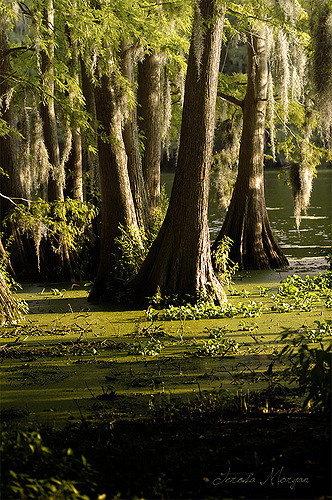
Cypress trees.jpg

Sunlit Cypress. Teresa PhillipsCC BY-SA

A few days ago,  I happened upon this captivating tweet:

I am well on the way to becoming a tree myself. I put down roots. I sigh when the wind blows. My sap rises in the spring and I turn towards the sun. Which tree would I be? Definitely a walnut tree.

-Roger Deakin, journal entry for April, quoted by writer Robert Macfarlane, Twitter, 04/04/2018

Macfarlane then asks: “Which tree would you be and why?”

—A cypress.

That was my immediate thought.

But why?

After all, one of my favorite scents is Fraser fir (the predominant Christmas tree in North Carolina). I vacuum the stubby needles at holiday’s end and try not to empty the canister for as long as possible, because the fir fragrance fills the air with every subsequent use. The trees of my childhood are dogwood, pine, live oak, magnolia, sweet gum. I have early memories of sun-dappled sidewalks covered with “helicopters”—one-winged seeds, or samaras—that spiral down from maple branches. I tossed the helicopters again and again, as high as I could, to watch them swirl like propellers. Crape myrtles lined my grandparent’s yard; I climbed their smooth trunks, sat in the crooks of their branches, countless times.

Why does cypress come to mind first, then?

Poets and writers, you know when an image appears so vividly that it holds some significance begging to be explored . . . .

For starters, my image is of Taxodium distichum, more commonly known as a bald cypress, or, my preferred name, a southern-cypress tree.

It’s rooted in the swamps of the southern United States, where my roots are. A tree at home in water, in rivers. I grew up in a place called Tidewater, entered the world in a hospital named for its proximity to water: Riverside.

My first recollection of the word cypress was my grandparents’ reference to a place on beyond where they lived, where the little dirt road curved past canals and thick woods that had grown to obscure stately houses: up Cypress Swamp, they’d say. Grandma’s best friend from first grade, who grew up to marry Grandma’s brother, was from Cypress Swamp. As a child, standing on the dirt road, looking through the treetops, if the sun was right, I could glimpse a bit of one old, abandoned house—a roof of cypress shingles.

The word sounded poetic to me even then: cypress. Like a whisper. Like something inviting. Maybe magical.

Although, through the ages, a cypress was usually associated with funerals and mourning. My affinity for the tree is clearly fused to my eastern North Carolina heritage, a reminder of the generations that have gone before me. My family tree, so to speak. It is ancient. Maybe nothing encapsulates that so well as this passage from Our State magazine, in which the author chronicles his boat journey on a river through a cypress forest:

 Many of the trees here must have witnessed those long-vanished species. They would have nodded over Native Americans in dugout canoes. They would already have been tall when the Lost Colony was lost, when the Mayflower sailed, when Attila the Hun was on the move. A few might have stood when Christ was born.

-T. Edward Nickens, “In Search of Methuselah,” Our State, June 8, 2016.

They live for so long, cypress trees, due to their ability to withstand storms; they thrive despite adverse growing conditions. Cypress wood is hard, strong, water-resistant—hence those shingles on the old country houses still standing as a forest  grows up around them. Those hand-hewn shingles sheltered the life therein. Like Noah’s ark, made of gopher wood from an unknown tree that some researchers speculate to be . . . cypress.

I cannot say the adversity, the storms, in my own life are any greater or worse than those weathered by other people I’ve known. I can only say that I’m still here. I view the cypress not as a funeral tree but one that preserves, celebrates, and affirms life; that, ultimately, is the whole reason why I write, why this blog exists at all.

On a fanciful note: Earlier I mentioned the word cypress sounding magical. When I was a child I loved the Chronicles of Narnia. I still do. In these books, C.S. Lewis borrowed from Greek mythology to depict dryads and hamadryads, the spirits of trees that took the form of young girls with their particular tree’s physical characteristics: a birch-girl dressed in silver, another with hair like long, willowy branches. Does a cypress call to me, then, because I am tall (5’8″ in bare feet)? That’s taller than the average American woman (5’4″) but not dramatically so. There must be something more, then, as to why the cypress chooses me, something unique to the tree and to me, other than our having southern roots in watery regions.

The knees.

In cypress forests, knobby projections stick up from the water. Theory has it that those “knees” help the tree breathe, enabling it to take in more oxygen. I don’t know how much truth lies in that theory, but I can tell you this: For my entire childhood I suffered from asthma and the only way I could sleep at night, the only way to breathe, was by curling up in a ball with my knees drawn up under me.

So, yes, my knees helped me breathe.

*******

In the old places

where the water stands still

they live on

holding all their stories

not evergreen

but ever-enduring

reassuring

reaffirming.

With every breath

drawn on their knees

they whisper,

“Remember.”

Real

and ethereal

—if I were a tree

a cypress

I’d be.

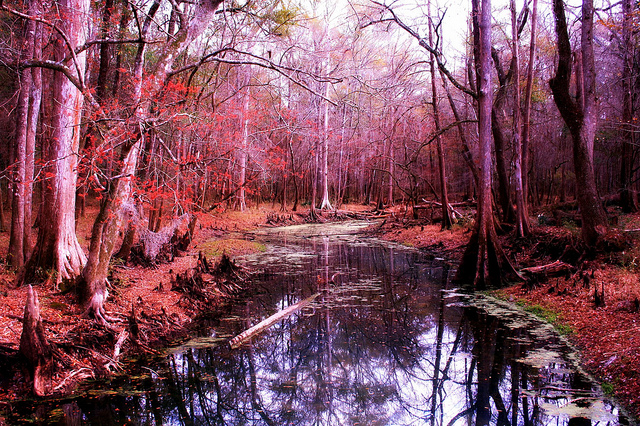
Cypress trees - pink

“When we are present in each moment, the past gently rolls up behind us and future slowly unravels before us.” echorooCC-BY

Belonging

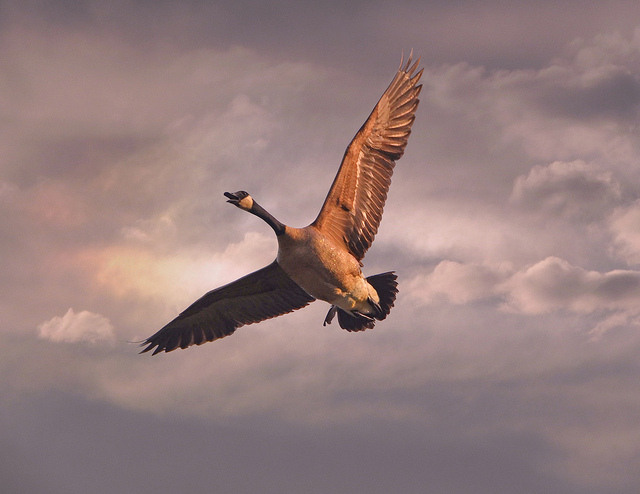
Goose in flight

Canada Goose in flight. Richard HurdCC BY

Meanwhile the wild geese, high in the clean blue air,

are heading home again.

Whoever you are, no matter how lonely,

the world offers itself to your imagination,

calls to you like the wild geese, harsh and exciting – 

over and over announcing your place 

in the family of things.

-from “Wild Geese,” Mary Oliver

During a summer workshop, I read Oliver’s poem “Wild Geese” and was charged with interpreting what it mean to me in a quick write.

I wrote:

No regrets. Life goes on. Heading home again – from wherever you are. This is a poem of belonging, of recognizing that we all have despairs, losses, soul-aches. We have to keep living, keep trusting life, keep reaching for it, because it reaches for us. Life calls to us as the geese call to one another. Reform – fly in formation. Geese mate for life – they keep going on. They know their places. We must know ours, must find ours, must believe in ours, even if we have never seen it, recognized it, known it existed at all – we have a place of belonging, for all things are connected with meaning, and have meaning. Home may not be home in the sense we know it. Home may be somewhere else – but we all have the homing device inside us. We must keep flying, trusting.  

I put that particular notebook away. I didn’t think about my interpretation again until I prepared to facilitate a recent “writing studio” workshop for teachers, touching on the power of poetry, abiding images, the interconnection of body, mind, heart, and spirit. I got the notebook out and took it with me. Not until I read my words aloud, months after the writing, did this realization come to mind – one so obvious that I can’t believe it didn’t come before.

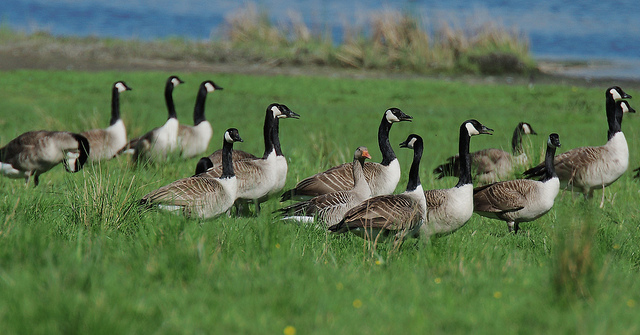
My father loved Canada geese. I didn’t know this until the last years of his life and even now I do not know why he was so fond of them. On our last Christmas, I gave him two Canada geese lawn ornaments for his front yard (his yard was a great source of pride to him, as I wrote in Fresh-cut grass).  Daddy was delighted; his face lit up at the sight of the goose statues. He set them on the lawn in the shade of the maple tree, where they stood, elegant and life-like, until his sudden, too-soon death.

Many things are a painful blur about those days, but on the re-reading of my interpretation of “Wild Geese,” a stark image returned to me: Walking behind my father’s uniformed, white-gloved pallbearers through the veteran’s cemetery, past a wide field to my right where, standing at attention, was flock of Canada geese, silently watching my father’s casket go by.

Not that they were paying homage, as much as my fanciful imagination would have me believe. The geese were likely keeping wary eyes on this odd processional of invaders so near their space.

Geese, I know, represent fidelity, valor, protection, navigation – returning home – among other things. I treasure their presence and their symbolism at my father’s funeral.

For, with my father gone, there would be no heading to my childhood home again. It marked the end of that family of things.

But I was grown, with children of my own. I had another home, another place of belonging.  Life goes on, I’d written after reading of Oliver’s wild geese. This is a poem of belonging, of recognizing that we all have despairs, losses, soul-aches.

It occurs to me now that Oliver’s poem is about identity.

Whatever our losses, our lot in life, there is a place of belonging. A place of protection, nourishment, growth, and being. However harsh life may be, this place calls to us. It’s up to us to hear and respond.

Home may not be home in the sense we know it. Home may be somewhere else – but we all have the homing device inside us. 

So the question is: What is that home, that place of belonging, where it is safe to be who you truly are? For some, it’s family. Or one’s life’s work. Or a community of faith, believing in an eternal home yet to come.

Others also find it in a group of like-minded people – artists, writers.

I find my place in all of these.

Wife, mother. Teacher, coach. Christian.

Writer.

Each my identity, each my gift.

Over and over announcing your place in the family of things.

Listen. Know who you are. Where you’ve come from, where you’re going. Come into your place in the family of things.

My father’s house was in the city; my home now is in the country. Early in the morning, as the sun rises over the vast field at the end of my lane, geese fly, calling to one another in their discordant, raspy voices. I can hear them long before I see them. They fade in louder and louder as they come near. If I stand outside as they fly over, I hear the silken sweep of their wings.  I can hear them, calling and calling, even when they’re gone, when I see them no more.

The family of things – it is there, always, even if we cannot see it, even when we see it no more.

So is the belonging. Wherever else I find my place, I’m still a daughter, a granddaughter, the living remnant of a family of things.

From my teacher-place, I reflect on how we must create a sense of belonging for the students, encouraging and guiding them to find their places in the family of things.

The world offers itself to your imagination, calls to you like the wild geese.

Whoever you are, wherever you are, whatever has gone before: Trust. Recognize. Reach. Open your wings, stretch them as far as they’ll go.

Fly on.

Geese in field
Kanadagås / Canada Goose. Stefan BerndtssonCC BY


Anchored

Seahorse

Seahorse. Brandon LeonCC BY-SA

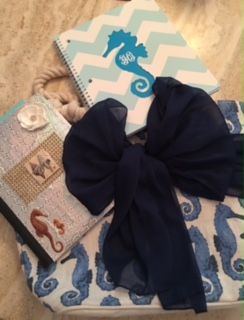
The seahorse was the motif of my summer.

He turned up everywhere – on my new beach bags, on a bracelet from a friend, on a spiral notebook given to me, in a pile of decorations for writing journals at a summer institute.

Seahorses galore.

This sudden proliferation was odd, too odd to be random. Loving symbolism, interpretation, and looking things up in general, I researched seahorses, curious about what mysterious meaning or significant message they portend for my life at the moment.

I already knew, of course, that the males bear the young, which is the reason I am mostly using the pronoun he, in honor of the seahorse dads.  I really couldn’t make much of a connection to this appealing characteristic, however. I am the only female in a household of males (including three dogs and two guinea pigs), none of whom are about to become a gestational vehicle.

In the metaphorical realm, seahorses apparently represent a great number of things: patience, persistence, inventiveness, creativity, whimsy – all enchanting. I celebrate and welcome all of these things.

I learned that the scientific name for the seahorse, hippocampus, is the same word for the part of the human brain thought to be the center of emotion and memory.

Speaking as a writer – utterly fascinating.

Seahorses can also symbolize stubbornness (my father’s word was “hardheaded”). Speaking as a human – ouch. Ahem.  I prefer to call it “determination” or “perseverance,” but we’ll keep moving along here.

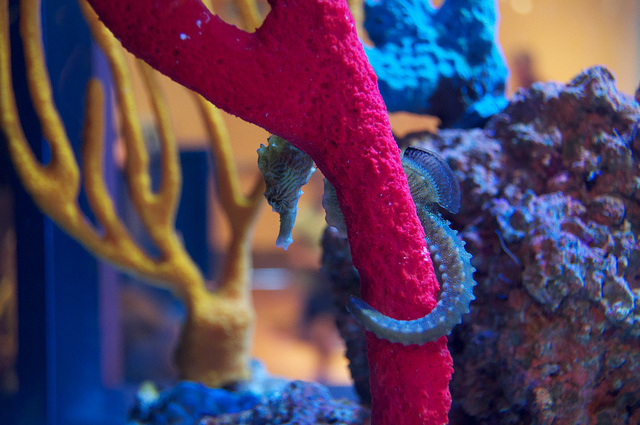
The thing that strikes me most about the seahorse is that it’s a poor swimmer – one species being the slowest-recorded swimmer in the animal kingdom – and that its tail is invaluable to its survival. National Geographic puts it this way: Seahorses are rather inept swimmers and can easily die of exhaustion when caught in storm-roiled seas . . . they anchor themselves with their prehensile tails to sea grasses and corals.

Ah. A ray of light shines here in the murky depths of symbolism.

The seahorse began appearing, and appeared most often, in things connected with my work as an educator – on a tote bag with a book order, on my notebook and journal.

Education today – might that be the storm-roiled sea, full of conflicting ideologies and solutions that sometimes beget more problems, just for starters? It’s not that educators are inept (“poor swimmers”) but that the ever-changing currents in our ecosystem are vast and powerful, so to shrink one’s spirit and drain one’s energy just trying to keep up, to stay afloat.

Seahorses can die of exhaustion if they aren’t anchored.

I think about how often the word anchor appears in the educational realm – anchor text, anchor standard – signifying the foundation of something upon which other things will be built, or that subsequent learning will connect back to.

But I don’t think that’s why the little seahorse loomed so large of late. In my mind I see him, small and shadowy against a backdrop of coral and waving sea grass, anchored by his tail, swaying peacefully despite the surging sea. I think of teachers and the demands they face. I think of students, who, above all, are too easily caught in a virtual riptide.

What’s the anchor here?

We are.

We anchor one another. Teacher to teacher. Whatever’s raging around us, we support each other, we help each other along. Ultimately, we form the solid thing, the reef, where students can anchor themselves, where their best interests are tantamount to our own, where they are sheltered, nurtured, and given outlets for inventiveness, creativity, whimsy, even in the most uncertain, troublous times.

Hang on, hang together, and believe.

Says the seahorse not just to the educational world – but to humanity.

Seahorse motif

Song of invisibility

I sit straight up in bed. “Oh dear.”

My husband jumps: “What’s wrong?”

My brain can’t form thoughts yet. I was dreaming about . . . something. Whatever it was has already melted away.

He repeats: “What’s wrong?”

“I don’t know. I am – startled.”

My husband sighs, turns over, goes back to sleep.

I can’t. I lie there with my heart pounding.

I’ll write for a while, I decide.

The predawn house is dark but for a nightlight in the hallway. I creep around, wraith-like, to avoid waking the three sleeping dogs. Heading toward the kitchen, I hear it, loud and clear, as if it’s on the front porch, trying to find a way in:

Whip-poor-will, whip-poor-will, whip-poor-will . . . .

My favorite onomatopoetic sound in all the world. I’ve not heard a whippoorwill that close to the house before.

Is that what woke me? 

And then I start thinking about symbolism, so while my coffee brews, I look up whippoorwills on the laptop. Chilling stuff. Harbingers of death, disasters, impending trouble. Being visited by a talking Raven might be more desirable.

Whip-poor-will, whip-poor-will, whip-poor-will . . . .

Okay, it’s a captivating sound, more enchanting than haunting, I think, pouring cream in my coffee. I’ve loved the call of the whippoorwill since I first heard it, the summer after I moved to rural North Carolina. It dominates a warm country night, an energetic, compelling song rather than a plaintive one. It makes me want to stand still and listen for a long, long time. I continue my online reading, how the whippoorwill is referenced over and over in story, song, and poetry. Folks, it’s really a mating call. That bird isn’t going to be lonely for long.  

And then I read: A group of whip-poor-wills are called a “seek” or “invisibility” of whip-poor-wills.

My imagination takes flight. Those are magical words.

“Seek” implies “seeker,” someone on a quest, not to mention Quidditch. Few words have greater magical connections than “invisibility” – it’s a coveted power. Granted, in this context invisibility and seek define a homely, nocturnal bird that is rarely seen and which is simply  seeking a mate with its fervent night song, but still . . . could there be something more?

I’d awakened with a sense of imminent danger, bolting upright in bed. Oh dear, I’d said, just as I crossed the line between sleeping and waking (this a hypnopompic state; I looked it up just now).  While I cannot remember a dream-creature – or any shadow-people, for the true paranormal enthusiasts out there – attempting to do me harm, I do wake sometimes because of a dry, rubby cough, thanks to the flu earlier this year and my latent asthma. I wonder if irregular breathing is the root of this.

What an unromantic notion.

Whatever the reason:  Suppose the whippoorwill arrived at my house not as a portent of doom but as a protector, a preventive force. What if it knew to sing its song – because, let’s face it, that song is all about life and reproduction, not death – to wake me at the very moment before disaster struck? Exactly what, then, did it seek to drive away or undo – and why? What did my evaporated dream have to do with it?

Whip-poor-will, whip-poor-will, whip-poor-will . . . .

Ah, here are better words to describe the call: Ethereal. Otherworldly. 

A little bit of magic in the still of the night from the seek, the invisibility – although I always hear only one.

I sip my coffee, smiling at my flight of fancy.

Although it could be something more . . . .

slice-of-life_individual