March snow

haiku story

gray Sunday morning
in spite of springing forward
it begins to snow

first time all winter
big white flakes now descending
on riotous blooms

purple-pink redbuds
bright yellow forsythia
pollen-laden pines

suspend certainty
while birds rush in, unafraid
of crystallized grass

momentarily
melting away in soft earth
—seems a sheer delight

to countless robins
hopping with newfound vigor
and the cardinal

on a blood-red blaze
toward the bare crape myrtle
where his mate awaits

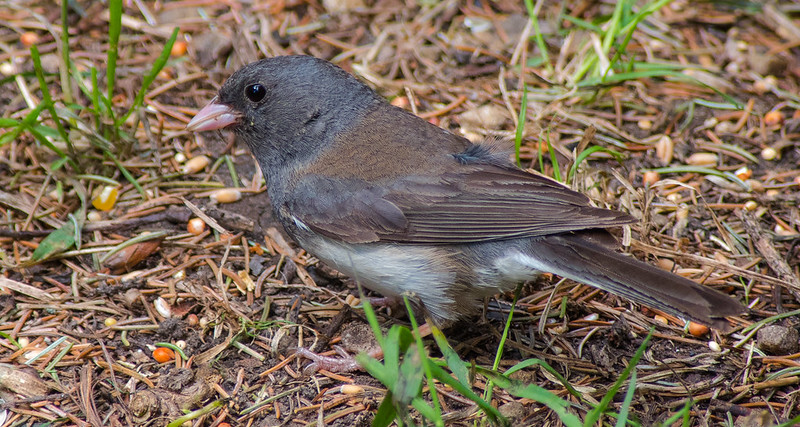
and dark-eyed juncos
living up to their nickname
ground-flitting snowbirds

while papa house finch
forages in the clover
on the old dog’s grave

for seeds he’ll carry
to mama finch on the nest
incubating eggs

bluebird on the gate
ruffles his blue-flame feathers
in exultation

two crows come and go
strangely silent, for they know
the benediction

Carolina wren
hidden somewhere in the pines
sings Holy Holy

the earth’s aflutter
with myriad wings and things
returning blessing

in spite of the snow
life springs forward, brightening
gray Sunday morning

2020-0417_CentreCoPA_WestMain_Eastern Bluebird in the snow -01amOBX. CC BY-NC 2.0.

*******

with thanks to Two Writing Teachers for the monthlong Slice of Life Story Challenge


Juncos

Winter mornings
in the half-light
I leave home for work

out on the lawn
a stirring of birds
so small
I can’t quite see
if they’re actually birds

maybe they’re
gray-cloaked fairies
performing secret rites

or the grass itself
sprouting feet for a night
and ethereal wings
for breaking away
at dawn of day

tiny tufts
of earth, unbound
with promise of
heavenward flight

For a couple of months I’ve tried to figure out what little birds are flitting in the tufts of grass each morning. Gray and ghostlike, they’re elusive as fairies. I finally got a good look at a few of them through the kitchen window. I am pretty sure they’re dark-eyed juncos, which my Merlin Bird ID app has picked up and identified by song. They are sparrows, “birds of the ground,” hopping around on lawns looking for seeds. They even nest in the ground.

To me, they give the illusion of the grass transforming into birds.

I researched them and learned that the junco is a symbol of impending winter weather, nicknamed “Snowbird”.

Merriam-Webster says the first known use of “dark-eyed junco” was in 1974—when I was a child. “Junco” itself seems to have originated from a word meaning “rush”… as in rushes, synonymous with grass.

It just so happens that grass is a personal symbol for my father. I’ve often written of sensing his presence in the scent of fresh cut grass; this is steeped in childhood memories of him mowing the lawn. He was meticulous about it. Daddy enjoyed CB radio when it became a fad born of fuel shortages in the 1970s. I can’t recall his handle, but I recall the one I made up for myself, having never heard it before:

Snowbird.

It seems to have come to me around the same time the name “dark-eyed junco” was first used...

out on the lawn
a stirring of birds
so small
I can’t quite see
if they’re actually birds

maybe they’re
gray-cloaked fairies
performing secret rites

—Maybe they are memory itself.

Dark-eyed Junco. Kurayba. CC BY-SA 2.0.

*******

with thanks to Two Writing Teachers for the monthlong Slice of Life Story Challenge

Focus

I am always looking for them.

Hawks.

I see them most often on power lines, easy to spot, as they are so much larger than other birds perched on high.

Alone. What other bird would perch with a hawk?

Some of them have so much white plumage that I think of snowy owls (which do not live in this southern clime).

In recent weeks I’ve seen a hawk in the branches of a winter-bare tree.

Regal. Breathtakingly beautiful.

Raptors, living on prey. Solitary creatures, not socialites. Steeped in symbolism.

Ultimately they are creatures of intense focus, and that is the lens I will use now.

It occurs to me, while contemplating hawks, that what we focus on feeds us.

Not our stomachs. Our spirits. Our souls.

Everything we devour isn’t good.

It also comes out that way, somewhere, somehow.

Somewhere, somehow, I think it was the hawk that inspired me to give up negativity for Lent.

I don’t need to partake of it or serve it (the whole point being repentance and not returning to it again).

I stepped away from social media quite some time ago; not gone, exactly, just…distanced. Able to hone in, occasionally, for what’s really of value.

I’ve stopped dwelling in the shadows of this school year (a work in progress). Perhaps more hours of daylight have helped with this…the hawk doesn’t waste precious time rueing the daily grind of life. It just does it. Concentrating on the task at hand. Never losing direction. Knowing when and where to move; until then, waiting and watching. With wide perspective.

Of course all the challenges don’t just disappear (as the hawk surely knows).

But in shedding unnecessary weights, the heights are easier to obtain. The mental eye is clearer, sharper.

Yes, focus.

Consider this, from Merriam-Webster:

The Latin word focus meant “hearth, fireplace.” In the scientific Latin of the 17th century, the word is used to refer to the point at which rays of light refracted by a lens converge. Because rays of sunlight when directed by a magnifying glass can produce enough heat to ignite paper, a word meaning “fireplace” is quite appropriate as a metaphor to describe their convergence point. From this sense of focus have arisen extended senses such as “center of activity.”

Directed light, channeled energy…being a conduit.

My thoughts spin homeward, to the hearth and heart of my life.

And as I drive at the end of the day, my freer spirit soars like the hawk on high, wind ruffling the embers of its breast.

Red-shouldered hawk. Photo by my friend E. Johnson

*******

with thanks to Two Writing Teachers for the Slice of Life Story Challenge

Like crows, hawks use tools
to get what they need.

Writing is a tool
for the soul.

A lens
for a better focus
on life.

Eavesdropping

a pantoum

Under the eaves
a porch
on the porch
a chosen door

a porch
sanctuary
a chosen door
from the other side, I hear

sanctuary:
father finch feeding nesting mother
from the other side, I hear
a song of love

father finch feeding nesting mother
on the porch
a song of love
under the eaves

Short clip of my house finches, which return every spring to nest in my door wreath (the finches don’t know that I purposely put out the twiggy grapevine wreaths they like best). Crank the volume to hear their beautiful voices. You might even catch a glimpse of wings as the father flies off to fetch more food for the mother. He will feed her until their little blue eggs hatch and then they’ll both feed their babies. In listening, it’s easy to understand how “charm” became the collective noun for finches and why they are said to symbolize joy.

House finches have an interesting history. From the Audubon Field Guide:

“Adaptable, colorful, and cheery-voiced, House Finches are common from coast to coast today, familiar visitors to backyard feeders. Native to the Southwest, they are recent arrivals in the East. New York pet shop owners, who had been selling the finches illegally, released their birds in 1940 to escape prosecution; the finches survived, and began to colonize the New York suburbs. By 50 years later they had advanced halfway across the continent, meeting their western kin on the Great Plains.”

also this, from the House Finch Overview, Cornell Lab of Ornithology:

“House Finches feed their nestlings exclusively plant foods, a fairly rare occurrence in the bird world.”

These are things I have learned. I continue to learn the lessons of the finches as they fill my home and heart to overflowing with a rare, almost-otherworldly joy.

House Finch mosaic. wolfpix. CC BY-ND 2.0.

*******

with thanks to Two Writing Teachers for the monthlong Slice of Life Story Writing Challenge

Crows

I could hardly wait to try the Cornell Lab Bird ID app during February’s Great Backyard Bird Count.

Especially the sound identification feature.

When you select it, ‘Merlin’ listens and tells you which birds it hears.

I already know the beautiful songs of house finches, cardinals, and Carolina wrens. The low, mournful coo of doves. I know birds of the night by sound: the haunting, onomatopoetic call of the whippoorwill in summer, the hair-raising screech and who? who? who? of owls. What other wonders are hidden in the woods surrounding my home?

And so it was one damp, drab morning that I stepped out on the back deck with my phone and opened up the bird wizard (the name Merlin is too good).

First bird heard:

CAW! CAW! CAW!

The words American crow popped up in the app.

Thanks, Merlin. That’s only the easiest bird sound in the world. I knew it as a little kid watching Kornfield Kounty in Hee Haw.

Globally speaking, however: Is there a bird more steeped in superstition, legend, and lore? Or with more conflicted symbolism?

Harbinger of death and sickness. Psychopomp, spiritual guide for the human soul. A sign of transformation, balance, wisdom, confidence, trickery… crows are even said to carry a person’s prayers to heaven.

They are scavengers but they cannot tear flesh open with their own beaks and have to wait for some other toothed predator to start the process; they’ve been known to lead wolves or other hunters to prey. Crows don’t dine exclusively on meat; they’ll eat “almost anything,” researchers say.

Scientists say that crows have big brains and are aware of their own thoughts. In Norse mythology, two crows (or ravens, depending on the source) whose names meant Thought and Memory rode the shoulders of Odin. Crows act with deliberation. They are keen observers. They use tools like sticks and shells when needed to get their food. They learn to recognize human faces and have been known to leave gifts such as pebbles or pretty shards of broken pottery as a thank you for humans who have fed them…

CAW! CAW! CAW!

Crows also prey on songbirds…

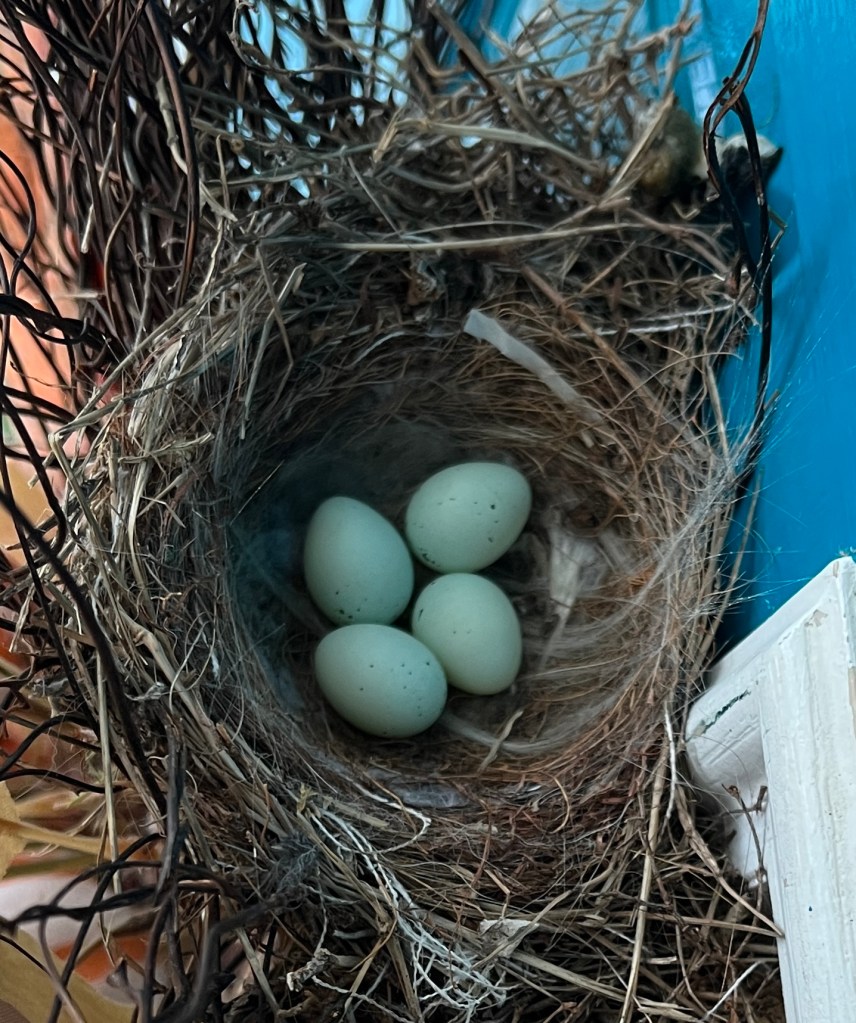
There’s Papa House Finch singing like Tevye on the roof of my house while Mama Finch is nestled on little blue eggs so perfectly hidden in the wreath on my front door…

Don’t even think about it, Crows. The finches are mine.

Yet.

In all my dreams about birds—for there’ve been many—I’ve not seen finches. Eagles, peacocks, owls, and whippoorwills (I think) have appeared.

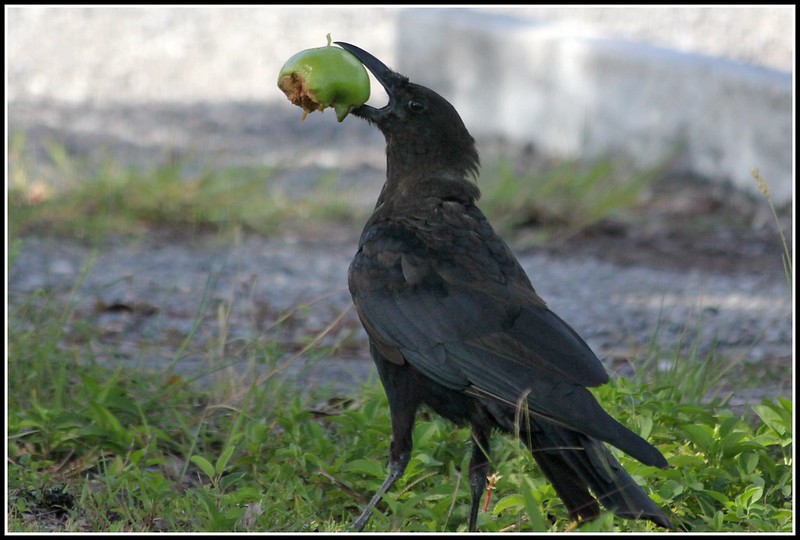
And one bright-eyed crow, sitting in the gravel beside a car, with a bright green stone or ball, waiting to give it to me.

What does it mean?? That is the question…

CAW! CAW! CAW!

I feel pretty sure about this one thing: If a crow offers you a gift…take it.

AMERICAN CROWcuatrok77. CC BY-SA 2.0.

One more bit of food for thought: The name Merlin has a controversial origin history itself… possibly derived from French merle, which means blackbird.

*******

with thanks to two fellow Slicers in the Two Writing Teachers community:
Kim Johnson, for pointing me to the Great Backyard Bird Count, and
Ms. Chiubooka (Cindy), for recently wondering what my take on crows would be.

We’re all in the daily Slice of Life Story Challenge together.

Writing life.

Auspices

In Roman times, priests called augurs studied the activities of birds to divine the will of the gods. This practice of reading signs and omens was called taking auspices.

Likewise, many ancient legends depict the language of birds as perfect and divine; predating human speech, it was communicated by deities, understood by prophets and angels. Some say bird language was the original language n the Garden of Eden, spoken by Adam, Eve, and God.

I cannot speak to these mystical beliefs. But I agree there’s something of the sacred in birds.

I assumed I’d developed this affinity later in life. Birdwatching as an older person’s pastime. My mother-in-law loved birds. So did my grandmother. What is the correlation between aging and deriving such pleasure from birds? An acknowledgement that life in this world grows short, and the beautiful should be savored? Or something deeper? Once upon a time, when women were birds, there was the simple understanding that to sing at dawn and to sing at dusk was to heal the world through joy. The birds still remember what we have forgotten, that the world is meant to be celebrated, writes Terry Tempest Williams.

I’d forgotten that my love of birds began early in life. It all started with parakeets named Angel and Lucifer (how’s that for spiritual connections?). Angel was blue and white, sky-and-clouds. Lucifer was yellow and green. They were pets of my parents’ friends and after my first mesmerizing encounter, I begged for a parakeet. I got one for my sixth birthday. Solid yellow (although I’d wanted one like Angel). The pet shop folks boxed my bird in a carton decorated like a circus train, with little holes in the sides. Riding home in the car, I peered in to see a red-purple eye looking back at me…

Tweety lived until I was twelve.

I could never have a caged bird now.

They are meant to be free.

Living in a rural area offers daily doses of bird-awe, from the blue herons standing like statues in stillwater ponds to the snowy-winged hawks perched high on power lines…last week on my way to work, I felt lighter than I have in a while. It’s been an exceptionally trying year at school. It helps that there’s actually more daylight now that spring is on the way (I should have my vitamin D checked, perhaps). On this particular day last week, I sensed that good things are coming. I even said it to myself, so strong was the sense: Good things are coming. A little farther on, I happened to notice a large brown clump up in a bare tree by the road. A nest of leaves, maybe? Work of squirrels? But as I drew near, I saw a white head…a curved beak..

An eagle.

For the rest of that day I felt I had wings myself.

And then there is the return of the house finches, which, truth be told, never actually leave. One or two little birds have been sleeping in my door wreath this winter. They startled me a few times at night, flying out of the wreath when I went to the porch. I suspect finches although I couldn’t get a good look in the dark. If you’ve read my blog a while, you know the finches build nests in my door wreath each spring. In fact, I left the old grapevine wreath out for this very purpose.

A couple of weeks ago, I heard the telltale chatter on the porch. Finches discussing the wreath. Probably planning the nest. It was a loud, spirited conversation, hard to tell if the pair was in agreement or not…

I kept checking the wreath, but all I saw was the indented place where a bird or two had been sleeping.

No nest. It was still February, after all.

This past Saturday, the finches were the loudest yet, out there on the porch. My son and granddaughter, age sixteen months, were visiting.

“Is that your finches, Mom?” he asked.

“Yes. They’re talking about making a nest,” I explained.

We listened for a while to the happy trills.

The next morning I went out to check… surely a nest was started, with all that cheerful bird language?

I saw nothing.

Until…I don’t know what made me get the stool and check the far side of the wreath…

This is what the finches were up to:

A perfect nest, so perfectly disguised that even I, who was watching for it, didn’t find it until four eggs had already been laid.

I know this happens every spring across the Earth, but to me, it is a miracle. The eggs, incubating life, laid on a bed so carefully and lovingly lined with soft hair…it is soul-piercingly precious.

As is the father finch’s glorious, glorious song from the rooftop, morning and evening, his voice rolling down and echoing across the countryside. His is the predominant voice of all the birds around, and there are many…I will write of them later.

For the father finch’s song of deep joy is my own right now…celebrating family, life, light.

Good things are here.

******

with thanks to Two Writing Teachers for the Slice of Life Story Challenge every day in the month of March.

I suspect there will be lots of birds in my posts… spirit-lifters that they are.

A president, a poem

Today on Ethical ELA’s Open Write, Stacey Joy invites participants to lift a line of poetry and use it in creating a Golden Shovel poem.

I was thinking about it being President’s Day, so I went in search of poems written by our presidents. This led me to Jimmy Carter, the first U.S. President to publish a book of poetry in his lifetime. He is our longest-living president; at age 98, he has just entered hospice care. I have lifted a line from his verse.

“To hear the same whale’s song” – Jimmy Carter, “Life on a Killer Submarine,” Always a Reckoning and Other Poems

Homeward Hymn

when my life draws to
its close I imagine the last thing I hear
will be cicadas rattling high in the
green oaks as I pass, fervently calling, calling the way, same
lost and found returning sound of whale’s 
pulsating destination song

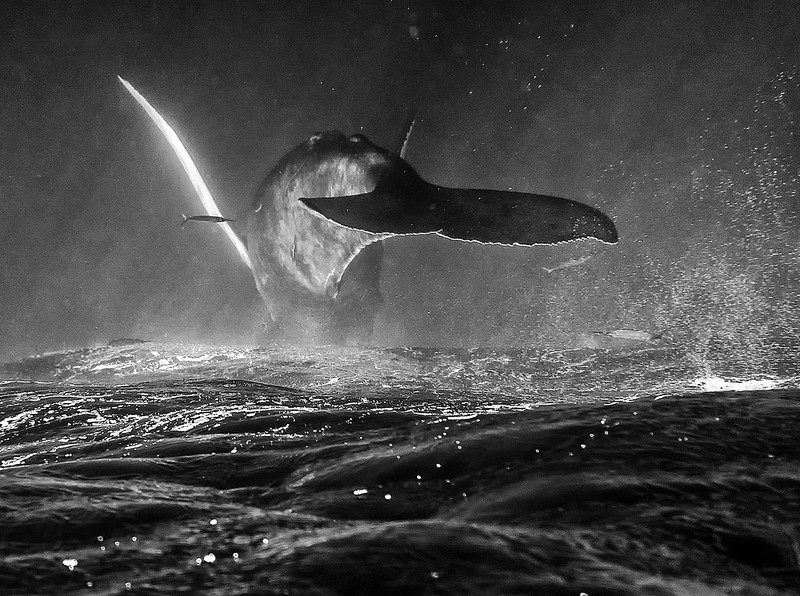
If Whales Could Fly. Christopher.MichelCC BY 2.0.

Tale-based poem: The Legend of Water Rabbit

Today on the Ethical ELA Open Write, poet Stacey Joy invited participants to read a few short folktales, fables, fairytales, myths, or legends to inspire a poem: “Your poem might be a response to, a retelling of, or a new version of the original piece.”

I wanted to work with a fable but the children’s tale that came to mind first was… well, maybe you will recognize itmy poem is meant to be something of a mythological sequeltribute.

The Legend of Water Rabbit

In the forest deep
upon a cushion of emerald moss
Water Rabbit sleeps

and dreams

of the Child.

In his dream
he cannot tell the Child
how much
he loves him

for to the Child,
the Rabbit isn’t real

and there is no language
for conjuring a bridge
across the chasm
of unbelief.

Water Rabbit twitches,
remembering

the nursery
the toys
the Wise Horse
who spoke of love

and longsuffering.

It was Fate that placed
the Rabbit in the arms
of the Child that night
when a favorite toy
was lost.

It was only for a season
that the Child embraced him
and carried stuffed Rabbit
everywhere he went…

Water Rabbit’s whiskers tremble
with dream-reliving.

He sighs.

Other rabbits nearby
cock their heads
and perk their long ears

for in a moment,
Water Rabbit begins
to whimper
and weep
and wail
in his sleep

—the dream
is all too real:
the Child’s fever,
the separation,
the command that
Rabbit and all the other toys
be burned.

It isn’t fire or fears
that brings Rabbit’s tears

but the thought
of never being
with the Child again.

Wake up! Wake up!
The colony surrounds
Water Rabbit,
dozens of their small front feet
against his shimmery fur,
shaking, shaking him

into reality.

Water Rabbit gazes at them
through his tears
from his emerald-moss bed

and asks…Is it time?
 
The colony nods in unison.

Water Rabbit rises
wiping tear tracks
from his velvety face.

The colony parts
Water Rabbit
makes his way through…

he hops and hops with 
boundless energy until
he reaches the clearing 

where the Child
bigger now
(for he’s bigger every Spring)

sits on the blanket
spread over the grass
with a picnic feast 
made ready.

Into the Child’s arms
leaps the Rabbit. 

There are no words
for there is no language
that can capture
love so great
and eternal
and real

as real as the solitary tear
of a toy Rabbit
about to be burned
for the sake of the Child.

For it was that teardrop
the inevitable price
of love
and sacrifice
that brought life,
transformation,
salvation.

That is how
Water Rabbit
came to be.

*******
-with thanks and apologies to Margery Williams and The Velveteen Rabbit.

2023 is the Chinese Year of the Rabbit.

More specifically, the Year of the Water Rabbit.

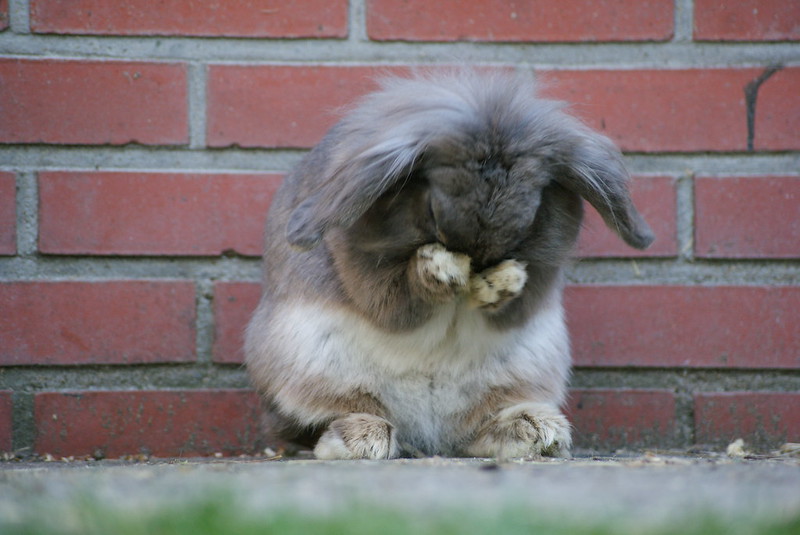
You make vita cry!jpockele. CC BY 2.0.

Colors of my life: Spiritual Journey

As host of my fellow Spiritual Journey writers on the first Thursday of this new month, Bob Arjeha asks: What colors make up your life? Do you shine bold…? Are you a more quiet light…? Are you a combination of both? What colors do you shine so that others may follow?

How creative, Bob. Thank you for providing such a compelling lens…

*******

It’s not a color I’d automatically choose to represent myself.

But then again, I have a hard time saying what my favorite color is. I love red for its bright power and cheer (think cardinals there by the roadside, bits of brilliant crimson against the drab gray-brown backdrop of winter, without snow). I love shades of coral for its vitality and unexpected freshness. I am drawn to neutral tones, grays, browns, taupes, creams, black and white, as far as a wardrobe goes, for they can be endlessly mixed and matched with every other color. I took a color personality test once and was told I am gold, which is quite gratifying on a number of levels, considering its value and connotations of endurance, faithfulness, and love.

I come at last to green.

It does not come readily to mind as one of my life’s colors.

For most of my life, in fact, I didn’t even appreciate that my birthstone is green. Why couldn’t it have been the lovely pale-purple alexandrite of June? The costly, iridescent-sparkling diamond of April? The fiery opal of October? I absolutely love opals…but no, my birthstone is an emerald. As a child I took a little consolation from Emerald City in The Wizard of Oz, but still… I didn’t love the color. Aside: children today do not know what their birthstone is. I remember poring over catalogs as a child, studying birthstones. Women proudly wore mothers’ and grandmothers’ rings bearing stones for every child and grandchild. I memorized the birthstone, modern and traditional, for every month.

I was given a little emerald necklace as a child (by Grandma, I think), and my Grannie bought me a simulated emerald-and-diamond ring for my tenth or eleventh birthday. Both pieces of jewelry have been lost over the years. I liked having them, but…green wasn’t really “my color”.

As a child of the 70’s, avocado green was a staple of home decor. Our telephone (with a wildly long cord that I stretched infinitely longer as a teenager) was this color. The panels on the front of my childhood house were this color. For years my dad owned only two suits, one polyester and one brushed suede, and they were both green. I didn’t like either one of them. My childhood bedroom had dark green carpet (and blue walls); my cat had kittens under my bed and Daddy had to cut away a good bit of that rug. My first car, a hand-me-down, was army green (an LTD Ford the size of an army tank; in those days, five bucks of gas would get you through the week). My high school colors were green and gold; most kids chose an emerald-green stone for their class rings. I chose pearl.

Why, then, does the color come tapping on the backdoor of my mind now, calling, Hello, it’s me, Green; I am important in your life. Let me in-?

How do I know Green is up to this, you ask?

Because of my dreams.

As a writer, I’ve learned to capture intriguing images for use later. My dreams are typically vivid. I know there’s much fascinating symbolism to them that I’m not able (and probably really don’t want) to analyze. I think of Jung. I recall the mighty gift of dream interpretation in the Bible. I decided to record my more compelling dreams in a journal. I’ve been astonished by several recurring patterns and images…including the number of times green has appeared in my dreams.

For the record, green isn’t always positive; we know it can represent illness, poison, envy, and even evil. Let’s go ahead and get that acknowledgement out of the way.

The rich, deep green in my dreams doesn’t manifest itself in any of these ways. At all.

Consider…

a friendly crow coming to see me and dropping a mysterious green ball (—stone?—fruit?) into my hand

vivid green grass growing on patches of barren ground

vast vivid green fields, going on and on

rich green leaves of trees at night, where owls are perched and calling

more than one dream of cicadas (which I love) with shiny emerald-green shells; in one dream, the yard was full of them, and they seemed to be burrowing in the ground. I so wanted to linger and watch…

There is more, but a couple of things are obvious: the green in these dreams is that of living things. It is the color of life, of nature, of growth. The cicada connection is one of my favorites; these green creatures represent fidelity and resurrection. There are clear overtones of wisdom beckoning in these dreams. Of being given some kind of gift. Of restfulness and rejuvenation: He maketh me to lie down in green pastures… of cycles and endurance and sustainability. Of being sustained. Green is the color of abundance and well-being and comfort. It makes me think about how we really don’t live as close to nature as we should, and what a terrible price we pay for that. I really didn’t recognize this great pull of nature at the core of my existence until I started writing consistently several years ago, and that’s when nature began revealing inextricable interconnectedness to human life on a spiritual level…just now I think of evergreen trees, enduring winter.

It is the color most often present in my dreams, by far. I may not have chosen it but it has chosen me, and I have come to treasure its significance in my spiritual life. I believe it is connected to my writing as well…for wring is a deeply spiritual activity. Green is, after all, a combination of blue, the color of sky and sea, and yellow, like the sun…life and eternity. Come what may, I shall go on. I know in Whom I trust. While I live, let me use the gifts given to me wisely and well.

Speaking of which: At Christmas my husband gave me a beautiful emerald necklace. He’d forgotten it was my birthstone; he chose it as a symbol of our Irish roots. I was wearing it when his sister came to exchange gifts… without any clue that her brother had given me the necklace, she gave me emerald earrings in the exact same shade, plus a jacket to match.

As it has chosen to wrap itself around me so…. let me be an open door, a window, to a world rippling infinitely rich and green with possibility.

A bit of light

Today on Ethical ELA I encountered a poetic form new to me: the lantern. My understanding is that it is a five-line Japanese shape poem beginning with a one-syllable noun followed by successive lines of nouns containing two, three, and four syllables, ending with another one-syllable noun, all connected to and building on the first word.

I was immediately captivated and had to give it a try.

It is challenging.

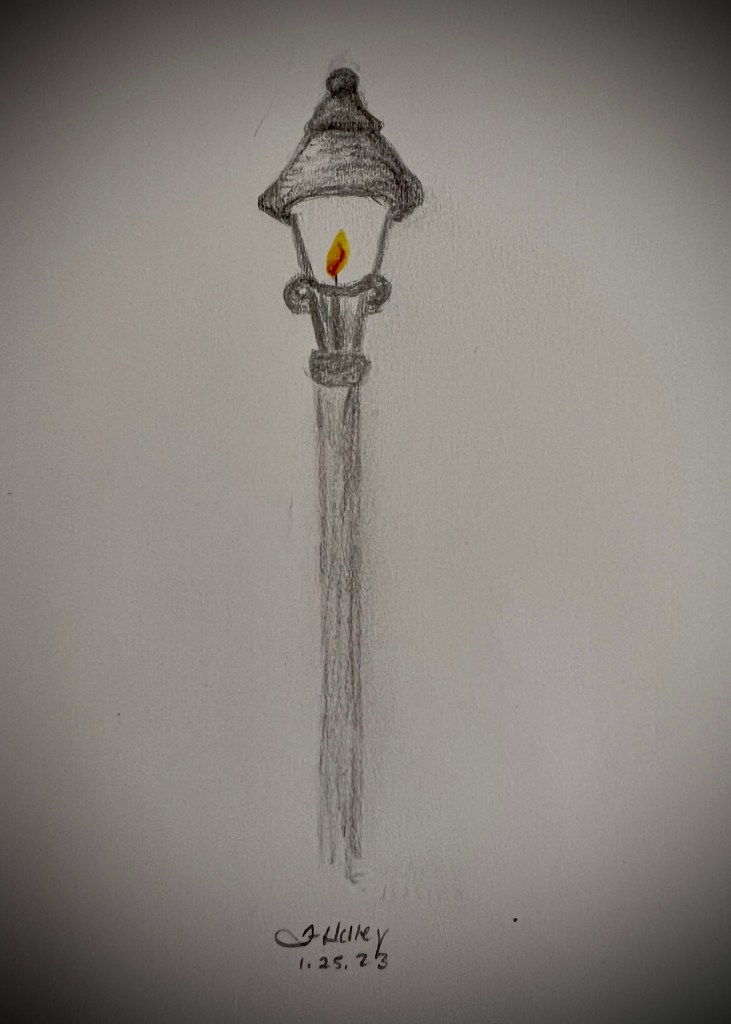
In my mind the lantern image morphed into a lamppost, a symbol with much personal meaning. Like the indelible image in Narnia, a lamppost marks the way home for me: one stood in front of the house where I grew up. Whenever I was out at night and turned the last corner, I’d see the light of that lamppost.

I went with the image. I kept the syllable count but gave up on sticking with just nouns. I could write a lengthy essay about all the other meanings the lamppost holds for me, but this is poetry; interpretation belongs to the reader. 

It is dark and dreary in my neck of the woods today, pouring rain… perhaps that’s another reason the lamppost remained.

I needed a bit of light.

To the Lamppost

Your
good light
still guides me
home through darkest
night