Freedom

Freedom is
a curious thing

trailing feathers
of eagles’ wings

mightier than
any earthly king

who may forget
she stands to bring

from her holy nature
a healing wellspring

to human hearts
if only they cling

to wisdom, to peace
—of these, let us sing

in a state of unity
let Freedom ring.

*******

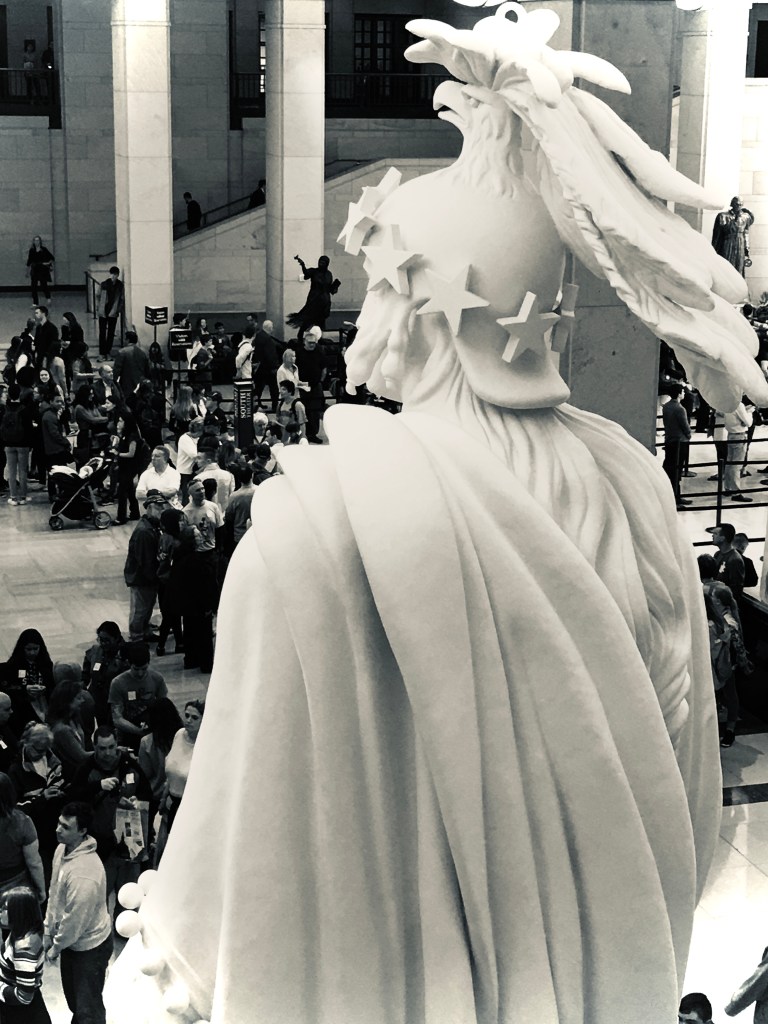
I photographed the Statue of Freedom in March 2018. She stands in the Capitol Visitor Center’s Emancipation Hall. This plaster version was the model for the bronze one atop the Capitol dome. Like a mythological warrior queen, she wears a helmet, bearing stars and the head of an eagle. While the eagle’s power and fierce majesty have led governments, empires, and regimes throughout history to adopt it as a symbol, it’s those long eagle feathers that captivate me. To Native Americans, they represent sacredness and healing. Think on that symbolism awhile.

As an American on this Independence Day, freedom to heal, not harm, is my prayer.

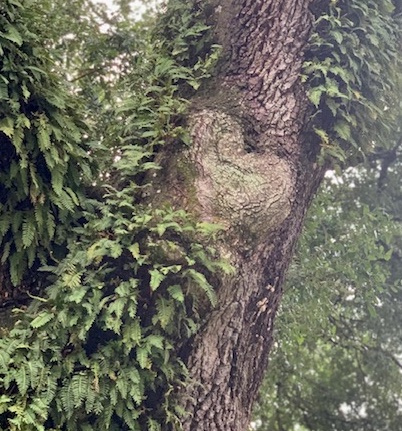
In the heart of the tree

with thanks to Margaret Simon for her photo, inspiring “This Photo Wants to Be a Poem” at Reflections on the Teche.

In the forest
stands a tree
bearing a heart
for all to see

how is it so
how can it be
this symbol of love
here on this tree?

When it was young
perhaps it was scarred
some long-ago night
black sky starred

when a bolt of lightning
struck young lovers
there pledging their troth
forsaking all others…

Some things, it seems,
are not meant to be
star-crossed lovers
found dead by the tree

their initials not carved
but their love still marked
by this bounced-lightning
scar in the bark

where life comes anew
with every rain, in turn
see, within the tree-heart
a resurrection fern

took root, where it dies
in the heart of the tree
yet like hope, like love,
returns alive, eternally.

Which is more compelling, the tree-heart or the resurrection fern within it?
Thanks again to Margaret for sharing her photo.

For the record, I like this explanation of the resurrection fern (Polypodium polypodioides) from the North Carolina Extension Gardener Plant Toolbox:

“The Resurrection Fern is an evergreen fern that is typically found growing on trees (especially leaning tree trunks and Live Oak trees), fallen logs, stumps, ledges, and rocks.  It will also grow on fence posts and buildings. Some of its host plants are live oak, elm, magnolia, and cypress.  it is considered an epiphytic plant, which is a plant that grows on another plant and dependent on that plant for support but not nutrition.  An Epiphytic plant gets moisture and nutrients from the air or from small pools of water that collect on the host plant.  It is also epipetric, meaning that it can also grow on rock.

It is a difficult plant to get established.  During dry periods it appears to die but regains normal appearance with rain.

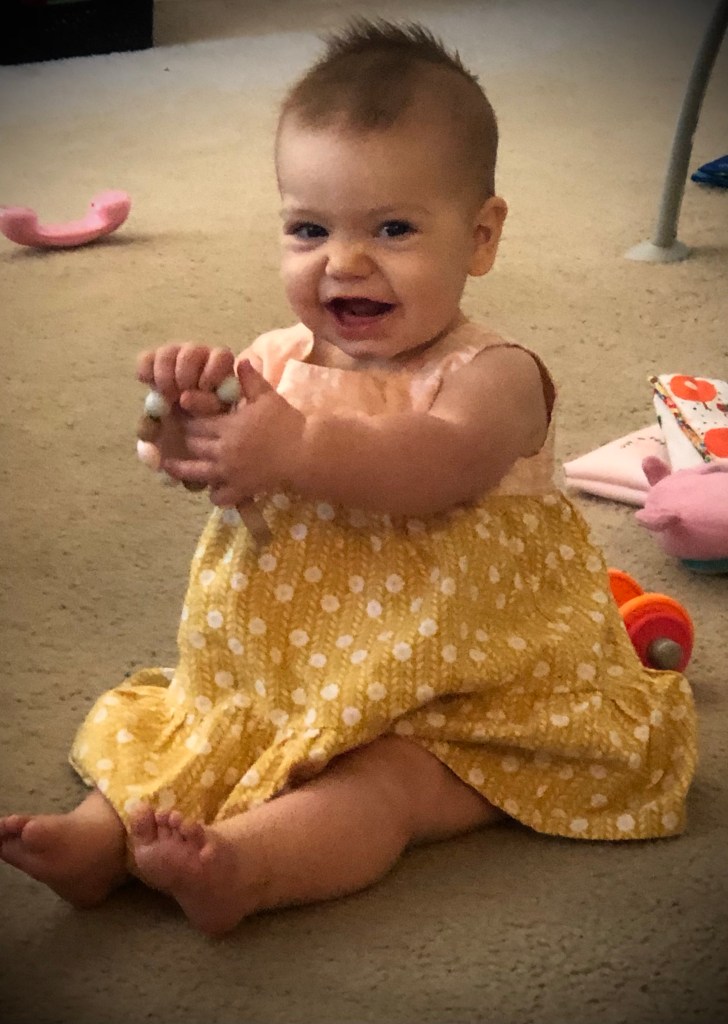
Eight months

Numbering the days
God recreated my world
with your arriving

My beloved Micah

One day I will tell you many stories, such as how you don’t like to take naps during the day and how I can manage to rock you to sleep. I like to think of it as Franna-magic. I will tell you that at eight months you suffer separation anxiety when you come to my house and your parents are out of your sight. I will tell you how you cry about that and how I take you outside and then you stop crying because it’s June, everything is so green, and the birds are always singing; you grow still, listening to their lively songs. Best of all, you heard your first cicada in my arms, one loner rattling high in the pines; you lifted your tear-streaked baby face to the sky in wonder. One day I will tell you that when I was a little girl staying with my grandparents in the summertime, the constant rising and falling of hundreds of cicada-rattles became my favorite sound. For me it is an Earth-song of belonging, comfort, hope, resurrection. It sings in my veins. In that sound, my grandmother is near. Perhaps you will love it too, my precious Micah. Maybe it will be one of many bonds we share in all the days and seasons and years to come, a tympani accompaniment to our generations, going on…just know that today and every day, your presence in this world is my new and hallowed heartsong.

XOXOXO forever & ever – Franna

Patch of earth

Sunny afternoon
visiting my son

my granddaughter
walks me out
to a patch
of dusty gray soil
shadowed by
the old live oak
not far from
the swingset

here, she says,
is where
we saw the turtle
laying eggs
then she
went away
into the woods

that is the way
of turtles, I say
she will not
come back

my granddaughter nods
and I recall
that her first word
was turtle

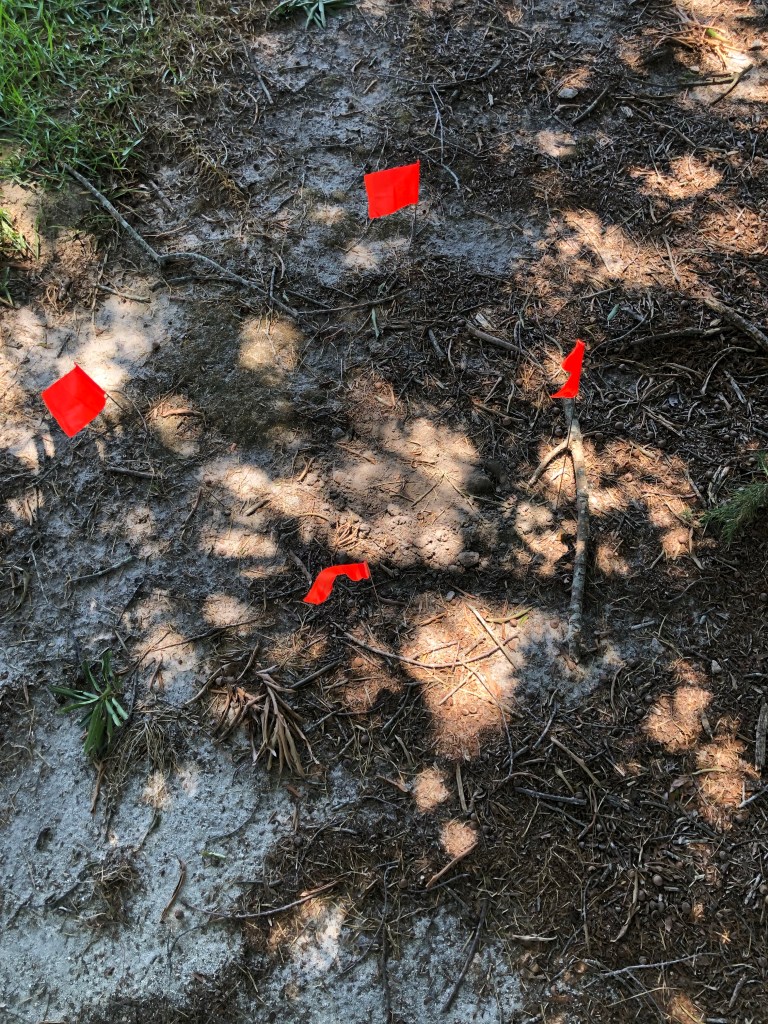
my son has placed
fluorescent stake flags
around this patch
of incubating earth

for the benefit
of his expectant
child

Not sure how many eggs are hidden here in this patch of earth so near my granddaughter’s playground.

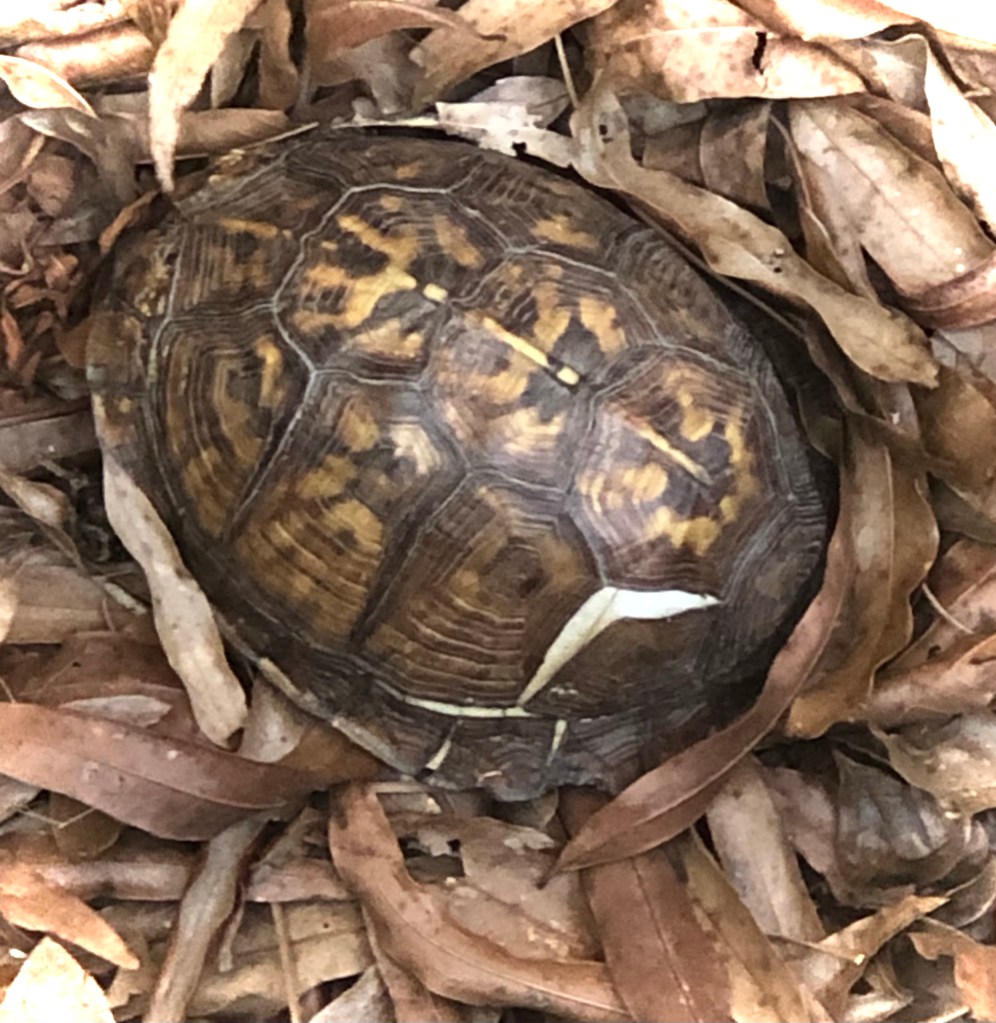
Empty box turtle shell discovered by my son’s basement. The turtle died some time ago. Not the mother, but apparently she was also an eastern box turtle. Under good conditions, the eastern box turtle can live over a hundred years. It’s a symbol for patience and is also the state reptile of North Carolina.

Word-association poem

with thanks to Allison Berryhill for this inspiration on today’s Open Write at Ethical ELA: Look around the room. Let your eyes rest on an object. Let that be your first word. List a word associated with it, then another…keep going until you’re ready to stop and “poetically connect the brain’s chain of associations.”

My word list:

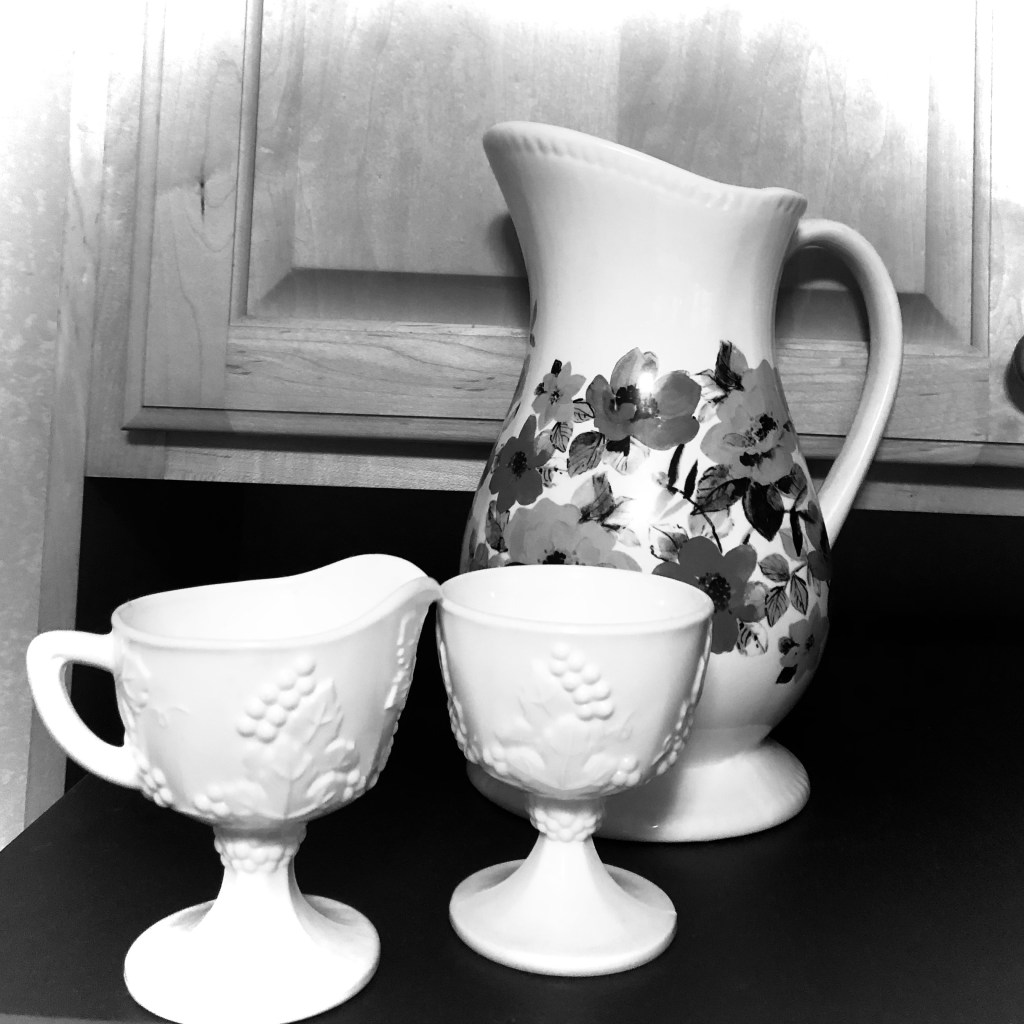
pitcher
pour
tea
sweetness
childhood
sugar

Drinking Deep

I remember the pitcher
in my grandmother’s hand, mid-pour
tea flowing like memory
me drinking deep of the sweetness
a childhood steeped in dinner-stories
Daddy saying Slide up to the table, Sugar.


The pitcher that sparked the associations. It’s just decor; didn’t consciously think, in the moment, about the milk glass creamer and sugar bowl being my grandmother’s.

Blue season

Today I am not driving along the backroads and byways to work, for that work is over and done for a season. There are a number of things I will and won’t miss but this morning I am thinking only of the drive. It has taught me much about noticing. And composition. Twenty minutes of travel in the countryside imprints images in my mind; I study them over and over.

For one thing, as I watched the verdant lushness of grass and trees deepen and the crops in the field bursting forth in their furrows, I thought about spring being the season of green. But not only green. Besides the blossoming and blooming of pinks, yellows, and whites, there’s the flash of fiery cardinal red, the dusting of robin-breast orange, the electric pop of the bluebird, the soft, quivering brown of Rabbit. It’s all poetry to me. Stirring a nameless longing. Maybe just for life itself.

Robert Frost comes to mind:

Nature’s first green is gold,
Her hardest hue to hold.
Her early leaf’s a flower;
But only so an hour.
Then leaf subsides to leaf.
So Eden sank to grief,
So dawn goes down to day.
Nothing gold can stay.

And then I contemplate how green is really a combination of two colors, yellow and blue. If nothing gold can stay, that leaves…blue.

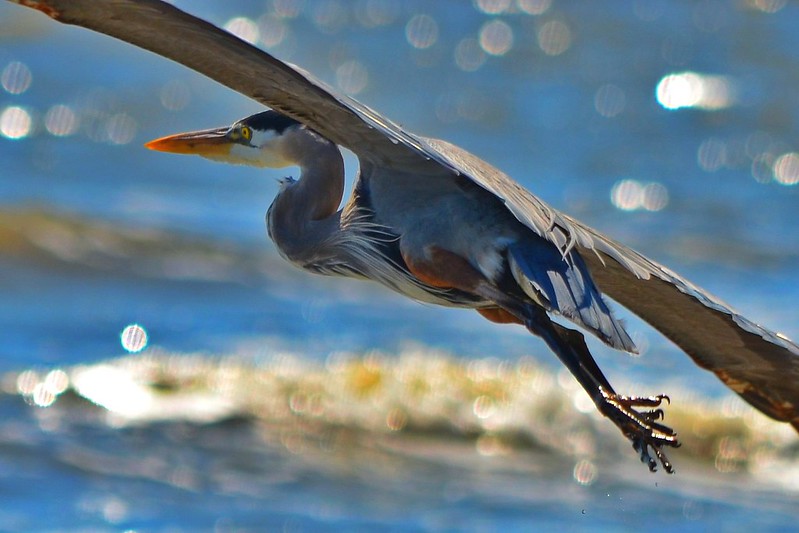
Which is so utterly fitting, as nearly every morning on my drive to work this spring I’ve been awed by the sight of a great blue heron in a pond. I pass three ponds, actually, and in two there’ve been herons. I have learned to look for them and there they are. Standing tall, serene, peaceful, almost elegiac. Once a pair of them flew across the road ahead of me. Dazzling. Somewhere in the brush I know there’s a nest with baby blue herons. In all my life, I cannot recall even glimpsing great blue herons. This is the birdiest spring I have ever known.

The herons are part of me now, and I think on the layers of meaning. Typically self-reliance, self-determination, progress… these seem surface level, like the color green. There’s more than meets the eye. There’s blue, a color I don’t usually associate with this season. Now I do. As I play with blue in my mind, it carries me to shadows, a time of day when the golden hours are transitioning to evening, and a fleeting memory of youth. A time of preparation, maybe going to dinner, gathering with friends, celebrating… all this, flickering and cool like tree-shadows when the day is nearly done and the blue hour descends. Again, a nameless longing. A heron in a pond.

I have had a hard time writing during these last weeks of school. Partly due to demands on my time. And physical limitations. And my psyche. But none of these are the blue longing.

Nature knows infinitely more than I about creating…and that is the pull, for nothing gold can stay.

Here’s to the blue season.

“Creativity is the Blue Heron within us waiting to fly; through her imagination, all things become possible.”

—Nadia Janice Brown

Photo: Great Blue Heron on the Coast of Texas, McFaddin Beach. Texas State Library and Archives Commission. CC BY 2.0

Spirit lifter

Upon arriving
at church
to teach a lesson
on the work of
the Holy Spirit
what should greet me
but the wafting fragrance
of cinnamon coffee
brewing serenely

so good and perfect
restoring my soul

even though the world
is no less broken

it is no less loved

for God so loved

as I read
the Scripture
sipping my
cinnamon infusion
what should appear
on the windowsill
but a little bird
looking through
the glass
at our class

a swallow
who’s built her nest
under the eaves

Even the sparrow
has found a home,
    and the swallow

a nest for herself,
    where she may have

her young—
a place near your altar,
    Lord Almighty, 

my King and my God

they know, birds
they know

wingbeats flutter
in my struggling
human heart

it’s all
the work
of the Spirit

I came to teach
I am being taught

I know
I know

my cup
runneth over

Spiritual journey: Celebrating small things

Today’s spiritual journey theme is celebrating small things (thank you, Ramona, for hosting our group).

What’s been on my mind all week, however, is the brokenness of things.

I wrote a series of poem-posts on it.

In those posts on the brokenness of things I could have mentioned that the incalculable horror, loss, and grief in Uvalde still weigh heavy on my heart each day, that I mourn the state of humanity and the inability to spare children. I could have mentioned that this school year, another chapter in the continuing saga of COVID, has been the hardest yet on staff, students, and families. I could have mentioned my despair over diametrically opposed viewpoints about what’s best for students and how some educators cannot get beyond deficit thinking to see the wealth of creative and artistic gifts in the youngest among us…

I wrote instead about being a child. About breaking my arm on the school playground when I was nine. About fearing my father’s anger and being surprised by his gentleness. In an effort to comfort me he brought one of my dolls along to the orthopedic office. It embarrassed me. I felt too old for the doll. Maybe it was more a matter of not want anyone else to think I still played with dolls. Yet the gesture touched me, even then. To this day the memory of my father holding that doll, shouting at the orthopedist to stop when I screamed during the bone-setting, is one of the most indelible images of my life. There my father stood, unable to spare me more than a moment of the suffering I had to endure. I could see the intensity of his own suffering. It was written all over his pale, fierce-eyed face. His presence and the knowledge of his pain on my behalf somehow breathed a waft of courage into my terrified heart. This little stirring of courage would sustain me through a subsequent hospital stay when the bones in my arm slipped and had to be reset. It would prepare me to visit a five-year-old boy with a crushed foot across the hall as he screamed in pain and terror. It would beget empathy: me there in my wheelchair with a cast halfway to my shoulder and him in a hospital bed with crib rails, his poor damaged foot heavily bandaged and raised on a suspended sling. United in common suffering, we would find a glimmer of overcoming, in the very midst of our brokenness.

That is the thing about children. Before there are even words to express, there are keen understandings. Children are natural ambassadors of healing. They instinctively seek to comfort. Their native language is love.

I realize, now, what I was longing for when I went back to those childhood moments.

The spiritual journey is littered with broken things, broken people, broken self. I remember wondering how that little boy’s crushed foot would ever heal. At nine I imagined the bones in countless pieces and couldn’t conceive of how doctors could repair that much disconnectedness. I wondered if his foot would ever be okay…but I knew, somehow, he would be.

Which leads me, at last, to the Great Physician. Who, like my father, intervened on my behalf to alleviate my suffering, and who, unlike my father, is able to provide more than momentary relief.

I’m not sure yet if I’m done writing about the brokenness of things but here’s where I finally pick up the path of celebration. I celebrate the sustaining gift of faith. I celebrate the memory of my father, gone for twenty years now but so alive and active in my memory. I celebrate that the school year is now ending, that a desperately-awaited respite has arrived. I celebrate children.

It occurs to me that none of these are “small things.”

So, here is one: I celebrate the musicality of children.

For on the most hellish of days, when I hear them singing, I remember heaven.

For the kingdom of God belongs to such as these… Luke 18:16.

Salvador Dalí – Los niños cantores (Children singing) 1968. Cea. CC BY 2.0
The brokenness of things: 2

part of a story-poem memoir, when I was nine

I never heard
of an orthopedist
until my father
takes me
after the fall
on the playground

and why has he brought
my Baby Ann doll

her plastic fingers
and face
look more smudged
than ever
in the glaring fluorescent light
of the exam room
where I sit
too embarrassed
and in too much pain
to say
I am not eight anymore
I am too old
for dolls now

the orthopedist
looks grim
while surveying
X-rays
of my poor left arm
against the light

not broken
in the typical place

an injection
for what’s about to come

it does no good, really

the orthopedist
braces himself
against the table
grips my damaged arm
with both of his hands

and pulls
and pulls
and pulls

my feral scream
comes of its own accord

that’s when Daddy
cries out

STOP. STOP.

— the orthopedist stops
he wipes his forehead

Daddy is pale
so pale
his blue eyes
animal bright

(in later years
he will say
I couldn’t stand
that man

but I knew
in the moment
he could not stand
my pain)

he stands there
clutching Baby Ann

who smiles at me
in her plastic way

she cannot help me now
but maybe
she’ll get Daddy through

doll hand. David Lee King. CC BY-NC-SA 2.0