Eavesdropping

a pantoum

Under the eaves
a porch
on the porch
a chosen door

a porch
sanctuary
a chosen door
from the other side, I hear

sanctuary:
father finch feeding nesting mother
from the other side, I hear
a song of love

father finch feeding nesting mother
on the porch
a song of love
under the eaves

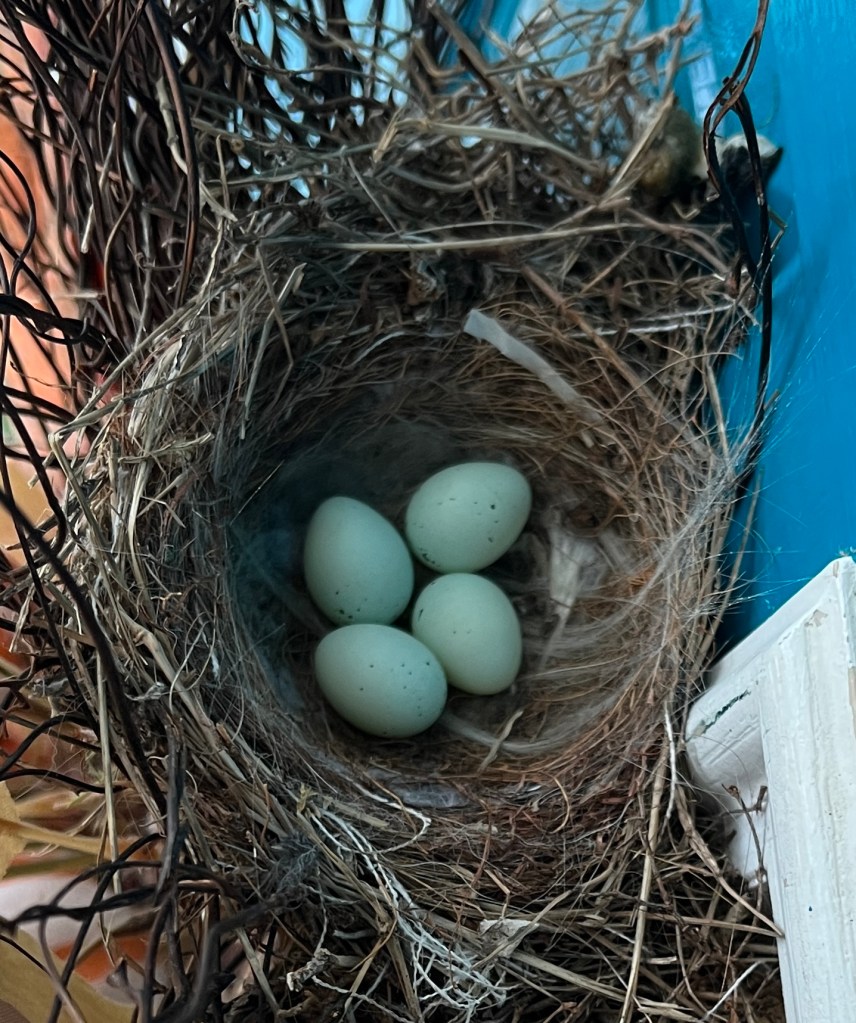
Short clip of my house finches, which return every spring to nest in my door wreath (the finches don’t know that I purposely put out the twiggy grapevine wreaths they like best). Crank the volume to hear their beautiful voices. You might even catch a glimpse of wings as the father flies off to fetch more food for the mother. He will feed her until their little blue eggs hatch and then they’ll both feed their babies. In listening, it’s easy to understand how “charm” became the collective noun for finches and why they are said to symbolize joy.

House finches have an interesting history. From the Audubon Field Guide:

“Adaptable, colorful, and cheery-voiced, House Finches are common from coast to coast today, familiar visitors to backyard feeders. Native to the Southwest, they are recent arrivals in the East. New York pet shop owners, who had been selling the finches illegally, released their birds in 1940 to escape prosecution; the finches survived, and began to colonize the New York suburbs. By 50 years later they had advanced halfway across the continent, meeting their western kin on the Great Plains.”

also this, from the House Finch Overview, Cornell Lab of Ornithology:

“House Finches feed their nestlings exclusively plant foods, a fairly rare occurrence in the bird world.”

These are things I have learned. I continue to learn the lessons of the finches as they fill my home and heart to overflowing with a rare, almost-otherworldly joy.

House Finch mosaic. wolfpix. CC BY-ND 2.0.

*******

with thanks to Two Writing Teachers for the monthlong Slice of Life Story Writing Challenge

Doggerel

noun

  1. comic verse composed in irregular rhythm.
    “doggerel verses”
    • verse or words that are badly written or expressed.
      “the last stanza deteriorates into doggerel”

Example:

Time for a nap
time to recharge
if only for a bit
on a teeny-tiny pillow
that ain’t a good fit

this is what comes
of living large

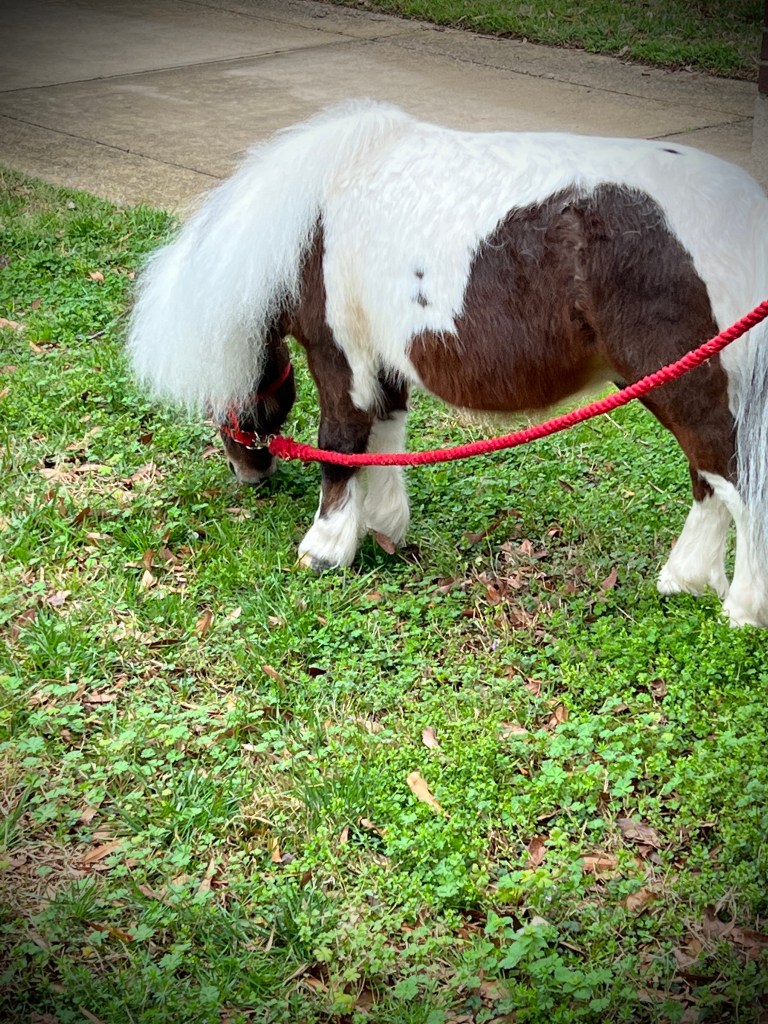
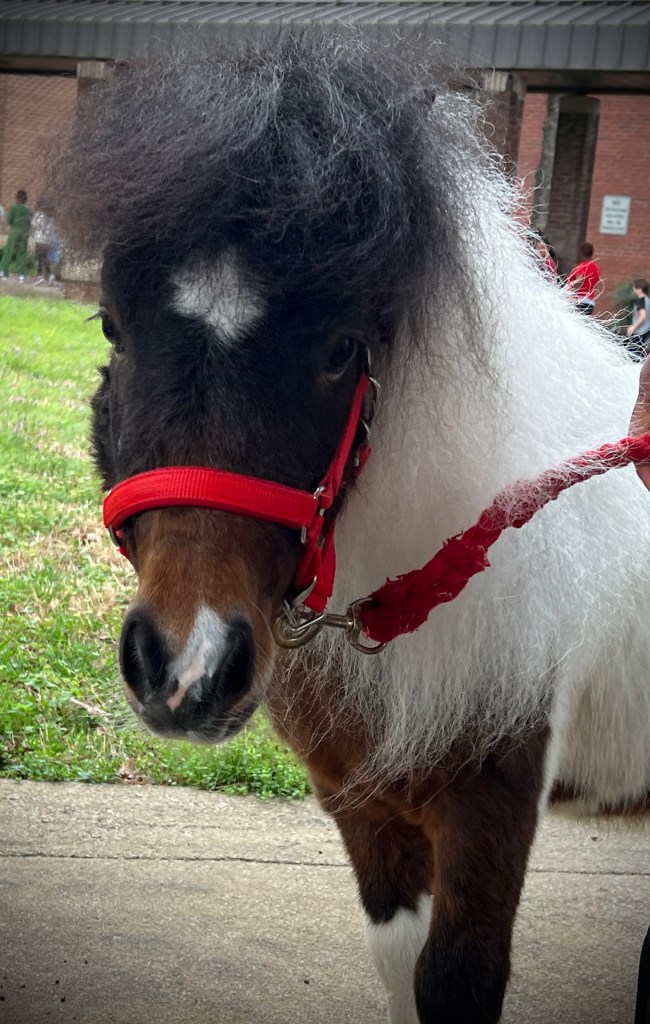
My son’s dog, Henry. Well-spoiled.
A master of making himself look “pitemous,” as you can see.

*******

with thanks to Two Writing Teachers for the monthlong Slice of Life Story Challenge
and to you, Dear Reader, for enduring this bit
of doggerel.

Crows

I could hardly wait to try the Cornell Lab Bird ID app during February’s Great Backyard Bird Count.

Especially the sound identification feature.

When you select it, ‘Merlin’ listens and tells you which birds it hears.

I already know the beautiful songs of house finches, cardinals, and Carolina wrens. The low, mournful coo of doves. I know birds of the night by sound: the haunting, onomatopoetic call of the whippoorwill in summer, the hair-raising screech and who? who? who? of owls. What other wonders are hidden in the woods surrounding my home?

And so it was one damp, drab morning that I stepped out on the back deck with my phone and opened up the bird wizard (the name Merlin is too good).

First bird heard:

CAW! CAW! CAW!

The words American crow popped up in the app.

Thanks, Merlin. That’s only the easiest bird sound in the world. I knew it as a little kid watching Kornfield Kounty in Hee Haw.

Globally speaking, however: Is there a bird more steeped in superstition, legend, and lore? Or with more conflicted symbolism?

Harbinger of death and sickness. Psychopomp, spiritual guide for the human soul. A sign of transformation, balance, wisdom, confidence, trickery… crows are even said to carry a person’s prayers to heaven.

They are scavengers but they cannot tear flesh open with their own beaks and have to wait for some other toothed predator to start the process; they’ve been known to lead wolves or other hunters to prey. Crows don’t dine exclusively on meat; they’ll eat “almost anything,” researchers say.

Scientists say that crows have big brains and are aware of their own thoughts. In Norse mythology, two crows (or ravens, depending on the source) whose names meant Thought and Memory rode the shoulders of Odin. Crows act with deliberation. They are keen observers. They use tools like sticks and shells when needed to get their food. They learn to recognize human faces and have been known to leave gifts such as pebbles or pretty shards of broken pottery as a thank you for humans who have fed them…

CAW! CAW! CAW!

Crows also prey on songbirds…

There’s Papa House Finch singing like Tevye on the roof of my house while Mama Finch is nestled on little blue eggs so perfectly hidden in the wreath on my front door…

Don’t even think about it, Crows. The finches are mine.

Yet.

In all my dreams about birds—for there’ve been many—I’ve not seen finches. Eagles, peacocks, owls, and whippoorwills (I think) have appeared.

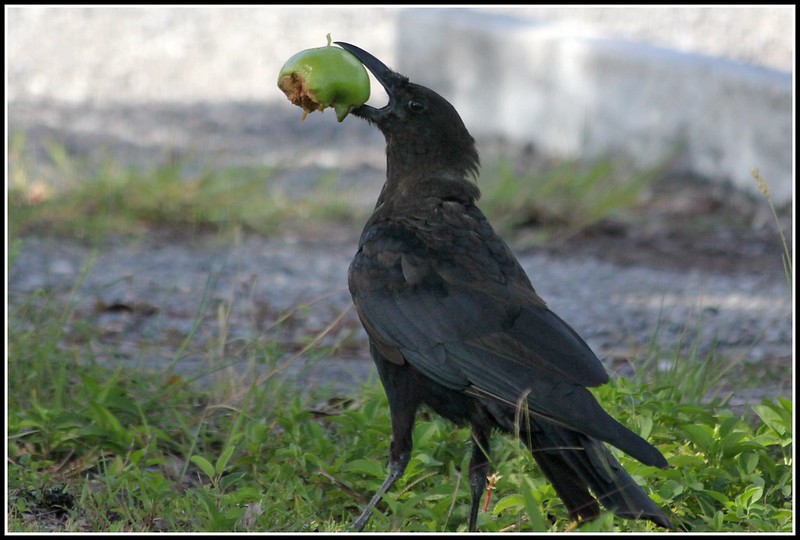
And one bright-eyed crow, sitting in the gravel beside a car, with a bright green stone or ball, waiting to give it to me.

What does it mean?? That is the question…

CAW! CAW! CAW!

I feel pretty sure about this one thing: If a crow offers you a gift…take it.

AMERICAN CROWcuatrok77. CC BY-SA 2.0.

One more bit of food for thought: The name Merlin has a controversial origin history itself… possibly derived from French merle, which means blackbird.

*******

with thanks to two fellow Slicers in the Two Writing Teachers community:
Kim Johnson, for pointing me to the Great Backyard Bird Count, and
Ms. Chiubooka (Cindy), for recently wondering what my take on crows would be.

We’re all in the daily Slice of Life Story Challenge together.

Writing life.

Barefoot baby ballerina

a reverso poem

At sixteen months
you walk through the house
on the very tips of your toes
while we marvel.

Baby Ballerina, we call you.
Our beautiful en pointe
barefoot ballerina.
Your Franna was a toe walker, too.

Your Franna was a toe walker, too,
barefoot ballerina.
Our beautiful en pointe
Baby Ballerina, we call you
while we marvel.

On the very tips of your toes,
you walk through the house
at sixteen months.

My beautiful granddaughter Micah…all that toe walking makes a little body tired.

Funny how I hear my father’s voice calling across the decades:
“Put your heel down when you walk!”


*******

with thanks to Two Writing Teachers for the Slice of Life Story Challenge every day in the month of March.

Auspices

In Roman times, priests called augurs studied the activities of birds to divine the will of the gods. This practice of reading signs and omens was called taking auspices.

Likewise, many ancient legends depict the language of birds as perfect and divine; predating human speech, it was communicated by deities, understood by prophets and angels. Some say bird language was the original language n the Garden of Eden, spoken by Adam, Eve, and God.

I cannot speak to these mystical beliefs. But I agree there’s something of the sacred in birds.

I assumed I’d developed this affinity later in life. Birdwatching as an older person’s pastime. My mother-in-law loved birds. So did my grandmother. What is the correlation between aging and deriving such pleasure from birds? An acknowledgement that life in this world grows short, and the beautiful should be savored? Or something deeper? Once upon a time, when women were birds, there was the simple understanding that to sing at dawn and to sing at dusk was to heal the world through joy. The birds still remember what we have forgotten, that the world is meant to be celebrated, writes Terry Tempest Williams.

I’d forgotten that my love of birds began early in life. It all started with parakeets named Angel and Lucifer (how’s that for spiritual connections?). Angel was blue and white, sky-and-clouds. Lucifer was yellow and green. They were pets of my parents’ friends and after my first mesmerizing encounter, I begged for a parakeet. I got one for my sixth birthday. Solid yellow (although I’d wanted one like Angel). The pet shop folks boxed my bird in a carton decorated like a circus train, with little holes in the sides. Riding home in the car, I peered in to see a red-purple eye looking back at me…

Tweety lived until I was twelve.

I could never have a caged bird now.

They are meant to be free.

Living in a rural area offers daily doses of bird-awe, from the blue herons standing like statues in stillwater ponds to the snowy-winged hawks perched high on power lines…last week on my way to work, I felt lighter than I have in a while. It’s been an exceptionally trying year at school. It helps that there’s actually more daylight now that spring is on the way (I should have my vitamin D checked, perhaps). On this particular day last week, I sensed that good things are coming. I even said it to myself, so strong was the sense: Good things are coming. A little farther on, I happened to notice a large brown clump up in a bare tree by the road. A nest of leaves, maybe? Work of squirrels? But as I drew near, I saw a white head…a curved beak..

An eagle.

For the rest of that day I felt I had wings myself.

And then there is the return of the house finches, which, truth be told, never actually leave. One or two little birds have been sleeping in my door wreath this winter. They startled me a few times at night, flying out of the wreath when I went to the porch. I suspect finches although I couldn’t get a good look in the dark. If you’ve read my blog a while, you know the finches build nests in my door wreath each spring. In fact, I left the old grapevine wreath out for this very purpose.

A couple of weeks ago, I heard the telltale chatter on the porch. Finches discussing the wreath. Probably planning the nest. It was a loud, spirited conversation, hard to tell if the pair was in agreement or not…

I kept checking the wreath, but all I saw was the indented place where a bird or two had been sleeping.

No nest. It was still February, after all.

This past Saturday, the finches were the loudest yet, out there on the porch. My son and granddaughter, age sixteen months, were visiting.

“Is that your finches, Mom?” he asked.

“Yes. They’re talking about making a nest,” I explained.

We listened for a while to the happy trills.

The next morning I went out to check… surely a nest was started, with all that cheerful bird language?

I saw nothing.

Until…I don’t know what made me get the stool and check the far side of the wreath…

This is what the finches were up to:

A perfect nest, so perfectly disguised that even I, who was watching for it, didn’t find it until four eggs had already been laid.

I know this happens every spring across the Earth, but to me, it is a miracle. The eggs, incubating life, laid on a bed so carefully and lovingly lined with soft hair…it is soul-piercingly precious.

As is the father finch’s glorious, glorious song from the rooftop, morning and evening, his voice rolling down and echoing across the countryside. His is the predominant voice of all the birds around, and there are many…I will write of them later.

For the father finch’s song of deep joy is my own right now…celebrating family, life, light.

Good things are here.

******

with thanks to Two Writing Teachers for the Slice of Life Story Challenge every day in the month of March.

I suspect there will be lots of birds in my posts… spirit-lifters that they are.

A president, a poem

Today on Ethical ELA’s Open Write, Stacey Joy invites participants to lift a line of poetry and use it in creating a Golden Shovel poem.

I was thinking about it being President’s Day, so I went in search of poems written by our presidents. This led me to Jimmy Carter, the first U.S. President to publish a book of poetry in his lifetime. He is our longest-living president; at age 98, he has just entered hospice care. I have lifted a line from his verse.

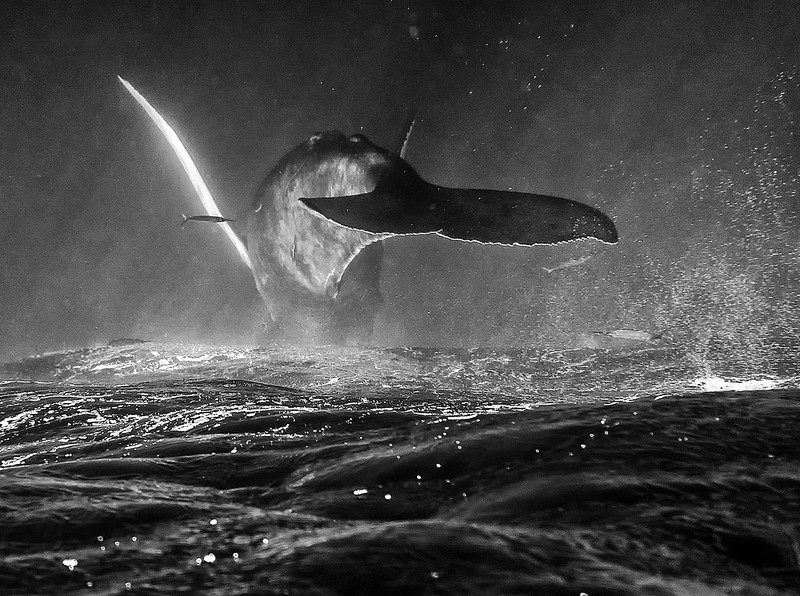
“To hear the same whale’s song” – Jimmy Carter, “Life on a Killer Submarine,” Always a Reckoning and Other Poems

Homeward Hymn

when my life draws to
its close I imagine the last thing I hear
will be cicadas rattling high in the
green oaks as I pass, fervently calling, calling the way, same
lost and found returning sound of whale’s 
pulsating destination song

If Whales Could Fly. Christopher.MichelCC BY 2.0.

I can’t be the only one poem

Today on Ethical ELA’s Open Write, Britt Decker shares a beloved C.S. Lewis quote: “Friendship is born at that moment when one person says to another, ‘What! You too? I thought I was the only one.’” She invites participants to share “quirky, unusual, uncommon things you do, believe, or say and turn the list into a poemstarting with the line ‘I can’t be the only one who’…”

To begin with: I have loved Lewis since I was ten years old and first landed in Narnia. I have a shelf of his books. When I read Britt’s words about Lewis, I echoed his own: “What! You, too?”

And so I keep that as my title…

What! You, Too?

I can’t be the only one who

would rather write than speak

drinks more black coffee than water

puts pepper on popcorn

is enchanted by abandoned houses
in various stages of falling down

left my Christmas tree up
until February this year
simply because it was beautiful
and looking at it
made me happy

barely dips in social media anymore

follows murder cases daily
for the latest developments

loves my Grandma name (Franna)
better than my actual given name

looks for hawks and herons
on my drive to work

grieves over the blue heron
not having been at a certain pond
in weeks
(please be all right)

savors the harsh rattling
of cicadas in summer
(heartsong
in the background orchestration
of my life)

senses the presence of my father
in the fragrance
of fresh-mown grass

thinks best and sees solutions
in the dark morning hours
before I’m fully awake

journals my dreams, to be awed
by the constant presence of birds
and the recurrence of
vivid green

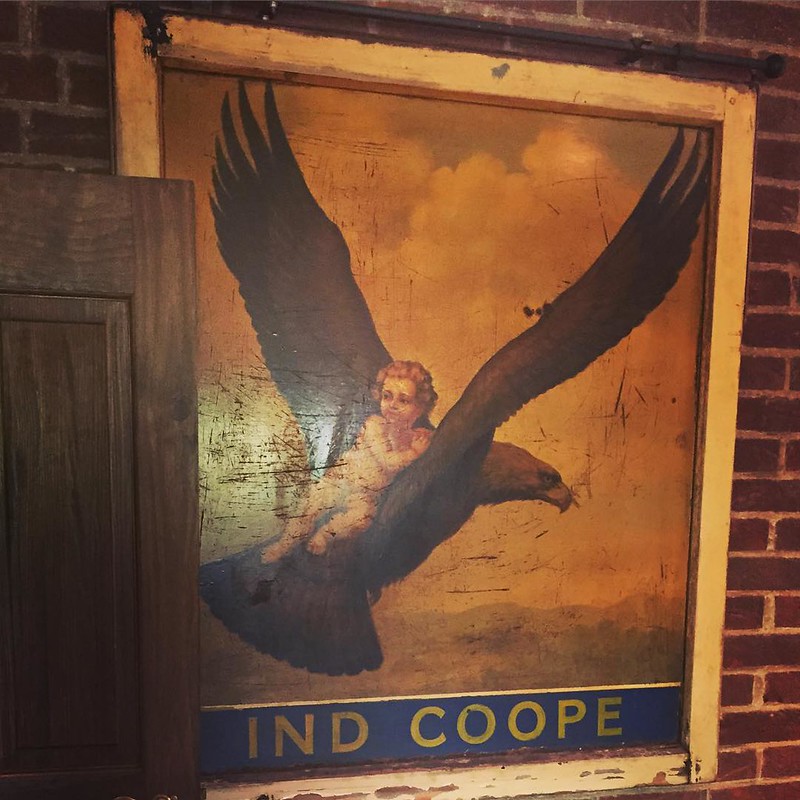
The original sign from The Eagle and Child (at CS Lewis’ home, The Kilns). #TXinUK. david_normanCC BY-NC-SA 2.0.

Tale-based poem: The Legend of Water Rabbit

Today on the Ethical ELA Open Write, poet Stacey Joy invited participants to read a few short folktales, fables, fairytales, myths, or legends to inspire a poem: “Your poem might be a response to, a retelling of, or a new version of the original piece.”

I wanted to work with a fable but the children’s tale that came to mind first was… well, maybe you will recognize itmy poem is meant to be something of a mythological sequeltribute.

The Legend of Water Rabbit

In the forest deep
upon a cushion of emerald moss
Water Rabbit sleeps

and dreams

of the Child.

In his dream
he cannot tell the Child
how much
he loves him

for to the Child,
the Rabbit isn’t real

and there is no language
for conjuring a bridge
across the chasm
of unbelief.

Water Rabbit twitches,
remembering

the nursery
the toys
the Wise Horse
who spoke of love

and longsuffering.

It was Fate that placed
the Rabbit in the arms
of the Child that night
when a favorite toy
was lost.

It was only for a season
that the Child embraced him
and carried stuffed Rabbit
everywhere he went…

Water Rabbit’s whiskers tremble
with dream-reliving.

He sighs.

Other rabbits nearby
cock their heads
and perk their long ears

for in a moment,
Water Rabbit begins
to whimper
and weep
and wail
in his sleep

—the dream
is all too real:
the Child’s fever,
the separation,
the command that
Rabbit and all the other toys
be burned.

It isn’t fire or fears
that brings Rabbit’s tears

but the thought
of never being
with the Child again.

Wake up! Wake up!
The colony surrounds
Water Rabbit,
dozens of their small front feet
against his shimmery fur,
shaking, shaking him

into reality.

Water Rabbit gazes at them
through his tears
from his emerald-moss bed

and asks…Is it time?
 
The colony nods in unison.

Water Rabbit rises
wiping tear tracks
from his velvety face.

The colony parts
Water Rabbit
makes his way through…

he hops and hops with 
boundless energy until
he reaches the clearing 

where the Child
bigger now
(for he’s bigger every Spring)

sits on the blanket
spread over the grass
with a picnic feast 
made ready.

Into the Child’s arms
leaps the Rabbit. 

There are no words
for there is no language
that can capture
love so great
and eternal
and real

as real as the solitary tear
of a toy Rabbit
about to be burned
for the sake of the Child.

For it was that teardrop
the inevitable price
of love
and sacrifice
that brought life,
transformation,
salvation.

That is how
Water Rabbit
came to be.

*******
-with thanks and apologies to Margery Williams and The Velveteen Rabbit.

2023 is the Chinese Year of the Rabbit.

More specifically, the Year of the Water Rabbit.

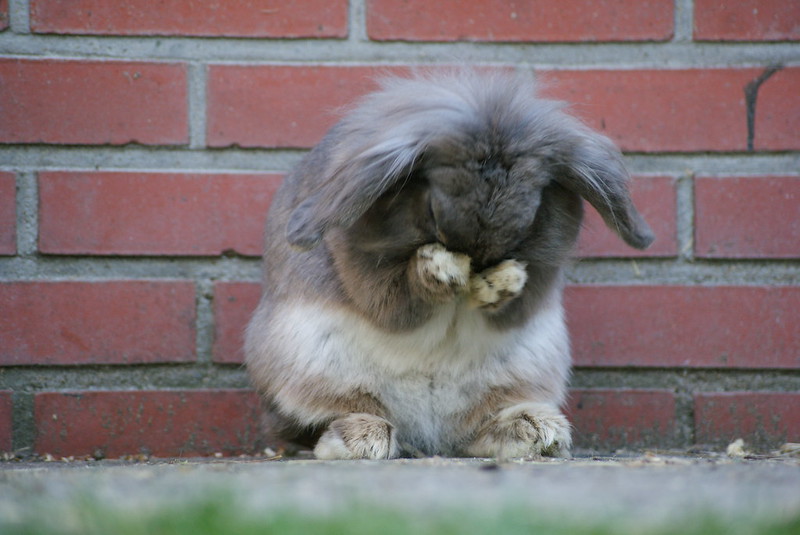
You make vita cry!jpockele. CC BY 2.0.

Heartdance


a celebration of love
in the unchoreographed dance
of life

two triolets

I.

On this Friday night
he prepares for the dance
much to his girl’s delight.
On this Friday night
her smile is country-morning bright
taking pictures out by the manse.
On this Friday night
he prepares for the dance.

II.

It was meant to be, you and me.
Let us dance
our own jubilee.
It was meant to be, you and me,
these moments, in our finery,
taking pictures out by the manse.
It was meant to be, you and me.
Let us dance.

My preacher-son and his girl, going to the Father-Daughter dance.

*******

with thanks to the Two Writing Teachers community for providing a place to share our unfolding stories,
even when they are poems.

A word on writing

I love writing, teaching writing, and helping others love writing.

There was a time in my career when I designed and co-created workshops for teachers as writers so that they could channel their own positive experiences into the classroom with students, to model for them how an embryo of an idea comes to life, how it grows bones and flesh and begins breathing and crying and rejoicing and blazing trails right there on the page (or screen). I led professional development. I went into classrooms. I worked alongside teachers and kids. I witnessed powerful things…I can still see the tears, the glowing faces, the pride and awe in the eyes of kids (and their teachers) over something they’d created, that came from within.

They wanted more.

That was before changes in my district, moving away from the writing workshop model and Lucy Calkins in general. Now writing is embedded in the Language Arts curriculum, largely in response to reading. The goals are lofty and writing assignments follow a highly prescribed pattern. Neatly formulaic. Uniform.

That is not to say there’s never any creativity… for example, in a nine-week unit series of extensive reading and writing about frogs, the students get to compose poems and write pourquoi tales about frogs. The pacing and process are pretty intensive… which is why a teacher came to me: “Could you meet with some of my students to help them with the pourquoi tales? So many are struggling. Meeting with each one is taking so long.”

It was like old times, almost, these writing conferences…except with the unique challenges of writing a myth about how some true facet of frogdom came to be while describing the setting and the frogs, giving them character traits, having them talk, and ending up with a lesson learned, i.e., moral to the story. —Did I say, by the way, these kids are around eight years old?

And did I say that there’s no way to teach writing without conferring with the writers? This is, in fact, THE teaching…teachers learning about the learners and figuring out what to do for them.

For there is an English learner who understands so much more than he’s able to convey; his struggle is with grammar, as word order is different in his language. His ideas, however, are original; he incorporates what he knows about his own father’s work. There is a child who missed some critical days in the unit and didn’t understand what to write about, and therefore wrote a completely off-topic but interesting narrative. Once he understood, he went on to compose an engaging narrative with a brilliant, metaphorical moral.

One by one, the kids came, and we talked about what they were trying to accomplish with this pourquoi, and then we figured out the big “hows” and “whys” in the tale… usually by my asking “what if…” and the lights in their eyes would come on. The sparkly pink and rainbow-dotted and brown-and-blue striped frogs came to life. They had conversations. They made bad choices like cheating; they made good choices by helping each other anyway. The tales explained why frogs jump so high, why their tongues are so long, why some are so colorful, why some are poisonous. They learned a lot of lessons about being better frogs.

One resistant boy didn’t want to stop working on his draft revisions to go to specials: “This is fun!” he said.

Oh, child. Somewhere the King of Frogs nods his head in understanding. I can almost see his tiny golden crown cocked to the side of his head, by his ancient and all-knowing eye:

Ribbit.

Only I hear it as Pourquoi…

Why.

frog

Frog. Dave Huth. CC BY

with special thanks to Two Writing Teachers for all you do on behalf of student writers and their teachers…our stories matter.