A long time ago in a Galaxie far, far away

Galaxie

Truly wonderful the mind of a child is. – Yoda

A long time ago in a Galaxie far, far away . . .

A little girl clutches Mama Bear and Papa Bear. Baby Bear has accidentally been flushed down the toilet.  Clad in a mod red pantsuit instead of a long white dress, and with hair too short for cinnamon buns on the sides of her head, the little girl is nevertheless a princess of sorts, if not a rebel. Yet.

“Stand right there and smile,” says the little girl’s grandmother, who snaps a picture. The little girl really cannot not see the camera, as the sun is in her eyes. She smiles anyway.

Behind her stands the Galaxie  – a 1964 Ford Galaxie 500 that the little girl’s Granddaddy bought, used, for her Grandma. The exterior of the car is red. The interior is red, the fabric of the seats trimmed with silver cord.  The Galaxie doesn’t have power steering or air conditioning. In the summer its windows must stay rolled down if the people inside are to survive. Once it lost a hubcap and the girl’s Granddaddy had to run after it in the city streets.

Yet the Galaxie represents power, things far beyond the little girl. Ford Motor Company named it for the Space Race before the success of the United States over the Soviet Union, which came to pass in 1969, when Neil Armstrong and Buzz Aldrin walked on the moon. The little girl has no memory of this event but likes watching Star Trek with her dad: “Beam me up, Scotty.” She sings The Jetsons theme song:  “His boy, Elroy . . . .” She loves the Jetsons’ dog, Astro. Space gets up close and personal in March of 1970, around the time this picture is taken. A total eclipse occurs in the southeastern United States. The little girl’s family and all the neighbors run out of their apartments in an excited frenzy to watch it. A hush, a stillness, falls over them as the bright day goes as dark as night. The sun disappears,  becoming a mere halo around the huge, black moon. 

“Don’t stare at it,” says Grandma, drawing the little girl close. “It will hurt your eyes.”

The little girl stares anyway, because it is so strange to see the sun go dark.

The world was changing fast. So was my universe. In the year following the eclipse, my grandfather retired. He’d been a shipbuilder since World War II. “We turned out ships in three months in during the war,” I recall him saying, “when it used to take a year.” The war had been over for twenty-five years and it was time to go home; my grandparents packed everything, loaded the Galaxie, and returned to the remote outskirts of Aurora, North Carolina – a tiny town named after the Roman goddess of the dawn. I thought at first it was named for Sleeping Beauty.

My summer voyages began. There on the old dirt roads where my dad ran and played as a child, I learned how to drive with that Galaxie. It was, after all, more indestructible than the Death Star. It was still running after the birth of my first child. My grandparents finally gave it away to the man who hauled trash off for them.

It’s probably running still, somewhere.

Which is more than can be said of our spacecraft.

slice-of-life_individualEarly Morning Slicer


Six-word memoir

Words pour in

“What do you love best? How can you use the things you love to represent you, to describe who you are, in just six words?”

I pause to let the fifth graders think.

“One thing that I love,” I continue, “is the sound of cicadas. Have you heard that sound?”

Hands shoot up. I nod to a girl who replies: “Those bugs that buzz really loud.”

“Yes. Every spring I look forward to hearing the cicadas again – they will buzz all summer long. They remind me of summers spent with my grandparents. The sound was deafening in the thick woods around their home. Hearing cicadas now makes me feel happy and safe, no matter what else is going on. It’s one of the things I love best. So I might try to write my six-word memoir about the sound of cicadas.”

With pencil on paper, using the document camera, I write:

Nature sings to me. I listen.

I see heads nodding.

“I might keep working these six words to see if I can make them represent me better. I might decide to work on another idea. Today you will make a list of things that you love – maybe things you love to do, or favorite objects, or even dreams you have of things you want to do or be – and think about how each thing represents you. Then we will work on capturing and hammering out those descriptions in just six words.”

Off they go around the room, to brainstorm.

I brainstorm, too. What else can I write? What’s another example I can give them?

Well, as far back as I can remember, I loved reading and writing – it’s who I am. It’s what I do. It’s why I’m in this very room this very minute, teaching it.

I think about it all night, and am ready for the next lesson.

“So, ladies and gentlemen, yesterday we brainstormed ideas for writing our six-word memoirs. We thought of things we love and how they might represent us. I thought of something else to represent me. Let me ask you: What do you think represents me? Think about what I do and what you know about me.”

A boy waves his hand: “I know! Harry Potter!”

The class giggles and a few say, “Yessss!”

I laugh. “Excellent. But think bigger than Harry Potter, if possible! Think about who I am and what I do.”

A quiet girl’s hand sneaks up. “You teach reading and writing.”

“There you go. I’ve loved reading and writing all my life. I think this idea might be a great choice for a six-word memoir. It really describes who I am. I have to think now about how to capture this idea in six words.”

With pencil, paper, and the document camera, I write:

I read, I write, I am.

Heads nod – and an image materializes in my mind just then.

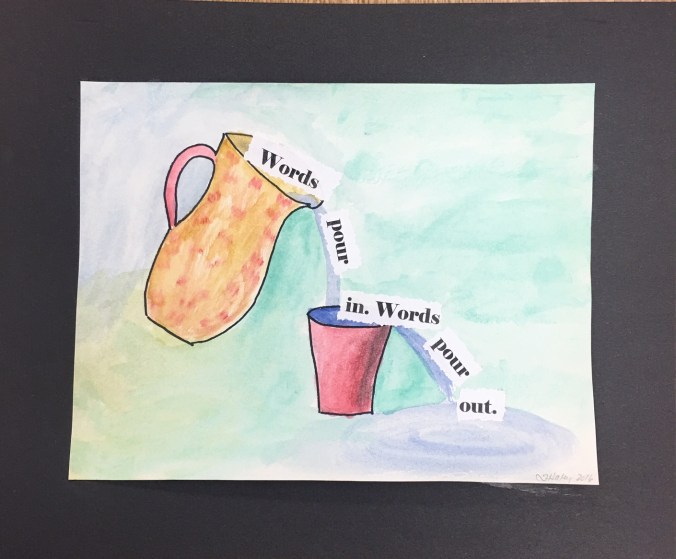
A pitcher, a glass, water pouring . . . .

“I just got an idea of how to make this better!”

I write:

Words pour in. Words pour out.

The children study these words.

“What do you think this means, ladies and gentlemen?”

A boy says, “First you wrote I read, I write, I am and you said you could make it better so I think you mean that if words pour in, you’re reading, and if words pour out, you’re writing.”

Across the room, faces light up.

I smile. “Well done. For a few minutes, share your ideas with your partner and talk about possible ways to begin writing your six-word memoir. Then we’ll all write.”

I listen as the ideas flow in and out, with a hum as vibrant as that of cicadas.

(If you’re interested in reading an earlier Slice on the sound of cicadas: Cicada rhythm)

slice-of-life_individualEarly Morning Slicer

But I’m not a teacher

Encourage

He’d saved his own money to buy me a Christmas present. He told his dad he wanted to go to the bookstore, so his dad took him.

He bought me a picture instead of a book and watched with great pride as the clerk wrapped it.

“I got it for my mom,” he told the clerk.

“Oh, she’ll love it!”

He clasped it to his heart all the way home.

He burst into the house, calling, “Mom! Mom! I got you a present!”

His dad said, “Son, just put it under the tree. It’s for Christmas.”

“I want to give it to her now!”

“All right,” I said,  sitting down on the couch. My little boy scrambled up beside me. “I’ll go ahead and open it, if that’s what you want.”

He watched my every move as I unwrapped the paper and pulled out the matted picture bearing the quote: A teacher in wisdom and kindness helps children learn to do exactly what they thought could not be done.

I didn’t know what to say for a moment.

“It’s beautiful, honey,” I said, hugging him. “Thank you so much.”

“Do you love it, Mom?”

“I do … but I’m not a teacher.”

My son surveyed me with huge dark eyes that seemed far older than his six years: “Oh yes you are, Mom.”

At the time, I wasn’t even a college graduate. Teaching wasn’t on my radar. Thirteen years, a degree, and another baby later, I actually became a teacher. In all of those education courses that required me to describe my educational philosophy, I wrote: A teacher is an encourager, recalling that solemn little face, those big eyes, the absolute conviction shining in them. Children, sometimes, are the greatest of sages, the most profound of prophets.

Three more years, and the boy graduated college himself with a degree in history. “What am I going to do for a job?” he asked one afternoon, a slight hint of anxiety in his voice.

“Teach,” I answered, smiling.

He didn’t smile back. “But I’m not a teacher.”

“Oh yes you are, Son.”

Before the summer ended, he had a job teaching social studies at his old high school. When he went to set up his classroom, he cleaned out the cabinets and found old tests – including his own.

He also became a soccer coach, taking his team to the championships and winning regional Coach of the Year this past season.

We didn’t seek teaching; it found us. We’ve done exactly what we thought could not be done – we do it every day, all over again.

And every day is new, if not easy; every day offers wisdom, beckons kindness, invites us to believe in others, in ourselves, every moment a chance to create, to reinvent, to overcome. It can be done.

Encourage one another.

slice-of-life_individualEarly Morning Slicer


Service

The restaurant was packed with the after-church crowd on Sunday. The boy halfway wondered if he should have chosen a different place for lunch, but he had a hankering for a steak today. 

The waitress took a long time getting to him for his order; he suspected it might take forever before his food actually arrived. Well, I’m really in no hurry, he told himself. That steak better be good, though.

The noise got to him a bit. Clinking glass at tables where busboys hurried, a screaming toddler, the hum of conversations, bursts of laughter, too-loud music. Why do restaurants continually raise the volume of the music above the volume of conversation? thought the boy. People are just about shouting to each other! 

The host passed his table, followed by an elderly woman with a walker who gingerly navigated the tables and chairs to be seated a short distance away from the boy. He sipped his sweet tea, wondering if he should make it last, as a refill any time soon did not seem like a remote possibility. The restaurant must be short-staffed today, or something.

The woman with the walker was alone. I wonder why? mused the boy. Is she a widow? Maybe she doesn’t have children. Maybe her husband is in the hospital. Or maybe a nursing home. It’s Sunday; maybe she’s been to see him, or maybe she’s going to see him after lunch.

It bothered him that this woman was alone.

It did not bother him that he was alone. Sometimes he ate with friends after church and sometimes he just enjoyed solitude. I am young, though, he thought. She is old. She should be with someone.

Maybe someone is meeting her here.

No one did.

The woman’s long wait jangled his nerves. He forgot that he, too, was receiving terrible service today; this old woman deserved better treatment. 

His steak eventually arrived. It was good. He savored every bite. When the bill came, he asked the waitress:

“Do you see that woman over there,  by herself?”

“The one with the walker?”

“Yes. Bring me her bill, too, please. I am buying her lunch today.”

And so he did. He left the restaurant feeling peaceful inside, before the woman knew her lunch was paid for.

His story brought tears to my eyes. The boy is just nineteen, a college student, working his first steady part-time job.

“You have one of the best hearts of anyone I’ve ever known,” I told him. “You truly do.”

He half-smiled like my father used to, sometimes.

“It was the only thing I could do for her, Mom.”

And, sated with steak, he went upstairs to the quiet sanctuary of his room, humming his favorite tune, the first one he ever learned.

Amazing Grace.

slice-of-life_individual

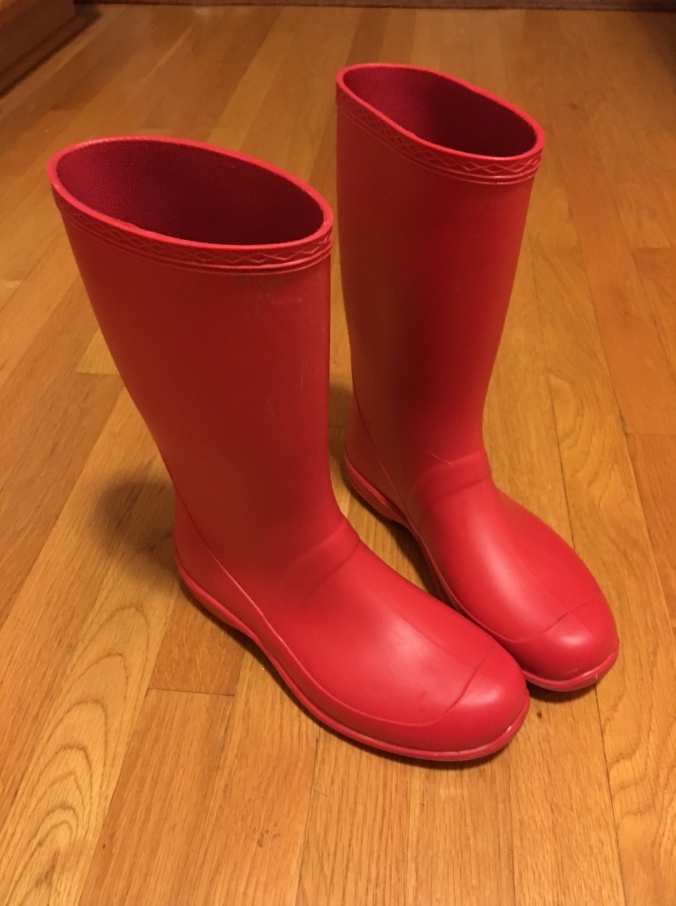
Red rubber boots

red-rubber-boots

It is Sunday, the day my Granddaddy is off from work at the shipyard. It is the day we usually walk to the playgrounds behind the churches across the busy city street, my small hand clasped in his large one, as we wait for the traffic light to change. Today it is raining and we can’t go out. I sit by his recliner on the braided rug beside his feet – he wears black lace-up shoes every day – and sigh.

“What’s the matter, Duck?” he wants to know. Sometimes he calls me Duck, sometimes he calls me Pig. I do not know why. He just does.  It makes me feel warm inside.

“Granddaddy, the girls in kindergarten have red boots to wear when it rains. I don’t have boots.”

“Oh, I see. I guess you been wanting some of those boots?”

I nod my head and crawl up into his lap. “Yes, Granddaddy. For a long time.” His black leather cap is on the side table by the recliner. I pick it up and put it on my head. It smells like him. A little Vitalis and a lot of goodness.

He wraps his arms around me. “Tell me about these boots, what they look like.”

“You can pull them over your shoes … ” I begin.

He got them for me, of course, those red rubber boots that I proudly wore to school and stored on the bottom shelf in the cloakroom, beside the boots of the other girls.

At the time he got them, I did not know that his retirement was imminent, that within the year he’d move back home to the far reaches of eastern North Carolina, three hours away. I would only see him a couple of times a year from then on.

I grew up. I had children of my own. When I went to visit Granddaddy, I sat on the stool by his recliner, as close to him as I could get. He patted my arm. We sat this way for a long time, without any conversation, just being together.

“You remember them red rubber boots I got for you?” he asked eventually. His blue eyes twinkled at me. Every now and then, across the decades, he’d mention those boots.

“Oh, yes, Granddaddy. I remember. I loved them so much.”

He chuckled, patting my arm with his large, wrinkled hand.

He was retired for thirty years, living to be almost 93.

I had nearly forgotten the red rubber boots when I happened to see a pair at the store a year or so ago. They were so like the boots he gave me when I was five.

“Ah, Granddaddy,” I whispered. “You’re never far away.”

I bought them.

They protect me from the rain; they keep me grounded, connecting me to the earth that my grandfather loved, for he was a lifelong farmer even though he had to find better-paying work to provide for his family. The color brightens the gloomiest day. I wear my boots with deepest gratitude for a humble man who knew about sacrifices, great and little, fiercely proud that his blood flows in my veins.

I remember, Granddaddy. I always will.

slice-of-life_individual

Born musician

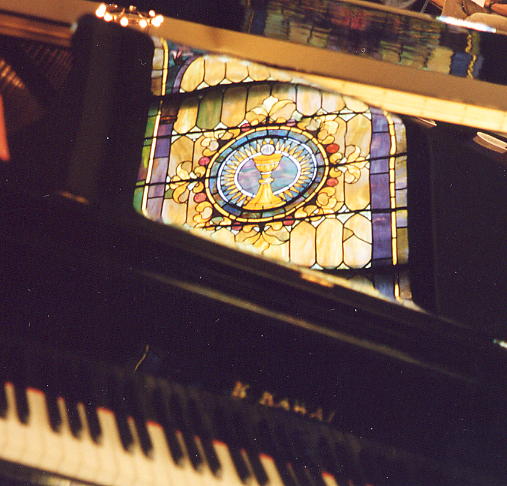
piano-window

Piano & window. Alan Mayers. CC BY-SA

Years ago, a woman – tired, seven months pregnant – sat in the front row of a church. The morning sun shone through the stained glass windows, casting jewel-tone light on the baby grand piano, a soothing sight to the weary woman whose busy child was churning her insides. The pianist took a seat and began to play the prelude.

The baby stopped moving. He or she didn’t move again until the prelude ended. After the final notes, the child resumed the high activity.

The baby hears the music, thought the mother, marveling. It was the first of many times she would notice the unborn child’s response.

Around age three, the boy frequently hummed a tune to himself. His mother recognized it: “Amazing Grace.” When he was four, the child started playing cassette tapes of gospel music that had belonged to his great-grandfather. After his fifth birthday, his mother stood in the doorway of his bedroom, watching the boy making tally marks with a dry erase marker on a whiteboard easel.

“What are you doing?” she finally asked.

“I’m counting the syllables,” her boy replied, with a serious expression on his little face. He continued his business, listening to the tape, steadily making marks.

It’s the beats, the mother thought. He’s counting the beats.

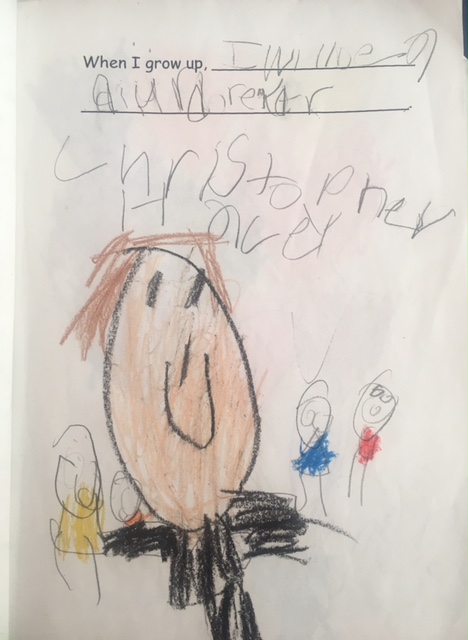
When he brought home his “All About Me” book on finishing kindergarten, his parents smiled at this page:

when-i-grow-up

“When I grow up, I will be a qiur drekctr (choir director).”

When he was seven, watching him tinker occasionally on his great-grandmother’s upright piano in the living room,  his mother said, “You love music so much – why don’t you take piano lessons?”

The boy shrugged, something of a disappointment to his mother, who expected he’d be excited. She took him to lessons anyway.

He wouldn’t practice. The lessons were abandoned before long.

His mother was sad.

In middle school, the boy decided to play alto sax in band. He began tinkering with the piano a little more. Then one day, when he was fourteen, he said, “Hey, Mom, listen to this.” And he played a medley of Christmas songs on the piano – both hands, all the parts – as if he’d been doing so all of his life.

His mother stood marveling, knowing, tears in her eyes.

The boy played the medley on the baby grand piano for the prelude at church on Christmas Day, to the astonishment of the congregation.

He played alto and bari sax for marching band throughout high school; he developed a love for jazz. Few of his friends knew he could play the piano as well. None knew he could sing. One of his teachers did, however. She sought him out when she couldn’t find sheet music for a song she planned to perform at Senior Awards Day.

“This is a version of ‘Perfect’ by Pink – do you think you can play it?” she asked the boy.

“I think so,” replied the boy.

He had two days to prepare.

The result:

One week after graduation, he was hired as the director of music programs at a church, fulfilling his childhood desire of being a choir director.

The rest of the story remains to be written, as it is still unfolding.

I am excited to see where the music takes you throughout your life, Son. Keep learning and reaching.

Much love –

Your infinitely proud mom.

Reflect: Few of us know what we are meant to do so early in life. It’s never too late to find out. What are your dreams, the things that bring you the most fulfillment? Pursue them! What are your gifts? Use them to benefit others. Encourage them to do the same.


The secret gates

ditch-gate

Into the ditch. jam343 CC BY

When I was a child, my neighborhood flooded regularly.

I lived on a block where all the backyards joined at a long ditch. When I went to play with a friend, I took a shortcut by running alongside the ditch and jumping over it, taking care not to land in it, for the ditch was lined with thick, black mud; if it did not stink outright, it certainly smelled organic, stagnant. Sometimes fleabane, tiny, hairy daisies, grew along the banks. That’s about it for ditch decor.

Whenever a heavy rain came – and a few times during a moderate rain – the ditch overflowed. Storm drains in the curbs overflowed as well, until water covered the streets and most of the yards. My friends and I had fun wading through it as we walked home from school, sloshing as much as we could.

My father, however, was irate every time.

As soon as he saw the water backing up, he got the city on the phone.

“Listen, I’ve called before,” he’d snap at the City Official on the receiving end. “You ought to have a record of it. This whole neighborhood is flooded AGAIN. Get whoever is paid to do it to open those drainage gates.”

Every time, the City Official pleaded ignorance about said gates.

I watched Daddy’s florid face redden. “You people always act like you don’t know what I’m talking about, but I am telling you, there are flood gates controlled by a switch and somebody up there knows how to use it. There’s NO EXCUSE for a place to flood like this. Open the gates!” He glanced through the picture window in the living room. “A canoe is going down my street right now. So help me, I will get in it, come down there, and find that switch myself.”

A canoe was going down our street, neighbors having dragged out their camping stuff, rowing merrily along. A teenage boy in waders, hip-deep in the water, pulled younger siblings on a raft behind him. To my horror, one young neighbor tossed a puppy from the front steps out into the water to make sure it could swim. It could; that the puppy swam back to its owner amazed me.

Daddy’s voice got louder, his face redder, until he hung the phone up in disgust, but within an hour of his call, the flood began to diminish.

As the water level went down, so did the color in Daddy’s face. In his eyes was a glint of victory, or perhaps vindication. The City Officials had, yet again, scrambled to open the secret gates they kept forgetting about. Good thing they had my dad to remind them.

Did the gates actually exist? Did they lead to the nearby river, or where? I never knew for sure, but the timing between my father’s phone calls and the floodwaters receding is intriguing, suggesting more than a fluke.

Our regular neighborhood floods were mild annoyances in comparison to the devastation experienced by anyone whose home has been lost or whose life has been endangered. The forces of nature are beyond human control, despite the best of foresight and man-made safeguards. On a small scale, my father did what was within his power to change a situation. One voice, persisting. Today I think of the labyrinthine educational system, of American politics, the overwhelming need for change when so much is at stake, and those who are suffering. What are the gates to clearing the way, and where lies the switch? Change is a force within human control. As Anne of Green Gables author Lucy Maud Montgomery penned: “All things great are wound up with all things little.”

Believe, be the voice, reclaim what is of value, before it is lost.

Reflect:  Water is a symbol of life, as well as adaptability, healing, and cleansing. When things become overwhelming, one of these might well be a switch to seek. Which might be yours? How might you help others?


Cicada rhythm

cicada-on-post

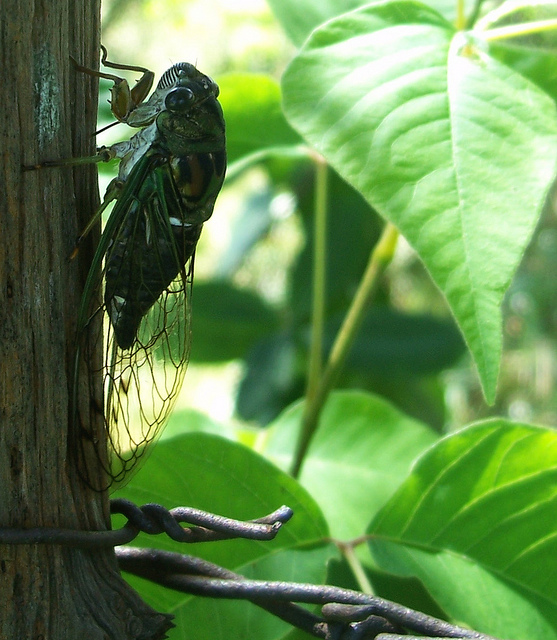
Image: Cicada on a post. Jo Naylor CC BY 

Summer is dying now, taking with it one of the things I love best: The song of cicadas.

If you’ve ever heard cicadas in full throttle, you might not agree with “song” as a fitting description of their cacophonous buzzing. It’s not pretty. The noise can be deafening.

Yet when I hear that first discordant rattle sometime in May, my spirit rises, my own heart sings in response.

The song of cicadas calls to me from long ago, when I was a little city girl spending sultry summers in the country. The song evokes narrow dirt roads keeping an ominous forest from encroaching on rustic homeplaces, tiny cemeteries where baby after baby is buried under white monuments adorned with lambs, and the old church just around the bend. The song is one of ages, the rising and falling of generations, all of us coming and going in our time. It is a song reverberating with tire swings hanging from pecan trees, canals teeming with frogs and turtles, white-tailed deer bounding up from lush ditch banks along fields at dusk. It is the bright song of the sun, of hope, of continuity. It is the dark song of the night, oddly comforting; something out in the blackness is vibrantly alive, maybe keeping watch, while children drift off to sleep. It is the sound of safety, stability, belonging. Calling and calling, the crescendo mirrors the rhythm of life, brimming with promise, echoing eternity. When I hear it, I am a child again, no matter how many summers have come and gone. My home is in the countryside now and it is with a deeper pang each September that I note the song fading out. Every May, as I mark another year of my existence, I listen for the first returning rattle. You’re back! my heart sings. Ah, but we were here all along, they might say, if cicadas had words. There’s a lot of living and loving yet to do. You have today. Carry on.

Reflect: What’s one thing in nature that inspires you? Why?


Lit legacy


Kobo

I love words because of my grandmother.

It’s a simple thing, really, to gather a child on your lap with a book open for the little eyes to see,  and read aloud as if time and duties and all the other business of life do not matter. In truth, none of those things matter more than creating a literate legacy for a child.

Did Grandma know the far-reaching effects these moments would have? She wasn’t a teacher. She just loved to read, and I caught it from her long before I ever started school. Over and over she read The Squirrel Twins to me, the adventures of Chitter and Chatter, immortalized in rhyme:

There were two little squirrels, who lived in a tree

As happy as two little squirrels could be…

She chuckled at the illustrations every time. Cozy there in her arms, enveloped in the light fragrance of her Avon sachet, the cadence of her voice seeped deep into my brain. One day I surprised her by taking the book from her hands and reciting every word on every page:

And this is the song they sang on the way,

“What a hippity-happity-hoppity day!”

“My goodness!”

“What, Grandmama?”

“You memorized all the words!”

I knew what was coming because of the repeated readings, connecting the visual story with the simple pattern of the rhyme before I could actually read the print. It’s such a simple thing: What was poured in came pouring back out.

She poured in so much more than words – the love of words, the love of story, eventually the love of writing. My grandfather retired when I was five years old. He and Grandma moved “back home” to eastern North Carolina, leaving me behind on the Virginia peninsula. “It was the hardest thing I ever had to do,” she said years later. Determined to stay connected, she began writing letters to me. I was soon old enough to write back, and when I told her that my dad (her son) complained about my using up his postage stamps, Grandma promptly sent a letter containing a book of stamps so that “you can write to me whenever you want.” I could almost see the defiant twist of her mouth when I read that line. Every summer when I came to stay for a few weeks with my grandparents, the first item on Grandma’s agenda was taking me to the tiny, musty town library where I checked out more books than I could carry. Nothing was ever deemed off-limits or inappropriate. I was completely free to read what I wanted, as much as I wanted, whenever I wanted.

When Grandma died, I inherited her piano, which now belongs to my musician son, and twenty-five years worth of diaries in which she recorded the minutiae of her days. In those pages, all those we loved and lost are still alive, the grievances of the time are now hysterically funny, almost sitcom-worthy, and her prayers for my teenage self are yet another heart-wrenching reminder of the lasting power of words.

She was a gift, my grandmother. A priceless jewel. Her name, in fact, was Ruby. Of all the things in life for which I am thankful, one of the greatest is that Ruby read.

Reflect: How are you helping light the literate way for the children in your life? Who lit the way for you? How might you return thanks? 

Breakfast Island

island

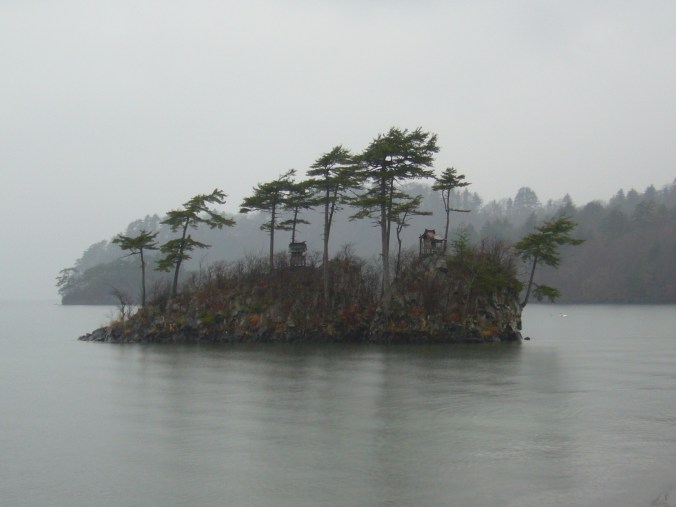
Image:  studio tdes CC BY

Somewhere in Maryland’s scenic Severn River is a tiny island that belongs to me.

Not that I have a deed to it, or that the island was even the giver’s to give, but those are minor details.

The transaction came about when I was around seven years old, during a family gathering. My aunt and uncle, avid boaters, decided to treat everyone to breakfast on the beach. In the chilly gray dawn, a bunch of us piled into my uncle’s motorboat and sped across the Severn. Unbeknownst to me at the time, this majestic river connects with the Chesapeake Bay; the U.S. Naval Academy stands at the convergence. I only knew I was cold and hungry. I shivered in the breeze, thinking that going to the beach for breakfast was just about the most exciting thing ever.

The beach turned out to be an island right in the middle of the river. If Huck Finn had seen it, he would have called it a towhead, a mere islet with a thicket of brush in the middle. As the grown-ups busied themselves with building a small fire, I walked the whole sandy circumference in a couple of minutes, marveling at the island’s diminutive size.

“What is this place?” I asked my uncle, who was crouching by the fire with a skillet full of sausage links.

“Just an island where people sometimes stop off,” my uncle answered, as the sausages began to sizzle.

The sun was bright now, the Severn very blue against the island’s golden sand. A few white sails appeared in the distance.

“What’s the island’s name?” I wondered aloud.

“It doesn’t have one,” replied my uncle.

“Why not?”

“I guess it’s too small for a name.”

How disturbing, that such a pretty place did not have a name.

“Why don’t the owners want it to have a name?”

“Nobody really owns this island,” my uncle said, carefully turning the sausages. Thin blue smoke drifted up from the skillet.

“What! How come nobody owns it? ”

“It’s just here, hon. It isn’t like the big islands, where people live. That’s a good thing, because anyone who wants to can stop and visit, like we’re doing now.”

An inexplicable sorrow welled up in me. It wasn’t fair that no one cared enough about this little island to want it or give it a name. It hurt my heart.

My uncle squinted at me. “What’s the matter?”

“It should belong to somebody.”

“Ok, then, why not you?”

“WHAT?!”

“It now belongs to you.”

“For real?”

“You’re the owner of this island. Congratulations.”

Pride surged through me – I owned this island, the prettiest place in the world! I loved it. Somehow I felt it was mutual, that the island loved me back, was happy that I was there, that we were meant to be. Then a fleeting fear struck me:

“Do I need to pay for it?”

My uncle howled with laughter. “Goodness! Well, since there is no other owner, it’s free.”

The sausages were done; someone filled another skillet with apples and cinnamon. I never knew apples could be fried. Their aroma filled the air like incense from an altar, sweet, pleasing, mouth-watering. For the rest of that morning I basked in the glory of possessing my own island,  soaking up the sun and asking for more apples, until they were gone. I never wanted to leave.

I have never returned. I do not know if the island still exists, or if time and weather have dissolved it, the way that relationships eventually dissolved. What I know is that for that one halcyon morning, I was the richest person on Earth; I owned an island, and it was free.

Reflect: In what ways can you take a child beyond the realm of “the usual” to experience something rich and unusual? How can you creatively instill a sense of ownership?