In the heart of the tree

with thanks to Margaret Simon for her photo, inspiring “This Photo Wants to Be a Poem” at Reflections on the Teche.

In the forest
stands a tree
bearing a heart
for all to see

how is it so
how can it be
this symbol of love
here on this tree?

When it was young
perhaps it was scarred
some long-ago night
black sky starred

when a bolt of lightning
struck young lovers
there pledging their troth
forsaking all others…

Some things, it seems,
are not meant to be
star-crossed lovers
found dead by the tree

their initials not carved
but their love still marked
by this bounced-lightning
scar in the bark

where life comes anew
with every rain, in turn
see, within the tree-heart
a resurrection fern

took root, where it dies
in the heart of the tree
yet like hope, like love,
returns alive, eternally.
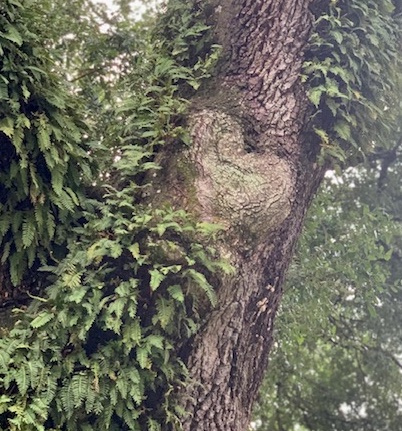
Which is more compelling, the tree-heart or the resurrection fern within it?
Thanks again to Margaret for sharing her photo.

For the record, I like this explanation of the resurrection fern (Polypodium polypodioides) from the North Carolina Extension Gardener Plant Toolbox:

“The Resurrection Fern is an evergreen fern that is typically found growing on trees (especially leaning tree trunks and Live Oak trees), fallen logs, stumps, ledges, and rocks.  It will also grow on fence posts and buildings. Some of its host plants are live oak, elm, magnolia, and cypress.  it is considered an epiphytic plant, which is a plant that grows on another plant and dependent on that plant for support but not nutrition.  An Epiphytic plant gets moisture and nutrients from the air or from small pools of water that collect on the host plant.  It is also epipetric, meaning that it can also grow on rock.

It is a difficult plant to get established.  During dry periods it appears to die but regains normal appearance with rain.

The swallows

In a corner
of a window
sheltered by
the carport
at my son’s home

a pair of swallows
built a nest

not well

as my son realized
one morning
when he found
a hatchling
naked, new
and dead
on the concrete
floor

the others
seemed safe
in the faulty nest

until the next day
when my boy
found all
the swallow babies
naked, new
so tiny
so dinosauresque
splayed across
the concrete
floor

some still living

and their mother
fluttering over by
the recycling bin
in the corner
crying
trying
to gather
her broken babies

they couldn’t be saved
my boy told me
with a breaking
in his voice

so I buried them
around
the oak
tree

I cannot think
about the ring
of baby birds
there in the ground
among the roots
of the old live oak

instead I stand
under the carport
noting the stillness
of the air

the silence
naked, new
in the absence
of swallows

somewhere out there
a mama
knows how much
she’s lost

like a child
I wonder
if she grieves

I grieve
for her


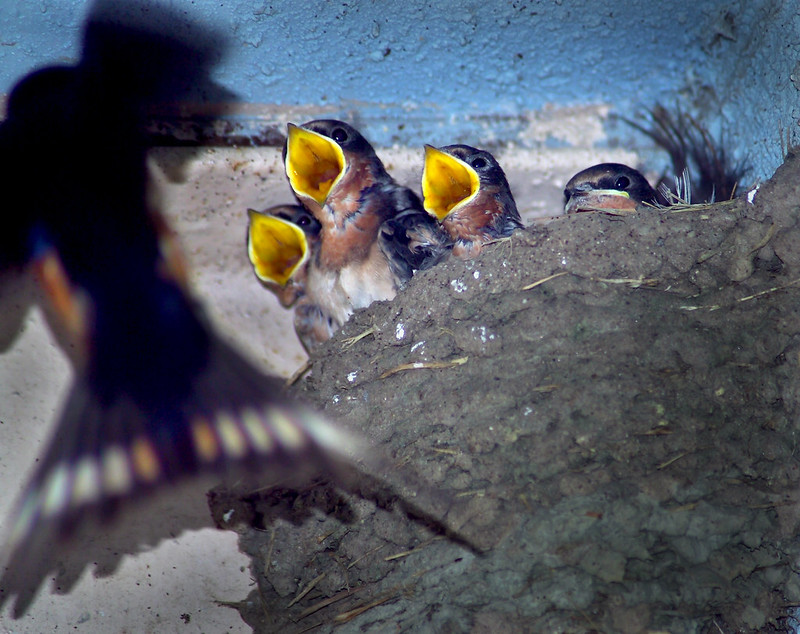
Baby swallows singing to their mother. Brookhaven National LaboratoryCC BY-NC-ND 2.0.


Patch of earth

Sunny afternoon
visiting my son

my granddaughter
walks me out
to a patch
of dusty gray soil
shadowed by
the old live oak
not far from
the swingset

here, she says,
is where
we saw the turtle
laying eggs
then she
went away
into the woods

that is the way
of turtles, I say
she will not
come back

my granddaughter nods
and I recall
that her first word
was turtle

my son has placed
fluorescent stake flags
around this patch
of incubating earth

for the benefit
of his expectant
child

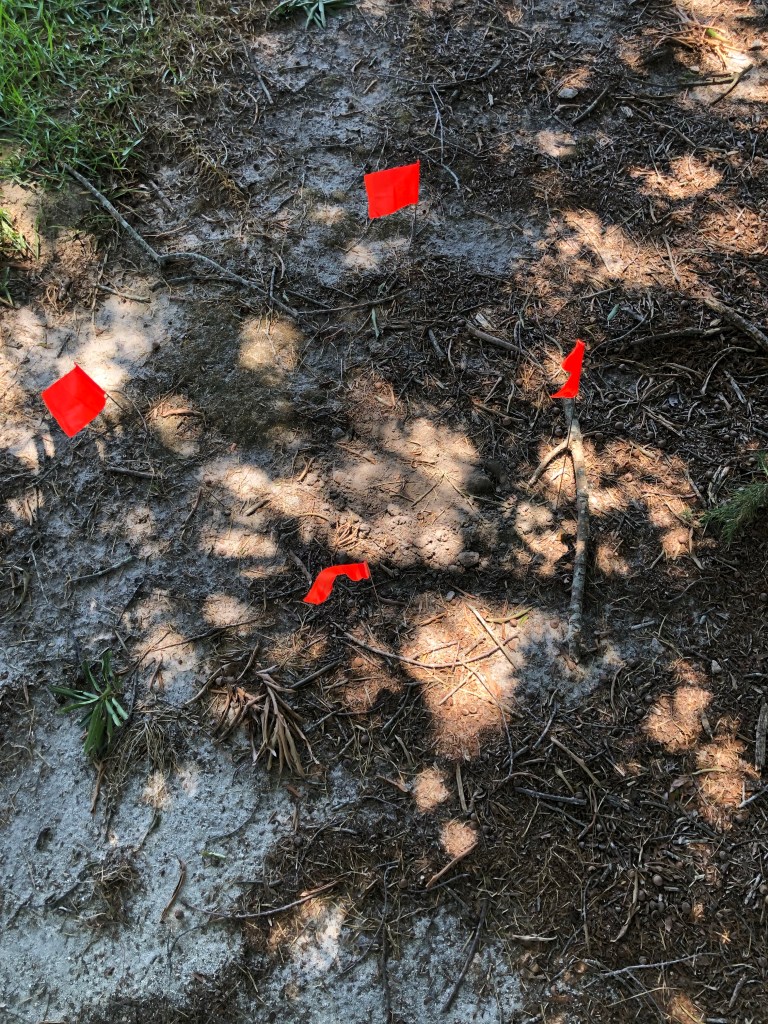
Not sure how many eggs are hidden here in this patch of earth so near my granddaughter’s playground.

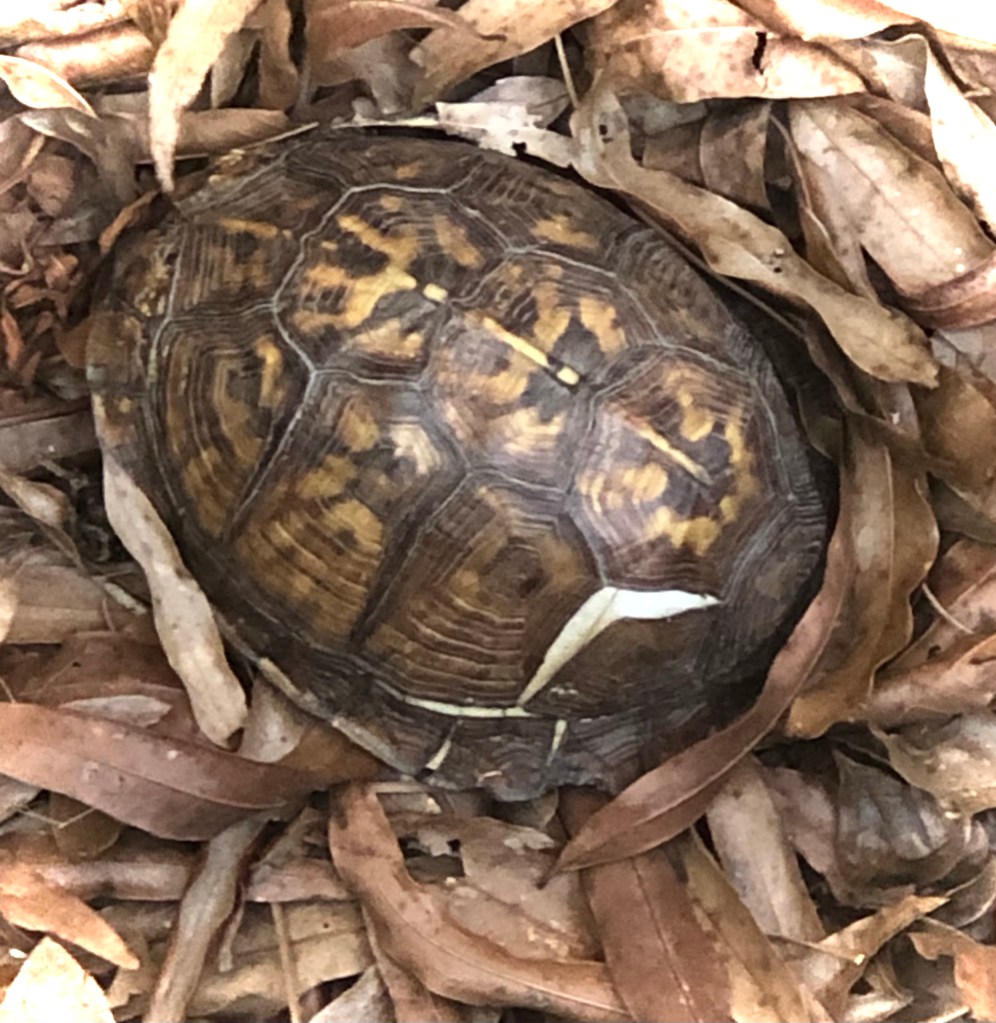
Empty box turtle shell discovered by my son’s basement. The turtle died some time ago. Not the mother, but apparently she was also an eastern box turtle. Under good conditions, the eastern box turtle can live over a hundred years. It’s a symbol for patience and is also the state reptile of North Carolina.

Blue season

Today I am not driving along the backroads and byways to work, for that work is over and done for a season. There are a number of things I will and won’t miss but this morning I am thinking only of the drive. It has taught me much about noticing. And composition. Twenty minutes of travel in the countryside imprints images in my mind; I study them over and over.

For one thing, as I watched the verdant lushness of grass and trees deepen and the crops in the field bursting forth in their furrows, I thought about spring being the season of green. But not only green. Besides the blossoming and blooming of pinks, yellows, and whites, there’s the flash of fiery cardinal red, the dusting of robin-breast orange, the electric pop of the bluebird, the soft, quivering brown of Rabbit. It’s all poetry to me. Stirring a nameless longing. Maybe just for life itself.

Robert Frost comes to mind:

Nature’s first green is gold,
Her hardest hue to hold.
Her early leaf’s a flower;
But only so an hour.
Then leaf subsides to leaf.
So Eden sank to grief,
So dawn goes down to day.
Nothing gold can stay.

And then I contemplate how green is really a combination of two colors, yellow and blue. If nothing gold can stay, that leaves…blue.

Which is so utterly fitting, as nearly every morning on my drive to work this spring I’ve been awed by the sight of a great blue heron in a pond. I pass three ponds, actually, and in two there’ve been herons. I have learned to look for them and there they are. Standing tall, serene, peaceful, almost elegiac. Once a pair of them flew across the road ahead of me. Dazzling. Somewhere in the brush I know there’s a nest with baby blue herons. In all my life, I cannot recall even glimpsing great blue herons. This is the birdiest spring I have ever known.

The herons are part of me now, and I think on the layers of meaning. Typically self-reliance, self-determination, progress… these seem surface level, like the color green. There’s more than meets the eye. There’s blue, a color I don’t usually associate with this season. Now I do. As I play with blue in my mind, it carries me to shadows, a time of day when the golden hours are transitioning to evening, and a fleeting memory of youth. A time of preparation, maybe going to dinner, gathering with friends, celebrating… all this, flickering and cool like tree-shadows when the day is nearly done and the blue hour descends. Again, a nameless longing. A heron in a pond.

I have had a hard time writing during these last weeks of school. Partly due to demands on my time. And physical limitations. And my psyche. But none of these are the blue longing.

Nature knows infinitely more than I about creating…and that is the pull, for nothing gold can stay.

Here’s to the blue season.

“Creativity is the Blue Heron within us waiting to fly; through her imagination, all things become possible.”

—Nadia Janice Brown

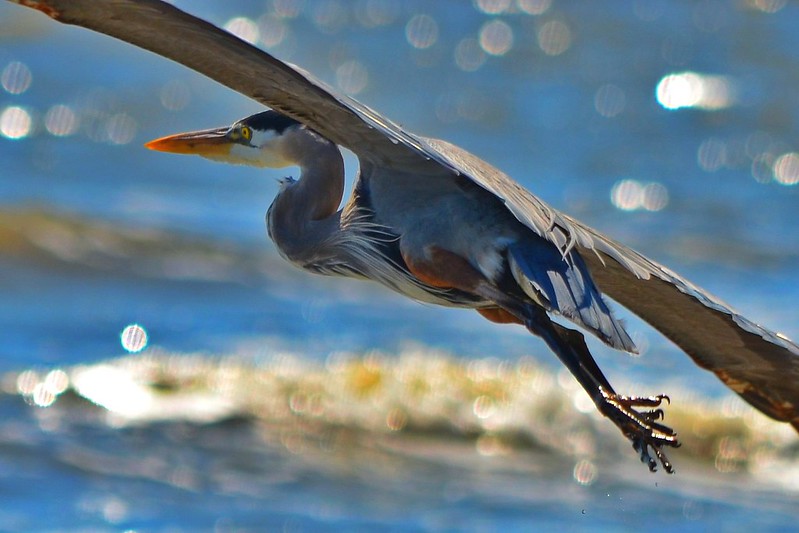
Photo: Great Blue Heron on the Coast of Texas, McFaddin Beach. Texas State Library and Archives Commission. CC BY 2.0

Hog-ku

Ordinary day
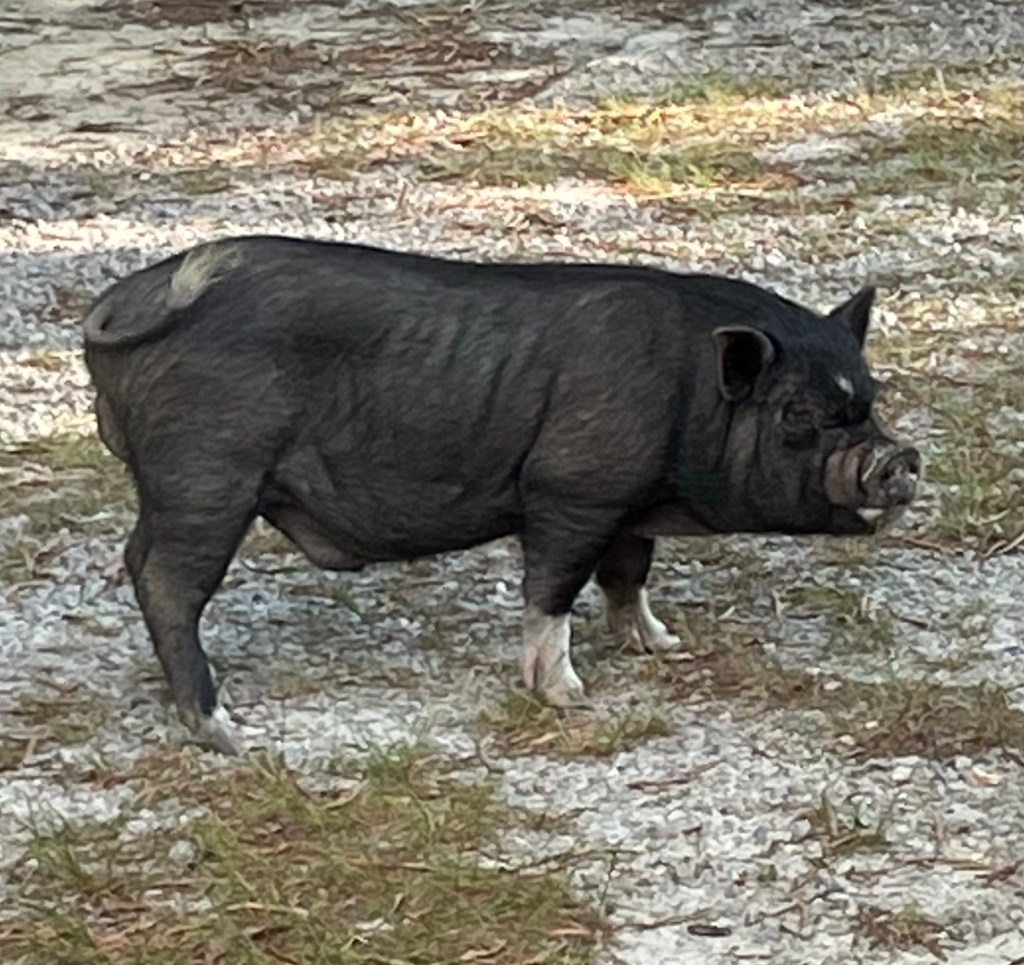
except for the feral hog
strolling through the yard

We’ve seen a lot of critters throughout our years of living in the countryside, but this is the first wild pig, enjoying a Sunday afternoon ramble through my son’s yard. My son took photos and sent them to me with an article on how feral hogs are an increasing concern in North Carolina. Apparently they do millions of dollars’ worth of damage to crops and pose a disease threat to livestock and pets. The state actually has a Feral Swine Task Force.

A zoomed and cropped shot, nevertheless too close for comfort…fortunately the hog wandered off.


A turn of turtles

My son texts to say
today
the girls and I
watched a turtle
laying eggs
in the yard

which I am sure
my six-year-old
backseat prophet
slash nurture scientist
loved witnessing

here’s hoping
she’ll keep the memory
for her little sister
living her first June

and that
they get to see
a turn of baby turtles
just before summer’s end

Snapping Turtle Laying Eggs Eno River Durham NC 095938-001. bobistraveling. CC BY 2.0.

“Turn” is one of the collective nouns for turtles.

Whip-poor-will aubade

He sings alone
just before light
Farewell, farewell
beloved night

Summer is nigh
yet again keep
echoing hope
—all do not sleep

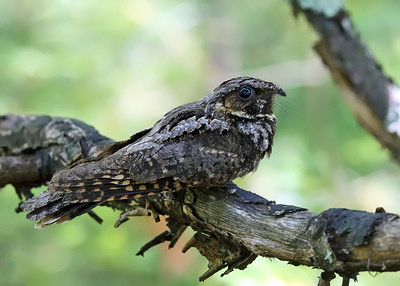
Whip-poor-will in the woods behind my home about an hour before dawn. Such longing and long-ago in the sound, for me. When my oldest boy was three, our family moved from Virginia’s Eastern Shore to the North Carolina Piedmont. We lived in a parsonage beside a little church high on a hill. It was June. All that first summer, when dusk settled in and I put my boy to bed for the night, the whip-poor-wills began calling. Over and over and over. Usually just one. The sound carries; it echoes through the darkness from the woods across the ponds and pastures, from old and deep places, affixing itself to the listening soul. I rejoice in its returning.

Eastern Whip-poor-willtcmurray74. CC BY-NC 2.0

Of racehorses and old roads

As I write, the National Anthem’s being sung at Churchill Downs for the start of the Kentucky Derby.

I’ll be pulling for a horse not favored to win.

His owner grew up in eastern North Carolina on a little stretch of road in the country. It’s paved now, but people have living memory of it being dirt… and I have an affinity for old dirt roads in these far reaches.

Once upon a time, I was a child who stayed in a little house on a dirt road in the summertime. I swung from a tire swing that Granddaddy hung from the pecan tree all studded with woodpecker holes. I swung to the deafening rise-and-fall rhythms of cicada-rattles, alongside the old dirt road across from the clearing where timeworn gravestones stood over people my grandmother knew when she was a child. I swung back and forth, round and round through the dappled afternoon, singing a favorite folk song from my father’s Peter, Paul, and Mary album…

Stewball was a racehorse
and I wish he were mine
he never drank water
he always drank wine…

The song goes on to say how the speaker bet on the gray mare and the bay, when:

ahead of them all,
came a-prancin’ and a-dancin’,
my noble Stewball.
The hoot owl, she hollered…

This past week, early one morning, I recorded a hoot owl (barred owl) hollering from the pines behind my home.

Memory runs so deep, so strong.

And so I pull for the horse named Barber Road, whose odds keep going down in these remaining moments before he gets to the gate.

Here’s to my own beloved road by another name in eastern North Carolina, and childhood, and belonging, and ol’ Stewball who wasn’t favored to win, either, but did, and to the hoot owl, the stories, the songs, and overcomings.

And here’s to you, Barber Road.

Run on.

Thoroughbred racehorseMIKI Yoshihito. CC BY 2.0.

Update: Barber Road finished 6th. By now the world knows that Rich Strike, the least-favored horse (80-1,) took the Derby in the second-biggest upset in its 148-year history. Secretariat, the first racehorse I remember, and who still fills me with awe to the point of tears, holds the record.

A curious balance

There’s a curious balance in life. Maybe the same can be said of death.

Once upon a time I watched a day-old kitten die in my mother’s hands. I wept that it didn’t have a chance to bloom and grow. I named it Edelweiss (who among you will catch that musical allusion?).

Not so many years ago I watched a sixteen-year-old dachshund draw his last breath after two needles from the vet. I wept. Profusely. So did my boy, standing by my side. He’s the one who said it had to be done. This was his beloved childhood pet from the age of four to twenty. When we left the vet’s office, my boy carried the little limp body in his arms. The lights had been dimmed and a candle had been lit. Tears rolled down the receptionist’s face.

The boy now makes his living in the death industry. After having obtained a worship ministry degree, he’s returned to school for mortuary science. A funeral director’s apprentice. His hours are long. He gets called out in the middle of the night, in the wee hours of the morning, to pick up a body.

He’s carried the old, the young, the sudden, the long-suffering.

Even a baby.

I worried, at first, about the toll it might take.

But he’s a born comforter, stalwart, as solid as mountain, as placid as a morning pond in the countryside, smooth as glass. In taking care of others, he is taking care of himself.

He is as happy as I’ve ever known him to be.

He meets people. He connects with them. He learns from them. He hears their stories, knows about their lives.

Not just the families of the deceased.

A couple of times a week, he picks up the funeral home groundskeeper and drives him to work. This man tends a farm, among other things. Occasionally he puts something in the back of my son’s car. At some point along the way he has my boy stop so he can get the thing out of the back. A cage, of sorts. The groundskeeper will set it by the woods and release whatever’s inside… a big ol’ possum, a raccoon… creatures he traps on the farm to keep them away from his chickens and eggs (I suspect he’s trying to catch a fox. Maybe he has. Maybe my boy just hasn’t said).

What strikes me is the preservation of life. That of the wild creatures as well as the domestic ones. It’s especially fascinating to me in light of the context, occurring en route to work at the funeral home. A curious balance…

Earlier this week, when the boy dropped the groundskeeper off at the farm at the end of the day, the man pointed to the goat pen:

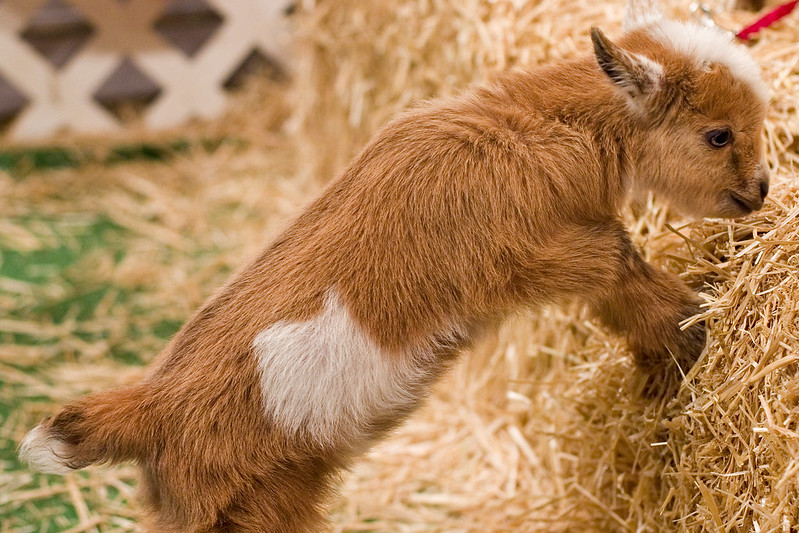
Looka new baby goat. It’s maybe thirty minutes old.

He pointed again:

That one, maybe fifteen minutes old.

My son marveled. I could hear it in his voice when he told me the story: Fifteen minutes old, Mom. So tiny. I could see the afterbirth still hanging from the mother.

He sees death every single day. How fitting that his work should also lead him to witness life preserved and the miracle of its fresh arrival.

Such a curious balance.

Baby Goatkendrick. CC BY-NC-SA 2.0

*******

with thanks to Two Writing Teachers for the Slice of Life Story Challenge every day in the month of March

Until we meet again

Today I write in memory of my grandfather.

His name was Columbus St. Patrick Brantley.

He was born in 1906 “up the swamp” in coastal North Carolina. Farming was in his blood. He married my grandmother during the Depression and worked as a sharecropper. My father was born in a tenant house. Just before WWII, Granddaddy went to Virginia to work as shipwright. He tried farming and house painting after the war but “couldn’t make a go of it,” so he went back to the shipyard, where he was still working when I came along. For the record: the whole family said I looked exactly like him when I was born.

He didn’t work on Sundays; that became our day together when I was small.

He retired when I was six. He and my grandmother moved back home and thus began my many journeys to the little white house nestled in the bend of an old dirt road, where the woods had grown up all around, taking back house after house where people lived no more.

In his later years Granddaddy recorded stories of his life on audiocassette to give to his family. He could remember seeing his first Model T at age three or four. He said that mail was delivered by horse and buggy; farmers ordered chickens that were delivered in cages. He had a whole string of pins awarded him for perfect Sunday School attendance at the little Methodist church. He loved listening to the Grand Ole Opry on the radio. He spoke of his nine siblings, including a sister, Peaney (Penelope), who died of diphtheria at age four. He outlived them all. He lived to see both of my children. He could remember an ancestor speaking of Dublin.

Near the end of his life, I gave him a framed print of an Irish blessing. It hangs by my front door now:

The last time I saw him, he was dying of lung cancer at ninety-two. It was springtime. He’d grown weak but was fully dressed, sitting in his recliner by the door; he tried to coax my two-year-old to sit in his lap, like I did when I was little. I sat by his chair on a stool and held his old, wrinkled, work-worn hand.

Do you remember how we used to go to the park on Sundays?

I do, Granddaddy. We took bread to feed the ducks.

And the old locomotive?

I can just remember climbing in it together…

He was tired, always a man of few words. We sat for a long time together, not speaking at all.

When it was time to go, I kissed him on his forehead.

I love you, Granddaddy. God’s got you safe in His hands.

That’s the best place to be. And I love you.

He held tight to my hand.

It’s been twenty-three years. You can’t imagine all I have to tell you, Granddaddy. There’s been another pandemic. Wars and rumors of wars. Your great-grandsons are grown. The little two-year-old you tried to coax into sitting with you at that last visit plays piano and guitar; he loves singing the old-time songs that you loved. His brother’s a pastor with a baby girl; he tells me almost daily that something about your great-great-granddaughter reminds him of you. God remains faithful from one generation to the next. It’s almost springtime again, the fields are so green…

Until we meet again, Columbus St. Patrick.

I love you.

*******

with thanks to Two Writing Teachers for the Slice of Life Story Challenge every day in the month of March.