Big English

Words are our most inexhaustible source of magic. – J.K. Rowling

He finishes his reading assessment and peers over at my screen where all the words are marked red.

I had to tell him every one of them.

He’s only been in this country for a year.

He is tiny, but his dark eyes are bright, intense. They catch and perceive everything. I can tell.

He considers all the red on the screen, then turns those knowing eyes on me.

Before I can say, “It’s okay, don’t worry, you’ll learn,” he reaches over to pat my arm.

“You,” he says. “You have big English.”

He pats his own chest. “Me, little English. I have big Spanish.”

I point to myself, to finish his thought: “Me, I have poco Spanish.”

He grins at me, and I smile back.

We understand each other in a way beyond words. We are okay, in perfect company, because of this wordless knowing between us. No assessment invented by man can capture the height, the depth, the strength of the human spirit. There is no real reason why trust should suddenly be born in such a moment, but it clearly has been.

“I tell you what,” I say to my tiny new friend, for that is what he is now, “I will help you with English and you can help me with Spanish.”

His grin broadens. His eyes shine.

I hold up my hand: “Deal?”

He laughs, slaps my hand with his own. “Deal.”

And he vacates the chair beside me, going off for the rest of his school day in a sea of Big English. Like a salmon, he has a hard battle, upstream all the way.

I expect he’ll swim, rise, leap – I see it in his eyes, sense it in his spirit.

I wonder what the future holds for him. Something of great importance, great value – I can feel it tugging.

Whatever part I can play, let me play it.

Let the magic begin.

Anchored

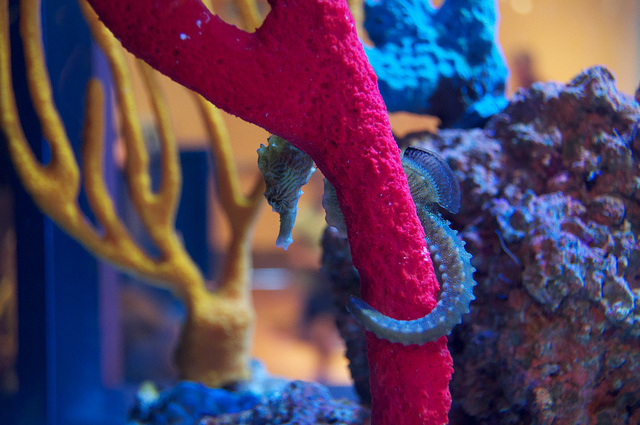
Seahorse

Seahorse. Brandon LeonCC BY-SA

The seahorse was the motif of my summer.

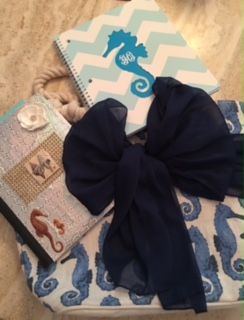
He turned up everywhere – on my new beach bags, on a bracelet from a friend, on a spiral notebook given to me, in a pile of decorations for writing journals at a summer institute.

Seahorses galore.

This sudden proliferation was odd, too odd to be random. Loving symbolism, interpretation, and looking things up in general, I researched seahorses, curious about what mysterious meaning or significant message they portend for my life at the moment.

I already knew, of course, that the males bear the young, which is the reason I am mostly using the pronoun he, in honor of the seahorse dads.  I really couldn’t make much of a connection to this appealing characteristic, however. I am the only female in a household of males (including three dogs and two guinea pigs), none of whom are about to become a gestational vehicle.

In the metaphorical realm, seahorses apparently represent a great number of things: patience, persistence, inventiveness, creativity, whimsy – all enchanting. I celebrate and welcome all of these things.

I learned that the scientific name for the seahorse, hippocampus, is the same word for the part of the human brain thought to be the center of emotion and memory.

Speaking as a writer – utterly fascinating.

Seahorses can also symbolize stubbornness (my father’s word was “hardheaded”). Speaking as a human – ouch. Ahem.  I prefer to call it “determination” or “perseverance,” but we’ll keep moving along here.

The thing that strikes me most about the seahorse is that it’s a poor swimmer – one species being the slowest-recorded swimmer in the animal kingdom – and that its tail is invaluable to its survival. National Geographic puts it this way: Seahorses are rather inept swimmers and can easily die of exhaustion when caught in storm-roiled seas . . . they anchor themselves with their prehensile tails to sea grasses and corals.

Ah. A ray of light shines here in the murky depths of symbolism.

The seahorse began appearing, and appeared most often, in things connected with my work as an educator – on a tote bag with a book order, on my notebook and journal.

Education today – might that be the storm-roiled sea, full of conflicting ideologies and solutions that sometimes beget more problems, just for starters? It’s not that educators are inept (“poor swimmers”) but that the ever-changing currents in our ecosystem are vast and powerful, so to shrink one’s spirit and drain one’s energy just trying to keep up, to stay afloat.

Seahorses can die of exhaustion if they aren’t anchored.

I think about how often the word anchor appears in the educational realm – anchor text, anchor standard – signifying the foundation of something upon which other things will be built, or that subsequent learning will connect back to.

But I don’t think that’s why the little seahorse loomed so large of late. In my mind I see him, small and shadowy against a backdrop of coral and waving sea grass, anchored by his tail, swaying peacefully despite the surging sea. I think of teachers and the demands they face. I think of students, who, above all, are too easily caught in a virtual riptide.

What’s the anchor here?

We are.

We anchor one another. Teacher to teacher. Whatever’s raging around us, we support each other, we help each other along. Ultimately, we form the solid thing, the reef, where students can anchor themselves, where their best interests are tantamount to our own, where they are sheltered, nurtured, and given outlets for inventiveness, creativity, whimsy, even in the most uncertain, troublous times.

Hang on, hang together, and believe.

Says the seahorse not just to the educational world – but to humanity.

Seahorse motif

Of candy, ice, & equity

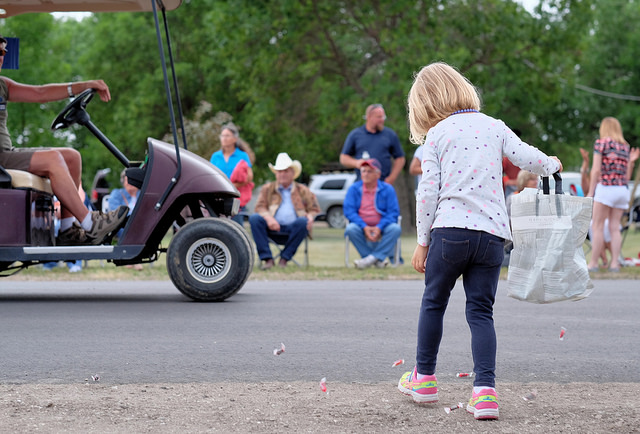
Candy throwing

The throwing candy tradition. Lars PloughmannCC BY-SA

And then the whining schoolboy, with his satchel

And shining morning face, creeping like snail

Unwillingly to school.

-Shakespeare, As You Like It

Reading these lines for the first time as a college student, I smiled in recognition of Shakespeare’s schoolboy. In less than twenty words, The Bard encapsulated the drudgery of the school experience and the subsequent aversion of countless children since the dawn of education itself. I thought of my young self’s occasional feigned stomachaches and the heaviness of my own feet on the pavement en route to school. I doubt I had a “shining morning face” – especially since my mother sometimes grabbed a used dishcloth to wipe it while I recoiled from the sourness.

As an educator living over four centuries after Shakespeare nailed this image, I sigh. Two thoughts weigh in my mind: Why school is still drudgery for so many, and how the rich get richer.

In Shakespeare’s time, of course, only the boys of wealthy families went to school; girls in these families were tutored at home. If parents had money, their kids got the education, the wealth of knowledge, to be the next leaders and shapers of society. While all children in America today have access to education, they aren’t all at the same place when they begin school. We know this. I heard it said best at at a district Title I meeting years ago by the keynote speaker, an esteemed professor from a nearby university: “The problem is systemic. Systems are designed as if all children are standing on the same starting line” – he showed a slide bearing a line with little dots along it, even a few ahead of it – “when the truth is that many are starting from far behind.” He clicked, and little dots appeared at varying distances below the “starting line.” Many alarmingly below.

I looked at those dots below that line. I knew some of those children, how terribly much ground they had to cover just to be at the beginning place, while their classmates surged onward, clearing bars being raised ever higher. I knew the truth of the professor’s words. I nodded as he went on to challenge curriculum and practices, admiring his boldness. Although he didn’t name it, he was essentially pointing out the Matthew Effect in reading – those who had already acquired foundational literacy skills versus those who hadn’t, that “the rich get richer, the poor get poorer.” Thereby hangs the achievement gap, that bane of many a teacher’s, school’s, and district’s existence.

It’s like a homecoming parade. Everyone turns out to cheer for the football team as the marching band sets the pace, followed by fire trucks blaring loud enough to wake the dead (side note – recall that chilling scene in Mr. Holland’s Opus?).  At my sons’ high school parades, I stood, hands shielding my ears, as people on the floats tossed handfuls of candy to the children lining the roadside. I watched the children who were closest, the ones who were strongest or most agile, scramble out to grab the candy as it fell. The ones farther back couldn’t get there in time. Over and over the scene repeated, unless a parent or a larger sibling got out there with the kids who couldn’t reach the candy. 

The parade rolls on, the beat keeps going, there are smiles and celebrations all around, but all things are not really equitable.

The chidren creep unwillingly to school often because access to the learning is not designed for them, in the ways that they learn, but for their stronger, more agile classmates. Or because it’s boring. Or because the teacher, with a sense of desperation borne of increasing expectations and evaluations, is tossing the lessons, the standards, in a catch-as-catch-can attempt. Some kids get it, some don’t. What about the child who’s already had plenty of this “candy” and is ready for something more? 

Drudgery, indeed – for everyone. To the point that teachers might creep unwillingly to school. Or leave the profession.

In recalling the professor’s words about “systemic issues”: Systemic change is slow. Glacial, I once heard it described, implying millimeters at a time. Agonizingly slow. But the truth is that glaciers actually flow – they mold themselves to the land and even shape the land, reforming it, as they go. 

Where does the momentum begin?

On the first day of my college math education course, the instructor eyed me carefully.

“You look scared to be here,” she observed.

“Math’s never been my thing,” I replied, with an attempted smile. Deep in my memory lay the words of my geometry teacher, who had attended the high school play in which I performed a lively comic relief role: I didn’t think you had it in you. My performance in her class had been poor; I couldn’t “catch the candy” and eventually transferred out before I flunked it.

My instructor pursed her lips. I swear I saw a twinkle in her eye.

She ended up pulling me into a group to present on the course and the college at a local event – we had shirts made with the words “Cutie Pi.”

The teacher – to this day, one of my favorites – turned my dread of the content into an experience, into something unexpectedly fun. She acknowledged and eliminated my barriers. Met me where I was and propelled me forward. 

One of her greatest statements: “The parents of the kids you’ll teach are not hiding their best kids at home. They’re sending you the best that they have.”

They don’t all start at the same place, nor will they all achieve at the same rate, but they can and will achieve. Systems compare students to one another; teachers must see each child’s strengths and weaknesses. Systems do not move children; teachers do.  Teachers, not the curriculum, are the architects and engineers of student learning, creatively building bridges between the child and the standards, finding the entry points and scaffolding.  Bit by precious bit, the ponderous glacier keeps moving because teachers are the gravity, the one absolute, magnetic force, whenever they make the sweet stuff – the love of learning, the desire for it – the real goal, with every child getting a true taste of it. 
 

Cactus malpractice

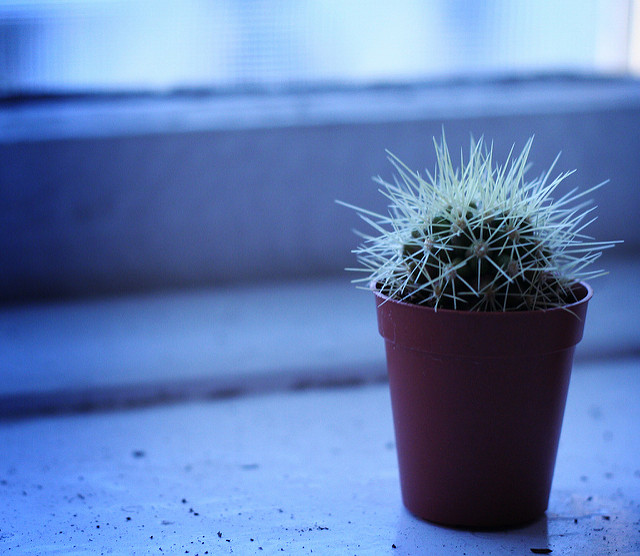
Cactus

Kelly’s cactus. GinnyCC BY-SA

I want a puppy, but his answer is always “NO.”

Tweety, my yellow parakeet, has died after six years of squawking, escaping his cage, and flinging seed hulls everywhere.

“No more birds, either,” says my father, in a tone that I dare not challenge.

I am bereft. I want something to take care of. Some small living thing that belongs to me.

I’m getting too old to catch caterpillars (the forest tent caterpillars, to be exact, which have amazing, detailed patterns with brilliant blue stripes and are not very hairy) and keep them in used margarine containers until they turn into little brown moths. Far too old to catch toads after school and bring them home in my metal Charlie Brown lunch box, which I was quickly forbidden to do.

I sigh. 

On a trip to Woolco, something catches my eye. It’s enchantingly tiny and it won’t make a mess or escape in the house.

So I ask: “Daddy, can I have a cactus?”

He looks at me oddly, as if he’s trying to decide whether or not I am being a smart aleck.

“Sure,” he says. 

The cactus costs 89 cents, the same as a 45 rpm record. It’s spherical, about the circumference of a quarter, about the height of a quarter standing on its edge. 

“Isn’t it the cutest thing?” I ask my Dad.

He raises his eyebrows. “Well, it’s certainly easy to take care of.”

For a couple of week, the cactus sits on my dresser, until I start worrying that it’s not growing. I know cacti don’t need a lot of water – maybe it needs more light, more heat. Cacti grow in the desert, after all.

Hmmm. How can I help it?

I know! The mirror in the bathroom is in a large frame. I can climb on the sink and put the cactus on the top of it, right up there under the light. 

Sure enough, it fits perfectly, just inches away from the bulb.

After a few days, I climb up and check on my cactus. It’s grown taller! I give it a few drops of water and return it to its makeshift sun.

And then I forget about it for weeks.

When I finally remembered the cactus and scrambled back on top of the sink to retrieve it, I found only a little brown crisp in the tiny pot.

Burnt slam up, as my grandfather might say.

I stood there gazing at the destruction in my hands, feeling a pang of horror mixed with shame – Am I the only person, ever, to kill a cactus? 

I meant well. I wanted the cactus to grow, to thrive, to have what it needed.

I just failed to check on it more than once to see if my plan worked, or to determine if it was even a good plan in the first place.

And the cactus couldn’t say Hey, this is too much light and heat, not enough water – I do still need that, you know. 

It just quietly withered away.

The word that comes to mind is mindfulness.

A mighty and crucial thing, indeed.

***

Note: There were hermit crabs and, yes, puppies in my near future. 

They fared far better.

Trapped

Hummingbird

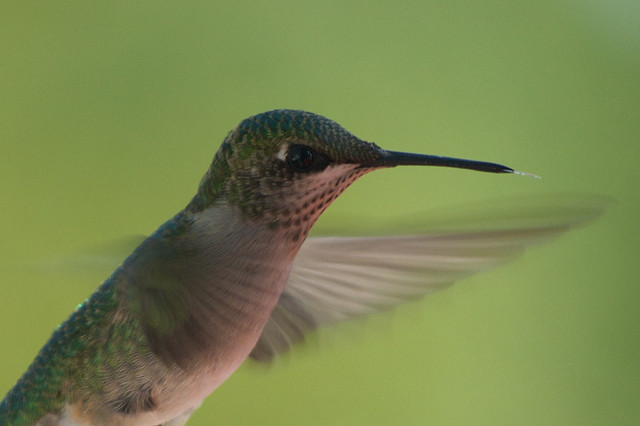
Ruby-throated hummingbird tongue. Pete MarkhamCC BY-SA

I hear it as soon as I step into the garage – a small flapping sound. I stop, trying to locate it – there’s also an accompanying sort of squeak. Mouse-like. I brace myself – I’ve found mice in here before, as well as a small copperhead snake that fortunately got away from me faster than I could get away from it. But mice and snakes don’t make flapping noises. This is the sound of little wings beating.

Desperately.

In a corner, beneath a window, I find the source. A hummingbird. It’s clearly in trouble. Not until I pick it up – almost weightless, just a quivering sensation in the palm of my hand – can I see why.  A bit of cobweb is stuck to its wings and wrapped in its feet. The hummingbird must have flown into it or picked an unfortunate place to perch. Once in the sticky thread, it was rendered helpless, unable to fly or free itself. How it got inside the garage is another question. 

This bird, utterly tiny, trembles in my hand. Its iridescent jewel-tone feathers glimmer like soap bubbles in the sun. I see its heart beating rather than actually feeling it. The bird’s eyes are bright, alert. How long has it been trapped like this? How much energy has it spent trying to rid itself of this confining cobweb?  The sound of its wings beating furiously and its cries of distress are testimony to the fierceness with which it tried.

“It’s all right, it’s all right,” I say in my most soothing voice, although I know my presence alone must be terrifying. “Be still, now.”

I pull the gossamer thread from the tiny, clenched toes, from around the wings where it’s loosely draped. The wings beat now with renewed zeal, as with vibrant hope or celebration. The hummingbird is suddenly airborne. I don’t even see it happen, it’s so quick. I run to the garage door, fling it open, and my little bird zips through like a miniscule fighter plane on a mission, into the wild blue yonder.

I watch it go, and my spirit soars with it.

I remembered the hummingbird this morning, when I heard softer wings beating in my garage, this time a big yellow-and-black butterfly (Eastern Tiger Swallowtail), trying to get out of a window. I caught him, too, and set him free outside.

It triggered the hummingbird memory, and got me thinking about being trapped. How hard it is to free ourselves of those things that hold us back, how they stick to us like a cobweb to a hummingbird’s wings. Past experiences, loss, failures, our own choices or choices of others, pain, regret – they feel more like chains. Burdens that keep us from living fully, maybe even from trusting life again, as that sometimes feels huge and potentially dangerous.

I think of things we desperately want to accomplish and the hindrances, the things that bind us, keeping us from moving toward those goals. The hummingbird fought to be free, in order to live – that was its goal, staying alive.

Surely it’s the teacher in me that suddenly thinks of Frederick Douglass. Reading his Narrative of the Life of Frederick Douglass, an American Slave  for the first time in college, I was struck by his desperate desire to read and write. As a child he befriended little white boys in his community to get them, bit by bit, to teach him how to read – in a time when it was forbidden to do so. Douglass fought hard and long to stay alive, to have a better life than the one prescribed for him; with the help of others along the way, he escaped the bonds of illiteracy and slavery. A brilliant man of words and influence.

All of this comes to me, on hearing wings beating in distress. Matthew Arnold wrote of Percy Bysshe Shelley: “A beautiful and ineffectual angel, beating in the void his luminous wings in vain.” We do not have to remain trapped, ineffectual. Our better selves, our better angels, would recognize those of others when their beating wings, their beating hearts, are caught in a void. It’s within our sphere of influence, within the parameters of our power, to help find the way out; in so doing, our own do not beat in vain.

Soul-ache

Only time for a quick hug

Only Have Time for a Quick Hug. JackieCC BY

I recently learned of the UK’s Empathy Museum, which began in 2015. Their mission: To help us look at the world through other people’s eyes. To walk in their shoes.

Literally.

Part of the exhibit, “A Mile in My Shoes,” is an actual collection of shoes worn by a Syrian refugee, a war veteran, a neurosurgeon, and many others. A person can don the shoes and walk in them while listening to a recording of the original shoe-owner’s story.

Another project of the Museum is the Human Library – instead of checking out a book, you can borrow a human for a conversation. “A Living Book,” says the site.

The keys to empathy are story and dialogue. Experiencing what others have experienced.

The Museum was founded by – can you guess? – a writer.

A thousand things flood my mind as I read about the Museum. Although I know it well, the power of story to impact and transform the mind and the heart is driven home again, anew. To live for a moment inside of others, to see through their eyes, to feel the stab of their pain, their fear, their sorrow, their longing, their joy (for joy, too, is a stab; read C.S. Lewis and William Wordsworth) is to bleed away part of ourselves on their behalf. Empathy is a simultaneous forgetting and remembering of our own soul-aches, while standing in someone else’s shoes.

Shoes remain, as stories remain. People do not. I have long been haunted by the image of shoes lying around the wrecked stern of Titanic when it was discovered. Author Charles Pellegrino writes that it took months for scientists to realize that these pairs of shoes, still intact after seventy-three years on the ocean floor, were uniformly spaced about eighteen inches apart, with shoelaces still tied. There’s no other trace of the people at all – not even teeth. Only the shoes remain to mark where the bodies came to rest. Scientists are at a loss to explain exactly how leather and shoelaces endure when no other clothing or skeletal remains are to be found, yet the shoes are there, the final witnesses, the last word in the story of their wearers. (And one more secret of the utterly mysterious ocean).

It is also worth noting how the hardcore scientists, successful in their famous mission to find her, wept over the Titanic.

Empathy.

Soul-ache.

For the suffering of others.

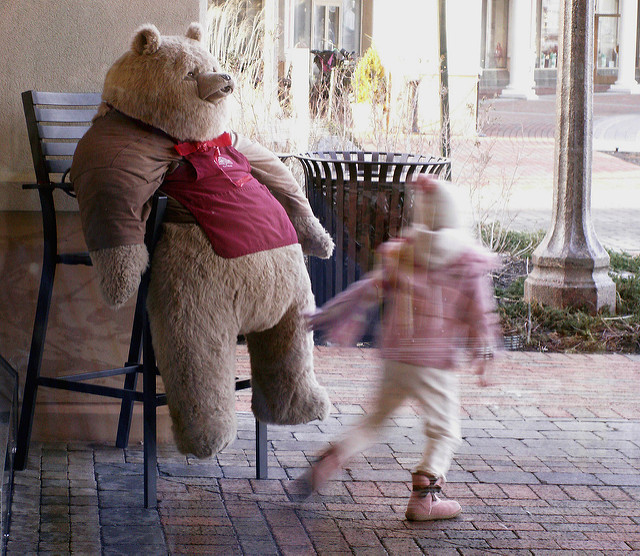
It’s also important to note that the word origin of empathy is rooted in passion as well as in suffering, hence the photo at the top of this post. The little girl runs to hug the stuffed bear in a burst of feeling, then runs away too quickly for the camera. Her image is blurred, ghost-like; a reminder that life is fleeting. She will not be a child for long. She may or may not ever be in this place again to see this bear, but in this moment, she is spurred to action.

That’s what empathy does – the short walk in someone else’s shoes strikes our souls so that we come away changed, wanting to make changes. We are all islands in a common sea, wrote Anne Morrow Lindbergh, twenty years after the kidnapping and murder of her baby boy. The common sea – the human experience, with all of its sufferings, its horrors, its joys, its beauty. See – really see – the people around you. Hear them. Feel their soul-aches, even as you feel your own. That’s empathy. Read it, write it, speak it – and by all means, teach it. A little soul-ache goes a long way in making the world more livable.

For all of us.

Note: The idea of soul-ache came to me while reading Mary Oliver’s poem “Wild Geese.”


Turtle meditation

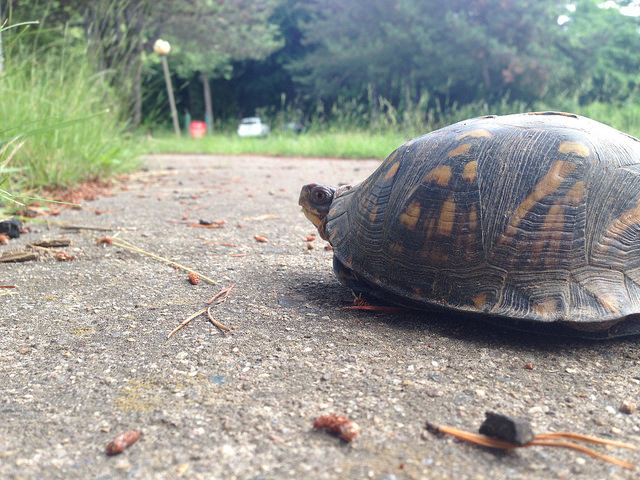
It’s almost summer here in rural North Carolina, which means two things: tobacco is lush in the fields, and turtles are busily crossing the roads.

Which also means that turtles are frequently run over by inattentive drivers.

There by the roadside, these wounded creatures die. Sometimes they leave a trail of blood on the pavement where they dragged themselves to the other side. Any roadkill is disturbing to see, but something about the inner pinkness of the turtle showing through the broken shell pieces troubles me immensely.

Maybe it’s because the shell, perfectly designed to protect the turtle, failed to do so.

But turtle shells are not meant to withstand the weight of a vehicle.

The pinkness represents vulnerability to me; I automatically begin thinking of other vulnerabilities due to failures of structures meant to protect or to edify.

Brokenness occurs on many levels in societies. Governments fail to protect the people, businesses fail to protect employees, family members fail to protect one another.

As an educator, an instructional coach, I see how expectations grow greater all the time and how the weight rests heaviest on teachers. I worry about the cracks, the brokenness, the damage – for, you see, the children are the most vulnerable part, the part we cannot afford to lose.

Any alleviation of this weight, any solution to such brokenness, lies first with the drivers.

Whomever and wherever you are.

Pay attention.

Reflect: Lucy Maud Montgomery wrote: “All things great are wound up with all things little.” Consider the brokenness around you. Repairs and healing will not be complete in a day. Where’s a small place you can begin, in a small but positive way? Positive results only come from positive words, ideas, and actions – and awareness. 

slice-of-life_individual

Fintervention 

​Last week our black goldfish, Kicker, indicated a desperate need for help.

It was pretty obvious. One day he was floating at the top of the tank, unable to swim. Still very much alive, he seemed trapped at the surface of the water. After a day or two of this, I wondered what, if anything, could be done.

I researched the condition: Swim bladder disorder. Kicker has all the symptoms.

I applied the recommended solution: Feeding him cooked, skinned green peas (I wonder who discovered this and how?).

Problems ensued. Most of the green pea chunks that I tried to feed Kicker either came apart or sank too quickly, before he could get to them; although Kicker can move, it’s limited. He has great trouble maneuvering and navigating. I watched with increasing concern – how long can a tiny, ailing fish last in this suspended state?

I did more research. One site recommended putting the green pea chunks on a toothpick.

Voila!

As you can see in the video clip, it worked.

Each day I am able to make sure Kicker eats his peas. He sees me coming and excitedly tries to meet me, paddling himself backwards, sideways, upside down, whatever way he can, to get his sustenance.

Kicker’s still kicking, but he’s not well yet.

Another layer of intervention is needed, apparently.

I can’t help but think of all the children who struggle with reading.

Very quickly, their needs become obvious – these readers cannot keep pace or go deep like their classmates. The reasons are varied and must be explored; a diagnosis must be made, an approach must be developed. Research-based strategies that worked for others can be employed, but time is of the essence – is it working or isn’t it? Is the child making progress or not? How long can a child float at the surface in such a suspended state before the condition worsens? What are the long-term ramifications? What else can be tried for the sake of the child, whose future is at stake?

To not do anything is to . . . well, in Kicker’s case, it’s to watch him die.

When I first started teaching, a well-respected teacher told me, “You can’t save them all.”

Those remain some of the most chilling words I’ve ever heard.

What if that was my child?

Would I not do everything in my power, seeking the advice of others, hunting down books on interventions and overturning every virtual stone in cyberspace, to find answers? Would I not TRY?

As I write, Kicker watches me from his tank. He’s waiting for me, for whatever help I can give him. When I go to him, he will meet me and do the best that he can. I will try another research-based strategy today, as I don’t know when his window of time will close.

We owe the children no less.


If you’d like to read Part One of Kicker’s saga: Flipover

slice-of-life_individual


A time to break down, a time to build

Old hotel

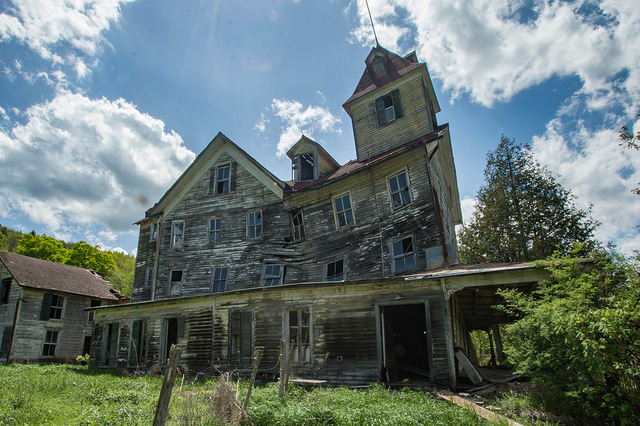
Old hotel. PhillipCC BY-SA

To every thing there is a season, and a time to every purpose under the heaven . . . a time to break down, and a time to build up . . . . 

Ecclesiastes 3:1, 3b

Along the country byways where I live, there are lots of old houses and barns in various stages of falling down. There’s an odd elegance to the sway of a gray weatherboard structure still holding its own, somehow, after decades, maybe even a century, of standing. Eventually, the wood returns to the earth, and the earth, in time, takes it back into itself.

I don’t know why I love dilapidated houses and barns so much, beyond their elegiac grace. I do not know why I find pictures of abandoned structures like schools and churches so compelling. Eerie and haunting, too, but mostly intriguing. Perhaps it’s due to my love of story, my wanting to know who was there, when, and why the places were abandoned – where did all the people go? Is there no one left who cares any more?

I only know that there’s a time to break or tear down, just as there is a time to build.

This doesn’t just apply to old, unsafe buildings.

It might apply to us, as we age. With time our bodies break down, albeit slowly, as they are not meant to keep going forever. Sorry, I do not have a build parallel for this.

It might apply to systems, procedures, approaches that once worked and don’t anymore – a time to examine, evaluate, break down and build anew.

Which begs the question: When is it time to break down? To build?

When the structure is dangerous, apt to cause harm, can no longer be used for the purpose it was originally intended, needs far too many reinforcements, has limited or no more effect, the time has come to break it down.

It’s the inevitable, really.

If a purpose remains, and a structure is needed, it can be built fresh. Stronger, more durable, more appropriate, more effective, more creatively, sometimes even simpler than what was there before.

Take stock around you. What’s falling down? What needs to go? What needs to stay, be scrapped, be rebuilt altogether from the ground up? If it’s not working, why, and where should you begin?

And do you mean for what you build to last for a day, a year, or a lifetime? The planning and the vision make all the difference. The foundation is the most essential part.

Consider who you’re building for, and why.

You’ll find the way.

It may be time.

Flipover

Error
This video doesn’t exist


This is Kicker, a goldfish given to my soccer coach son by one of his teams.

Kicker is not well, as you can see. In fact, we thought Kicker had kicked the bucket, but then we noticed a little fin and mouth movement.

After watching the tiny creature floating helplessly on its side for a morning, I wondered: Can this be fixed? Can poor Kicker be helped?

An Internet search on “floating goldfish” reveals that goldfish are susceptible to a disease called swim bladder disorder or flipover, frequently caused by overeating. The swim bladder is what gives the fish its buoyancy; it cannot function properly if other organs are swollen and pressing on it. This essentially paralyzes the fish.

Kicker has been flipped like this for three days. My thought now: How much longer can this little fish last?

And, being an educator and a writer, I cannot keep from seeing deeper meanings, metaphors, analogies.

I’ve often said that teachers are becoming paralyzed with regulations – too much, too many, suppressing the natural artistry and creativity that comprise great teaching. Expectations are needed, certainly, but when so many are placed on schools, on teachers – on students – what happens to freedom of movement and growth? How many teachers feel like Kicker, floating helplessly near the surface, unable to do anything about it?

In turn, how many students feel that way?

Is there a remedy?

For Kicker, there may be.

Green peas.

Yes, really. My search tells me that feeding cooked, skinned green peas to a fish affected with swim bladder disorder often alleviates the condition. The experts say not to feed the fish for three days after the onset and then to try the peas.

I gave it a shot. It’s very hard, by the way, to get food in the mouth of a fish that can’t swim. But Kicker fluttered his fins and opened his mouth, clearly trying his best.

Kicker seems to be a little livelier this morning – he’s always greeted us, wagging his whole body just like a dog, whenever we approach the tank. Today he’s twisting a bit more, fluttering his fins and tail excitedly. He even gyrated himself all the way over, a complete 360. He’s still not very mobile or upright yet – but I see better movement, and I am hopeful.

Back to teachers, to students: What’s the remedy to glutted systems?

Certainly not adding more. Green peas won’t cut it here – if only they could! – but perhaps they hold a metaphorical answer. Perhaps the answer lies in boiling away, skinning back, getting to the inside part, the valuable part, the part that matters most. Education is not something to be done to children any more than professional development should be done to teachers; growth and learning come from a place of inspiration, desiring to know more and having authentic opportunities to explore, to ask “How can we make this happen?” or the greatest learning question of all time: “What if …?” It all comes from tapping what’s within, not from exterior layers upon layers, causing figurative flipover.

Goals and standards are necessary. They can be met, exceeded, in fact, with inspiration, creativity, and freedom – these lie at the heart of educational wellness.

Our survival depends on it.


If you’d like to read Part Two of Kicker’s saga: Fintervention

slice-of-life_individual