Rambling autobiography

I was born in a state named for a queen, by a river named for a king, and in a hospital named for the river. I adore books, words, wind chimes, church bells, birdsong, the crying of gulls at the shore, ocean waves crashing, the utterance of my newest name, Franna, in my granddaughter’s voice, the aliveness in my son’s fingers dancing over the keys of my grandmother’s piano until the house and my soul burst with his music, and silences. I bought a white flannel nightgown and sheets with bright red cardinals on them at Christmastime because Grandma loved cardinals and Christmas, it is the season of her birth and her death, she is nearest then, so now I lay me down to sleep in heavenly peace. I have her wedding band; I wear it every day. I never dreamed of being a teacher. One of my sons became a teacher, too, then a preacher, like his father. When I was eight or nine, I had an imaginary black cat; one time after climbing from the backseat of Grannie’s car, I flung my hand out to keep the imaginary cat from escaping and Grannie slammed the door on my fingers (no one ever knew about the cat…sorry, Grannie, it wasn’t your fault). My favorite place is out in the middle of nowhere along an old dirt road where my grandmother then my father then I played as children, where cicadas in the woods sing as loud as Heaven’s choir about being born, living, dying, and the Resurrection. I can still smell Old Spice in the cool of those evenings when Granddaddy leaned down to offer me his clean-shaven cheek to kiss, Good night, I love you, see you in the morning. I dated the handsomest black-haired man I’ve ever seen for just three months when we decided to get married, thirty-seven years ago. I fainted at a funeral one summer afternoon but not from grief. I gave my real black cat to Daddy when I got married because I couldn’t take her to the tiny apartment that would be my new home. I once had a yellow parakeet; Daddy got it for my sixth birthday and it lived until I was twelve, dying one summer when I was at Grandma’s playing on the old dirt road — such a mysterious balance, the giving of things and the living of them. I am a grandmother now. I want to have a good dog as long as I am alive and to see my granddaughters grown into all their beautiful becomings before the cicadas sing me away to the riverside where I shall meet the King, at last.
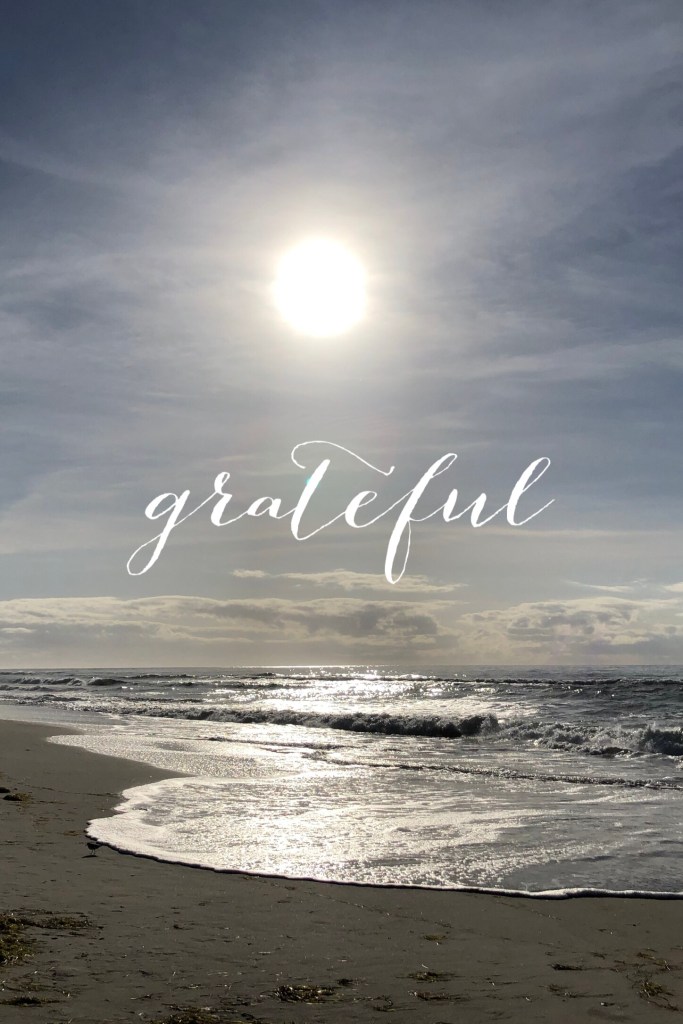
If I take the wings of the morning
    and dwell in the uttermost parts of the sea,
even there your hand shall lead me,
    and your right hand shall hold me.

Psalm 139:9-10

*******

with many thanks to Denise Krebs for the inspiration. Here are Denise’s starters (borrowed from Linda Rief) for a rambling autobiography:

I was born…
I adore…
I bought…
I have…
I never…
One of my…
When I was (age)…
My favorite place…
I can still (sense)…
I dated…
I fainted…
I gave…
I once had…
I am…
I want to…

and thanks to Two Writing Teachers for the Slice of Life Story Challenge every day in the month of March.
Sunday song

Early Sunday morning, on my way to church, the sky’s overcast but sun rays are peeking through, all set to teach the lesson on what constitutes a “hero” and while the best-known characteristic may be courage (which is not the absence of fear but acting bravely in spite of it), not to mention self-sacrifice, then perhaps the least recognized is humility, throwing off the mantle of leadership to be a servant, it’s all a matter of the spirit, service… and as I drive past barns, fields, pastures, the green, green grass hints of imminent spring, making my heart rejoice, as do the horses tossing their manes when I pass, surely shaking off sleep and the night, greeting the day as if to say Good morning, good morning, not to mention that I have just enough time to make choir practice before I teach, for we are finally singing as a choir again after two long years, and look at all these robins flocking by the roadside, taking flight as I round the bend, maybe straightening a curve or two, until I remember something my childhood preacher said: Don’t have a Jesus bumper sticker on your car if you drive like the devil… good thing I have no such sticker, but I’ll slow down a bit just the same…in my bag is a list of prayer requests and petitions to make, knowing the Lord already knows, for He knows all, sees all, is over all, and while there is so much I cannot understand, I am learning, I am always learning, and although words are forever scrolling through my brain, today, my heart needs no words; it just sings, like the birds.

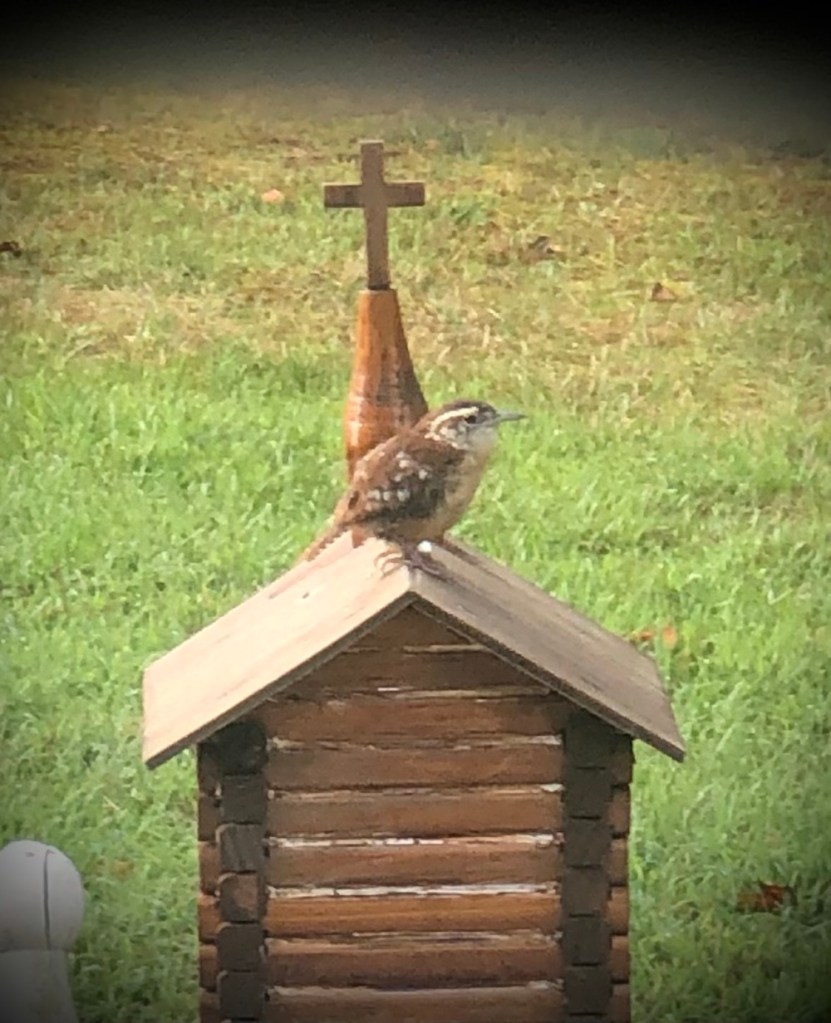
A photo from last summer. In recent weeks a little Carolina wren has been perching on the tip of the cross of one of our two “bird churches,” singing its heart out to the sky. I haven’t been successful in recording this glorious solo… yet.

*******

with thanks to Two Writing Teachers for the Slice of Life Story Challenge every day in the month of March.

Always remember

a bit of palindrome written to a picture worth much more than a thousand words,
maybe even a thousand infinities, to me

Always
remember how much you’re loved
my child
and child of
my child
remember how much you’re loved
always.

My oldest son and his baby girl, Micah.
He named her. Micah means “Who is like God?”
Answer: No one, no one, no one…


But the steadfast love of the LORD is from everlasting to everlasting on those who fear him, and his righteousness to children’s children… Psalm 103:17

*******
with thanks to Two Writing Teachers for the Slice of Life Story Challenge every day in the month of March.

Ashes

a combination Slice of Life & Spiritual Journey offering

I grew up hating ashes.

They were a part of my everyday life.

My parents were smokers. Salem menthols. When their friends came over or when some of my mother’s family gathered at our house, smoke hung in the air, thicker than fog, like some conjured ghost constantly materializing, encompassing, lingering…

Sometimes I was given the chore of cleaning out the ashtrays. A debasing job. Dirty. Ashes are pervasive. Everywhere and never really gone, no matter how hard you try. Even now, remembering, the stench is my nose, the metallic taste on my tongue…

It would be a long time before I’d learn the seeming incongruity of ashes as the main ingredient of an age-old cleansing agent. Lye. Which was also used to make hominy and that Southern staple, grits. In spite of my heritage, I never learned to like them.

It took me longer still to understand ashes as symbolizing something holy. Ash Wednesday and Lent weren’t part of my Protestant church or family tradition.

I got the humility part early on, however. From stories. First there was Cinderella, named for the soot that clung to her skin and her clothes from ashes that she (too!) was relegated to cleaning. Ashes are pervasive… then the Bible. Job, stricken with boils, scraping himself with broken pottery, sitting in the ashes. The repentant king of Nineveh mandating sackcloth and ashes after revival preached by the pouting prophet Jonah. Eventually, the vivid image of Tamar placing ashes on her head, sobbing, in utter humiliation and grief after the assault by her half-brother. Priests were commanded to change out of their sacred garments before disposing of burnt offering ashes.

Ashes are pervasive…

At fifteen I stood outside watching flakes falling from the sky in late May. Not snow at that time of year, in the southeastern United States. Ash. From the eruption of Mount St. Helen’s on the other side of the country. The volcano’s side exploded with such force that plumes of ash rocketed skyward for miles. The snowlike flakes settled across the nation and parts of Canada. I caught these curiosities in my hands. They didn’t melt. They looked to me like flakes of human skin.

I thought of war.

I think of war now. As I write, scenes are all over the TV. Bombs. Destruction. Death. What once was, now in ashes.

I think of the gorgeous churches of Kyiv.

I think of the dead.

My second son is a recently-certified crematory operator. Traditional burials are steadily giving way to cremations now. One day I went with him and watched while he placed someone’s ashes in an engraved box urn. These ashes are different from other kinds. Pale powder, fine as talcum. One of the most reverent acts I’ve ever witnessed, my boy tenderly packing that human dust.

The ancient Romans had a saying, Memento mori. Remember that you die. It is the same idea behind Ash Wednesday rites: Remember that you are dust, and to dust you shall return, echoing God’s words to Adam in Genesis 3:19, after the Fall.

I’ve never had a cross of ashes placed on my head by a priest, but I understand the call to repentance. It echoes deep in my bones. I know the desperate desire for holiness in the face of raging unholiness. The need for whole–ness. I believe in repent and believe. I do. I repent. I believe.

I believe there’s an eventual reckoning.

Ashes are pervasive.

Volcano ash man. @Doug88888.CC BY-NC-SA 2.0.

*******

with thanks to Two Writing Teachers for the Slice of Life Story Challenge every day in the month of March. This is my sixth year participating.

Thanks also to my Spiritual Journey writing friends and to Ruth Hersey in Paraguay for hosting on the first Thursday in March. Ruth chose the theme “ashes” in connection with Ash Wednesday (which is why my post is going up a day early this month).

In the time of broken hearts

Heard on the news this week: Broken heart syndrome is a real thing.

It happens after significant stressors. Too much adrenaline. The heart is weakened. It hurts.

There’s a scientific name for it: takotsubo cardiomyopathy. It derives from the Japanese word for “octopus trap,” after the shape of the left ventricle of the heart in this condition.

It is temporary. The broken heart can heal in a short time, maybe days or weeks.

It can sometimes lead to complications. Rarely death, though.

It seems to affect mostly women 50 and older.

But I wonder.

I wonder, as I regularly step in for teachers who are out.

I wonder, as I absorb laments and frustration and anger about the depth of student struggles.

I wonder, as I listen to students reading poems about tasting the salt of their tears.

I wonder, when I wake up so tired on workdays, when I have so little left to give when I get home.

And I am usually one to see the glass half full, to find the awe in each day, like…

the blue heron standing a glassy pond on the drive to work

the whorls of white smoke floating up from the chimney of a little house in the countryside, struck by the rising sun and transformed into clouds of peach-colored light

the newest photo of my three-month-old granddaughter who’s beginning to smile more and more

hearing my boy play old hymns on the baby grand piano at church with such a multitude of notes and joyful liveliness that surely, surely the angels dance

the one little bird (a cardinal?) singing for all it is worth, from the treetops

-these things strengthen my heart.

And keep it, I think, from breaking.

It is a long season, this pandemic, with its deep layers of residue.

On this day of celebrating love and hearts…I wish you healing peace for the pieces.

Photo: Broken Heart Chalk 2. Retta Stephenson.CC BY 2.0

Collaborative Spirit

I will call it
as I see it
from the ever-shifting sands
at the shoreline
looking out
over the vast and raging sea
called School
nowadays

so much debris
in those rolling waves
flotsam and jetsam
of curriculum
of standards
a wreckage of data
certainly broken systems
and even “learning decay”
-phew-
how’s that
for positivity

it is not
that I don’t have faith

I do

I believe in kids

I believe in teachers

I believe in overcoming

I also believe
everyone doesn’t believe

and I know
as I hear the crashing waves
and the gnashing teeth
that the current
will drown us all
if we pull
apart

if only
if only
I could build a sturdy ship
I’d name it
Collaborative Spirit

and
if I could just get everyone
on board

we’d sail
over
and through
and beyond
what we can even
imagine

together

it’s just that
one person
can’t build a ship
(or relation-ship)
alone

no

building the
Collaborative Spirit
takes all hands
on deck

that’s how I call it
that’s how I see it
from the ever-shifting sands
at the shoreline
looking out
over the vast and raging sea
called School
nowadays

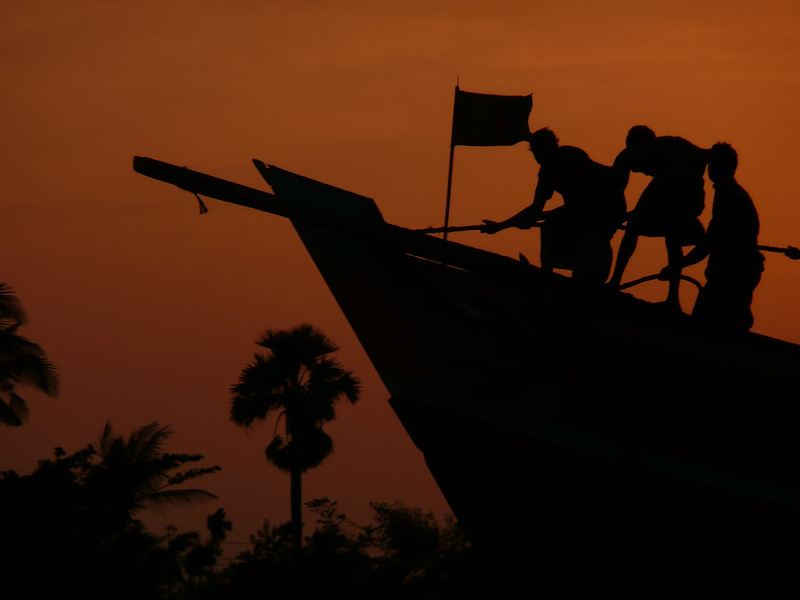
Wooden ship on the Rupsa River (Bangladesh). joiseyshowaa. CC BY-SA 2.0

Heart healing

“Heart” is the Spiritual Journey prompt for this first Thursday in February.
Thanks to Linda Mitchell for hosting our group of writers.

On a Sunday afternoon at the end of July, 2019, my husband had a massive heart attack and cardiac arrest. He was resuscitated by EMTs and went straight into surgery after arriving at the hospital. He got four stents and spent several days in induced hypothermia to reduce trauma to his brain, which can happen when blood flow has ceased and is suddenly restored. He recuperated slowly, painfully; his sternum had been broken by the CPR which saved his life. He came home. One morning in September he woke to jolts in his chest and tingling down his arm. I took him back to the hospital. More heart attacks. This time he had four bypasses. The surgeon mended his sternum with a little metal plate.

He is doing well now. In fact, up until winter settled in, he was doing eight-mile hikes in the park a couple of times a week and feeling as good as he ever has.

As this first Thursday in February drew near with Valentine’s Day and “heart” as the Spiritual Journey prompt for the month, I thought of a couple of things I might like to explore. I had chosen one, in fact, when I saw the heart-shaped hospital pillow that remains in our bedroom. This pillow was given to my husband after the bypass surgery. His attending nurse wrote on it with a Sharpie: “Keep hugging your heart!”

I thought, this is it. This is what I need to write about.

These pillows are given to all patients recuperating from open-heart surgery. The patients hug them when they have to cough or sneeze, lessening the severity of the jolt. The pillow protects the incision site whenever the patients move and when they practice the necessary deep-breathing exercises for their lungs.

It just so happens that the hospital where my husband’s surgery and recuperation has the lowest mortality rate in the country for heart bypass patients (according to reports from 2017-2019). It also just so happens that the county’s resuscitation rate is the highest in the nation. So, if you’re going to have cardiac arrest and need cardiac surgery, it’s the best place to be.

My husband is evidence of this.

I think about the surgeon who held my husband’s heart in his hands, who grafted those bypasses. He told us that as soon as the first graft was done, my husband’s heart immediately began beating stronger; it was hungry for the blood. It wanted to live.

Now. Where’s the spiritual element in all this, you ask?

Beyond the miracle that one human can cut open another and repair his heart, and that this repaired person can heal and live life awhile longer, is the Great Physician who is able to transform hearts and lives. When I was young, I attended a Bible study group in which a couple of guys could play guitars and we’d often sing this version of Psalm 51:10-12:

Create in me a clean heart, O God
and renew a right spirit in me

Create in me a clean heart, O God
and renew a right spirit in me

And cast me not away from thy presence, O Lord,
take not thy Holy Spirit from me.
Restore unto me the joy of thy salvation
and renew a right spirit in me.

Godly heart-grafting, I would say. Cleansing, taking away the bad parts, restoring. The heart must be transformed before the spirit can be renewed. Sometimes a great deal of work must be done…but the Lord is able. If we let Him work. If we are hungry for it. We often think of letting Him into our hearts but it’s really more a matter of offering our hearts—battered, damaged, tangled, sick as they may be—to Him. He knows exactly what is needed. Psalm 51 is the cry of David’s heart after Nathan the prophet confronted him with his adultery and murder. It can be the cry of any of our hearts as we place them in the healing hands of Almighty God, craving His mercy.

I rejoice that my husband lives, that he was made well, that the hospital and the EMTs are the best around.

I rejoice more that the Lord forgives and heals hearts and spirits. He works on my own, daily. He is the physician and the pillow, the healer and the comforter. The ultimate heart-hugger. He is the best place to be.

Not to mention that His own mortality record is unsurpassable.

Sunday is a stillness

Sunday is a stillness
in my week
not restful
for a pastor’s family
but restorative
and right
the church standing tall
like a father
doors like open arms
welcoming the penitent child
wrapping me
in belonging

Sunday is a stillness
in my spirit
ever how fierce or frayed
ever how dismayed
like a calming infusion
like a healing balm
the stillness seeps
so deep, so deep
for in all the unholiness
the holy remains

Sunday is a stillness
in my life
for the living
for the forgiving
for the remembering
for the mattering
for my walking in the footsteps
of those who walked before me
in the rhythms of grace
singing old songs of belief
through all our yesterdays
until our eternal Sunday
comes at last.

King’s gold

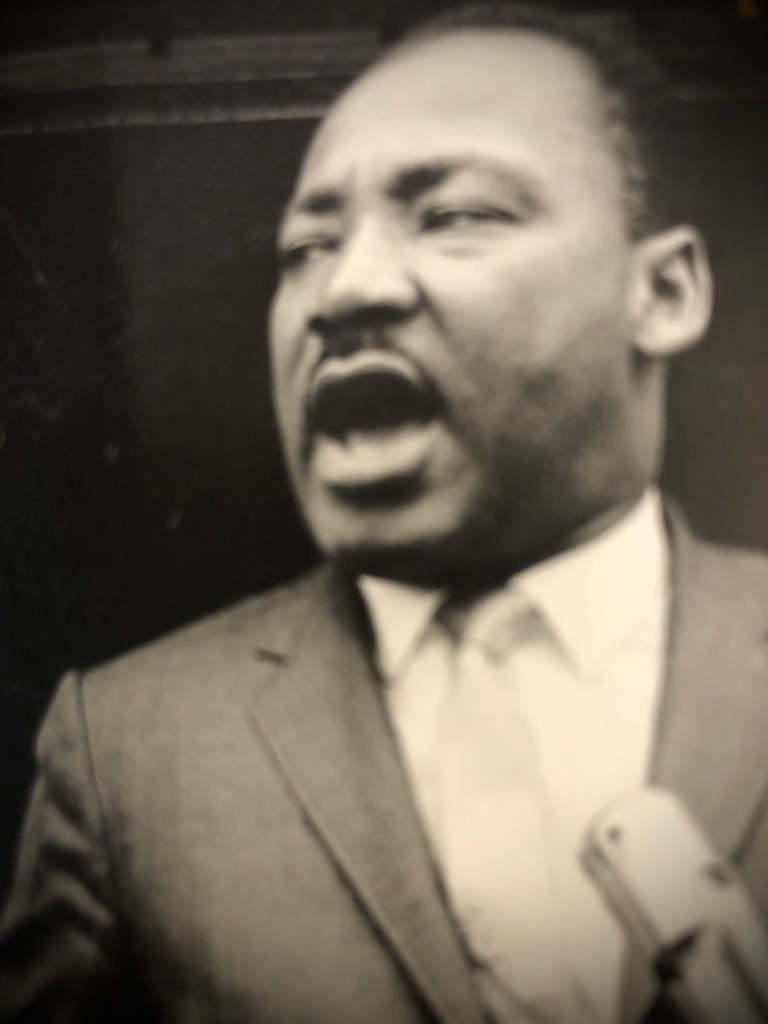
Today on the Ethical ELA Open Write, Kim Johnson challenged teacher-poets to try different versions of the Golden Shovel, which is typically created by borrowing one line of a poem or speech and using it as the beginning or ending words of each line of your own new poem. Kim encouraged using lines from Dr. King’s speeches, in honor of the day.

This is the first time I’ve attempted to write a triple Golden Shovel. I took three meaningful lines from “Letters from Birmingham Jail” – remembering that Dr. King was a minister:

-“Whatever affects one directly, affects all indirectly”(opening words to line 7)
-“There can be no deep disappointment where there is not deep love” (somewhere in the middle, until last 4 lines)
-“Injustice anywhere is a threat to justice everywhere” (ending words to line 8)

(Thank you, Kim – and Dr. King).

Lost and found

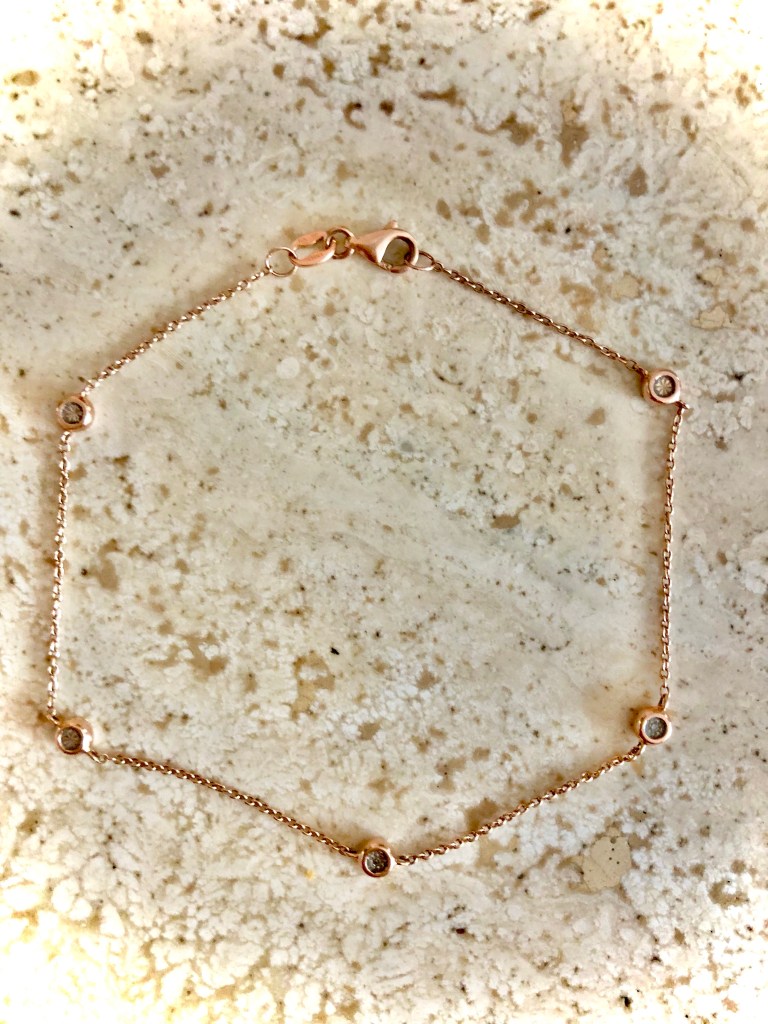
It’s a delicate rose-gold chain with crystal bezels. I don’t know its value, but my oldest son gave it to me some years ago, so to me it is priceless. I wear it every day on my right arm where it frequently catches the light and reminds me of him.

The last thing I do whenever I leave the house is pull it out from under my sleeve (if I am wearing long sleeves or a coat, and as temperatures were in the thirties this morning, I was wearing both).

When I reached for it today, the bracelet wasn’t there.

I had a busy morning ahead; I couldn’t stop to look for it.

I had to carry on without it.

In my mind, I retraced steps. I would look for it when I got home.

And so I did.

Wasn’t in the bed (I’d made it, surely I would have seen the bracelet if it was lying there).

Wasn’t on the floor, not anywhere that I could see. I used my phone flashlight so the bracelet would shine in the light…

I checked my closet, checked the sleeve of my pajamas and my warm red robe.

Not there.

Even checked my husband’s car; we went out for Mexican last night.

No.

“Do you think you lost it at the restaurant?” queried my husband.

“No, I didn’t even take my coat off and the sleeves are fastened close at the wrists. I don’t think it could have fallen out.”

It’s just a little bracelet but it’s irreplaceable.

My boy gave it to me.

Retracing, retracing…

I am a pretty good finder of things. I can usually retrace enough or recall what I was doing well enough to locate a lost thing. I ask myself: What makes sense?

Back to the closet.

It made sense that the bracelet might have come off when I changed out of my robe and pajamas, which I left folded on top of a storage box in there. I had already checked, but…it’s what made the most sense.

Shined my flashlight (again) on the closet floor.

Shook out the pjs.

No.

Shook the fuzzy red robe, ran my hand through the sleeve.

No.

Shined my flashlight on top of the storage box…

A glint of rose-gold, there in a crevice.

—Found.

It’s safely back on my arm now.

So, I haven’t always been able to find a lost thing. Speaking of my boy, he lost a precious item when he was small. It’s a silver basketball pendant that belonged to his grandfather, who played the game in high school. His name is etched onto the pendant along with the year: 1935. My husband was wearing it on a silver chain when we first met. He explained that it belonged to his dad, who died when he was twelve. He said: “If I ever have a son, I am going to name him after my father.” And so, a few years later, our boy was born. He was named for my husband’s father. And he was given the basketball pendant on a silver chain when he was too young, really, to be mindful of it. One day it disappeared. We retraced our steps, hundreds of times, over the days, weeks, months. We have moved a couple of times since then. The pendant has never resurfaced. It’s silly, perhaps, to mourn for a thing, but such a loss is more than material; it’s for the history and person and love attached to it…I prayed many times that the little old basketball pendant from 1935, lost in the 1990s, might still find its way back to us someday.

It hasn’t yet.

But that doesn’t mean it won’t…