Abundance: Spiritual journey

May. Newness. Longer days, more sunlight. Blossom-laden trees perfume the air, geese with goslings glide across glassy ponds. Along the backroads and byways, the fields have been plowed; John Deere tractors roll over the naked earth, freshly dotted with neat rows of little green plants.

I think of sowing and the harvest to come.

My illustrious daily planner seems to be a cross between almanac and oracle these days. It offers this quote:

Small seeds of gratitude will produce a harvest of hope.

I love it for its own merit, emphasizing gratitude, which I know to be as transformative a force as love, forgiveness, and possibly awe. I envision tiny seeds of gratitude planted in the furrows of the heart, eventually producing a harvest of hope to be stacked and stored for when it is most needed in the future.

And I remember Joseph.

Unlike the chief cupbearer in Genesis 40, who “did not remember Joseph, but forgot him,” after Joseph interpreted his dream, correctly and prophetically. At the time they were in prison with the chief baker, who would be hanged by Pharaoh (yet another accurate dream interpretation by Joseph). To this point, Joseph had endured quite a bit. His mother died just after having his baby brother. His older brothers detested him for being their father’s favorite and for being “this dreamer” (37:19)… perhaps Joseph shouldn’t have told them of his dreams in which they, and their father, Jacob, all bowed to him. His brothers discussed killing him until Reuben, the oldest, intervened. They threw Joseph in a pit instead and sold him as a slave. Joseph is purchased by Potiphar, the captain of the guard of Pharaoh. Joseph serves Potiphar with great efficacy and integrity, so much so that Potiphar “left all he had in Joseph’s charge, and because of him he had no concern about anything but the food he ate” (38:6). Until Potiphar’s wife tried repeatedly to seduce him, that is, becoming so aggressive that Joseph wriggled out of his garment to get away from her… a garment she used to make the accusations which landed him in jail for thirteen years. (Note: This is the second garment that causes trouble for Joseph; the coat of many colors given to him long before by his father didn’t set so well with those brothers. Imagine their initial self-righteousness while tearing it, dipping it in goat’s blood, and presenting it to their father as evidence that Joseph was attacked and killed by wild animals…which, of course, they’d live to regret).

And Joseph is forgotten in prison until Pharaoh has a troubling dream and the restored cupbearer finally remembers him.

Here’s the thing: It was God’s plan all along for Joseph to stand before Pharaoh and interpret his dreams of coming famine, that Pharaoh should be so impressed he’d set Joseph up as prime minister of Egypt, that Joseph should execute his proposed plan for planting and harvesting:

During the seven plentiful years the earth produced abundantly, and he gathered up all the food of these seven years, which occurred in the land of Egypt, and put food in the cities. He put in every city the food from the fields around it. And Joseph stored up grain in great abundance, like the sand of the sea, until he ceased to measure it, for it could not be measured. -Genesis 41:47-49

It is this divine plan of action that eventually saves Joseph’s brothers when they come seeking food in Egypt.

Joseph weeps a lot through several chapters. When his brothers realize who he is, they bow before him (every dream having come true) in fear and trembling… and Joseph chooses reconciliation over retribution. His father is still alive; he brings the whole family to Egypt to survive the famine. The brothers again fear his wrath on the death of their father, but Joseph’s words ring with gratitude to God: “You meant evil against me, but God meant it for good, that many people should be kept alive…” (50:20). And so the Twelve Tribes of Israel were preserved.

Seeds of gratitude, shall we say, protect against spiritual famine, yielding hope to be relied upon in times when faith is tested, as Joseph’s was. He never wavered; this is why I love him. He’s one of my favorite Biblical figures, exhibiting integrity and faith in abundance.

In the midst of our trials, God is at work. In times of bleakness, verdant lushness awaits.

Begin with seeds of gratitude… and expect a harvest of unimaginable abundance.

Joseph Storing Grain During the Seven Years of Plenty. Patrizio Cajés (1540-1612).

*******

with thanks to my Spiritual Journey friends who write on the first Thursday of each month, and to Susan Koehler for hosting today on a theme of “abundance.”

It’s all about the journey

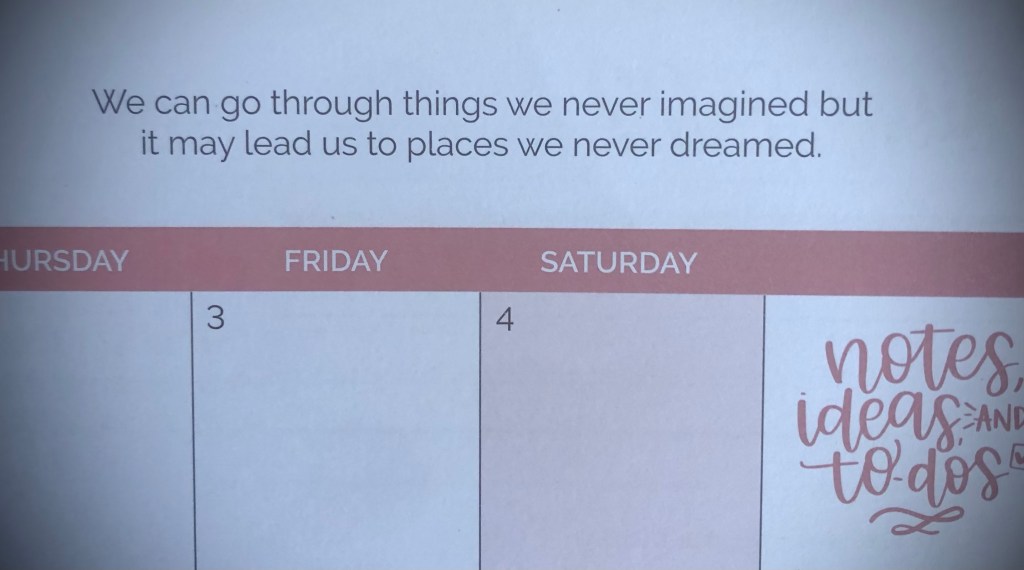
Flipping through my planner today, scheduling even more things to be done before school is out in June, I discover this quote…

We go through things we never imagined but it may lead us to places we never dreamed.

For just a fraction, a breath, the brokenness of things diminishes…

I could write of this school year’s hardships on colleagues, with colleagues, on families, and on children most of all…

of COVID still rearing its tiny invisible head in the community…

of young and beautiful creatures that have died…

of incomprehensible suffering and loss…

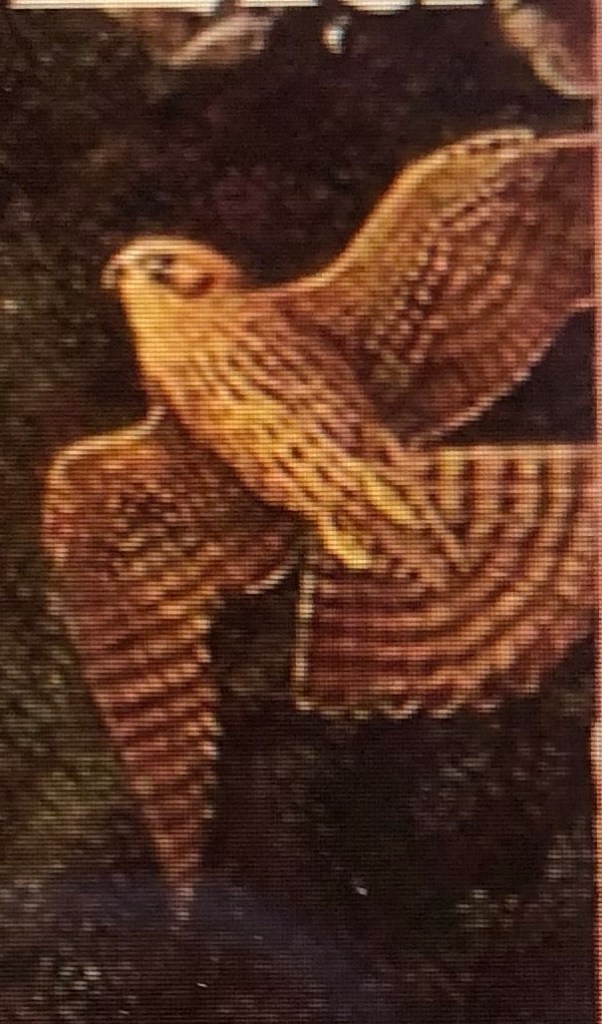
but I will write instead of lush green moments, the “birdiest” spring I’ve ever known, an abundance of wings and chatter and song each day, so many things I’ve never seen before, like a pair of great blue herons flying low over the road from pond to brush…

my son arriving at home, placing his baby daughter in my arms, her tiny sweet hand reaching to pat my face as she drinks from her bottle…

a newness that is more than seasonal, invoking the eternal like shafts of sunlight in shadowed places…

for just a fraction, a breath, I have a sense of undoing, of forests, animals, people restored, rejoicing, the Earth itself laughing, the whole atmosphere charged with absolution, pure, deep, and complete…a bright glimmering, a pulled curtain quickly falling back into place.

It is enough.

I turn the pages and keep writing on my tomorrows.

Annotation found poem

Today on Ethical ELA Jessica Shernburg invites teacher-poets to find 1-3 short texts to read and annotate or texts that we’ve previously annotated (“examples you have modeled for your students, your responses to student work, books you have marked up, etc.”). The idea is to use your own annotations in creating a found poem.

This is the kind of thing that could keep me busy for days, weeks, infinity…

My annotations come from an eclectic mix of professional development, research, an old but much-loved novel, and the Bible: Culturally Responsive Teaching and the Brain: Promoting Engagement and Rigor Among Culturally and Linguistically Diverse Students (Zaretta Hammond), The Power of Moments (Chip and Dan Heath), The Forgotten Beasts of Eld (Patricia A. McKillip), and John 16.

Might I violate the expectation
of an experience
with the right amount of tension
keeping the rubber band taut

bearing in mind that
there must be trust enough
for productive struggle

risking vulnerability
even as a disciple unprepared
for the terribleness
of what is to come

imagine tapping inner power
to call creatures with ancient magic
unto myself

while tasting
the freewheeling thoughts
of birds

More birdspiration

Finch eggs in a nest
on my front door wreath
captivated me
to such a degree
that I failed to see
what was happening
outside the back door:
a bright flash of blue
disappearing in
the little bird church
-bluebird occupants
brought Easter eggs, too.

On my back deck, Easter afternoon: a male bluebird is either bringing food to his mate or helping to feed babies. He entered and exited multiple times; once I was sure he was flying off with a bright blue piece of eggshell. These are the first-ever occupants of the little bird church, which has just been sitting on the deck as decor. I’ve seen the female as well. So hoping to get photos of bluebird babies soon (I need a better camera…this was taken with my phone through the kitchen window and screen).

My soul rejoices in this proliferation of feathered life, that songbirds have chosen my home for their own.

How lovely is your dwelling place,
    O Lord of hosts!
My soul longs, yes, faints
    for the courts of the Lord;
my heart and flesh sing for joy
    to the living God.

 Even the sparrow finds a home,
    and the swallow a nest for herself,
    where she may lay her young,
at your altars, O Lord of hosts,
    my King and my God.

Psalm 84: 1-3

Easter exultation

In honor of the day, an excerpt of “Jesus Makes Sin Forgivable” by Anne Graham Lotz in Just Give Me Jesus (2000):

The Pharisees couldn’t stand Him
but found they couldn’t stop Him
Satan tried to tempt Him
but found he couldn’t trip Him
Pilate examined Him on trial
but found he couldn’t fault Him
The Romans crucified Him
but found they couldn’t take His life
Death couldn’t handle Him
and the grave couldn’t hold Him.

*******

And a happy Easter haiku for you:

I have no more eggs.
As of this morning, new life.
Dawn exultation.

Good Friday tritina: It is finished

Eternity hangs on it
there where our sin-debt is
paid in full, finished

we would be finished
yet out of love, He did it
He is

what love is
the robe of righteousness is finished
take it, wear it

It is finished

Detail of a shirt made for me by a friend

The words “It is finished” are a translation of tetelestai – Greek for what a servant would say on returning to a master after completing a mission. It’s an accounting word, signifying a debt paid in full; it was stamped on receipts. The phrase indicates a final and complete sacrifice: Christ died as the Passover lambs were being slaughtered. And where were Passover lambs born? Bethlehem. The responsibility of those shepherds in the field abiding, keeping watch over their flocks by night…

The tritina form is comprised of ten lines with repeated ending words in this pattern:
1
2
3

3
1
2


2
3
1

1 2 3


Tell me without telling me poem

Yesterday on Ethical ELA’s VerseLove, Scott McCloskey invited teacher-poets to compose around “tell me without telling me,” the popular social media meme from a few years ago: “Tell us (through vivid sensory details and whatnot) that you are __________ without telling us you are __________. ” In his model, Scott masterfully incorporated many fragments of famous poems that have inspired him to write, followed by this reveal: “Tell me you’re a poet without telling me you’re a poet.”

So for Day 9 of National Poetry Month, here’s mine… it incorporates bits I’ve written before… and there’s SO much more to write…

It all began, I suppose,
in a darkened room
when Grandma plugged
this thing called a color wheel…

it sat on the floor, rotating, illuminating
the all-foil Christmas tree.
There in the dark
the sparkling silver tree
transitioned to red, blue, gold…

a stillness, a riveting

There was a girl
in my childhood church
who played the piano
accompanying the sanctuary choir.
Once, she stood alone
in front of the handbell table
reaching, grasping,
her white-gloved hands
a blur of choreography
playing those bells solo
never missing a note.
She was sixteen.

a stillness, a holding of breath

I don’t remember
learning how to read.
It was just a thing I could do.
But in fourth grade, the teacher
(built like a mountain, with a face
and heart of carved stone)
read to us every day.
An intelligent, artistic spider
who saved a less-than-radiant pig.
A boy who didn’t want that annoying,
subversive, endearing, ol’ yeller dog
that ended up saving his life, 
before picking up the shotgun…

My God. My God.
I almost died with that dog

and there have been books
in my hands,

in stacks by my bed,
ever since.

a stillness, an absorbing

There’s more, so much more.

At nineteen, 
walking into the community theater audition
where the handsomest man I ever saw
sat with a script…

we were married in less than six months.

Thirty-seven years this summer.

Two years in, when he said he was called 
to preach, I said
Well, you’ll be miserable 
unless you do.

a stillness, an abiding

Our oldest son saying
over and over
I’ll never go in the ministry.
It’s too hard a life.
Not getting married or
having any kids, either.

Just after he enrolled
in seminary,
he met a lovely young lady
with a little daughter
named for the title character
of his favorite book.
In the fullness of time
and in the span of a month
he became a husband, father, 
and pastor.

It was ordained. Jehovah jireh.
God provides.

Last fall, he named his newborn daughter
Micah. Which means
Who is like God?

Indeed, who?

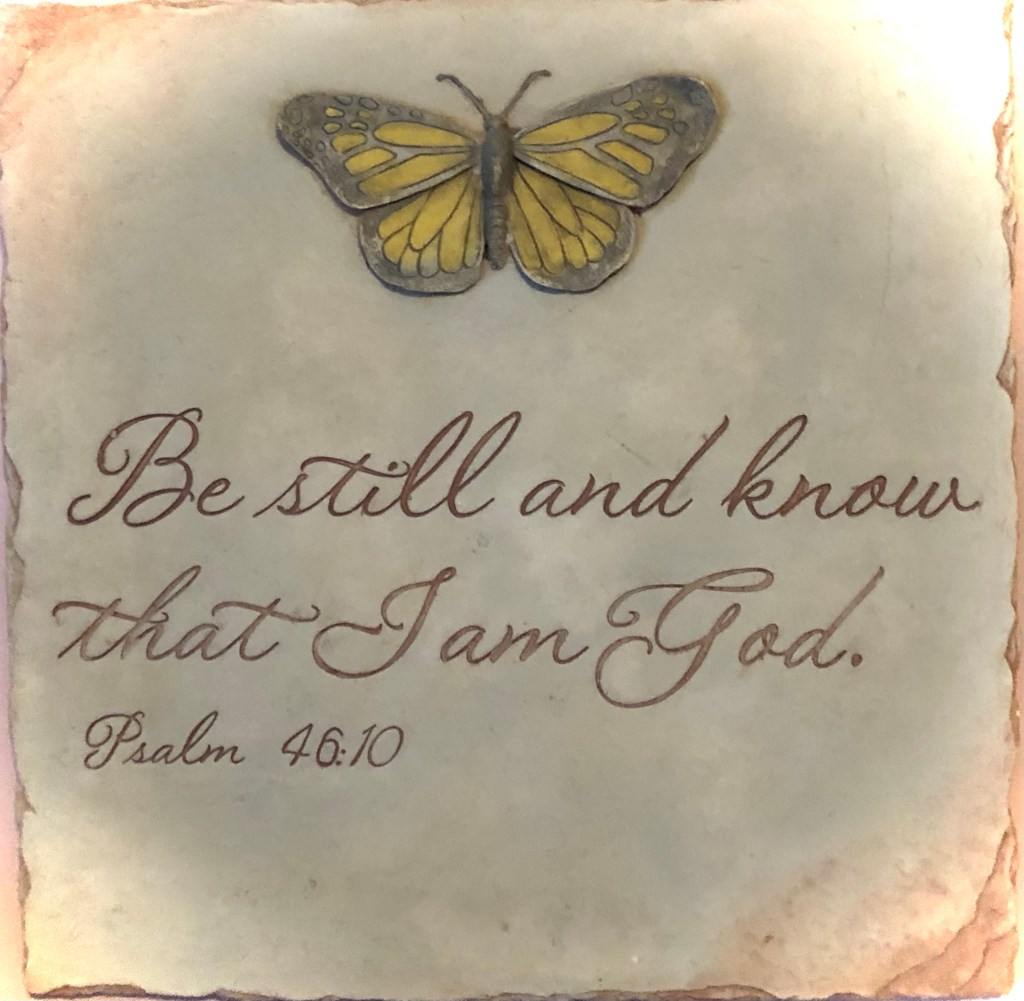
I am still, and know.

*******

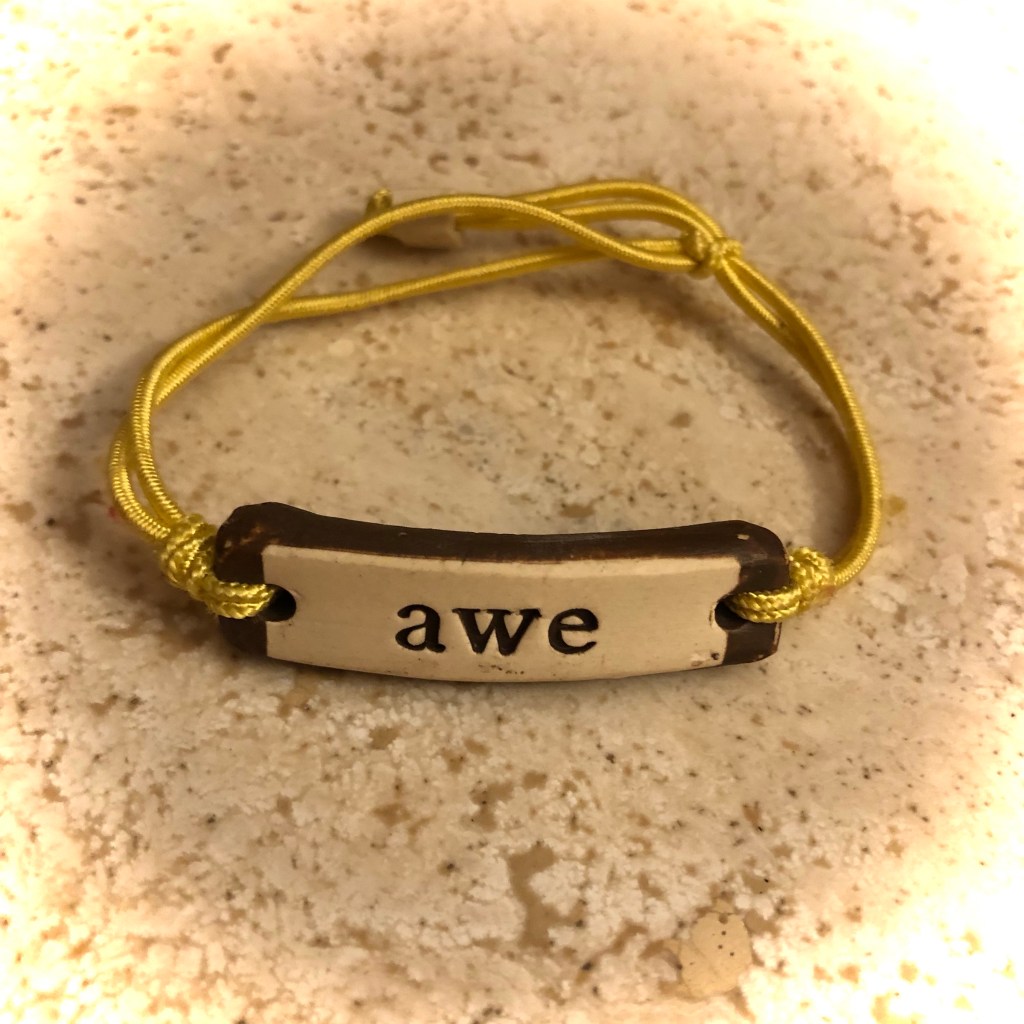
(Tell me you are awed without telling me you are awed)

(likely to be continued…)

I bind unto myself

A Spiritual Journey Thursday offering for April.

Karen Eastlund beckons fellow SJT writers with the phrase “I bind unto myself today…”

It’s the beginning of many prayers compiled by the Northumbria Community in Celtic Daily Prayers. The phrase is also attributed to the Hymn of St. Patrick (see Cantica Sacra). Thank you, Karen, for the inspiration and blessing.

What prayer might I make, what claim might I stake, on these five words? What do I need to bind unto myself today, any day, every day? What do I hold most dear? What holds me?

It comes to me via pieces of Scripture—John 1:1-4, 6:63; Hebrews 12:2.

A pantoum:

I bind unto myself today
love of words
the Word, in the beginning
the Creator of all things    

Love of words
I bind unto myself today
the Creator of all things
speaking life

I bind unto myself today
the Word made flesh, who dwelt among us
speaking life
the Author and Finisher of my faith

The Word made flesh, who dwelt among us
the Word, in the beginning
the Author and Finisher of my faith
I bind unto myself today

Until we meet again

Today I write in memory of my grandfather.

His name was Columbus St. Patrick Brantley.

He was born in 1906 “up the swamp” in coastal North Carolina. Farming was in his blood. He married my grandmother during the Depression and worked as a sharecropper. My father was born in a tenant house. Just before WWII, Granddaddy went to Virginia to work as shipwright. He tried farming and house painting after the war but “couldn’t make a go of it,” so he went back to the shipyard, where he was still working when I came along. For the record: the whole family said I looked exactly like him when I was born.

He didn’t work on Sundays; that became our day together when I was small.

He retired when I was six. He and my grandmother moved back home and thus began my many journeys to the little white house nestled in the bend of an old dirt road, where the woods had grown up all around, taking back house after house where people lived no more.

In his later years Granddaddy recorded stories of his life on audiocassette to give to his family. He could remember seeing his first Model T at age three or four. He said that mail was delivered by horse and buggy; farmers ordered chickens that were delivered in cages. He had a whole string of pins awarded him for perfect Sunday School attendance at the little Methodist church. He loved listening to the Grand Ole Opry on the radio. He spoke of his nine siblings, including a sister, Peaney (Penelope), who died of diphtheria at age four. He outlived them all. He lived to see both of my children. He could remember an ancestor speaking of Dublin.

Near the end of his life, I gave him a framed print of an Irish blessing. It hangs by my front door now:

The last time I saw him, he was dying of lung cancer at ninety-two. It was springtime. He’d grown weak but was fully dressed, sitting in his recliner by the door; he tried to coax my two-year-old to sit in his lap, like I did when I was little. I sat by his chair on a stool and held his old, wrinkled, work-worn hand.

Do you remember how we used to go to the park on Sundays?

I do, Granddaddy. We took bread to feed the ducks.

And the old locomotive?

I can just remember climbing in it together…

He was tired, always a man of few words. We sat for a long time together, not speaking at all.

When it was time to go, I kissed him on his forehead.

I love you, Granddaddy. God’s got you safe in His hands.

That’s the best place to be. And I love you.

He held tight to my hand.

It’s been twenty-three years. You can’t imagine all I have to tell you, Granddaddy. There’s been another pandemic. Wars and rumors of wars. Your great-grandsons are grown. The little two-year-old you tried to coax into sitting with you at that last visit plays piano and guitar; he loves singing the old-time songs that you loved. His brother’s a pastor with a baby girl; he tells me almost daily that something about your great-great-granddaughter reminds him of you. God remains faithful from one generation to the next. It’s almost springtime again, the fields are so green…

Until we meet again, Columbus St. Patrick.

I love you.

*******

with thanks to Two Writing Teachers for the Slice of Life Story Challenge every day in the month of March.


Rambling autobiography

I was born in a state named for a queen, by a river named for a king, and in a hospital named for the river. I adore books, words, wind chimes, church bells, birdsong, the crying of gulls at the shore, ocean waves crashing, the utterance of my newest name, Franna, in my granddaughter’s voice, the aliveness in my son’s fingers dancing over the keys of my grandmother’s piano until the house and my soul burst with his music, and silences. I bought a white flannel nightgown and sheets with bright red cardinals on them at Christmastime because Grandma loved cardinals and Christmas, it is the season of her birth and her death, she is nearest then, so now I lay me down to sleep in heavenly peace. I have her wedding band; I wear it every day. I never dreamed of being a teacher. One of my sons became a teacher, too, then a preacher, like his father. When I was eight or nine, I had an imaginary black cat; one time after climbing from the backseat of Grannie’s car, I flung my hand out to keep the imaginary cat from escaping and Grannie slammed the door on my fingers (no one ever knew about the cat…sorry, Grannie, it wasn’t your fault). My favorite place is out in the middle of nowhere along an old dirt road where my grandmother then my father then I played as children, where cicadas in the woods sing as loud as Heaven’s choir about being born, living, dying, and the Resurrection. I can still smell Old Spice in the cool of those evenings when Granddaddy leaned down to offer me his clean-shaven cheek to kiss, Good night, I love you, see you in the morning. I dated the handsomest black-haired man I’ve ever seen for just three months when we decided to get married, thirty-seven years ago. I fainted at a funeral one summer afternoon but not from grief. I gave my real black cat to Daddy when I got married because I couldn’t take her to the tiny apartment that would be my new home. I once had a yellow parakeet; Daddy got it for my sixth birthday and it lived until I was twelve, dying one summer when I was at Grandma’s playing on the old dirt road — such a mysterious balance, the giving of things and the living of them. I am a grandmother now. I want to have a good dog as long as I am alive and to see my granddaughters grown into all their beautiful becomings before the cicadas sing me away to the riverside where I shall meet the King, at last.

If I take the wings of the morning
    and dwell in the uttermost parts of the sea,
even there your hand shall lead me,
    and your right hand shall hold me.

Psalm 139:9-10

*******

with many thanks to Denise Krebs for the inspiration. Here are Denise’s starters (borrowed from Linda Rief) for a rambling autobiography:

I was born…
I adore…
I bought…
I have…
I never…
One of my…
When I was (age)…
My favorite place…
I can still (sense)…
I dated…
I fainted…
I gave…
I once had…
I am…
I want to…

and thanks to Two Writing Teachers for the Slice of Life Story Challenge every day in the month of March.