Abundance acrostic

The acrostic is an ancient poetic form, appearing in Scripture and as prayers in medieval literature. On Day Five of National Poetry Month, I use it to announce a family celebration…with a little wordplay…

Although I planned to resume writing of Easter’s
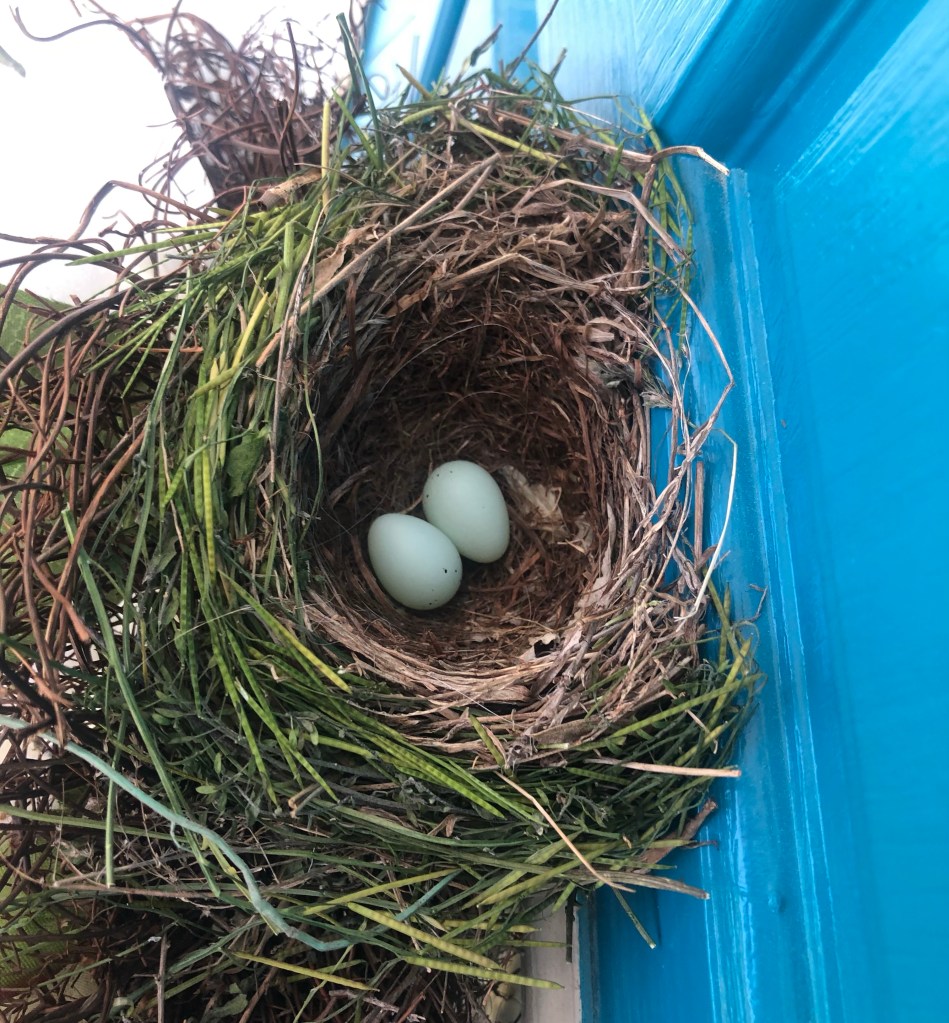
Bounty in the nest on the front door wreath,
Unprecedented number of little blue eggs—five!—
Now, instead, I ask you to picture my family
Doing a bun dance over the holiday,
At least in our hearts, at this
New-life announcement on
Cookies and a special T-shirt:
Expecting! —Exponential Easter joy!

First, the finch eggs in the nest on the front door.
The fifth egg appeared this morning.
We usually get three or four. Abundance!

Now for the cookies:
My daughter-in-law and granddaughter made them
to announce the special news to my husband and me
over Easter weekend
…aBUNdance!

My granddaughter’s face was radiant,
delivering those cookies at our family dinner.
In this photo she is crying on first hearing the news.
She threw herself into my son’s arms.
The desire of her little heart, granted; abundant joy.

—A-bun-dance, indeed!

Out of the tomb pantoum

In honor of Easter, on Day Four of National Poetry Month

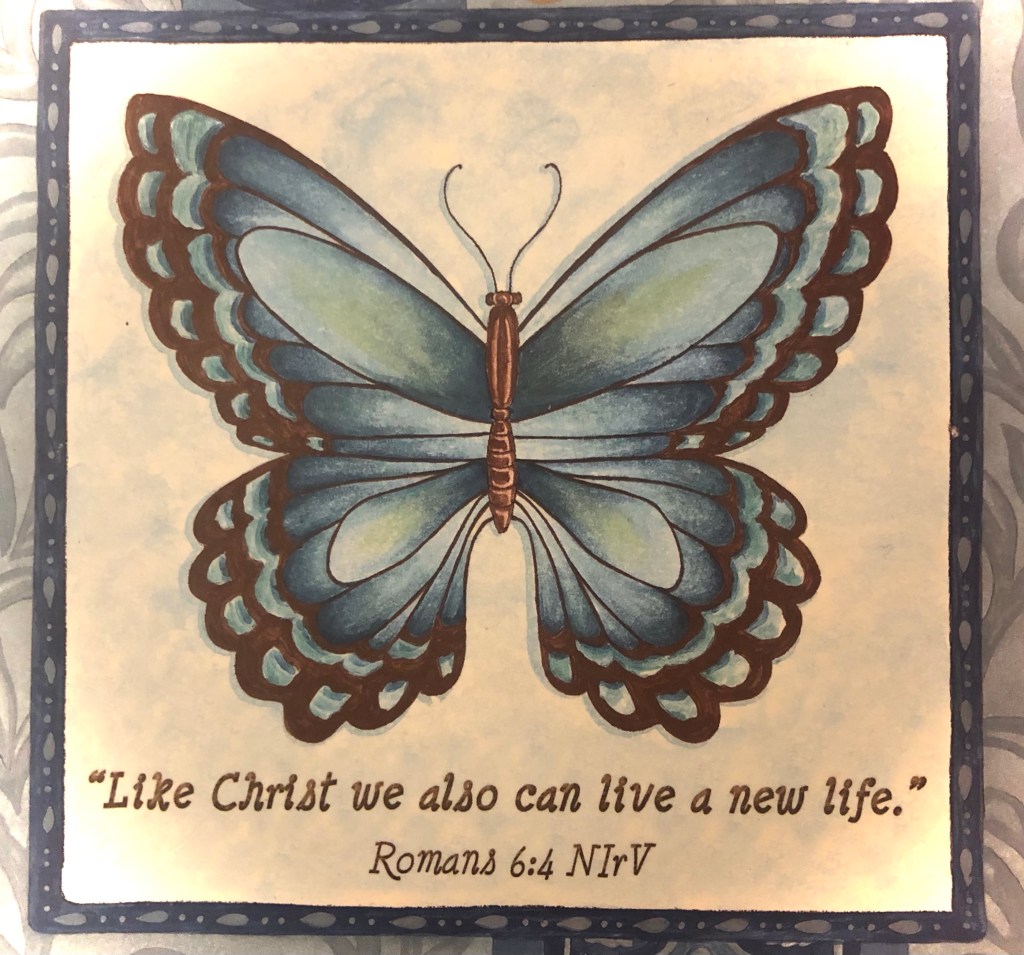
Like Christ we also can live a new life
Out of darkness into light
Offering forgiveness amid strife
As sunrise conquers longest night

Out of darkness into light
Eyes blinking, faith made sight
As sunrise conquers longest night
On the wings of morning, take flight

Eyes blinking, faith made sight
Releasing what is past
On the wings of morning, take flight
Heart’s stone removed at last

Releasing what is past
Offering forgiveness amid strife
Heart’s stone removed at last
Like Christ we also can live a new life

*******

Note: A pantoum doesn’t have to rhyme, although mine does. It is a form comprised of repeating lines in this pattern:

  1. Begin by writing four original lines.
    1 2 3 4
  2. REPEAT lines 2 and 4 and expand ideas in lines 5 and 6:
    2 5 4 6
  3. REPEAT lines 5 and 6, expand ideas in lines 7 and 8:
    5 7 6 8
  4. FINALLY, repeat lines 1, 3, 7 and 8 in the following order:
    7 3 8 1

Finch found haiku

I have heard of found poems. I have not heard of a found haiku. But I offer one today from a favorite book: The Goldfinch by Donna Tartt.

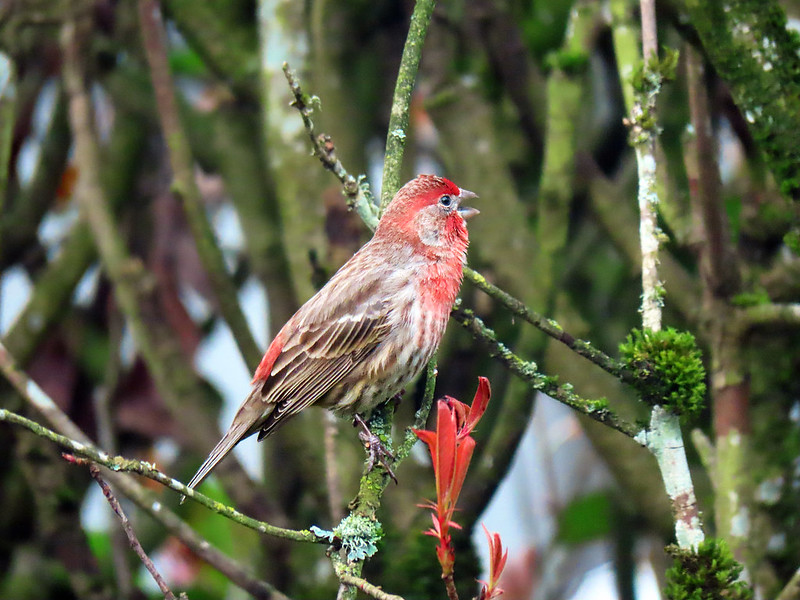
For Day Three of National Poetry Month and in honor of the finches who returned to nest in the wreath on my front door, having mysteriously disappeared last spring during the onset of the COVID-19 pandemic.

bright, immutable
finch singing out brilliantly
from the wreck of time

A house finch song on the first day of spring. Richard Griffin. CC BY-SA

Vaccination poem

Written on Day Two of the effects, for Day Two of National Poetry Month

first time, no sweat
carry on as usual
aware of soreness only
when reaching up
into the cabinet

second time, sweat
crawl back to bed
chilled to the bone
insidious feverish price
paid for immunity


Photo: NIAID. CC BY

Bird sanctuary poem

A Golden Shovel poem in honor of the finches nesting on my front door, the miracle of new life, and faith. Reshared as a stand-alone from my April 1st Spiritual Journey post, in recognition of National Poetry Month. A Holy Week celebratory hymn based on the words of Christ: Behold, I am making all things new (Revelation 21:5, ESV).

I come to the sanctuary in the cool of the day to behold
these moments of Earth’s remembering, an altar call where I
respond, walking the greening aisle just as I am
to a fanfare of wingbeats and music-making.
Holy holy holy, I surrender all
in wordless doxology on the returning. Let all things
their Creator bless, with ancient morningsong, yet ever new
.

shared for Poetry Friday, with thanks to Mary Lee for hosting the Roundup

Digging for awe: Golden shovel poems

I recently wrote a post for the CCIRA Professional Development Blog on the sometimes spirit-crushing work of literacy education. I will not list all of the contributing factors here; I will just say that there are many, especially during this long year of COVID-19. Prior to to writing the post, when asked what teachers are facing in regard to literacy and what is most needed, I responded: “A great lot of pressure at present. We have to able to relax some and find joy in our work.”

As I wrote, and as is usually the case, the path became clearer: Make room for awe.

That is my guiding “one little word” (OLW) for the year, see. And maybe for the rest of my life…

Yesterday I spoke with a colleague who will continue teaching virtually until the year ends in June, for students whose parents have chosen this option. She spoke of awe in regard to the Google Classroom chat feature: “So many more kids share their thoughts this way, more I’ve ever seen in person. I’m in awe of how much they have to say and how they encourage each other. We use the chat all the time now.”

This means students are writing more, which makes my heart sing. If ever there is a conduit for awe, it is writing.

Example: Have you noticed how many people—many students—have suddenly been enraptured by poetry after hearing Amanda Gorman? Who credits her childhood teachers and her school for valuing this kind of expressive, artistic, move-the-mountains writing?

I’ve been lamenting the loss of meaningful writing in elementary schools in my corner of the world, just when it it’s most needed—the writing workshop model having fallen out of favor in the last few years for an embedded, formulaic approach around a topic at a time. That is another whole story; suffice it to say that I am in awe of teachers and students finding their way back to writing that matters.

All of which brings me to Golden Shovel poems. It’s a form I’ve been playing with for about a year. It holds great appeal on a number of levels, practical, creative, metaphorical…the idea of mining for the nuggets of gold, the diamonds that lie within, often so unexpected, yet so important.

A teacher might give the Golden Shovel to students to dig something more out of whatever books they’re reading, songs they’re singing, famous speeches they’re studying, even a line a classmate has written—anything, really. Not necessarily as a response to the work itself, but latching onto any line that strikes them with its beauty, or pierces their hearts with its poignance, or stirs their souls with its power, to create something new and personally meaningful from it. Make room for awe…

Try digging with the Golden Shovel yourself. Take a line from a poem or a favorite book, speech, or song that has special appeal to you and transform it into something of your own. Each word in that line becomes the ending word of a line of your own poem (or the beginning word, if you prefer). Your poem may reflect an aspect from the original work. It may not. A Golden Shovel poem can mean whatever you wish; it’s just inspired by the line you use to create it.

I chose this line from Gorman’s Inauguration Day poem, “The Hill We Climb”: Even as we grieved, we grew.

Days roll on, even to odd, odd to even,

tossed dice, never quite landing, as

we wonder how that’s possible. Don’t we.

In the spinning we still loved as we grieved

and we’ll go on, won’t we, 

even as we did when odds against us grew.

And this one, from the book Wintering: The Power of Rest and Retreat in Difficult Times, by Katherine May: We do not fade so easily from this life.

Now, who are we

and what should we do,

here where the sun shines not

and Earth’s colors fade.

Even so

consider how easily

we glide from

that room to this,

enduring, rather than living, life

And so I pass the Golden Shovel.

Here’s to the awe of your own discoveries.

Happy digging.

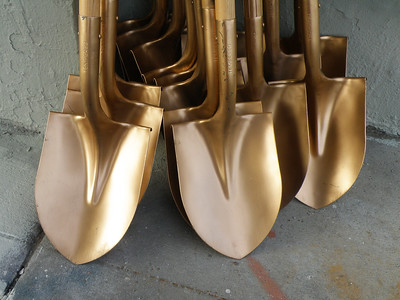
Photo: Golden shovels. Alachua County. CC-BY

*******

The annual Slice of Life Story Challenge with Two Writing Teachers is underway, 
meaning that I am posting every day in the month of March. 

This marks my fifth consecutive year.

In the night

A “backwards poem,” to be read like Hebrew or Arabic, from right to left:

start a with wake I

voice your hearing
name my calling

remember I before
are you
here longer no 

are you
gone long

still but
somehow
near so

or perhaps try it frontwards, left to right:

I wake with a start

hearing your voice
calling my name

before I remember 
you are no longer here

you are
long gone

but still
somehow
so near

*******

many thanks to Katrina Morison for the backwards poetry” inspiration during
the March Open Write at Ethical ELA

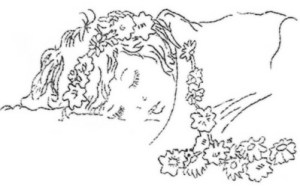
Image: Pillow. Playingwithbrushes. CC-BY

The annual Slice of Life Story Challenge with Two Writing Teachers is underway,
meaning that I am posting every day in the month of March.

This marks my fifth consecutive year.

Zone

This quote was in my planner for the month of March.

Since it is the month of the Slice of Life Writing Challenge, I thought of it in terms of writing, and of the mind—where writing lives.

I picture “comfort zone” as a little garden surrounded by a stone wall; there is no gate. There, in the coolness of the day, the grass remains lush and green; dew glints like diamonds in a sun that never rises nor sets. There is no twilight in this zone, nor any dawn. Time is irrelevant. The season is constant; perpetual spring. Flowers remain in bloom, lavender, pink, lacy white like a wedding gown, but they give off no spirit-stirring fragrance, and they never die. They just are. A little fountain bubbles quietly in the midst. In the distance, birdsong. The birds don’t come to visit this garden, though, beckoning as it is. They are living things which need living things. Nothing grows in the garden. It is not stagnant, only static.

This garden is a place where nothing ever happens; to attempt feeling, to imagine, to have any hope of creating, one must risk climbing the wall.

There is no guarantee of what lies on the other side…except that the ground is there to land on, and that the stars are overhead for guidance, and that the wind will not be controlled, it will blow where it will, and somewhere in it you learn what holds and what does not, like the stone walls, mossy, cool to the touch, henges of the human mind. That is the strangest zone of all. It has nothing to do with time, but with that small green thing that desires to grow, seeking cracks for tender tendrils to poke through…whether in or out. The little living thing simply reaches for the light.

And so we write. We scale the wall of the comfort zone where nothing beautiful grows… and discover unexpected light. Perhaps in the wonder of words, in the glory of ideas, in the power of story… and then we realize: Different gardens, different flowers, different wellsprings, perhaps…but underneath, the living root that connects us all, one to the other. It is deep. It is ancient.

Going more than a bit out of my comfort zone here: sharing Golden Shovel poems built from the planner quote. They still need a good bit of work. As we sometimes do. They are imperfect, unpolished. As we are. You can see the poems are mirror images of each other. For so are we, in the end…

The writerly zone, after all, cannot be the comfort zone.

It is a scaling of the wall. Of the mind, and also of the heart… for that is called trust.

Note that one definition of “mind” is the element of a person that enables them to be aware of the world and their experiences, to think, and to feel; the faculty of consciousness and thought.

Sounds like a writer to me.

Before the Writing

A keen awareness of World
comfort beckoning
zone of reckoning
is this defining one’s mind?
A vast, inner expanse encompassing the
beautiful, a safe
place of keeping
but does that matter if
nothing leaps from yours to mine, or
ever climbs over the stone walls where
grows our vine of stories, inextricably
there intertwined, and infinitely rooted.

After the Writing

World of awareness, keen, a
beckoning comfort
reckoning of zone,
mind, one’s defining, this is
the encompassing expanse, inner, vast, a
safe, a beautiful
keeping of place
-if matter that does, but
-or mine to yours, from leaps nothing
where walls stone the over climbs, ever
inextricably, stories of vine, our grows
rooted, infinitely, and intertwined, there.

*******

The annual Slice of Life Story Challenge with Two Writing Teachers is underway, meaning that I am posting every day in the month of March. This marks my fifth consecutive year and I’m experimenting with an abecedarian approach: On Day 26, I am writing around a word beginning with letter z.

Now that I’m over THIS wall…in which direction shall I go for the remaining five days?

Writing

With special thanks to Dr. Kim Johnson who hosted Ethical ELA’s Open Write last week with the invitation to compose “Your Life’s Table of Contents” poems. There is no formula, just lots of freedom; Kim said: “I started thinking about how I might write a table of contents organizing the poems I have written over these past few years, in verse…Imagine you are creating a collection of your own work, and try your hand at an organizing poem to be a table of contents or any other feature of a book.

My poem is based on a timeline of my writing history, starting at age 6.

My Life’s Writing Anthology

Bible story plagiarized
in blocky big letters
on lined newsprint paper

All About Me
carefully rendered detail
teacher-praised

Myth of Shoeani
on the origin
of shoes

Dr. Heartbeat, Dr. Heartbeat
a play composed
around four words
heart
lion
clock
—I forget the fourth

The Poetry Years
of rainbows
friendships
love
loss
even a baby dragon
rhythms of my soul
attempting to understand
itself

A short story
a mystery
a secret
a little girl
kept safe

All-nighter
research paper
on the function of 
King Claudius
in Hamlet
—still tied two of my best friends
for the highest marks in class

Oral tradition
of grandparents
put to paper
for the first time

Novel ideas
captured in notebooks
beginning to live
even if 
they haven’t breathed
in a while

Critical research
on children’s fantasy lit
taking the last of my strength
and the humanities prize

Short stories
hammered out
within word counts
for competitions

Mentor texts
for students
and teachers
learning how to write
and to love
memoir
essay
story
fantasy
poetry

The blog:
the archive
the scrapbook
of my writing life
my love letter
to words
and the world

*******

The annual Slice of Life Story Challenge with Two Writing Teachers is underway, meaning that I am posting every day in the month of March. This marks my fifth consecutive year and I’m experimenting with an abecedarian approach: On Day 23, I am writing around a word beginning with letter w. How could it NOT be “writing”?

Reading

With special thanks to Kim Johnson, who invited participants to write around “second grade pain” on Ethical ELA this week. She modeled with a form of poetry, the pantoum.

I knew right away what my poem would be about…

2nd Grade Trouble Pantoum

I’m in trouble for reading
My little heart bleeding
For I hid during math with a book
When Teacher came to look

My little heart bleeding
To numbers, conceding
When Teacher came to look
In my cloakroom nook

To numbers, conceding
Warrior Teacher, succeeding
In my cloakroom nook
Oh, treasured book, that the pillager took!

Warrior Teacher, succeeding
For I hid during math with a book
Oh, treasured book, that the pillager took!
I’m in trouble for reading.

*******

Note: A pantoum doesn’t have to rhyme, although mine does. It is a form comprised of repeating lines in this pattern:

  1. Begin by writing four original lines.
    1 2 3 4
  2. REPEAT lines 2 and 4 and expand ideas in lines 5 and 6:
    2 5 4 6
  3. REPEAT lines 5 and 6, expand ideas in lines 7 and 8:
    5 7 6 8
  4. FINALLY, repeat lines 1, 3, 7 and 8 in the following order:
    7 3 8 1

The annual Slice of Life Story Challenge with Two Writing Teachers is underway, meaning that I am posting every day in the month of March. This marks my fifth consecutive year and I’m experimenting with an abecedarian approach: On Day 18, I am writing around a word beginning with letter r.

Also shared for Poetry Friday this week; many thanks to Linda at TeacherDance for hosting the Roundup!