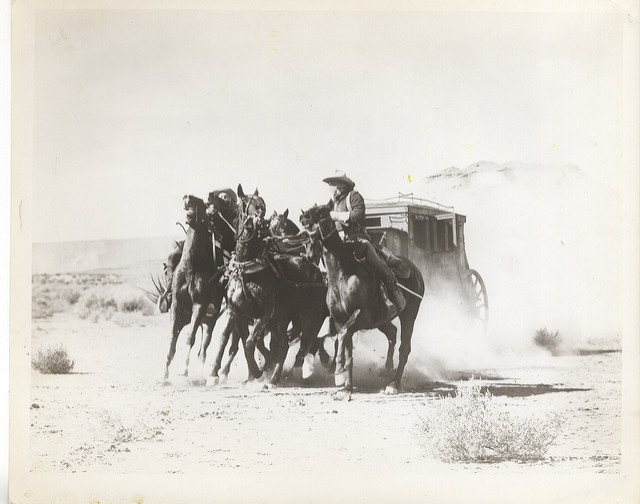
Salt and the stagecoach

Stagecoach

Western Stagecoach 08. Robin HallCC BY

The third graders were having a hard time.

“We’re writing pourquoi tales in this unit,” explained their teacher, “which have to be based on the students’ research of frogs. We practiced writing one together and now they have to write their own, but they keep coming up with stuff that doesn’t quite work. I’ll end up with twenty stories about ‘Why Frogs Have Eyes’ or something.”

She sighed.

So, as extra practice,  I agreed to come help the children write pourquoi stories on topics of their choosing. I modeled writing one of my own composition, “Why People Wear Shoes,” incorporating their artistic contributions along the way (my main character meets a talking owl and the kids said it needed to be huge so that my character could ride on its back, which greatly enhanced the story).

Then we brainstormed ideas that they might write about:

Why there are stars

Why there are oceans

Why the ocean is salty

Why zebras have stripes

Why there are colors (challenging!)

Or anything else in the universe that might make a sensible pourquoi.

“Remember,” I told them, as they settled on their ideas and started to write, “you can have fun with this. You can make animals can talk, you can make mysterious things happen, but your stories have to clearly explain why or how something is the way it is.”

When I returned the next day, the teacher said, “You’ve got to hear this!” She asked a boy to read his draft to the class. A quiet boy who hadn’t seemed especially interested in writing.

I sat down and listened. He’d chosen “Why the Ocean Water is Salty.” A man working in the mountains delivered salt to people in a stagecoach. Thieves threw a stick of dynamite into it, which frightened the horses. They drove over a cliff into the sea, where the dynamite went off, dispersing “billions of salt” throughout the water.

Oh, and the driver survives, retires, and decides he’ll just fish and hunt for the rest of his life.

He finished reading. His classmates applauded enthusiastically.

Must have been a full minute before I thought to close my gaping mouth.

“Amazing!” I finally managed to say. “What made you think of a stagecoach?”

“Well, first I wrote that the man was breaking up rocks on the mountain and hit one accidentally with his foot. It rolled down a cliff and knocked other rocks in, but then I thought, that doesn’t make sense. Rocks won’t make the ocean salty. So I thought about a stagecoach with salt in it. Then I needed something to explode in the water . . .”

—Makes perfect sense to me.

The moral of the story:

We can show them the stagecoach

but if we never let them load it as they please, 

they’ll drive only so far.

Set the wheels in motion,

hand over the reins,

jump out of the way.

See what astonishing routes they take.
Happy place

Sitting in the surgical room, waiting for a minor outpatient procedure, I try to redirect my sense of dread by listening to the nurses chatting:

“The knees, they’re the most unforgiving body part.”

“How about the uterus? The uterus is a vindictive organ. You mess with it and it’s going to fight back.”

Immediately I am looking all over the room for something to write with: The uterus is a vindictive organ –! That’s got to be one of the best lines I’ve heard in my entire life. Profound and very possibly inarguable . . . .

But pens apparently aren’t needed in the surgical room, as I can’t see one anywhere, and even if I did, I can’t get to it, I’m hooked to an IV, and besides, here comes a nurse, still talking: “The liver, now, it has a great sense of humor, but the uterus has absolutely none. —How ya doin’?”

She’s addressing me. “Oh!” I say, still etching the dialogue into my brain in a desperate attempt to preserve it. “I’m, um, good.”

—What does she mean, the liver has a great sense of humor? Because it’s able to regenerate? Or is there some other reason? What can that possibly be?

“So, you know you’ll get propofol, right, and this will all be over in a jif,” she says cheerily, busying herself with the tubes and such.

—Propofol. Isn’t that what killed Michael Jackson?

I am just about to ask when the anesthesiologist comes in and says, “All right, let’s do this.”

I want to say, Hang on a second, I really need to know about the liver’s sense of humor, when the anesthesiologist says in a low, silken voice:

“Do you have a happy place?”

I so know what THIS is. Get me talking about something happy so I’ll go under peacefully. A completely obvious ploy.

I don’t want to be put under, I don’t want to talk about my happy place, I want to know about the liver’s sense of humor before I wear myself out wondering about it.

But the moment’s upon me and suddenly this question about my happy place makes me want to cry.

See, I think my happy place is a little like Heaven, and if I start talking about it—will I wake up?

No need to fight. Just embrace it, says my own voice in my own head. At least, I think it’s my own voice.

So I say, “Yes, I have one.”

“Tell me about it,” says the silken voice, as warm as a blanket.

I sigh. “My grandparents’ home.”

“Where’s that?” asks the liver-humor nurse.

“In Beaufort County, out in the country. Some people say at the end of the world.”

“Why were you happy there?” coos the anesthesiologist.

“Well, because they were there. My grandparents. I always wanted to be with them.”

And they always wanted me, I think, but I don’t say it aloud. I can see them, faintly, as I speak. Standing out in the yard, watching for my arrival. One or the other or both, every time they knew I was coming. Watching, waiting.

“What was it like there?”

I’m not sure who asked this.

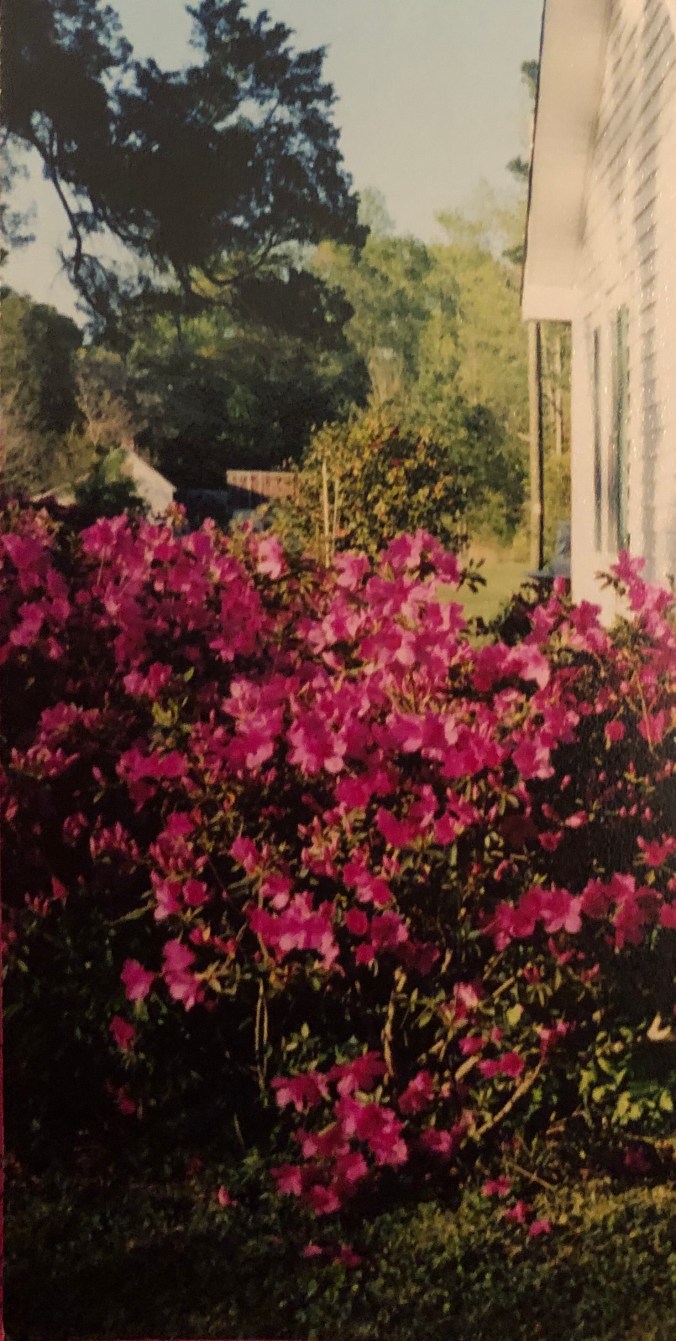
I can see it as I speak, as if through a window in my mind. The blue sky, the trees. Grandma’s azaleas, the camellia bush, the orchard, Granddaddy’s garden, the old hen house. I am not sleepy, yet. Maybe I can fight this, a bit . . .

“I grew up in the city and in the summers I’d go stay with my grandparents. I loved the country. It was a little paradise . . .”

It was love personified, love-infused, love written in the veins of every leaf, in every blade of grass, in the black earth itself that gave back so abundantly of what was given,  love echoing in every birdsong, in the vibration of every cicada, love painted on the iridescent bodies of dragonflies in a place more alive than any other I have ever known.

“Time to wake up, now,” says a gentle voice in my ear.

Grandma? Is it morning, already?

I’m so sleepy, still.

“Here you go. It’s all over, and everything is fine. You did great.”

It’s the liver-humor nurse.

I’m dressed, wheeled out to the car, buckled in beside my husband who’s driving, and well on my way home before I realize:

I STILL don’t know why the liver has a great sense of humor.

The gazebo

Gazebo at Night. Lori L. StalteriCC-BY

At first he thought he never wanted to see it again, the little gazebo on campus.

How perfect it was when he last saw it.

He couldn’t have orchestrated things better than they’d played out: the June sunlight just beginning to wane after dinner, shining in a deep, golden slant through the magnolias, the fragrance of the last blooms heavy in the air.

And her.

At last, and again, for they’d broken upon once. This time he knew it was meant to be. Side by side they sat, and he gave her the ring.

She started to cry.

“Will you marry me?”

She wiped her tears, laughed, hugged him. “Yes!”

Perfect. That one afternoon, in the whole of his life, was perfect.

In two weeks she was gone.

Not ready, she told him. They were too young.

That’s it then, he told her. Not now, not ever.  

His friends consoled him: “You ARE too young. Just enjoy life before you worry about getting tied down.”

Trouble was, he didn’t know how.

For days, all he wanted to do was sleep. He slept the rest of the summer away. He ate his way through autumn into the winter until he decided (while standing on the scales) that enough was enough.

He started walking, counting his calories. He lost seventy pounds.

He reconnected with old friends.

One asked, “Whatever happened, exactly?”

He told her all of it, just as they were driving past the campus. On the spur of the moment, he said, “I’ll even show you the gazebo where I gave her the ring.”

It was getting dark. He parked the car. They got out, walked the magnolia path. Lights in the lampposts flickered on. It was chilly; he hadn’t thought to wear a coat but he hadn’t planned on strolling to the gazebo tonight, or any night. He shivered as they stepped into the clearing . . .

The gazebo wasn’t there.

For a minute he thought he was dreaming. He looked every which way—yes, this is where it was. This is where it stood.

It’s gone!”

“Gone? How could it be gone?” asked his friend. “Are you sure this is the right place? That you haven’t made a mistake?”

“I made a mistake here, all right, but it wasn’t forgetting where the gazebo is. Was. I even used to ride my bike past it when I was little. Right here.” He scratched his head. “This is like something out of the Twilight Zone.”

His friend laughed. “Well, it’s twilight anyway. And maybe that gazebo didn’t disappear. Maybe it never existed at all, and maybe you never made that mistake because it’s been erased. It just never was.”

To this day, he hasn’t asked anyone who might know what happened to the gazebo, because, as far as he’s concerned, his friend is right.

Although he still occasionally checks, when he happens to think of it, which is less and less often.

It’s not there.

As if it never was.

*******

(True story)

Beautiful child

At a recent meeting of educators, I heard a woman speak of her child’s transition to a new school. The child came home bubbling with excitement on Day One:

“Mom, my teacher looks like me!”

This is the first time her child ever had a teacher of the same race, the woman said. In fact, she went on to say, with quick finger quotes for emphasis, her child was “the only ‘beautiful’ child in the class last year.”

I understood what she meant: Her child was the only one of their race in that classroom.

I’m a mom. I know the protective, fiery love for one’s own, above all else. A proverb comes to mind: “There’s only one beautiful child in the world and every mother has it.” This mom didn’t say there’d been a problem at the previous school but as an educator I know that a sense of belonging and identity are vital to learning. I know that every school and classroom should strive to value, support, empower, and celebrate each child (as well as the adults). For that is how children learn to value, support, empower, and celebrate each other. That’s humanity at its best.

Which is why, as a human being hearing these words from another, a mother and educator, I came away with one heavy, lingering question:

Aren’t ALL children beautiful?

Rabbit reverie

I saw the first one of the season just about a week ago, while driving along a back road on the blackest of nights. Through an infernal, eternal, cold Carolina rain, my headlight beams caught a flash of brown, a glimpse of white cottontail zigzagging like lightning off to the right.

—Rabbit.

—Spring is near.

The cheery thought sent me into a rabbit reverie.

My husband used to tell our boys when they were small that fog was really the rabbits making soup.  I immediately envisioned hundreds of tiny cast-iron pots over miniature campfires out in the woods, with rabbits meticulously stirring and stirring the steaming contents—Where’d you get this fanciful idea? I asked. My husband smiled: It’s what my father used to tell me. To this day, our sons, grown men,  look outside on a foggy day and nod sagely: “Rabbits making soup again.”

Baby rabbits hung out on our porch during the spring I was expecting the second of the two boys. The older one, seven turning eight, sat at the windows of his baby brother’s nursery-in-progress to watch them up close: Look, Mom, look! There they are! Easter bunnies!

I decorated the nursery with a Peter Rabbit theme.

The first good animal drawing that I ever did, that my first-grade classmates sincerely complimented, was of a rabbit. I didn’t tell them I’d traced it, as that seemed a totally insignificant point at the time.

I recalled my father mentioning the local radio station of his 1940s childhood, WRRF. He said it stood for We Run Rabbits Fast.

Life runs faster than rabbits, doesn’t it, Daddy. Too, too fast.

With that, all my rabbit thoughts left me as rapidly as they came.

Until I promptly stumbled upon this garden photo with two baby bunnies nestled in a head of—cabbage?

So that’s what this is about. I am clearly dealing with a motif.

Okay, Bunnies, I acknowledge you, your contribution to my life, your secret culinary arts, your near-omnipresence in children’s literature, your real and mystical connections to springtime, even your voracity.

I’m grateful for you.

I’m also thankful that I don’t have a garden for you to destroy, just saying.

And I am really, really sorry that I carried around that rabbit’s foot (dyed aqua) when I was nine. It wasn’t lucky anyway; that’s the year I broke my arm . . .

Seems I’ve long since redeemed myself, little friends.

The gesture

Pure love

Pure love. SurFerGiRL30CC-BY

Sunday morning at church. I took a seat by the aisle where sunlight poured through the stained glass window, where pale patches of pink, green, blue, and gold glimmered down the white wall.

In front of me sat a young man, a young woman, and a little girl, three years old.

The young man stretched his arm along the back of the pew, nearly but not quite embracing the young woman and child, just an easy drape of affection, of togetherness.

I could just see the top of the child’s head, two pinned-up pigtails coming loose, where his hand rested.

Then a chubby little hand crept up to pat his arm, once, twice, with all the grace of a ballerina. Two slow, deliberate, barely-discernible pats, before the dimpled hand disappeared again.

I watched, pierced by this silent message.

Maybe it was I love you. Or Thank you for being with me. Or quiet reassurance—I am fine, you are fine, we are fine together. Maybe even I’m here, you’re here, all is well with the world.

Such pureness of heart in that simple gesture. Such trust and confidence, such peace. How naturally it comes to a child, reaching out to someone else in benevolence, faith, and belonging.

And I mourned the incremental loss of it as we grow older, that it should fade like the colored patches of stained-glass light against the wall, that clarity of purpose should be obscured even as we accrue the words and language to better communicate our thoughts and feelings, that we should have to think twice about reaching out, or being the first to do so.

Two gentle pats, in them contained the original order and design of things, that together is the best place to be, that we are here for one another.

And so the children remind us.

A word for 2019

A friend gave me a treasure box of gifts for Christmas.

One of the items in it was this gilded 2019 planner.

I already have a (rather large) daily planner for mapping out my workdays—I write in pencil because, as I accommodate the teachers I support, the course of each day shifts constantly, and I make lots of notes. Part of living the coachly life. I’ve learned to embrace it.

So I look at this beautiful planner and think: How shall I use it?

I could give it away, except that don’t want to, it was given to me with love, and I have come to understand that things come to us for a reason. There’s a purpose for this little planner.

I look at it, shimmery and new, just like the year itself, lying before me.

Beckoning, almost.

I will use it for something personal, then.

Maybe for my writing. To map out a timeline, to hold myself accountable for completing things. Or perhaps as a bit of a notebook, recording new thoughts and ideas before they get away, before I have the chance to play with them and flesh them out. I could capture images until I have time to explore why they struck me and what they mean. I frequently use the notes app in my phone for this but the planner has more “space” for movement, for expression. Not to mention sketching. I could carry it with me, keep it by my bedside.

Or I might even be able to use the planner as a sort of manuscript style sheet. For I’ve lots of things that need to be written, rewritten, or simply finished.

However I slice it, then, the planner invites me to plan.

And to write.

And there’s my word for 2019.

It’s something I already do, that already defines me, so it seems superfluous, but it’s the word, the action, that calls to me most. With the greatest sense of urgency, tinged with excitement.

—WRITE.

Here’s to your own unique adventure as the golden cover of 2019 opens.

Take it, live it, to the next level.

Treasures await.

And one of them is your story.

Thank you, Brian Wilson

img_0617

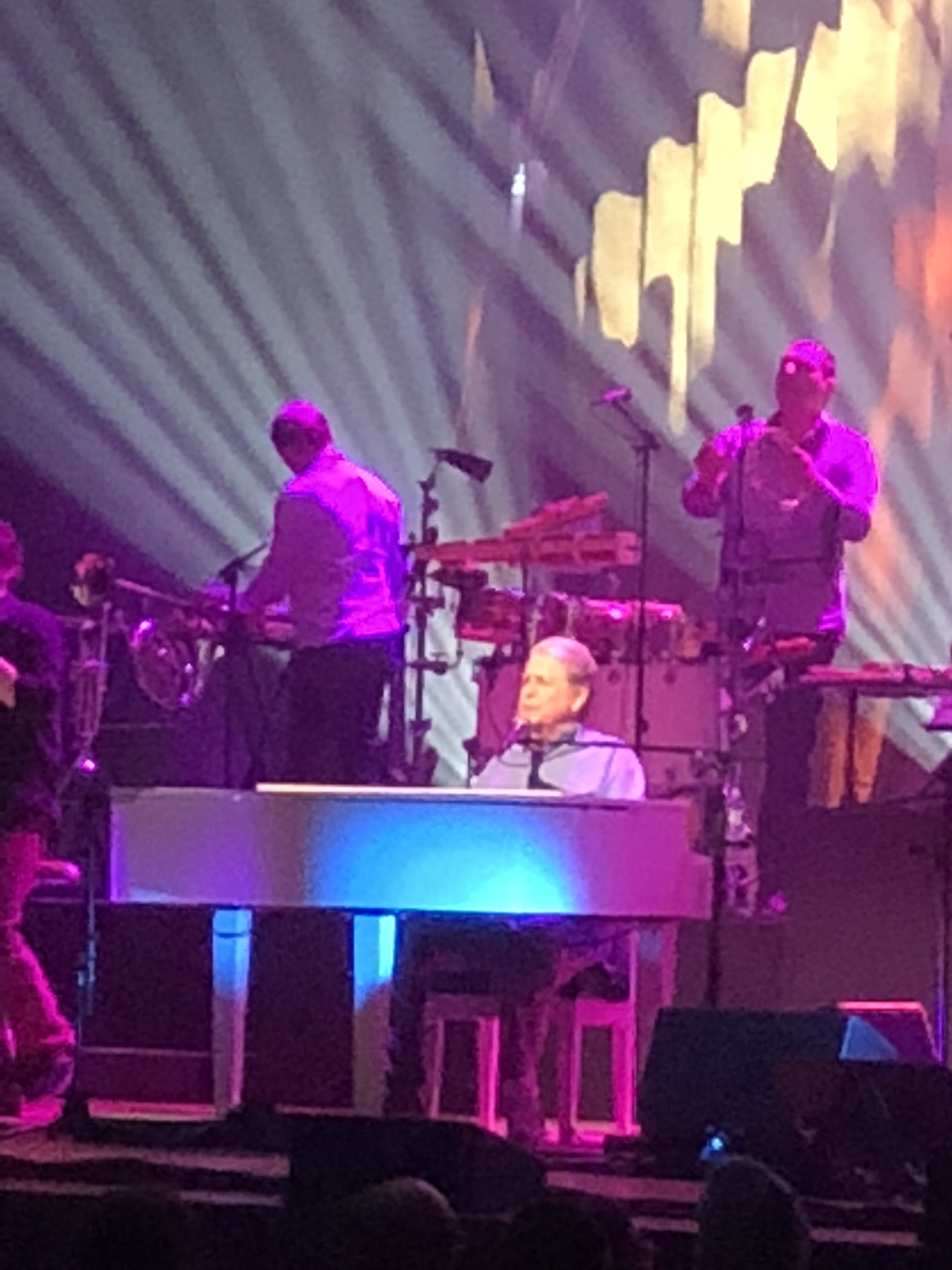
Brian Wilson sings his favorite song from Pet Sounds, “God Only Knows.” 11/02/2018. Richmond, VA.

If setting is everything, then tonight is mystical.

To begin with, the November evening is balmy. Few people in the crowd gathering on the sidewalk are wearing jackets. There’s quiet anticipation in the air, in the murmur of voices. It’s supposed to be raining but the sky above the city is dry, shimmering like a thick swath of navy blue velvet.

The sense of wonder deepens upon entering the auditorium. I’ve never been inside the Carpenter Theater in Richmond before and am unprepared for the splendor of it. Gilded walls, pillars wrapped in vines, balconies adorned with Roman statues, backlit alcoves with busts—it’s like stepping out of a time machine into Old World fantasyland. Overhead, white clouds frame the stage front against the dark auditorium sky —ceiling, I mean—where dozens of man-made stars sparkle an ethereal welcome.

The writer in me searches for words:

breathtaking 

otherworldly

adventure

expectancy

Apropos, I think, for our temporary raison d’etre: My family is here for the Brian Wilson Pet Sounds concert.

Primarily because the younger of my two sons (Cadillac Man), at twenty-one, avows Brian as the artist he most admires. He strives to emulate him in his own music. He studies how Brian deconstructed songs and what he did with vocals and chord progressions, complex, innovative stuff fifty-two years ago when Pet Sounds was released and still the stuff of legend, of music history. My son researches the Beach Boys and tells me things I never knew about their origins, talents, trials, and tragedies. He identifies with Brian on multiple levels—they both have a penchant for Cadillacs, both of their fathers lost their left eyes—but mostly my son relates to Brian’s musical thought and language. Cadillac Man confesses that he couldn’t concentrate on what his first grade teacher was saying in class years ago because “Sloop John B” was playing in his own head. This explains a few things about his childhood academics  . . . nevertheless, that this incident occurred nearly four decades after the release of Pet Sounds speaks to the timelessness of Brian’s work.

So we’re here to see an icon tonight. A glimpse of the extraordinary.

For me it’s not just the music, although I’ve always loved it, too.

It’s the story.

A boy deaf in one ear, teaching his younger brothers the harmonies he heard in his head, singing together in their bedroom at night. An athlete who once wrote in a high school essay: “I don’t want to settle with a mediocre life, but make a name for myself in my life’s work, which I hope will be music. The satisfaction of a place in this world seems well worth a sincere effort to me” (I Am Brian Wilson: A Memoir, 2016).

A name for himself, a place in this world, and a life that’s anything but mediocre . . .  I think about these things as the crowd greets him with a standing ovation. Brian is helped onstage, having had back surgery earlier this year. He wears a brace on one leg. His escorts seat him at a white piano, center stage, where his silvery hair glows in the spotlight.

I look at him and think about time. How quickly life passes. I think about the strange, sad, haunting truth of great gifts so often coming with equally great physical or mental afflictions attached, as if that’s part of the deal. We all have our demons. The ones that chase us, the ones that we chase. Brian’s battles are well-known. The most wondrous thing to me this night is that he’s still here, despite all, the only one of the Wilson brothers to reach old age, a survivor of so much. Still performing, sharing his profound gift.

He speaks just a little throughout the show. I wonder how he feels, what he thinks. At seventy-six, does he enjoy touring now? He wasn’t able to for years when he was young. Does anxiety still threaten to crush him? Is he in much physical pain?

If the answers are yes, then he’s mastered these demons. For the sake of the music, for others.

Brian sings his brother Carl’s solo in “God Only Knows” as stage lights come to rest on him like splintered sunbeams. God rays. I recall the clip of his speech for the Beach Boys’ Rock and Roll Hall Fame induction, in which he said that “music is God’s voice” and that he only ever wanted to create joyful music to make people happy.

He does just that, even now. At the end of the concert, this orderly, respectful crowd—comprised of multiple generations—is on its feet dancing to the old favorite songs. It’s a celebration of life, love, being young—whether now or long ago—and the creative power of humanity overcoming the terrible weight of being human. I think of these things as the audience thunders its applause, as Brian’s escorts return for him, as he’s carefully ushered away.

I wonder what it costs him, these moments of joy for other people. And marvel that he still has it in him to give.

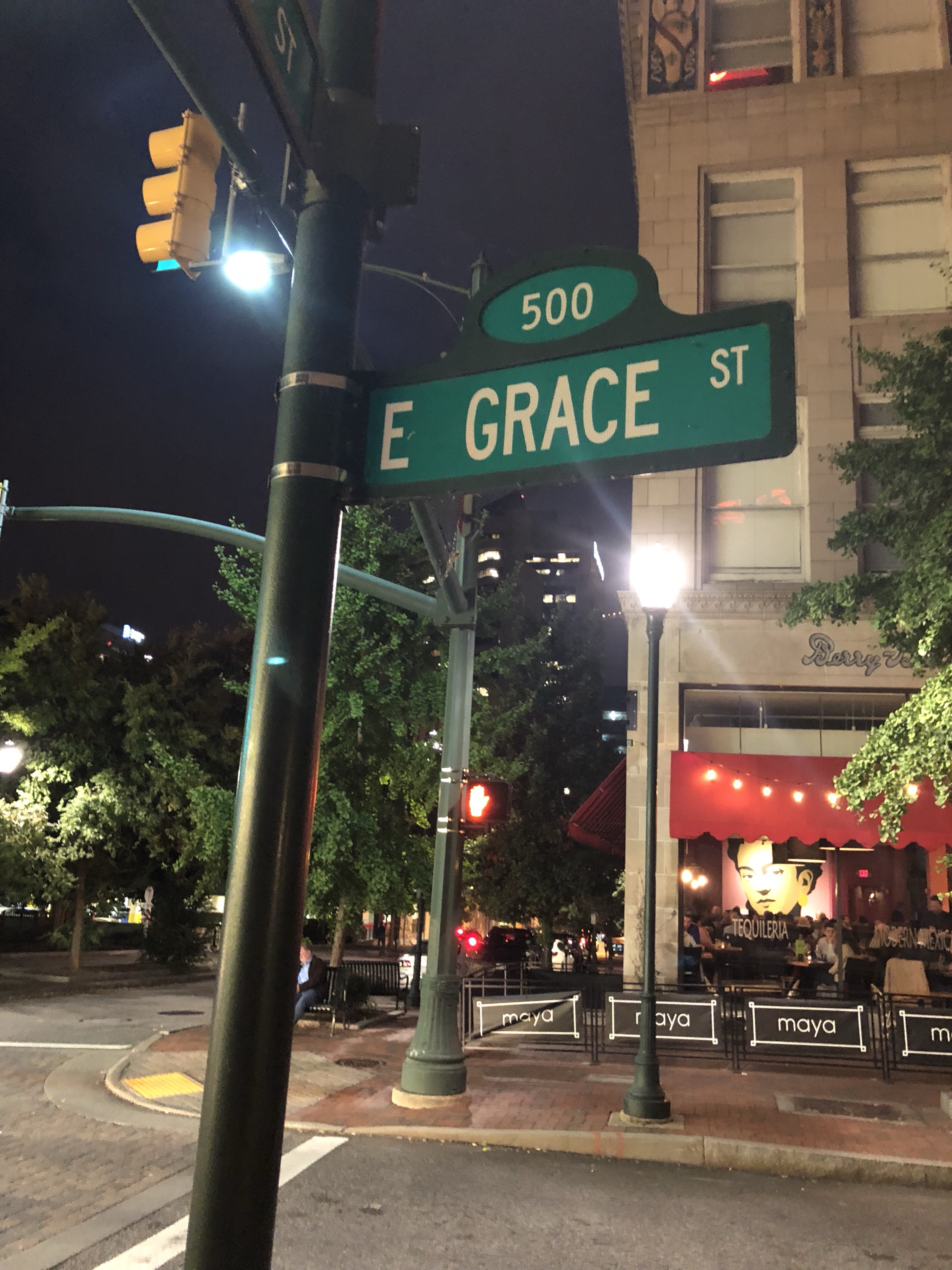
I leave the theater mentally wishing Brian peace in the days and years remaining to him and to his loved ones. I hope he can keep doing this for as long as he wants. I ponder the curious nature of gifts and how they’re so clearly bestowed on certain mortals. Maybe the Roman auditorium put me in mind of the Muses. There’s a word for the strength to overcome, to relentlessly pursue and attain the beautiful, despite unfathomable suffering, the Herculean feat of living. I can’t quite think of what it is. Overhead, the real stars glitter at random through an indiscernible cloud cover. The night is soft, quiet. And then—there it is. The word. I am not sure what Brian would say, but to me, the street sign says it all:

*******

I must also mention the timeless charisma of Al Jardine in this performance. He carried much of it while seeming to enjoy every moment. As did Blondie Chaplin, with absolute showmanship. All in all, the instrumentalists and vocalists paid exemplary homage to the music, which sounded unbelievably rich and true performed live. 


Making space

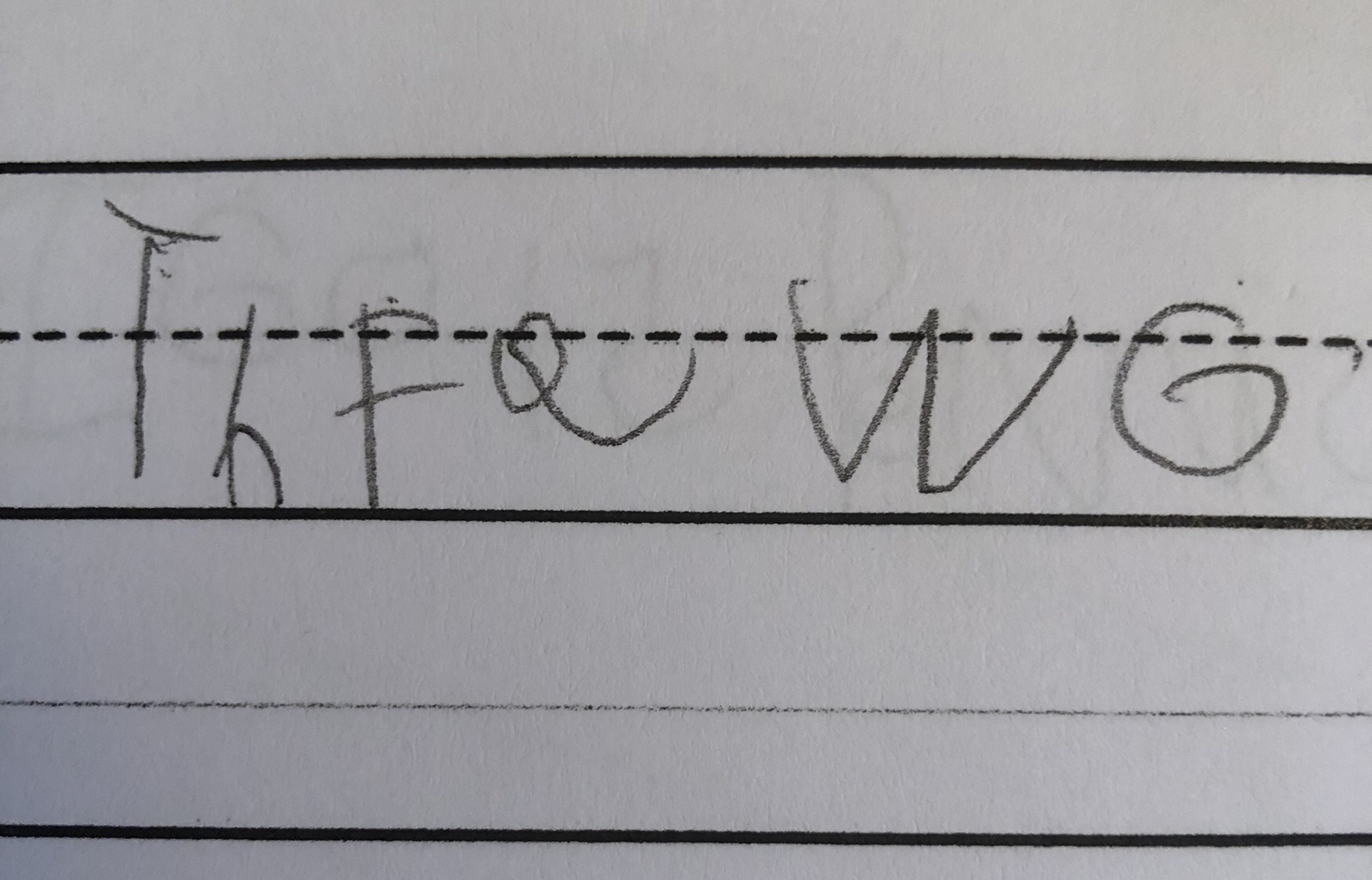
Anyone who’s ever worked in kindergarten or first grade knows that emergent writers often write strings of letters.

For example:   The flowers grow.

Sometimes the strings of letters are much longer and harder to decipher. A next teaching point would be working on the concept of words.

Enter Mr. Finger Space.

He’s a handy little tool for young writers, to facilitate their thinking about each word they’re trying to write and to begin making spaces between them.

I have, as you can see from the leading photo, a colorful collection of googly-eyed Mr. Finger Spaces ready to get to work.

Today as I passed by the jar, this gathering of Spaces seemed so beguiling that I thought: There’s a blog post in this. Somehow. 

I snapped a photo and went on my way.

I knew the accompanying story would come. That’s how it always works. A spark of inspiration, given time to grow . . .

This time it came pretty quickly.

As usual, it didn’t arrive as the expected story. Not about a little writer employing a cheery craft stick—I mean, a Mr. Finger Space!— to compose a sentence of separate words for the first time.

No.

It came after a conversation with a colleague about her wonderful weekend getaway, reconnecting with old friends, reliving priceless experiences:

There’s so much I’d forgotten, that I haven’t thought about in so long . . . it was incredibly meaningful to have those memories come rushing back. How important they were, those times we shared. I loved every minute of remembering and at the same time was saddened by how much I’ve lost because day-to-day responsibilities take all my focus . . . you know there’s not room to carry it all around in your head all the time . . . .

You need to write about them now, I told my colleague. My friend. Those memories, while they’re freshly stirred. Preserve them before they leave you again. Spend time going back in your mind, immersing, and you’ll be surprised at what you can recall.

I know this to be true from my own experience, over and over again.

A sigh. The longing was etched on her face: Just how to find the time . . . 

That’s when the googly eyes of Mr. Finger Space appeared in my mind; I immediately understood the message.

Moments of love and laughter, priceless gifts, slipping away under the weight of just living. Fragile strings of memory running together until the beautiful meaning is nearly obscured . . . .

The only way to stave off such loss is to push this often senseless, insensitive, jumbled-up world back, if only for a few precious minutes, in the midst of every run-on day. To breathe. To plunge deep into the recesses of your mind, to know yourself, who you are, and what really matters. Feel the stories pulsing through your being. Fight for them, to keep them alive.

Find the words. They’re all there, within you. They just haven’t been put into organized form yet.

Make the space. 

Put your pencil to the paper. Just start.

The rest will come.

Circle of light

Good fairy

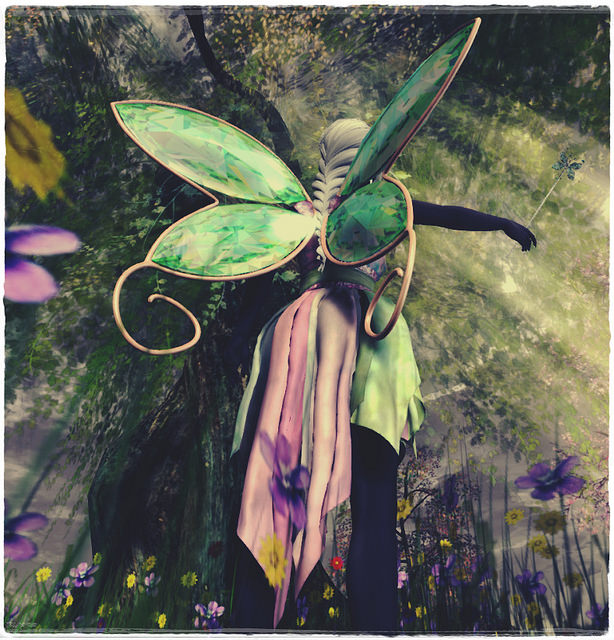
The Fairy Queen. Shayariel TeardropCC-BY

I have a colleague, mentor, and friend who retired a few years ago but who remains tirelessly dedicated to supporting teachers as writers. I was about to describe her here as a small, lively lady but those words don’t do her justice; she’s a vivacious dynamo. Her bright blue eyes always sparkling with energy, she’s mission-minded, a visionary, able to discern and speak hard truths with grace, even humor.

This past summer, as we co-facilitated a teacher-writer institute in our district, my friend was constantly thinking of ways to empower our attendees: “You know, if we need additional assistance, she would be wonderful; she knows so much about teaching young writers,” or “We need to think about a way to get them to share their experiences as writers; more teachers need to hear this!”

Listening to her one afternoon, as she made more suggestions on how colleagues could maximize their strengths, an image formed in my mind: My friend garbed as a fairy, walking a twisting path through an ominous, dark forest, wand held aloft, casting a welcoming light, seeing the good that’s hidden, calling it to her.

“You’re like a good fairy,” I told her, “the way you see people and empower them to find and use their gifts. It’s amazing how you’re always drawing more people into your warm circle of light, no matter how dark the path might get.”

“Oooh, I love that!” laughed my friend. “With a frog on my shoulder!”

“You know I will have to write about this,” I warned.

“Okay, just don’t forget the frog,” she said, eyes twinkling, moving on to a table to give feedback to a teacher who was just beginning to see herself as a writer. I watched as tears flowed down that teacher’s radiant face.

I thought about how I wouldn’t have been here at this institute, wouldn’t have had numerous opportunities as a literacy coach and writer if it hadn’t been for this friend who tapped me almost immediately for the work. Nearly from our first encounter, she encouraged me to use my voice, to seize moments, to inspire others, to keep pressing on, and, above all, to WRITE.

How thankful I am for her circle of light, that she drew me into it. Greater than any candle, torch, or wand, the light of inspiration passes from one to another as we march onward in the journey of life, with its inevitable twists, unexpected turns, obstacles, and darkness. Sometimes we cannot see further than our own immediate, wavering circle of light. That’s when it’s most important to look ahead, to recognize those going before us like beacons, vibrantly carrying on. Whatever comes, my friend will always be there, shining bright, holding her light as high as she can to make the circle larger . . . her little frog riding on her shoulder.