My new name

All the world’s a stage,
And all the men and women merely players;
They have their exits and their entrances;
And one man in his time plays many parts

—Shakespeare, As You Like It

Life’s transitions tend to sneak up on us.

For example, when it dawned on my oldest son that high school wouldn’t last forever and beyond it was college plus this thing called The Rest of Your Life, involving responsibility and duty, he looked at me with big brown eyes full of gloom: “I don’t want to grow up.”

Alas. It happens.

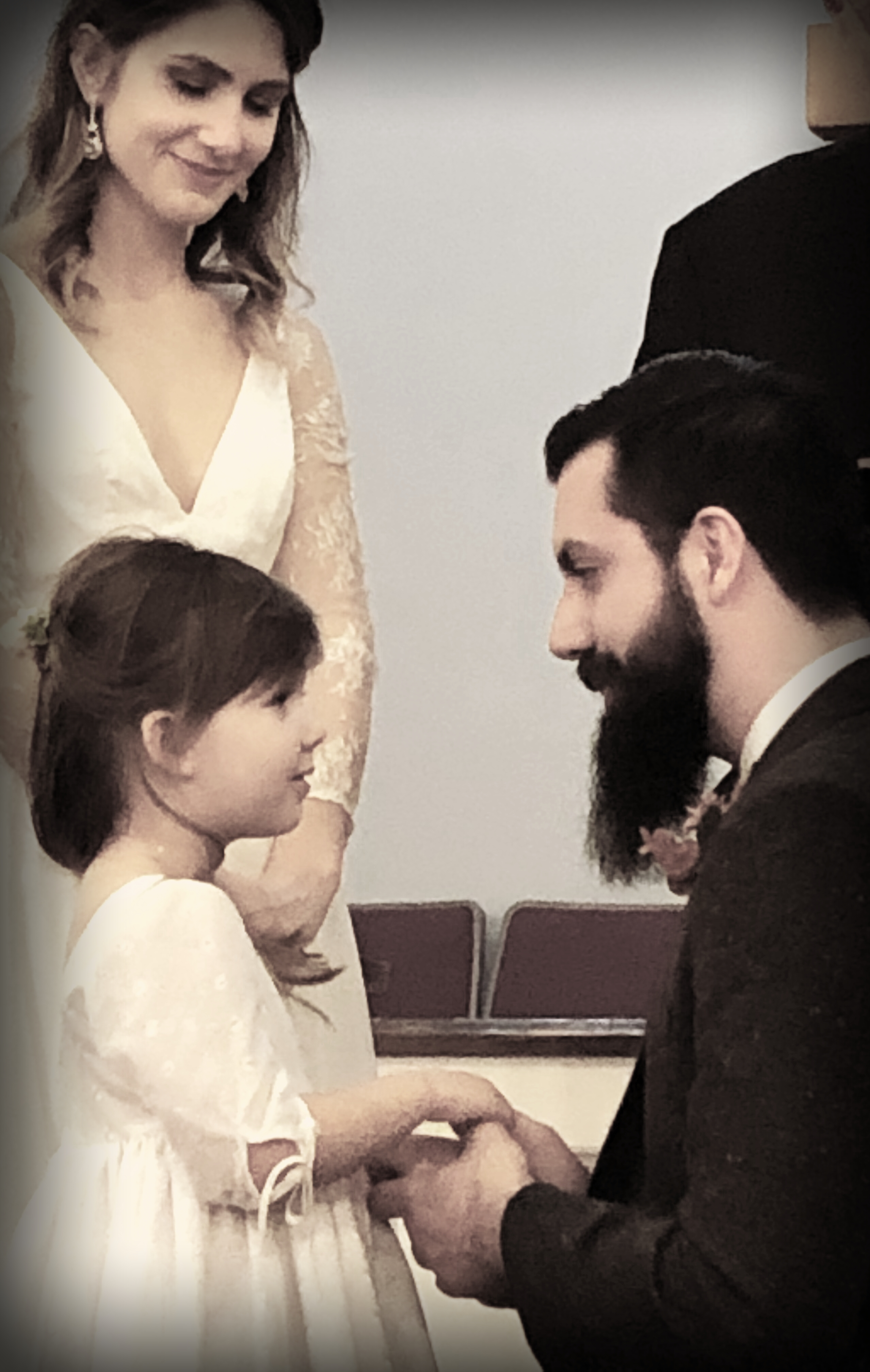
But he found his way. Last fall he simultaneously started the pastorate, married, and became the dad of a beautiful four-year-old girl. That’s a lot of transitions in one fell swoop, and he’s embracing them all. He’s thriving.

One man in his time plays many parts . . .

All of a sudden, his father and I have reached the grandparent stage of life. While it’s the loveliest transition, I can’t keep from thinking, with a pang, How did I become this old? Truth is, there’s exactly the same age difference between my grandmother and me as there is between me and my new granddaughter. It shouldn’t seem so astonishing.

The hardest transition isn’t mine, however. It’s my granddaughter’s. She loves to come over, loves to climb in my lap with a book as much as I loved climbing into my Grandma’s with one. All of this is glorious fun. No, the hard part is what to call me. She’s used to saying Miss Fran:

“Miss Fran, I’m hungry!”

“Oooo, Miss Fran, I like your nails. Can you paint mine?”

“Can we have a popcorn party and watch Frozen again, Miss Fran?”

“Let’s go outside and blow bubbles, Miss Fran!”

She likes telling everyone that I am her grandmother now. She even likes pretending to be me. My son said that after I broke my foot she went clomping around their house with one rain boot on, saying “I’m Miss Fran!” Yikes.

This transition away from Miss Fran has proved challenging. But she’s working on it.

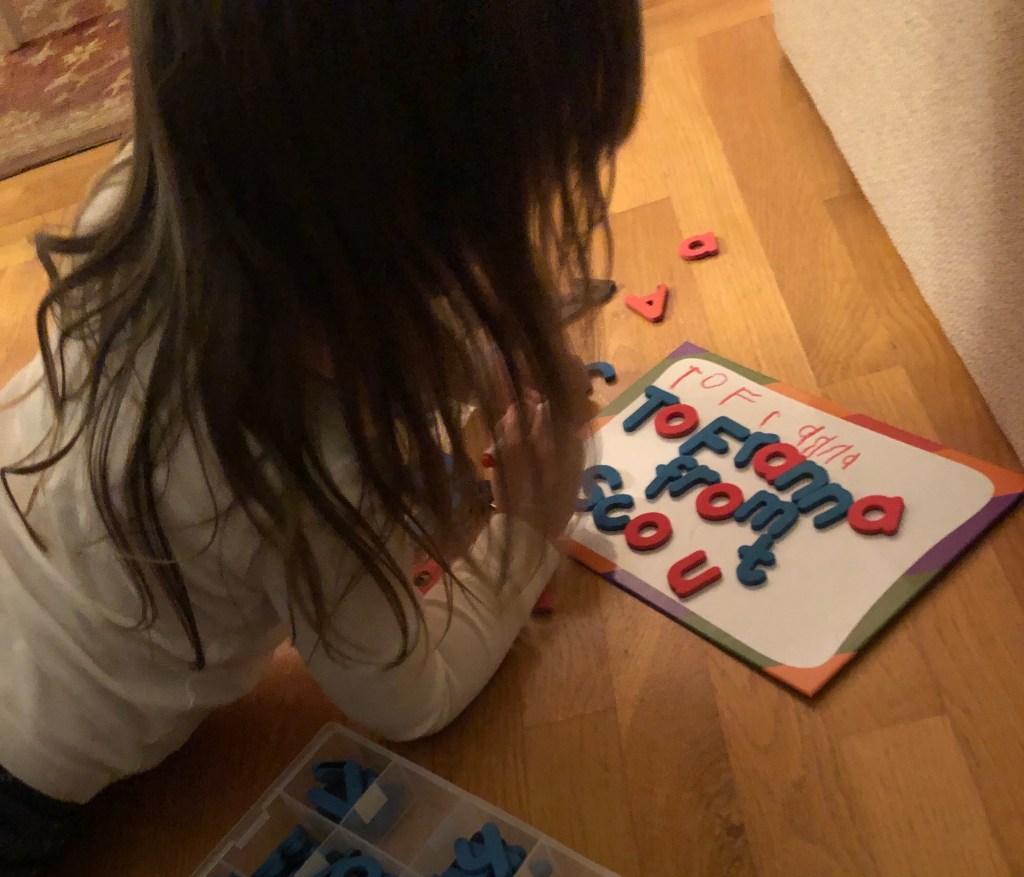
The other night she asked me to spell words for her with magnets on a whiteboard. I did, without realizing that she intended to copy them with a marker.

Here she is, writing with utmost care. A message to me.

With my new name, for the new role I get to play in her life:

Franna.

Life just gets grander.

I asked her if she wanted to spell “Franna” with one ‘n’ or two. She chose two.

Waiting

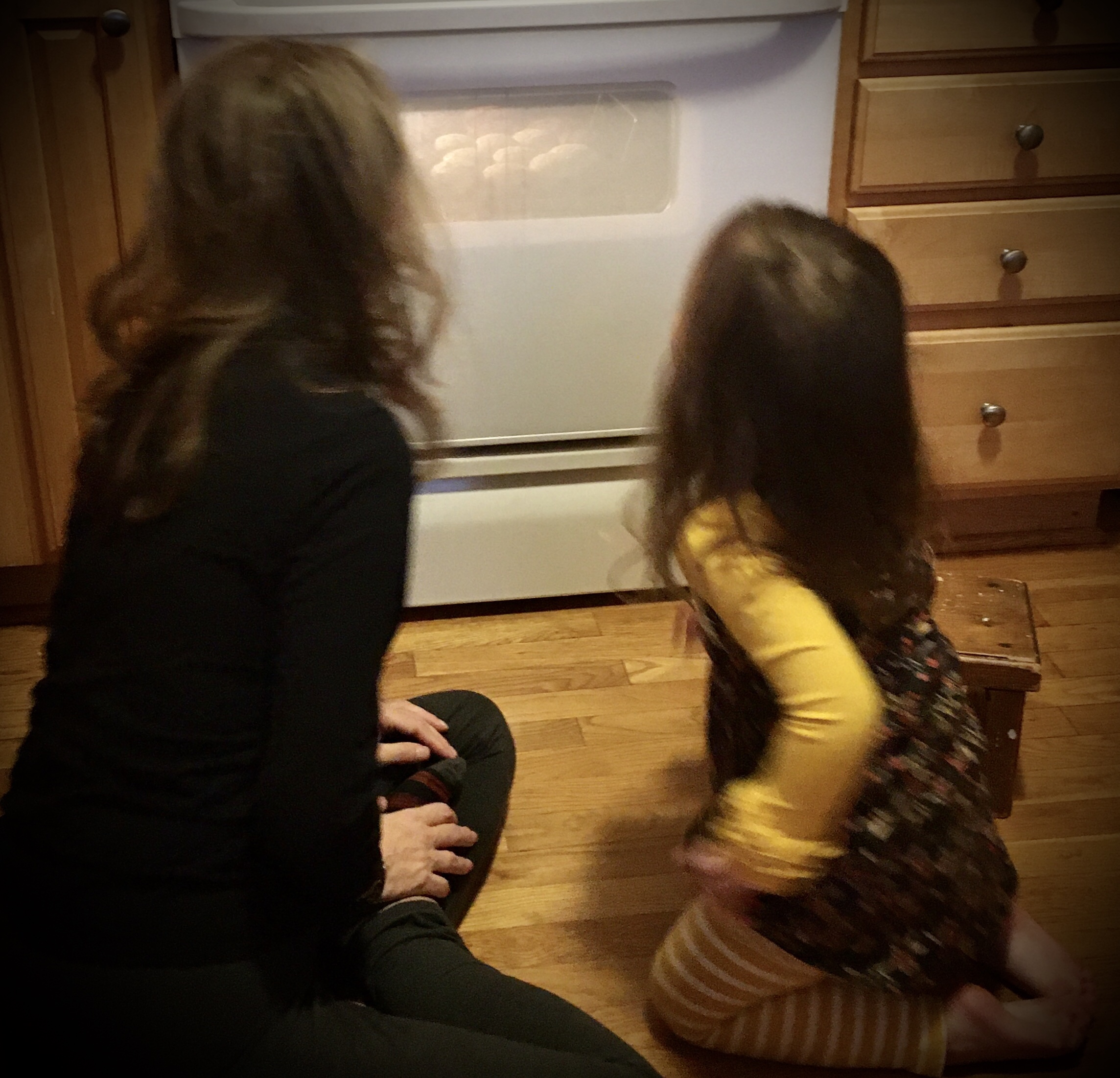
We put the cookies in the oven

and we wait.

Good things take a while.

Don’t they.

Like Christmas and growing up.

Like wedding days

and having children.

Like heart-dreams coming true.

Like you.

It took a long time.

I had to wait.

My little boy had to grow up

and finally find your Mom.

It took a while

didn’t it

for you to get your dad.

Know what he told me?

“Mom, you’re getting a little girl

at last.”

So much of life is waiting, waiting,

it’s true

like my long ago-dream

of you.

So many books to read

and stories to share

and songs to sing

and places to go

and just to be

you and me.

So we put the cookies in the oven

and oh, we can hardly wait.

Power of three

The title of this post might have you wondering if it’s about a mnemonic aid or a literary device (also known as “Rule of Three”). Perhaps you envisioned triangles — the strongest geometrical shape in the context of civil engineering and architecture — or the algebraic exponent, as in “to the third power,” i.e., cubed.  Or maybe even the Trinity.

But today I am pondering the power of three as it relates to the human brain, words, and reading.

As inspired by a little person who’s been staying with me each day for a few weeks this summer.

She is three years old.

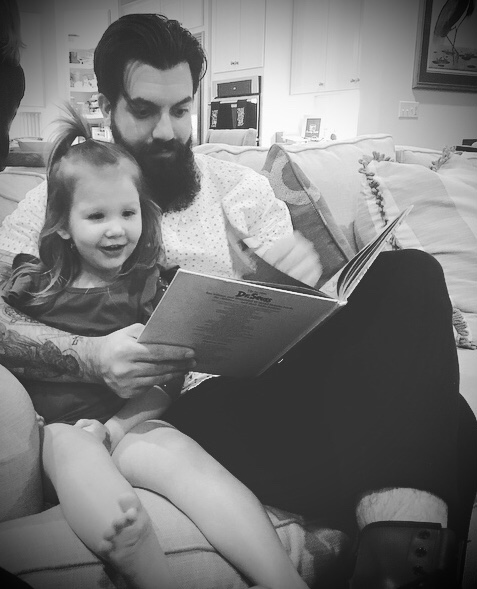
Her mom and my son, who’s a newcomer in their lives, read to her each night.

So each day, as she settles for a nap, I read to her from an assortment of books I keep in baskets here at home. Some of these I bought just for her. Most are from my personal collection at school, a few are old favorites of my sons, and a couple I salvaged from stacks discarded by teacher colleagues who considered them too outdated (a worthy topic for a later post . . .).

And each day, of her own volition, my new little girl picks the same three books: Curious George Goes to the Hospital, A Bad Case of Stripes, and Green Eggs and Ham.

That is the exact order in which she insists they be read each day.

I think of myriad things while reading this rather motley selection to my rapt little listener. Two of the books have been in print for over half a century. Their illustrations are simple. The the third has elaborate illustrations and a story that might be deemed too strange or “above” a preschooler’s interest and capability to understand. While she examines various books throughout the day, poring over pictures on many pages, it’s always these three books she clutches in her arms as she climbs into bed for nap. I am reminded, yet again, of the inestimable power of reading aloud, rereading, and familiarity. And of choice. 

I also think about the impact of language on a child’s developing brain. It just so happens that a book in the stack of my own summer reading is Thirty Million Words: Building a Child’s Brain, in which the author (cochlear implant surgeon Dana Suskind) writes: “By the end of age three, the human brain, including its one hundred billion neurons, has completed about 85 percent of its physical growth, a significant part of the foundation for all thinking and learning. The development of that brain, science shows us, is absolutely related to the language development of the young child. This does not mean that the brain stops developing after three years, but it does emphasize that those years are critical” — because the neural pathways for language are being created  only in that window. As a literacy educator, I mull the importance of early phonemic awareness in conjunction with Suskind’s words: “It takes more than the ability to hear sounds for language to develop; it is learning that the sounds have meaning that is critical. And for that a child must live in a world rich with words and words and words.” (Suskind later emphasizes the quality of language in addition to the number of words spoken, the power of affirmations on a growing child’s development. And her first line of her first chapter is “Parent talk is probably the most valuable resource in our world.”)

All of this swirls in my own brain as I reread the same three books every day to this three-year-old entrusted to me, as we converse about her observations and questions:

“What is a tube?” she asks, during the fifth (sixth?) reading of Curious George’s hospital visit. “Like a hose in the garden, only a lot smaller so it can go down George’s throat. Very small,” I say. “Tiny,” she declares with authority, and we go on with our sixth (seventh?) reading of this book.

“What is broke?” — when, in A Bad Case of Stripes, Camilla “broke out in stars.” This is a bit harder to define. “Hmmm. Has your skin ever had a rash, or a lot of tiny spots on it?” She nods hesitantly, and I say, “Then your skin broke out, meaning it suddenly got spots or little bumps on it for a while.” I can tell by her solemn expression that this information is being processed. A minute later: “What is sob?” When I say it means to cry a lot, not just a little, the light of understanding flickers instantly in her wide blue eyes.

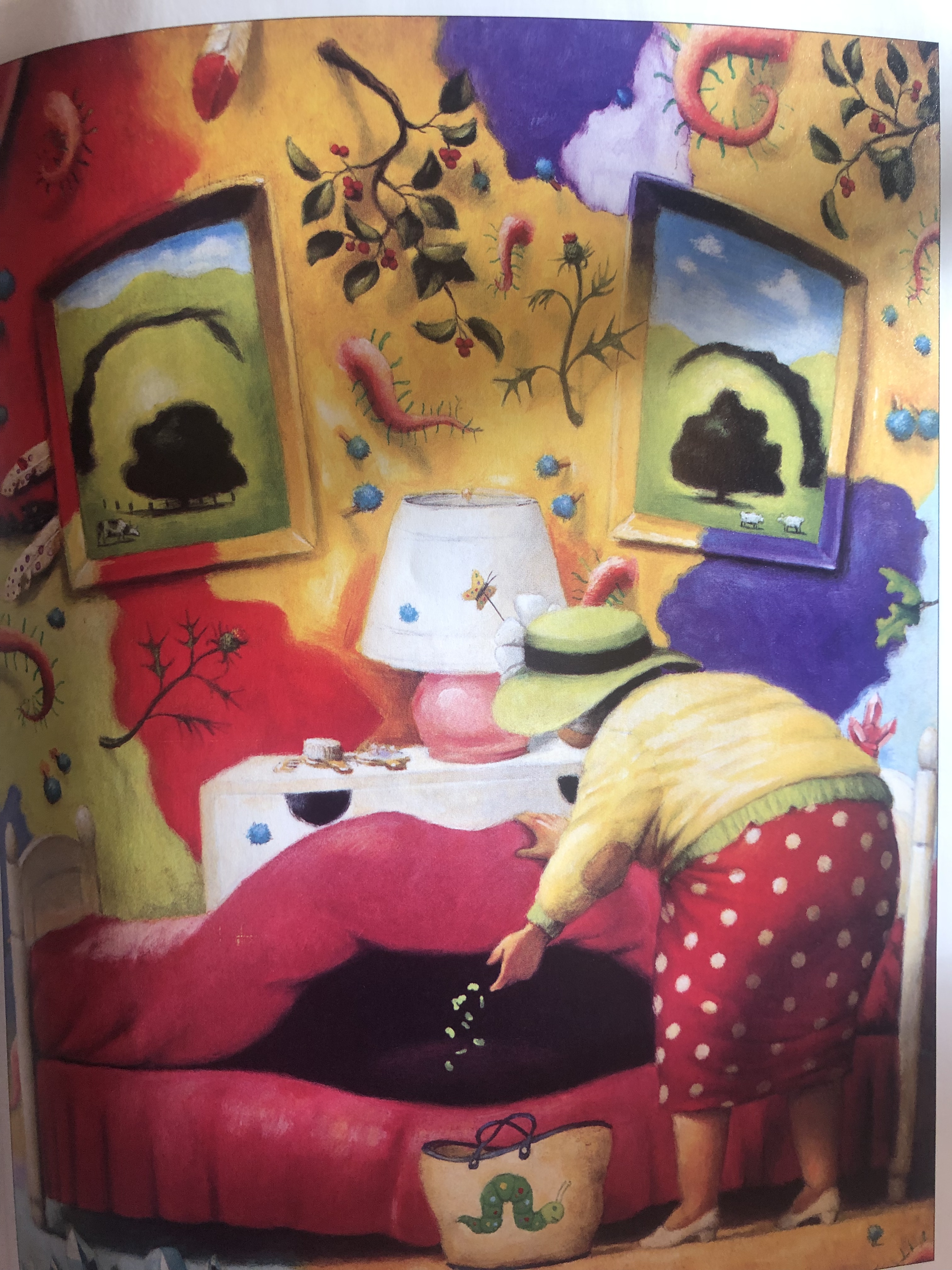
I continue this umpteenth reading of Stripes to the page where the old woman who will cure Camilla arrives, just after the visit from the Environmental Therapist who told her to “breathe deeply and become one” with her room. Camilla became one with her room, all right; she melted into the walls where two pictures became her eyes, a dresser morphed into her nose, and her bed turned into her mouth. Totally abstract. Transcendental. Out there. I read in my best kind-old-woman voice: “What we have here is a bad case of stripes. One of the worst I’ve ever seen!” 
img_2950

My listener giggles. “It’s not a bad case of stripes. It’s a bed case of stripes.”

A pun so profound that I am at a loss for words.

She’s three.

I make a mental note to tell her mom, who’s clearly laid a magnificent foundation long before now.

This perceptive child notices the letters down the side of the Stripes front cover. She attempts to sound them out, and I let her try for a minute before telling her the words are “Scholastic Bookshelf.” She points to the square between the words and asks, “Why is this one blank?” I am excited: Print concepts! Teachable moments! “That’s a space. They come between words. See, this is a word. Then a space; this is another word . . .” She picks it right up: “And this is a word, this is a word . . .”

Truth is, all moments are teachable moments.

Even though her eyes are growing heavy, she chimes in with the rhyming words in Green Eggs and Ham.  In fact, she takes over reciting portions without my help now, mimicking my expression and cadence, on all the right pages . . .

I leave her to her nap. I wonder if her dreams will be filled with monkeys, phantasmagorical color patterns, rhythms, rhymes, words, words, words. My husband is compelled to check on her after awhile. He whispers his report: “She’s sound asleep.” Obliviously recharging her power of three for the remainder of the day, and for a future brimming with potential.

To the power of infinity and beyond, one might say.

And I believe it.
The gift

I remember what you wrote but I came to find the book anyway, to read the inscription again.

I hold it in my hands and think about you for a long, long time.

You were the baby who was always smiling, the cheeriest toddler, until I had to launder your blanket. Then you leaned your head against the washer and cried.

You were the little boy in preschool who sat beside classmates on the playground when others overlooked them, excluded them. From the start you noticed the outcast, offered comfort, pulled for the underdog.

You were:

The winner of the Principal’s Leadership Award at the end of your senior year.

The college student who started teaching the men’s Sunday School class at church.

The young man who returned to high school, where your Leadership Award still hangs in the front office, to teach Social Studies. Remember how, when you were setting up your classroom, you cleaned out a cabinet and found your old history exams in that stack of papers?

The teacher who taught your students to dance the Charleston—and who taught your own brother in AP U.S. History (your Dad and I weren’t kidding when we said, “Don’t even THINK about calling us in for parent-teacher conferences”).

The soccer coach who built the program and took the team to the State playoffs for the first and only time. 

An inspiration to so many kids. Their parents still tell your father and me.

I remember it all.

Teachers don’t make a lot of money; you took an extra job at night.

I remember the call. You’d been taken to the hospital. You’d been assaulted. Emergency surgery, jaw wired shut, liquid diet for six weeks. Having to carry wire cutters if you should vomit, or you’d suffocate.

How you chose to visit that young man in prison, forgave him, became his friend.

How you adopted a rescue dog, reached a crossroads in your life, came back home, quit teaching, enrolled in seminary.

Almost immediately followed by your meeting the loveliest young woman and her little girl.

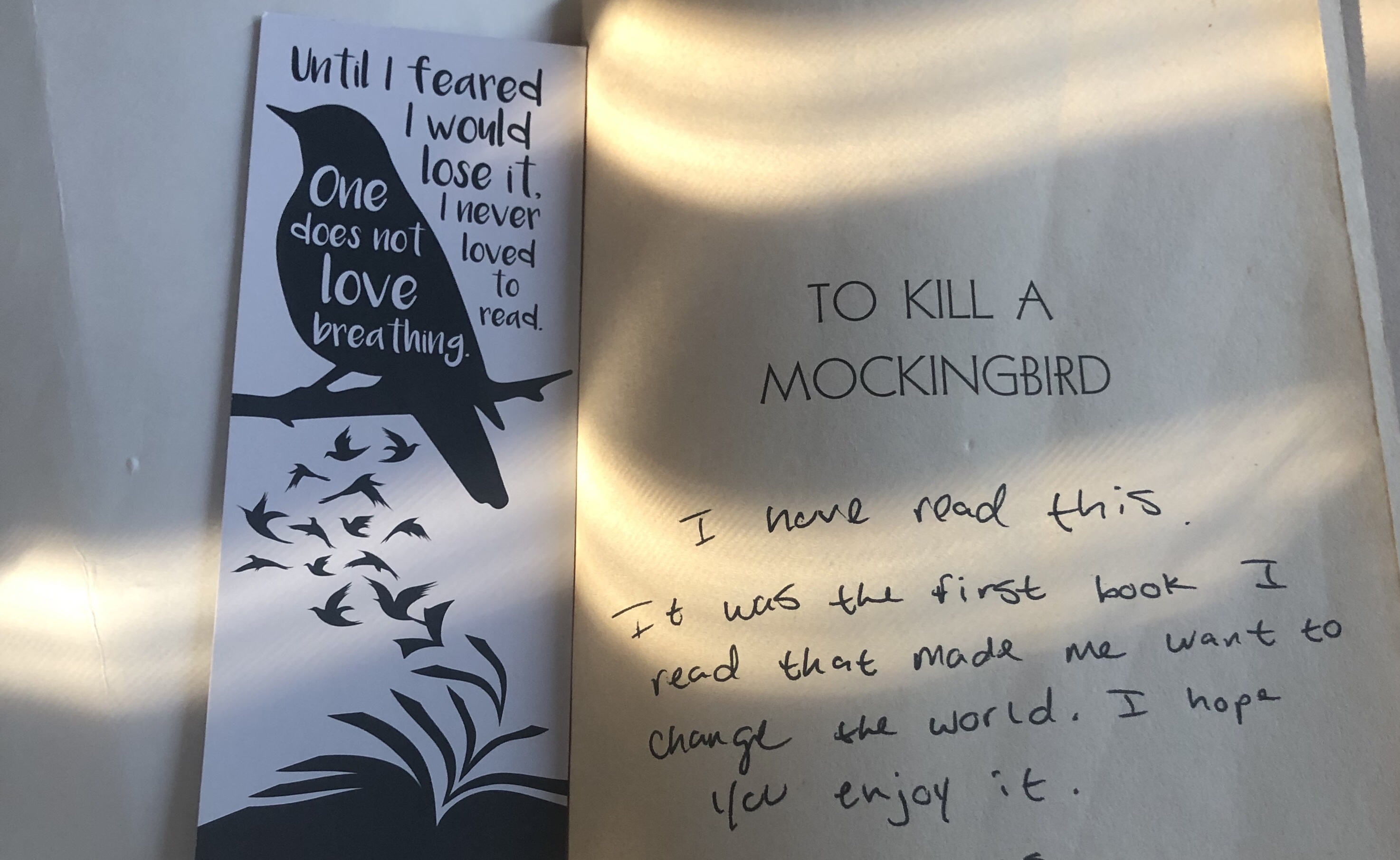
I think about all these things as setting sunlight spills through the blinds onto this book in my hands, illuminating the words you wrote to me that Christmas, years ago:

It is the first book I read that made me want to change the world.

You may not think so, but you’ve been changing the world since the day you first entered it, baby boy. One word, one breath, one heartbeat at time.

I’m quite sure you always will.

Maybe we should have named you Atticus.  

No matter, for things have a way of working out as they’re meant to. I watch you with your new loved ones. I marvel at the gift of it all, the sheer poetry of life writing itself a day at a time, in the most curious of rhythms—like how pages of a book that stirred your heart long ago should come to us, living and breathing, a young mom who loves the same book, and in a little girl named Scout, crawling into your lap for a story.

Tale of two chocolates

Last night I was privileged to have guests, one of whom is a three-year-old girl.

While seated at the dinner table, my son’s Valentine stash on the counter caught her eye.

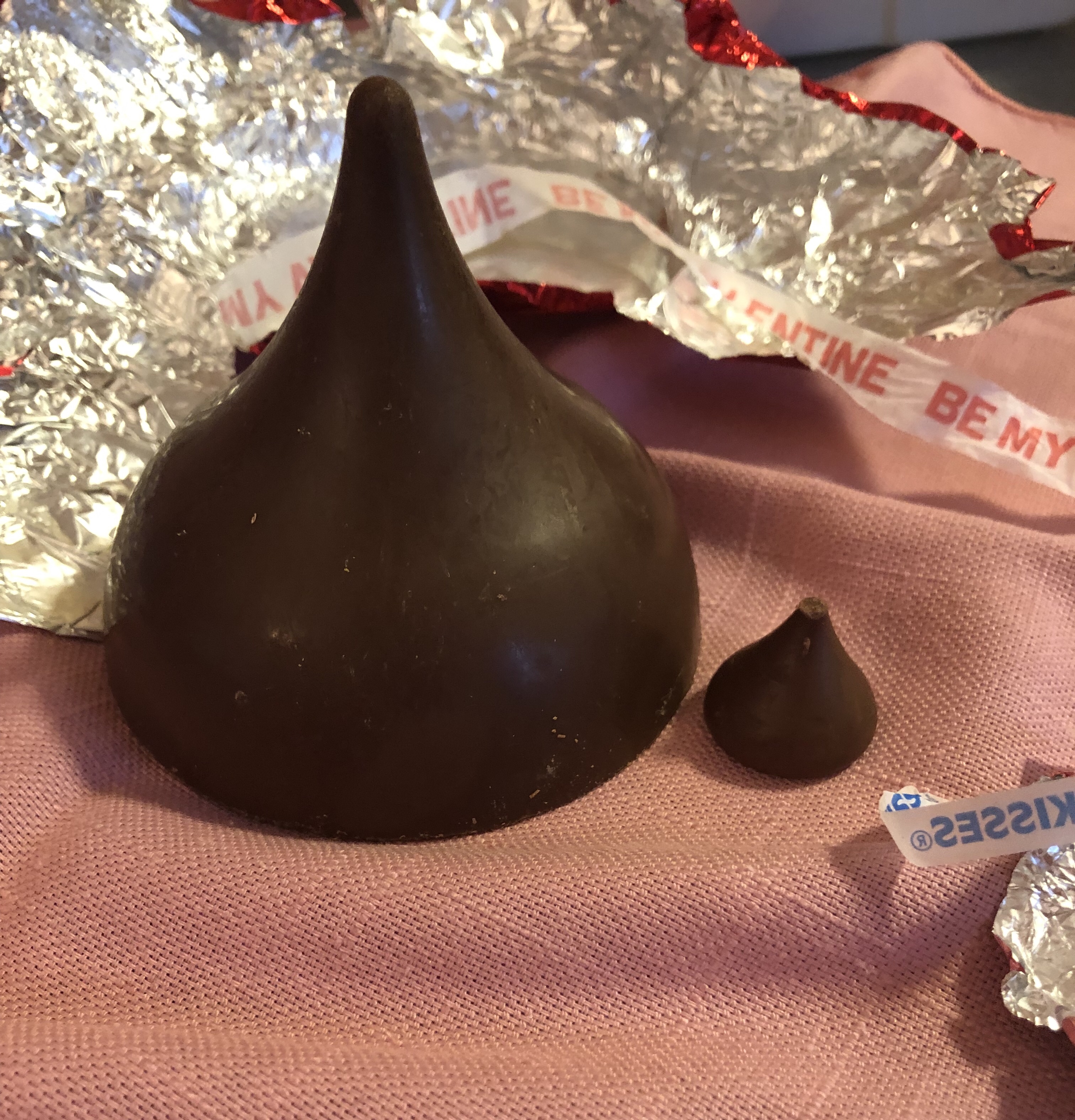
“What’s that?” she asked, pointing to a giant Hershey’s Kiss wrapped in red foil.

“Chocolate,” we told her.

“I want it!” she said.

“No, that’s too much chocolate,” said her mom.

Our little visitor looked at my husband (for support? For overruling authority?). She maintained solemn poise for a few seconds: “Mom says no.”

Then her mouth quivered and her blue eyes went watery.

Poor brave baby, I thought. Trying to accept ‘no’ is so hard.

Her mom got up and reached into the candy basket. “Wait, here’s a little one. You can have this little chocolate, okay?”

The watery eyes brightened: “A tiny one? I can have a tiny one?”

“Sure,” smiled her mom, handing over the regular-sized Kiss.

Small, chubby fingers nimbly divested this Kiss of its pink foil. But the child didn’t eat it. She studied it, then observed: “It’s a baby.”

The rest of us chuckled.

Our small visitor pointed back to the big Kiss and told my son: “I want to see it!”

“Okay,” he obliged. He got up from the table and fetched the giant chocolate.

“Open it! Open it!” demanded the girl, bouncing up and down in her chair.

Her mother looked hesitant as my son unwrapped it: “Just look—you’re not going to eat it, okay?”

As soon as the foil fell away, our little visitor’s face glowed. “It’s the mama!” She held the little Kiss up to the big Kiss: “Here’s your baby.” Wiggling the little Kiss, she said: “Hi, Mama! I missed you.”

As the rest of us dissolved in laughter, a grin spread across the child’s winsome face. She promptly ate the “baby” Kiss and went back to eating her dinner while my own thoughts enveloped me, momentarily drowning out the grown-up conversation.

The beauty, the lightning-quickness of a very small child’s mind, stirring, brimming, spilling over into a narrative with which she identifies, a defining of her world—a child, in fact, who hasn’t been verbal for very long. Easy to dismiss as a simple spur-of-the-moment burst of imagination, but in reality, it’s so much more. This is understanding at its finest, coming naturally through play, through story.

Oh, to bottle it . . . no. Never that. Oh, to open it, let it breathe, let it steep, becoming ever more potent each day, invincible against time and factors that will systematically dilute and evaporate it. Imagination, play, story, the core of who we are from our very beginning . . . the Mama Kiss.

—How we miss you.

The gesture

Pure love

Pure love. SurFerGiRL30CC-BY

Sunday morning at church. I took a seat by the aisle where sunlight poured through the stained glass window, where pale patches of pink, green, blue, and gold glimmered down the white wall.

In front of me sat a young man, a young woman, and a little girl, three years old.

The young man stretched his arm along the back of the pew, nearly but not quite embracing the young woman and child, just an easy drape of affection, of togetherness.

I could just see the top of the child’s head, two pinned-up pigtails coming loose, where his hand rested.

Then a chubby little hand crept up to pat his arm, once, twice, with all the grace of a ballerina. Two slow, deliberate, barely-discernible pats, before the dimpled hand disappeared again.

I watched, pierced by this silent message.

Maybe it was I love you. Or Thank you for being with me. Or quiet reassurance—I am fine, you are fine, we are fine together. Maybe even I’m here, you’re here, all is well with the world.

Such pureness of heart in that simple gesture. Such trust and confidence, such peace. How naturally it comes to a child, reaching out to someone else in benevolence, faith, and belonging.

And I mourned the incremental loss of it as we grow older, that it should fade like the colored patches of stained-glass light against the wall, that clarity of purpose should be obscured even as we accrue the words and language to better communicate our thoughts and feelings, that we should have to think twice about reaching out, or being the first to do so.

Two gentle pats, in them contained the original order and design of things, that together is the best place to be, that we are here for one another.

And so the children remind us.