Write me

Write me

Write me. Menno Abbink. CC-BY

As I stood at a checkout counter this weekend, the young lady ringing up my purchase eyed my #WhyIWrite T-shirt.

“So, you’re a writer?” she smiled, scanning my items.

Someone asks me this every time I wear the shirt in public. The interest always surprises me.

And, in spite of blogging for two years, having an untold number of stories in various stages of completion since I was six, and continuously capturing ideas in notebooks for more things to explore through writing, I still pause when asked this question. Funny how hard it is to own I am a writer. 

After a slight beat, I gave the young lady my short answer: “Yes. And I teach writing.”

Although she kept smiling, a shadow crossed her beautifully made-up face. “I struggled with writing in high school,” she said. “I speak well” —unmistakable pride glimmered in her dark eyes— “but I can’t write as well as I speak.”

There was something almost apologetic in her self-assessment. A trace of shame over this perceived shortcoming.

I hear this in people’s voices every time they tell me that they’re “not good writers.”

Some of them are teachers.

And I mourn, because, somewhere along the way, others have made them believe this.

“How often did you see the writing process modeled?” I asked the cashier, already knowing the answer. “Did you see examples of what the teachers wanted you to do, to make it concrete? Did you get feedback from the teachers during the writing of your essays, to help you improve your writing?”

She shook her head. “Oh, no. We were just told ‘Here’s the assignment, here’s when it’s due.’ ”

She completed my transaction. A long line of people waited behind me; I couldn’t ask this affable, well-spoken cashier if she’d ever enjoyed writing, or tried it for fun, just to see what she could do. I couldn’t say: You think you’re not a writer, but that is not the end of your story. 

I left the store knowing that I’ll have to return for a follow-up conversation in which I will say these things and encourage her to write. Maybe I’ll even take her a journal. I have several lovely ones waiting to be used.

My checkout conversation reiterates to me, yet again, that students struggle with writing because teachers struggle with teaching it. Writing is labor-intensive. It’s time-consuming. Teacher education programs often offer very little in the way of solid writing pedagogy, and unless teachers have access to professional development that provides them with the “how” and “why”—positive writing experiences of their own—the struggle goes on. Systems, administrators, and teachers battle over a clear vision of what quality writing instruction is, what the authentic writing process is versus any program, and why effective writing instruction matters (that’s another whole post in itself). I know educators who confess to “not being good” at teaching writing. Some happen to be in positions where they are advocating for the removal of writing workshop in schools.

In truth, it all begins with So, you’re a writer?

For the answer to that question must be yes before one is equipped to be a teacher of writing.

As for me, I’d start a grassroots SAVE EDUCATION THROUGH WRITING movement if I could.

In the meantime, I content myself with helping whomever I can, whenever I can, to grow themselves as writers.

The timing of my checkout encounter happens to be uncanny; I was, in fact, preparing to co-facilitate my district’s second annual Teacher Summer Writing Institute, which starts today.

In a few hours, I’ll meet the participants, elementary through high school cross-curricular educators who are willing to give up seven hours a day for an entire week during their vacation, ultimately to benefit the students they serve. Part of our institute rationale reads:

Everyone has the capacity to write, writing can be taught, and teachers can help students become better writers.

Writing grows out of many different purposes. 

Participants will be invited to be writers and engage in creative struggle.

We become experts at teaching writing by writing.

We will coach one another as we want our students to be coached on their writing journeys.

I know great things lie in store for the teachers who are coming. Not because of anything I or my co-facilitators say or do, but because of what lies within these teachers, these writers. I anticipate my own surprises— about the craft, about myself—because it always happens when I work at writing. The wellspring never runs dry. Never. Whenever writing is involved, I’ve learned to expect the unexpected. And to let it pour.

However these teachers may feel about writing, they’re already illustrating an important truth before Day One is up and running: This is not the end of the story.

It’s a beginning.

New pages await, expectantly, beckoning:

Write me.

You can do it.

And so can that cashier . . . .

*****

See Stone speaks for words of wisdom on teaching, literacy, reading, and the power of writing as shared by author Nic Stone on Day 1 of the Teacher Summer Writing Institute.

That kid

Legos

Legos. qrevolutionCC BY

I woke up thinking of him today.

Don’t know why.

Maybe it’s because another school year just ended and memories are flowing thick and deep, like they always do.

Maybe something subconsciously reminded me of the collective sigh of relief when he finished elementary school and moved on a few years ago.

I am not sure.

But here he is again, so clear in my mind.

He arrived every morning long before the school doors were open, jumping, running on the sidewalks, talking to himself, singing. Staff spent the first few hours of each day trying to calm him down.

My first real encounter with him came in third grade when I, as the literacy coach, worked out of the room across from his classroom. In better moments, he’d appear without warning in my room: “What do you do in here?”

“I plan reading and writing lessons. Sometimes I have reading groups in here. Want to read with me?”

“Naw,” he said, wide-eyed, shaking his head emphatically, bouncing back to his room just as the teacher realized he’d left.

In the worst moments, the teacher came to enlist my help.

“I need a breather,” she said once, gray-faced. “I can’t do anything with him today. Can you please just stay in the room for a few minutes?”

So I stepped in. Everyone was seated, working on something, except . . . that kid. He was standing by a classmate’s desk. Taking things off of it.

“Stop it!” she kept saying.

“What’s going on?” I asked her.

“He’s taking all my supplies that I’m trying to use for this project,” said the exasperated girl.

Leaning down to his eye level, I addressed that kid: “Did you ask her permission to borrow her supplies?”

He snorted and flounced away from me. He kept grabbing pens and markers.

Firmly accentuating every word, I said: “Leave her things alone. If they aren’t yours, do not touch them without permission.”

At this moment, I realized the whole class had stopped working to watch.

He didn’t return the items. Instead, he marched to his desk, took out a wrinkled piece of notebook paper, wrote a word on it, and waved it around in the air:

Bitch

I took odd satisfaction in his spelling the word correctly.

Just then his teacher returned from her “breather.” In fractions of a second, she absorbed the scene. She was livid. The rest is a blur, her ushering that kid out of the room while the others bent quietly back to their work.

He wrote me a note of apology while doing his time in the assistant principal’s office. Delivered it to me himself, later that day.

He’d drawn flowers all over it.

That was the beginning of my being his “safe place.” When he couldn’t function in the classroom setting, his teacher sent him over to me for a few minutes, until he was able to return. One day was especially bad; I cannot remember the details of his actions. His teacher, red-faced and teary-eyed, escorted him over and immediately returned to the rest of her class.

Pacing back and forth like a caged animal, his eyes suddenly landed on the Legos on a table in the wet area of the room. Without a word, he sat at the table, and, block after block, immersed himself in building.

Presently his teacher came back, and on seeing this, turned to me. Turned on me, actually:

“Why are you rewarding his behavior like this? Why should he disrupt the class completely and get to come over here and play?” This teacher, usually so mild-mannered and nurturing, was angry to the point of visibly shaking.

Caught off guard, I took a step back. “I didn’t think of it as a reward, or even playing. He’s decompressing—this seems to be exactly what he needs.”

She stared at me for a long minute. Then she turned to that kid and said, “Are you ready to come back to class?”

He got up without a word and followed her.

Many more times that year he came, played with the Legos for a little while, and went calmly back to class.

I learned, talking to him, listening to him, that his mind functioned in overdrive. Warp speed. Hyper-curious. He asked questions other students didn’t think to, without reservation. He noticed minute details that others, adults included, frequently did not.

Such as, seeing me walking toward him in the hallway: “Hey, Mrs. Haley! Where are you going? What’s wrong with your hip?”

“What?”

“Your hip. One’s higher than the other.”

I looked at his earnest face, stunned. He was right; a touch of scoliosis left one hip slightly higher than the other, which plagues me every time I have to buy pants or jeans, making sure the one side is long enough.

He was also a math whiz. Scored high on his tests. Reading, not so much. He did decide to read with me a time or two. I later watched him work hard on his reading test, but there were too many things vying for his fractured attention; too many choices, too many strategies to remember.

But he tried.

And then he went on to middle school.

One day, at the end of another school year, I was walking through the parking lot with boxes to place in my car when I heard, “HEY, MRS. HALEY!”

—That voice!

A human projectile came from nowhere and threw its arms around me, tight.

That kid.

“Hey!” I said. “It’s you! How are you?”

“Good!” he said. “How’s that hip?”

That kid.

That rare kid, with rare insight and gifts that many may never see.

Woke up thinking of him today.

God, please let him make it.

The horse

Secretariat

Secretariat. Charles LeBlancCC BY-SA

They’re gathered at the kitchen table—Daddy, Mama, Grannie, Earnie— as Mama shuffles the cards. With a riffling “flflflflflflflflflflt,” she makes the cards fall in a fancy bridge finish. I don’t know how she does it. They’re playing Canasta. Cigarette smoke hangs thicker than fog in the close kitchen; Grannie is the only one who doesn’t smoke. I sometimes think that the white cloud pouring like an upside-down waterfall from Earnie’s lips straight up to her nostrils looks kind of dragonish. I wonder again why she’s not married, being my mother’s older sister. My sister and I almost never call her Aunt. She’s just Earnie. 

I can’t stay in the kitchen for long. The smoke stings my eyes and makes me cough. I watch cartoons with my sister for a while on TV, then drift back to my room to look at my at rock and mineral sticker books, until I am thirsty and come back to the kitchen for Kool-Aid. The grown-ups pay me no mind; they’re into their game. I pay them no mind as I get my drink from a pitcher in the refrigerator.  

Until I hear them saying a strange name. One I’ve heard on TV.

A lot. 

It sounds like “secretary.”

Earnie is a secretary. For something called Sybil Service. For the Army, I think, but she doesn’t wear a uniform. She can write in shorthand. I have seen her notepads and her little squiggles look made up. How can those little curly marks mean anything at all?

But they’re not talking about a person. I can tell by the way they say the name that there’s something very important about it. 

“Who is Secretary It?” I ask. I gulp my Kool-Aid. 

Secretariat,” Daddy says, enunciating clearly, frowning at his cards. “He’s a racehorse that just made history. He won the Triple Crown—ran so fast that he left all the other horses behind like they were just standing still.” 

Secretariat. Secretariat.

The name is as strange as Earnie’s shorthand. It uncurls in my head like a wisp of smoke. The way Daddy says it is the way people speak in church before the preacher preaches. When the music is just beginning. 

Part of me suddenly envies this horse who can run so fast, who’s so strong. I can’t run. When I do, I can’t breathe; my asthma is as heavy as a horse sitting on my chest and all I can do is wheeze until it passes.

But another part of me tastes something sweeter than Kool-Aid when I whisper his name.

Which I do, over and over.

Secretariat.

*******

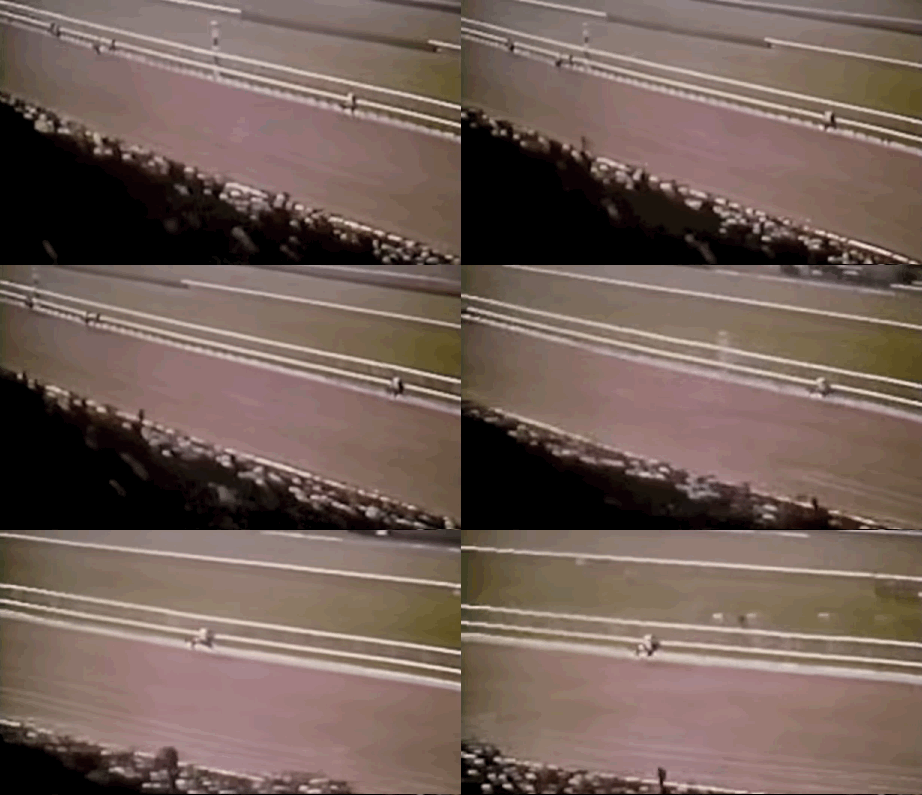
I don’t remember seeing him run or win the Triple Crown in 1973. I didn’t know he was the first such winner since 1948, that he broke records with his times, that he won the Belmont by 31 lengths—so much that when I look at the old footage now, the other horses aren’t even in the frame with him. I didn’t know anything about horse racing at all, nothing about the big money, or betting, or odds.

But I remember the awe, the utter reverence, with which his name was spoken. His image, a magnificent, glossy red horse with three white-stockinged legs, soon became familiar to me.

What I understood instantly, the day I learned of him, is that he was the stuff of legend. His name tasted of rare glory, of something almost otherworldly. It’s possible that Secretariat was the beginning of my love of things fantastic.

I celebrate Justify’s recent Triple Crown win. I pulled for him all the way, holding my breath, tears flooding my eyes when he crossed the finish line, another beautiful chestnut horse excelling at exactly what he was born to do.

And I marvel at my weepiness, at my need to go back and watch the clips of Secretariat, to read about him one more time. It’s a longing born of wonder, of the crystallized moment that this big red horse with the strange name seeped into my heart like the red Kool-Aid stain above my lip, sparking something magical in the little girl that I was.

img_4952-4


Tell me something good

Don't believe everything

Image: John D. Fisher, street photographer. CC BY-SA

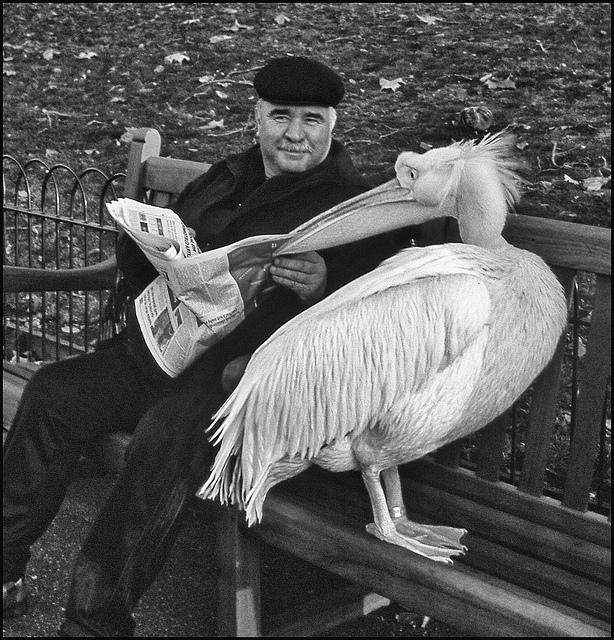
When I found this photo of a man reading the newspaper, I noted that his pet pelican has grabbed a corner. I imagined the bird saying to the man, somewhat dryly as it peers at the page, Tell me something good.

It just so happens that a teacher colleague recently wore a shirt to school bearing these same words. Tell me something good.

“Well,” I said to her, “This is something good: Summer’s almost here.”

She laughed. At the time she was was returning her end-of-grade testing materials. “I hope people tell me something good all day.”

I began to think about how different a day could be if people continually heard something good from others.

Vacation’s almost here.

The test is over.

I enjoy working with my colleagues.

I admire your work.

I found twenty dollars in the pocket of a coat I was about to throw out!

Systems and society can make us pretty acclimated to the negative. Deficits, grievances, outrageous behavior, all that’s broken, all that’s not working. Things that beat down rather than build up.

But good stuff’s always happening out there.

All the time, everywhere.

A stranger stopped to change my tire this morning. He was tired, on his way home from working the night shift, but he said that being able to help someone is a blessing. 

I got a well-written thank you note from a young person.

Another Triple Crown winner!

It’s all about hope, really. A reminder that there’s much to keep striving for in the hard grind of life. And that it’s worth it.

Tell me something good.

Please.

Most meaningful moments in school: A student’s perspective

Jumping for joy

Jumping for joy. kilgarronCC BY

“So,” I ask the student, “what are some of your favorite memories from all your time in elementary school?”

She’s working on her fifth grade graduation speech. Making this farewell address to the school is part of her official role as Student Council President. She’s struggling with framing her thoughts, which is why I’m here.

She looks off in the distance, past the walls of the room where we’re sitting, scrolling back over the chapters of her young life. I wonder what she’s remembering. Maybe a time she accomplished something she thought she couldn’t? Winning a class competition? A book that a teacher read aloud? A moment in a lesson when she learned something powerful that will remain with her for the rest of her life? I hope that’s it because I want to know it. And tap into it.

Finally she smiles. “There was this one time my first grade teacher just started tossing candy around the room.”

I blink. “Um, okay . . . why did she do that?”

The student shrugs, still smiling. “I don’t know. I don’t think there was a reason. I just remember she had a lot of candy and she started tossing it around for us and the other classes.”

Six years of elementary school and this is her favorite memory.

Having nothing to do with learning, achieving, growing, or rationale . . . but everything to do with spontaneous joy.

“All right then,” I say as I jot notes. “You can put this in your speech. Maybe call it the time you remember it ‘raining candy’ and explain what your teacher did.”

“That’s good,” she nods.

“Can you think of any other special or meaningful moments from all your time here?”

I wait as she scrunches her face a bit, thinking hard. Then another big grin:

“Yeah, the time the fourth grade teachers got together and sang to our classes.”

They sang? I never knew they did this. I’m curious. “Why did the teachers sing to you?”

“Just for fun, I think.”

Her eyes are so bright.

We finish fleshing out the draft of her speech. She is pleased. As she heads back to her classroom, I walk the hallways, replaying the conversation, mulling the moments that hold significance for such an accomplished student.

Just simple, unscripted, uninhibited moments when teachers were having fun.

How few and far between are they?

But how priceless to students, in the long educational scheme of things.

I walk on, carrying both the lightness and the weight of it.

Of calluses and rings

My older son showed me his hands this morning: “Look, Mom.”

He has tiny calluses across both palms from working out.

It causes me to reflect on why we labor hard enough at something for the friction to wear such places on our skin. To my son, the weight training is worth the effort for his physical well-being; he is dedicated to his regimen. His hands pay this small price for the health of the rest of his body.

In the photo above, a man’s ring has worn a callus on his palm when he forgot to remove it before a mountain bike race. It draws me because I have a similar, very faint callus on my own left palm from my wedding band. As I hardly race mountain bikes or use my hands in intensive manual labor on a daily basis—and I don’t even wear my rings while at home due to contact with soaps, cleansers, and detergents—it’s a bit mysterious as to why this hard little spot exists on my hand. I’ve decided that it’s occurred over time, over many, many years of marriage.

Therein lies the rub, so to speak. The ring, over time, has worn the callus. Might it be symbolic of marriage friction? For, let’s face it, no two people can live under the same roof for long without some earnest element of friction. But in a strong marriage—in any strong relationship—the labor of love is worth it; you keep at it. As long as your hearts don’t become callused (and your attitude callous) toward one another, the relationship protects itself against the friction. That’s what a callus is, a protection-against-the-friction place.

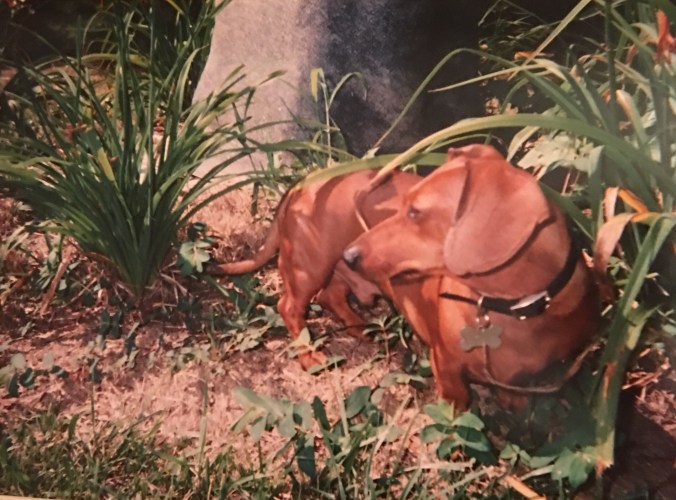
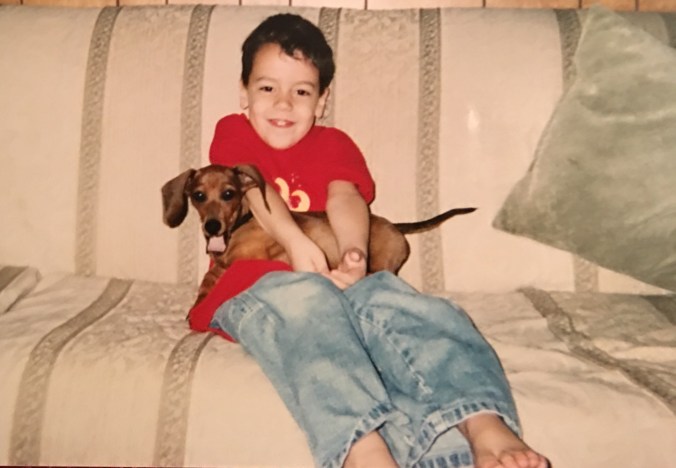
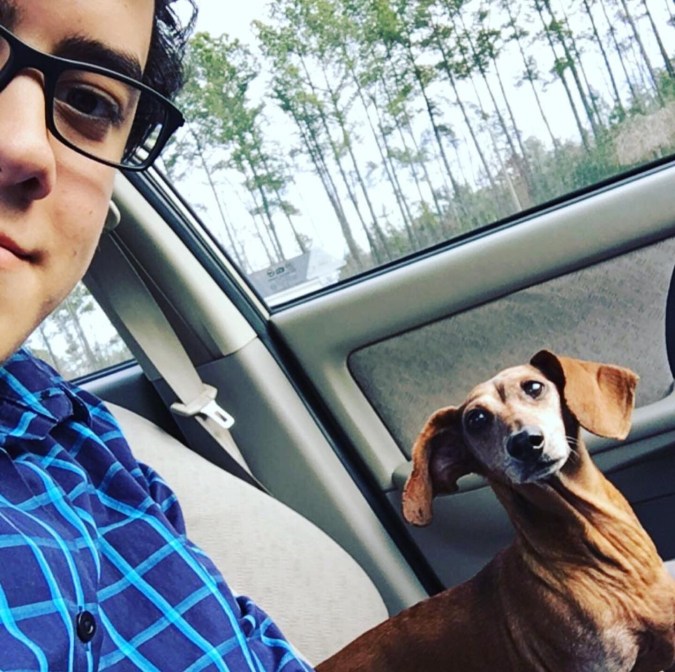
Last Saturday, my younger son, Cadillac Man, showed me the huge callus on his own palm. It’s from the shovel he used to dig the grave for Nik, our sixteen-year-old dachshund. This little dog was his daily companion since he was four and saw him almost through college.

If you’ve ever raised a dachshund, you know about friction . . . .

But the callus on Cadillac Man’s hand is a labor of love.

And worth it, for while his heart (and mine) are presently more sore than his hand, we expect more calluses yet, for we’re going to make a memorial garden where Nik is buried. A beautiful callus on the earth, if you will. A protection-against-the-friction of having to let him go, a working toward healing by building up a place of strength. The pains of creating our little memorial will be insignificant compared to the expected result.

It happens to be Memorial Day weekend. I think of men and women wearing wedding rings given by spouses who’ve died in service of the United States. Of families and friends marking the losses of those they loved. They’ll bear the scars of it on their hearts always. I think of those who fell, in this generation and all those before, believing that, if they must pay the price of their lives for the well-being of others, the outcome would be worth it.

Labors of love, protection-against-the-friction.

The story of sacrifice, sometimes complete, often beautiful, lies in the hard places left behind.


Good-bye, mighty Nik

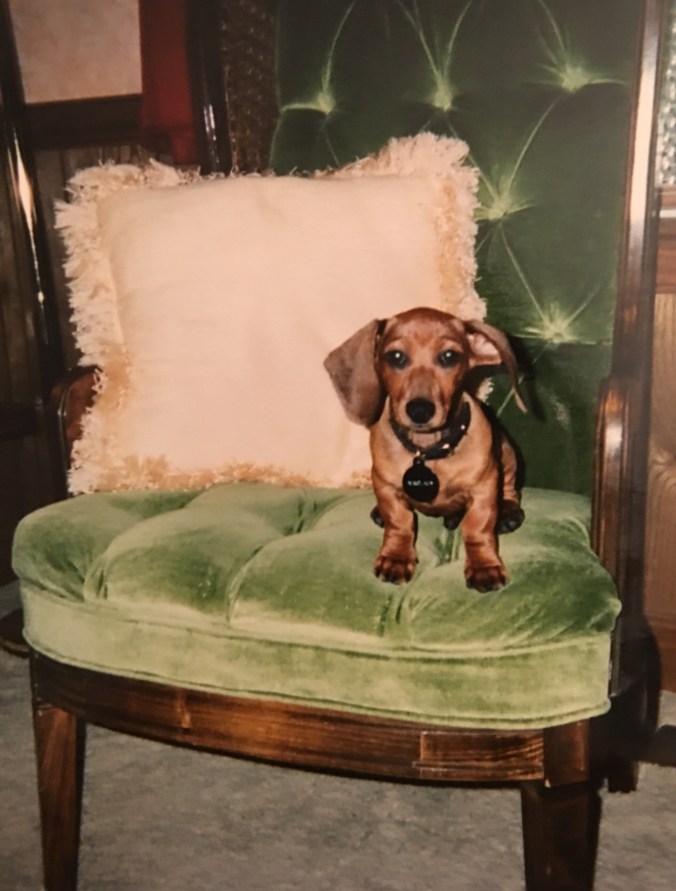
Nikolaus, 2004. Age 2. 

Dear Nikolaus,

I write to celebrate you and your long, long life.

To thank you for the joy you brought and the love you gave for so many years.

To ask your forgiveness.

When you first came to our family, we were elated.

April 2002. Age 3 months.

You see, we’d been looking for a little dog because we had a little boy who wanted one so badly. Big dogs frightened him.

But you were perfect.

April 2002. Nikolaus age 3 months. Cadillac Man age 4.

And so you grew up together.

You weren’t always easy, but you were always, always loved. Despite the countless accidents in the house and that time you snuck a chicken strip off of little Cadillac Man’s plate and ran for all you were worth with your booty. Not to mention how you figured out a way to climb on top of the furniture to get the boys’ Valentine and Easter chocolate. And ate it all, leaving only the wrappers behind. More than once. How did you do it and not get sick?

We began to think, all things considered, that you might be immortal. After all, you outlasted legions of other pets. The boys began to joke about you plotting the demise of every other dog, for they came and went throughout the years, but you remained. No one questioned your alpha status. Not even the dogs seven times your size, when you took their rawhides and their pillows for your own. They just sat, blinking in respectful disbelief, at your Napoleonic powers.

There’s so much to say, for we shared so much together. I am thankful for my special place in your little heart. How, when you were young and strong, you’d jump up on the couch to curl up beside me or to crawl in my lap. For the hours I spent working on the computer and you were snuggled behind me, between my back and the chair. I loved you and your deep, abiding warmth, always near, just being. Just together.

How the boys loved you. How they laughed as we tried to teach you to roll over, to sit and beg, the two tricks you’d pull off multiple times in succession just to get one treat.

How much comfort you gave them when they were hurting, from boyhood to manhood. They held you in their arms, but you, well—you were holding their hearts all along.

January 2017. Cadillac Man, age 19, celebrating Nik’s 15th birthday with a car ride.

Time is no friend, is it, old sweet Nik. Not when it takes your youth so that you can’t jump anymore but have to be picked up and carried. Not when it turns your face and paws so white. Not when it takes your sight, your hearing, even your ability to understand exactly where you are and what’s going on.

Here’s what I marvel over: That you tried to run through the grass like always, even when you couldn’t see. That you could still find me in bathroom getting ready for work each morning. That you never forgot where your treats were, or that you should get one after coming in from outside, even when it had to be broken into small pieces for you to chew. I knew you could only find them by smell; that’s why I put your broken-up treats on the kitchen rug, so you wouldn’t push them all across the floor trying to get them into your mouth.

I marvel over your ever-voracious appetite, how you ran for your bowl every morning, even if we had to guide you just a bit.

And I worried when you started losing weight.

May 2018. Age 16. 

The vet said your blood work was amazing for a dog of your age; never saw the like. Said your heart was strong. Said things like cancer can make a dog lose weight despite plenty of food, and it wouldn’t show in the blood. Gave you the pain medicine which made you sleep but also tore your bowels up so that we couldn’t give it to you anymore.

And still you rallied, although every day you got thinner and thinner.

Cadillac Man watched you staggering and falling in the yard.

Mom, he looks like a skeleton. He’s just going in circles. 

Mom, it may be time.

Mom, I just got on the scales with him. He’s under seven pounds.

Three weeks before, you were about nine pounds.

When you were a young dog, you were nearly twenty pounds.

On Saturday, when I gave you your last bath, I could see every vertebra on your back, could feel every knob on your tiny tail. For the first time in your life, you sat in the bathwater, too weak to stand.

When we wrapped you in your “Happiness is a Dachshund” blanket to take you to another vet, I didn’t know it was going to be good-bye.

I didn’t.

I thought maybe another medication would help. Or another suggestion. You’d made it so far, so well, until then. The regular vet said your heart was strong, so . . .

The new vet said:

I can’t fix the blindness.

I can’t fix the deafness.

I can’t fix the severe cognitive impairment.

You can run tests to see why he’s losing the weight, but it would only be for academic purposes. Just to know. He’s a very old, weak dog.

Cadillac Man looked at me, holding you in his arms:

Mom, there’s hardly anything left of him.

How to let you go like this, when you’d been so utterly trusting and loving your entire life?

You looked at me with your tired, cloudy eyes, and I wasn’t sure what you were seeing. Maybe me. Maybe not.

I couldn’t know how much pain you felt; you never complained. You just kept going, for it’s all you knew to do.

I loved you. I struggled then, I struggle now with the decision, but I believe the boy—the man—who loved you best knew what was best.

And so we stroked your sweet head when you breathed your last—one tiny sigh, of contentment, of resignation, of release—utterly, utterly peaceful.

And I take comfort where I can find it. When I read about euthanizing suffering pets, when I talk to others who’ve been there, I don’t question the logic. Of course no one wants to watch their beloved endure prolonged suffering. When I think of your ravaged little body, I know you couldn’t bear much more. Your determination, your will, was astounding. That’s where I struggle. That’s why I write. It’s a matter of the spirit, see.

I write to celebrate our long run together. Sixteen years.

I write to thank you for your unconditional love, and to tell you that mine is just as unconditional. I love you still, even now that you’re gone.

I write to thank you for the joy you brought to two young boys for so long. You’re indelibly written on their hearts, as long as they live.

I write to say I’m sorry. For all the times I lost my patience, for the times I could have made more time, for being part of that last, anguishing decision. But if you were going to go, I was going to be there with you, all the way.

And I ask your forgiveness, because the weight is so hard to carry. But old age and sickness are hard to carry, too, aren’t they.

For something so little, you are so mighty, Nik.

I imagine you always will be.

Eating life

My friends and I spoke recently of family members in various stages of dementia and failing health.

Our declining ones hallucinate. They see children who aren’t there and can relate what the children are doing: running down the hall, making a mess with cereal, simply standing there in the room. They speak of loved ones long dead, as if they are well and visit regularly. Time is a viscous fluid in the brain of someone nearing the end of life; it is often hard to discern if the person is speaking of events that occurred yesterday, today, or fifty years ago.

Sometimes the visions are unnerving.

My father would visit Grannie, my mother’s mother, in the hospital. He’d help feed her. One day during their conversation, Grannie casually told my father: “I see Earline over there.”

My mother’s sister, who died of cancer years before. She never married and lived at home with Grannie.

Daddy, taken aback, asked, “Where is she?”

Grannie pointed. “Over there against the wall. Under the clock.”

There was a clock, in fact. High on the bare hospital wall.

Daddy said, “But . . . ”

Grannie cut him off. Looked him right in the eye: “I know she’s dead.”

Never one to tolerate fancies, my father asked, “Well, what does she look like?”

Grannie hesistated. Maybe grasping for words. “Kind of grave-y.”

A mere observation, without emotion or alarm. She may as well have been commenting on the weather or the hospital food.

I told this story when the topic came up with my friends, as we commiserated on watching our aged loved ones endure these haunting effects.

“It’s so strange,” said one friend, who has two relatives suffering with dementia. “Neither of them ever liked to eat eggs. Never in their whole lives. Now that’s all they ask for – Can you bring me some scrambled eggs? Run on over to IHOP and get me some eggs.”

I tried to recall if my grandmothers and mother-in-law made this request. But they’d all liked eggs; it wouldn’t have been unusual.

While my friends talked, I kept thinking There’s something to this egg thing.

It’s true that the tastes of dementia patients can change, that they sometimes develop cravings for things they never liked before. The answer could be that simple; eggs are a simple food.

They’re considered brain food. How interesting that a person succumbing to dementia should begin to crave them. Numerous articles on foods good for the brain reference choline, a nutrient found in egg yolks, that helps improve memory, brain cell communication, and even fetal brain development. Eggs are protein, the building block of the brain, the building block of life itself.

This is where I leap from the physical, the scientific, to the metaphysical. All around the world, since ancient times, the egg symbolizes life. In some belief systems, life-energy. An object small enough to hold in your hand, the egg represents the universe, health, nature awakening, new life about to emerge, immortality.

And hope.

They may sense it, they may not, those whose brains are slowly giving way. Perhaps it is the final rallying cry of the brain alone, this impulse to eat eggs, in an effort to hold on, to carry on.

Can you please bring me some eggs? 

Eating health, even as it ebbs away.

Eating hope.

They are eating life.

Wisteria, part 5

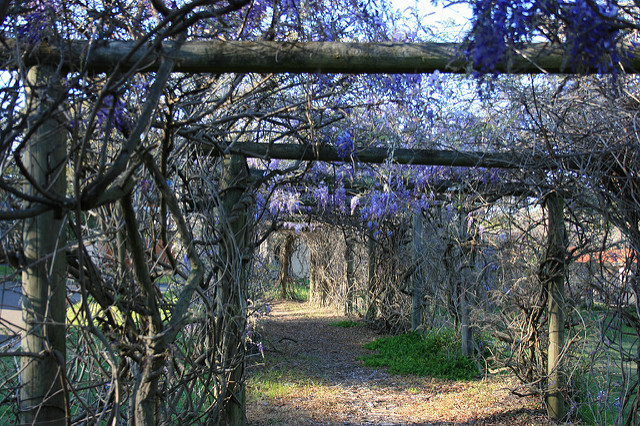
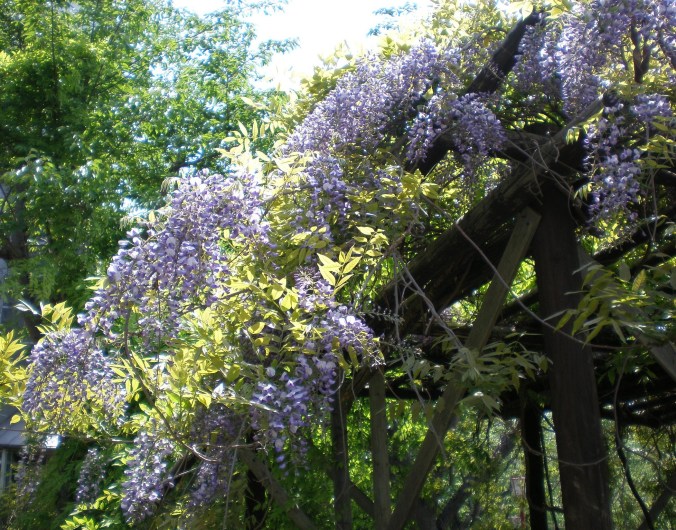
Wisteria long arbor

Wisteria arbor. Jason BakerCC BY

Here’s my last installment of a tale told by a wisteria vine.

“Setting is everything,” said the facilitators at the writing workshop I attended last summer. “Setting drives the plot, the actions of characters . . . .”

That’s certainly true of this story.

All my life I’ve been haunted by an old house in the woods beside my Dad’s childhood home. I looked for it every time I visited my grandmother and we walked down the narrow dirt road. She’d point it out through the trees (she knew where to look; I had trouble finding it):

“There it is, the Griffin house.” 

I’ve seen many old, abandoned houses since, in various stages of falling down, but the Griffin house, obscured by thick woods, was the first. The allure, the spooky wonder I felt as a child, was immediate and intense.

It’s never left me.

None of the people who lived in this house were my relatives. They’re in my blood only because of the place and the stories, real and imagined. My aunt, as a child, used to run on a path between her house and the Griffins’ to play with the Griffin grandchildren. Eventually, said my aunt, the wildflowers and weeds grew taller and taller, and then . . . well, everyone and everything grew up.

The Mixon road began across from the right front of my grandparents’ yard. Standing in the Griffin yard, to the left of my grandparents home, the Mixon road would have been visible to the far right, branching off of the main dirt road. By the time I came along the Mixon road consisted of only two wheel tracks in the grass, a path leading partway through the woods and fading away where fields were still being farmed. There’s no trace of the road at all now; scrubby brush has overtaken it. No one would know a road, or a house, was ever there. Grandma said that the Mixon home down this vanished road was beautiful. It was two stories with a double porch, dating back to the Civil War. That house was gone long before I ever came to be. 

Perhaps this story springs only from a hopeless romantic streak, but as the wisteria grew heavier and heavier in the trees of my ancestral homeplace with each passing year, it stirred the stories, imaginings. For fractions of seconds, I could see the old, hidden Griffin house as it was. I could feel the thrum of farm life, see a mother surrounded by little children, sense a man pouring his soul into the earth to make it produce enough to feed his own.

That house is, for me, an abiding image. I can forever pull back layers to find new and deeper meanings: the passing of time, “memento mori,” we are mortal, and who will remember us when we’re gone?

The wisteria is another abiding image. If it has attached itself so to me, then why not to my characters?

When I happened upon an science article about plants having memory, I wondered, What if such memories could be tapped? What if a botanist actually had a means of, say, sticking a needle in a plant to extract its memories? 

As a writer, I get to do just that. Without the needle.

In previous segments of this story, Jennie Jay Mixon has grown up to marry the widower neighbor, Thomas Griffin. The wisteria finally blooms for the first time. The affinity between girl and plant deepens; their lives, their maturity, mirror one another. In this final segment, the mirroring takes an unexpected, divergent turn . . . .

*******

So Jennie Jay transplanted herself in the Griffin household as the mother figure to six children, the oldest being barely younger than she. Jennie rooted herself in the family as if she’d always been there. And in some ways, she had. She wrapped her love around Thomas Griffin the way I wrapped myself around the arbor frame. Like my arbor supported me, Tom’s strength secured Jennie Jay. Under the arc of their love, the children, the farm, flourished.

Until their first baby died, weeks after birth.

She spent that day drifting between the house, the cemetery, and me, wandering as if she were that lost toddler of long ago.

He finally pulled her to a bench he’d placed under me, sat her on his lap.

I did all I knew to do, Tom. She seemed to be getting stronger. What did I do wrong?

Nothing, my love. She was just too little. You can’t blame yourself.

I ache to hold her. To feel her warmth. I think somehow I needed her more than she needed me. I am just so empty. 

There’ll be others to come, who need you. And I need you, Jennie.

She smiled a little then. She pressed her wet face against his coat. He leaned his head back against my trunk, let her cry, and cried along with her.

But he was right. In time, more babies arrived: Twins, then two more.

I was a part of that last fertilization. Really, I was.

They crept out of the house one balmy summer night under a waning crescent moon when I was blooming riotously, having been pruned back a few times for my own good. I sheltered them as they loved each other, murmuring of long ago: dandelions, destiny, The Powers That Be.

And me. Jennie Jay and Tom whispered of me, even then.

Let it be duly noted, however, that I find the efficient business of self-pollination far superior, although this interlude did clarify some finer points.

And children grow almost as fast as vines; one by one, they all left home.

Tom began to wilt.  Rheumatism, Jennie called it. She fussed over him, waited on him. He basked in her attention much like I bask in the sun.

Considering the span of their ages, everyone expected him to go first; it was the natural order of things.

I perceived it before she did.  How, I cannot convey, but I discerned something stealthily growing, snaking its way silently through her inside parts, bit by bit. The terrible truth is that this Thing was like me. Powerful in the way it grew and took over. I had not fully known my own power until Tom extended the arbor with an enclosed walkway of trellises. My new shoots, innocent, so tender, had spiraled through the lattice. As I grew, my tendrils tightened; I began to pull the lattice into myself, out of control, until Jennie Jay and Tom cut that part of me away.  They left the overhead beams of the new walkway for me to extend myself and luxuriate, but no more lattices, as I would only destroy them.

I sensed nothing good in the Thing that slowly choked the life out of Jennie Jay. It wanted to live, she wanted to live, I wanted to live; but I could not desire to live if my living was at the expense of hers.

The elongated arbor allowed me to get near the bedroom window. Jennie Jay, so small and white, lay still on the bed. Tom’s cane remained in the corner, for he seldom left her side, even when the neighbors came to relieve him, or when the children came to say good-bye.

He held her whenever she screamed, when the Thing, out of control, took, bent, consumed, destroyed. He was holding her on that last morning. The sun had just risen; dew sparkled like scattered seeds of fiery rainbows.

Her eyes opened, looked through the window at me.

It’s morning, Tom. Time to get going. I’ll wait for you under the wisteria. Come on whenever you’re ready, dearest.

Humans say envy is green. I am green. I know envy. I envied the pine tree given for her casket. I wanted to be the one, would have sacrificed myself, to hold her forever and ever.

Of course he knew. Before he nailed the lid shut, he hobbled outside with a pair of shears to clip a little sprig of my purple flowers. When his children and the neighbors attempted to help, he shooed them all away. He carried my flowers, placed them under Jennie Jay’s white fingers, kissed her hands, her face, one last time, and nailed the lid himself.

He planted her beside their first baby, a wise distance away from the first Mrs. Griffin.

In his grief I was powerless. I could offer no condolence, could not weep, could not acknowledge our loss in any way other than shedding my blossoms, borne by the breeze to collect on the mound where she lay.

I lost track of time then. So did Tom.  He did not come to me again but went quickly after her, his existence too intertwined with hers for him to adapt to a world without Jennie Jay in it. She was his world.

By then the garden was no more. The yard soon went wild. Grasses and weeds grew tall; the pecan tree rotted away. The Griffin children, their grandchildren, their great-grandchildren, came back from time to time, always in a hurry, visiting the graves, showing the land to potential buyers.

No one wanted it.

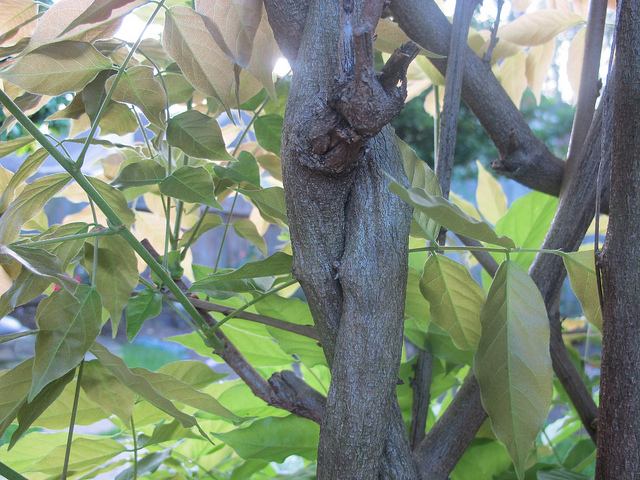
The barns collapsed. The house and I kept standing, even as saplings grew into trees around us. My arbor could not bear my weight; I crushed it. I latched onto a sturdy oak, where I climbed and climbed above the darkness of the woods which claimed for itself what was once the productive farm of a good, kind man.

I reached the house, at last. All traces of the whitewash were long gone. I wove myself through the bare clapboards and window frames, up the narrow staircase, back out between the cypress shingles.

She lived here, she was happy here. Her babies were born here. The walls and I were the last testaments to their love, that peculiar human gift. My tendrils tasted it all, absorbed it, took every bit and stored it deep within myself. My twisted trunk attained the girth of a man. Parts of my vine grew larger than Thomas Griffin’s muscular arms when they first wrapped around Jennie Jay.

I am all that remains. The house caved in from the ravages of time, weather, and me, but I am compelled ever onward and upward. Trees do not grow fast enough to suit me, for my goal is to reach the sun, that life-giving, golden orb beckoning from the periwinkle sky; I sense that something of Jennie Jay is there, just on the other side.

Until then, I draw from the essence of her deep within myself, where every sensation is preserved, where she lives on and on and on.

Her first and last words were of me.

First and last, first and last. My images of her keep circling, circling, ever-circling.

She was the first child I ever saw . . . .

Wisteria & old house

Old North Carolina home covered in wisteria. David R NCCC BY

*******

The End.

But maybe not.

Wisteria’s last line is also its first, so, back to The Beginning . . . .

Wisteria sprig

Wisteria sprig. Maggie McCainCC BY-SA

Wisteria, part 4

Wisteria vine

Wisteria. Asiya QureshiCC BY

I love things that are old. 

I am having fun tinkering with this little story about the old days, based on my grandmother’s childhood memories and stories that occurred before she was born. The ancient oral tradition . . . as I listened to her, faint images of people partially materialized in my mind. I wondered what their extended stories might be, what their lives were like on family farms in this remote, woody place that I visited each summer. In my lifetime, it was nearly all woods; few traces of the community remained. 

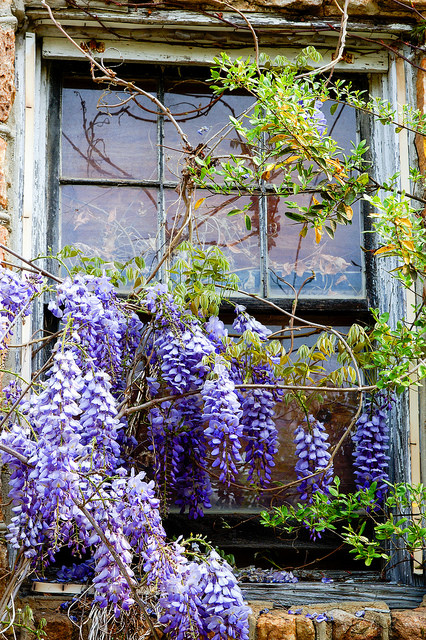
The wisteria remains. It hangs in the trees where the farm houses once were, its abundant, pale purple flowers the very image of April in North Carolina, whispering of long ago.

I starting wondering what stories the wisteria could tell, what it had witnessed across the years.

Then I heard its voice. 

I guess I’ve always had a wild imagination . . . 

It’s also fun to relate Wisteria’s story, beginning in the 1880s to the turn of the twentieth century, thus far, in segments somewhat like a serial in newspapers or magazines of that era. 

In the preceding installments (Wisteria, Wisteria, part 2 , and Wisteria, part 3), the vine tells of its mysterious origin on the Griffin farm and its developing kinship with a girl named Jennie Jay, who’s become a teenager harboring a secret. Mr. Griffin, father of six, has just lost his wife in childbirth with the seventh. The vine isn’t able to bloom, not an uncommon condition.

In today’s post . . . well, just sit back and listen to what Wisteria has to share . . .

*******

I woke the next spring to find Mr. Griffin building a porch on the front of his house. Every day, neighbor women stopped by with fudge or a pot of chicken and dumplings or stew for his family. The married women stayed only minutes, but the widows . . . they lingered, smiling and chatting at Mr. Griffin as he tried to work. By now I understood a lot more about humans than I used to. I stretched myself closer to the house for snatches of conversation.

Mr. Griffin, it seemed, had little to say.

He managed, somehow, to finish the porch. He left the gardening to his children and whitewashed the house. It stood tall, narrow, and bright in the sunlight by day; it glowed in the moonlight at night, as white as the stone markers just across the dirt road.

In all this time Jennie Jay did not make an appearance.

Her mother walked over one afternoon, bearing a basket, when the Griffin children had gone Up the Swamp to visit their mother’s relations. Mr. Griffin leaned against a porch column, smoking his pipe, gazing at the place where his wife, his baby, and his parents were planted.

He straightened, nodded, when he saw who was coming.

Miss Aurelia.

Hello, Thomas.  Here, I fried a chicken and made some biscuits for you.

I greatly appreciate it.

Your porch is lovely.

Thank you. The children enjoy it. Just got the swing up this morning.

How are you?

Can’t complain. You?

We’re all well.

A pause. Then—

Jennie Jay came home today.

Ah. So she’d gone away, had she.

Mr. Griffin puffed his pipe. He took a long moment to respond:

How did she like Raleigh?

She says she likes the shops but hates the city.

They both chuckled.

My sister said she was terribly homesick. She couldn’t understand why Jennie Jay wanted to come back to the ‘sticks,’ you know.

A slight smile played on her face.

Mr. Griffin just stared ahead. He made no reply.

She asked about you. Wants to come by.

He turned and looked directly at her for the first time since she arrived.

His voice was suddenly hoarse:

Well, by all means, Aurelia, go and tell her to come.

********

From my high perch on the arbor they built for me, I knew she was coming before he did.

In a yellow dress, her wide-brimmed hat a corona, she gleamed against the reeds and trees, a far cry from the tottering child who once escaped her mother.

He’d hurried in the house to shave, then waited for a while in the new swing, which faced the old Mixon road. Where she’d be walking. Then he took to pacing back and forth out in yard by me, until she finally came into sight.

He stood in my shadow as if rooted, drinking her in the way I drink in sunlight: Jennie Jay, pink-cheeked, blue eyes shimmering, pulsating with life. Her pale hair, long tendrils that my thin green ones could never begin to match, hung loose under her hat.

His gray eyes were as sharp as knife blades when she drew near, his expression unreadable.

He extended his hand:

Welcome home, Jennie Jay.

She grasped his hand, smiling.

Is that all you have to say to me, Mr. Thomas?

He trembled. Oh, could I feel it.

Just say it, man, say it!

God above, Jennie, you are beautiful.

Did you miss me while I was away?

I did.

That is good, because, Thomas Griffin, I. Missed. YOU.

She threw her arms around him.

Her hat fluttered to the ground beside my trunk; there were no more words. He clasped her to him like he might never let go. He sobbed, but Jennie laughed, even as the salt water flowed down their faces; she reached up and pulled his to her own.

By my calculations, she was in her eighteenth year.

I was about sixteen.

****

It happened.

On the day Thomas Griffin married Jennie Jay Mixon and brought her home in his old mule-drawn buggy—by her request— he had a special wedding gift waiting. He wouldn’t let her look; she had to keep her gloved hands over her eyes until he was ready:

All right, love, you can look now.

It was me, of course. In full bloom for the first time in my existence.

My heavy lavender clusters spilled like grapes over the arbor; my fragrance filled the air. I was majestic and I knew it, nearly as resplendent as the young bride.  My one regret—if my kind is allowed a regret—is that I couldn’t bloom yellow for her.

She laughed and cried at the same time, just as when Mr. Griffin first held her in his arms.

It is amazing, amazing! Oh, Tom, how…?

It just happened, Jennie. Of its own accord. All for you, I’m sure.

That wisteria is the most beautiful thing in the world.

Ah, my sweet, salty Jennie Jay.

Wisteria blooming

*******

This isn’t the end of the story. Not yet.

To be continued, one last time . . . Wisteria, part 5.