Finding a safe harbor poem

National Poetry Month continues, and while I have been writing a poem each day in April, I have not posted them all here on the blog.

Today I return to post about “safe harbors.”

Yesterday for VerseLove at Ethical ELA, poet Padma Venkatraman offered this prompt along with her own beautiful work as an example: “Think about a place that feels like a safe harbor to you – and bring that space alive in a poem.”

Ah. I knew exactly what to write about…

Haven

I should convert
one of the boys’
old bedrooms
to a study
where I can write
with fewer
interruptions

but here
at the kitchen table
is my place

here
there are windows
all around

I open the blinds
while it is yet dark

inviting the light
before its return

bringing with it, birds
rippling with song
praise for the morning
and the new day

these colorful
feathered visitors
peer in my windows
from time to time
like curious, bright-eyed
Muses

—yes, I am here
—yes, I see you, too

and sometimes
when my husband
turns on the TV
in the living room
I grow weary
of the news
and sports

but when
he goes away
he leaves music playing
for the puppy

playing under my chair
little ball of golden fluff
having dragged every toy
he owns
to my feet

where he whimpers
just now
to be held

and so I pick him up

he curls in my lap
while I write
to the background song
a’rippling:

If my words did glow
with the gold of sunshine…

yeah, the Grateful Dead…

here in my place
my beloved space

I write

ever grateful, alive.

******

Lyrics: “Ripple,” Robert Hunter/Jerome Garcia, 1970.
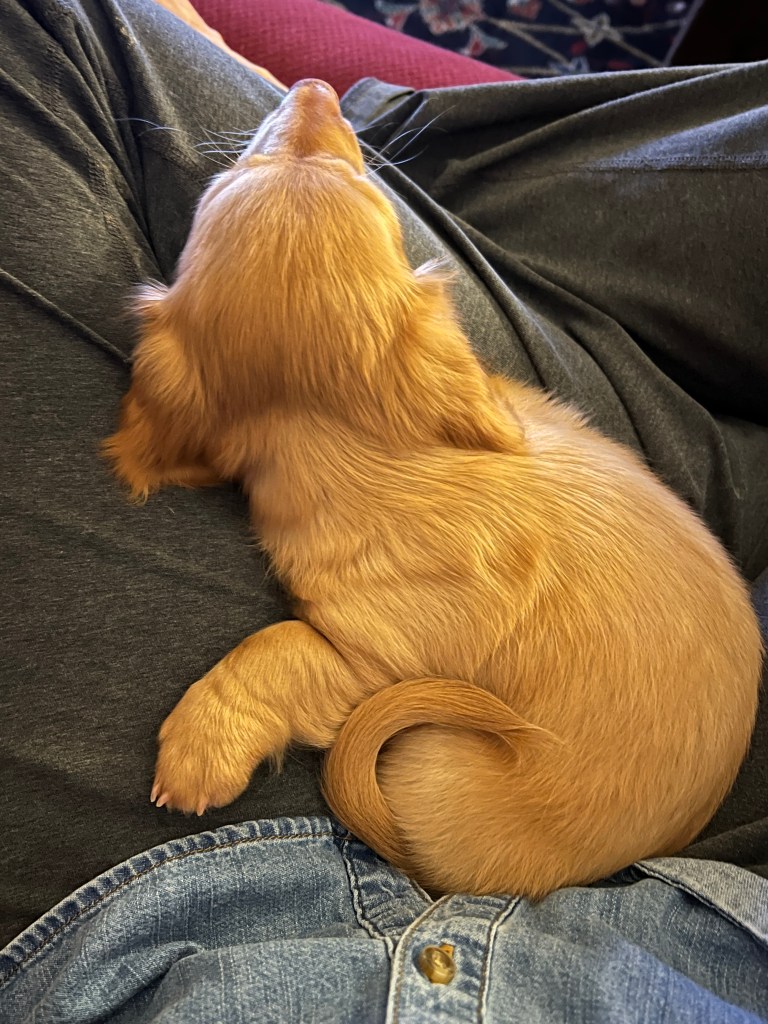
My Jesse

with thanks also to Two Writing Teachers for the Tuesday Slice of Life Story Challenge
Progressive poem 2025

I am honored to be part of a writing community creating a progressive poem throughout the month of April. There are thirty of us, and we each add a line when our day comes.

I am the twelfth. The final line in bold is mine…interesting to watch the poem taking shape! And in which direction will it go next?

*******

Open an April window
let sunlight paint the air
stippling every dogwood
dappling daffodils with flair

Race to the garden
where woodpeckers drum
as hummingbirds thrum
in the blossoming Sweetgum.

Sing as you set up the easels
dabble in the paints
echo the colors of lilacs and phlox
commune without constraints

-Now I hand the poem off to Cathy Stenquist!

Here are the contributors for the month:

April 1 Linda Mitchell at A Word Edgewise
April 2 Tricia at The Miss Rumphius Effect
April 3 Robyn at Life on the Deckle Edge
April 4 Donna Smith at Mainely Write
April 5 Denise at https://mrsdkrebs.edublogs.org/
April 6 Buffy at http://www.buffysilverman.com/blog
April 7 Jone at https://www.jonerushmacculloch.com/
April 8 Janice Scully at Salt City Verse
April 9 Tabatha at https://tabathayeatts.blogspot.com/
April 10 Marcie at Marcie Flinchum Atkins
April 11 Rose at Imagine the Possibilities | Rose’s Blog
April 12 Fran Haley at Lit Bits and Pieces
April 13 Cathy Stenquist
April 14 Janet Fagel at Mainly Write
April 15 Carol Varsalona at Beyond LiteracyLink
April 16 Amy Ludwig VanDerwater at The Poem Farm
April 17 Kim Johnson at Common Threads
April 18 Margaret at Reflections on the Teche
April 19 Ramona at Pleasures from the Page
April 20 Mary Lee at A(nother) Year of Reading
April 21 Tanita at TanitasDavis.com
April 22 Patricia Franz
April 23 Ruth at There’s No Such Thing as a Godforsaken Town
April 24 Linda Kulp Trout at http://lindakulptrout.blogspot.com
April 25 Heidi Mordhorst at My Juicy Little Universe
April 26 Michelle Kogan at: https://moreart4all.wordpress.com/
April 27 Linda Baie at Teacher Dance
April 28 Pamela Ross at Words in Flight
April 29 Diane Davis at Starting Again in Poetry
April 30 April Halprin Wayland at Teaching Authors

Spring verse

On the second day of National Poetry Month, Leilya Pitre hosts VerseLove at Ethical ELA. She offers this poetic prompt:

A tricube consists of three stanzas, each with three lines, and each line having three syllables—quick, rhythmic, and focused. It’s easy to remember as 3:3:3.

Begin by answering the question: What does spring mean to you?

I think I have an answer…

Spring’s Message

Morning sky
streaked rose-gold:
heaven’s yawn

Birdsong praise
rising on
wings of dawn

Green-robed earth
resurrects—
loss is gone

True or False poem

My friend Denise Krebs hosts VerseLove over on Ethical ELA today with a profound “true/false” list poem based on the work of Dean Young. By all means, read her poem and the prompt.

Here’s what I have, so far…

True or False?

  1. I am much older than I appear.
  2. Green is the color of ordinary time.
  3. Angels can sing.
  4. Stars can sing.
  5. Trees can sing.
  6. Just because it’s myth doesn’t mean it isn’t true.
  7. There’s a reason I use seven asterisks for section breaks.
  8. A seahorse holds the reins of your memory and emotions.
  9. Salt water heals all.
  10. Blood is thicker than water.
  11. Blood cries.
  12. I will live to see another solar eclipse.

*******

Bonus points will be awarded for citing evidence in support your answer for #10.

Tip: Double check #3 before submission.

*******

MDavis.D, CC BY-SA 4.0 https://creativecommons.org/licenses/by-sa/4.0, via Wikimedia Commons

*******

with thanks to Two Writing Teachers for the Tuesday Slice of Life Story sharing

Alphabeticals poem

For VerseLove today on Ethical ELA, host Jennifer Guyor Jowett extends this invitation to participants: Pick any letter from the alphabet. Think about its shape, its function, how else it might be heard or understood. Play with variations. See what might be discovered. 

Welp… I find I’ve gotta go with this.

Ode to F

Let’s face it:

F is not the most alluring
letter of the alphabet.

It indicates failure.

It stands for an expletive.

Technically, it’s fricative,
a sound made by forcing
air through a narrow channel,
in this case, by placing the
teeth on the lower lip

looking rather like
trepidation

or, rather,
fearfulness.

Seems a humble
(if not humiliated)
letter
not to mention
nearly impossible
for a young child
to write
in its capital cursive form:
France, for example,
looks like Trance.

But
let’s face it:

F happens to be
a banner letter.
Case in point:
when a small child
has to turn her
first name initial
into an object
for a class assignment
and the girl beside her
is drawing E as
the gorgeous wing
of a bird in flight
the F girl’s got nothing
until she finally thinks
of a flagpole.

A universal
symbol of
freedom

and where would we be
without that?

It stands nobly
there in JFK and RFK

not to mention
twice ceaselessly
in F. Scott Fitzgerald.

A banner letter,
indeed

woven into the very
fabric of our existence…
how could we function
without

Fibonacci sequence
flora and fauna
forests
fish
family

or finches?

Or FRIDAY
or friends?

Or fearlessness.

Or faith.

Stand tall
and proud, 
oh F,
waving your
two little fronds
in the wind
forever.

Fly on.

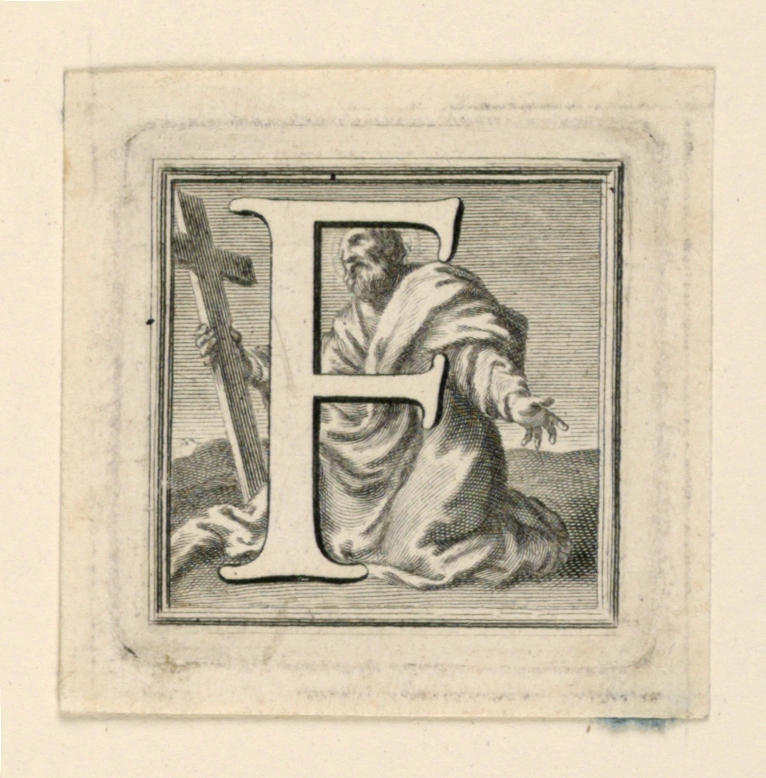
Decorated Capital Letter F“.Jakob Frey, Swiss, active Italy, 1681 – 1752. CC0 1.0.
Public domain, Smithsonian.

Inspirational place poem

For VerseLove on Ethical ELA today, host Wendy Everard invited participants to “Take some time to rabbit hole online.  Discover some places that were inspirational to your favorite author or poet.  You can write about a place you’ve visited or one that you’ve discovered today, through some research.”

Ah. See if you know this place and, more importantly, the person that inspires me.

Remember the Signs

Sometimes
there is
a magic
that
chases you
from one
world
to another

such as when
you visit
a Tex-Mex restaurant
in North Carolina

dedicated to Elvis

and as
the hostess
leads your party
to your table
you happen
to notice

high on the wall
above all the 
hodgepodge
framed photos
that aren’t even 
of Elvis at all
but instead are 
of food 
and dogs 
and cars
(the ceiling
is a mass
of actual
gleaming chrome
hubcaps)

…that high
on the wall
above these
eccentric displays
is a wooden sign

and that
is when
you know
you know
you know
magic is 
afoot

the air begins
tingling with it

and if
you can somehow
explore this wall
without being noticed
by anyone else

you might
very probably
find, if conditions
are right,

a hidden door…

It is here,
somewhere,
I am sure.

Someday,
so help me, 
I shall find it

I shall get in

to find myself
I suspect

in the Rabbit Room
of an Oxford pub
where a group of men
light their pipes and order
another beer as they
debate the manuscript
on magic chasing you
from one world
to another

by mysteriously
connected rooms
and secret portals…

inside the Tex-Mex
Elvis restaurant
I stand staring
at this sign
(later,
I will have trouble
remembering
if I actually
saw it)

knowing magic
is afoot

—it’s more than
a pretty strong
inkling…

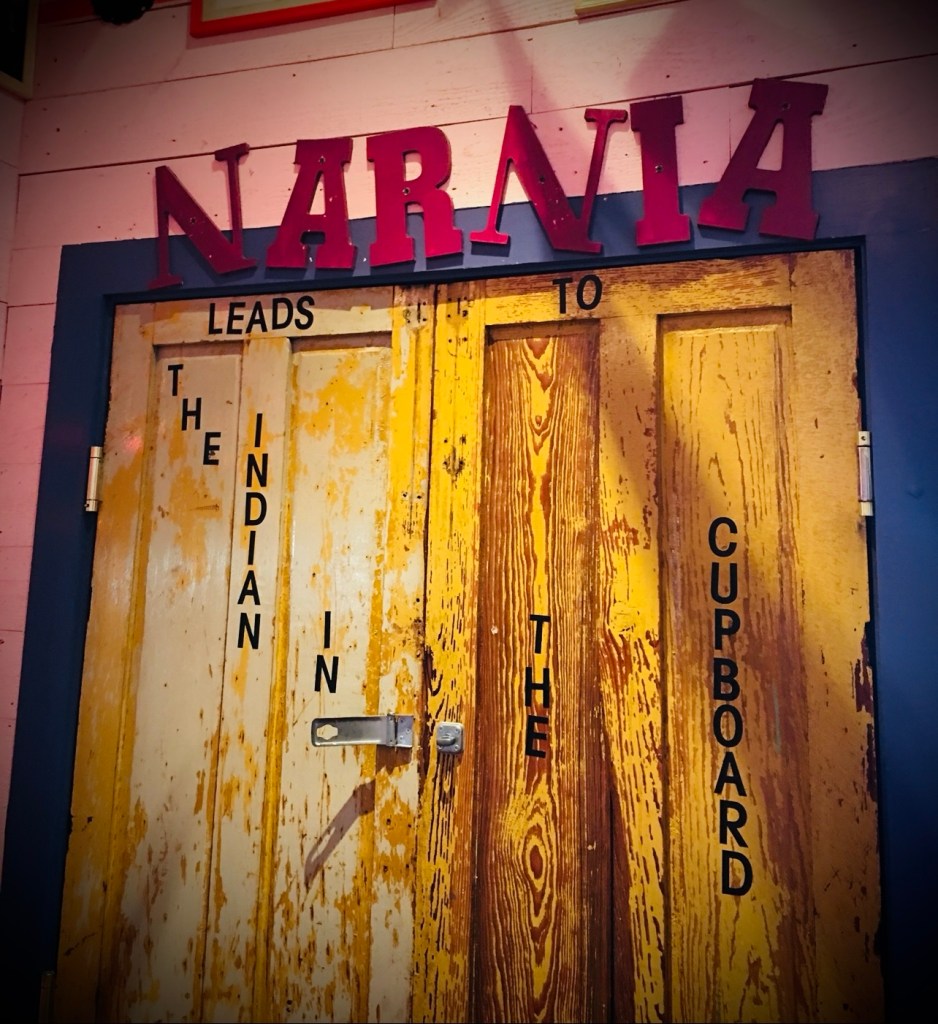
A photo of the actual sign — and door—! on the wall inside the Tex-Mex Elvis restaurant in NC.

*******

*REVEAL* in case you did not know:

The Rabbit Room was a private lounge in the back of the Oxford, England pub, The Eagle and the Child (nicknamed The Bird and the Baby), where C.S. Lewis, J.R.R. Tolkien, and others (“The Inklings”) met regularly to share their working drafts. My poem’s title, the tingling magic, the door leading to another world are all Narnia/Lewis references. Even “I shall get in” is taken from Lewis, whom I’ve loved since age ten. The manuscript being debated in the poem is The Lion, the Witch, and the Wardrobe – Tolkien didn’t like it and basically told Lewis it would never work. While writing the poem I actually forgot what the sign (“NARNIA”) looked like in my local Tex-Mex-Elvis restaurant; I recalled it as an obscure reference to that magical world. I had to scroll around for the photo I took, to remember…but even my forgetting the sign ties directly into the plot of one of The Chronicles of Narnia books (The Silver Chair).

The sign’s presence in this odd place is definitely magical to me…one day…I shall get in…

Hashtag and magic box poems

April is National Poetry Month, and over at Ethical ELA, VerseLove is well underway.

My friend Kim Johnson kicked off the daily poetry writing yesterday by inviting participants to introduce themselves via hashtag poems. Kim shared the process:

Write your name vertically down the left side of a page.  You can use your first name, nickname, or full name – your choice! 

Place a hashtag in front of each letter of your name.

Jot a list of your hobbies, your passions, and any other aspects that you might use to introduce yourself to someone getting to know you.  You can scroll through photos, Facebook posts, or past poems to help you think of some ideas. 

Finally, use the letters to make a hashtag acrostic to introduce yourself to your #VerseLove family! You can #smashyourwordstogether or #space them apart. 

My hashtag poem (I used my favorite variation of my name, what my granddaughters call me):

#HeyY’all #ThisIsMe

#finchologist
#rise&write
#aweseeker
#naturereveler
#nowletmelookthatup
#anothercupofcoffeeplease

Today, Bryan Ripley Crandall hosts VerseLove with a “Magic Box” poem – the directions are somewhat extensive, but very intriguing; check them out here.

My Magic Box poem:

The Golden Rim

I discovered the jewels
right here at home
       whispering rules, awaiting accruals
like longing, lingering talismans
to put in my pockets, protection from fools

I shall not suffer them, removing my saffron socks
barefootedly heading for another world
where winter is fading
       adventure, a’waiting
already, I savor the welcoming salt

I wished, and the grail materialized
in my hand, like a poem
       capturing the wellspring of my heart
       hoping for rhythms of grace
with these words etched around the golden rim:
Write Me

Oh, this spiral shell of Time, wobbling on crustaceous legs!
It’s sweet as honey and bitter as medicine in tentative turn
luring me to press myself
between the musty pages
with my new ink, riding the roaring waves of the past
in the bubbling clean foam of Now.

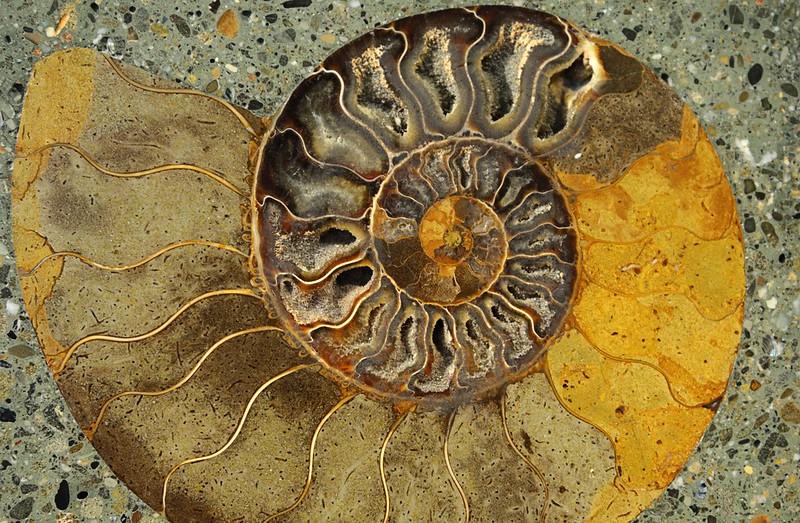
Fossil nautilus.HitchsterCC BY 2.0.

Speaking of Now…what will you write?

******

with thanks to Kim and Bryan at Ethical ELA
along with those sharing for Slice of Life Tuesday at Two Writing Teachers

A slice of memoir poetry: Island gift

National Poetry Month is winding down, and while I haven’t posted each day here on the blog, I’ve written a poem every day in April for VerseLove on Ethical ELA.

April 22nd was Earth Day. Host Emily Cohn invited poets to “remember an island: real, fictional, ancestral, or otherwise… Imagine or describe a world there.”

I have a favorite childhood memory about an island. I wrote a post about it seven years ago (Breakfast Island); this week I returned to it and condensed it into a poem.

Two takeaways: 1) Rewriting IS writing and 2) Less is more. I find the original post far too wordy now.

Here’s the revision.

*******

Island Gift

On a chilly gray dawn
my family piles into 
my uncle’s motorboat

we are all together
speeding over the Severn 

the grown-ups have decided
it would be fun to have 
breakfast on the beach

my uncle knows just the place
a little island where people
sometimes stop off

I shiver in the lifejacket
until my teeth chatter

I am starving 
how long
is this going to take?

turns out the island
is only a mound of sand
with a bit of scraggly brush
In the middle

I walk the entire edge of it
while the grown-ups
are building the fire

the sun is up, golden,
warming my cold skin

the gray Severn
is now sparking blue

What is this island’s name?
I ask my uncle
as sausage links begin sizzling
in a pan

It doesn’t have one
 
I have never heard of a place
not having a name

Why don’t the owners name it?
 
No one really owns this island…
it’s just a small place,
here in the river
 
I don’t know why
this makes me want
to cry

my uncle, turning the sausages,
squints up at me:
what is the matter?
 
It should belong to somebody
 
You’re right. I think
it should be you. 
Congratulations!
You now own an island
 
my heart beats fast
because I know, right now,
that I want this island
to be mine forever
but

Do I have to pay for it?
 
my uncle laughs loud and long

(I will remember this
when the family
isn’t a family
anymore)

Since there’s no other owner
it’s free

someone is frying apples
the aroma rises
like incense from an altar
in thin blue smoke
vanishing in the breeze

I tell the island I love it

it whispers 
that it loves me back

and I know
for this one morning
that I am the richest person
on Earth

I own an island

and it’s free


Photo: Paul VanDerWerf. CC BY

*******

thanks to Emily Cohn for the island invitation on VerseLove at Ethical ELA

an to Two Writing Teachers for the Tuesday Slice of Life sharing-place

For my finch followers: hatching

When death
is all around
be still, listen
to the sound
of birds

to hopes lost
and found

here in the song
life and grace
abound


Backstory: House finches return year after year to build nests on my front door wreath. Every spring and summer, my porch becomes a bird sanctuary and nursery; I, a present but uninvolved custodian, watch it all unfolding from the periphery. This winter the little finch pair actually roosted in the wreath at night. That is a first. I imagined them nestled together in the grapevine, keeping each other warm, dreaming dreams of life to come. They started awfully early this season, building their nest in the wreath and laying at least four eggs before the last week of February. It was still cold. March arrived with gusting winds and sustained freezing temperatures; I worried about the tiny life on my door. During winter’s only snow this year, well before before spring officially arrived, the baby finches hatched. Because of the cold, I stayed away; I didn’t want to startle Mama Finch, who needed to be on the nest keeping her babies warm. I saw the hatchlings when they were a day or two old and didn’t check again for about three weeks…expecting they had fledged and possibly gone, as the happy singing and trilling bird-talk at my door had ceased. When I came around to check the nest, I found one fledgling dead, its little head drooped over the front of the nest, and another beautiful fledgling, so tiny, with such perfect little wings, enmeshed with the nest at the back—almost becoming part of the nest. This is another first: in all these generations of finches I’ve not known any babies to die. In fact, they usually stay in the nest after they can fly, seemingly unwilling to leave. I marvel at how they can still stuff themselves into it. Home sweet home…until now. Not wanting to leave the dead baby finches and fearing there were parasites or some disease in the nest, I removed the babies, placed them deep in a bed of leaves by the woods out back, and destroyed the old nest.

It broke my heart.

The parents must have been watching me…I read that birds mourn for their little lost ones.

They began rebuilding immediately. With urgency, Soon there was a perfect green nest artistically adorned with a long gray feather from some other bird, lined with layers of the softest, whitest fluff —wherever do they find this? And a week before Easter there were five—five!—new eggs.

They began hatching yesterday. I’ve been keeping close watch…and this is the first time I’ve caught a glimpse (just the very quickest glimpse) of a finch actually hatching.

The poem at the opening was inspired by one shared for VerseLove on Ethical ELA yesterday, coinciding with the hatching of these finch eggs: Why Do You Write Poems When Death is All Around Us?

The answer, for me, is a matter of awe: Life is all around, somehow overcoming, even singing at the door.

*******

with thanks to Andy Schoenborn for sharing Kyle “Guante” Tran Myhre’s poem yesterday
and Two Writing Teachers for the weekly Slice of Life story sharing-place


and to the finches
for infusing my days

with so much awe
hope
and notes
of joy


Poetry: keeping the channel open

For VerseLove on Ethical ELA this week, host Margaret Simon shared this quote from dancer Martha Graham (on The Marginalian):

“There is a vitality, a life force, an energy, a quickening that is translated through you into action, and because there is only one of you in all of time, this expression is unique. And if you block it, it will never exist through any other medium and it will be lost. The world will not have it. It is not your business to determine how good it is nor how valuable nor how it compares with other expressions. It is your business to keep it yours clearly and directly, to keep the channel open. You do not even have to believe in yourself or your work. You have to keep yourself open and aware of the urges that motivate you. Keep the channel open.”

Margaret invited poet-participants to free-write for ten minutes and “just flow.” She shared a poem she composed in her Notes app while walking, along with this encouragement to keep going: “Mary Oliver says ‘You do not have to be good’ in her poem ‘Wild Geese’…accept what comes and be open to it. We all have an energy inside us waiting to be released in some creative way… Forget the rules today and flow, flow, flow.”

In keeping the channel open…here is where my mind went first.

Gifts from the Limbic Sea

Before it is quite morning
the otherworld of dreams
begins to recede
the hippocampus
swimming in its own sea
of memory
is unable to hold onto
the waving grasses
ever how beautiful
or important these
may be 

Try, I tell my twin seahorses
before I am quite awake
I would tighten
the ethereal reins
but I know I am
only dreaming

my hands cannot grasp
anything solid
images dissolve into foam
all I can feel
is a gentle current
ebbing away

or maybe 
that strange and bright
otherworld remains
and I am what transitions
from there to here
borne away on 
mystical tides 
back to reality

and so I rise 
in the darkness
before it is quite morning
to find my journal

and write
before the hippocampus
shakes off 
the remaining residue

it’s not much
this grasping
but I do it
because
these last particles
of dream-dust
preserved on the page
mean something

and they 
are mine

Hippocampus coronal sections. DanielsabinaszCC BY-SA 4.0

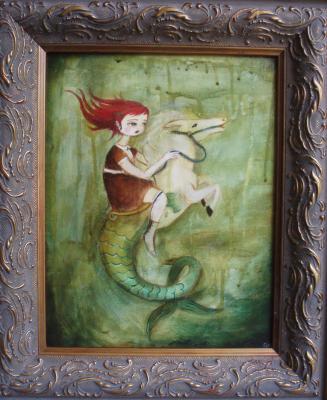
‘Hippocampus’ by The Black Apple. Halogen GalleryCC BY-SA 2.0