Good Friday tritina: It is finished

Eternity hangs on it
there where our sin-debt is
paid in full, finished

we would be finished
yet out of love, He did it
He is

what love is
the robe of righteousness is finished
take it, wear it

It is finished

Detail of a shirt made for me by a friend

The words “It is finished” are a translation of tetelestai – Greek for what a servant would say on returning to a master after completing a mission. It’s an accounting word, signifying a debt paid in full; it was stamped on receipts. The phrase indicates a final and complete sacrifice: Christ died as the Passover lambs were being slaughtered. And where were Passover lambs born? Bethlehem. The responsibility of those shepherds in the field abiding, keeping watch over their flocks by night…

The tritina form is comprised of ten lines with repeated ending words in this pattern:
1
2
3

3
1
2


2
3
1

1 2 3


Shoe poem

For VerseLove on Ethical ELA today, Andy Schoenborn invites teacher-poets to write “tumble down poetry” about shoes:

“For the small spaces they occupy, poems can cause writers to freeze. To break a poem free, try writing a paragraph or two of prose and, then, watch a poem tumble down with this process… today let’s write about shoes. Please take three minutes and write in prose about a pair of shoes that you’ll never forget… Once your paragraph is written, look for naturally occurring repetition, alliteration, striking images, and moments of emphasis fit for enjambments. Then play with the structure and form as a poem ‘tumbles down’ the page.”

It’s amazing, when you stop to think about it, how many shoe stories we have… this memory from long ago quickly overshadowed all others for me today.

Shoe Story

Fifth grade
studying mythology

the teacher says:
Now you will write
your own myth

sometimes myths
are about inventions
or journeys
or transformations

what can I write
about any of these?

I think
I sigh
I look
around the room

rainslapped windows
there was a time when
my parents would have made me
pull galoshes over my shoes

I hate hate hate my shoes
saddle oxfords
— I call them sadlocks
black and white
or in my case, 
black and gray
needing polish
again

everyone else
wears Hush Puppies
suede desert boots

Be grateful
for what you have
I’ve been told
by various grownups
in my life

(who do not have to wear
sadlocks)

I wonder
who ever invented
these stupid stupid shoes

I wonder when shoes
were invented

—wait—

a picture forms in my mind
a boy, living in a village
by the sea
where the sand is soft
where no one needs shoes…

I grab my pencil

I write him into being

this boy who had to save
his village by climbing
the mountain
where sharp rocks cut his feet
where he made shoes
from big leaves, tied
with strips of bark

on his return to the village
everyone started wearing shoes
in honor of their hero,
Shoeani.

Saddle oxfords. MBK (Marjie). CC BY-NC-SA 2.0.

Ancient shoes. Falling Outside The Normal Moral Constraints. CC BY 2.0.

Gogyohka poem (on joy)

For VerseLove today at Ethical ELA, Stacey L. Joy introduces the Gogyohka form. Stacey writes: “The Gogyohka is a form of verse developed by poet Enta Kusakabe in 1957. The idea behind the Gogyohka was to take the traditional form of Tanka poetry (which is written in five lines with 5-7-5-7-7 syllable counts) and liberate its structure, creating a freer form of verse. In the 1990s, Kusakabe began his efforts to spread Gogyohka as a new movement in poetry, and there are now around half a million people writing this form of verse in Japan.” Stacey invites teacher-poets to write a five-line free form poem on joy or liberation, or as many Gogyohka poems as we want.

As I pondered the many things that bring me joy and a sense of liberation, the song “Ode to Joy” came to mind. I went with it. The song title and the last verse comprise the last lines of each Gogyohka:

Call to Joy and Liberation

Listen
it is there
in feathered new-morning stirrings
before the sun’s rising
ode to joy

Believe
it is there
the golden key of redemption turning
in the locked human heart
ever singing, march we onward
 
Look
it is there
illuminating the faces of generations
clasping their grandchildren
victors in the midst of strife
 
Dig
it is still there
the uninhibited dance of childhood
a wellspring pure and free as birdsong
joyful music leads us sunward
 
Create
and it is there
a record of your existence
your own vital contribution 
in the triumph song of life

Joy

News poem

On Day 12 of National Poetry Month, Susie Morice invites teacher-poets to scan the news for crafting poems on VerseLove at Ethical ELA. Susie writes: “Use the news piece as a launch for a poem that conveys your concerns that this news arouses. Let us see the claws of your rage, feel the scratch of your worry, taste the saffron of your affection. Let it take you to wherever it takes you.  We want to hear your voices.”

This local news caught my heart two days ago. I find that I cannot add to it. The facts speak for themselves.

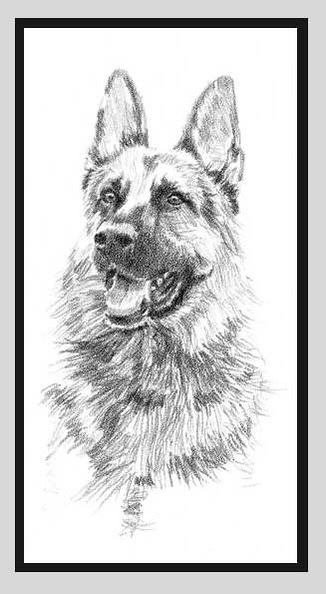
Fallen Officer

He died
in the line of duty

tracking an armed robber
who opened fire

the funeral home
got a call
asking if
they can
“do this sort of thing”

they say they can

surely a service 
with full honors

for our fallen hero

named Major

age 3
German Shepherd
K-9 Officer

God forgive
us all

Thanks K. for being such a great help and a friend. Whitewolf PhotographCC BY-NC-ND 2.0.
Major was a beautiful black German Shepherd

Thanks also to Two Writing Teachers for the weekly Slice of Life Story Challenge

Quirky poem

For Day 11 of National Poetry Month, my friend Kim Johnson invites teacher-poets to compose quirky poems for VerseLove at Ethical ELA: “We all do quirky, bold things that break the ice and bring us closer together. Think of a time that you’ve done something quirky – with friends, with family, with students or even complete strangers. Let’s share our quirky exchanges today and whatever emotions they bring – in whatever form of poetry we choose.”

I hardly have to think about this one…

Quirky Legacy

What goes around
comes around
particularly in 
prankster families
like mine

Once upon a time
my husband hid 
our oldest’s shoe

The boy (in his teens)
hunted high and low
demanding to know
(laughing)
where his dad hid it
because he knew 
exactly who
had done this 

Funny thing is,
my husband forgot
where he stashed
the shoe

Years later,
in the midst
of redecorating,
I moved
an antique pitcher
and discovered
the shoe inside

By that time,
the boy had achieved
retribution
many times over,
the most legendary
of his pranks
involving 
his dad’s cell phone
suspended in jello
(a Ziploc bag
didn’t help at all;
my husband hauled
the boy and
the ruined phone
to Verizon
for a replacement
while the clerks
tried but couldn’t keep
straight faces)

Years later
the boy 
(now a dad)
texts me
while I’m out shopping:
Mom, can you pick up
a copy of Prince Caspian?
He was reading 
the Narnia series
for the first time
and his daughter,
age six,
had hidden the book
from him
and couldn’t
remember where

What goes around
comes around
particularly in
prankster families
like mine

Definito poem

On Day 10 of National Poetry Month, my friend Margaret Simon invites teacher-poets to compose a definito poem for VerseLove on Ethical ELA. It’s a form invented by her friend Heidi Mordhorst: “A free verse poem of 8-12 lines (aimed at readers 8-12 years old) that highlights wordplay as it demonstrates the meaning of a less common word, which always ends the poem.” Margaret’s suggestions: “Choose a word that has a certain fascination to you. You can look for the Word of the Day or any word that comes to mind. Play with the etymology of the word. What do the sounds mean? How does the meaning play with your thoughts? Explore the word using imagery, metaphor, and word play.”

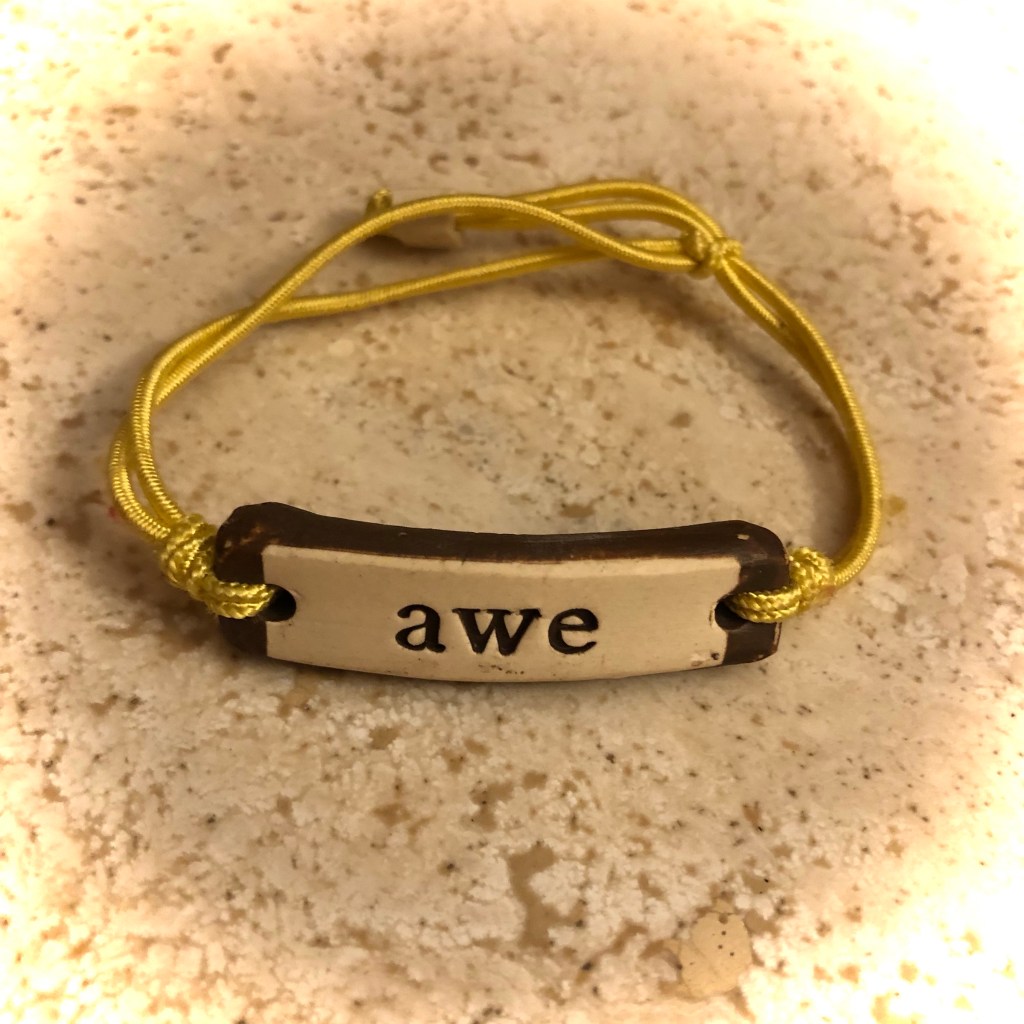
So… I tried, I really tried, two things: 1) Getting away from my OLW, “awe” and 2) Keeping to the recommended 8-12 lines. I failed in both. I did, however, have a lot of fun with the unfolding of this pseudo-definito…

Awe “Definito”

So, Children, 
maybe you have seen something
so wonderful
that you went all shivery inside
and maybe your skin
even got tingly
or goosebumpy

a thing
so beautiful 
that you don’t have a word
for how beautiful it is

the feeling you get when
the sun’s slanted golden light 
breaks through the clouds
after a storm
or when you see a rainbow, 
(not made with crayons,
a real one) in the misty height,
colors glimmering, glowing, blurring, 
an ethereal sight
ethereal? Sorry. It means 
to be so airy and light and beautiful
that the thing almost doesn’t belong
to this world
like stars, crystal-bright
against the black-velvet sky
on a winter’s night

maybe you have felt their stab of
silvery coldness, looking up
while your breath
hangs white
in the air

—yeah, that’s the feeling;
should we stop to
discuss metaphor
again?

No, it doesn’t have to be cold.

It can be a rush of warmth
on seeing a puppy
tiny, pink-mouthed, and so new
that its eyes are not yet open

—please note: The word is not spelled
the same way as what you say:
Awwww!
This, Children, is a homophone,
a poem for another day—

and the feeling might not come
from something you see
at all. 

It can come from something you hear. 
Once I was in an auditorium
where a girl who was trained in opera
sang just one high note;
her lips never moved
I couldn’t see her breathing
and the sound grew bigger
and bigger
and bigger
until the room
and my brain
and my heart 
were filled, almost bursting
with the pure, clear
starlike sound

-oh yes, I can tell by your eyes
and your open mouths
that you are beginning
to understand
awe.

After the tornado

Tell me without telling me poem

Yesterday on Ethical ELA’s VerseLove, Scott McCloskey invited teacher-poets to compose around “tell me without telling me,” the popular social media meme from a few years ago: “Tell us (through vivid sensory details and whatnot) that you are __________ without telling us you are __________. ” In his model, Scott masterfully incorporated many fragments of famous poems that have inspired him to write, followed by this reveal: “Tell me you’re a poet without telling me you’re a poet.”

So for Day 9 of National Poetry Month, here’s mine… it incorporates bits I’ve written before… and there’s SO much more to write…

It all began, I suppose,
in a darkened room
when Grandma plugged
this thing called a color wheel…

it sat on the floor, rotating, illuminating
the all-foil Christmas tree.
There in the dark
the sparkling silver tree
transitioned to red, blue, gold…

a stillness, a riveting

There was a girl
in my childhood church
who played the piano
accompanying the sanctuary choir.
Once, she stood alone
in front of the handbell table
reaching, grasping,
her white-gloved hands
a blur of choreography
playing those bells solo
never missing a note.
She was sixteen.

a stillness, a holding of breath

I don’t remember
learning how to read.
It was just a thing I could do.
But in fourth grade, the teacher
(built like a mountain, with a face
and heart of carved stone)
read to us every day.
An intelligent, artistic spider
who saved a less-than-radiant pig.
A boy who didn’t want that annoying,
subversive, endearing, ol’ yeller dog
that ended up saving his life, 
before picking up the shotgun…

My God. My God.
I almost died with that dog

and there have been books
in my hands,

in stacks by my bed,
ever since.

a stillness, an absorbing

There’s more, so much more.

At nineteen, 
walking into the community theater audition
where the handsomest man I ever saw
sat with a script…

we were married in less than six months.

Thirty-seven years this summer.

Two years in, when he said he was called 
to preach, I said
Well, you’ll be miserable 
unless you do.

a stillness, an abiding

Our oldest son saying
over and over
I’ll never go in the ministry.
It’s too hard a life.
Not getting married or
having any kids, either.

Just after he enrolled
in seminary,
he met a lovely young lady
with a little daughter
named for the title character
of his favorite book.
In the fullness of time
and in the span of a month
he became a husband, father, 
and pastor.

It was ordained. Jehovah jireh.
God provides.

Last fall, he named his newborn daughter
Micah. Which means
Who is like God?

Indeed, who?

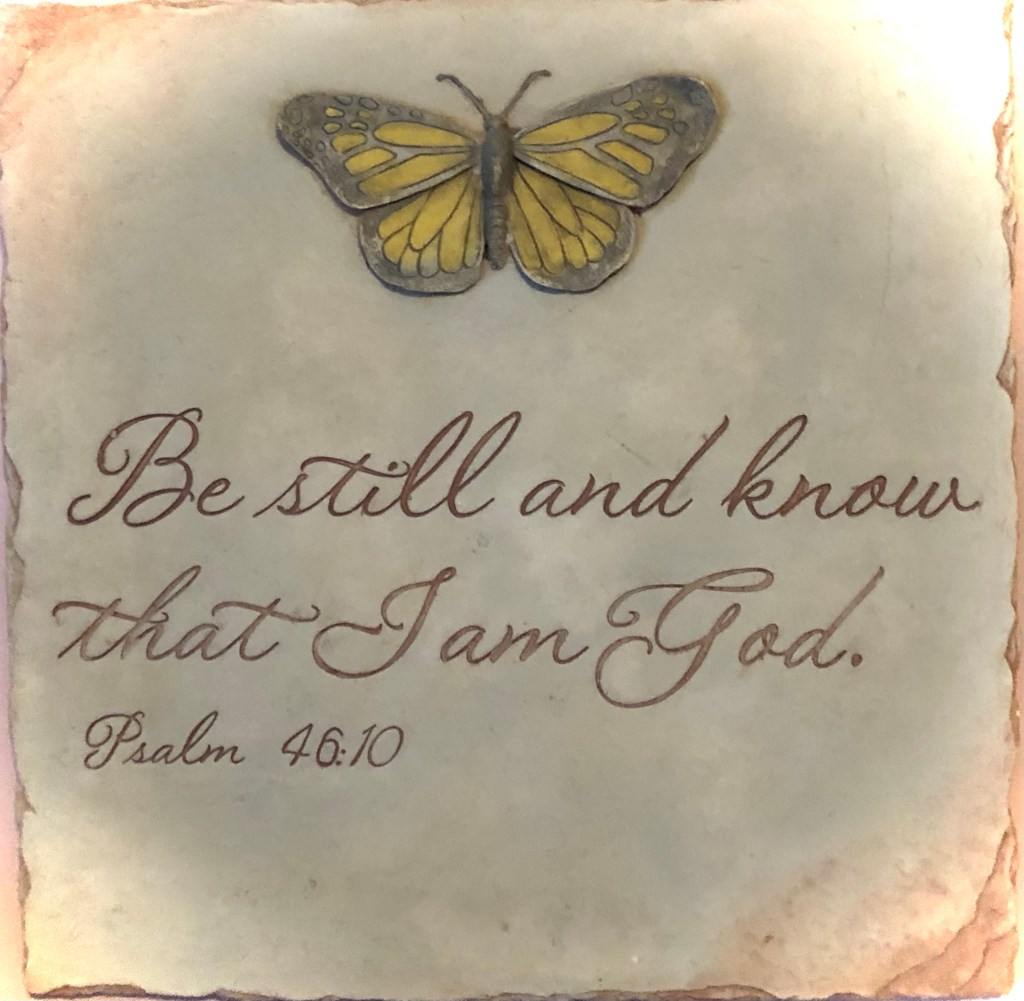
I am still, and know.

*******

(Tell me you are awed without telling me you are awed)

(likely to be continued…)

4×4 poem

Here is a variation of my previous post, Eggsultation, in the 4×4 poem form shared by Denise Krebs on Ethical ELA for VerseLove: Four stanzas of four lines, any topic. Note how the lead line moves in the stanzas.

Eggsultation

Exultation:
Finches return
to make a nest
atop the wreath

on my front door
Exultation:
grass artistry
made without hands.

Speckled blue eggs
—one, two, three, four.
Exultation:
tiny new life

incubating.
Morning birdsong
rises skyward:
Eggsultation.

House Finch PairBirdman of Beaverton. CC BY-NC-SA 2.0.

Song structures poem

On Day 7 of National Poetry month, for VerseLove at Ethical ELA, Chris Goering invites teacher-poets to compose around song structures by borrowing syllables, meter, rhyme scheme, etc.

My youngest son came immediately to mind.

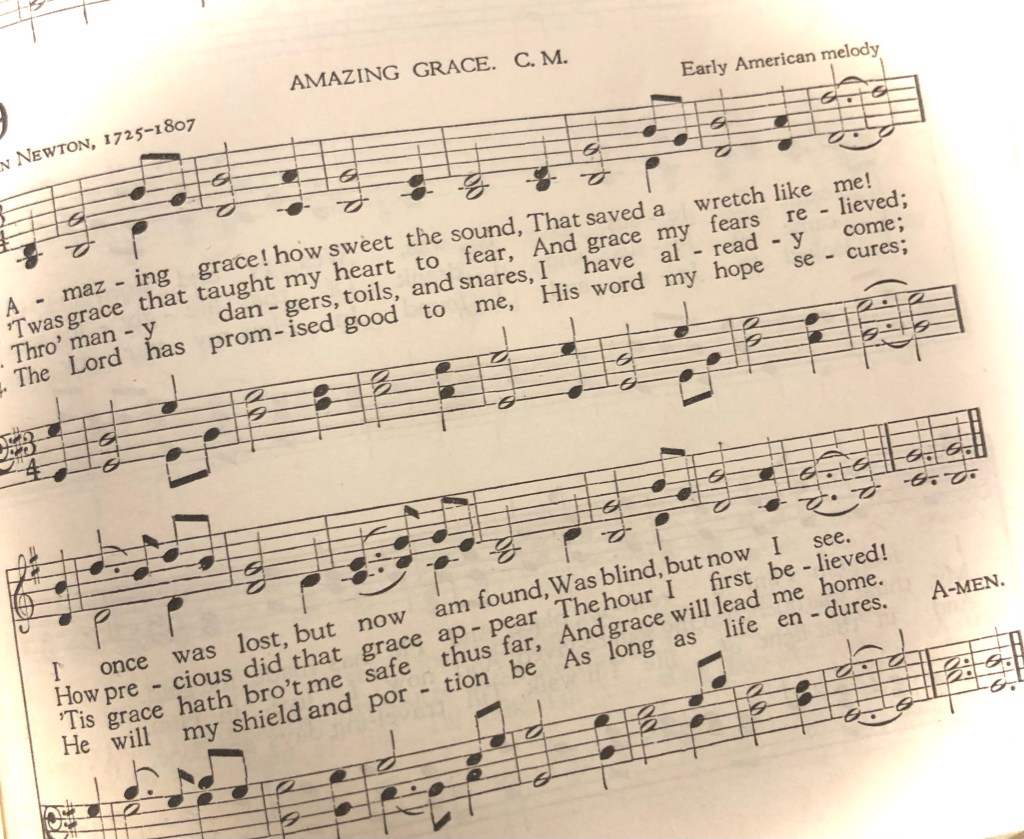
Before he was born, he would get very still when the piano was played in church; he would become active again when it stopped. I was sure he was listening to the music. At five he said he wanted to be a choir director when he grew up… he now has a degree in worship ministry. 

Here’s a scene from long ago, about his first favorite song.

Amazing Grace, Age Three

My boy hummed the song before he knew
What it meant to weep for grace
What could he know of a shattered soul
In spite of his solemn face?

At the whiteboard he stood, making marks
Counting every beat he heard:
Adders deedle-dee, adders, adders…”
-For at three, grace needs no words

I bind unto myself

A Spiritual Journey Thursday offering for April.

Karen Eastlund beckons fellow SJT writers with the phrase “I bind unto myself today…”

It’s the beginning of many prayers compiled by the Northumbria Community in Celtic Daily Prayers. The phrase is also attributed to the Hymn of St. Patrick (see Cantica Sacra). Thank you, Karen, for the inspiration and blessing.

What prayer might I make, what claim might I stake, on these five words? What do I need to bind unto myself today, any day, every day? What do I hold most dear? What holds me?

It comes to me via pieces of Scripture—John 1:1-4, 6:63; Hebrews 12:2.

A pantoum:

I bind unto myself today
love of words
the Word, in the beginning
the Creator of all things    

Love of words
I bind unto myself today
the Creator of all things
speaking life

I bind unto myself today
the Word made flesh, who dwelt among us
speaking life
the Author and Finisher of my faith

The Word made flesh, who dwelt among us
the Word, in the beginning
the Author and Finisher of my faith
I bind unto myself today