Grace upon grace

Yesterday Leilya Pitre opened the March Open Write over at Ethical ELA with an invitation to compose poetry inspired by the Ides of March.

The Roman calendar confuses me, with all the backward counting. An “ide” is one day before the middle day of the month. For March, that’s the 15th – yesterday’s date. Leilya gave several poetic form suggestions: villanelle, free verse, limerick. She prompted participants with a choice: 1) Write with “an air of inevitability and doom…mirroring the idea of a foretold fate,” or 2) “Write a poem that celebrates a moment of change or transformation, akin to the original meaning of the Ides of March as a day of transition in Roman history.”

A day of transition…hmmm.

Change.

What needs to change more than the human heart?

I confess to wanting to run for my life at the idea of writing a villanelle (see how much the very word looks like “villain”?). The form is deadly! And there’s only one Dylan Thomas. Nobody else can rage, rage at the dying of the light quite like him. And so I opted for free verse, my default form.

Crickets. Nothing. No ideas on ides.

And so I returned to the villanelle – drat it all! – with “an air of inevitablity and doom,” for sure.

But then: Two repeating lines came to me. I started a rhyme search. A villanelle takes a pile o’ rhyming words. Not all of them will work. One of my favorite images re-materialized in my head: the “golden rim.” Yes. Let us drink from the golden rim of the goblet…no, chalice. Yes. What are we drinking, and why? What’s the point? What does it mean?

Have you ever heard that what you need is there, right within your reach, if you just look?

In this case, what I needed was literally right there within reach: the bracelet on my wrist. You’ll see.

Here’s the poem. Still tinkering with it.

Gratiam pro gratia

As evening descends in shadows dim
Let’s toast to ceasefire of life’s fight:
Drink, my love, from the golden rim.

The face of the morrow will be less grim
—See, our ashen embers retain the light
As evening descends in shadows dim.

Toss off your cloak with fraying trim.
Kneel by me, pray, well we might—
Drink, my love, from the golden rim.

There sparkles yet a priceless gem
Within the pocket, glittering bright
As evening descends in shadows dim.

Hold my hand — let’s sing a hymn
Before we take our earthly flight.
Drink, my, love, from the golden rim.

Sweet chalice of life, abrim,
Despite this darkest night…
As evening descends in shadows dim,
Drink, my love, from the golden rim.
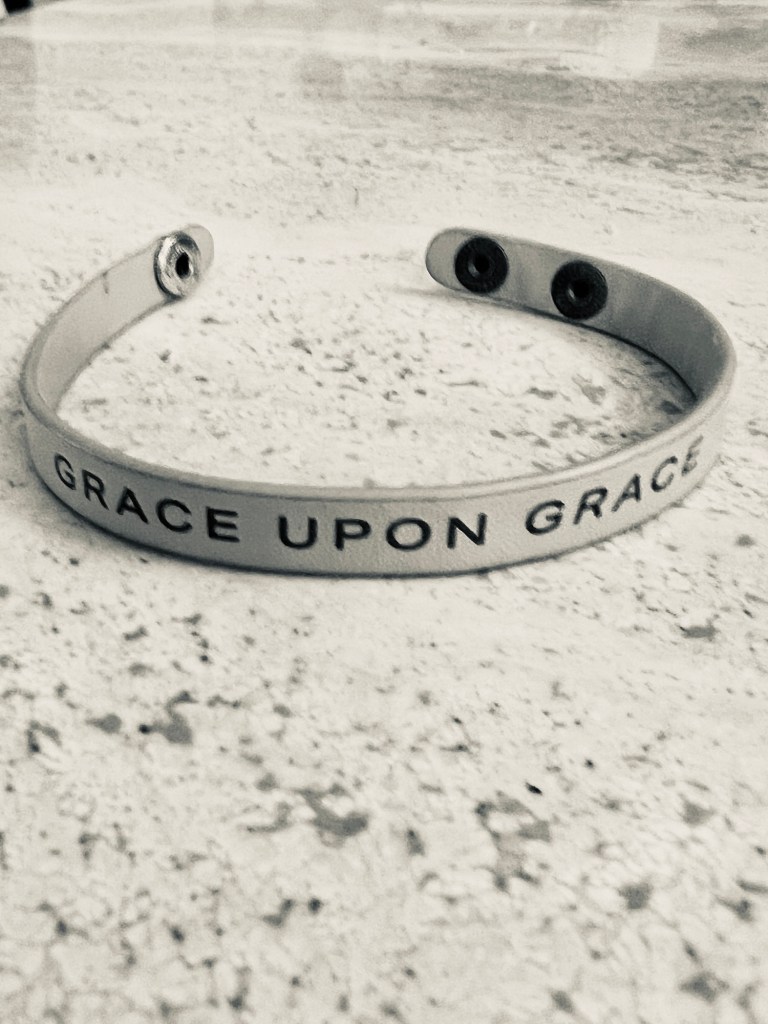
My poem’s title is Latin for the words on my bracelet. An excerpt of John 1:16: from the fullness of Christ, we have received “grace upon grace.” I wear it as a reminder to give grace, having received it in such abundance. I purchased the bracelet at a coffee shop called Charis (“Grace”) which has a wall plastered with customers’ prayers written on tiny slips. The owners donate a portion of proceeds to organizations that are working to make the world a better place. Our time here is short. Let us be about this work, in communion with one another, giving each other grace.

*******

with thanks to Two Writing Teachers for the March Slice of Life Story Challenge
The snickersnee

On the first day of the August Open Write at Ethical ELA, Gayle Sands invited participants to scroll this site, https://www.merriam-webster.com/words-at-play/surprising-uncommon-words, for choosing an uncommon word to pay with in crafting a poem.

The word that caught me was snickersnee.

I’ll just let the poem speak for itself…

The Snickersnee

Woe to the olden blades
rusty, dull, disobliging—fie!
Off with thee, useless utensils
—begone!
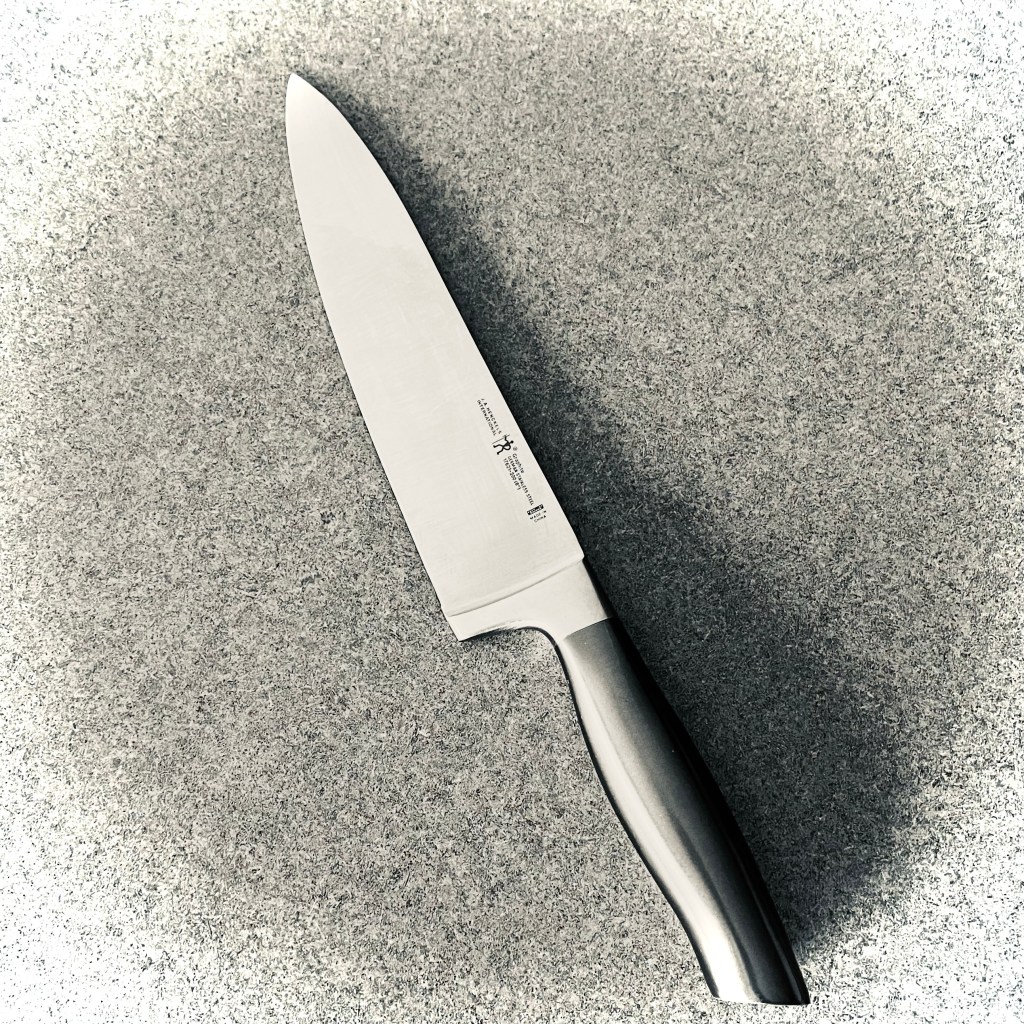
Behold the Snickersnee:

So fine a blade
German-made
slicing mine vegetables
as if they were but a dream
or merely air…
I forgetteth this
exceptional sharpness
during the washing-up
whereupon the Snickersnee
indiscriminately
snicketh a chunk 
o’ me.
(Just a thin slice o’ thumb.
A profusion o’ blood,
nevertheless.
Alas.)

Behold the snickersnee

Mythical morn

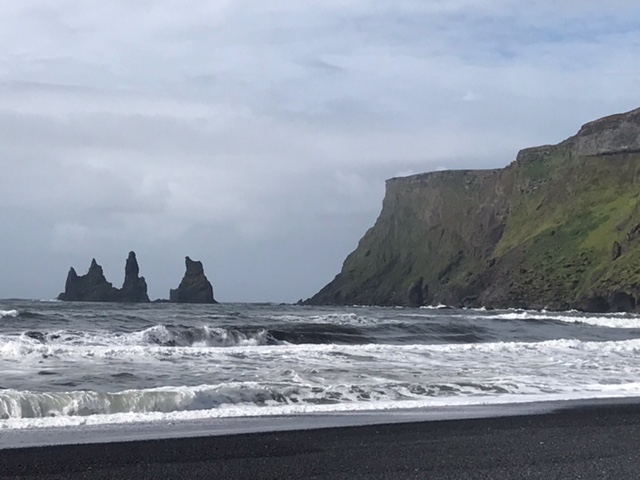
Iceland beach

Sea stacks (Reynisdrangar) and black sand beach,  Vík í Mýrdal, Iceland

The breaking of the wave cannot explain the whole sea. – Vladimir Nabokov

My older son toured Iceland this week, capturing his own abiding images of the exotic landscape.

We struggled to find adequate words for encapsulating the stunning scenery.

Desolate. Windswept. Wistful. These drifted in and out of my thoughts when viewing the photos, although they were a shade off, a tad too dark, didn’t have the exact right feel, weren’t sufficient. Uncaptured words, like elusive, shadowy birds, circled round my mind, never quite touching down.

It’s like being on another planet, my son texted.

Ethereal, I texted back, almost happy with that word, as it’s one I love and it almost fit.

It’s mythical. 

My son nailed it.

He was, after all, the one there taking it all in.

Land of legend and lore, glaciers and volcanoes, sharp contrasts and starkness, sparse, picturesque villages, moody skies and morning mists, Iceland is mythical. Not in the sense of Avalon and Atlantis, for one can actually stand at the volcano’s edge or scoop up handfuls of the black sand at the beach, really tiny pebbles of basalt. The whipping wind, the rocky coast, the crashing waves – the Vikings would recognize these still.

It looks like something out of Tolkien or the Chronicles of Narnia, said my son.

Experiencing Iceland vicariously, I did what I always do when I wonder about things – I looked them up (until this moment, I hadn’t thought that looking things up might count as a hobby; I am saying it’s mine, the next time I’m asked). There in the Internet’s vast sea of words, the facts have as magnetic a pull as the legends.

On the southern tip of Iceland, where my son stood on the black sand looking out at the craggy basalt sea stacks, the ocean is unimpeded all the way to Antarctica – there is no land mass in between. Hence the Atlantic rollers – long, powerful waves – can attack this shore with ferocity. I envision the sea drawing itself back as far as it wants, like a pitcher winding up for a fastball. Treacherous, even deadly (local legend features sea trolls and shipwrecks), there’s yet something lyrical, spiritual, about the wild freedom of the ocean at this point on the globe.

The Earth is mostly water; we are mostly water. 71% of Earth is covered by water; there’s 73% water in the human brain and heart. The ocean’s inspirational pull on us may be that simple – like recognizing like. We see the beauty and the power of the sea and something stirs deep within us – humans have waxed poetic about the ocean from time immemorial.

The thing that draws me most about this particular spot, the fascinating black beach at the village of Vik on the southernmost tip of Iceland, is knowing the ocean is unhindered here, from the shore at the uppermost part of the world to the lowest. The vast freedom, the power. The creative force. It draws me as a writer, as a teacher, as a human. That we are capable of great destruction is an understatement – but that’s not where I am going. From our entry into the world to our exit, there’s not a time we aren’t hindered by obstacles, both physical or metaphysical, taking their tolls on our bodies, minds, hearts, spirits. It’s astonishing how we are inspired to carry on, unfathomable how the smallest of things can be the source of willing ourselves onward – we flow over, around, through what would hold us back, finding peace despite what looms, ever how great, in our paths. As with the ocean, humankind has waxed pretty eloquently, deeply, about trouble, trials and pain. It’s a shared experience; none of us is unmarked. The difference is how we make our way, individually.

To be truly unleashed and still live seems an impossibility, so I ponder the power of unhindered inspiration – the indomitable force that would be. What heights, what depths, what creativity. Ultimate constructive power, unlimited possibility.

If such energy were harnessable . . . well, that’s the stuff superheroes and sagas are made of.

I tap into it as much as I am able, and let it flow on – one grateful conduit of ideas, images, and meaning, in my little part of the boundless, surging sea.

Iceland waterfall

Skógafoss, a waterfall in southern Iceland at the former coastline.

Note: Prior to writing this post, I had been toying with a piece about an enchanting encounter on a beach much closer to home. The titles of these posts are deliberate plays on one another, attempts at capturing the essence of place: Mystical morning.