Definito poem

On Day 10 of National Poetry Month, my friend Margaret Simon invites teacher-poets to compose a definito poem for VerseLove on Ethical ELA. It’s a form invented by her friend Heidi Mordhorst: “A free verse poem of 8-12 lines (aimed at readers 8-12 years old) that highlights wordplay as it demonstrates the meaning of a less common word, which always ends the poem.” Margaret’s suggestions: “Choose a word that has a certain fascination to you. You can look for the Word of the Day or any word that comes to mind. Play with the etymology of the word. What do the sounds mean? How does the meaning play with your thoughts? Explore the word using imagery, metaphor, and word play.”

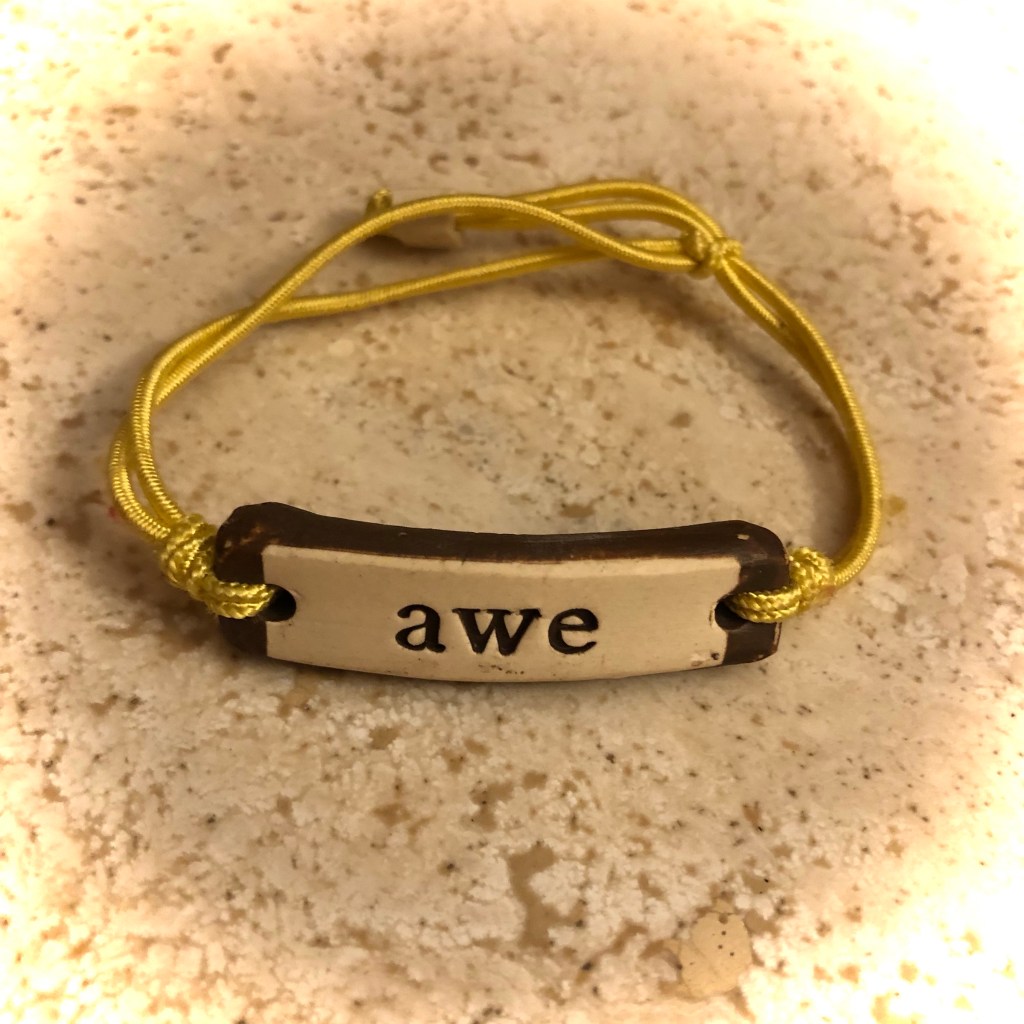
So… I tried, I really tried, two things: 1) Getting away from my OLW, “awe” and 2) Keeping to the recommended 8-12 lines. I failed in both. I did, however, have a lot of fun with the unfolding of this pseudo-definito…

Awe “Definito”

So, Children, 
maybe you have seen something
so wonderful
that you went all shivery inside
and maybe your skin
even got tingly
or goosebumpy

a thing
so beautiful 
that you don’t have a word
for how beautiful it is

the feeling you get when
the sun’s slanted golden light 
breaks through the clouds
after a storm
or when you see a rainbow, 
(not made with crayons,
a real one) in the misty height,
colors glimmering, glowing, blurring, 
an ethereal sight
ethereal? Sorry. It means 
to be so airy and light and beautiful
that the thing almost doesn’t belong
to this world
like stars, crystal-bright
against the black-velvet sky
on a winter’s night

maybe you have felt their stab of
silvery coldness, looking up
while your breath
hangs white
in the air

—yeah, that’s the feeling;
should we stop to
discuss metaphor
again?

No, it doesn’t have to be cold.

It can be a rush of warmth
on seeing a puppy
tiny, pink-mouthed, and so new
that its eyes are not yet open

—please note: The word is not spelled
the same way as what you say:
Awwww!
This, Children, is a homophone,
a poem for another day—

and the feeling might not come
from something you see
at all. 

It can come from something you hear. 
Once I was in an auditorium
where a girl who was trained in opera
sang just one high note;
her lips never moved
I couldn’t see her breathing
and the sound grew bigger
and bigger
and bigger
until the room
and my brain
and my heart 
were filled, almost bursting
with the pure, clear
starlike sound

-oh yes, I can tell by your eyes
and your open mouths
that you are beginning
to understand
awe.

After the tornado
Tell me without telling me poem

Yesterday on Ethical ELA’s VerseLove, Scott McCloskey invited teacher-poets to compose around “tell me without telling me,” the popular social media meme from a few years ago: “Tell us (through vivid sensory details and whatnot) that you are __________ without telling us you are __________. ” In his model, Scott masterfully incorporated many fragments of famous poems that have inspired him to write, followed by this reveal: “Tell me you’re a poet without telling me you’re a poet.”

So for Day 9 of National Poetry Month, here’s mine… it incorporates bits I’ve written before… and there’s SO much more to write…

It all began, I suppose,
in a darkened room
when Grandma plugged
this thing called a color wheel…

it sat on the floor, rotating, illuminating
the all-foil Christmas tree.
There in the dark
the sparkling silver tree
transitioned to red, blue, gold…

a stillness, a riveting

There was a girl
in my childhood church
who played the piano
accompanying the sanctuary choir.
Once, she stood alone
in front of the handbell table
reaching, grasping,
her white-gloved hands
a blur of choreography
playing those bells solo
never missing a note.
She was sixteen.

a stillness, a holding of breath

I don’t remember
learning how to read.
It was just a thing I could do.
But in fourth grade, the teacher
(built like a mountain, with a face
and heart of carved stone)
read to us every day.
An intelligent, artistic spider
who saved a less-than-radiant pig.
A boy who didn’t want that annoying,
subversive, endearing, ol’ yeller dog
that ended up saving his life, 
before picking up the shotgun…

My God. My God.
I almost died with that dog

and there have been books
in my hands,

in stacks by my bed,
ever since.

a stillness, an absorbing

There’s more, so much more.

At nineteen, 
walking into the community theater audition
where the handsomest man I ever saw
sat with a script…

we were married in less than six months.

Thirty-seven years this summer.

Two years in, when he said he was called 
to preach, I said
Well, you’ll be miserable 
unless you do.

a stillness, an abiding

Our oldest son saying
over and over
I’ll never go in the ministry.
It’s too hard a life.
Not getting married or
having any kids, either.

Just after he enrolled
in seminary,
he met a lovely young lady
with a little daughter
named for the title character
of his favorite book.
In the fullness of time
and in the span of a month
he became a husband, father, 
and pastor.

It was ordained. Jehovah jireh.
God provides.

Last fall, he named his newborn daughter
Micah. Which means
Who is like God?

Indeed, who?

I am still, and know.

*******

(Tell me you are awed without telling me you are awed)

(likely to be continued…)

4×4 poem

Here is a variation of my previous post, Eggsultation, in the 4×4 poem form shared by Denise Krebs on Ethical ELA for VerseLove: Four stanzas of four lines, any topic. Note how the lead line moves in the stanzas.

Eggsultation

Exultation:
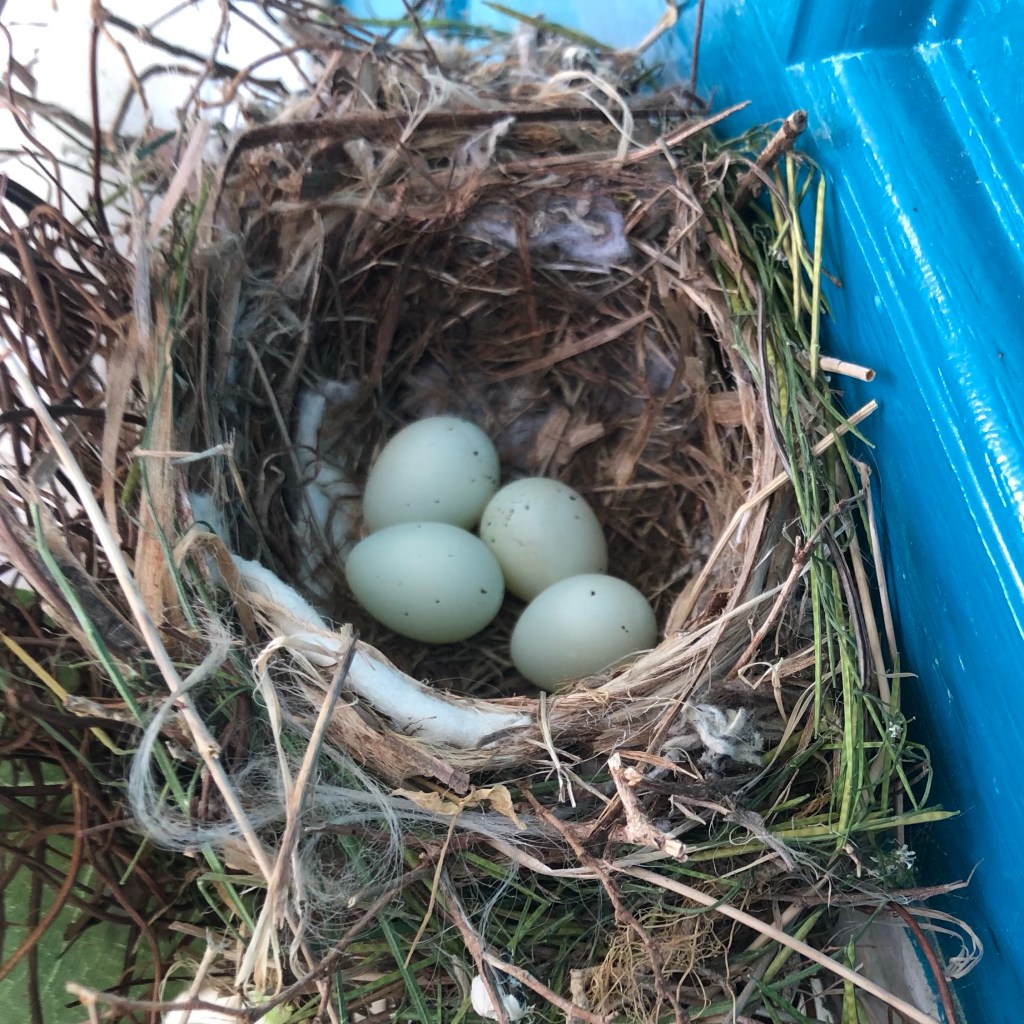
Finches return
to make a nest
atop the wreath

on my front door
Exultation:
grass artistry
made without hands.

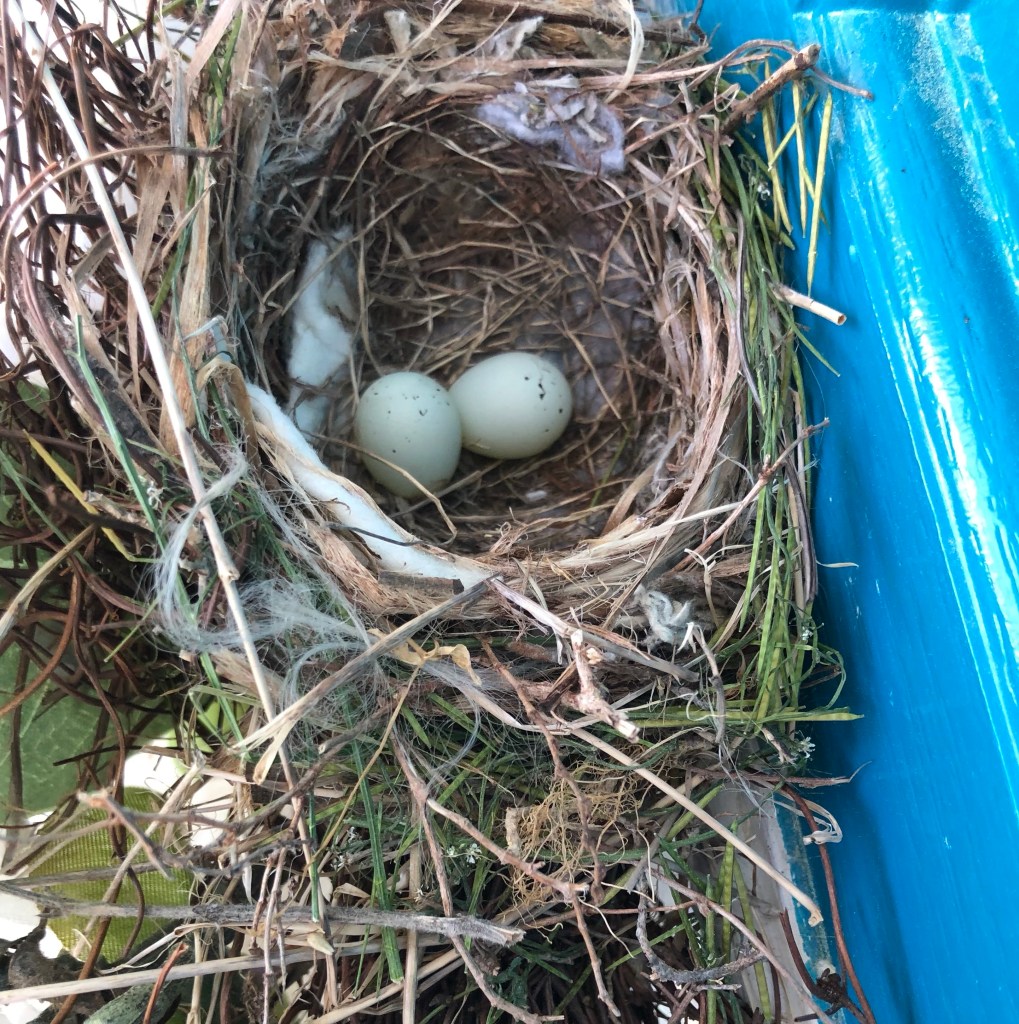
Speckled blue eggs
—one, two, three, four.
Exultation:
tiny new life

incubating.
Morning birdsong
rises skyward:
Eggsultation.

House Finch PairBirdman of Beaverton. CC BY-NC-SA 2.0.

Song structures poem

On Day 7 of National Poetry month, for VerseLove at Ethical ELA, Chris Goering invites teacher-poets to compose around song structures by borrowing syllables, meter, rhyme scheme, etc.

My youngest son came immediately to mind.

Before he was born, he would get very still when the piano was played in church; he would become active again when it stopped. I was sure he was listening to the music. At five he said he wanted to be a choir director when he grew up… he now has a degree in worship ministry. 

Here’s a scene from long ago, about his first favorite song.

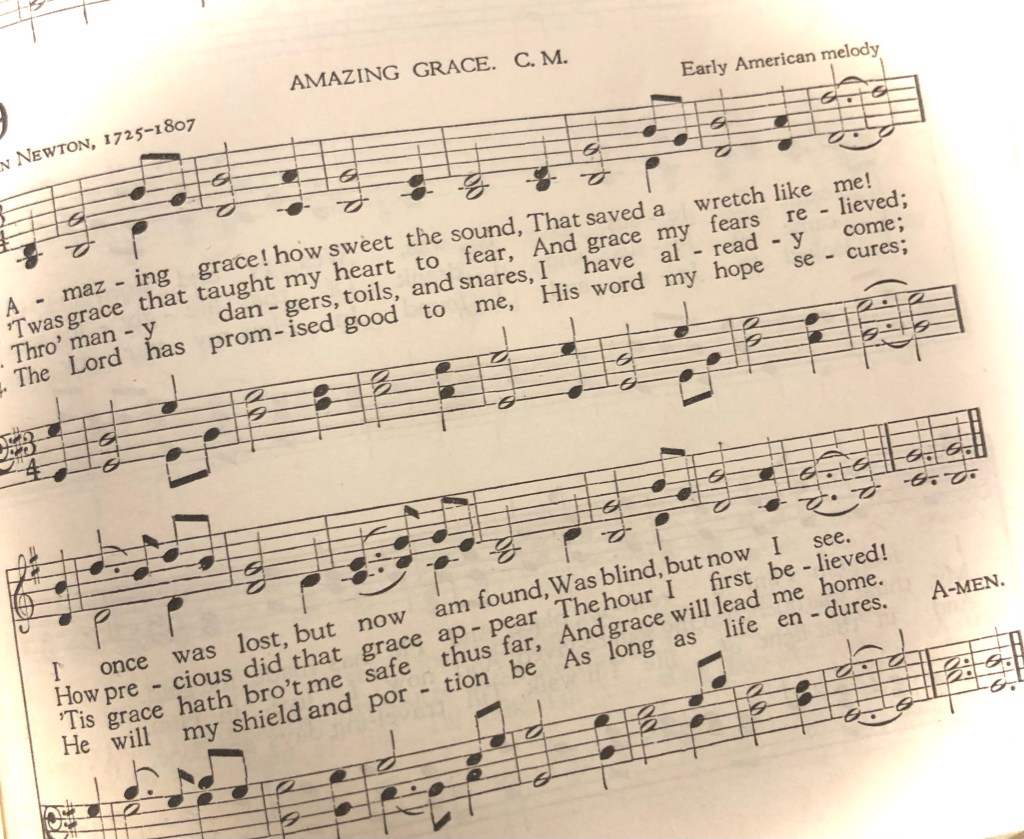
Amazing Grace, Age Three

My boy hummed the song before he knew
What it meant to weep for grace
What could he know of a shattered soul
In spite of his solemn face?

At the whiteboard he stood, making marks
Counting every beat he heard:
Adders deedle-dee, adders, adders…”
-For at three, grace needs no words

I bind unto myself

A Spiritual Journey Thursday offering for April.

Karen Eastlund beckons fellow SJT writers with the phrase “I bind unto myself today…”

It’s the beginning of many prayers compiled by the Northumbria Community in Celtic Daily Prayers. The phrase is also attributed to the Hymn of St. Patrick (see Cantica Sacra). Thank you, Karen, for the inspiration and blessing.

What prayer might I make, what claim might I stake, on these five words? What do I need to bind unto myself today, any day, every day? What do I hold most dear? What holds me?

It comes to me via pieces of Scripture—John 1:1-4, 6:63; Hebrews 12:2.

A pantoum:

I bind unto myself today
love of words
the Word, in the beginning
the Creator of all things    

Love of words
I bind unto myself today
the Creator of all things
speaking life

I bind unto myself today
the Word made flesh, who dwelt among us
speaking life
the Author and Finisher of my faith

The Word made flesh, who dwelt among us
the Word, in the beginning
the Author and Finisher of my faith
I bind unto myself today

Eggsultation

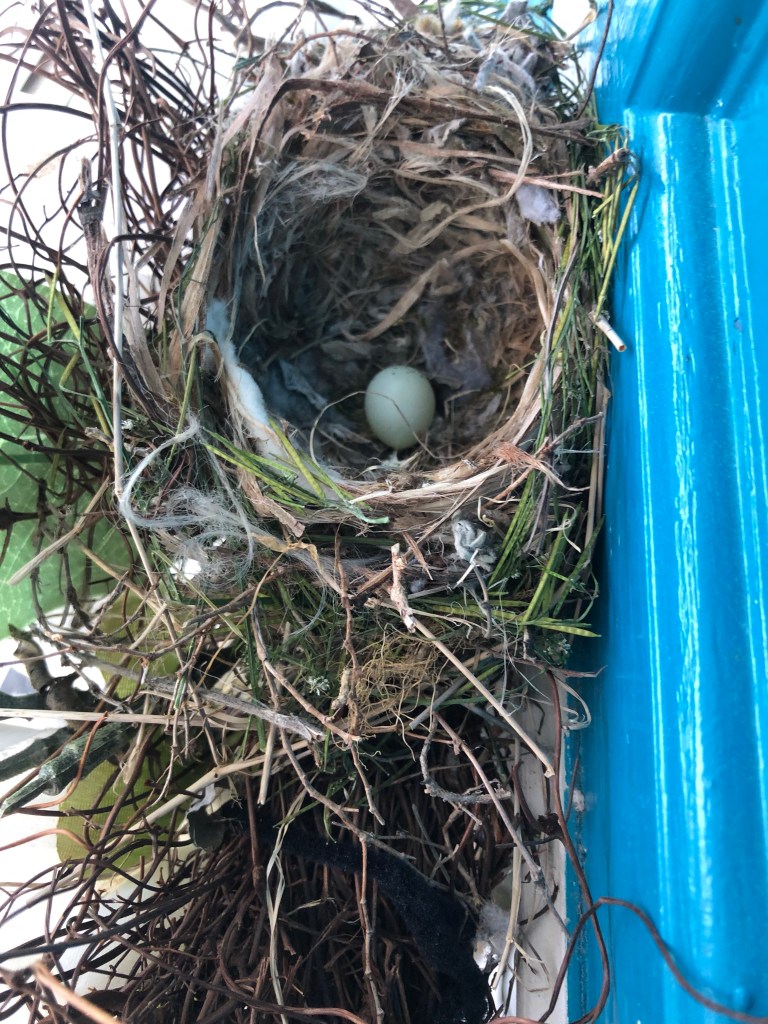
-The continuing saga of Little Blue Egg

Dear Little Blue Egg,

In all the generations of finches
hatched in wreaths on my front door
I have never known
a mother to lay just one egg
and leave

but that is what your mother did
last Sunday.

Here you’ve been ever since
resting in your nest,
forlorn in the freezing cold

day after day after day

one blue egg
one blue door
one long blue silence
one blue human
(that would be me, Franna,
sad self-appointed custodian
checking on you every morning)

until Friday

when, out of the blue,
there were TWO
of you!

On Saturday, three!

On Sunday, no more…
although I heard
the most beautiful singing
at my door

then on Monday… FOUR.

Little Blue Eggs galore.

I do not know
where your parents were
during those five days
of your cold blue lonesomeness
or how your mother could withhold
her charming clutch
for so long

but I know this thing:
your father and mother sing
every morning
like tiny angels
in eggsultation

and so
do I.

Little Blue Egg gets a sibling five days later

A quartet of Little Blue Eggs… joy!

A short clip of the parents’ music… it echoes throughout the house.
No wonder that finches symbolize joy or that their collective noun is a “charm.”

Some sources say only males sing; others say females sing in spring.
Listening to their bright morningsong, I am reminded
of these lyrics from O Come, All Ye Faithful:
Sing, choirs of angels,
sing in exultation…

*******

with thanks to Two Writing Teachers for the Tuesday Slice of Life Story Challenge

note:
the letter to Little Blue Egg (alone no more!) is an epistolary poem
for Day Five of National Poetry Month


Burrows and seeds poetry

On Day 4 of National Poetry Month, Jennifer Guyor Jowett, inspired by poet Irene Latham, offers this invitation for VerseLove at Ethical ELA: “Create your own burrow. Find a seed at the end of the piece, something to begin your own writing today. Let it serve as a title or beginning line.”

I borrowed some of these beautiful ending lines from fellow VerseLove poet, Kevin Hodgson:

We poets keep watching
for dust, falling,
in flight.

Ars Poetica: Dustcatching

We poets keep watching for dust, falling
we would capture it with our hands
feel it on our tongues as it lands
genesis of words breathing life
dust to dust, falling 
from the stars

from the stars
dust to dust, falling
genesis of words breathing life
feel it on our tongues as it lands 
we would capture it with our hands
we poets keep watching for dust, falling

Stardust. Send me adrift. CC BY-NC-ND 2.0


Collaboration poem

Day 3 of National Poetry Month: for VerseLove at Ethical ELA, Gae Polisner and Lori Landau share poetry they composed via collaboration in a Google Doc as a means of inspiring one another and keeping the poetry flowing. The invitation today is to lift a line, a few words, or theme from a fellow VerseLove poet to create something new.

I lifted the line “Creaking of floor, house settling” from my kindred-spirit-writer-friend, Kim Johnson. She wrote of morning sounds, which include the “tick tick tick” of dog nails on the floor… see how “tick” made its way into my title, not even a conscious connection on my part. I noticed it when I reread her poem.

Time Ticks On

Creaking of floor
house settling
sighing at the close
of another day
shaft of sunlight
on the oak floor
glimmers brightest
just before fading
away

Beyond the window
tree shadows lengthen
across green green grass

I think about walking there
in the cool of the day
pretending 
the shadows
are portals 
where I might fall through

to find you

Tree shadows over green lawn. Horia Varlan.  CC BY 2.0.

*******

I’ve also borrowed a line from Lori, “to find you” – I think the point of inspiration between Lori and Gae, “gone,” has fused to my own Muse this morning. The line intentionally borrowed from Genesis 3:8 is one of my favorites… only now, post-poem, am I realizing how it, too, is connected to “gone.”

Core memories poem

On Day Two of National Poetry Month, Emily Yamasaki offers this invitation for VerseLove at Ethical ELA: “There are some details that we hold in our hearts and minds, never to be forgotten. Whether it was carved into our memory in joy or distress, they are always there. Join me in giving those core memories a space to live openly today.”

This is the kind of thing that can keep me writing for hours, days, years… I kept it simple, using the first things that rose to the surface, sticking somewhat close to Emily’s models.

random core memories

the cadence of my grandmother’s voice, reading
fat pencils in kindergarten
the smell of struck kitchen matches
bacon grease kept in a canister by the stove
having to throw myself against the stubborn front door
     of my childhood home, to get it open
ironing my father’s uniforms
the smell of his shoe polish
the vaporizer sputtering in my room at night
the rattling crescendo, decrescendo of cicadas
saying it’s going to be all right without knowing how
finding sharks’ teeth in the new gravel of an old country road
lines from dialogues in my 7th grade French textbook
soft-petal satin of new baby skin
that one wonky piano key (is it D or E?)
the mustiness of my grandparents’ tiny old church
the weight of the study Bible in my hands
seeing you for the first time, across the crowded room
the cadence of our granddaughter’s voice, reading

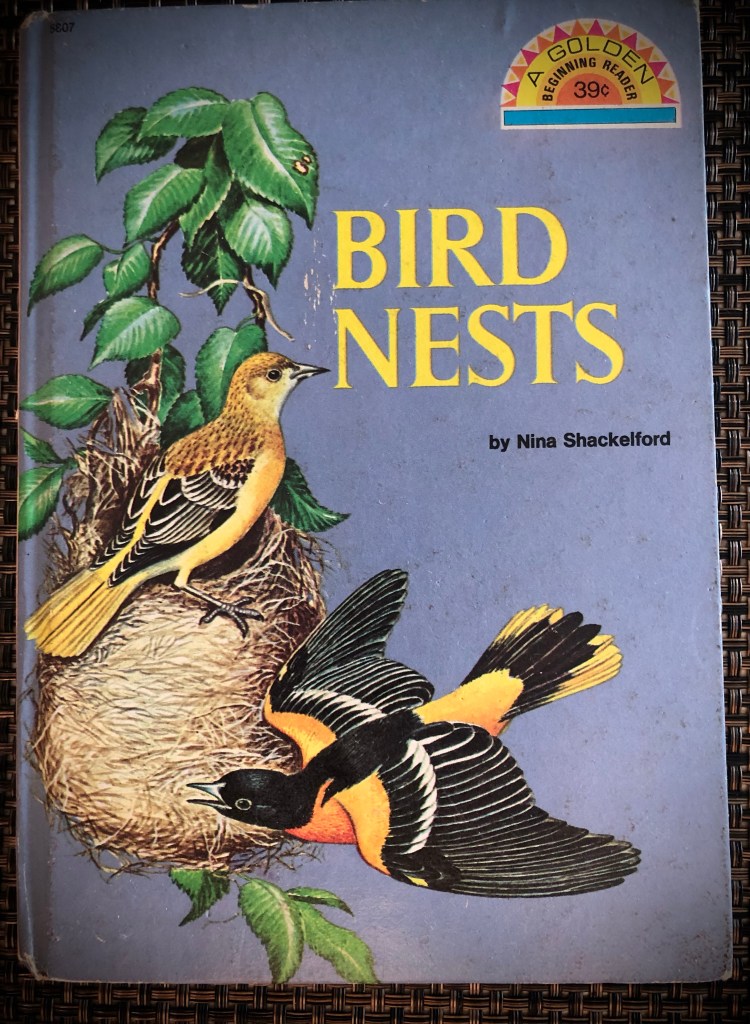
A book my grandmother read to me, that I read with my granddaughter now.
Is it any wonder that I find birds and nests so alluring?
Early memories hold such latent power.

Sunflower acrostic

Happy National Poetry Month!

At Ethical ELA, Bryan Ripley Crandall kicks off VerseLove by inviting teacher-poets to compose acrostics: “Think of your  person, place, or phrase. Lay the letters onto the page as if fallen leaves. Game-on. Write as if you are ‘gifting’ to another, and use each letter to craft an original poem.”

I love acrostics and have long believed this ancient form is underused.

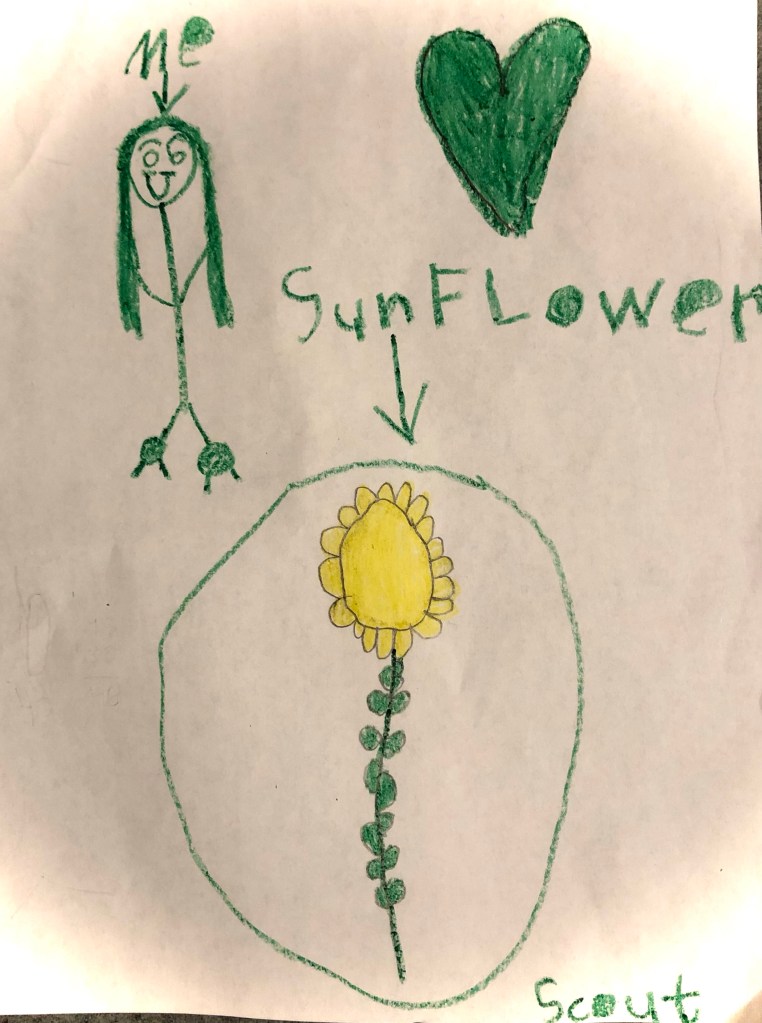
As I pondered a topic, I went to the refrigerator door to start breakfast, and there it was:

The Drawing My Granddaughter Made During a “Sleepover”

Six years old, blissfully
Unaware that it’s the emblem of a 
Nation being invaded, she announces:
Franna, I am making this for you.
Love crayoned on the paper as
Our own special symbol.
When night falls, we put on our pink pajamas
Emblazoned with these light-seeking faces
Radiating joy of now, promise for tomorrow.

She texts me in the evenings sometimes to be sure I am wearing my sunflower pajamas