Sand dollar etheree

Inspired by and dedicated to Margaret Simon, who shared the photo and who’s mourning the loss of her father.

Photo: Kim Douillard

Half
remains
afterward
it is enough
tangible beauty
even in mourning throes
to sense the infinite flows
of life undulating beyond
what the eye can see or hand can hold
where the spirit abides whole, unbroken

Whip-poor-will aubade

He sings alone
just before light
Farewell, farewell
beloved night

Summer is nigh
yet again keep
echoing hope
—all do not sleep

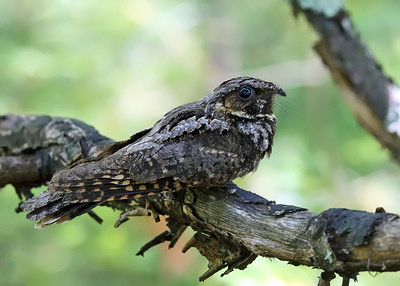
Whip-poor-will in the woods behind my home about an hour before dawn. Such longing and long-ago in the sound, for me. When my oldest boy was three, our family moved from Virginia’s Eastern Shore to the North Carolina Piedmont. We lived in a parsonage beside a little church high on a hill. It was June. All that first summer, when dusk settled in and I put my boy to bed for the night, the whip-poor-wills began calling. Over and over and over. Usually just one. The sound carries; it echoes through the darkness from the woods across the ponds and pastures, from old and deep places, affixing itself to the listening soul. I rejoice in its returning.

Eastern Whip-poor-willtcmurray74. CC BY-NC 2.0

Memento mom-ri

There are
certain advantages
to having
a young son
in the mortuary business

such as when
he tells you
that you really
ought to set up
a “pre-need”
and pay for
your funeral
in advance

or
when he texts you
a picture
of a rose-gold casket
because he thinks
you will love it
(okay, it IS beautiful
—still…)

but most of all
when he brings you flowers
while you’re living

because he
remembers Mother’s Day
and he works
right next door
to a killer florist.

*******


with thanks to Two Writing Teachers community for Tuesday Slice of Life sharing

Of racehorses and old roads

As I write, the National Anthem’s being sung at Churchill Downs for the start of the Kentucky Derby.

I’ll be pulling for a horse not favored to win.

His owner grew up in eastern North Carolina on a little stretch of road in the country. It’s paved now, but people have living memory of it being dirt… and I have an affinity for old dirt roads in these far reaches.

Once upon a time, I was a child who stayed in a little house on a dirt road in the summertime. I swung from a tire swing that Granddaddy hung from the pecan tree all studded with woodpecker holes. I swung to the deafening rise-and-fall rhythms of cicada-rattles, alongside the old dirt road across from the clearing where timeworn gravestones stood over people my grandmother knew when she was a child. I swung back and forth, round and round through the dappled afternoon, singing a favorite folk song from my father’s Peter, Paul, and Mary album…

Stewball was a racehorse
and I wish he were mine
he never drank water
he always drank wine…

The song goes on to say how the speaker bet on the gray mare and the bay, when:

ahead of them all,
came a-prancin’ and a-dancin’,
my noble Stewball.
The hoot owl, she hollered…

This past week, early one morning, I recorded a hoot owl (barred owl) hollering from the pines behind my home.

Memory runs so deep, so strong.

And so I pull for the horse named Barber Road, whose odds keep going down in these remaining moments before he gets to the gate.

Here’s to my own beloved road by another name in eastern North Carolina, and childhood, and belonging, and ol’ Stewball who wasn’t favored to win, either, but did, and to the hoot owl, the stories, the songs, and overcomings.

And here’s to you, Barber Road.

Run on.

Thoroughbred racehorseMIKI Yoshihito. CC BY 2.0.

Update: Barber Road finished 6th. By now the world knows that Rich Strike, the least-favored horse (80-1,) took the Derby in the second-biggest upset in its 148-year history. Secretariat, the first racehorse I remember, and who still fills me with awe to the point of tears, holds the record.

Osprey acrostic

Overlords of sea and sky
Sunward soaring, unafraid
Precise piscivore pair
Riding the winds with
Easy grace
You see and seize the moment

Osprey pair. Photo by my friend E. Johnson.
“Fierce beauty,” as Sy Montgomery would say.

Abundance: Spiritual journey

May. Newness. Longer days, more sunlight. Blossom-laden trees perfume the air, geese with goslings glide across glassy ponds. Along the backroads and byways, the fields have been plowed; John Deere tractors roll over the naked earth, freshly dotted with neat rows of little green plants.

I think of sowing and the harvest to come.

My illustrious daily planner seems to be a cross between almanac and oracle these days. It offers this quote:

Small seeds of gratitude will produce a harvest of hope.

I love it for its own merit, emphasizing gratitude, which I know to be as transformative a force as love, forgiveness, and possibly awe. I envision tiny seeds of gratitude planted in the furrows of the heart, eventually producing a harvest of hope to be stacked and stored for when it is most needed in the future.

And I remember Joseph.

Unlike the chief cupbearer in Genesis 40, who “did not remember Joseph, but forgot him,” after Joseph interpreted his dream, correctly and prophetically. At the time they were in prison with the chief baker, who would be hanged by Pharaoh (yet another accurate dream interpretation by Joseph). To this point, Joseph had endured quite a bit. His mother died just after having his baby brother. His older brothers detested him for being their father’s favorite and for being “this dreamer” (37:19)… perhaps Joseph shouldn’t have told them of his dreams in which they, and their father, Jacob, all bowed to him. His brothers discussed killing him until Reuben, the oldest, intervened. They threw Joseph in a pit instead and sold him as a slave. Joseph is purchased by Potiphar, the captain of the guard of Pharaoh. Joseph serves Potiphar with great efficacy and integrity, so much so that Potiphar “left all he had in Joseph’s charge, and because of him he had no concern about anything but the food he ate” (38:6). Until Potiphar’s wife tried repeatedly to seduce him, that is, becoming so aggressive that Joseph wriggled out of his garment to get away from her… a garment she used to make the accusations which landed him in jail for thirteen years. (Note: This is the second garment that causes trouble for Joseph; the coat of many colors given to him long before by his father didn’t set so well with those brothers. Imagine their initial self-righteousness while tearing it, dipping it in goat’s blood, and presenting it to their father as evidence that Joseph was attacked and killed by wild animals…which, of course, they’d live to regret).

And Joseph is forgotten in prison until Pharaoh has a troubling dream and the restored cupbearer finally remembers him.

Here’s the thing: It was God’s plan all along for Joseph to stand before Pharaoh and interpret his dreams of coming famine, that Pharaoh should be so impressed he’d set Joseph up as prime minister of Egypt, that Joseph should execute his proposed plan for planting and harvesting:

During the seven plentiful years the earth produced abundantly, and he gathered up all the food of these seven years, which occurred in the land of Egypt, and put food in the cities. He put in every city the food from the fields around it. And Joseph stored up grain in great abundance, like the sand of the sea, until he ceased to measure it, for it could not be measured. -Genesis 41:47-49

It is this divine plan of action that eventually saves Joseph’s brothers when they come seeking food in Egypt.

Joseph weeps a lot through several chapters. When his brothers realize who he is, they bow before him (every dream having come true) in fear and trembling… and Joseph chooses reconciliation over retribution. His father is still alive; he brings the whole family to Egypt to survive the famine. The brothers again fear his wrath on the death of their father, but Joseph’s words ring with gratitude to God: “You meant evil against me, but God meant it for good, that many people should be kept alive…” (50:20). And so the Twelve Tribes of Israel were preserved.

Seeds of gratitude, shall we say, protect against spiritual famine, yielding hope to be relied upon in times when faith is tested, as Joseph’s was. He never wavered; this is why I love him. He’s one of my favorite Biblical figures, exhibiting integrity and faith in abundance.

In the midst of our trials, God is at work. In times of bleakness, verdant lushness awaits.

Begin with seeds of gratitude… and expect a harvest of unimaginable abundance.

Joseph Storing Grain During the Seven Years of Plenty. Patrizio Cajés (1540-1612).

*******

with thanks to my Spiritual Journey friends who write on the first Thursday of each month, and to Susan Koehler for hosting today on a theme of “abundance.”

Essence experiment

My kindred-spirit-blogger-teacher-writer friend Lainie Levin had a fun post this week on a favorite exercise with young student writers: playing with suffixes added to your name, then coming up with a definition of the essence of you. Lainie calls this “nounifying yourself.” Here’s her suggested suffix list:

-itude
-ness
-ility
-age
-dom

-ity
-ship
-sion
-ance/ence

-al
-ation
-iety
-ment

Naturally I had to accept her invitation to compose (read more about her process and see fun student examples in her lively post, Word Play – thank you for this, Lainie!)

Frandom

The quality of maintaining a quiet inner realm despite the world’s clamor, where one’s thoughts are free to be one’s own; typically achieved through experiences with reading, writing, nature, and awe.

A drawing of me by my granddaughter last year: Franna in her Frandom?

It’s all about the journey

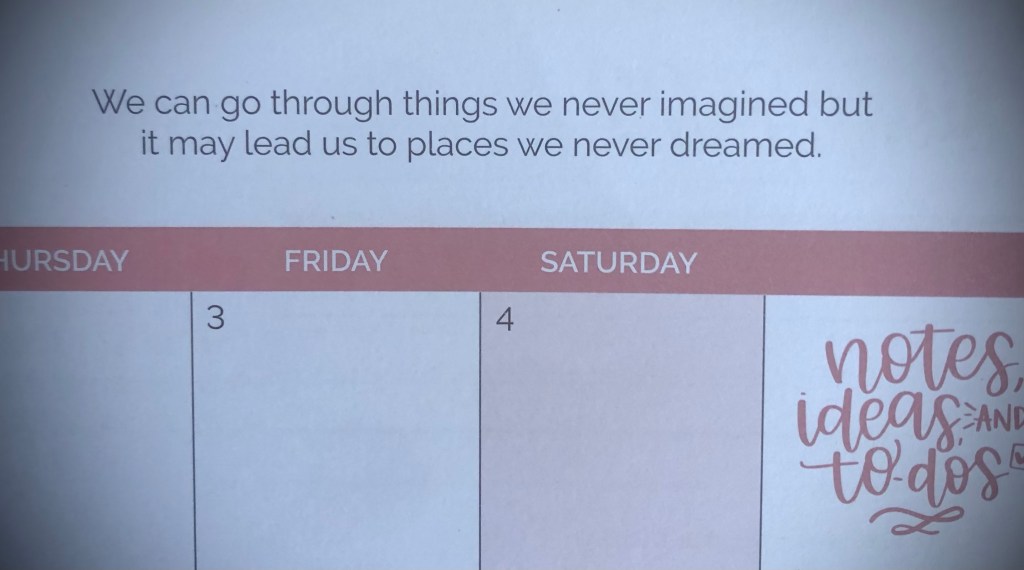
Flipping through my planner today, scheduling even more things to be done before school is out in June, I discover this quote…

We go through things we never imagined but it may lead us to places we never dreamed.

For just a fraction, a breath, the brokenness of things diminishes…

I could write of this school year’s hardships on colleagues, with colleagues, on families, and on children most of all…

of COVID still rearing its tiny invisible head in the community…

of young and beautiful creatures that have died…

of incomprehensible suffering and loss…

but I will write instead of lush green moments, the “birdiest” spring I’ve ever known, an abundance of wings and chatter and song each day, so many things I’ve never seen before, like a pair of great blue herons flying low over the road from pond to brush…

my son arriving at home, placing his baby daughter in my arms, her tiny sweet hand reaching to pat my face as she drinks from her bottle…

a newness that is more than seasonal, invoking the eternal like shafts of sunlight in shadowed places…

for just a fraction, a breath, I have a sense of undoing, of forests, animals, people restored, rejoicing, the Earth itself laughing, the whole atmosphere charged with absolution, pure, deep, and complete…a bright glimmering, a pulled curtain quickly falling back into place.

It is enough.

I turn the pages and keep writing on my tomorrows.

Out of balance: a lesson

At a kindergarten soccer game this weekend, I noted how the coaches let the kids keep kicking the ball even when it goes out of bounds. This is probably because the ball is so often out of bounds; the kids might never get sustained playing time otherwise.

At one point, the ball rolled over to where my family was sitting. A little boy—the littlest, in fact—came running after his teammates, yelling: “Out of balance! Out of balance!”

We spectators giggled amongst ourselves: “Out of balance. So cute.”

The tiny guy stopped to look at us in all earnestness: “Out of balance means the ball is not on the court.” And he took off across the field after his kindergarten teammates, who’d managed to get the ball back in bounds, momentarily.

As we wiped the mirth streaming from our eyes, I thought about something a former mentor told me years ago about accepting approximations. It’s clear this little boy knows what he’s talking about. The ball was beyond the boundaries of the playing field. Never mind there wasn’t actually a court…basketball has a court, tennis has a court…he is learning. He’s in kindergarten. He will soon learn the word is bounds and that soccer is played on a field.

Certainly he will need to know the right terminology. But for now, let him develop some stamina and skills. Let him learn to be a team player. Let him love the game.

Truth is, in order to grow, sometimes things need to be kicked out of balance.

Soccer. Ashelia. CC BY-NC 2.0.

*******

with thanks to Two Writing Teachers for the weekly Slice of Life Story Challenge