The sound of gratitude

playing with a variation of pantoum, on gratitude found in favorite sounds

When I listen, I can hear
the sound of gratitude

in the rattle of summer’s last cicada, clinging
and crystal tones of children, singing

The sound of gratitude—
in the distance, church bells ringing
and crystal tones of children, singing
then at your voice, my heartstrings quiver

In the distance, church bells ringing
Jesu, Joy of Man’s Desiring
then at your voice, my heartstrings quiver
one last “I love you” before retiring

Jesu, Joy of Man’s Desiring
—when I listen, I can hear
one last “I love you” before retiring
in the rattle of summer’s last cicada, clinging.

*******

Cicadas are ancient symbols of renewal, rebirth, transformation, change, resurrection, immortality, spiritual realization. Socrates linked the cicada song with divine inspiration in religion, poetry, art, and love.

Thanks to Ruth at SOS: Magic in a Blog for the sounds of gratitude inspiration & to Susan Bruck for hosting Poetry Friday Roundup at Soul Blossom Living.

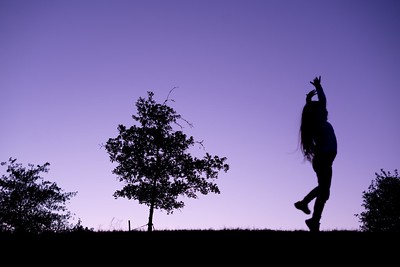
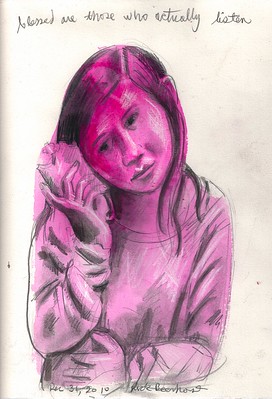
Photo: Listen. Artists Rick & Brenda Beerhorst. CC BY

Spiritual journey: Grateful for belief

For Spiritual Journey Thursday, on the theme of gratitude.

I am grateful for a new morning. I am grateful to be writing about spiritual journeys on the first Thursday of the month, and for my fellow sojourners. As I write, silver-white stars are still glittering in the black sky. My kitchen bay window faces east where the sun is soon to rise. When it does, I will stop to drink in its glory.

I am grateful for books, for having developed a love of reading so early in life that I can’t remember learning how. I am grateful for libraries, for row upon row of treasures waiting to be discovered, for being ten years old and stooping to examine a curious title, for removing a book, opening the cover, and finding myself in another world.

Narnia, to be exact. That book was The Lion, The Witch, and the Wardrobe. It would send me scrambling for the rest of the books in the series, always longing for more. I was given a boxed set for my twelfth birthday and the tattered copies remain on my bookshelf to this day.

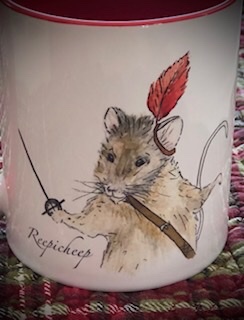
When it comes to spiritual journeys, no character in Narnia with the exception of Aslan (the Talking Lion, “King of Beasts, the son of the Emperor-Over-the-Sea, the King above all High Kings in Narnia”) outshines Reepicheep, leader of the Talking Mice. Reepicheep, who stands about two feet tall, is young King Caspian’s most loyal knight, quite fierce in battle with his small rapier. In The Voyage of the Dawn Treader, Reepicheep sails with his king to explore unmapped lands. He does not intend to return home to Narnia; instead, he means to sail to the end of the world, on to Aslan’s country.

No one knows if Aslan’s country can be reached this way. When Lucy (a human child from our world, if you did not already know) asks “Do you think Aslan’s would be that sort of country you could ever sail to,” Reepicheep says he does not know, but that when he was a baby a Dryad (spirit of a tree) sang to him in his cradle about finding his heart’s desire where “sky and water meet, where the waves grow sweet… there is utter East.”

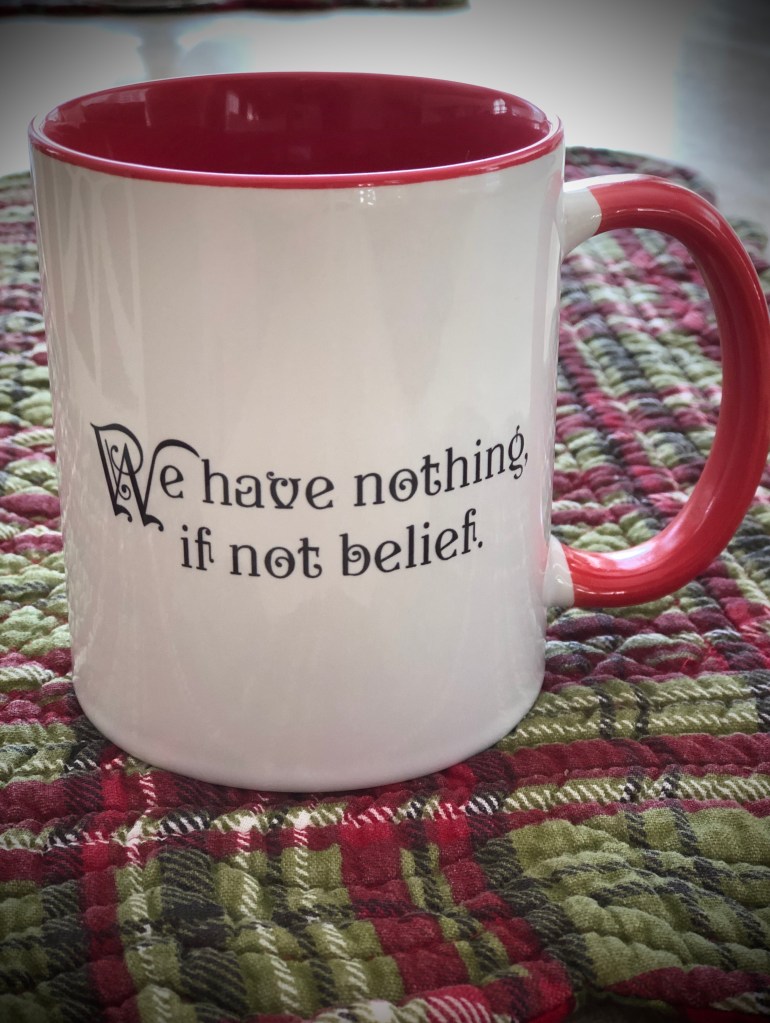
In the movie, however, Reepicheep answers: “We have nothing if not belief.”

When the Dawn Treader can sail no farther, as it’s reached the shallows of lily-clogged, sweet waters where the sea and sky meet, Reepicheep makes his goodbyes. A tiny wooden boat is lowered from the ship and he sails on, alone, over the rim of the world.

No one ever sees him again.

At least, not in that world.

Aslan’s country is another matter…

I glance through my bay window facing east and see that the sky has changed. The upper canopy is now indigo, melting into turquoise, into lighter aqua nearer the horizon where the faintest yellow glows above a pale rosy blush… I cannot see the sun, but I know it is there… it is coming…as it always does.

I am grateful for a new morning. I am grateful for the coffee in my Reepicheep mug, for the eastern sky reminding me to rise above the things of this tainted world… as poet Robert Browning wrote: Man’s reach should exceed his grasp, or what’s a heaven for?

I am grateful for the journey.

*******

with thanks to C.S. Lewis and my fellow Spiritual Journey voyagers, especially Ruth who’s hosting today from Haiti. Visit her site, There’s No Such Thing as a God-Forsaken Town, for more on gratitude.

Also grateful for taking the plunge into creating this blog. A wonderful personal adventure it’s been, writing, discovering, remembering, and interacting with new friends all along the way. This is my 400th post.

The witch’s flight

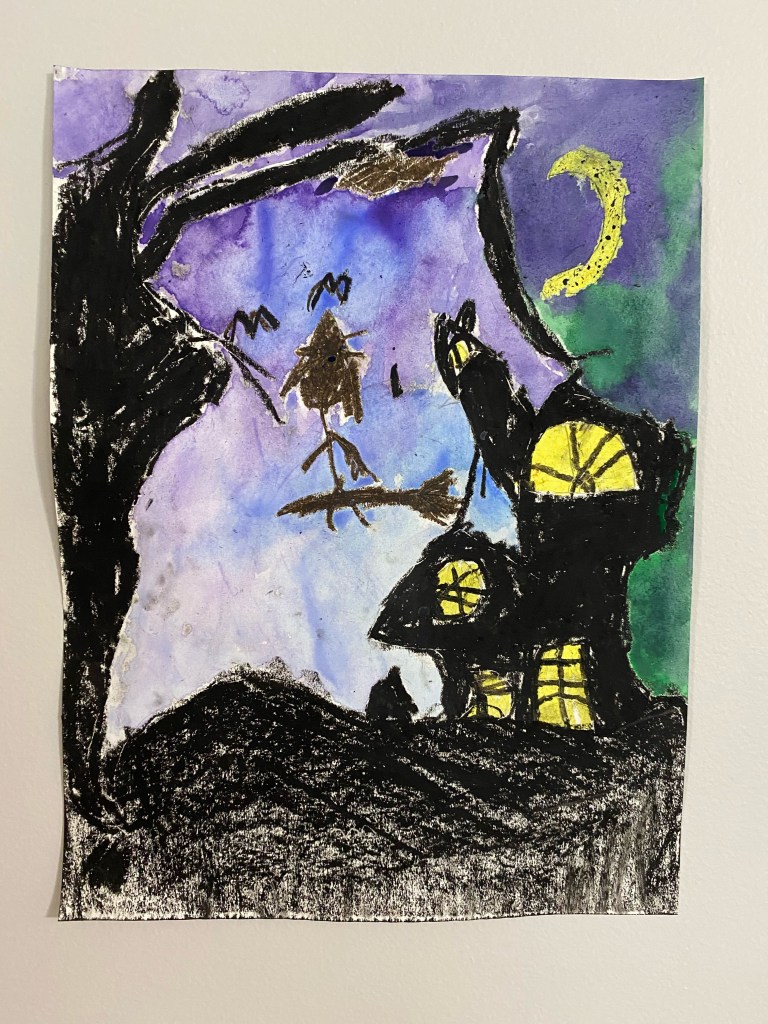
Mixed media by Scout, age 4.

One purple Halloween night
the mean old witch took flight
on her broom, headed east
to find her favorite sugary feast.
The sloth is the witch’s pet,
up the tree, as high as he can get,
sleeping under the crescent moon
—”HAHAHAAAA!” cackles the witch,
“I’ll be back soon!”

*******

poem collaboration by Scout and Franna, who wish you a Happy Halloween.
Scout says “Watch out for that witch.”

Masked

This week, Sharing Our Stories: Magic in a Blog invites writing about masks we’ve encountered or worn, literal or figurative, maybe one from long ago…

Winter morning. In my pajamas on the cold kitchen floor, Onyx and Bagel jumping on me with joy. Half-dachshunds, brothers who look nothing alike. Onyx, black and tan (muddled markings; his whole head is tan) is the stronger of the two. A combination of rubber ball and coiled spring, he can jump high enough to give me a kiss even when I’m standing—if I lean over just a little. It’s a feat; at thirteen I’m growing tall. Bagel, long-haired, red piebald, snowy white chest, coloring that reminds me of Lassie, is the happiest dog on Earth except for when it thunders and he runs to hide behind the commode. My sister sits by the wall on top of the vent, her skinny eleven-year-old body drawn into a tight ball, pajama bottoms ballooning and fluttering in the rush of heated air. She doesn’t want to be up, doesn’t want to go to school, is too grumpy for more than a furtive dog-greeting. She’ll play when she’s ready. I embrace the wriggling, wagging, warm bodies, giggling, when I hear footsteps in the hall…Daddy’s familiar stride on the hardwood, in shoes that he polishes every night with a tin and stained cloth until the glossy surfaces reflect like black mirrors…

Suddenly the dogs shoot to the gate (or what we call the gate: a gray particleboard once used under a twin bed mattress when Mama was recovering from back surgery, we slide it back and forth) in the wide kitchen doorway. Barking, ferocious; I have never heard them—or any dog—make such violent noise. They charge the gate, lunging, sounding ready to attack…

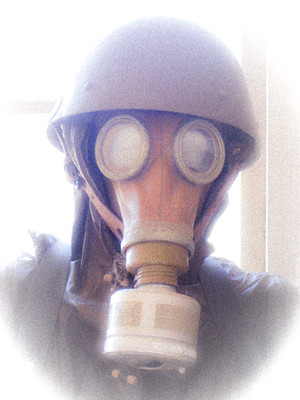
There stands Daddy. His face is gone. Instead, there’s huge, opaque goggle-eyes, a distorted nose, pulled and hanging, elephant-like, no sign of human skin or hair; olive-gray visage, that of an ominous specter…

He’s wearing a gas mask.

I had never heard of a strike, picket lines, or unions before. I couldn’t understand why someone would be called a scab for going to work but it did make sense that people who protect said scabs would be scathingly called “Band-Aids”… I knew police were involved, somehow, but the picture in my mind was as muddled as Onyx’s markings, without defining details.

My father wore the same uniform as police but he wasn’t an officer. He was a company security guard. A protector of the gates. Duty-minded. Responsible. The parent who got up with me at night when I had asthma attacks, who would later co-sign my first college loan with the stern admonishment that I’d better pay it back because he couldn’t (I did).

He would die in uniform, but not for many more years, in an attack waged by his own heart, myocardial infarction, three days before retiring, while on his way to work.

The dogs are going crazy. I stare at the mask and the only word that comes to mind is ‘monster’it isn’t right, it isn’t right, that such things should have to exist because of what people do to each other, that Daddy should need this macabre (newly-learned word) apparatus for his own protection—he removes it. He doesn’t mean to scare. “Gracious,” he says to Onyx and Bagel, chuckling, “what fierce watchdogs.” They cease barking and resume wagging the second his human face is restored. They return, pressing their little bodies against me. I can feel them trembling.

Or maybe that’s me, as Daddy goes about preparing for another day.

Lead photo: Insights Unspoken. CC BY-SA

*******

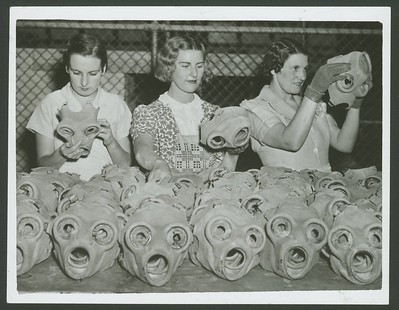
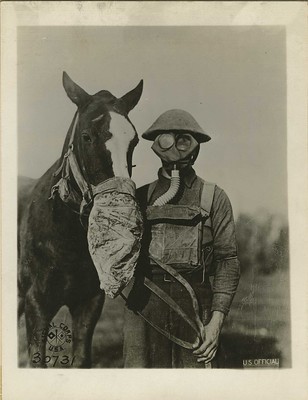
History, as we know, repeats itself in infinite ways. I inadvertently stumbled into this historical gas mask hall of horrors…or maybe it’s a hall of mirrors…

Checking rubber faces for gas masks. State Library of Victoria Collection, circa 1941. CC BY

Soldier and horse. Reeve17408. CC BY

I’ve joined an open community of writers over at Sharing Our Stories: Magic in a Blog. If you write (or want to write) just for the magic of it, consider this your invitation to join us.

Trees know

Yesterday they came back.

Just a few of them.

The others will have their turn, soon. For now they wait in the wings and on the screens…

In a month when masks are normally worn for celebrating, they came masked for protection—of others.

Several of us stood as sentinels in the misty gray morning, waiting, also masked. Gloved, thermometers ready, when the first bus rolled up and its door opened to release three children.

Another bus carried only one.

But when the first child passed inspection and entered the building, the gathered staff cheered. Applauded. Like welcoming a hero home.

They are heroes.

These kindergarteners, these first, second, third graders in their colorful masks, quietly navigating the building, sitting socially-distanced (alone) at lunch… I suspect these images are etched deep in my brain for the remainder of my days.

I saw this verse on a StoryPeople print by Brian Andreas (1993):

When I die, she said, I’m coming back as a tree with deep roots & I’ll wave my leaves at the children every morning on their way to school & whisper tree songs at night in their dreams. Trees with deep roots know about the things that children need.

I think about how trees

help us breathe

cleanse the air

provide refuge

absorb storms

soften hard edifices

beautify

welcome

are calming

are cooling

change with the seasons, yet remain constant

color the world

Tree leaves do whisper. Trees talk to each other (they do). They live in groups and look out for one another.

They carry the stories they live within them. You can read them, in their rings.

I cannot decide which is best, to be the tree with deep roots, waving my leaves at the children on the way to school, singing in their dreams…or to be the child, asleep, hearing the tree-song…

I stand, a sentinel in the gray silence of the empty bus loop, masked, gloved, thermometer in hand, watching bits of red and yellow and fiery orange swirling through the air as if stirred by an unseen hand… tree confetti, celebrating life, letting go in order to hold on through the coming winter, who knows how dark or cold, and I’m seized by the sudden desire to run into those dancing colors…

—I am bits of both.

*******

Thanks to Two Writing Teachers for the invitation to share on Slice of Life Tuesdays and for also knowing about the things that children need. They, too, carry their stories within them…

Photo: Donnie Ray Jones. CC BY

Don’t ‘should’ on yourself

Years ago, as I was lamenting things I wish I’d done differently as a literacy coach, my mentor leaned over and put her hand on my arm. Shaking her head, she uttered this unforgettable phrase:

“Don’t should on yourself.”

I wrote it on the cover of my coaching notebook. I would tell it to teachers. We laughed and something was released. The work would still be work, endless and immense, but one felt a bit lighter approaching it.

There are some foundational, common-sense shoulds. One should bathe regularly. One should wear clothes in public. But many shoulds serve as self-imposed bars to remind us we aren’t measuring up, somehow. That we are less. I always loved to write but was trapped for years by the exhortation: “A writer must set a regular writing schedule.” Period. Oh, I’d think, that’s what I should do. That’s what real writers do. If I don’t, I’m not really a writer. Except that my life isn’t ever arranged in such neat compartments of time. Schedules have to change too much. Then: “Writers write every day.” —I should do that! I want to do that! When I didn’t, a niggling sense of failure tugged at my spirit. Cobwebs of despair wound round my heart. The inner critic gloated: “Toldja. You don’t have what it takes.” Scraping should off myself took a long, long time—it likes to fossilize, layer by layer. Its armor is self-guilt. Its color, regret. Should doesn’t need the sharp spear of fear; it is the deadweight of an anvil, iron forming in the soul, shard by shard.

Should isn’t battled with mere acceptance. That’s dangerous ground. I did have to accept that I couldn’t write on the same schedule, every day, but I couldn’t stop there or I would never write. The secret weapon, for me anyway, was reimagining. What do I really want to accomplish? What does success look like for me, within the pattern of my days? I wanted to write more and to write better. I had stories to tell. Eventually they led to this blog. The blog led to wanting to uplift others—there’s already plenty in the world pulling us down. I found myself uplifted in the process. I write several times a week, some weeks more than others. I write whenever I can carve out the precious pockets of time…and for the record, thinking about writing is writing, which I do in the background of my mind all day, every day. A hasty note capturing a fragile new idea before it sprouts wings and flies away is writing. On a Post-It, in the margins of my planner, in notes on my phone, eventually transferring to a notebook… whenever the idea appears, I stop for a second to see it, translucent, barely formed, and catch it. To me that’s the most important thing a writer does. One cannot spin without a thread of silk. And so I had to reimagine what writing looks like, what it really is. I shook off should and carried on with far more productivity on my own terms—without feeling guilty for stopping to rest whenever I need to.

When Sharing Our Stories: Magic in a Blog encouraged writing as a way to “shed your shoulds,” I was reminded, once again, that should is too often an unnecessary, subconscious burden…

Shed your shoulds
like leaves in woods
Trees shorn of fragility
preserve their ability
to survive.

Hear should rustling: ‘Don’t forget’
like leaves curling with regret
Spiraling, sigh by sigh
piling inside, dead and dry
cluttering today.

Beware should’s false measure
robbing Now of its pleasure
Shed those shoulds
like autumn woods
composting for tomorrow.

The moral of the story, Friends: Don’t should on yourself.

Scrape that mess off and use it for fertilizer.

*******

I’ve joined an open community of writers over at Sharing Our Stories: Magic in a Blog. If you write (or want to write) just for the magic of it, consider this your invitation to join, too.

13 ways of looking at a black cat crossing your path…

A list poem, of sorts, inspired by Wallace Stevens “Thirteen Ways of Looking at a Blackbird,” shared this week on Ethical ELA. The Open Write challenge: “To look outside ourselves to the larger world. Craft a poem about it…the larger world is many different things to people, and in many cases, it’s America.”

Everything hinges on interpretation. There are infinite ways of looking.

It just so happened that this week marked my return to campus in preparation for student cohorts transitioning back to the building. Driving along the familiar back road for the first time in what seemed like ages, car piled with stuff, brain churning with things to do and how to do them, trapped in a constant state of COVID suspension, in a fog very like the one rising from the ground, smoky swirls lending a seasonal eerie-ness to beguiling red-gold trees against an obscured sky, what to my wondering eyes should appear but the sudden darting of a black cat from the woods just ahead on the right. Neatly across the ditch bank it sailed, mission-like, directly across the road in front of me…

13 Ways of Looking at a Black Cat Crossing Your Path in the Time of COVID-19 While Driving to School to Teach Online Near Halloween of Election Year 2020

I.
Unexpected poetry in motion from the russet woods, long, lithe feline fluidity rippling low along the golden ditch bank, ebony mercury flowing across the gray asphalt, a thing of beauty, a joy forever or at least until…
II.
Still alive. I didn’t hit it.
III.
Spawn of inexplicable, maniacal laughter
(nowhere near the Joaquin Phoenix level)
IV.
The omen of—misfortune? As in—Google crashing?—no Wi-Fi?—more lost instruction?—a forgotten mask? —one more directive on what to do or not to do with data, disinfectant, distance?
V.
Will I even make it to school today?
VI.
Will students (onscreen)?
VII.
Spirit of the season, shape-shifter running to and fro on the Earth, demon on the loose, witch’s familiar, unholy harbinger …
VIII.
This election. Heaven help us.
IX.
Misrepresentation and slaughter of God’s creatures.
X.
Curiosity. Where are you running to, little black cat? From where? From what—or whom? Do people other than scientists know that your fur holds secrets to disease resistance? Can the mystery be unlocked, decoded?
Pandemics of rats and bats.
What if healing sprung from cats.

Poetic justice.
XI.
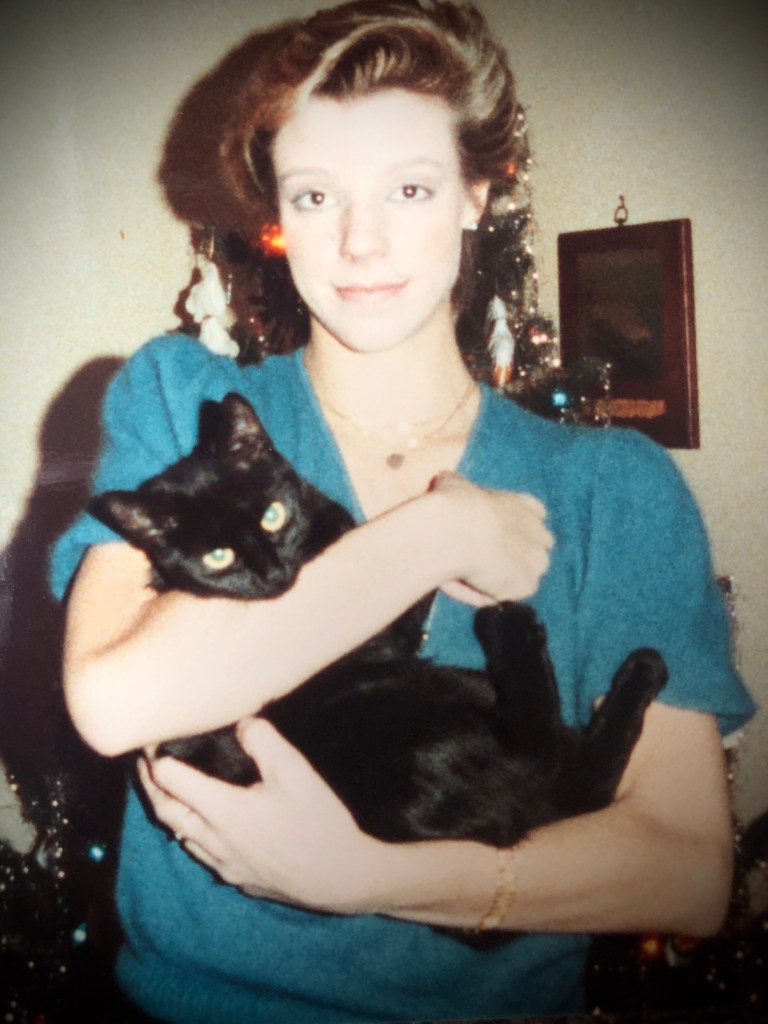
Portal of memory… I had a little black cat, once. She had no tail and no one else wanted her. The last left in a box of kittens a guy at college was giving away. Brought her home, named her after a magic cat who was exceedingly wise, in a book I read as a child. Couldn’t take her with me when I married and moved into an apartment so I gave her to my dad. He bought turkey from the deli, tore it into small bites, and fed her on the countertop.
She wasn’t magical. Just full of ever-purring love.
XII.
The great portender, seeming to be what you are not… all I know is you are poetry in motion. Run on, blithe spirit. Run on, long, lithe spirit-lifter, ebony mercury flowing… how glad I am our paths crossed.
Fear not. We bring one another no harm.
XIV.
I skipped #13. Too unlucky.

*******

Note on IX: For centuries, beginning in medieval times, superstition and associations with evil led to widespread killing of black cats. Many shelters today will not allow black cats to be adopted near Halloween for fear of their being used as decorations and mistreated, tortured, sacrificed, or abandoned. Just one way of looking at those lines.

With thanks to Ethical ELA for inviting many ways of looking and to the fine folks celebrating Poetry Friday, especially Jama Rattigan for hosting the Roundup. Jama’s blog, An Eclectic Feast of Food, Fiction, Folderol and Chewy Culinary Verse is a mind-bogglingly gorgeous work of art. I don’t know how she does it!

Thanks also to Keats, Shelley, Stevens, and Patricia A. McKillip. I haven’t forgotten you, Moriah.

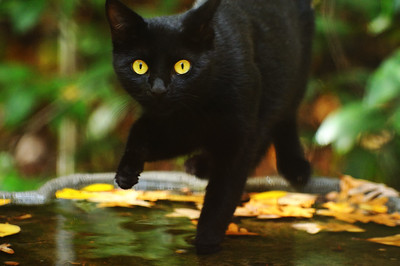
Lead Photo: Ralph Daily. CC-BY

The passing

This week I’m participating in a five-day poetry Open Write at Ethical ELA. Day One’s writing invitation, “Bodies in Motion,” was sparked by the importance of sports to so many student athletes who haven’t been able to participate—when it may be the only reason they come to school. Many feel most at home with a team, on a field, writes host Sarah J. Donovan, needing to “move their bodies to feel joy, to feel normal, to feel self.” Instead they’re confined to screens and “plexiglass cubicles.” For the Open Write we crafted poems about our own athletic experiences, or those of family members, or even about what we used to be able to do but can’t anymore.

I’ve never been athletic, not ever, in the whole of my life.

My husband, however, was.

Through him I know the vital and abiding value of sports for a young person…

Here’s a scene I witnessed recently at home.

The Passing

She comes out of his study carrying it
in her four-year-old arms
and his face is transformed, glowing
as if a passing cloud has uncovered the sun.
He leans forward in the recliner as she
drops it, kicks it, sets it spinning
—Oh, no, he says, this one’s not for kicking,
it’s for dribbling, just as the ball stops
at his feet. He reaches down, lifts it
with the easy grace of the boy on the court,
hands perfectly placed on the worn brown surface
in split-second calculation of the shot
so many times to the roar of the school crowd
so many hours with friends, his own and then
his son’s, still outscoring them all, red-faced,
heart pounding, dripping with sweat, radiant
—and at twelve, all alone on the pavement
facing the hoop his mother installed
 in the backyard of the new house
after his father died, every thump echoing
Daddy, Daddy, Daddy.
The game in the blood, the same DNA
that just last year left him with a heart full
of metal and grafts, too winded to walk
more than short distances, having to stop
to catch his breath, deflated
—it needs some air. Do you have a pump,
he asks his son, sitting there on the sofa,
eyes riveted to the screen emitting
continuous squeaks of rubber soles
against hardwood.
—Yeah, Dad. I’ve got one and the needle, too.
His father leans in to the little girl at his knee,
his battered heart in his hands:
—Would you like to have it?
She nods, grinning, reaching, her arms, her hands
almost too small to manage the old brown sphere
rolling from one to the other like a whole world
passing.

*******

with thanks to Ethical ELA for the monthly poetry Open Writes and Two Writing Teachers for fostering a vital and abiding love of writing in students— and teachers.
Revise on.

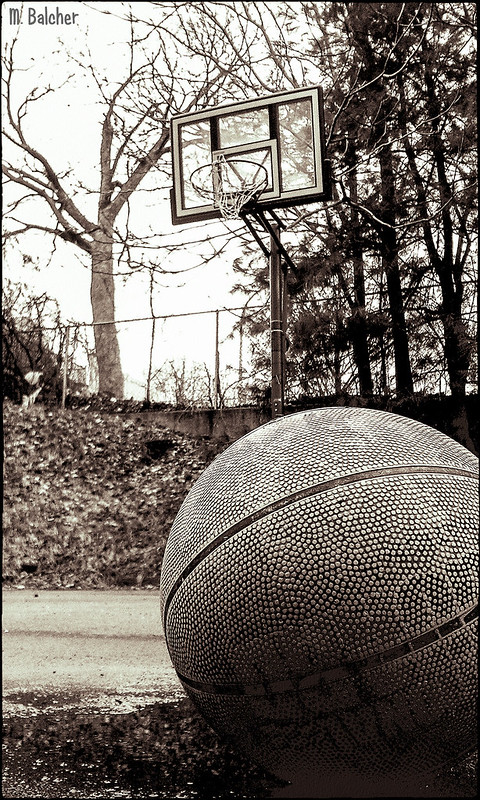
Photo: Marcus Balcher. CC BY-SA

Dancing ghosts

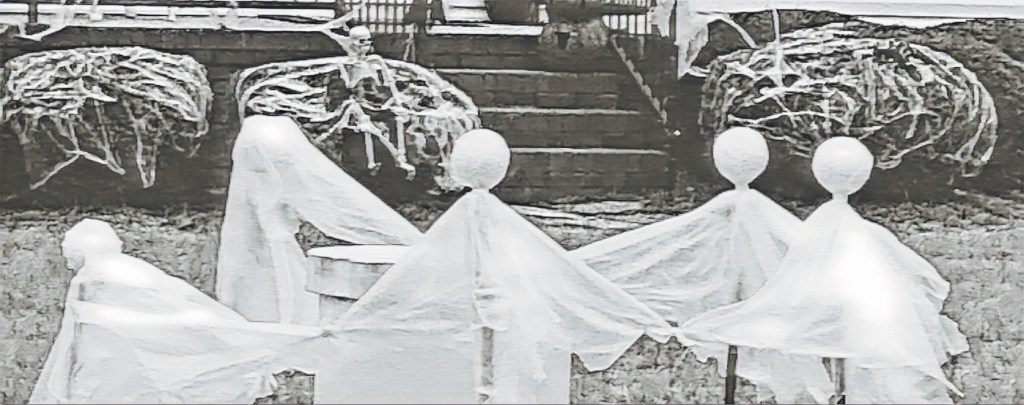
A poem inspired by a neighbor’s decorations

I happened to glimpse them, in a ring
Holding hands, a curious thing
In the darkness, dancing there
Diaphanous beings, light as air
Small faces in gossamer veiling
Wispy arms fluttering, flailing
Maybe in mischief, maybe in glee
Luminous little spirits set free
…hallowed revenants of you and me,
The children that we used to be.

*******

Just a little offering (shades of October? A bit of Octo-plasm?) for Poetry Friday.
Special thanks to Janice Scully at Salt City Verse for hosting the Roundup.