Rescue

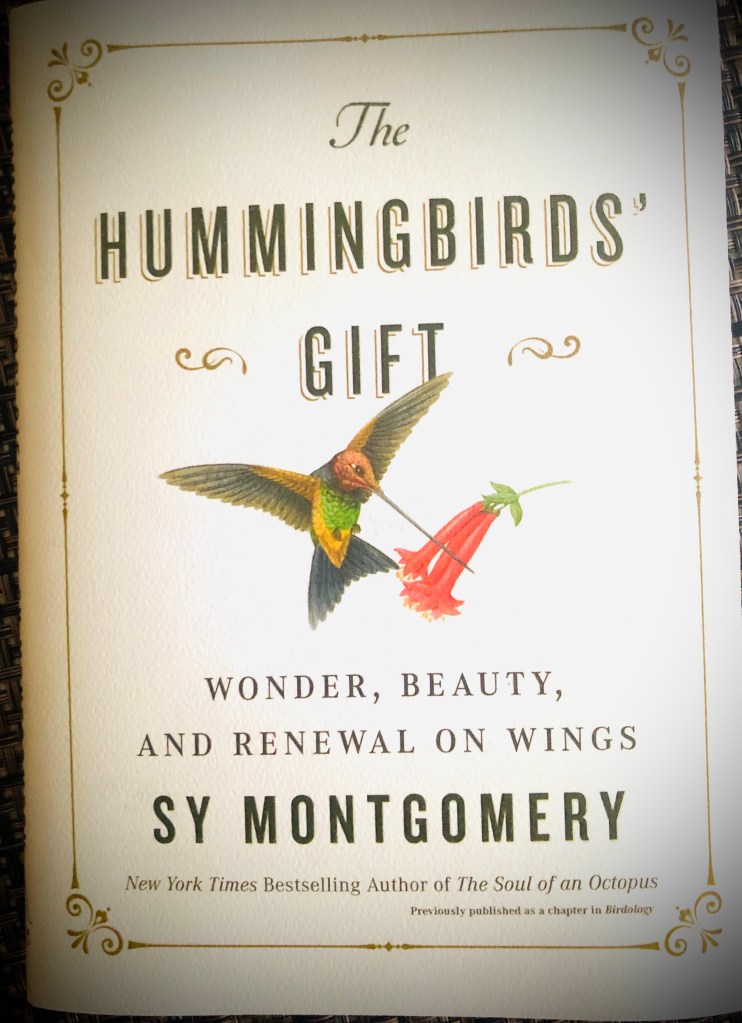
Just a snippet of my current reading, if your weary heart needs a lift today:

“One autumn, a ruby-throat, on its lonely, five-hundred-mile migration—a journey across the gulf of Mexico, which can demand twenty-one hours of nonstops flight—landed, spent, on a drilling platform on the Mississippi coast. The oil company dispatched a helicopter to fly it to shore. The hummingbird spent the winter in a gardener’s greenhouse, then left, fat and healthy, on its spring migration.”

—Sy Montgomery, The Hummingbirds’ Gift: Wonder, Beauty, and Renewal on Wings

Cannot help thinking that sometimes we are the hummingbird at the end of our strength; sometimes we are the oil company with mighty means of helping another living creature…if we but see.


Hummingbird. U.S. Forest Service. CC BY-SA

Tiny king

The Tiny King Comes to Sip His Nectar

He visits a little more each day
watching me through the window, wary
not knowing I hold my breath
at sight of him, flash of living jewel-fire
out of nowhere, here, and gone

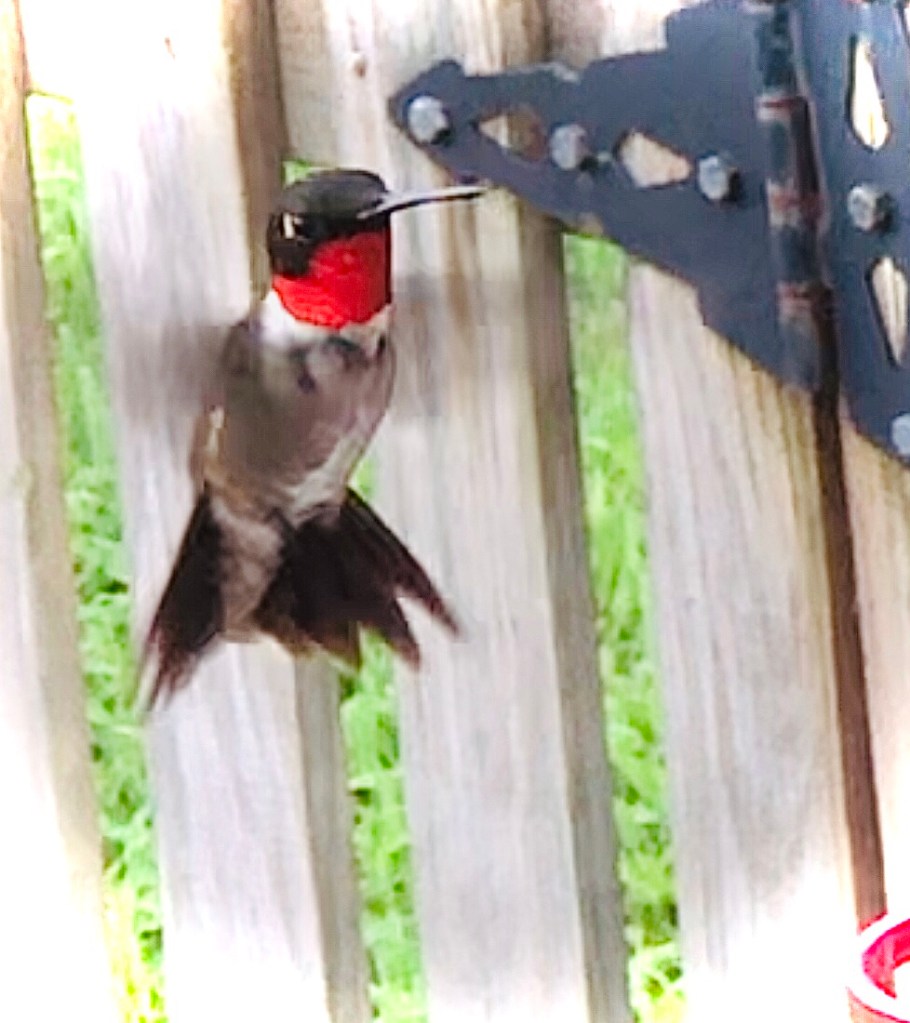
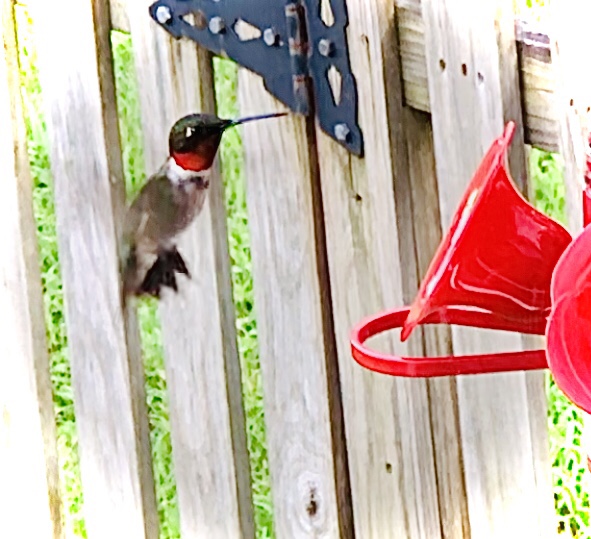
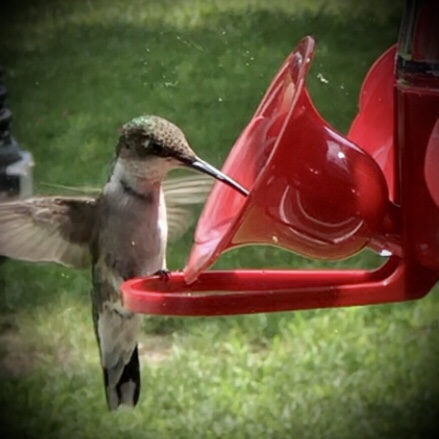
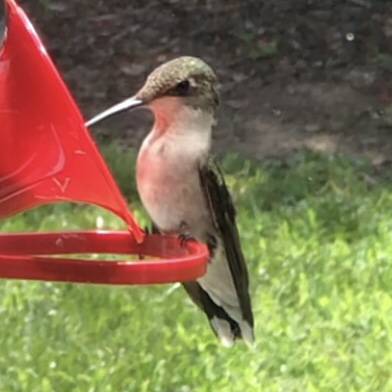
My male ruby-throated hummingbird
—took days of stealth to get these shots.
The females come more frequently.


Rubies are the stone of kings; in chess, the king can move in any direction. In mythology, nectar is the drink of the gods. Fitting symbolism for this little creature so gloriously arrayed, so endowed with otherworldly powers. He’s outside my window looking in at this very moment, the morning sun shining on his fiery throat—the brightest color I’ve ever seen in nature. Utterly breathtaking. He’s laid claim to the window feeder since I put another one out in the yard. Tiny king of a tiny kingdom, reigning and defending from a twig-throne on high, among pink blossoms in the crape myrtlewhich just so happens to represent royalty.

Solitary existence: the hummingbirds

Hummingbirds lead a solitary existence.

I saw one hummingbird out back last week, darting about the pines. It turned in my direction, tiny pale-bellied fairy-creature suspended in midair, as if to acknowledge my presence across the yard before zipping away. I wondered if it was making some kind of request. The next day I bought a feeder and hung it outside my kitchen window; within moments, a tiny female landed to sip my homemade nectar.

The next day another female arrived. I watched the two of them competing for turns at the feeder. All day they chase each other away, each still managing to land and feed for the few seconds it takes to sate a creature so tiny. One tentative male finally showed up today, his ruby throat resplendent in the sunlight. I haven’t managed to get a photo of him yet. I hope he’ll return, despite these territorial females.

There’s a lot I didn’t know about hummingbirds. They’re curious. They watch me through the window as I’m watching them. I read that they’re highly intelligent; they learn to recognize the person who feeds them and may even remind this person if their sugar water is running low. They are not social, not flock birds. When they migrate to Mexico in the fall, they go it alone. Why does this pull so terribly on my heartstrings? I cannot shake the image in my mind of this tiniest of birds flying so far by itself.

They do not think of themselves as fragile. They are not lonesome.

It’s what they do. They lead a solitary existence.

With that, the hummingbird memory stirs.

Summer, long ago. Riding in Grandma’s rocket-red Ford Galaxie 500 along the dusty dirt road to her sister’s house. The Galaxie doesn’t have power steering or air-conditioning so the windows are down and Grandma has a Kleenex stuffed into her cleavage to catch the trickling sweat. Fortunately Aunt Elizabeth only lives about a mile away, in a little bungalow house with square tapered columns, off to itself by cornfields and groves of hardwoods. There’s a path in the grass of her yard where her old maroon car (I think it was maroon, either a Ford or a Chevy, I can’t recall exactly) is parked by the weathered outbuilding. Grandma and I park behind it and walk in the shade of the trees to Aunt Elizabeth’s back porch.

Everything is old. The porch floorboards, the screen door that squawks on opening and closing, the tiny, cramped kitchen, the worn linoleum revealing a slightly swayed floor, the living room with braided rugs…it’s a dark house, faintly musty. The smell of Time hangs in the air, unmoved even by the square electric floor fan humming on high speed. Aunt Elizabeth is pleased to see me. She opens her arms to give me a hug and kiss. Her pale cheek, faintly mottled with reddish freckles, is cool. She’s two years older than my grandmother. She asks how my Daddy is, says she sure does miss him, oh, she used to enjoy having him over to eat…

Aunt Elizabeth doesn’t have children. Not any that lived. When I first asked about it, Grandma told me of her sister’s two premature, stillborn babies. Tiny things, said Grandma; she was there when it happened. She held them, grieved for them. Aunt Elizabeth was married to Granddaddy’s youngest brother, who died before I was born. He suffered from some kind of condition doctors could never figure out. Without any warning, he’d lose consciousness and collapse. It happened numerous times until the day he had a spell and couldn’t be revived.

So my great-aunt, in her sixties, lives here alone, way out in the country where, in the 1970s, people still don’t have telephones; they drive to each others’ houses to visit and catch up on news. It is good that a few of her eight siblings live close by, that grown nieces and nephews make a point to come by to see her when they can. Aunt Elizabeth gardens, cans her vegetables and preserves in glass jars for storing on her kitchen shelves, drives to town, tends to herself, is completely independent, yet it seems a solitary existence to me. As she chats with Grandma I wonder if she’s lonesome, if she still misses her husband, gone for so long, and if she’s sad about having no children or grandchildren of her own. She hands some bubblegum out to me and I know she got it because she knew I was coming.

When our visit is over, we all walk out on the porch — that’s what you do, in the country. You walk out and wave until your visitor drives out of sight. Unwritten etiquette. Everyone does it. Same for throwing your hand up to any other car you pass on the road.

But Grandma and I don’t leave yet, because of the hummingbirds.

They’re everywhere.

Aunt Elizabeth has strung up several red and yellow plastic feeders around her porch. At every one is a horde of the tiny birds, dipping in and out. The air vibrates from the rapid fanning of their wings; I feel the circulation, a coolness against the heavy summer humidity.

I am awed. I have never seen anything so magical before. I can’t even count how many hummingbirds.

The sisters, in their delight, laugh like young children.

—It comes back to me, watching the few contentious hummingbirds outside my window almost half a century later. I didn’t know how rare a thing it was, then, the communal gathering of hummingbirds. I remember my great-aunt, not with pity. I hear the musical sound of her laughter and the humming of all those tiny wings there on her porch….knowing that in the long enduring of life’s losses and trials come moments of pure enchantment and abundant richness.

I shall need more feeders.

*******

with thanks to Two Writing Teachers for the weekly Slice of Life story-writing invitation
Tiny warriors

Not one but two hummingbirds
visit the new feeder now
as if the first brought a friend
to a cool new place for a drink

This is not the case

It’s a competition
a quarrel, a chase
each determined

to drive the other away
each little but fierce

Methinks I will call them
Helena and Hermia

(no sign of any males;
perhaps they’re in the woods
asleep)

What I’d say to these tiny warriors
if I could make them understand
is that there’s plenty to go around


but humans
(what fools we mortals be)

who should understand
have yet to learn
about living peaceably
about there always being enough

if only…

I sigh as I ponder
the solitary existence
of hummingbirds

and the mad beating
of their wings


“And though she be but little, she is fierce…”

Hey, hummingbird

gogyoshi: a Japanese poem with a title and five lines

Hey, Hummingbird

as if accepting southern hospitality
(always dependent on sugar)
my new enchanting friend
stops by to sip and sit a spell
throughout the summer day

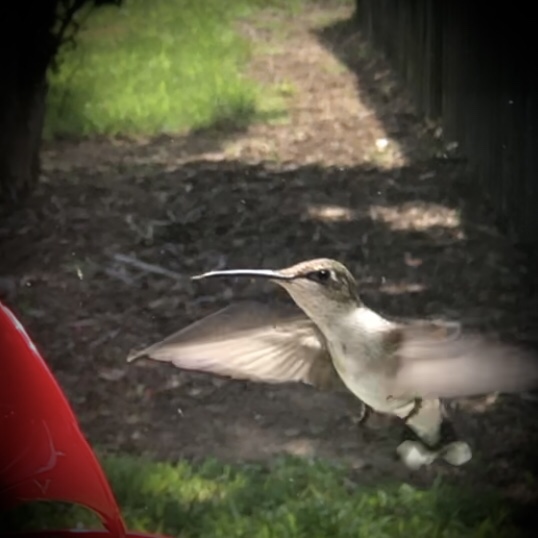
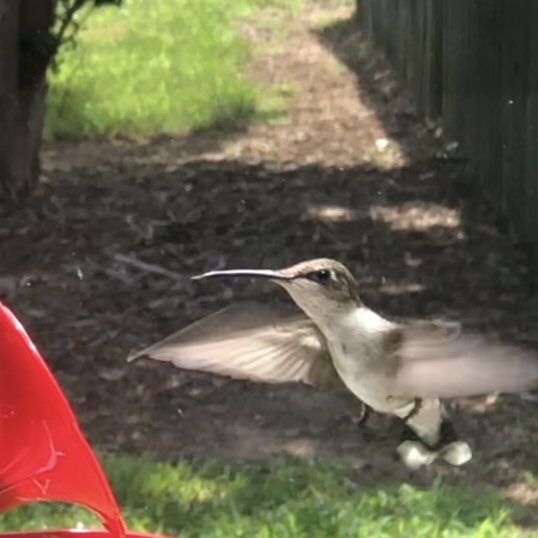
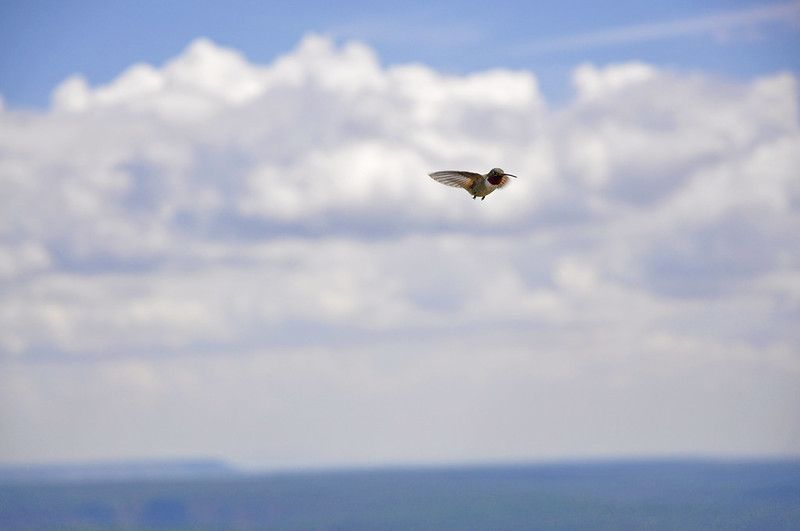
Female ruby-throated hummingbird.
She began visiting within moments after I put out the feeder.

There comes a time…

when the baby finches
on my front door wreath
have flown
and I no longer hear
the cheerful cheeping
and chattering

that particular
morningsong
is gone

although an entire
avian choir
assembles in the trees
before dawn
each day
singing the darkness
away

there comes a time
when I know
the twice-used nest
is too destroyed
and the old wreath
with faded magnolias
is battered
past all hope

there comes a time
when I must take it down
from my seasonal
bird sanctuary
to ceremonially
throw it away
as I did today

thinking about
all the life
that came into being
on this circle
of grapevine
hanging from
a single nail

but I do not grieve

I imagine
dozens of finches
alive in the trees
surrounding

I imagine
they’re a big part
of the dawn choristers
sounding

and I know,
I know
a pair of them
will return
when I put up
a new wreath
next spring

there comes a time
when I finally
clean the porch
where I can sit again
and bask
in my tiny part
of sustaining
fragile feathery life
in this world

and celebrate
being able
to open
my front door
once more

After several springs, the magnolia wreath is no more
but I have a fresh clean door
and this wreath celebrating summer

Purity

a tanka

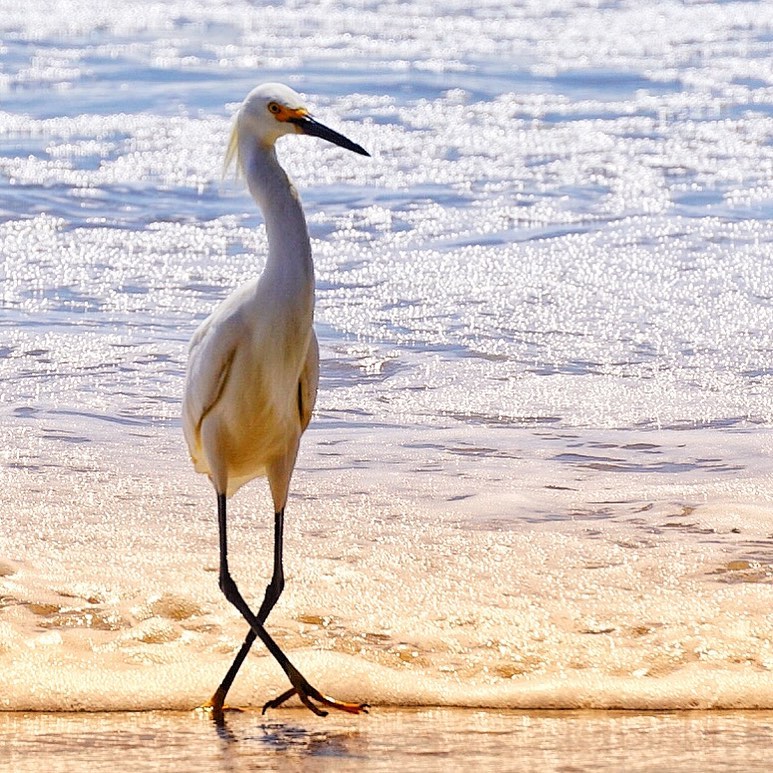
Photo: Egret by Kim Douillard

Lone snowy egret
by moonstone sea genuflects
in pious homage.
Opalescent baptism

on the wings of no regret.

*******

Thanks to Margaret Simon who shared Kim’s breathtaking photo for “This Photo Wants to Be a Poem” at Reflections on the Teche.

I love symbolism and am awed by certain images that come to mind during composition:

Egrets, snow, opals, and baptism all symbolize purity. So does the sea; it cleanses itself.

Egrets and moonstone are linked to balance. The colors on the water in this photo brought moonstone and opals to mind—they are gems of light-play. Note the posture of that bird.

Egrets also symbolize piety. They prefer solitude.

The swallows

In a corner
of a window
sheltered by
the carport
at my son’s home

a pair of swallows
built a nest

not well

as my son realized
one morning
when he found
a hatchling
naked, new
and dead
on the concrete
floor

the others
seemed safe
in the faulty nest

until the next day
when my boy
found all
the swallow babies
naked, new
so tiny
so dinosauresque
splayed across
the concrete
floor

some still living

and their mother
fluttering over by
the recycling bin
in the corner
crying
trying
to gather
her broken babies

they couldn’t be saved
my boy told me
with a breaking
in his voice

so I buried them
around
the oak
tree

I cannot think
about the ring
of baby birds
there in the ground
among the roots
of the old live oak

instead I stand
under the carport
noting the stillness
of the air

the silence
naked, new
in the absence
of swallows

somewhere out there
a mama
knows how much
she’s lost

like a child
I wonder
if she grieves

I grieve
for her


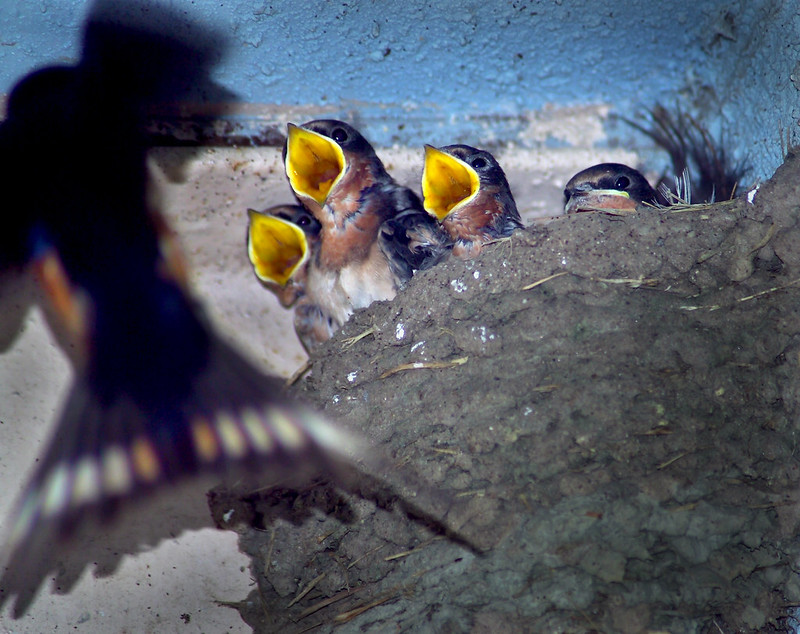
Baby swallows singing to their mother. Brookhaven National LaboratoryCC BY-NC-ND 2.0.