Another roll of metaphor dice

Today on Ethical ELA Stefani Boutelier invites teacher-poets to roll Metaphor Dice, originally created by Taylor Mali for composing poems with students.

I’ve written a few poems based on Metaphor Dice:

Your Ego is a Feckless Maelstrom

Junkyard Loss Is Not Elusive

Guilt Is a Stingy Odyssey

Here’s where today’s roll landed me…

Wearer Beware

seel (as defined by Dictionary.com):

 1. Falconry. to sew shut (the eyes of a falcon) during parts of its training.

 2. Archaic.

  1. to close (the eyes).
  2. to blind.

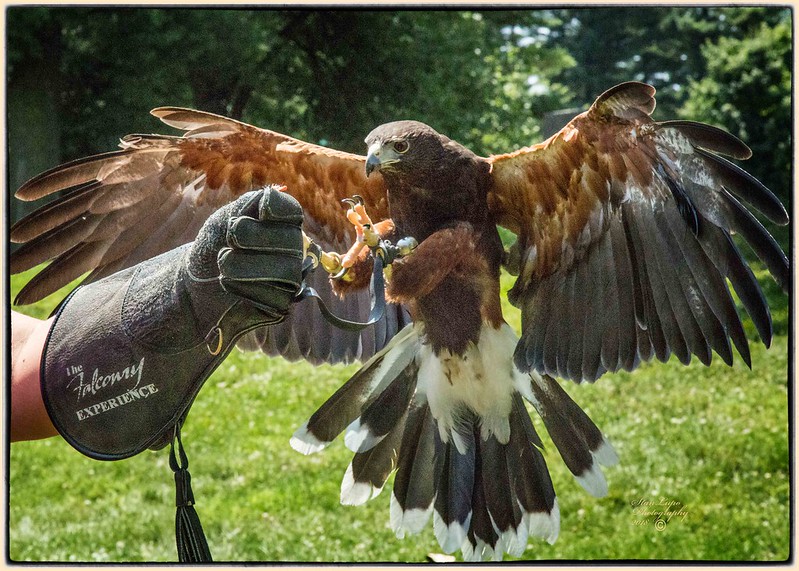
Bias is a capricious gauntlet 
a gloved hand
infinitely unwieldy 
but nevertheless employed
in stitching closed the eyes
in beckoning talons
begging the question
of rapture in the raptor
of rupture in the captor
over eviscerating prey
which is to say
once worn with intent
to destroy
the capricious gauntlet of bias
may turn, of its own accord,
to reach instead
for one’s own throat

beware the taking up
and the throwing down

Thunder Comes To Gauntlet. stanlupo. CC BY-NC-ND 2.0.

Cheese haiku

with thanks to Tammi Belko, who encouraged teacher-poets to write on the topic of cheese today at Ethical ELA: “Poets have been mysteriously silent on the subject of cheese” (G.K. Chesterton).

an extended haiku, of sorts

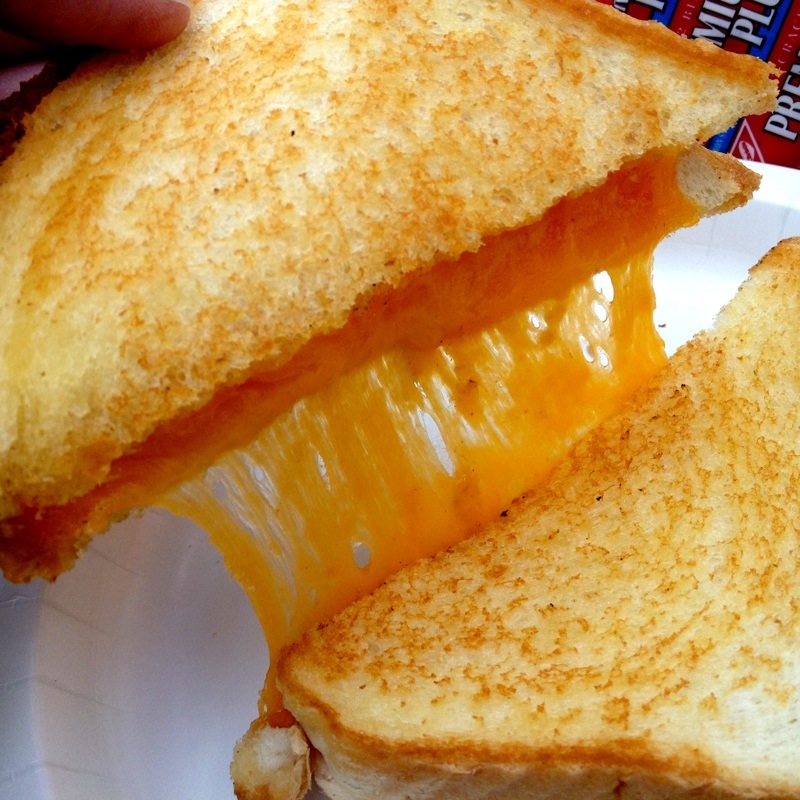
For Love of Grilled Cheese

Mama and Grannie
decide they want Chinese food
I don’t like the smell

they’re frowning at me
holding my nose in Kam Ling’s
ordering grilled cheese

—not on the menu
I’m confusing the waiter
Just take bread, I say,

two pieces, and put
a slice of cheese in between
and butter outside
 
fry it in a pan…
a loooong time later, it comes
miraculously

(was someone dispatched
to a nearby grocery
in great vexation?)

Not long afterward
Mama has a surgery
Grannie comes to stay

Daddy is working
and doesn’t cook, anyway
I ask for grilled cheese

Grannie makes the thing
in the toaster… No, I say,
that’s not how Grandma Ruby

makes my grilled cheeses
Grannie’s face goes Mr. Hyde
like on Bugs Bunny

she shouts—the house shakes—
I’M. NOT. YOUR. GRANDMA. RUBY!
Heaven help me please

I may not get grown
if grown-ups demolish me
for love of grilled cheese

Grilled Cheese Sandwich @ Thunder Bay Regional Hospital. istargazer. CC BY-NC-ND 2.0.

Note: I love Chinese food now.
And my Grannie. Mutual forgiveness and gratitude, for so many things.

Walking poem

Today on Ethical ELA Leilya Pitre invites teacher poets to “walk to your place of comfort.” The idea is to take a break, rest, relax, maybe noting things that capture your attention when you’re on a walk, or maybe walking back in time, through memories, or recalling a personal revelation that occurred on a walk. Just walk, poetically.

I love walks and have written of many… today, I meander back through memory to a place of comfort.

Walking with Granddaddy

Sunday afternoon
sidewalks aren’t crowded
no rush hour traffic
clogs the street
just a few cars
stopped at the intersection

can’t walk over to Rose’s
at the corner today
to buy a toy 
like my Slinky
or click-clacks, 
glass amber spheres
suspended on a string
to pull back and hear
that loud CLACK CLACK,
or a powder-blue
sachet ball made of satin
decorated like a lion’s head
with blue googly eyes
and an aqua feather-tuft mane

no, Rose’s is closed today

so is the drugstore
at the end of our row
no chocolate-covered cherries
or Peppermint Patties
or those caramel creams
that you love so

no, today we walk
hand-in-hand
across the street
while cars wait
at the lights

past the fire station
round back of the 
Baptist church

to the playground

you let me climb
the big sliding board
not letting go
of my hand
until I am sitting at the top

you are there
at the bottom
when the sliding stops

you push me in the swing
until my feet touch the sky
I am a bird 
flying so high

until the shadow
of the steeple-cross
grows long on the grass

hand-in-hand again
I watch our feet pass

back over the pavement
crossing the street
each step measured in time
of heart-to-heart beats

—oh, how yours to mine
still talks
so long after
our Sunday walks 

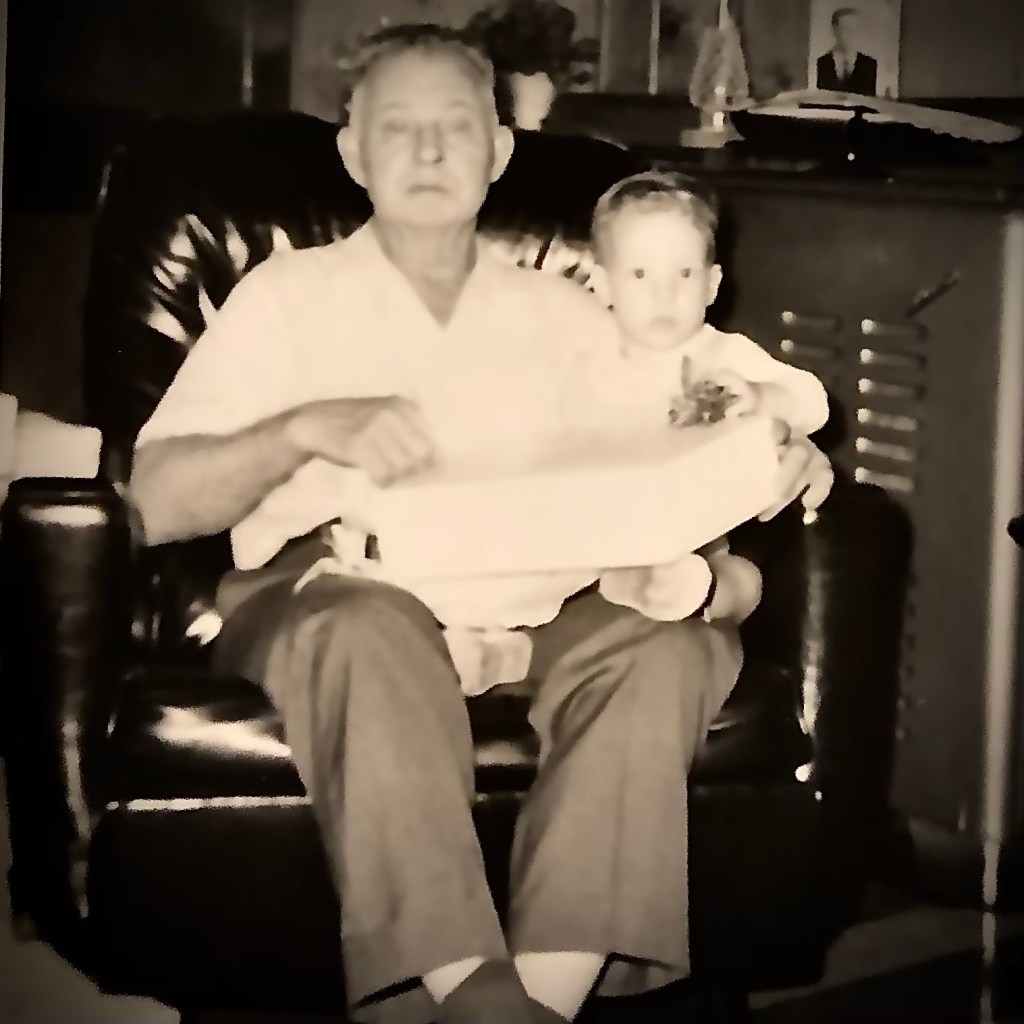
Granddaddy and me on his 61st birthday.
I am two and a half.

Thirty years later:
Granddaddy with my boys and me, on his 91st birthday,
a year and a half before he died.

He is gone, but never far away.
More birdspiration

Finch eggs in a nest
on my front door wreath
captivated me
to such a degree
that I failed to see
what was happening
outside the back door:
a bright flash of blue
disappearing in
the little bird church
-bluebird occupants
brought Easter eggs, too.

On my back deck, Easter afternoon: a male bluebird is either bringing food to his mate or helping to feed babies. He entered and exited multiple times; once I was sure he was flying off with a bright blue piece of eggshell. These are the first-ever occupants of the little bird church, which has just been sitting on the deck as decor. I’ve seen the female as well. So hoping to get photos of bluebird babies soon (I need a better camera…this was taken with my phone through the kitchen window and screen).

My soul rejoices in this proliferation of feathered life, that songbirds have chosen my home for their own.

How lovely is your dwelling place,
    O Lord of hosts!
My soul longs, yes, faints
    for the courts of the Lord;
my heart and flesh sing for joy
    to the living God.

 Even the sparrow finds a home,
    and the swallow a nest for herself,
    where she may lay her young,
at your altars, O Lord of hosts,
    my King and my God.

Psalm 84: 1-3

‘How to be’ poem

Today on Ethical ELA Sheri Vasinda invites teacher-poets to compose “How to be” poems for VerseLove, in honor of National Poetry Month. The idea is to choose a topic, research it, list facts, and write a poem incorporating those facts in a Do/Do Not format. Sheri says students love this. Imagine their awe at seeing facts take on poetic form…and the power they find in it.

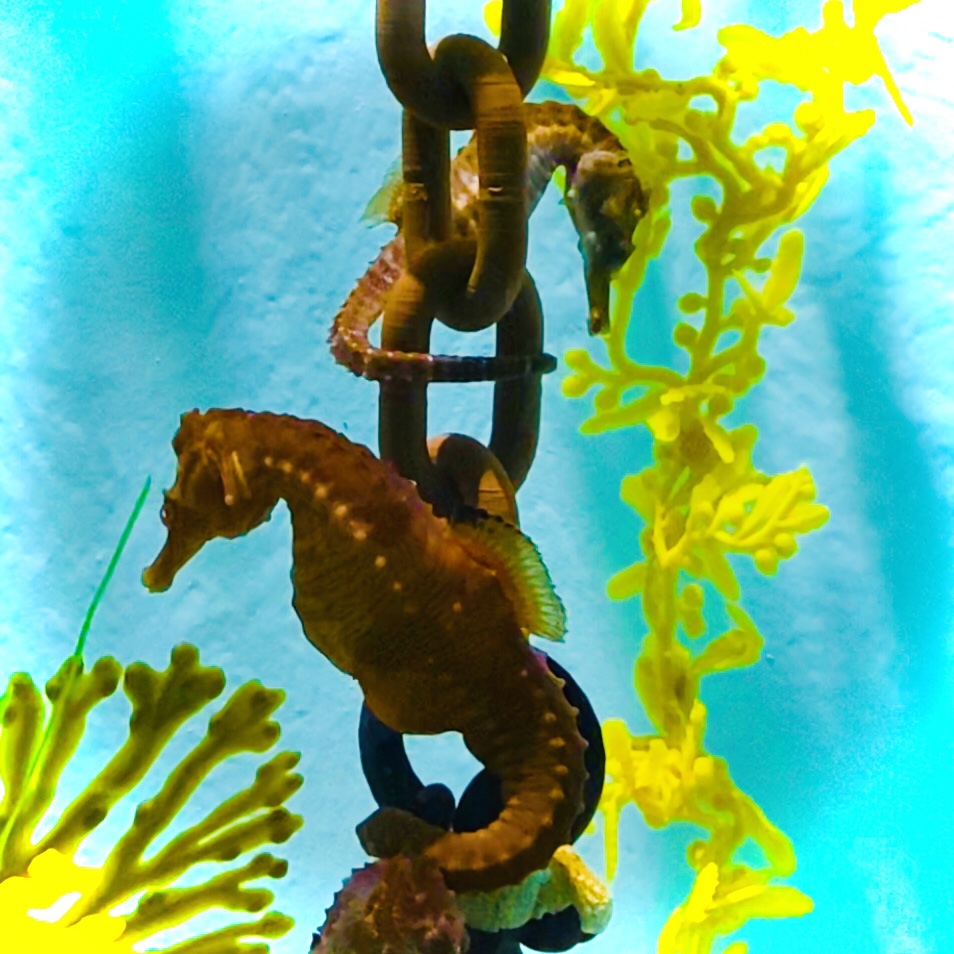
I’ve written of seahorses before; they fascinate me for many reasons. As a writer, the seahorse remains one of my favorite symbols.

How To Be a Seahorse

Don’t worry about being the slowest swimmer
in the sea;
just anchor your prehensile tail to long grasses
so that strong currents
don’t drown you

Don’t worry about your posture
being different from other fish;
let them be horizontal
you stay upright

Don’t worry about having no teeth
and no stomach
and no etiquette;
rejoice that your loud lip-smacking vacuum
enables you to eat constantly
so you can stay alive

Don’t worry about not having scales;
wear your bony armor
with befitting chivalry

Don’t worry how other fish do it;
you find someone
you blush, you flush bright colors
you court for a few days
prim and proper
keeping apart at night
meeting again just after dawn
—ye who are males, step up
sacrifice your own time and energy
on behalf of your beloved
by carrying the babies for her
(even if there ARE 2000 of them)
-out of all the universe
you be Dad Extraordinaire

and commit
for life

Never mind—if you do—
that your scientific name means
“horse sea monster”
—just wonder, if only you can,
little Hippocampus
why your very likeness
is embedded deep
in the temporal lobe
of the human brain
as the central storehouse
for emotion
for learning
for the vast, rolling sea
of human memory.

You can’t worry about that, Seahorse.
Just keep rolling your eyes
in every direction
independently of each other
and swim
(if ever so slowly)
onward

*******

with special thanks to Two Writing Teachers for the weekly Slice of Life Story Challenge

‘Succinct truth’ poem

Today on Ethical ELA, Maureen Young Ingram invites teacher-poets to compose “succinct truth” poems for VerseLove. The idea is to write about a difficult subject with a message of hope in 10-20 short lines, playing with lack of punctuation and capitals.

Mine’s twenty-two lines but I’m letting it be.

Dichotomies

humans
are a dichotomous race
desperately desiring
dutifully demanding
historically unable
to extend grace
at least
each other-ward

the tome of our existence
a work in progress
pages of pain
penned in blood

some say that babies are a sign
that the world should go on

forgetting that worlds go on
without humans at all

although my dog doesn’t think so

there’s hope
isn’t there
as long as dogs
haven’t given up
on us

My son with his dog, Henry, who surely has a soul
and who loves with his whole dog heart

Easter exultation

In honor of the day, an excerpt of “Jesus Makes Sin Forgivable” by Anne Graham Lotz in Just Give Me Jesus (2000):

The Pharisees couldn’t stand Him
but found they couldn’t stop Him
Satan tried to tempt Him
but found he couldn’t trip Him
Pilate examined Him on trial
but found he couldn’t fault Him
The Romans crucified Him
but found they couldn’t take His life
Death couldn’t handle Him
and the grave couldn’t hold Him.

*******

And a happy Easter haiku for you:

I have no more eggs.
As of this morning, new life.
Dawn exultation.

Retooled tanka poem

Today Cara Fortey invites teacher-poets to compose tankas for VerseLove on Ethical ELA. A tanka has thirty-one syllables and, in English, is usually arranged in five lines of 5/7/5/7/7. Cara offers the example of Harryette Mullin, who reduced the lines to three, for flexiblity of form. In honor of Mullin’s nature walks captured in tanka, Cara extends this invitation: “Write one or more of your own tankas in the style of Harryette Mullen. Take a walk, literally or imaginatively, and write what comes to you in three lines with 31 syllables.”

Mourning Walk

Last summer when I walked here 
the fallow field at the end of the lane opened up before me
an undulating sea of green

Long before I reached the shimmering expanse
I could feel the mystical, quivering aliveness
in the depths of the grasses

Infinitesimal orchestra, vast insect choir
assembled in its tabernacle, offering lifesong
to all the Earth

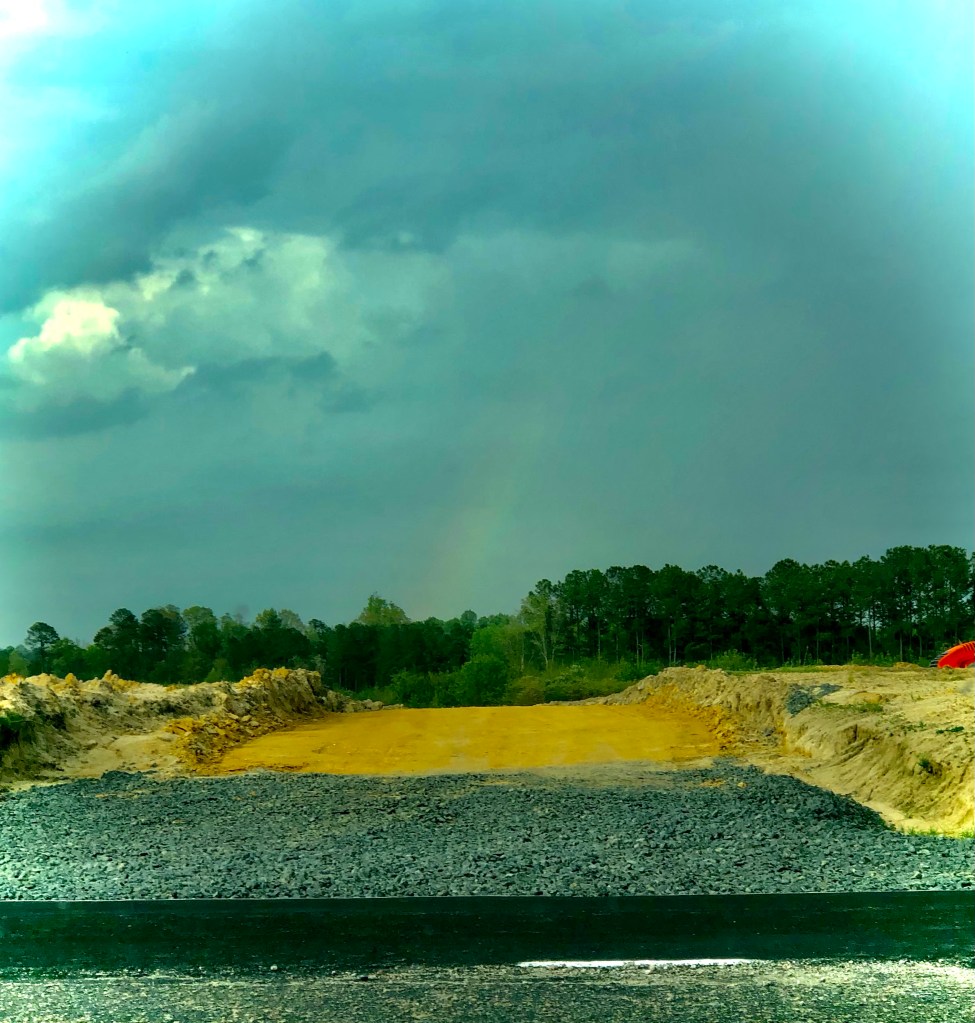
Today, I stand here in memoriam
for the field is no more, shorn of its green tresses
its body ravaged by bulldozers

An unseasonably cold wind
whips with knife-shivering emptiness
even doves, high on the power lines, bear silent witness

Good Friday tritina: It is finished

Eternity hangs on it
there where our sin-debt is
paid in full, finished

we would be finished
yet out of love, He did it
He is

what love is
the robe of righteousness is finished
take it, wear it

It is finished

Detail of a shirt made for me by a friend

The words “It is finished” are a translation of tetelestai – Greek for what a servant would say on returning to a master after completing a mission. It’s an accounting word, signifying a debt paid in full; it was stamped on receipts. The phrase indicates a final and complete sacrifice: Christ died as the Passover lambs were being slaughtered. And where were Passover lambs born? Bethlehem. The responsibility of those shepherds in the field abiding, keeping watch over their flocks by night…

The tritina form is comprised of ten lines with repeated ending words in this pattern:
1
2
3

3
1
2


2
3
1

1 2 3


Shoe poem

For VerseLove on Ethical ELA today, Andy Schoenborn invites teacher-poets to write “tumble down poetry” about shoes:

“For the small spaces they occupy, poems can cause writers to freeze. To break a poem free, try writing a paragraph or two of prose and, then, watch a poem tumble down with this process… today let’s write about shoes. Please take three minutes and write in prose about a pair of shoes that you’ll never forget… Once your paragraph is written, look for naturally occurring repetition, alliteration, striking images, and moments of emphasis fit for enjambments. Then play with the structure and form as a poem ‘tumbles down’ the page.”

It’s amazing, when you stop to think about it, how many shoe stories we have… this memory from long ago quickly overshadowed all others for me today.

Shoe Story

Fifth grade
studying mythology

the teacher says:
Now you will write
your own myth

sometimes myths
are about inventions
or journeys
or transformations

what can I write
about any of these?

I think
I sigh
I look
around the room

rainslapped windows
there was a time when
my parents would have made me
pull galoshes over my shoes

I hate hate hate my shoes
saddle oxfords
— I call them sadlocks
black and white
or in my case, 
black and gray
needing polish
again

everyone else
wears Hush Puppies
suede desert boots

Be grateful
for what you have
I’ve been told
by various grownups
in my life

(who do not have to wear
sadlocks)

I wonder
who ever invented
these stupid stupid shoes

I wonder when shoes
were invented

—wait—

a picture forms in my mind
a boy, living in a village
by the sea
where the sand is soft
where no one needs shoes…

I grab my pencil

I write him into being

this boy who had to save
his village by climbing
the mountain
where sharp rocks cut his feet
where he made shoes
from big leaves, tied
with strips of bark

on his return to the village
everyone started wearing shoes
in honor of their hero,
Shoeani.

Saddle oxfords. MBK (Marjie). CC BY-NC-SA 2.0.

Ancient shoes. Falling Outside The Normal Moral Constraints. CC BY 2.0.