The light

Every morning
at about this time
if I’m not yet out of bed
a curious, pulsating light
enters the room

I would like to think
it’s a Muse, arriving
from celestial regions
bearing new and fragile ideas
for the taking and keeping

or that it’s some other
ethereal visitor
out there beyond
my window
illuminating
the darkness
and if so,
I want to know
why

but no,
it’s only a neighbor
on his morning jog
right on time,
between four and five o’clock
wearing a mining hat
that casts a bright beam
before him as he runs

I think, there’s a metaphor in that
a meditation, a prayer
before I rise
to face the day
in this present darkness:
Let there be a light
on my head
a means of truly seeing
all that I will encounter

not in the inadequacy of
my own shadow, falling before me
no, let it fall behind me
indiscernible in the dark

and so I watch this soft light
bobbing along my walls
permeating my closed blinds
painting pictures real and imagined
in my mind
while the Muse
(who never really leaves)
prods with a finger
or maybe it’s more of a pulling
or a whispering
or all of these

and I sigh,
throwing back the warm covers
rising to write
while it is yet night

a light
to set the day
off
and running

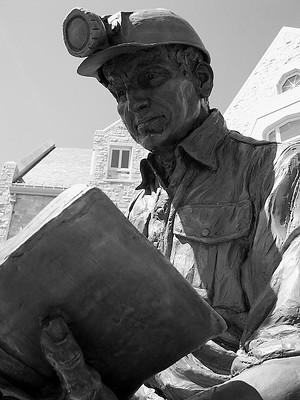
Statue, “Quest for Knowledge,” Washington & Jefferson College, depicting a coal miner on lunch break. Photo by “Kathy,” CC-BY.
My neighbor wears a hat akin to this on his predawn jogs.


Facing fears poem

National Poetry Month has ended, and I miss it. While I may not be posting every day for a while, I continue to write.

The last prompt on Ethical ELA’s #VerseLove was on fear. Articulating it, facing it…perhaps conquering it.

This got me thinking how facing a thing for what it really is = the first step in conquering. There’s a lot of extreme anxiety in the world today. A lot of hatred. Sometimes we just don’t see things for what they are…including our own thoughts.

And so this poem was born.

Courage, peace, and wellness to you, Friends. Whatever it is…you can overcome.

My Fear Haiku

I once read a book
where people’s eyes turned inward.
They died from seeing

what’s inside their minds.
I trembled to take a look
at what lurks in mine.

Now I remember
what Granddaddy once told me
regarding black snakes:

don’t ever kill them.
See, black snakes eat rats and mice;
they’re good. We need them.

I think fear’s like that
snaking along, with purpose
something quite useful

so I never try
to kill it. Let it consume
the uglier parts

of my thoughts, and go its way
leaving me with a clean peace
and a better mind

so that all I fear,
in the end, is forgetting
memories of love.

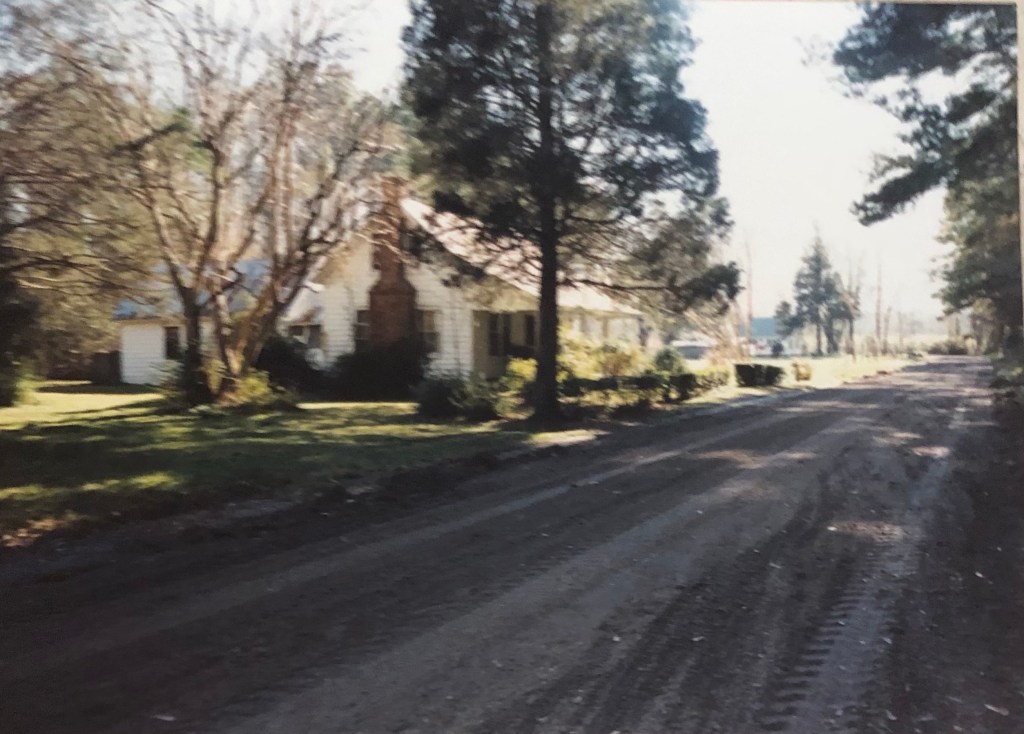
Path of peace. The view after turning off the highway to visit my grandparents. The house is my grandmother’s homeplace, where she and her eight siblings were born in the early 1900s. Just ahead, around the bend on the left, stood my grandparents’ home where my dad and his sisters grew up in the 1940s-50s, and where I spent many childhood summers.

My safest haven on Earth. Snakes and all.

Love, life lessons, legacy, and memories live on.

Earth-keeper poem

For the final Day of National Poetry Month, with thanks to Susie Morice, who encouraged poets to write of their favorite earth-keepers on yesterday’s #verselove at Ethical ELA. She suggested using a quote from an environmentalist to build the poem.

My quote is excerpted from a favorite novel:

“We found that trees could communicate, over the air and through their roots…We found that trees take care of each other…seeds remember the seasons of their childhood and set buds accordingly…trees sense the presence of other nearby life…a tree learns to save water…trees feed their young and synchronize their masts and bank resources and warn kin and send out signals to wasps to come and save them from attacks.” —Richard Powers, The Overstory

Understory Haiku
(for Granddaddy)

Once upon a time
my grandfather dug a well
in the earth he loved

he never said why
or who needed that water
maybe his neighbors

farm communities
did that; they worked together
for the common good

down deep in that hole
his shoveling uncovered 
a fully-formed tree

never saw the likes
he said, and I never asked
what became of it

but I imagine
it still lives, long after him
my understory

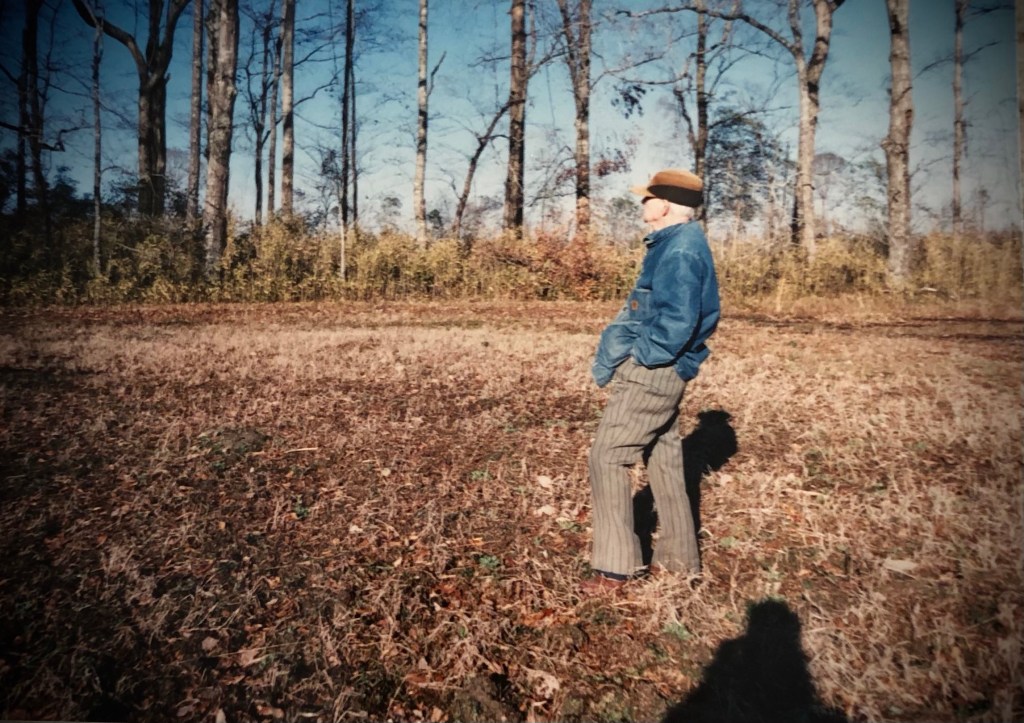
My grandfather, walking the land he loved most, his childhood farm. He told me where the house stood, and all the old barns…at the time of this photo, nothing remained but a wide field still in cultivation, bordered by trees. That’s my shadow at the bottom, taking his picture.

“Secret connoisseur” poem

with thanks to Karen Workun who invited a quick write today for #verselove at Ethical ELA. The idea is to brainstorm “secret areas of expertise,” choosing one to spin into a poem.

This is dedicated to Dennis. Again.

For Day Twenty-Seven of National Poetry Month

Lapland

Lapland
they say
is an icy
enchanted region
where the
northern lights
color-play
in the sky
and where
the only official Santa
actually lives
but here
in my house
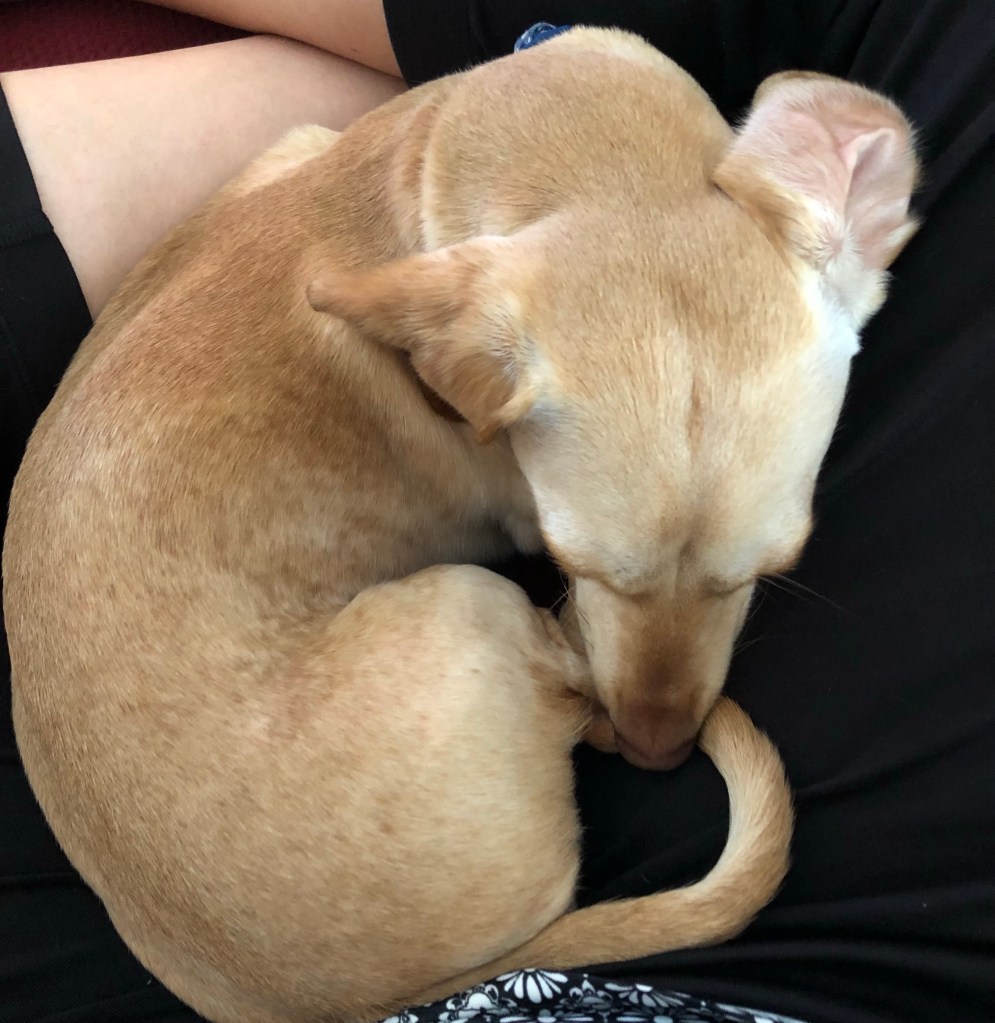
I am Lapland
to a ten-pound
cream-coated
chocolate-nosed
dachshund
who will NOT stop hopping
by my chair
until he successfully
springs into my lap
or until I scoop him up
whichever comes first
and where he settles in
to snooze
with blissful
rhythmic
surprisingly loud
dog-snores
for as long
as I’ll let him
which is usually
until my leg goes
completely numb
from his tiny deadweight
yet still I sit
absorbing
his mighty warmth
like a recharging
of life
for the day
and should I have
to get up and walk
to get the blood flowing again
in my poor numb leg
he trails me
with glistening
brown doe-eyes
beseeching
the reappearance of
his cozy
enchanted Lapland
for the sweet dreaming
of his
little dog dreams

A bit of legacy poem

For Day Twenty-Six of National Poetry Month

Testament 

I cannot measure
how much time remains
in the hourglass
of my days

sand grains
steadily trickling
more than half
already gone

yet still refining
polishing
my existence

with words

let them be
the worry-stone
worn smooth
slid into the pockets
of those I encounter
a cool indented
presence of calm
for the holding

let them be a beckoning
a turning inward
toward crystals
forming in the geode void
the amelioration
of hollow places

let them be
like the curious folk remedy
of my childhood
jars of strange white peach rings
with heart-colored centers
floating in witch hazel
(which has nothing to do
with magic; the etymology of the name is
pliable)
cure for bruises and
what ails you

let my words be
a gauge for life-giving rain
collected
yet flowing on
and on
a good measure
pressed and shaken
poured out

a testament of love
for the new life

coming

In the grass (a snapshot poem)

with thanks to Susan Ahlbrand who invited writing around an old snapshot today for #verselove at Ethical ELA.

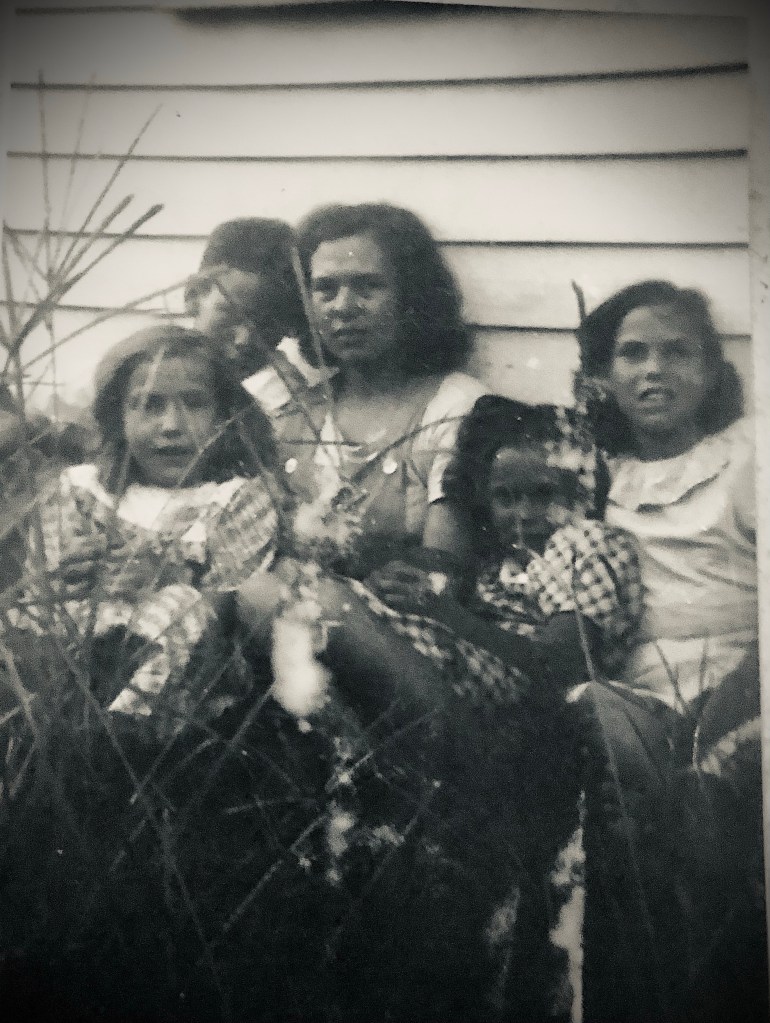
A tribute to my grandmother, who had six children by age twenty-two, during the Depression. She outlived four of them. One baby boy died a few years before this photo was taken.

For those of you who read my poem for Earnie (my aunt Earline): she’s second from right, the child snuggled closest to her mother.

A pantoum for Day Twenty-Four of National Poetry Month

In the tall, tall grass
a mother’s determined love
covers a multitude of sins
revealed in time

A mother’s determined love
surviving day by day
revealed in time
burns at the roots of deprivation

Surviving day by day
her feisty, firebright glow
burns at the roots of deprivation
before the brokenness shows

Her feisty, firebright glow
covers a multitude of sins
before the brokenness shows
in the tall, tall grass

Question (of literacy) poem

On behalf of children, on Day Twenty-Three of National Poetry Month

Speaking Points (Do They?)

Glowing screen split into
graphs, trendlines, colors
a virtual sea of data
and faces of colleagues floating
with the question:
“You are the literacy person—
what do you think?”

What I think is that
there’s no secret code
or formula
or magic bullet
or any infallible translation
of impersonal little dots
scattered like breadcrumbs
leading to ponderous conclusions
about the beating heart
of a living, breathing child
and so I say,
“I don’t know what I think
until I hear this child read.”

For while the thunder of uncertainty rumbles
and pedagogies rise and fall
like generations
on billowing waves,
I cannot imagine the whole
of my own existence
crammed into little dots
for others to interpret
the magnitude of my story
or divining and defining
the scope of my future
without ever hearing
my voice

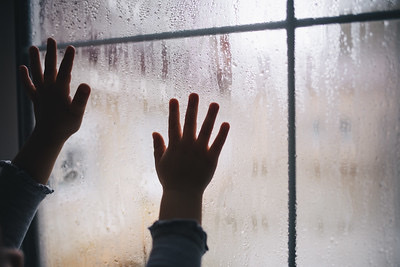
Child’s hands at the window. Nenad Stojkovic. CC BY

*******

with thanks to teacher-poet Angie Braaten for the suggestion of writing around “an important question you’ve been asked,” using this format:

Stanza 1: Question

Stanza 2: Answer

Stanza 3: Reflection

Unexpected poem

with thanks to Araceli, Deanna, and Michelle at #verselove on Ethical ELA today, for the invitation to write about someone who’s influenced your life, incorporating sensory details. My first inclination is to write of my grandparents – as I often do – but today, my aunt came to mind. I expect she’d be so surprised.

I am.

This one’s for her.

On Day Twenty-Two of National Poetry Month

A Poem for Earnie 

I didn’t expect to write of you today
but here I am, remembering
of all things, the tape recorder
your ready, set, go!
the click of your finger pressing play
and singing for all we were worth,
you, my little sister and me:
Wherever you go,
wherever you may wander in your life
Surely you know
I always want to be there…

one of us flubbing the words
all of us cracking up
you saying, I’ll rewind
let’s try it again

I think of your laughter
wild, free, contagious
your raucous humor
trailing you like an ermine robe
rich, resplendent, priceless
cloaking loneliness
I may not have perceived

The only one of my mother’s sisters
never to marry or have children
which didn’t keep you from giving advice
pressing Mama’s buttons
like no one else on Earth
yet she went and named her youngest daughter
after you

Then there were the wigs on
the featureless disembodied heads
sitting on your dresser
you could pick whatever 1970s hair you wanted
each day
how cool was that?

I can’t recall a thing you ever cooked
only that you loved eating
Mama said you were picky
you didn’t look it
Mama said that’s why you weren’t married
so picky that you didn’t get got

I wondered why you never really left home
living with Grannie most of your life
you’d break away for an apartment once or twice
but would always go back
like you needed to be
within the borders
of her shadow

Perhaps it will surprise you
that I recall the ceramics class you took
and the Pepto Bismol pink statuette
of Hotei, the Laughing Buddha
god of happiness and contentment
that you made for me
his hands thrown high to the heavens
Rub his big belly for good luck
each day,
you said
and I could hear the pleasure in your voice
only much later did I flip him over
to find your inscription of love
on the bottom of his pedestal

Funny how the dress you wore to my wedding
was Pepto Bismol pink
I am glad I asked you to be my wedding director
at Mama’s prodding
I remember the books you ran out to buy
to do the job well
for me

Of course there’s Jenny…
a love of your life
Siamese as picky as yourself
who’d curl in my lap
purring
That’s rare,
you’d say

Jenny who lived twelve years
who died in the fire
when you woke in the middle of the night
choking on the smoke
phone in your bedroom
hot to the touch
calling 9-1-1 for the first time
because it was
a brand-new thing
I don’t know how you roused
Grannie and Papa G in the other room
nor how any of you climbed out of the windows
onto the roof
into the freezing midnight air
and safety
as the firemen arrived
but you did it

in my mind, Mama’s voice:
It took three firemen to hold her
from going back in
for Jenny.
They found her
the next day
under Earnie’s window.

I hear your anguished sobs
even now
in those wee hours when you
arrived at our house to stay
reeking of smoke
so that the fur coat you wore
would have to be destroyed

I remember the clothes
you bought for my first baby
in bright, beautiful colors,
expensive
so lovingly chosen

You didn’t live to see my youngest
never knew of his gift for music
how you’d have loved it
I can see you right now,
tape recorder in hand

As the disease took your lungs
and reached its insidious fingers
into your brain
I recall the peculiar shine in your hollowed eyes
against the yellowing of your face

when you asked:
Are you still writing?
Have you published anything yet?

Yes and no, Earnie.
I am still writing, yes.
Long, long after we laid you to rest
in your pink dress
(Grannie had your nails painted to match)
and this isn’t really published
but it’s for you
I didn’t expect to be writing of you today
or singing Olivia Newton-John all of a sudden
after all these years,
but here I am
and here you are,
wherever I may wander
in my life
snatches of song, rolling laughter
here in my morning
here in my night.
Duality poem

with thanks to Brooke, Bailey and Ryan at #verselove on Ethical ELA yesterday. They challenged poets to create duality poems: “Alternative italics is where a poem is written with two meanings. The first meaning is the poem as a whole, and the second meaning is given to it through the italics. Most commonly, the two themes are fundamentally (or, at least, seemingly) opposed. Take two opposed ideas or concepts and make one the base. The other idea will be repeated throughout the poem and written in italics.”

Here is my take on the dual nature of the human heart…

For Day Twenty-One of National Poetry Month

What the Human Heart Craves

Peace
sweet peace
drifting earthward
as prayers float heavenward

Peace
enveloping souls
like winter coats
pulled from a magic wardrobe
thwarting winter’s chill

Peace
seeping inward
warms the heart
dwarfing all fear

Peace
is hardly for cowards.
It is
its own reward.

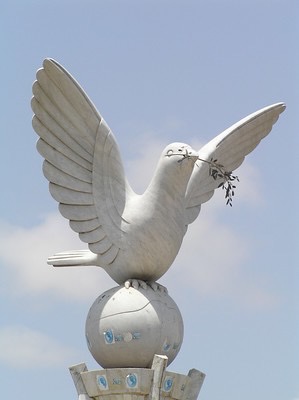
Peace dove. Jeff Attaway. CC BY