Walk with me

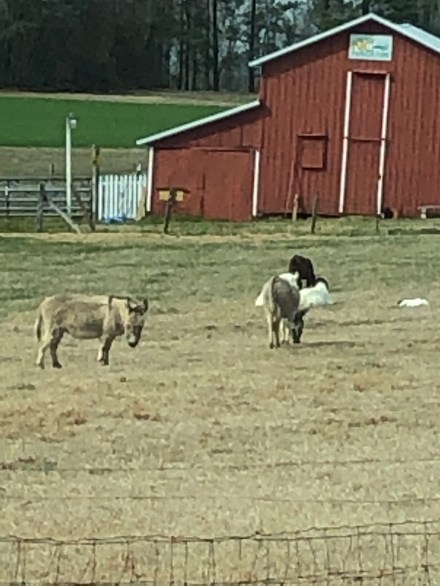
“Jerusalem” donkeys live in a pasture near my home. They are so named for the cross formed by black stripes across their shoulders and down their backs. The donkey is a symbol of peace, for they are peaceable creatures, although farmers know they will protect livestock by driving away coyotes.

The donkey currently plays a significant role around the world with the observance of Palm Sunday and Holy Week. The Gospels of Matthew and John both proclaim the fulfilling of Zechariah’s prophecy that the Messiah would come to Jerusalem humbly, riding the foal, or colt, of a donkey. In Mark and Luke, Jesus directs his disciples to a colt “on which no one has yet sat.” Only Matthew records that the unbroken colt doesn’t come on this mission alone: Its mother walks alongside as it carries Jesus through the shouting crowds in the streets of Jerusalem.

It is the image of the mother walking beside her colt—her child—as a calming presence amid chaos, as a needed coach in fulfilling the sacred duty, that suddenly pierced my heart and inspired today’s post.


Walk with Me

My world is confined

to the home that I know

until strangers come

to lead me away

—please, will you come with me,

walk with me?

I know not the destination

only that it’s far

beyond what I can see

and I can’t go it alone

I need you by me,

to walk with me.

The crowds, the fervor,

what can it all mean

 but that I’m not safe

in this place of screams

don’t leave me now!

Just walk with me.

Such heavy burdens in this

untamed human world

some worthy, some not.

What’s the difference?

—Show me, I am watching you

walk with me.

A step and a step and a step

at a time,

I find I can carry on

as long as you are here

—because you don’t fear

to walk with me.

It is new to me, 

my burden; but it is light

despite the shadows

you are at peace

—and so am I

for you walk with me.

I know, somehow,

you’ll see me home

when this day, these cries,

this purpose, are done

—so walk with me

walk with me

keep me ever close 

and

walk with me.
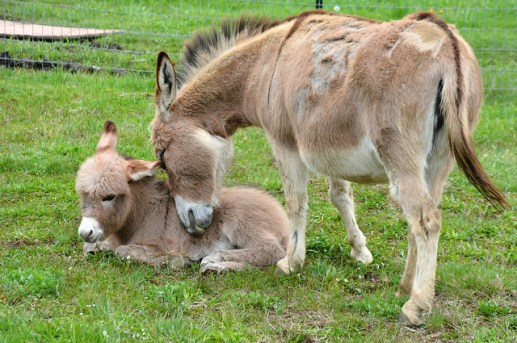
Jerusalem donkeys

Mother & baby Jerusalem donkeys. Barbara BresnahanCC BY-SA

Trust is a reflex

Trust is a reflex

when eyes can’t see

when a presence passes over

and mouths open

anticipating sustenance.

Trust is a reflex

when others draw near

when in their shadow

minds open

to positive intentions.

Trust is a reflex 

perhaps, more than a choice

that the proximity of others

portends benevolence

not harm.

Trust is a reflex

a silent cry of the heart

believing that somehow

someone is near enough 

to hear.

Holy

It is dark, I cannot see.

—Wait a bit, there will be

light.

I  don’t see You, but I’ll trust.

—I made your eyes, they will adjust;

I gave you sight.

So much I see, that should not be.

Be still and leave this all to Me;

it will be right.

 I fear most to see inside of me.

Fear not. Even there I’ll be

to drive away your night.

No darkness is too great for Me.

This I know. It sets me free.

Toward Your light my soul

takes flight.

Keep it alive

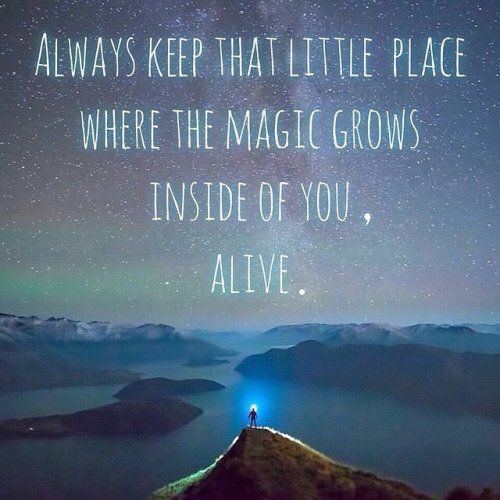
It is the place

where ideas are born

some as ghosts

some fully formed

It is the place

where voices echo, echo

real or imagined

they ebb and they flow

It is a place of seeing

yet layered in veils

lift them one by one

as mystery entails

It is a place of sensing

both self and Other

alive within, without

—feel the shiver, the shudder

It was striving to be

long before we had words

for we are knitted of story

given voice, to be heard

So nurture it well

let it breathe, let it grow

keep the magic alive, for

you’re meant to write it,

you know.

Dichotomies

Dichotomy
Dichotomy #3 by Abdulaziz al Loghani. Brett JordanCC BY

Our greatest national resource is the minds of our children.

—Walt Disney

When they are hungry

who would give them rocks

When they cry for a spark

who would spew water

When they strive to see

who would deploy smoke and mirrors

When they would fly

who would clip their wings

When they desire to go further up, further in

who would confine, constrain

When they crave autonomy

who would demand automatons

When their differences resemble a separate peace

who would distill a disparate piece

When the lengths they must travel are not equidistant

who would mistake equality for equity 

When they carry fragile fragments of hope within

who would build a diehard dystopia without

When they begin to perceive diversity as a gift

who would wrap it in sameness

When they aren’t the same

who would construct uniform boxes

When they would breathe

who would affix a lid

When the scraping of the adze and the hammering cease

who will hear the sound of fingernails

from inside

the casket of our dichotomies? 


Note: If you read “they” as children, try reading with “they” as teachers.

*******

Literary allusions: Matthew 7:9-10 and Luke 11:11-12; The Last Battle, C.S. Lewis; A Separate Peace, John Knowles; Animal Farm and Nineteen Eighty-Four, George Orwell; The Giver, Lois Lowry; To Kill a Mockingbird, Harper Lee; As I Lay Dying, William Faulkner.

Metaphor

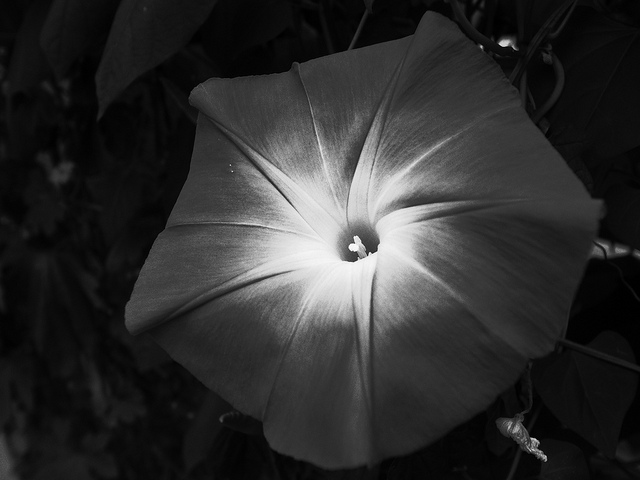
For metaphorMorning glory. Jason BolderoCC BY

Following a poetry unit in fourth grade, the teacher invited me to collaborate on arts-integrated assessments. We set it up by having students choose 1) Poetry concepts they learned and 2) The vehicle for conveying their understanding, one of the multiple intelligences: arts smart, math smart, music smart, body smart, self smart, people smart, word smart, science/nature smart, and one extra that we added, tech smart.

Students could collaborate if they’d selected the same “smart.” They were free to think and design as long as the activity or product defined or represented the selected elements of poetry – imagery, personification, alliteration, simile, etc. Some students chose to make games and puzzles (math smart) with their poetry concepts. Some went straight for Chromebooks. Some preferred sketching and drawing (later in this process one student who struggles with academics will show me how she intentionally incorporated perspective and 3D elements in her art smart visual representation of imagery). A team of body smart students began choreographing a dance to define three concepts. One student wanted to write a song. 

So much excitement, so much brilliance, yet no one picked “metaphor”— the word sat all alone on the chart where students placed their names beside the poetry elements that they wanted to demonstrate.

And no one chose “word smart” as the mode. They had, however, written their own poems during the unit.

I pointed out that word smart is naturally interwoven with music smart in writing a song, and with body smart in the chants accompanying the dance. Words play their part in slideshows, in the puzzles and games, and in all the conversation the kids were having about how to best represent the concepts in these ways.  

As for metaphor . . . the students grinned. With lots of teeth. “You said you’d give us a model.”

Ah. So I did. Is that why no one picked “metaphor” and “word smart”? Was this a conspiracy?  A throwing down the gauntlet?

I smiled inside myself. I would have chosen metaphor anyway (I think). And what better “word smart” way to convey its meaning than through poetry?

When I returned, rough draft poem in hand, I posed a question: “First, I need to make sure you know for yourselves what metaphor is. How would you define it?”

Their responses:

“An image that stands for something else.”

It helps paint a picture in the reader’s mind.”

You can’t say ‘like’ or ‘as’ because that’s simile. You have to say something IS something else.”

A comparison.”

Wordplay.”

Really, guys? And none of you picked metaphor? Seriously?” I asked in mock exasperation.

Giggles. They sit gathered round my chair, on the rug at my feet, these young sages waiting for me to read.

What is metaphor?

Metaphor is the sun behind the clouds

the heavens reaching long, shining fingers

down to the earth of our minds.

Metaphor is the moon on the ocean of knowledge

bits of silver smiles shining on a dark surface

that’s always moving, moving, moving.

When I say that home is the velvety warmth of my dog

and the laughter of my family around the dinner table

that’s metaphor.

What is metaphor for?

Well, meta means beyond.

Metaphor is understanding

in a deeper way.

Without metaphor

imagery is a just a strange skeleton

without flesh and color

something we don’t recognize.

Metaphor is what we know

helping us to see better.

Metaphor is new glasses.

Metaphor is the cloak

thrown over the invisible

to make it appear

and have shape

and make sense.

Without metaphor

poetry would shrivel

and maybe die.

Metaphor waters the poet-tree

and keeps it alive.

That’s meta.

That’s what it’s for.

Metaphor.

In one motion their hands went up to flutter or “sparkle” in silent applause; I had a fleeting sense of being in a beatnik coffee house, minus the sound of finger snaps. Of course these artists, mathematicians, scientists, all, will be chomping to give me specific feedback with the rubric that I helped them create. They’ll do it thoroughly and gleefully, rest assured.

Such a jewel-encrusted, double-edged sword, teaching.

After

On a mission through the school’s main hall

a casual glance through the glass wall

fresh mulch, a sea of woody brown

a few dead leaves scattered round

—Fall.

It registers after I pass

something else beyond the glass

something crumpled on the woody bed

a conspicuous spot of red.

I turn around. 

A bird, lying on the ground

flat on its back

speckled white and black

white claws curled, scarlet head.

Little woodpecker. Dead.

Flew into the glass wall, it’s clear

from the way it’s lying here.

A broken neck, I think

but then, then—I see it blink.

What comfort can I give?

Is it even going to live?

I mustn’t touch it, must let it be

I won’t have it die for fear of me.

The hall’s deserted, what to do

people are waiting for me, too

—I’ll hurry. I can never atone

for letting it die alone.

On my hasty return, a wondrous sight

the woodpecker, sitting upright

scarcely moving, still dazed.

I am amazed.

It opens one eye, tests its beak

assessing the damage wreaked

turns that stunning head

of breathtaking red.

I silently celebrate

as I watch and pray and wait

for that one eye remaining shut

to be all right, to open, to see—but

the instant it does, without warning

with a flurry of wings, off in the morning

he goes. I didn’t see him fall

from my side of this glass wall.

I’m just here, rejoicing, for his open eyes

his reclaimed strength, his reclaimed skies.

My heart goes with him, as he flies

—I saw him rise.

Just before he took flight again. A woodpecker happens to symbolize communication, opportunity, and awareness. How grateful I am to have seen him, to have witnessed his overcoming.

September 11

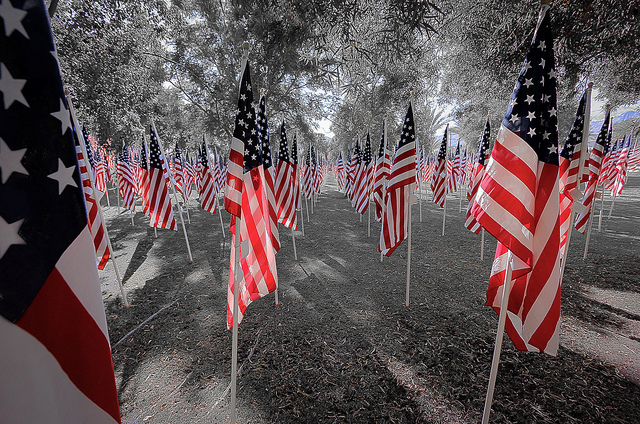
Healing field

The Healing Field. Randy HeinitzCC BY

Out of the blue

a student asks:

“Mrs. Haley,

if you could have

one magic power,

what would it be?”

Other students 

look up from their writing

to listen. 

I think of suffering

of strife

of festering

scars and stripes

visible

and invisible.

Broken bodies

hearts

psyches.

The children watch

and wait.

What power would it be?

“Healing,” I say.

They absorb this

without a word

their young eyes

looking far away

or maybe far within

to make

their own meaning.

They nod

as they return

to creating

their own stories.

September 1st

Morning glory

Morning glory. Toshiyuki IMAICC BY-SA

 In the half-light

the barest fog

wisps about the trees

silhouetted against

a colorless sky.

The stars have gone.

Stillness but not silence

just the faintest thrum

of summer symphony

by insects of the night.

The last long encore.

Cool expectant breath

of the dawn

before day is fully awake

like the rooster nearby

with his rusty, lusty cry.

Circadian rhythm. All is well, is well.

I stand

under the haloed half-moon

drinking in the glory

of life

 even in its transitions.

Even in

farewell, farewell, farewell.

Be

img_5026-2

Long may our land be bright . . . 

Be

I find a place where I can be

away from clamor

away from contention

away from conflagration.

A place where I can see

sunlight on the grass

on the trees

on the rocks

on the water

flowing on and on.

A place that invites me

to see the good

in myself,

in others,

to be the good

for myself

for others.

A place of recess

of stillness

of silence

where I sigh less.

Here,

for this moment,

I can

breathe

believe

and be.

Perhaps this is a strange Fourth of July post. It came together strangely.

It was inspired in part by two quotes from children’s television icon Fred Rogers in the documentary of his life and work, Won’t You Be My Neighbor:

  • Whatever happened to GOODNESS? To just being GOOD?” Mr. Rogers, a man of faith who spent five decades helping others and building them up, asked this in the wake of the 9-11 attacks. He would live just seventeen more months.
  • Silence is our most underused gift.” In many segments of his program, Mr. Rogers was silent so that children could concentrate on what they were seeing. 

I thought about children. About seeing our country, our world, through their eyes. 

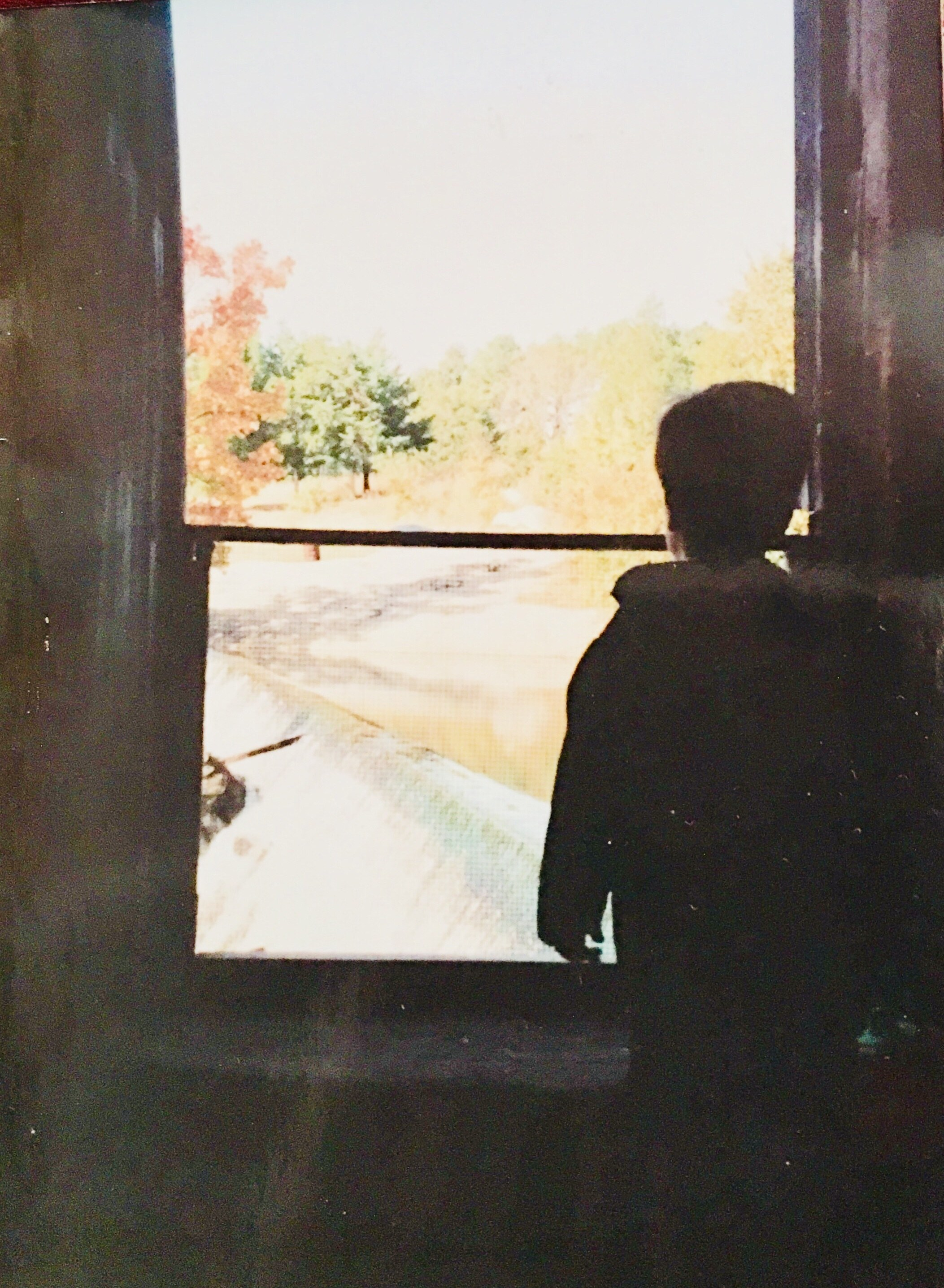
I remembered the photo of my first son contemplating the autumn countryside from the doorway of an old grist mill when he was just three. He grew up to be an American history teacher.

A sprinkling of our patriotic songs and lyrics returned to me, like sea spray on the breeze. America the beautiful. Land that I love. Land of the noble free. Crown thy good with brotherhood. Home of the brave. Home sweet home. 

All stirring me to ruminate on beliefs and believing, on building up versus tearing down, on how, if all voices are shouting, no one’s being heard.

The word clamor came to mind and it somehow strung everything together—whatever happened to goodness and silence is our most underused gift and children and faith and long may our land be bright—like beads on a string.

So today, for a moment, I find a place away from the clamor. In the dawn’s early light and within myself.

To reflect.

To be.

And believe.

Still.