Morningsong

Waking
to grayness
rain slapping windows
winter wind crying
because it does not heed
spring
and life.
Wrapped in my blanket
I listen
to that unrelenting wind
daring
not caring
moaning
mourning
around the edges
of existence.

—then—

Through the
gusting gloom
wailing doom
a faint sound.
A solitary
little bird
singing
joy joy joy-joy-joy
honoring
the light
ever
how dim.

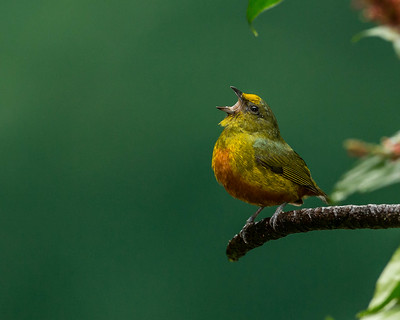
Bird singing in the rain. Andy Morffew. CC BY

On the finches not returning

Today I lift a line from Emily Dickinson.

“Hope” is the thing with feathers—
My finches, every spring—
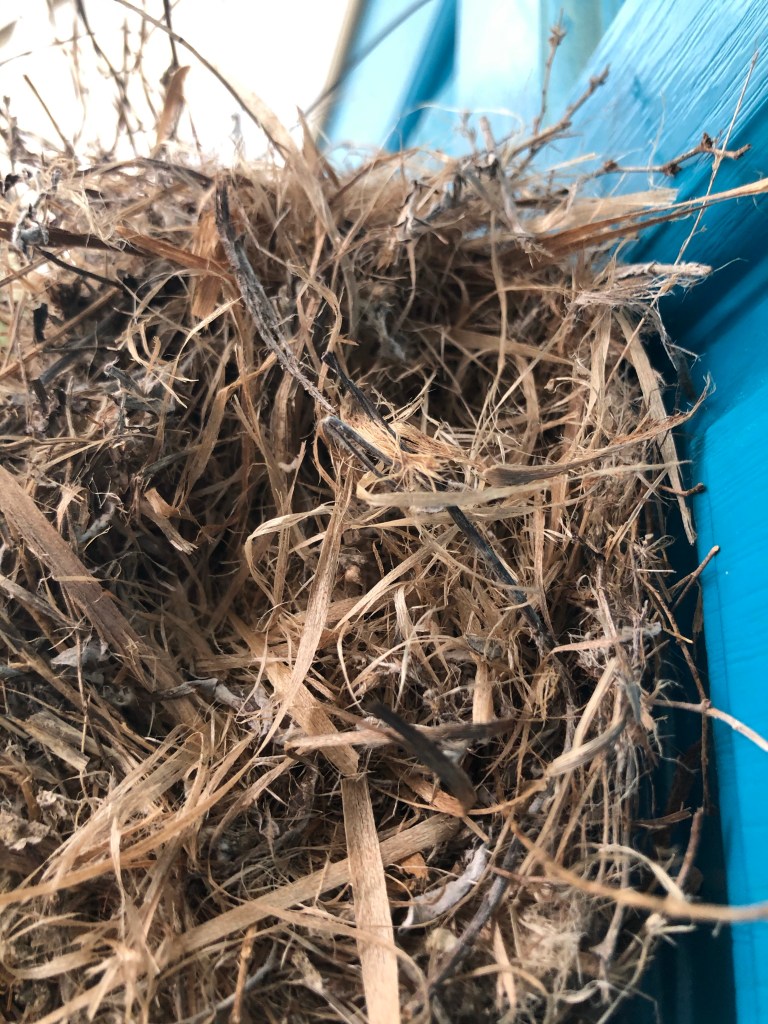
On my wreath their nest awaits
New life they always bring—

This year —more than ever—
I watch for their return—
Yet the nest is empty
Of that for which I yearn—

I wonder what is keeping them
And if my charm is gone—
Do the finches know somehow
Life must keep moving on—

Come home, little finches—
Come home— if you will—
Hope is the thing with feathers
Where I’m abiding—still.

Note: “Charm” is the group name for finches.

April fool

Just some fleeting impressions while sweeping my porch … the beauty of the day in such stark contrast to what’s happening in the world …

While sweeping the porch this April day

there’s children at distant play

laughing, falling

voices calling

lawnmowers mowing

cool breeze blowing

flowers quivering

trees shivering

sun shining

life divining.

Joyous birdsong

like nothing’s wrong

as if only rebirth

sweeps the Earth

not humanity hurled

netherworld.

A spring reception

of such deception.

Beautiful day, you’re almost cruel

playing such an April fool.

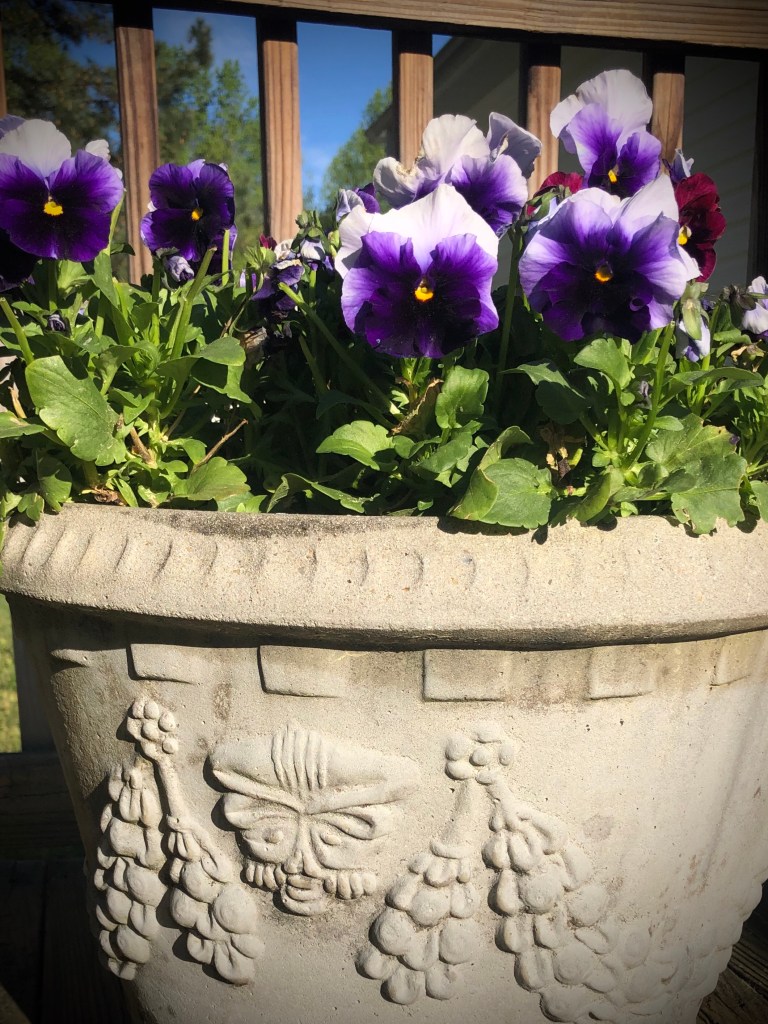
If you were here with me you could see these pansies quivering despite the brightness of the morning. The name of this colorful, dark-eyed flower comes from French penser, “to think.” Pansies symbolize contemplation and remembrance.

Serpentina splendor

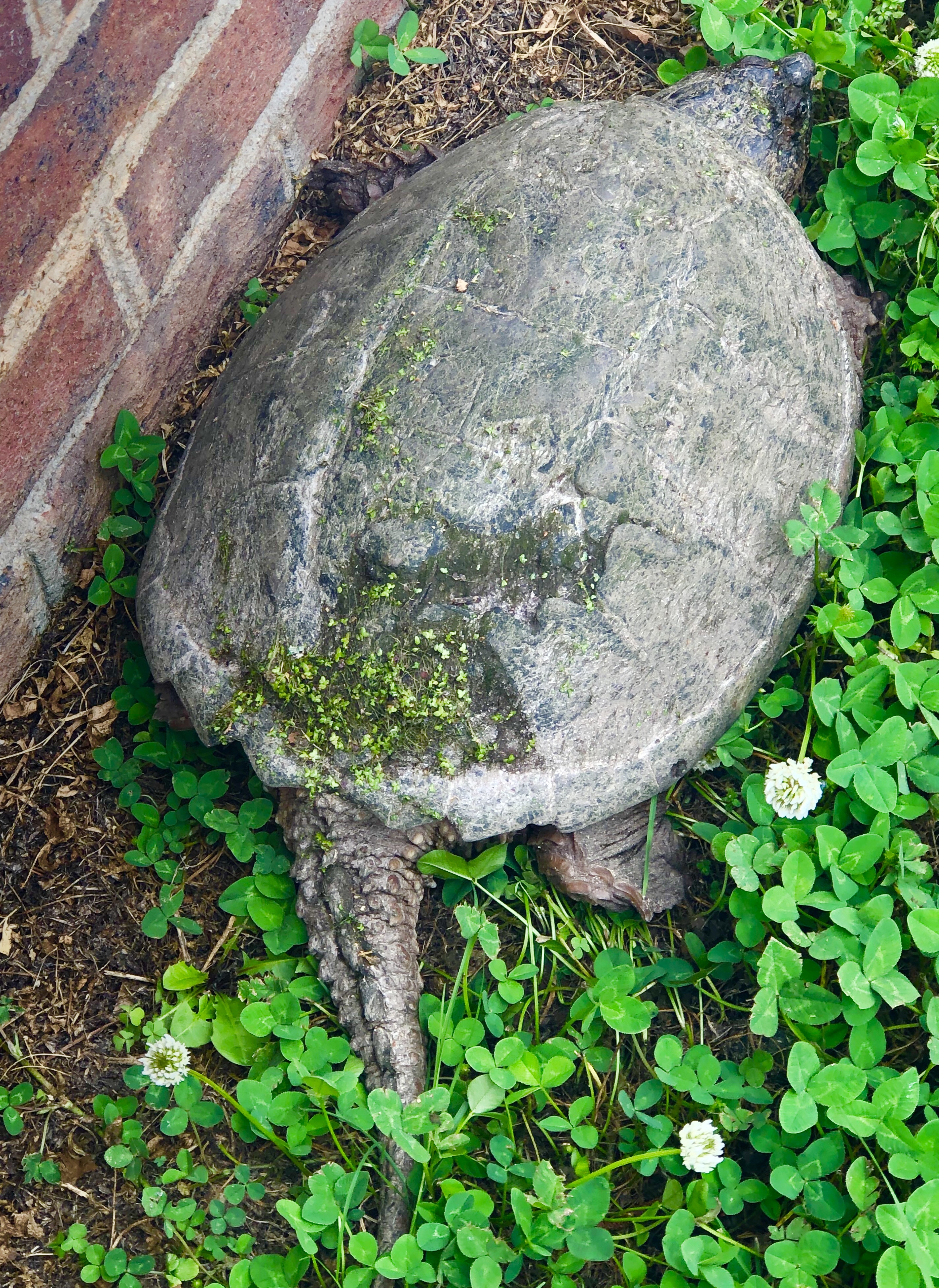
Chelydra serpentina, or common snapping turtle

The dogs raced along the backyard fence, barking and growling like fiends at something on the other side. My husband, upon going out to investigate, hollered with equal parts glee and shock: “Come see this! You won’t believe it!”

All I could think was It had better not be a snake.

No, but close.

Meet Serpentina.

The dinosaur turtle.

Okay, not really dinosaur, just the biggest snapping turtle I’ve ever seen. In my yard, in the clover. With algae growing on her shell.

And her head.

I am really at a loss for words to describe her. Monumental. In size, and in her likeness to stone.

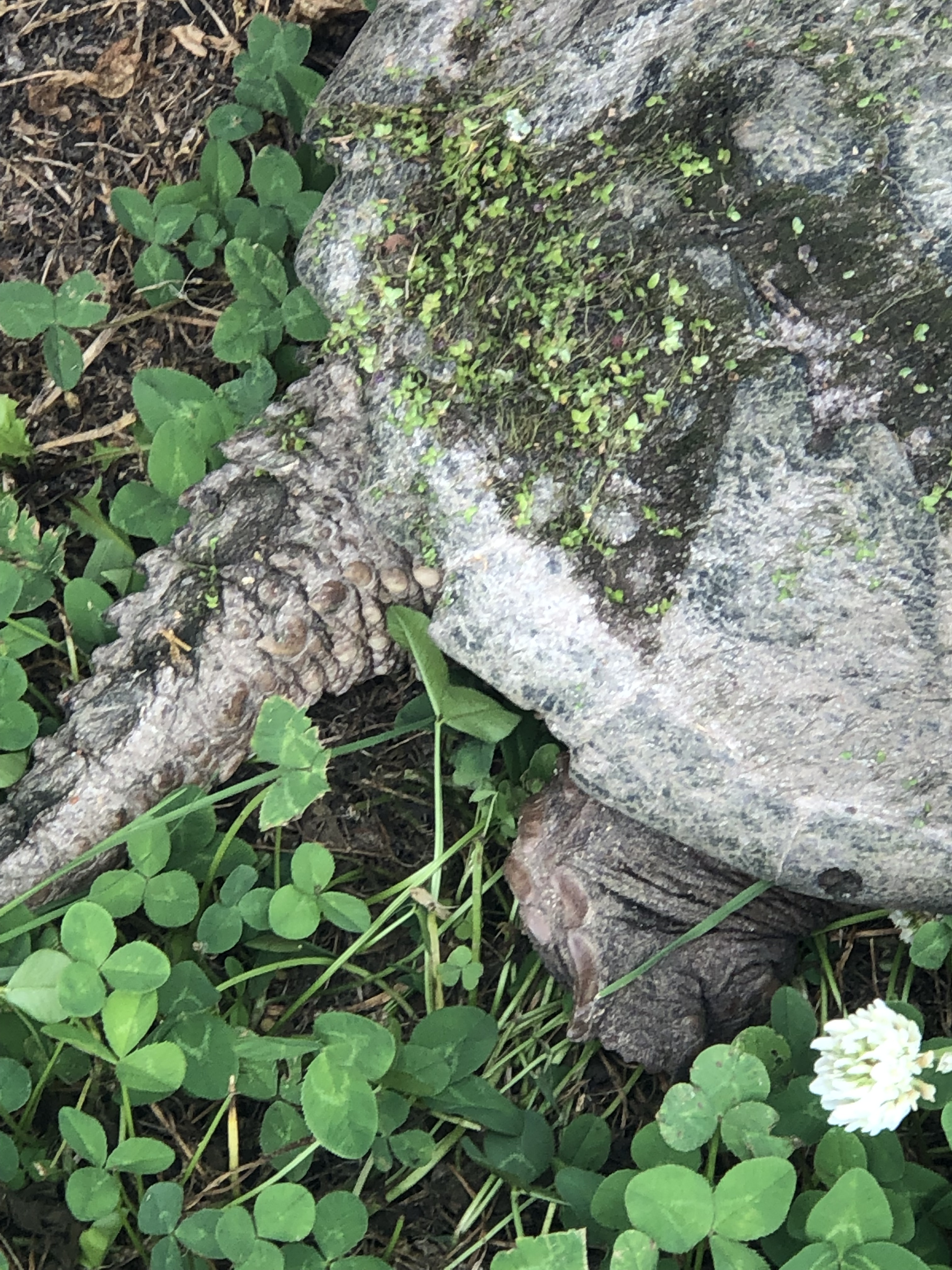
And tell me this tail does not scream dinosaur to you:

My family gawked, marveled, shuddered until we could gawk, marvel, and shudder no more. We let our visitor be. I went inside the house and watched from the kitchen window. After a few short minutes, she began zipping—okay, not really zipping, but crawling a whole lot faster than I imagined a turtle could—along the outside of our backyard fence. Periodically she stopped, leaned up, put her front feet on the fence, and stretched her neck impossibly long (think brontosaurus). Down she dropped again to resume her steady clip.

She’s trying to get to the woods behind our backyard, I thought. The fence is blocking her.

Yet when I turned away from the window for a moment, she vanished without a trace.

I felt oddly bereft.

I mean, it’s not like she’s a snuggly sort of creature.

Several days later I read in a local news article that a record number of snapping turtles appeared in our area en masse, looking for places to lay their eggs.

Nesting, they were.

Old Serpentina—I don’t even know how old she is, she just looks like the ages, a fossil from the dawn of time—her sense of urgency was real.

Maybe that’s what sort of spoke to me, without words. Mother to mother. Living being to living being. In my recoiling was a stab of appreciation; my sense of wonder overruled my impression of fearsome. And somehow, in all of it, lurked a twinge of sadness for which I have no explanation whatsoever.

When Carol Varsalona extended a recent invitation and challenge to create digital inspirations for her #SpringSplendor gallery, I thought of Serpentina. She came along in spring, all right. She’s not what I had in mind at all. I had a beach sunrise in mind. A sprig of wisteria. Beautiful things.

But Serpentina has, you must admit, a splendor all her own.

So, my tribute:

Snapping turtle - Copy

Untoward grace

in algae carapace

seeking with care

a place

to lay new life.


—My best to you and your splendid babies, Serpentina.

I kind of hope I get to see them.

Good vibrations

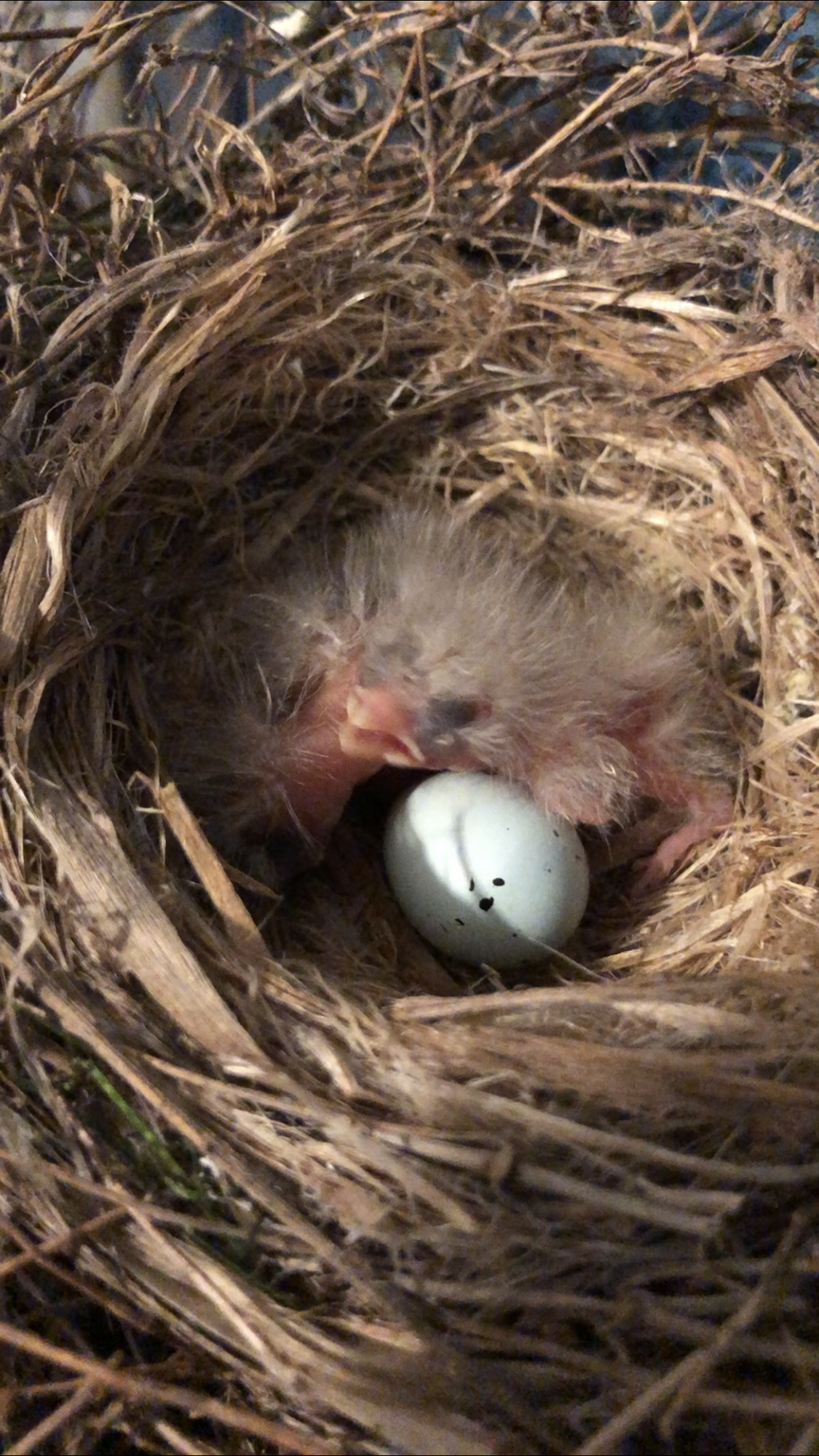
Two of our three baby finches hatched 

I was expecting to find a hatched baby finch on Sunday.

Instead, I found two!

—I think.

I can really only tell it’s two because one egg of three is still there. Although I can kind of discern two different necks, one baby lying over the other.

I knew the eggs were due to hatch around Sunday, and all last week I wondered what the mother bird was experiencing. To begin with, she built—rebuilt, actually—her nest on top of the wreath on my front door, which means that any time we walk down the hallway or open any other doors in the house, she feels those vibrations. Is that a good thing, somehow? Is that a reason why finches like to build so close to humans, to feel those larger rhythms of life, perhaps trusting them to be benevolent and protective forces?

And I wondered—being a mom—if she could feel stirrings inside the eggs beneath her as she diligently kept them warm on these still-frosty nights and mornings. Eggshells are only so thick . . . Can she feel those tiny hearts beating under her, long before her chicks begin pecking their way out into the world?

So many good vibrations . . . .

Reminds me of the story behind the famous song. When he was young, Brian Wilson’s mother told him that dogs will bark at people who give off “bad vibrations.”

Inspired, Brian eventually composed the Beach Boys iconic masterpiece Good Vibrations.

Which leads me back to the naming of these three babies (in a previous post: Tiny trio).  Finches are singers, and my son is a Beach Boys aficionado, so . . . .

Ladies and Gentlemen, please welcome Brian and Dennis (the latter of which was apparently revved up and decided to hatch early—how fitting).

Their brother Carl is due to arrive tomorrow.

—Stay tuned!

“I’m pickin’ up good vibrations . . . “

Tiny trio

Omne trium perfectum: “Everything that comes in threes is perfect”

Little bird up in a tree

Looked down and sang a song to me.

—”Little Bird,” Dennis Wilson, Stephen Kalinich, Brian Wilson

The house finch nesting in the wreath on our front door is incubating three lovely blue eggs.

My son (Cadillac Man) and I are walking, doing laps in the churchyard on a sunny afternoon, talking about names for baby birds (see what happens when new life generates in your realm; if you’re human, you take nonsensical ownership).

“It’s too obvious, but I almost can’t resist calling them Atticus, Jem, and Scout,” I chuckle. “I mean, they’re FINCHES.”

“Yeah, you’re right—it’s too obvious,” says Cadillac Man.

I think I hear a small sigh.

“Hmm. Well, there’s Harry, Hermione, and Ron . . . ” I offer.

Cadillac Man’s face remains immobile. I can’t see his eyes behind his sunglasses. He says nothing.

I can see that literary names are a no go, which is a shame, with “the rule of three” and all that. Cadillac Man does not think from a repository of words and phrases gleaned over time from books like I do. He thinks in music. He always has.

We walk a little way in silence; we’re keeping a pretty good pace. Then Cadillac Man proceeds to tell me new things he’s learning in his continuous (borderline obsessive) research on his musical passion, the Beach Boys: “Dennis didn’t get credit for how much musical talent he really had . . . .”

—I have an inspiration. Cadillac Man will love this. When he pauses, I say:

“We can name the baby birds after the Wilsons. Since’s there’s three of them.”

He grins. “Well, these little birds are singers.”

Brian is due to hatch next Sunday. Dennis and Carl should follow on Monday and Tuesday.

Even if they’re female, it will be fun, fun, fun . . . .

The homecoming

Last summer, a pair of finches made a nest on the wreath on my front door. I watched their family develop, day by day: Four eggs, four baby birds, four fledglings taught how to fly by their parents, and then they were gone.

I suffered empty nest syndrome. Literally.

I took wreath down for the winter and saved the little nest, because I didn’t have the heart to destroy a thing so beautifully made by tiny creatures that don’t have hands.

A Christmas wreath hung on the door until I finally got around to removing it in late January (well, it was festive; it brightened the winter-bleak days).

And I re-hung the “finch wreath,” which is clearly for springtime, but . . . I confess . . . I was hoping . . . .

And along mid-February—might it have been Valentine’s Day? Really?—I heard them.

The tell-tale cheerful chirps, the sweetest bird music, right outside my door.

My heart sang, too: You’re back, you’re back! Welcome home! 

They built a new nest and then . . . nothing.

For weeks, nothing.

I began to worry, which makes no sense, because these tiny birds are much more adept at survival than I am. My worry was mostly selfish, I realized. I wanted the birds here, didn’t want them to change their minds, find another place. I wanted to hear their happy voices every morning, wanted the joy they unknowingly impart, wanted to see new life happen again.

Every day, I checked. The perfect little nest was barren. No finches in sight or within hearing.

The temperatures dropped below freezing again. Just as I began to fear that some fate had befallen my finch friends, I wondered: Is it possible that they knew another freeze was coming? That they built the nest as planned, right on schedule, but that they can hold off laying eggs until the cold spell passes? Can that happen?

Then, early yesterday morning, a chorus of chirpy cheer outside my door!

I had to go see . . .

I have an egg!

Today at the exact same time will be another egg, tomorrow, maybe another, and soon I’ll know how big my little finch family will be.

But for now I just reflect, with reverential awe, on how the first egg came with the first bit of welcome warmth on the first day of the week.

My birds are back home, safe in their sanctuary, on Sunday morning.

And I sing for joy.

Sun day

Here in the heart of North Carolina, epic snow and bitter temperatures haven’t been an issue.

We’ve had a different plague.

For nine dark days in a row, it’s rained.

Rain rain rain rain rain rain rain rain rain

Small rivers flowing over roads and through parking lots. Yards turned to absolute bogs. Maybe we can raise a bumper crop of Venus flytraps.

The farmers say it’s good for the cows, that continuously pulling their feet up high from so much mud as they walk builds their muscles (is this true? The rain is beefing up the beef?).

Not so for humans. The utter gloom left us in a zombie-like stupor.

Gray day after gray day after gray day . . . .what did the sun even look like? Feel like?

Wait—I remember reading something like this. I first encountered it long, long ago. A story of bad enchantment. . .

“When you try to think out clearly what this sun must be, you cannot tell me. You can only tell me it is like the lamp. Your sun is a dream; and there is nothing in that dream that was not copied from the lamp. The lamp is the real thing; the sun is but a tale, a children’s story” . . . Slowly and gravely, the Witch repeated, “There is no sun.” And they all said nothing. She repeated in a softer, deeper voice: “There is no sun.” After a pause, and after a struggle in their minds, all four of them said together: “You are right. There is no sun.” It was such a relief to give in and say it.

—C.S. Lewis, The Silver Chair

How easy to forget there ever was a sun, succumbing to the mind-numbing sound of rain, rain rain, just as Prince Rilian, Eustace, Jill, and Puddleglum fell under the spell cast by the strum, strum, strum of the Witch on her stringed instrument.

Until yesterday, that is, when I heard a sound other than falling water.

Just outside my bedroom window, birds were singing. Merrily.

Despite the pouring rain, on a morning with no sun, they sang with pure zest.

How it lifted my spirits. Surely the sun could not be far from returning. Surely the birds knew it, were proclaiming it ahead of time: This this this too will pass pass pass. This this too will pass pass pass, wait and see, wait and see . . .

Then, today, bit by bit, the grayness lifted. Yellow shafts of light suddenly spilled through the blinds; I ran right outside to revel in the brightness. Now, as the afternoon wanes, shimmering golden fingers are playing across my keyboard, my hands, the table, the walls. I think of a happy child, dancing, full of joie de vivre, joy of living.

Today just so happens to be Sunday.

And now I have a bit of song for you, little harbinger birds:

Little darling, it feels like years since it’s been here
Here comes the sun
Here comes the sun, and I say
It’s all right.

—George Harrison

Wisteria, part 5

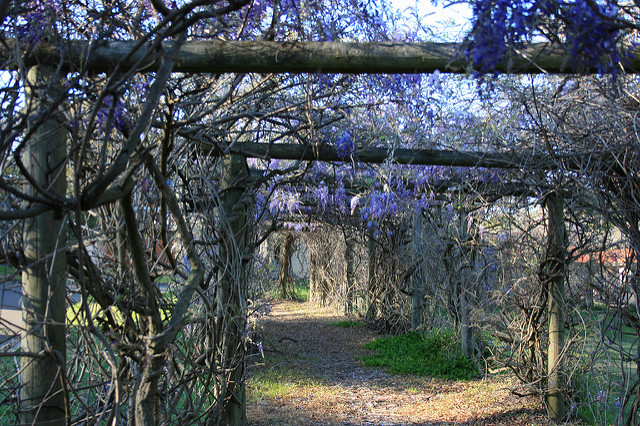
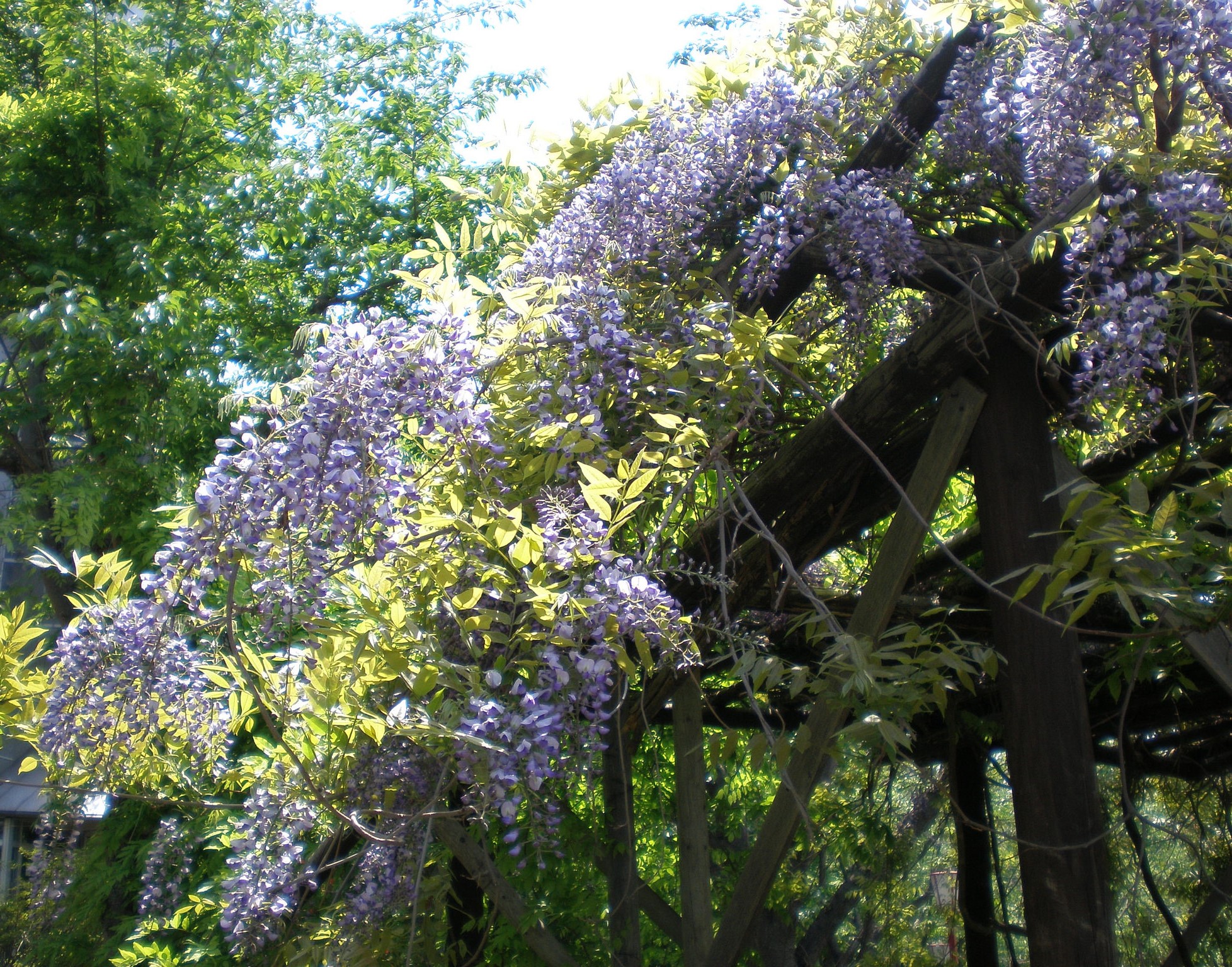
Wisteria long arbor

Wisteria arbor. Jason BakerCC BY

Here’s my last installment of a tale told by a wisteria vine.

“Setting is everything,” said the facilitators at the writing workshop I attended last summer. “Setting drives the plot, the actions of characters . . . .”

That’s certainly true of this story.

All my life I’ve been haunted by an old house in the woods beside my Dad’s childhood home. I looked for it every time I visited my grandmother and we walked down the narrow dirt road. She’d point it out through the trees (she knew where to look; I had trouble finding it):

“There it is, the Griffin house.” 

I’ve seen many old, abandoned houses since, in various stages of falling down, but the Griffin house, obscured by thick woods, was the first. The allure, the spooky wonder I felt as a child, was immediate and intense.

It’s never left me.

None of the people who lived in this house were my relatives. They’re in my blood only because of the place and the stories, real and imagined. My aunt, as a child, used to run on a path between her house and the Griffins’ to play with the Griffin grandchildren. Eventually, said my aunt, the wildflowers and weeds grew taller and taller, and then . . . well, everyone and everything grew up.

The Mixon road began across from the right front of my grandparents’ yard. Standing in the Griffin yard, to the left of my grandparents home, the Mixon road would have been visible to the far right, branching off of the main dirt road. By the time I came along the Mixon road consisted of only two wheel tracks in the grass, a path leading partway through the woods and fading away where fields were still being farmed. There’s no trace of the road at all now; scrubby brush has overtaken it. No one would know a road, or a house, was ever there. Grandma said that the Mixon home down this vanished road was beautiful. It was two stories with a double porch, dating back to the Civil War. That house was gone long before I ever came to be. 

Perhaps this story springs only from a hopeless romantic streak, but as the wisteria grew heavier and heavier in the trees of my ancestral homeplace with each passing year, it stirred the stories, imaginings. For fractions of seconds, I could see the old, hidden Griffin house as it was. I could feel the thrum of farm life, see a mother surrounded by little children, sense a man pouring his soul into the earth to make it produce enough to feed his own.

That house is, for me, an abiding image. I can forever pull back layers to find new and deeper meanings: the passing of time, “memento mori,” we are mortal, and who will remember us when we’re gone?

The wisteria is another abiding image. If it has attached itself so to me, then why not to my characters?

When I happened upon an science article about plants having memory, I wondered, What if such memories could be tapped? What if a botanist actually had a means of, say, sticking a needle in a plant to extract its memories? 

As a writer, I get to do just that. Without the needle.

In previous segments of this story, Jennie Jay Mixon has grown up to marry the widower neighbor, Thomas Griffin. The wisteria finally blooms for the first time. The affinity between girl and plant deepens; their lives, their maturity, mirror one another. In this final segment, the mirroring takes an unexpected, divergent turn . . . .

*******

So Jennie Jay transplanted herself in the Griffin household as the mother figure to six children, the oldest being barely younger than she. Jennie rooted herself in the family as if she’d always been there. And in some ways, she had. She wrapped her love around Thomas Griffin the way I wrapped myself around the arbor frame. Like my arbor supported me, Tom’s strength secured Jennie Jay. Under the arc of their love, the children, the farm, flourished.

Until their first baby died, weeks after birth.

She spent that day drifting between the house, the cemetery, and me, wandering as if she were that lost toddler of long ago.

He finally pulled her to a bench he’d placed under me, sat her on his lap.

I did all I knew to do, Tom. She seemed to be getting stronger. What did I do wrong?

Nothing, my love. She was just too little. You can’t blame yourself.

I ache to hold her. To feel her warmth. I think somehow I needed her more than she needed me. I am just so empty. 

There’ll be others to come, who need you. And I need you, Jennie.

She smiled a little then. She pressed her wet face against his coat. He leaned his head back against my trunk, let her cry, and cried along with her.

But he was right. In time, more babies arrived: Twins, then two more.

I was a part of that last fertilization. Really, I was.

They crept out of the house one balmy summer night under a waning crescent moon when I was blooming riotously, having been pruned back a few times for my own good. I sheltered them as they loved each other, murmuring of long ago: dandelions, destiny, The Powers That Be.

And me. Jennie Jay and Tom whispered of me, even then.

Let it be duly noted, however, that I find the efficient business of self-pollination far superior, although this interlude did clarify some finer points.

And children grow almost as fast as vines; one by one, they all left home.

Tom began to wilt.  Rheumatism, Jennie called it. She fussed over him, waited on him. He basked in her attention much like I bask in the sun.

Considering the span of their ages, everyone expected him to go first; it was the natural order of things.

I perceived it before she did.  How, I cannot convey, but I discerned something stealthily growing, snaking its way silently through her inside parts, bit by bit. The terrible truth is that this Thing was like me. Powerful in the way it grew and took over. I had not fully known my own power until Tom extended the arbor with an enclosed walkway of trellises. My new shoots, innocent, so tender, had spiraled through the lattice. As I grew, my tendrils tightened; I began to pull the lattice into myself, out of control, until Jennie Jay and Tom cut that part of me away.  They left the overhead beams of the new walkway for me to extend myself and luxuriate, but no more lattices, as I would only destroy them.

I sensed nothing good in the Thing that slowly choked the life out of Jennie Jay. It wanted to live, she wanted to live, I wanted to live; but I could not desire to live if my living was at the expense of hers.

The elongated arbor allowed me to get near the bedroom window. Jennie Jay, so small and white, lay still on the bed. Tom’s cane remained in the corner, for he seldom left her side, even when the neighbors came to relieve him, or when the children came to say good-bye.

He held her whenever she screamed, when the Thing, out of control, took, bent, consumed, destroyed. He was holding her on that last morning. The sun had just risen; dew sparkled like scattered seeds of fiery rainbows.

Her eyes opened, looked through the window at me.

It’s morning, Tom. Time to get going. I’ll wait for you under the wisteria. Come on whenever you’re ready, dearest.

Humans say envy is green. I am green. I know envy. I envied the pine tree given for her casket. I wanted to be the one, would have sacrificed myself, to hold her forever and ever.

Of course he knew. Before he nailed the lid shut, he hobbled outside with a pair of shears to clip a little sprig of my purple flowers. When his children and the neighbors attempted to help, he shooed them all away. He carried my flowers, placed them under Jennie Jay’s white fingers, kissed her hands, her face, one last time, and nailed the lid himself.

He planted her beside their first baby, a wise distance away from the first Mrs. Griffin.

In his grief I was powerless. I could offer no condolence, could not weep, could not acknowledge our loss in any way other than shedding my blossoms, borne by the breeze to collect on the mound where she lay.

I lost track of time then. So did Tom.  He did not come to me again but went quickly after her, his existence too intertwined with hers for him to adapt to a world without Jennie Jay in it. She was his world.

By then the garden was no more. The yard soon went wild. Grasses and weeds grew tall; the pecan tree rotted away. The Griffin children, their grandchildren, their great-grandchildren, came back from time to time, always in a hurry, visiting the graves, showing the land to potential buyers.

No one wanted it.

The barns collapsed. The house and I kept standing, even as saplings grew into trees around us. My arbor could not bear my weight; I crushed it. I latched onto a sturdy oak, where I climbed and climbed above the darkness of the woods which claimed for itself what was once the productive farm of a good, kind man.

I reached the house, at last. All traces of the whitewash were long gone. I wove myself through the bare clapboards and window frames, up the narrow staircase, back out between the cypress shingles.

She lived here, she was happy here. Her babies were born here. The walls and I were the last testaments to their love, that peculiar human gift. My tendrils tasted it all, absorbed it, took every bit and stored it deep within myself. My twisted trunk attained the girth of a man. Parts of my vine grew larger than Thomas Griffin’s muscular arms when they first wrapped around Jennie Jay.

I am all that remains. The house caved in from the ravages of time, weather, and me, but I am compelled ever onward and upward. Trees do not grow fast enough to suit me, for my goal is to reach the sun, that life-giving, golden orb beckoning from the periwinkle sky; I sense that something of Jennie Jay is there, just on the other side.

Until then, I draw from the essence of her deep within myself, where every sensation is preserved, where she lives on and on and on.

Her first and last words were of me.

First and last, first and last. My images of her keep circling, circling, ever-circling.

She was the first child I ever saw . . . .

Wisteria & old house

Old North Carolina home covered in wisteria. David R NCCC BY

*******

The End.

But maybe not.

Wisteria’s last line is also its first, so, back to The Beginning . . . .
Wisteria sprig

Wisteria sprig. Maggie McCainCC BY-SA

Wisteria, part 4

Wisteria vine

Wisteria. Asiya QureshiCC BY

I love things that are old. 

I am having fun tinkering with this little story about the old days, based on my grandmother’s childhood memories and stories that occurred before she was born. The ancient oral tradition . . . as I listened to her, faint images of people partially materialized in my mind. I wondered what their extended stories might be, what their lives were like on family farms in this remote, woody place that I visited each summer. In my lifetime, it was nearly all woods; few traces of the community remained. 

The wisteria remains. It hangs in the trees where the farm houses once were, its abundant, pale purple flowers the very image of April in North Carolina, whispering of long ago.

I starting wondering what stories the wisteria could tell, what it had witnessed across the years.

Then I heard its voice. 

I guess I’ve always had a wild imagination . . . 

It’s also fun to relate Wisteria’s story, beginning in the 1880s to the turn of the twentieth century, thus far, in segments somewhat like a serial in newspapers or magazines of that era. 

In the preceding installments (Wisteria, Wisteria, part 2 , and Wisteria, part 3), the vine tells of its mysterious origin on the Griffin farm and its developing kinship with a girl named Jennie Jay, who’s become a teenager harboring a secret. Mr. Griffin, father of six, has just lost his wife in childbirth with the seventh. The vine isn’t able to bloom, not an uncommon condition.

In today’s post . . . well, just sit back and listen to what Wisteria has to share . . .

*******

I woke the next spring to find Mr. Griffin building a porch on the front of his house. Every day, neighbor women stopped by with fudge or a pot of chicken and dumplings or stew for his family. The married women stayed only minutes, but the widows . . . they lingered, smiling and chatting at Mr. Griffin as he tried to work. By now I understood a lot more about humans than I used to. I stretched myself closer to the house for snatches of conversation.

Mr. Griffin, it seemed, had little to say.

He managed, somehow, to finish the porch. He left the gardening to his children and whitewashed the house. It stood tall, narrow, and bright in the sunlight by day; it glowed in the moonlight at night, as white as the stone markers just across the dirt road.

In all this time Jennie Jay did not make an appearance.

Her mother walked over one afternoon, bearing a basket, when the Griffin children had gone Up the Swamp to visit their mother’s relations. Mr. Griffin leaned against a porch column, smoking his pipe, gazing at the place where his wife, his baby, and his parents were planted.

He straightened, nodded, when he saw who was coming.

Miss Aurelia.

Hello, Thomas.  Here, I fried a chicken and made some biscuits for you.

I greatly appreciate it.

Your porch is lovely.

Thank you. The children enjoy it. Just got the swing up this morning.

How are you?

Can’t complain. You?

We’re all well.

A pause. Then—

Jennie Jay came home today.

Ah. So she’d gone away, had she.

Mr. Griffin puffed his pipe. He took a long moment to respond:

How did she like Raleigh?

She says she likes the shops but hates the city.

They both chuckled.

My sister said she was terribly homesick. She couldn’t understand why Jennie Jay wanted to come back to the ‘sticks,’ you know.

A slight smile played on her face.

Mr. Griffin just stared ahead. He made no reply.

She asked about you. Wants to come by.

He turned and looked directly at her for the first time since she arrived.

His voice was suddenly hoarse:

Well, by all means, Aurelia, go and tell her to come.

********

From my high perch on the arbor they built for me, I knew she was coming before he did.

In a yellow dress, her wide-brimmed hat a corona, she gleamed against the reeds and trees, a far cry from the tottering child who once escaped her mother.

He’d hurried in the house to shave, then waited for a while in the new swing, which faced the old Mixon road. Where she’d be walking. Then he took to pacing back and forth out in yard by me, until she finally came into sight.

He stood in my shadow as if rooted, drinking her in the way I drink in sunlight: Jennie Jay, pink-cheeked, blue eyes shimmering, pulsating with life. Her pale hair, long tendrils that my thin green ones could never begin to match, hung loose under her hat.

His gray eyes were as sharp as knife blades when she drew near, his expression unreadable.

He extended his hand:

Welcome home, Jennie Jay.

She grasped his hand, smiling.

Is that all you have to say to me, Mr. Thomas?

He trembled. Oh, could I feel it.

Just say it, man, say it!

God above, Jennie, you are beautiful.

Did you miss me while I was away?

I did.

That is good, because, Thomas Griffin, I. Missed. YOU.

She threw her arms around him.

Her hat fluttered to the ground beside my trunk; there were no more words. He clasped her to him like he might never let go. He sobbed, but Jennie laughed, even as the salt water flowed down their faces; she reached up and pulled his to her own.

By my calculations, she was in her eighteenth year.

I was about sixteen.

****

It happened.

On the day Thomas Griffin married Jennie Jay Mixon and brought her home in his old mule-drawn buggy—by her request— he had a special wedding gift waiting. He wouldn’t let her look; she had to keep her gloved hands over her eyes until he was ready:

All right, love, you can look now.

It was me, of course. In full bloom for the first time in my existence.

My heavy lavender clusters spilled like grapes over the arbor; my fragrance filled the air. I was majestic and I knew it, nearly as resplendent as the young bride.  My one regret—if my kind is allowed a regret—is that I couldn’t bloom yellow for her.

She laughed and cried at the same time, just as when Mr. Griffin first held her in his arms.

It is amazing, amazing! Oh, Tom, how…?

It just happened, Jennie. Of its own accord. All for you, I’m sure.

That wisteria is the most beautiful thing in the world.

Ah, my sweet, salty Jennie Jay.

Wisteria blooming

*******

This isn’t the end of the story. Not yet.

To be continued, one last time . . . Wisteria, part 5.